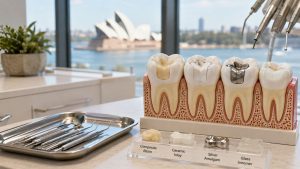

When you have teeth that are damaged, weak, or missing altogether, it can affect everything from your confidence to your ability to enjoy a meal. Thankfully, dental crowns and bridges are two of the most reliable and time-tested solutions in modern dentistry for bringing back the strength and appearance of your smile.
Rebuilding Your Smile With Crowns and Bridges

A healthy, complete smile isn’t just about looking good; it's essential for your overall wellbeing. When teeth are compromised, it can impact how you eat, speak, and feel. This is where restorative dentistry really shines, offering practical ways to repair damage and fill gaps.
Think of a dental crown as a custom-made helmet for your tooth. It’s designed to cover the entire visible part of a tooth that might be cracked, severely decayed, or weakened after a root canal. By fitting snugly over the top, the crown restores the tooth's original strength, shape, and natural look, allowing you to use it normally again.
A dental bridge does exactly what its name suggests—it ‘bridges’ a gap left by one or more missing teeth. It’s typically made of a false tooth (or teeth) anchored securely in place by crowns fitted to the healthy teeth on either side of the space.
The Purpose of Restorative Dentistry
While a beautiful smile is a fantastic outcome, the real purpose of crowns and bridges runs much deeper. These treatments are all about restoring health and function.
- Restoring Function: They bring back your ability to chew food properly and speak clearly—things that are often difficult with damaged or missing teeth.
- Maintaining Alignment: A bridge stops neighbouring teeth from drifting into an empty space. This is crucial for preventing future bite problems, jaw pain, and other complications.
- Providing Protection: A crown acts as a shield for a fragile tooth, protecting it from further damage and often saving it from needing to be extracted down the line.
- Boosting Confidence: It's simple, really. Filling gaps and fixing damage gives you back a natural-looking smile, which can have a huge positive impact on your self-esteem.
These restorative solutions don't just fix teeth—they rebuild your confidence, restore your ability to eat and speak comfortably, and protect your long-term oral health.
Of course, the first step towards successful treatment is finding a reputable dental clinic where you feel comfortable and confident in the care you'll receive. This guide will walk you through every aspect of crowns and bridges, helping you understand the process and make the best decision for your smile.
When Is a Dental Crown the Right Solution?
Even with the best care, our teeth sometimes need extra support. From an unexpected crack to the effects of long-term wear, there are times when a simple filling just isn’t enough to keep a tooth strong and healthy. That’s where a dental crown comes in.
A dental crown is a custom-made “cap” that fits over your entire tooth, right down to the gumline. Think of it as a new, protective outer layer that restores the tooth's original shape, size, and strength. At The Smile Spot, Dr. Thanos often recommends a crown when a tooth is too compromised for other fixes. Let’s walk through the most common situations where a crown is the ideal choice.
Protecting a Cracked or Weakened Tooth
One of the main reasons for a crown is to save a tooth with a significant crack. While enamel is tough, it’s not invincible. A fracture can leave the sensitive inner part of your tooth exposed, causing pain and creating a pathway for infection.
Imagine a ceramic mug with a fine crack down its side. It might still hold water for now, but you know it’s living on borrowed time. A crown acts like a sturdy band, holding the cracked tooth together, absorbing chewing forces, and preventing the crack from spreading further and causing the tooth to break apart completely.
Restoring a Tooth with a Large Filling
Sometimes, a tooth has so much decay that after we clean it all out, there isn't much healthy tooth left to support a filling. Big fillings can act like a wedge, placing a lot of stress on the thin remaining walls of your natural tooth.
Over time, this pressure can cause the tooth to fracture around the filling. A crown is the perfect solution here. It covers the entire tooth—filling and all—providing robust protection so you can chew without worrying about it breaking. This is a common step in restorative treatments involving dental crowns and bridges.
A dental crown isn't just a cosmetic fix; it's a functional restoration designed to protect and preserve your natural tooth, helping you avoid an extraction and keeping your smile whole.
After Root Canal Therapy
A root canal is a fantastic procedure for saving a tooth that has an infected nerve. The treatment cleans out the infection from the tooth's inner chamber, but this can also leave the tooth hollowed out and brittle.
To protect this vulnerable tooth from fracturing, we almost always place a crown on top once the root canal is finished. This protective "helmet" reinforces the tooth, allowing you to chew with confidence and ensuring the long-term success of the root canal treatment.
Addressing Severe Wear and Tear
Teeth can become worn down for various reasons, including acid reflux, a highly acidic diet, or chronic teeth grinding (bruxism). When your enamel wears away, it can lead to sensitivity, an unbalanced bite, and a worn-down appearance.
Crowns are a great way to rebuild these teeth, restoring their original height and shape. This not only improves the look of your smile but can also correct your bite, helping to relieve jaw pain and other related problems.
Completing a Dental Implant
A dental implant is a titanium post that replaces a missing tooth root. But to look and function like a tooth, it needs a top. This is where a crown plays its final, vital role.
After the implant has fused with your jawbone, a custom-made crown is attached to it. This crown is carefully crafted to match the colour and shape of your neighbouring teeth, creating a seamless and incredibly stable replacement. The result is a new tooth that looks, feels, and functions just like one of your own.
How Dental Bridges Solve Missing Teeth
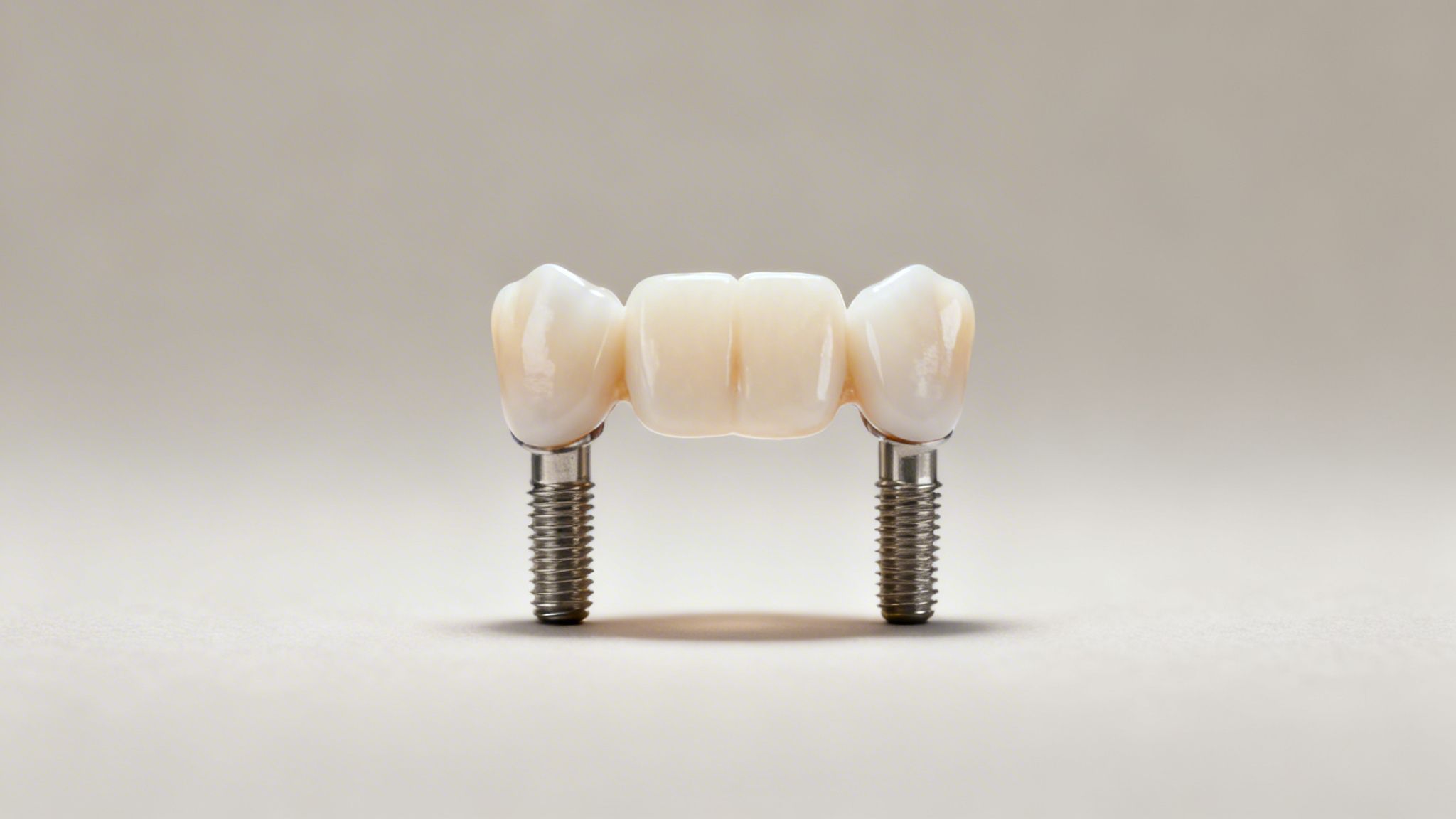
While a dental crown is the perfect way to save a single damaged tooth, what happens when a tooth is already gone? A gap in your smile is more than just a cosmetic issue—it can kick off a chain reaction of dental problems. This is exactly where a dental bridge comes in, offering a fixed, reliable solution.
Think of it just like a bridge over a river. A dental bridge literally ‘bridges’ the gap left by one or more missing teeth. It’s made up of an artificial tooth (called a pontic) that fills the space, held securely in place by crowns attached to the healthy teeth on either side. These anchor teeth are known as abutments.
The result is a seamless restoration that fills the gap, restores your natural bite, and lets you smile with complete confidence again.
Why a Bridge Is More Than Just a Gap Filler
Leaving a gap in your smile can cause some surprisingly big problems down the track. Your teeth are a team, and they work together to hold each other in the right position. When one is lost, the neighbours lose their support and naturally start to drift into the empty space.
This shifting can lead to a host of issues:
- Bite Problems: As teeth move, your bite can become misaligned, making it uncomfortable or difficult to chew properly.
- Jaw Pain: A wonky bite puts extra strain on your jaw muscles and joints, which can lead to chronic pain or TMJ (temporomandibular joint) disorders.
- Increased Risk of Decay: Tilted or crowded teeth are much harder to clean, creating new hiding spots for plaque and bacteria to cause trouble.
A dental bridge does more than just complete your smile. It acts as a vital placeholder, stopping your other teeth from shifting and protecting the long-term health and stability of your entire mouth.
A bridge also brings back your ability to chew your food properly and speak with clarity. Most importantly, it gives you back the complete, confident smile that is so important to everyday life. For anyone weighing up their options, it’s also useful to read our guide on dental implants before and after to understand the differences.
Understanding the Different Types of Dental Bridges
Not all gaps are the same, and neither are bridges. Depending on where the missing tooth is and the health of the surrounding teeth, Dr. Thanos will recommend the right type of bridge for your unique situation. There are three main kinds of dental crowns and bridges we use.
1. Traditional Bridge
This is the most common and robust type of bridge. It involves a pontic (the replacement tooth) fused between two crowns that are cemented onto the abutment teeth on either side of the gap. Made from strong materials like porcelain-fused-to-metal or all-ceramic, they are built to last.
2. Cantilever Bridge
What if you only have healthy teeth on one side of the gap? That’s when a cantilever bridge can be a great option. Instead of being anchored on both sides, the pontic is supported by a single crown cemented to just one abutment tooth. Because all the biting force goes onto that one tooth, we usually reserve this type for areas with less stress, like your front teeth.
3. Maryland Bridge
Also known as a resin-bonded bridge, this is a more conservative approach. Instead of using full crowns on the neighbouring teeth, a Maryland bridge has a pontic supported by a metal or porcelain framework. This framework has small "wings" on each side that are bonded to the back of the abutment teeth, out of sight. It’s a fantastic choice when the neighbouring teeth are perfectly healthy and don’t need crowns.
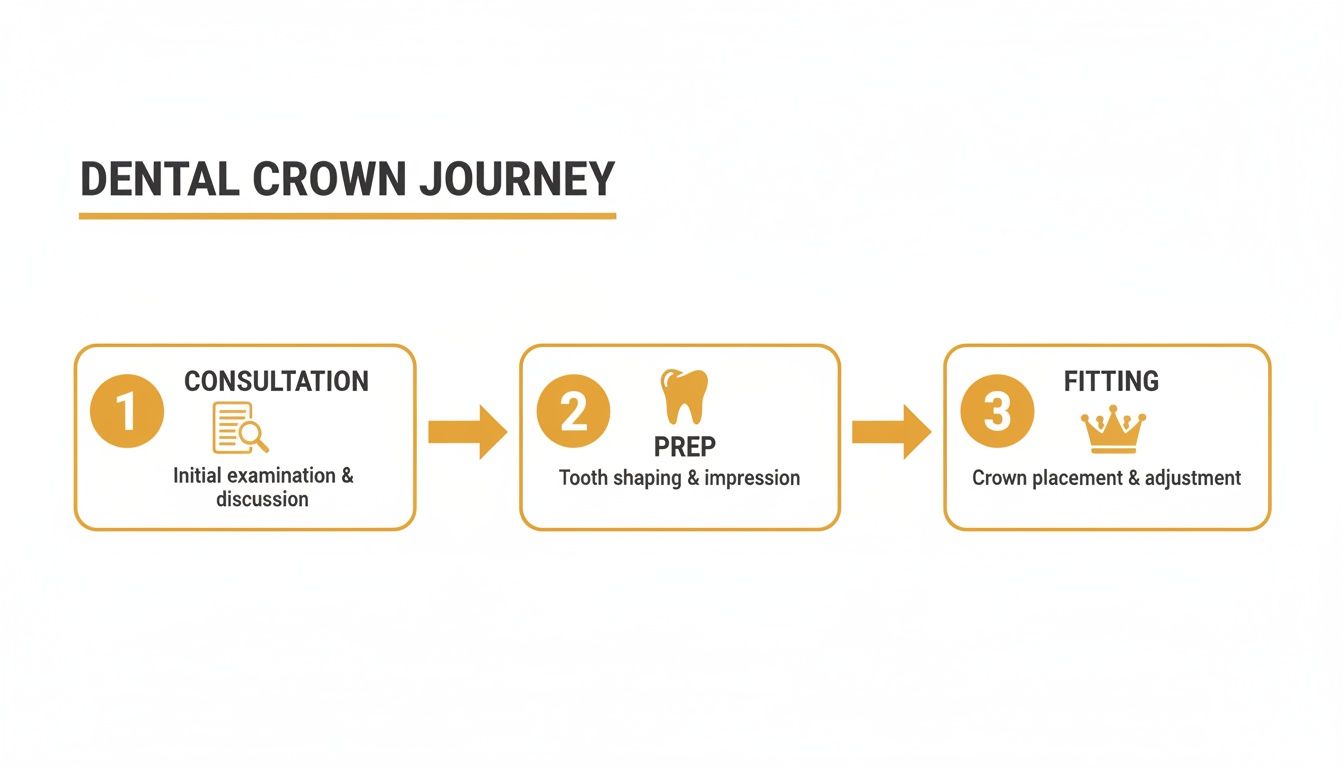
Your Step-by-Step Crown and Bridge Journey
Heading into any dental procedure can feel a bit daunting if you don't know what's involved. That’s why we walk you through every part of the dental crown and bridge process from start to finish. We find that knowing exactly what to expect helps turn anxiety into confidence.
The entire process is carefully planned across just a few appointments. Our focus is always on gentle techniques, clear communication, and making sure you’re completely comfortable every step of the way.
Step 1: Your Initial Consultation and Treatment Plan
It all starts with a relaxed chat with Dr. Thanos. This first appointment is our chance to listen to you, understand your concerns, and figure out your smile goals. We’ll carry out a thorough check of your teeth and gums, which usually includes digital X-rays to see the full picture of your oral health.
From there, Dr. Thanos will explain if a crown or bridge is the right fit for your situation. He’ll walk you through the different material options, explain the pros and cons of each, and answer all your questions. This is a team effort—we work together to create a plan that aligns with your health needs, aesthetic goals, and budget.
Step 2: Preparing the Tooth
Once you're happy to go ahead, we'll get your tooth (or teeth) ready. The first thing we do is make sure the area is completely numb using a local anaesthetic. You won’t feel any pain at all during this step.
For a crown, Dr. Thanos gently reshapes the tooth, creating the ideal base for its new covering. For a bridge, the teeth on either side of the gap are prepared in the same careful way. We use precise, modern tools to remove only the absolute minimum amount of tooth structure needed.
Step 3: Impressions and Your Temporary Restoration
With the tooth prepared, we need to take a highly accurate impression. Think of it as a detailed blueprint that our master dental lab uses to craft your final, custom-fitted restoration. We use a modern digital scanner, which is not only incredibly precise but also fast and much more comfortable than the old-school putty moulds.
You’ll never leave our clinic with a prepared, exposed tooth. We'll craft and fit a high-quality temporary crown or bridge for you to wear while your permanent one is being made. This protects the tooth, lets you chew and talk comfortably, and keeps your smile looking great.
We are deeply committed to a gentle and pain-free experience. If you feel anxious about dental work, we offer sedation dentistry options to help you feel completely relaxed and at ease throughout your entire treatment.
Step 4: Fitting Your Permanent Crown or Bridge
Around two weeks later, you’ll come back for the final, exciting step: getting your new smile. We’ll start by removing the temporary restoration and giving the underlying tooth a good clean.
Dr. Thanos will then gently place your new permanent crown or bridge, checking that the fit, shape, and colour are perfect. He’ll make any tiny adjustments needed to ensure it sits flush with your gum line and that your bite feels balanced and comfortable.
Once we’re both happy with the result, the restoration is permanently bonded into place with a powerful dental cement. After a final polish, your journey is complete. You’ll walk out with a strong, beautiful, and fully functional new tooth. If you have concerns about the financial side of treatment, learning more about dentists with payment plans near me can offer some helpful solutions.
Choosing the Right Material for Your Restoration
Once we’ve decided together that a dental crown or bridge is the best way forward, our next conversation is about materials. This isn't a one-size-fits-all decision; it’s a choice we make based on where the tooth is, your aesthetic goals, and the bite force it needs to handle day-to-day.
Think of it like choosing tyres. You wouldn’t put the same tyres on a light city car as you would on a four-wheel drive heading off-road. In the same way, the ideal material for a front tooth in your smile line is often quite different from what we’d recommend for a hardworking molar.
Let's walk through the main options so you can feel confident in your choice.
Comparing Dental Crown and Bridge Materials
To give you a clearer picture, here’s a quick comparison of the materials we use most often at The Smile Spot.
| Material | Key Benefit | Best For | Consideration |
|---|---|---|---|
| Porcelain-Fused-to-Metal (PFM) | Time-tested strength and durability. | Back teeth (molars and premolars) that do the heavy lifting when you chew. | A thin, dark metal line can sometimes appear at the gumline over time. |
| All-Ceramic (E.max) | The most natural, lifelike appearance. | Front teeth, where blending in perfectly with your smile is the top priority. | Beautiful but not designed for the extreme chewing forces on back teeth. |
| Zirconia | Exceptional strength and chip resistance. | Molars, dental bridges, and for people who clench or grind their teeth. | Looks fantastic, but can be slightly less translucent than E.max. |
Each material has a role to play, and the best one for you depends entirely on your specific situation. Dr Thanos will walk you through the pros and cons of each, helping you find the perfect balance of strength, beauty, and longevity for your smile.
Porcelain-Fused-to-Metal (PFM)
Porcelain-fused-to-metal, or PFM, has been a workhorse in dentistry for decades, and for good reason. These crowns start with a strong metal alloy base for excellent durability, which is then covered with a layer of tooth-coloured porcelain to create a natural look.
This clever combination gives you the best of both worlds: strength from the metal core and aesthetics from the porcelain surface. PFM dental crowns and bridges are a fantastic, reliable choice for back teeth that need to stand up to serious chewing pressure. The only real downside is that if your gums recede over the years, the metal edge might show as a faint dark line right at the gumline.
All-Ceramic Restorations
When it comes to teeth that are front and centre in your smile, looks are everything. This is where all-ceramic materials like E.max really shine. Milled from a single block of a special glass-ceramic called lithium disilicate, these crowns are famous for their stunning, translucent appearance that perfectly mimics natural tooth enamel.
Because they're 100% ceramic, there’s zero risk of a dark line ever appearing at your gums. This makes them our go-to choice for restoring front teeth where aesthetics are paramount. This focus on appearance is something we also prioritise for other cosmetic treatments, a topic we explore in our guide on how long porcelain veneers last.
Zirconia Restorations
What if you need incredible strength but don't want to compromise on aesthetics? That’s where Zirconia comes in. Zirconia is a type of ceramic so tough it's sometimes nicknamed "ceramic steel." It can handle immense biting and grinding forces, making it an ideal material for crowns and bridges anywhere in the mouth, but especially for back molars.
Modern Zirconia can also be layered with porcelain, giving it a natural, vibrant look that blends toughness with beauty. It’s become an incredibly popular choice for patients looking for a durable, metal-free restoration that looks just as good as it feels.
Ensuring Your New Crown or Bridge Lasts
Getting a new dental crown or bridge is a fantastic step towards a stronger, more complete smile. To make sure you get the most out of this investment for years to come, a little dedicated care is all it takes. While your new restoration is incredibly tough, the natural tooth underneath and your gums still need your attention to keep everything healthy.
It's quite common to experience some mild sensitivity to hot and cold right after your final fitting. This is completely normal as the tooth and surrounding gums settle down. Using a toothpaste for sensitive teeth and steering clear of extreme temperatures for a few days usually does the trick.
Your Daily Hygiene Checklist
The long-term success of your new crown or bridge really comes down to great oral hygiene. Even though materials like porcelain and zirconia can't get a cavity, the join where the crown meets your tooth is a spot where plaque can build up.
Here’s a simple routine to keep your new work in top shape:
- Mindful Brushing: Always use a soft-bristled brush and clean your teeth twice a day. Pay extra attention to the gumline around your crown by angling the bristles at 45 degrees to gently sweep away plaque.
- Effective Flossing: For a single crown, flossing daily as usual is perfect. If you have a bridge, it’s crucial to clean underneath the pontic (the replacement tooth). A floss threader or an interdental brush makes it easy to guide the floss under the bridge and keep the area clean.
Your new restoration is immune to decay, but the health of the underlying natural tooth and gums is the foundation for its longevity. A consistent hygiene routine is the best insurance for your investment.
The Importance of Regular Professional Care
Great home care is essential, but it’s only one part of the equation. The other is keeping up with your regular dental appointments. Think of these visits as a professional service for your smile, allowing us to keep an eye on your new restoration and the surrounding tissues.
During your check-up, we'll carefully inspect your crown or bridge to make sure the fit is still perfect and there are no signs of wear. A professional clean will remove any stubborn tartar that brushing and flossing might have missed, especially around the edges of the restoration. This proactive care helps us spot potential issues long before they turn into bigger problems.
This is a vital part of maintaining your overall oral health, which we discuss in more detail in our guide to the importance of a regular check-up and clean. By combining diligent home care with professional oversight, you can expect your dental crown or bridge to last for well over a decade, keeping your smile strong, healthy, and complete.
Your Crown and Bridge Questions, Answered
It's completely normal to have a few questions before committing to any dental treatment. We've put together some of the most common things patients ask about crowns and bridges to give you clear, straightforward answers and help you feel confident in your decision.
Does Getting a Dental Crown or Bridge Hurt?
Making sure you’re comfortable is our number one priority. The entire procedure is done using local anaesthesia, which completely numbs the area so you won’t feel any pain while we work.
It's quite common to feel some mild, temporary sensitivity in the days following your appointment, but this usually fades quickly. For anyone feeling particularly anxious about treatment, we also offer sedation options to help you feel completely calm and relaxed from start to finish. If you do have some lingering discomfort, you might find the general tips in our article on managing dental pain after an extraction helpful.
How Long Do These Restorations Last?
With the right care, a well-made crown or bridge can serve you beautifully for many years.
A high-quality crown or bridge can last for 10 to 15 years, and often even longer. Its lifespan really comes down to the material used and how well you look after it day-to-day.
We’ll give you simple, detailed aftercare instructions to help you get the most out of your new smile. Things like consistent brushing, flossing (especially under and around a bridge), and keeping up with your regular professional cleans are the keys to protecting your investment for the long haul.
Is a Dental Implant a Better Option Than a Bridge?
Both are fantastic solutions for missing teeth, but they work in different ways and are suited to different situations. A dental implant is a standalone replacement that mimics a natural tooth root, which has the added benefit of preserving your jawbone. A bridge, on the other hand, uses the neighbouring teeth for support.
There’s no single "better" option—only the best option for you. Dr. Thanos will take the time to assess your oral health, check your bone density, and chat with you about your goals. It’s a collaborative process to figure out which treatment will give you the best possible result for your unique smile.