You’ve probably asked the question as many others have. How much is teeth whitening, and why do the prices seem to be all over the place?
That usually happens when there’s a reason you want a brighter smile soon. A wedding is coming up. You’re updating your photos for work. You’ve noticed your teeth look darker in certain lighting, especially after years of coffee, tea, or red wine. The goal sounds simple, but the choices can feel messy once you start comparing whitening strips, pharmacy kits, custom trays, and in-chair treatment.
Cost matters, but price on its own doesn’t tell you much. Whitening is one of those treatments where the cheaper option can become the more expensive one if the result is patchy, short-lived, or leaves you with sensitivity you then need to manage. The better question is often not just what whitening costs today, but what it costs to get a result you’re happy to live with.
Thinking About a Brighter Smile
A lot of patients in Dulwich Hill and the Inner West don’t come in asking for the “strongest” whitening. They want something more practical. They want to look fresher without doing anything extreme. They want to know what works, what doesn’t, and whether the money is worth it.
That’s a sensible way to approach cosmetic dentistry. Whitening sits in the same broad category as other minimally invasive cosmetic treatments, where small changes can make a face look more rested and more confident without major treatment. Teeth are often part of that picture.
Before whitening, it’s also worth knowing whether the teeth and gums are ready for it. If there’s plaque, tartar, gum irritation, or decay, whitening won’t fix the underlying issue. In many cases, a professional clean is the step that makes the whitening result look better and last better, which is why patients often start with a check-up and clean.
Whitening should start with a diagnosis, not a shopping decision.
The main thing to know is this. There isn’t one “right” whitening price for everyone. There’s a right option for your teeth, your timeline, your sensitivity level, and your expectations. Some people want one appointment and a noticeable jump in shade. Others would rather whiten gradually at home with more control.
The Three Tiers of Teeth Whitening Explained
Understanding whitening costs is easier when comparing them to travel classes. You can reach the same destination, but the speed, comfort, supervision, and predictability are very different.
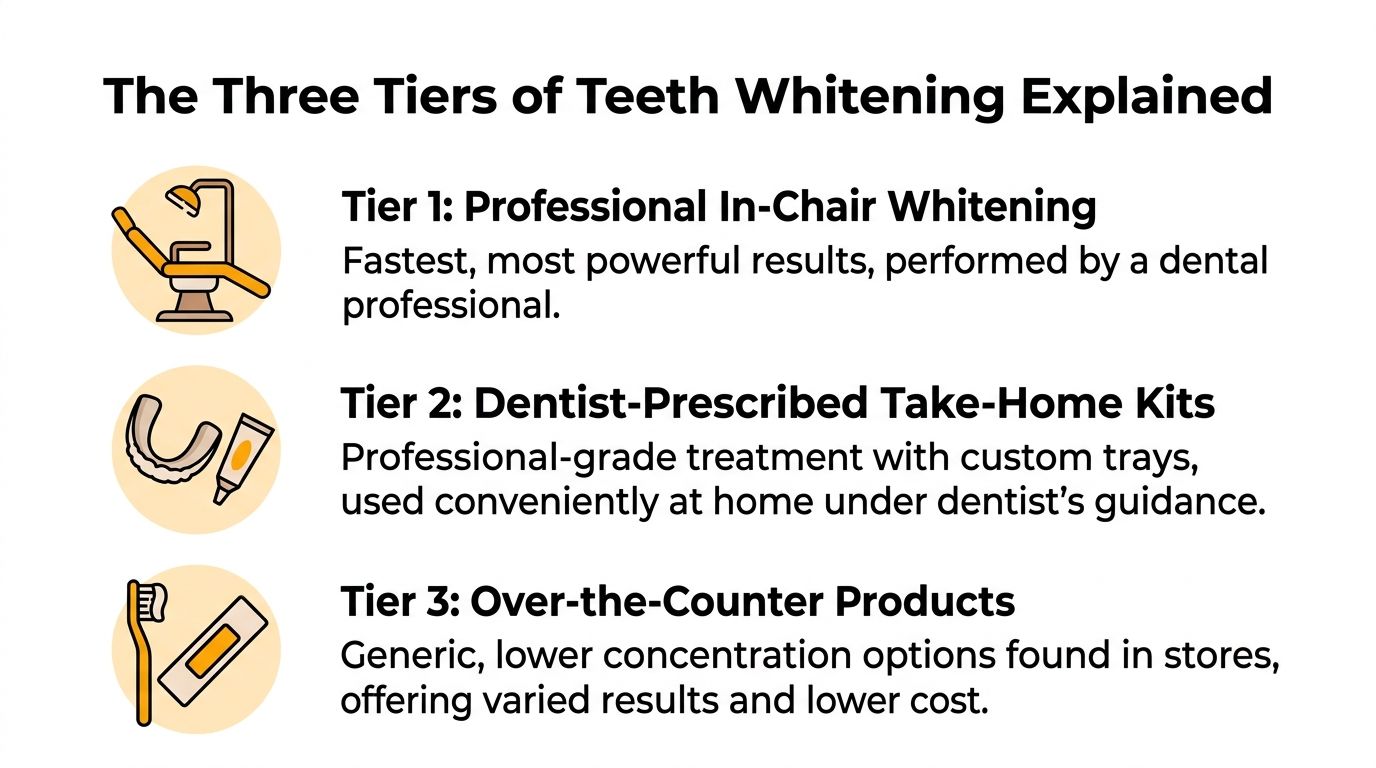
First class in-chair treatment
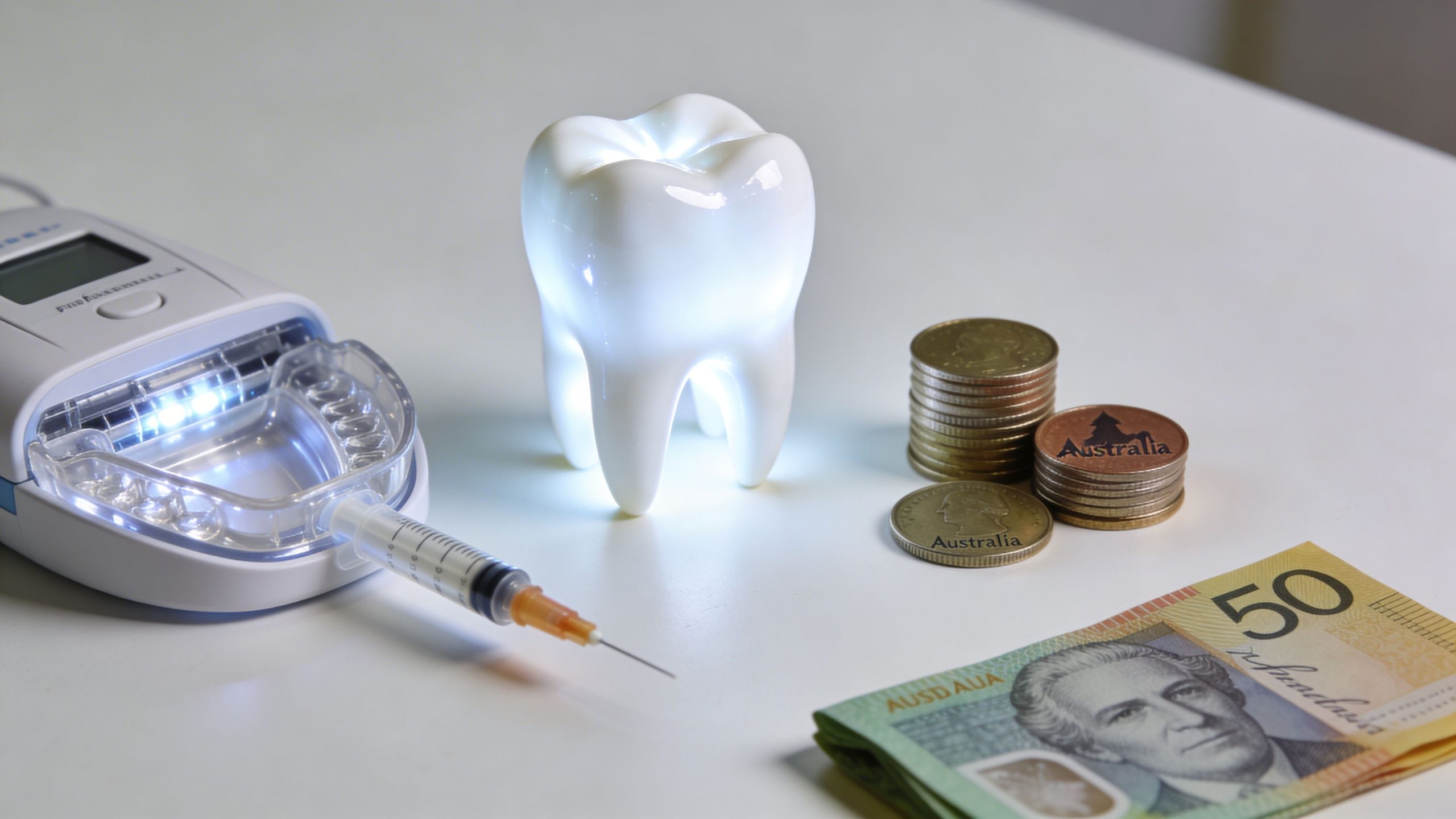
This is the fastest and most controlled option. Professional in-office whitening in Australia typically costs AUD 400 to AUD 800 per session, according to this Australian whitening cost guide. It also notes that professional methods can achieve 8+ shades of improvement, while over-the-counter products usually deliver 2 to 4 shades, and 70% of Australian adults prefer dentist-supervised whitening for safety and longevity.
You’re paying for stronger systems, isolation of the gums, clinical oversight, and a result that’s usually visible straight away.
Business class custom take-home kits
These sit in the middle. They’re prescribed by a dentist, but you wear them at home. The same pricing guide places dentist-prescribed at-home kits at AUD 150 to AUD 400 in Australia. They’re slower than in-chair whitening, but they offer more control and are often a very smart option for people who want professional guidance without a long appointment in the chair.
For many busy patients, this is the sweet spot between cost and reliability.
Economy over-the-counter products
These include whitening strips, generic trays, pens, and whitening toothpastes. The same source places these at AUD 20 to AUD 100.
They’re easier to buy, but the trade-off is simple. Lower concentration, less precise fit, more variation in results, and more guesswork. For mild surface staining, they may help. For deeper staining or uneven colour, they often disappoint.
Teeth whitening options at a glance
| Feature | In-Chair Professional Whitening | Dentist Take-Home Kit | Over-the-Counter (OTC) Product |
|---|---|---|---|
| Typical cost | AUD 400 to AUD 800 per session | AUD 150 to AUD 400 | AUD 20 to AUD 100 |
| Supervision | Performed by a dental professional | Prescribed and monitored by a dentist | Self-directed |
| Speed | Fastest | Gradual | Variable |
| Typical result range | 8+ shades | Moderate to strong change over time | 2 to 4 shades |
| Fit | Clinically managed | Custom | Generic |
| Best for | Fast, visible change | Balanced value and convenience | Budget-led trial |
Practical rule: If you need the result for a specific date, don’t rely on a supermarket product as your only plan.
The In-Chair Whitening Experience at The Smile Spot
For patients who want speed and a stronger single-visit result, in-chair whitening is the premium option.
Professional in-office teeth whitening in clinics like ours in Dulwich Hill typically costs AUD 500 to AUD 1,200, and treatments using advanced Biolase laser technology can achieve 5 to 8 shade improvements in a single 60 to 90 minute session, as outlined in this treatment cost overview.
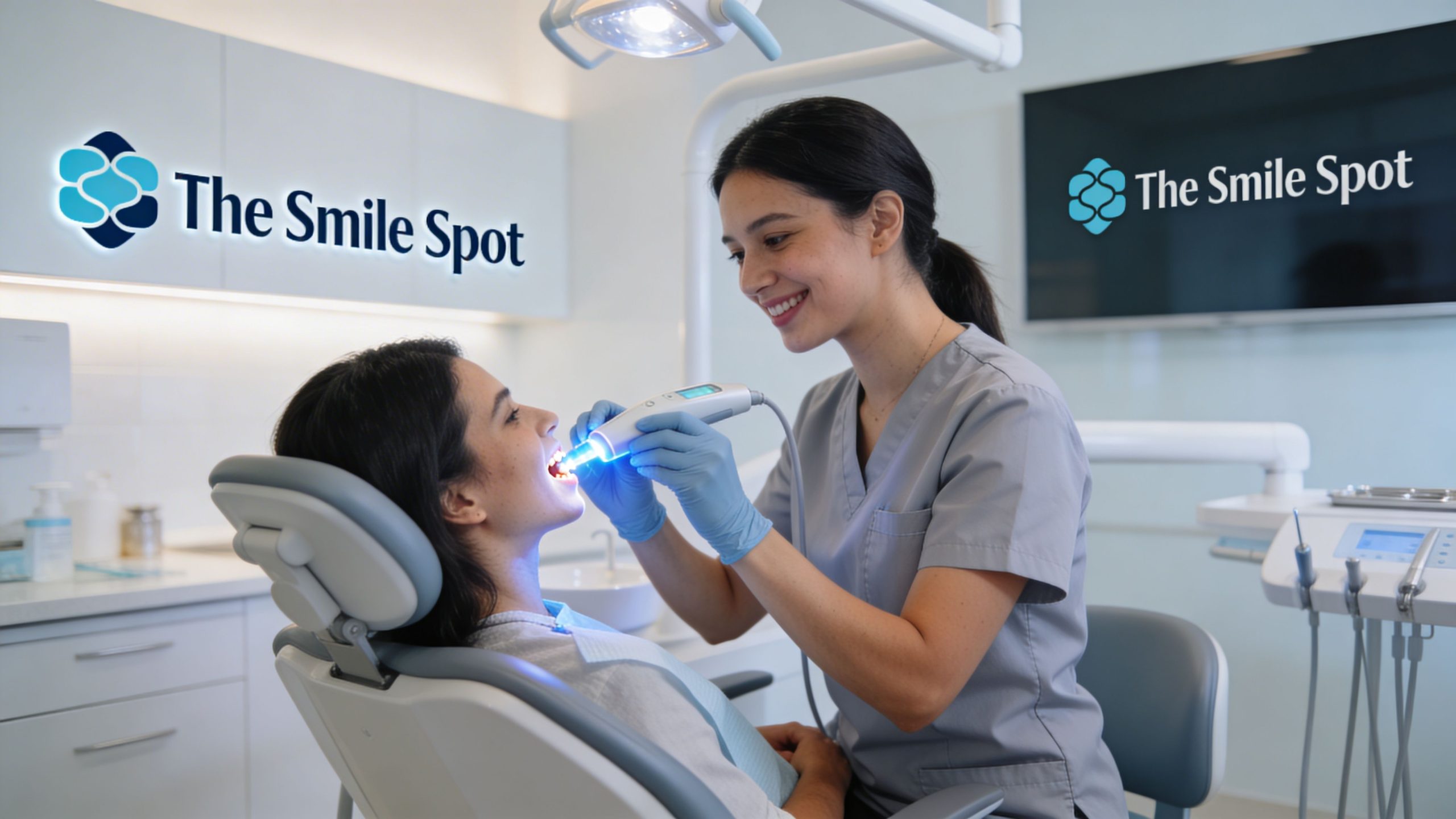
What happens during the appointment
The process is more methodical than many people expect.
First, the teeth are assessed to make sure whitening is appropriate. If there’s decay, leaking fillings, exposed root surface, or active gum inflammation, that needs attention first. Whitening works best on healthy teeth.
Next, the lips and gums are protected, and the whitening gel is applied in a controlled way. With laser-assisted systems, the light energy helps the gel break down more efficiently, which is part of why these treatments can produce a stronger result in less time.
Why the technology matters
Biolase isn’t there for show. The point of using an advanced system is to improve control, efficiency, and comfort.
A well-run in-chair appointment is not just “stronger gel plus bright light”. It’s diagnosis, isolation, application, timing, and monitoring. That’s what turns whitening from a gamble into a procedure.
If you want a broader overview of what professional whitening involves, this guide on professional teeth whitening is a useful next read.
A short visual explainer can also help if you prefer to see the process before booking.
Who this option suits best
In-chair whitening usually suits people who:
- Have an event coming up and want a faster result
- Prefer treatment under supervision rather than doing it themselves at home
- Have staining that hasn’t responded well to basic retail products
- Value convenience over the lower upfront cost of slower options
The right candidate for in-chair whitening isn’t just someone who wants whiter teeth. It’s someone who wants speed, predictability, and a controlled clinical setting.
Professional Results at Home Custom Whitening Kits
A custom whitening kit is often the most sensible option for patients who want professional-grade whitening without committing to an in-chair session.
Dentist-provided take-home whitening kits in Australia are priced at AUD 300 to 600 and use 10 to 22% carbamide peroxide gels. Clinical data cited in this overview of dentist take-home whitening shows these kits can achieve 4 to 6 shade improvements over 7 to 14 days, with a 70% reduced risk of sensitivity compared to in-office treatments because of the lower concentration and absence of heat activation.
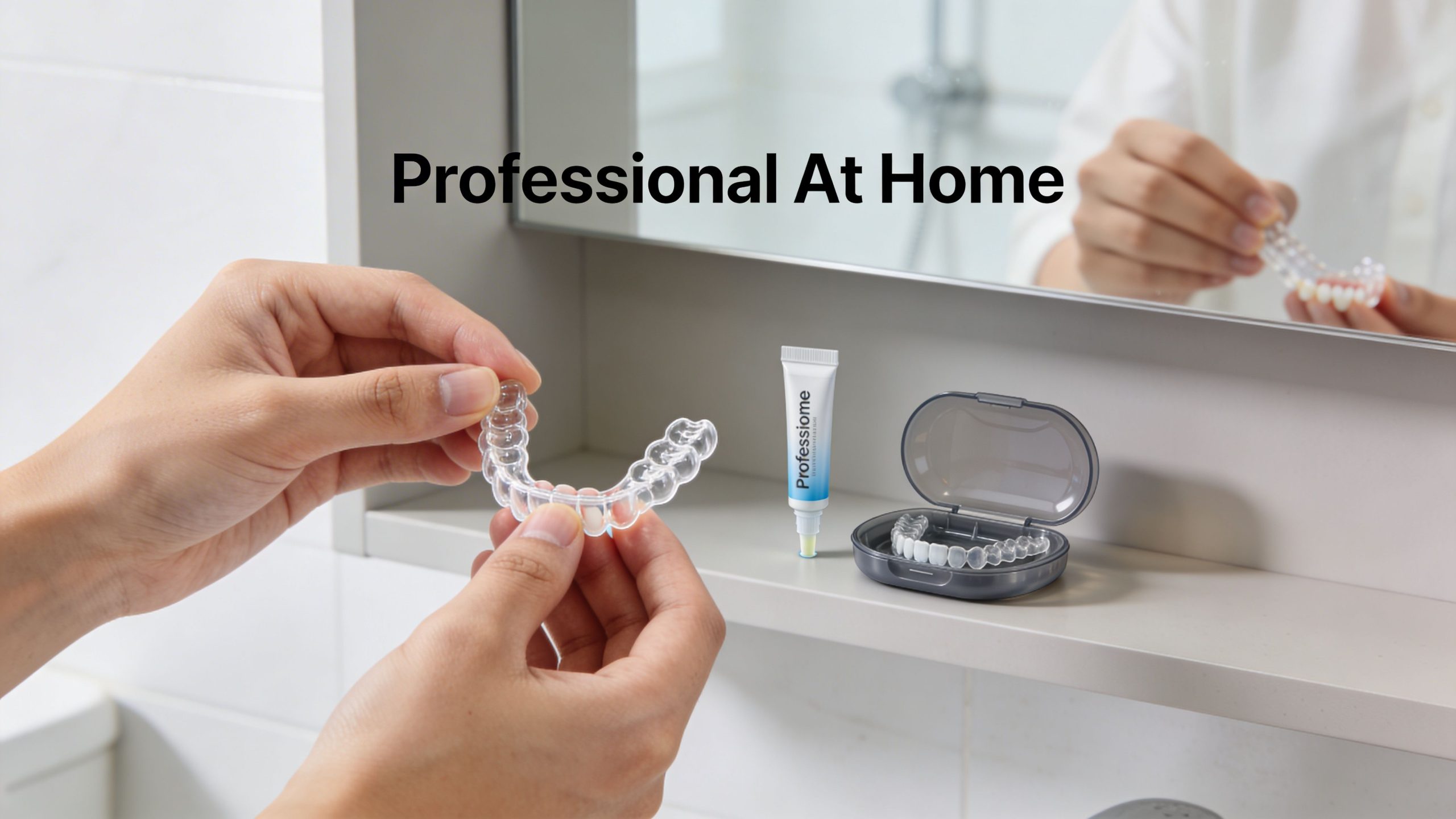
What makes a custom kit different
The tray is the key difference.
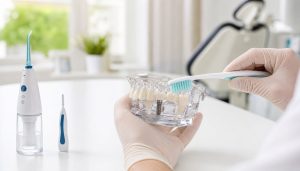
A custom tray is made to fit your teeth properly, so the gel sits where it should and stays away from the gums as much as possible. That matters because uneven contact is one of the biggest reasons store-bought trays produce blotchy results or irritation.
With a custom kit, the treatment is slower by design. That’s not a weakness. It often gives patients more control over the pace of whitening and how their teeth feel during the process.
What the routine looks like
The routine is straightforward, but it still needs discipline.
- Wear time matters: The gel is used over a series of days rather than in one sitting.
- Consistency matters more than intensity: Missing applications usually slows the result.
- Your starting shade matters: Some teeth whiten quickly, while others need a steadier approach.
This option tends to work well for people who don’t need instant whitening and like the idea of progressing gradually.
When take-home kits make the most sense
Custom kits are often a good fit if you:
- Travel a lot and want a flexible routine
- Have a history of sensitivity and want a gentler path
- Want to maintain a previous whitening result without repeating a full in-chair visit
- Prefer spreading the process out over a week or two
For many patients, this option best balances cost and practicality. The upfront fee is lower than in-chair whitening, but the result is still based on proper diagnosis, custom fit, and professional-strength materials.
What Else Affects the Price of Teeth Whitening
The advertised fee is only part of the story. The final value of whitening depends on what your teeth need before, during, and after treatment.
Long-term cost-effectiveness matters. In-office whitening costs more upfront at $500 to $900, and Australian studies cited in this cost-effectiveness discussion indicate results often last 9 to 12 months. The same source notes that take-home kits at $150 to $400 can be more cost-effective over time, but hidden costs such as $150 sensitivity treatments or pre-whitening cleans need to be factored into the overall total.
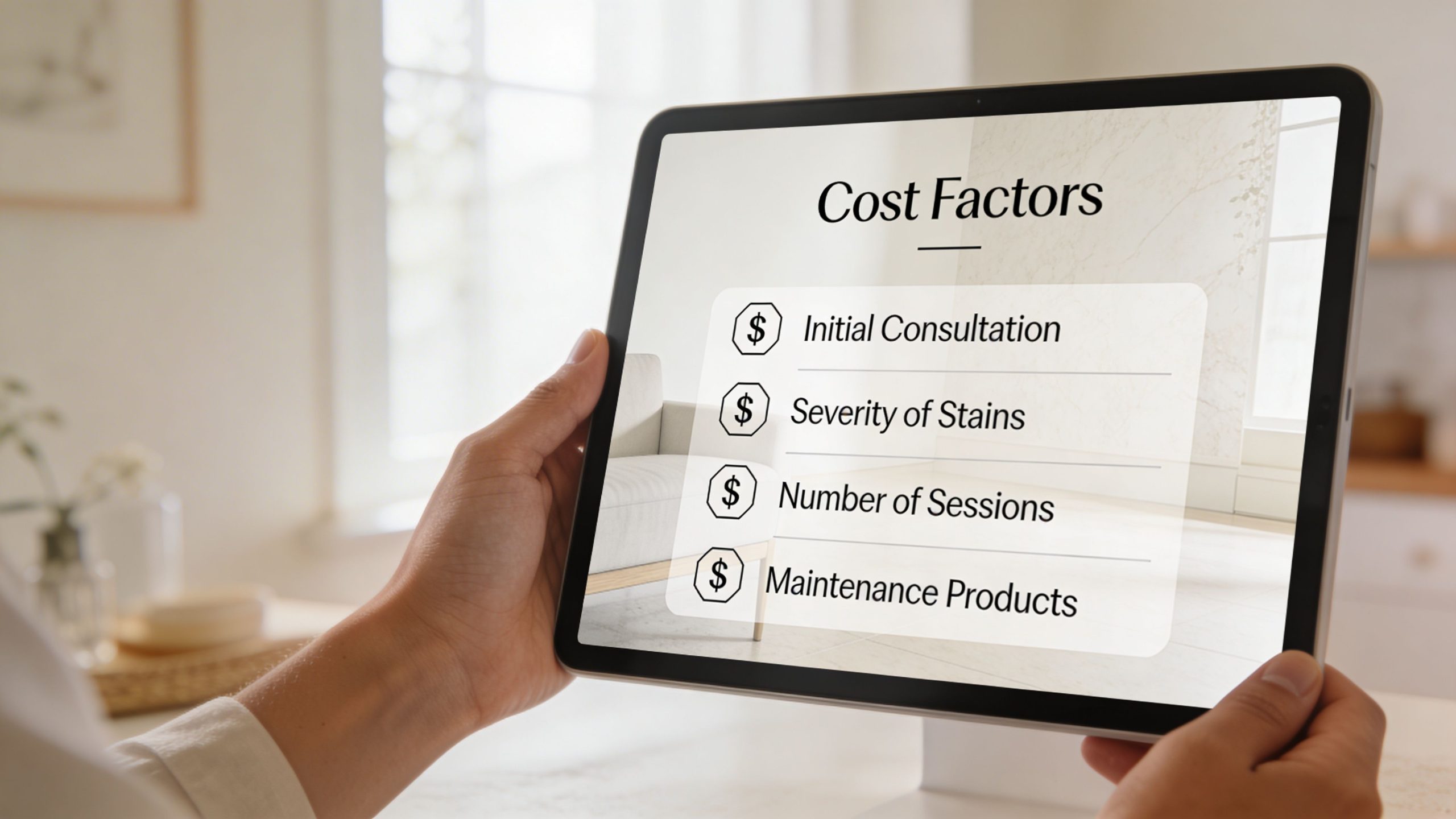
If your teeth need preparation first
Whitening works best on clean, healthy tooth surfaces. If you’ve got plaque, tartar, or gum inflammation, the whitening process may need to wait until the mouth is in better condition.
That’s one reason a proper exam and clean should never be treated as an optional add-on. It’s part of doing whitening safely and properly.
If you have crowns veneers or fillings
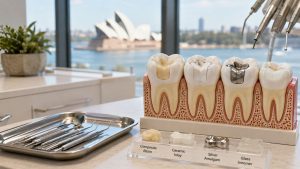
This catches many people by surprise. Whitening changes natural tooth structure. It does not whiten crowns, veneers, or fillings.
So if you have visible dental work at the front, the cost question becomes more nuanced. You may whiten the natural teeth first, then decide whether any existing restorations still match. If you’re unsure how that works, it helps to understand the basics of dental crowns and bridges.
If you’re prone to sensitivity
Sensitivity isn’t unusual, but it does affect planning.
Sometimes the best value choice is not the cheapest treatment. It’s the option least likely to create discomfort that then needs extra products, extra review, or a slower restart. Patients with sensitivity often do better with staged whitening, lower strength gels, or a custom take-home approach.
Cheap whitening becomes expensive quickly when it has to be corrected, paused, or repeated.
If your stains are deeper than average
Not all discolouration behaves the same way.
Surface staining from food and drink usually responds better than darker internal staining. When stains are deeper, the issue isn’t just whether whitening will work, but whether one round will be enough to reach your goal. That’s where expectations matter. Some smiles need maintenance, not a one-off fix.
Is Professional Whitening a Good Investment
For the right patient, yes.
The strongest argument for professional whitening isn’t that it’s the cheapest route. It usually isn’t. The argument is that it gives you a safer, more predictable result and often a better long-term experience.
The Australian teeth whitening market is projected to grow at a 5.4% annual rate from 2025 to 2030, with professional services holding 60% of the market. That demand is linked to results lasting 1 to 3 years and an 82% patient satisfaction rate, compared with 45% for over-the-counter options, according to this market analysis.
Those figures reflect what many dentists see in practice. People are usually happiest when the whitening plan matches the condition of their teeth and the finish they want, not when they buy the lowest-cost product on the shelf.
Value is more than shade change
A good whitening result should look clean and natural. It should also fit with the rest of your smile.
That matters even more if whitening is part of a wider cosmetic plan. If you’re also thinking about reshaping, bonding, or veneers later, timing matters. For example, people comparing whitening with longer-term cosmetic options often find it useful to understand how long porcelain veneers last.
Professional whitening is a better investment when you want a result you can plan around, maintain properly, and trust.
Financing Your New Smile in Dulwich Hill
Many patients don’t need more information about whitening itself. They need clarity about how to pay for it without guessing.
The practical first step is to ask for a written treatment plan. That should spell out whether you need a clean before whitening, whether you’re better suited to in-chair or custom trays, and whether there are likely maintenance costs later. Transparent fees matter more than headline prices.
Questions worth asking before you book
- What’s included in the fee. Consultation, review, take-home gel, and any follow-up should be clear.
- Are there staged options. Some patients prefer to begin with a lower-cost home system and review the result before committing further.
- Can private health fund benefits apply. Cover varies, so it’s worth checking your policy directly.
- Are payment arrangements available. Flexible payment options can make timing easier, especially if whitening is part of a broader treatment plan.
If you’re comparing clinics, don’t just ask how much is teeth whitening. Ask what the fee includes, what the likely maintenance looks like, and what happens if your teeth are sensitive or you already have visible restorations.
For patients who want a broader overview of manageable treatment costs, this article on dentists with payment plans near me is a practical place to start.
Your Next Steps and Common Questions
The most accurate whitening quote always comes after someone looks at your teeth. That’s because the right option depends on your starting shade, any existing dental work, your sensitivity history, and how quickly you want the result.
If you’re deciding between options, think in this order. First, are your teeth healthy enough to whiten now. Second, do you want speed or flexibility. Third, are you comparing sticker price, or the full cost of getting a result you’ll still be happy with later.
Common questions
Can I whiten my teeth if I have crowns or fillings
Usually yes, but only the natural teeth will change shade. Existing crowns, veneers, and fillings won’t whiten, so colour matching needs to be discussed before treatment.
What if I’m worried about sensitivity
That’s exactly the kind of issue that should shape the treatment choice. Many patients do better with a slower custom-tray approach, shorter wear times, or a modified plan instead of the strongest possible treatment.
How do I make whitening last longer
Good home care helps. So does staying on top of regular cleans and being realistic about staining habits. Coffee, tea, red wine, and smoking can all pull the result back more quickly.
Is whitening always worth doing before other cosmetic work
Often, yes. If you’re considering bonding, veneers, or other visible restorations, whitening first can make shade planning easier and help avoid mismatches later.
The main thing is not to self-prescribe. Whitening looks simple from the outside, but the best results usually come from choosing the method that fits your mouth, not the one with the loudest packaging.
If you’d like clear advice on the best whitening option for your teeth, book a consultation with The Smile Spot. You’ll get a personalised assessment, transparent guidance on costs, and a treatment plan that focuses on value, safety, and results that suit your smile.