A missing tooth has a way of turning into an everyday problem. You notice it when you smile in photos, when food catches in the gap, or when you find yourself chewing on one side without thinking. For many people in Sydney, the first question isn’t only, “Can this be fixed?” It’s, “Can I afford to fix it properly?”
That’s a fair question.
Dental implants can feel confusing at first because there isn’t one single price, one single treatment path, or one single type of patient. Some people need one tooth replaced. Others are dealing with loose dentures, broken teeth, or several failing teeth that have become harder to manage year by year. The right solution depends on your mouth, your goals, your health, and your budget.
Affordable dental implants sydney searches usually bring up a mix of price ads, package offers, and technical terms that don’t mean much if you’re new to the process. What most patients want is a clear explanation in plain English. They want to know what affects the cost, what choices they have, and how to avoid paying for the wrong thing.
Your Guide to a Confident Smile in Sydney
Living with a missing tooth can wear you down in small ways. You may smile less. You may avoid certain foods. You may also worry that replacing the tooth will be far too expensive or too complicated to fit into normal life.
That’s where good guidance matters.
A dental implant isn’t just a screw placed in bone. It’s a full tooth replacement designed to restore how you chew, how you speak, and how comfortable you feel when you smile. When it’s planned properly, it can also protect the surrounding teeth by avoiding the need to grind down healthy teeth for a bridge.
Many people assume implants are only for major dental cases. They’re not. Some patients need a single front tooth replaced after trauma. Others lose a back tooth and don’t realise how much that gap affects their bite until months later. Some have worn a denture for years and are tired of movement and irritation.
A good implant plan should make sense both clinically and financially. If either part is unclear, ask more questions before you commit.
If you’re early in your research, looking at real treatment transformations can help you understand what’s possible. This collection of dental implants before and after examples gives a practical sense of how much difference the right treatment can make.
Confidence usually returns step by step. First, you understand the options. Then you understand the costs. After that, the process feels much less intimidating.
Understanding Dental Implant Costs in Sydney
A dental implant quote can feel confusing at first because it is rarely a single fee for a single step. It is more like quoting a bathroom renovation. One number might cover the demolition only, while another includes the fittings, tiling, and final finish. Implant treatment works the same way.
For a single tooth in Sydney, fees often vary widely from clinic to clinic. The reason is usually not just price difference. It is what is included, how complex the case is, and how the treatment is planned from the start.

What you’re actually paying for
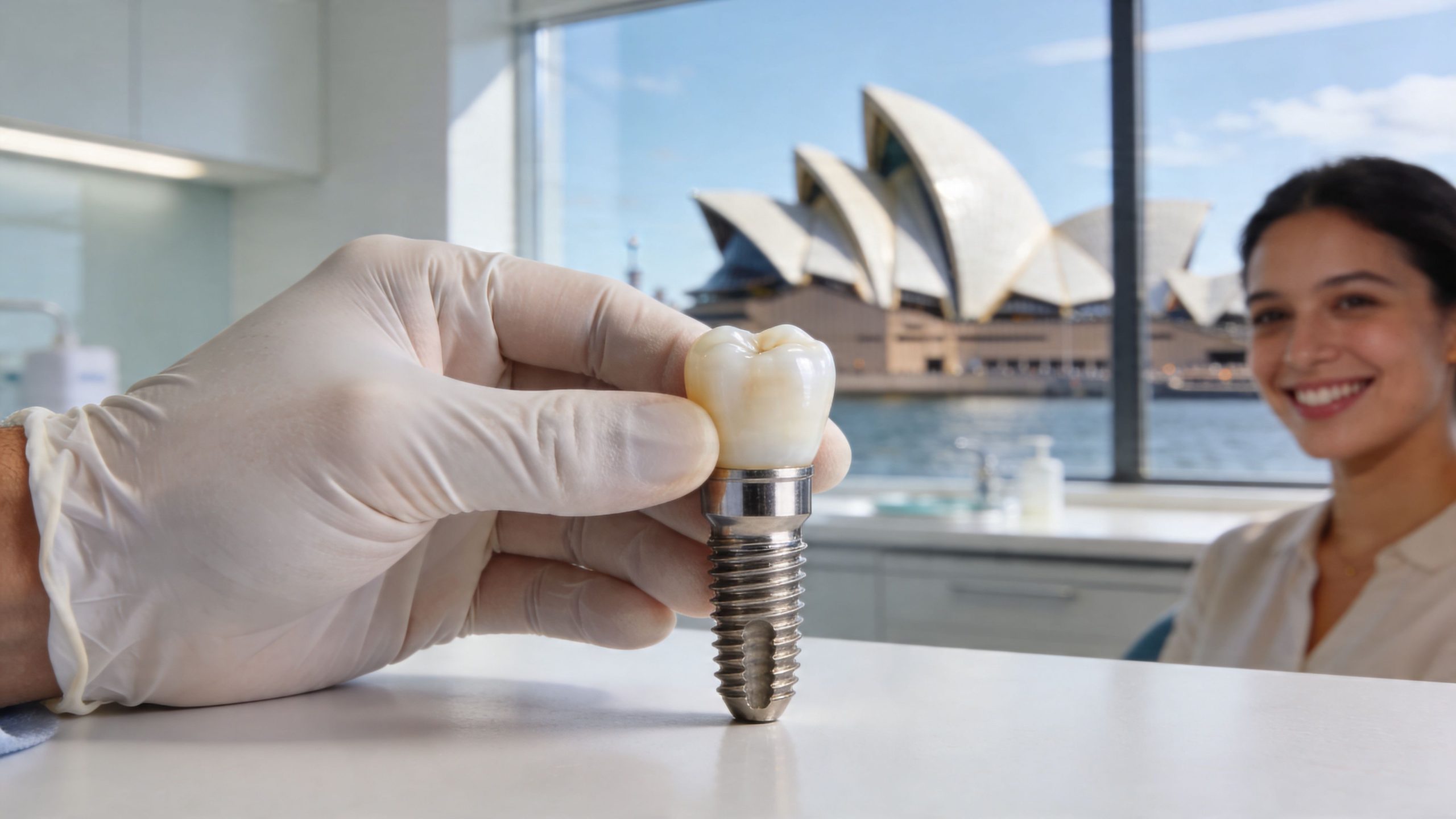
A single implant usually has three core parts:
- The implant post. This is the titanium fixture placed in the jawbone.
- The abutment. This is the connector between the implant and the replacement tooth.
- The crown. This is the custom-made tooth you see above the gum.
That sounds straightforward, but many quotes also need to account for the planning that makes the result predictable. That can include the initial examination, 3D imaging, surgical planning, reviews during healing, and the final fitting of the crown.
This is why two quotes that both say “single implant” may not mean the same thing.
Why one patient pays more than another
Two Sydney patients may each be missing one tooth, yet the total fee can still differ a lot. A fresh extraction site with good bone is usually simpler to treat than an older gap where the bone has shrunk over time.
Common factors that change the final cost include:
- Bone and gum condition. If the site needs grafting or extra preparation, treatment becomes more involved.
- Tooth position. A front tooth often needs more detailed cosmetic work than a back tooth.
- Implant and crown materials. Different systems, labs, and crown materials affect fit, appearance, and long-term wear.
- Planning technology. 3D scans and guided surgery add cost, but they can also reduce guesswork.
- Clinician experience. Careful planning and risk management matter because correcting implant problems is far more expensive than preventing them.
From a patient’s point of view, the practical question is simple. Are you paying for a low entry number, or for the full process needed to end up with a stable, functioning tooth?
Cheap treatment and affordable treatment are not the same
Affordable treatment should still be safe, well-planned, and clear about what is included. A very low advertised fee can be perfectly legitimate if it covers one stage only. The trouble starts when patients assume that price includes the whole tooth replacement.
Before you compare clinics, ask for an itemised quote. You want to see whether the fee covers the surgery alone or the complete sequence from planning through to the final crown.
| Cost element | What it may include | Why it matters |
|---|---|---|
| Implant surgery | Placement of the titanium post | This is one stage only, not always the finished tooth |
| Restorative components | Abutment and final crown | These turn the implant into a working tooth |
| Diagnostics | Examination, scans, treatment planning | Good planning lowers the chance of surprises |
| Follow-up care | Reviews, healing checks, adjustments | This supports comfort and long-term stability |
A clear quote gives you something else as well. It helps you budget properly.
In real life, Sydney patients are often weighing more than the treatment fee itself. They may be checking what their health fund contributes, whether payment plans are available, whether grafting can be avoided, or whether there is a different implant option that suits their budget better. For larger cases, the structure of the treatment matters even more. This guide to All-on-4 dental implants cost in Australia explains how costs change when you move from replacing one tooth to rebuilding a full arch.
Practical rule: If one quote is dramatically lower than the others, ask exactly what is included, what might be added later, and what follow-up care is part of the fee.
The goal is to understand the complete financial journey before you commit. When the quote is clear, the treatment plan is easier to trust.
Your Dental Implant Options Explored
A patient might come in thinking, “I just need an implant,” only to find there are a few different ways to replace missing teeth. That is normal. Dental implants are not one single treatment. They are a family of options, and the right one depends on the size of the gap, the condition of the nearby teeth, and what you want life to feel like afterwards.
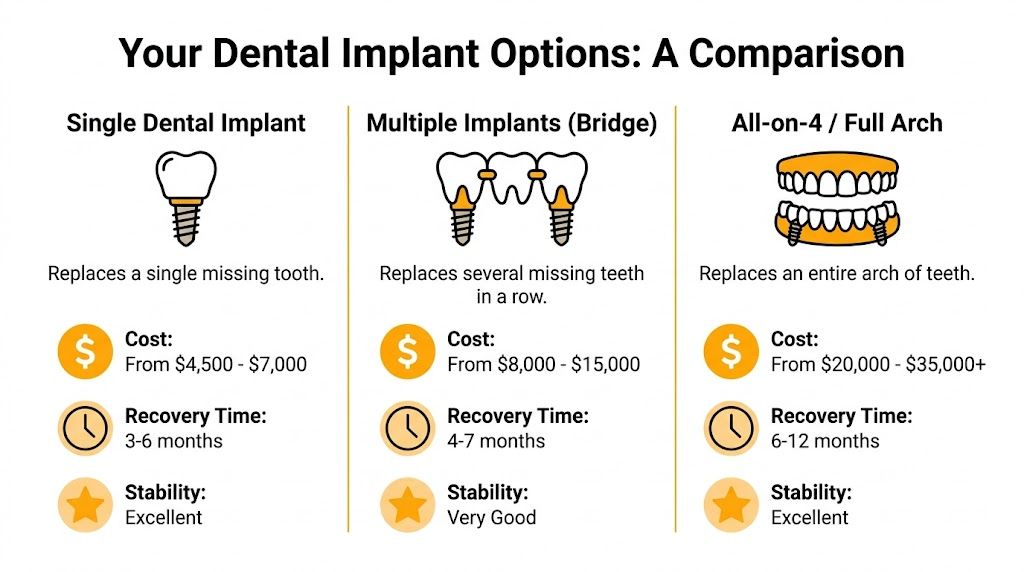
From a cost point of view, this matters more than many Sydney patients expect. The lowest total fee is not always the option with the lowest starting price. In some cases, preserving healthy teeth saves money and trouble later. In others, joining teeth together on fewer implants can make treatment more practical.
Single tooth implant
This option usually suits someone who is missing one tooth and has healthy teeth on either side.
The implant replaces the root under the gum. A custom crown replaces the part you can see. It works much like rebuilding a house with a new foundation first, then the visible structure on top. Because the support is independent, the neighbouring teeth do not need to be cut down as they often are for a conventional bridge.
A single implant may be a good fit if you:
- Lost one tooth from decay, trauma, or fracture
- Have a long-standing gap after an extraction
- Want a fixed replacement instead of a removable partial denture
For many patients, this feels the most like getting one tooth back rather than wearing a prosthesis.
Implant-supported bridge
If several teeth are missing side by side, placing one implant for every missing tooth is not always necessary.
An implant-supported bridge uses implants as the supports, then connects replacement teeth across the gap. A simple way to picture it is a small span supported by solid posts at key points, rather than a separate post under every section. That can reduce the number of implants needed while still giving you a fixed result.
This option is often considered when:
- Several adjacent teeth are missing
- You want a fixed solution
- The gap can be supported safely from fewer implant positions
Patients often mix this up with a traditional bridge. The difference is in where the support comes from. A traditional bridge leans on natural teeth. An implant-supported bridge leans on implants.
All-on-4 and full-arch treatment
When most or all teeth in the upper or lower jaw are missing, failing, or heavily restored, full-arch treatment may make more sense than replacing teeth one by one.
All-on-4 is one version of that approach. It uses a smaller number of implants to support a full set of replacement teeth for one arch. In the Sydney market, full-arch implant treatment can vary widely in cost depending on the implant system used, the materials in the prosthesis, whether extractions are needed, and whether temporary and final teeth are both included. That is why broad price comparisons can be misleading unless the quote spells out each stage clearly.
All-on-4 or similar full-arch treatment may suit patients who:
- Have multiple failing teeth
- Wear dentures and want more stability
- Need a fixed full-arch solution
For many people, this is as much a daily life decision as a dental one. They want to chew with more confidence, speak without worrying about movement, and stop planning around a loose denture.
Comparing Dental Implant Solutions in Sydney
| Solution | Best For | Typical Cost Range (per arch/tooth) | Treatment Time |
|---|---|---|---|
| Single implant | One missing tooth | Varies by case, materials, and whether extra treatment is needed | Usually staged over several appointments |
| Implant-supported bridge | Several missing teeth in a row | Often higher than one implant, but may be lower than replacing each missing tooth separately | Usually staged over several appointments |
| All-on-4 | Full upper or lower arch replacement | Usually the highest upfront investment, with costs changing based on materials, planning, and complexity | Multi-stage treatment with healing and final restoration |
How patients usually decide
Patients rarely choose based on the implant label alone. They choose based on the problem they want solved, the budget they can manage, and the level of treatment they feel comfortable committing to.
If one tooth is missing, protecting the healthy teeth beside it often becomes the priority. If several teeth are missing together, the question becomes how to restore function without overbuilding the case. If the whole arch is involved, patients usually focus on stability, maintenance, and how the total cost will work with payment plans or health fund rebates over time.
If you would like a clearer picture of the implant itself, this explanation of an endosseous dental implant placed in the jawbone gives a helpful technical overview.
The right option is the one that restores function, fits your mouth, and makes financial sense over the full course of treatment.
The Dental Implant Journey What to Expect
Most anxiety comes from not knowing what happens next. Once patients understand the sequence, the treatment usually feels far more manageable.
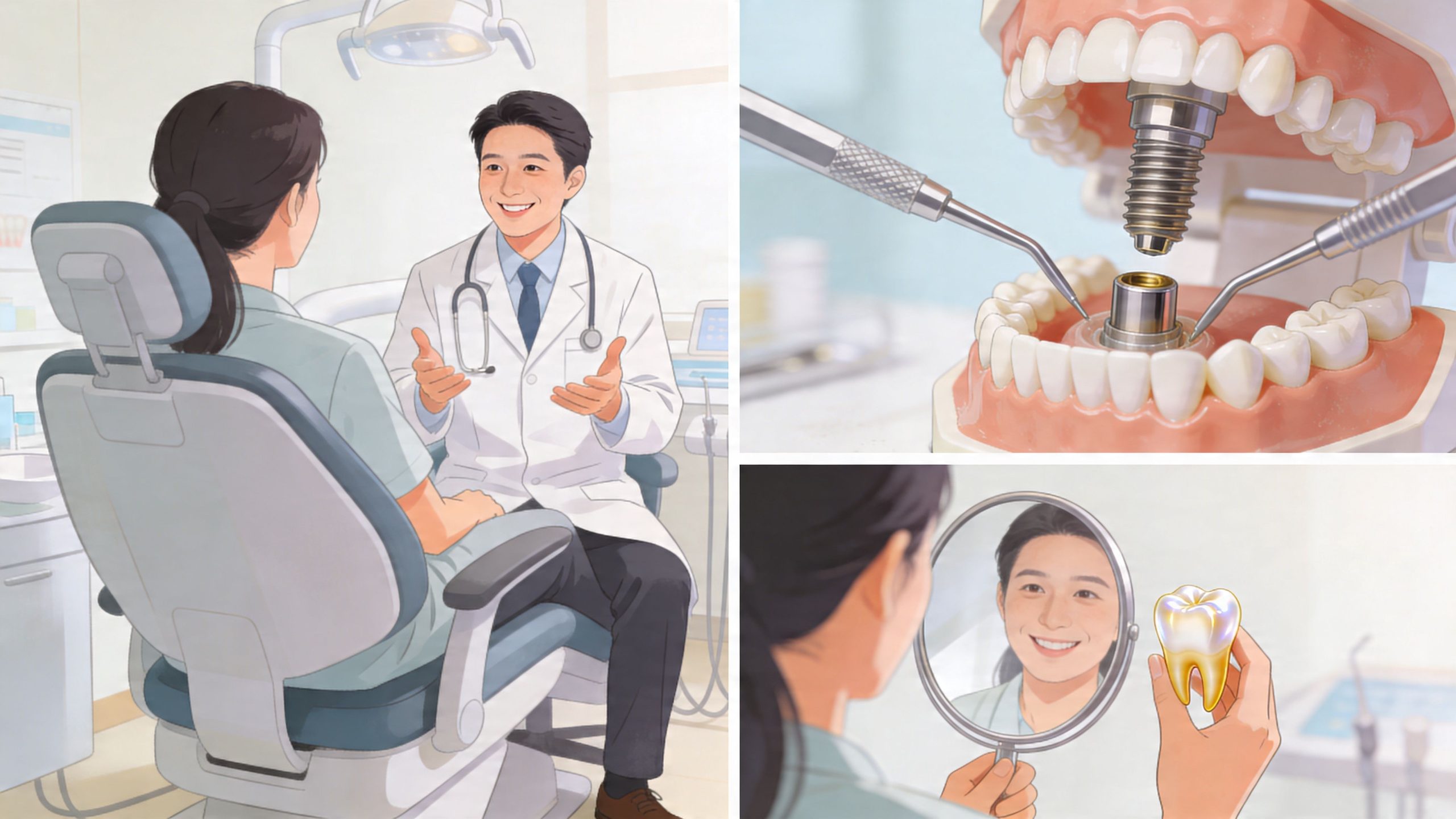
The first appointment
The journey starts with a proper assessment. That means looking at the tooth gap, checking the gums, assessing the bite, and reviewing scans so the implant can be planned in the right position.
This stage matters more than patients often realise. Implant treatment is prosthetically driven. In simple terms, that means the final tooth should guide where the implant goes, not the other way around.
You should leave this visit understanding:
- Whether an implant is suitable
- What preparation might be needed
- What the total sequence looks like
- What your quote includes
The day of placement
The procedure itself is often shorter and calmer than people expect. The area is numbed, the implant site is prepared, and the titanium post is placed into the bone.
Some patients worry that “implant surgery” means a major hospital-style event. In most cases, it’s a carefully controlled dental procedure done with local anaesthetic, and sedation may also be discussed for nervous patients.
Healing instructions are straightforward. Keep the area clean, follow food advice, and attend reviews.
The healing phase
This is the quiet but important part. The bone gradually bonds with the implant surface in a process called osseointegration.
You won’t feel that bonding happening, but it’s the foundation of the result. During this period, your dentist monitors healing and makes sure the implant is stable before the final tooth is attached.
If you’d like a separate explanation of long-term maintenance after treatment, this article on how long dental implants last covers what affects longevity in everyday practice.
A short visual explanation can also make the process easier to picture:
The final tooth
Once the implant has healed well, the visible tooth is completed.
That may involve impressions or digital records so the crown can be shaped to match your bite and neighbouring teeth. When it’s fitted properly, it should feel secure, natural, and easy to clean.
Patients often expect the final moment to feel dramatic. It’s usually quieter than that. The bigger change is what happens in the weeks after, when chewing becomes easier and the missing tooth stops being something you think about every day.
Making Implants More Affordable Safely
A common Sydney scenario goes like this. Someone is ready to replace a missing tooth, then gets a quote and immediately asks, “Do I need to pay all of this at once?”
Usually, no.
Implant treatment is often spread across stages, and that gives patients room to plan sensibly. The goal is not to chase the lowest number on a website. The goal is to reach a result that is stable, cleanable, and realistic for your budget over the full course of treatment.
That matters because implant costs are shaped by more than the implant itself. Your health fund, whether bone grafting is needed, the type of restoration, and how treatment is staged can all change the final figure. For many Sydney patients, the key question is not just “What does an implant cost?” It is “How will I pay for this in a safe, manageable way?”
The main ways patients spread the cost
In practice, patients usually combine one or two funding options rather than relying on a single solution.
- Private health fund rebates. Some parts of implant treatment may attract a rebate, depending on your level of extras cover and the item numbers involved. A clinic should be able to tell you which parts may be claimable, but your fund confirms the final rebate.
- Staged payment plans. Because treatment often happens in phases, payments can sometimes be aligned with those phases. If you want a practical overview of local options, this guide to dentists with payment plans near me explains how these arrangements usually work.
- Early release of superannuation. Some patients look into this for dental treatment that is medically justified. It involves paperwork and approval steps, so it helps to ask early what documents may be needed.
A good financial plan works like a treatment plan. It should be clear, step by step, with no surprises halfway through.
Where people save money safely
Safe savings usually come from choosing the right treatment, not the cheapest advertisement.
For example, a patient missing one back tooth may not need the same approach as someone replacing several teeth and rebuilding bite support. One person may benefit from careful staging over time. Another may reduce costs by using an existing removable denture in the short term while the implant heals. Those choices can lower pressure on the budget without lowering the standard of care.
That is very different from a quote that looks cheap because key parts have been left out.
Be cautious if you see:
- Package wording that is hard to decode, especially if it is unclear whether scans, the abutment, the crown, or review visits are included
- Pressure to commit on the spot, before you have had time to read the plan properly
- No itemised quote, even though implant care involves several separate steps
- Very little discussion about maintenance or future repairs, which are part of the long-term cost picture
A clear quote should read like a map. You should be able to see where you are starting, what comes next, and what each stage is likely to cost.
Where lower-cost implant options may fit
Some patients ask about mini implants because they can be less invasive and, in selected cases, less expensive. That can be a reasonable conversation to have, especially for denture stabilisation or when bone volume is limited.
The key point is suitability.
Mini implants are not a direct substitute for standard implants in every case. They are a different treatment option with different uses, just as a compact car and a ute both get you on the road but are built for different jobs. If a clinic suggests them, ask why that option suits your mouth, your bite, and your long-term goals.
A practical way to judge value
Patients usually make the best decisions when they can answer three simple questions with confidence:
- Do I understand why this treatment is being recommended?
- Can I see exactly what is included in the quote?
- Can I manage the cost across the treatment timeline without cutting corners?
If the answer is yes to all three, affordability becomes much easier to handle.
Clear communication matters here. Good clinics know that trust grows when patients understand both the dentistry and the dollars involved. That same principle appears in other service industries too. Businesses that explain their value clearly tend to get more dental patients because people respond to clarity, not confusion.
A safe implant decision should feel calm, informed, and financially realistic. That is what affordable care looks like in real life.
How to Choose Your Sydney Implant Dentist
You sit down for an implant consultation in Sydney, hear a price, and then realise you are not quite sure what you are comparing. One clinic sounds cheaper. Another sounds more thorough. A third talks about premium materials, but does not explain what that means for your mouth or your budget.
That is the moment to slow down.
A good implant dentist should help you understand three things clearly. What treatment you need, why it suits you, and what the full financial path looks like from start to finish. If any part feels vague, it becomes hard to judge value.

Questions worth asking
The best consultations feel a bit like getting a building quote for a home renovation. You do not only want the final number. You want to know what is included, what quality of materials is being used, who is doing each part of the work, and what happens if an extra step is needed.
These questions usually give patients a much clearer picture:
- What implant system do you use, and why do you use it? Reputable clinics should be able to explain their choice in plain language. Implant systems vary, but the main point is whether the clinic uses recognised, well-documented components and can support them over time.
- Are the components approved for use in Australia? This helps you confirm that the materials meet local regulatory standards.
- Will I receive an itemised quote? You should be able to see whether scans, surgery, the abutment, the crown, reviews, or extra procedures are included.
- Who plans and places the implant, and who makes the final tooth? Implant treatment has surgical and restorative parts. Both matter.
- How do you assess whether I need bone grafting or other preparatory treatment? A careful answer usually tells you a lot about how thorough the clinic is.
- What will maintenance involve after treatment? An implant is not a set-and-forget solution. You should know what follow-up care will be needed and what future costs may arise.
A clear answer builds trust. A rushed answer usually does the opposite.
What a careful clinic explains well
Sydney patients often focus on the headline fee first, which is understandable. But the smarter comparison is the total plan.
For example, one quote may look lower because it covers only the implant placement. Another may include the crown, imaging, reviews, and a surgical guide. Those are very different offers, even if both are described as dental implant treatment.
This matters financially. It also matters clinically. If a dentist explains your case in stages and shows where costs may change, you are more likely to avoid surprises later.
Red flags patients should notice
Some warning signs appear before any treatment starts:
- The clinic avoids clear pricing details
- You feel pressured to commit on the day
- Alternatives are brushed aside without explanation
- Questions about healing time, risks, or maintenance get vague answers
- The plan sounds identical for every patient
Implant dentistry should never feel like a one-size-fits-all sale. Your bone levels, bite, gum health, medical history, and budget all affect the right approach.
Look beyond the marketing
A polished website can make a clinic look reassuring, but presentation is only one piece of the puzzle. If you are curious how practices attract attention online, this article on how clinics get more dental patients shows why strong marketing can help people find a dentist. It does not tell you whether the treatment planning is careful or whether the quote is transparent.
That is why real-world questions matter more than polished wording. Ask who is responsible for each stage. Ask what is included. Ask what could change the cost.
If you would feel comfortable hearing the same recommendation for your partner, parent, or adult child, you are usually in a much safer place.
Experience and Technology at The Smile Spot
A Sydney patient might start by asking about price, then realise a second question matters just as much. How carefully is the treatment being planned?
At The Smile Spot, implant treatment is approached as part of the whole mouth, not as a single isolated procedure. That makes a practical difference. An implant has to sit well with the gums, the bite, the neighbouring teeth, and the way you will clean and maintain it over time. If those pieces are ignored, a lower starting quote can become a more expensive path later.
Why digital planning matters
Good implant work starts long before the day of surgery. Digital imaging and 3D planning help the dentist study the bone shape, nearby structures, and the ideal implant position before treatment begins. It works a bit like reviewing a building plan before laying foundations. The goal is to reduce guesswork, not to add fancy technology for its own sake.
For patients, that usually means clearer decisions at the start and fewer surprises during treatment. It can also help the dentist decide whether a simpler approach is suitable or whether extra steps, such as grafting or staged treatment, should be discussed early.
Common benefits include:
- More precise planning before any procedure is booked
- Better communication because patients can see and understand the site more easily
- Guided placement in cases where that adds control and consistency
- Gentler treatment when a minimally invasive approach is appropriate
- Better coordination between surgical and restorative stages
Technology does not replace judgement. It supports it. Value is found in a dentist who can use those tools to explain what is happening, why it is being recommended, and how it may affect both the timeline and the total cost.
Why the patient experience matters too
Implant treatment usually happens over several appointments, sometimes across several months. For many Sydney patients, the practical side matters more than they expect. Appointment times, clear fee conversations, sedation options for nervous patients, and a team that explains each stage calmly can make the process feel manageable.
That matters financially as well. When the plan is organised properly from the start, patients are in a better position to understand what is included, what may change, and how treatment can be staged in a way that suits real life.
The best experience usually comes from a simple combination. Careful diagnosis, modern planning tools, clear explanations, and honest discussion about fees. That is what helps people feel informed rather than sold to.
Frequently Asked Questions About Dental Implants
Do dental implants hurt
Most patients are surprised by how manageable the process feels. The treatment area is numbed thoroughly, so you shouldn’t feel sharp pain during placement. Afterwards, it’s more common to feel tenderness, pressure, or mild post-operative soreness rather than severe pain.
The bigger difference usually comes from planning and technique. When treatment is well organised, recovery tends to feel more straightforward.
How long does the whole process take
It depends on the site, the healing response, and whether any preparatory treatment is needed first.
Some cases progress quite easily. Others need a slower sequence so the bone and gums can settle properly. The safest approach is the one that matches the biology, not the one that promises the fastest timeline.
Can my body reject a dental implant
Patients often use the word “reject,” but what they usually mean is implant failure.
A dental implant isn’t rejected in the same way an organ transplant might be. Problems usually happen because the implant doesn’t integrate as intended, the site is overloaded too soon, or the surrounding tissues become unhealthy. Good planning, good oral hygiene, and regular reviews all help reduce those risks.
Are implants always the best option
No. They’re an excellent option for many people, but not every person and not every tooth gap needs an implant.
Sometimes a bridge is more sensible. Sometimes denture stabilisation is the main goal. Sometimes treatment should be delayed until gum disease or other issues are brought under control. Good dentistry starts with choosing the right treatment, not forcing one treatment to fit every patient.
What should I ask at my first consultation
Keep it simple. Ask:
- Am I a good candidate for an implant?
- What are my alternatives?
- What does the total fee include?
- What technology do you use to plan treatment?
- How do you manage follow-up care and maintenance?
If the answers are clear, practical, and consistent, you’re usually in the right kind of conversation.
If you’re considering dental implants and want clear advice without pressure, The Smile Spot offers consultations for patients in Dulwich Hill and the Inner West who want to understand their options, expected treatment steps, and likely costs before making a decision.