Saturday sport is about to start at Johnson Park. Your child is tying up their boots, the team bag is open, and someone asks, “Did you bring the mouthguard?” Or maybe it’s a weekday morning in Dulwich Hill and you’ve woken with a tight jaw, sore teeth, and that dull headache that makes coffee feel like a chore.
That’s usually when people search mouthguards near me.
Most families aren’t looking for theory. They want to know what protects teeth, what feels comfortable enough to wear, and how to get it done without taking up half the week. Around the Inner West, that matters. School sport, club rugby, AFL, martial arts, and stress-related grinding all create very different risks, and the right answer depends on why the guard is needed in the first place.
Why a Quality Mouthguard Is Required
A mouthguard often feels easy to skip until a child comes off the field with a chipped front tooth or a parent wakes up with sore jaw joints and worn edges on their teeth. In practice, I see the same pattern. The guard matters most when life is busy, sport starts early, and families need something that will be worn properly without fuss.

In the Inner West, that risk is part of normal family life. Rugby, AFL, basketball, martial arts, skate parks, and school sport all bring a real chance of knocks to the teeth and lips, especially when a child is tired, distracted, or growing quickly. For adults, the problem is often less obvious. Night grinding can flatten enamel, strain the jaw muscles, and put fillings, crowns, and veneers under pressure.
A good mouthguard reduces force to the teeth and soft tissues. That does not mean every injury is preventable, but it can mean the difference between a sore lip and an emergency dental visit. That trade-off matters. Repairing a broken tooth usually costs far more, and takes far more time, than protecting it in the first place.
Children need a little extra thought here. Mixed dentition, braces, and changing jaw growth all affect fit, which is why a paediatric dentist near you can help assess what level of protection suits their age, bite, and sport.
A simple rule works well for families. If there is a realistic chance of contact, collision, a fall, or an elbow, ball, stick, or board reaching the face, a sports mouthguard should be part of the kit.
The same prevention mindset applies in grappling and combat sports. Technique helps, training habits help, and the right protective gear helps. This guide on prevent injuries in BJJ is a useful reminder that small prevention steps usually save a lot of trouble later.
Custom-Fitted vs Over-the-Counter Guards
Saturday morning sport in the Inner West often starts the same way. Someone realises the mouthguard is missing half an hour before kick-off, and the chemist option suddenly looks good enough.
Sometimes that quick fix gets a child onto the field. The problem is what happens after that. If a guard feels loose, bulky, or hard to breathe through, it usually ends up half-chewed in a sports bag or pulled out during play.
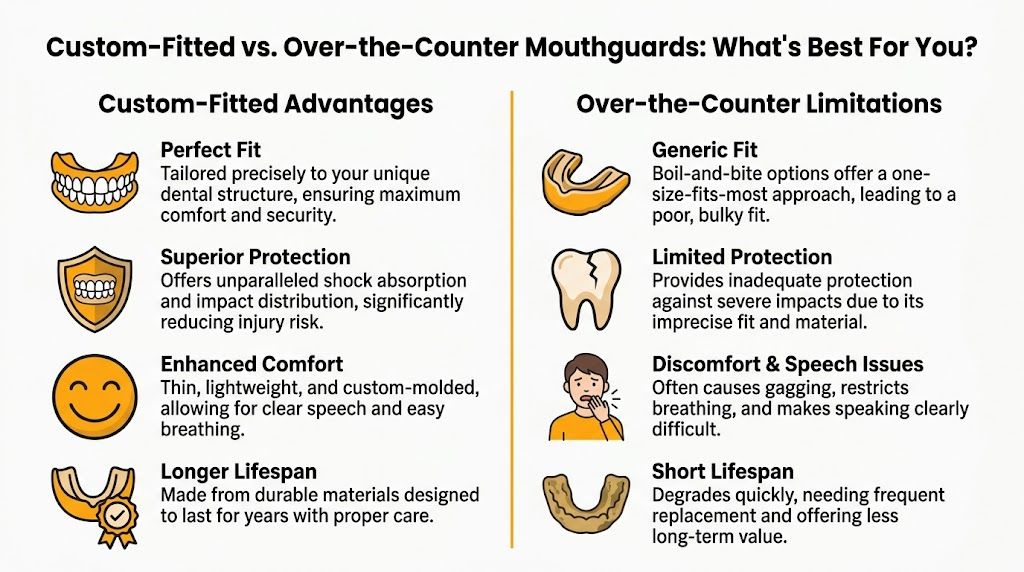
A custom-fitted mouthguard is made from an impression or scan of your teeth, so it matches the bite, sits securely, and needs less effort to keep in place. A boil-and-bite guard is shaped at home after softening in hot water, which can work for short-term use but often leaves uneven thickness and a less reliable fit.
What changes in real use
Fit changes everything.
A custom guard usually stays up on the teeth without constant biting to hold it there. That matters during football, basketball, hockey, martial arts, and skate falls, where impact is unpredictable and the player is already breathing hard, calling out, or reacting quickly. Families who are also thinking about lower limb injury prevention in court sports may find this guide on preventing injuries in basketball and netball useful. Mouth protection belongs in that same practical, prevention-first approach.
Over-the-counter guards often fall short in three ways. They can shift when the child opens wide or talks. They can feel thick enough to trigger gagging or mouth breathing. They are also easy to distort if the first mould at home is rushed, overheated, or repeatedly bitten into.
Mouthguard Comparison Custom-Fitted vs Over-the-Counter
| Feature | Custom-Fitted (from a Dentist) | Over-the-Counter (Boil & Bite) |
|---|---|---|
| Fit | Made for your teeth and bite | General shape, adjusted at home |
| Retention | Stays in place more reliably | Can loosen or shift |
| Comfort | Usually slimmer and easier to tolerate | Often bulky |
| Breathing and speech | Easier to breathe and talk | More likely to interfere |
| Protection | More consistent shock distribution because the fit is precise | Protection varies with the mould and fit |
| Durability | Made from professional materials and reviewed for wear | More likely to distort or wear down |
| Adjustment | Can be checked and refined professionally | No precise chairside adjustment |
| Value over time | Higher upfront cost, stronger long-term use | Lower upfront cost, often replaced more often |
Where the trade-off shows up
The chemist guard usually wins on speed and shelf price. Custom wins on wearability and reliability.
For a child doing regular weekend sport, that trade-off is pretty clear. A guard that stays in and feels manageable is far more likely to be worn properly. In practice, that is what families are paying for. Not just the material, but the fit, the retention, and the chance that the guard is still in the right place when contact happens.
I also pay closer attention to custom guards for patients with braces, crowns, veneers, implants, or a history of chipped teeth. Those mouths need a better margin of safety, because the cost and inconvenience of repair climb quickly.
Store-bought guards still have a place. If a child needs something the same day for a casual activity, an OTC option is better than no protection at all. But for a full season of rugby, AFL, hockey, basketball, or martial arts, a professionally fitted guard is usually the more affordable choice once you factor in comfort, replacement, and the risk of dental treatment later.
For Inner West families with packed afternoons, the practical question is not only which guard is better. It is whether a local clinic can fit one without turning it into a drawn-out process.
The Right Guard for the Right Reason Sports vs Nightguards
Saturday sport in the Inner West can mean one child heading to netball, another to footy, and a parent waking up with a sore jaw from grinding. Those situations all involve the teeth, but they do not call for the same appliance.
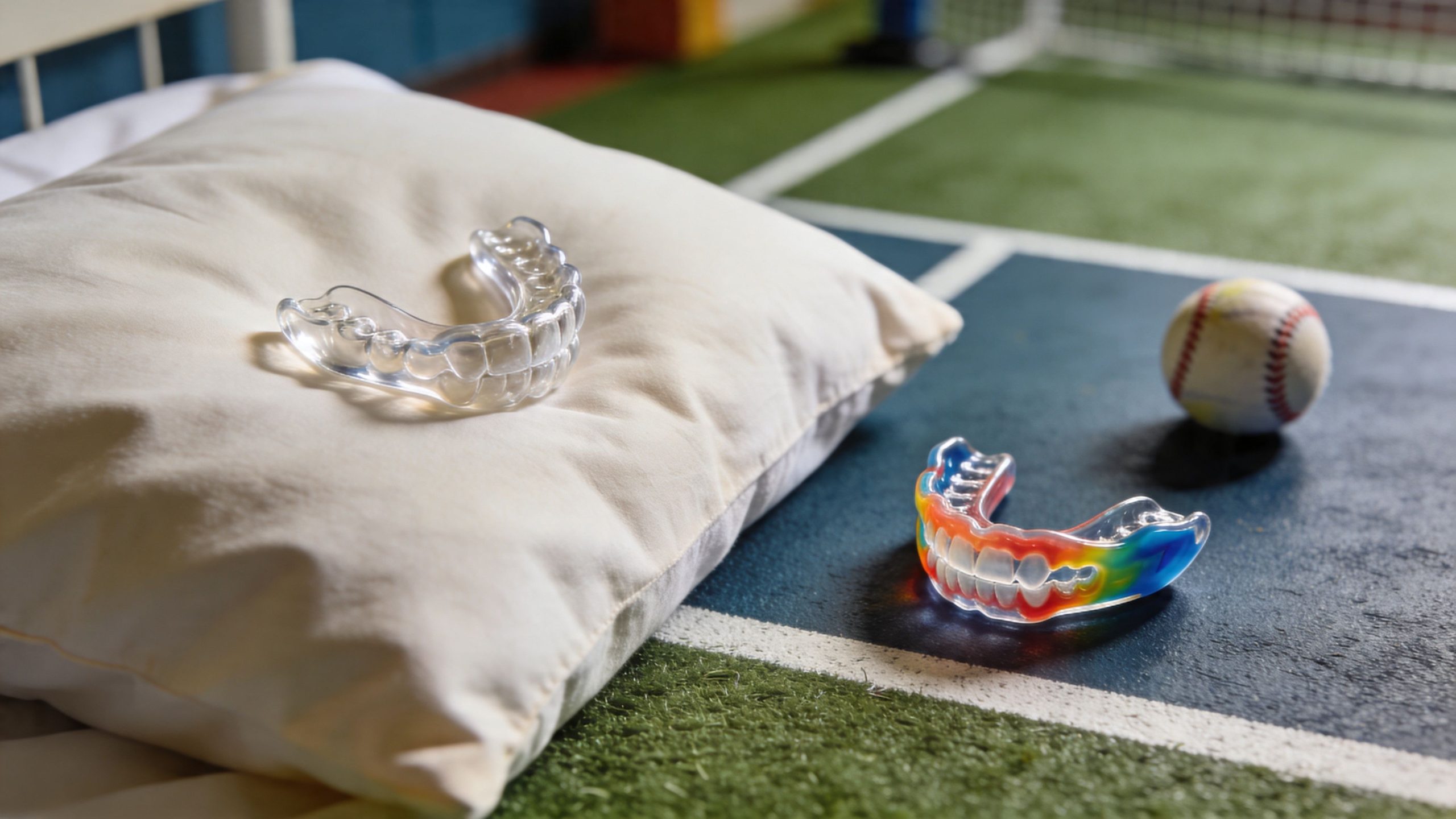
A sports mouthguard is made to absorb impact from a hit, fall, elbow, or ball. A nightguard, also called an occlusal splint, is made to reduce the load from clenching and grinding while you sleep. If you swap them around, the fit, comfort, and protection are usually poor.
Sports guards are built for contact and collisions
In clinic, I explain it this way. A sports guard needs enough thickness in the right places to cushion a sudden blow and help spread force away from the teeth and jaw. That matters in rugby and AFL, but it also matters in basketball, netball, hockey, martial arts, and skate-related falls around local parks and school courts.
Court sports often get underestimated. Many dental injuries happen from accidental contact, not just from high-impact tackles. Families already working on preventing injuries in basketball and netball are on the right track, but good movement training does not replace mouth protection.
Sports guards also need to stay in place during breathing, talking, and quick movement. If a child keeps spitting the guard out on court, protection drops fast.
Nightguards are built for pressure from your own bite
Grinding and clenching usually show up differently. Patients mention morning jaw tightness, worn edges, headaches, tooth sensitivity, or a crown that feels like it is taking too much force. The cause is internal pressure, repeated night after night, rather than a one-off hit.
A 2024 survey by the Sleep Health Foundation reported that teeth grinding during sleep is common in Australian adults. In practice, the exact number matters less than the pattern we see every week. People often do not realise they grind until they chip a tooth, flatten the edges, or start getting soreness around the jaw joints.
That is where a nightguard helps. It creates a controlled biting surface and can reduce the strain placed on teeth and dental work.
The right nightguard depends on the bite
There is no single nightguard that suits everyone.
- Soft guards can feel easier at first, but heavy grinders sometimes chew into them.
- Hard acrylic splints give firmer control and are often better when the bite needs stability.
- Dual-laminate designs can suit patients who want a balance between comfort and wear resistance.
The choice depends on how strong the grinding is, how the upper and lower teeth meet, and whether there is existing dental work to protect. For patients seeing a local dentist in Dulwich Hill, that decision is easier because the guard can be matched to real wear patterns rather than guessed from a chemist shelf.
A sports mouthguard should not be worn to manage bruxism. A nightguard should not be worn for contact sport. They may look similar at a glance, but they are made for different forces, different materials, and different risks. For busy Inner West families, getting the right one first usually saves time, money, and a second appointment later.
The Custom Mouthguard Process from Start to Finish
Individuals often find reassurance in the straightforward process of getting a custom mouthguard. The biggest worries are usually the same. Will it take ages? Will the mould feel unpleasant? Will the final guard feel bulky?
In practice, the process is much simpler than many patients expect, especially when digital scanning is used instead of older putty impressions.
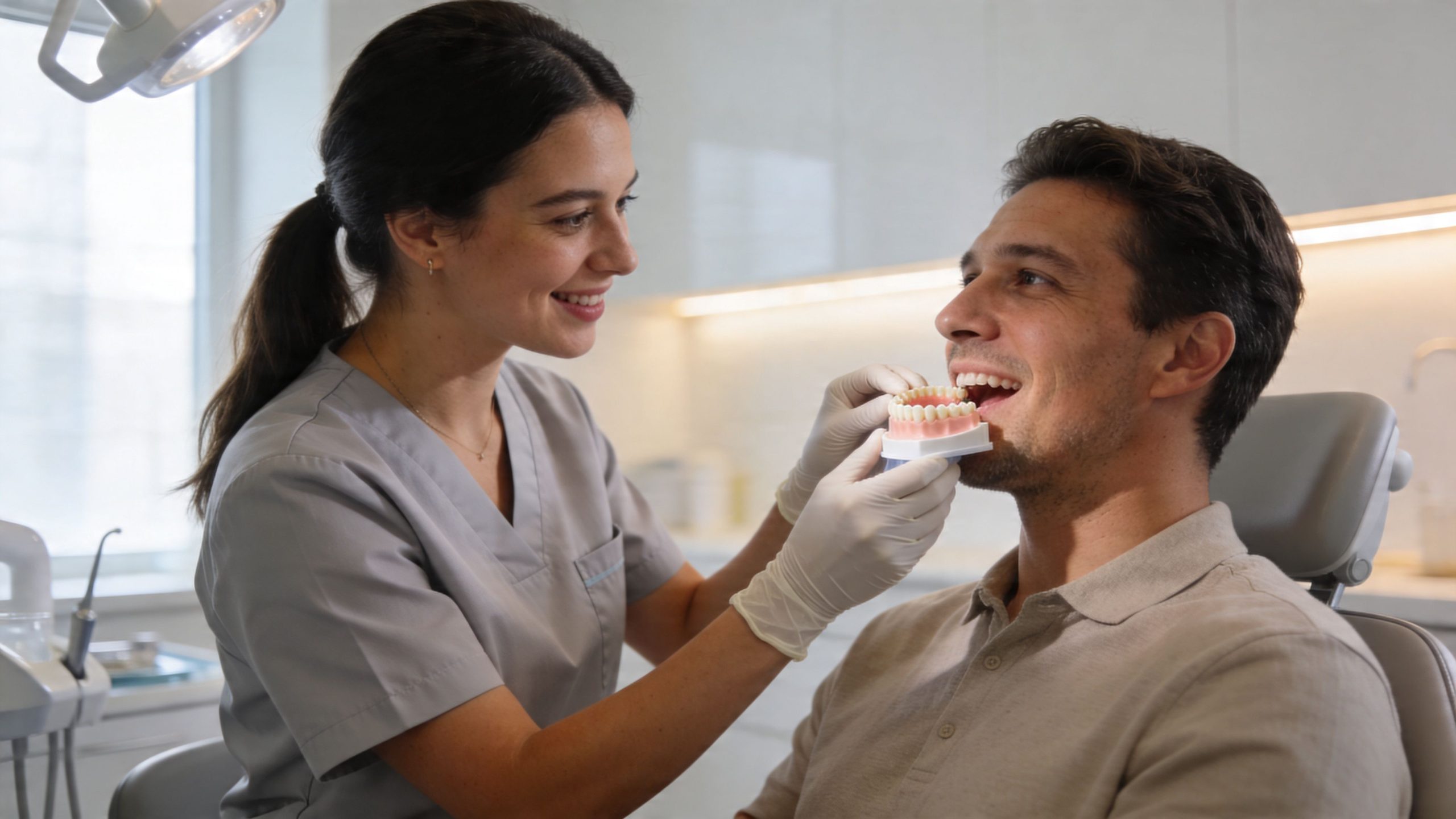
For local patients comparing options, seeing a dentist in Dulwich Hill can make the whole process easier because adjustments, fit checks, and follow-up all happen close to home rather than across multiple locations.
Step one is matching the guard to the job
The first appointment starts with the reason for the guard. Sport, grinding, jaw soreness, braces, cosmetic dental work, or a history of cracked teeth all change the design.
At this stage, the key questions are practical:
- What activity is the guard for? Rugby needs a different design approach from sleep grinding.
- How often will it be worn? Seasonally, weekly, nightly, or year-round.
- Are there braces, crowns, veneers, or implants to protect?
- Has there been previous dental trauma or jaw pain?
Those details matter because the appliance has to fit your teeth, but it also has to fit your routine.
Step two is recording the teeth accurately
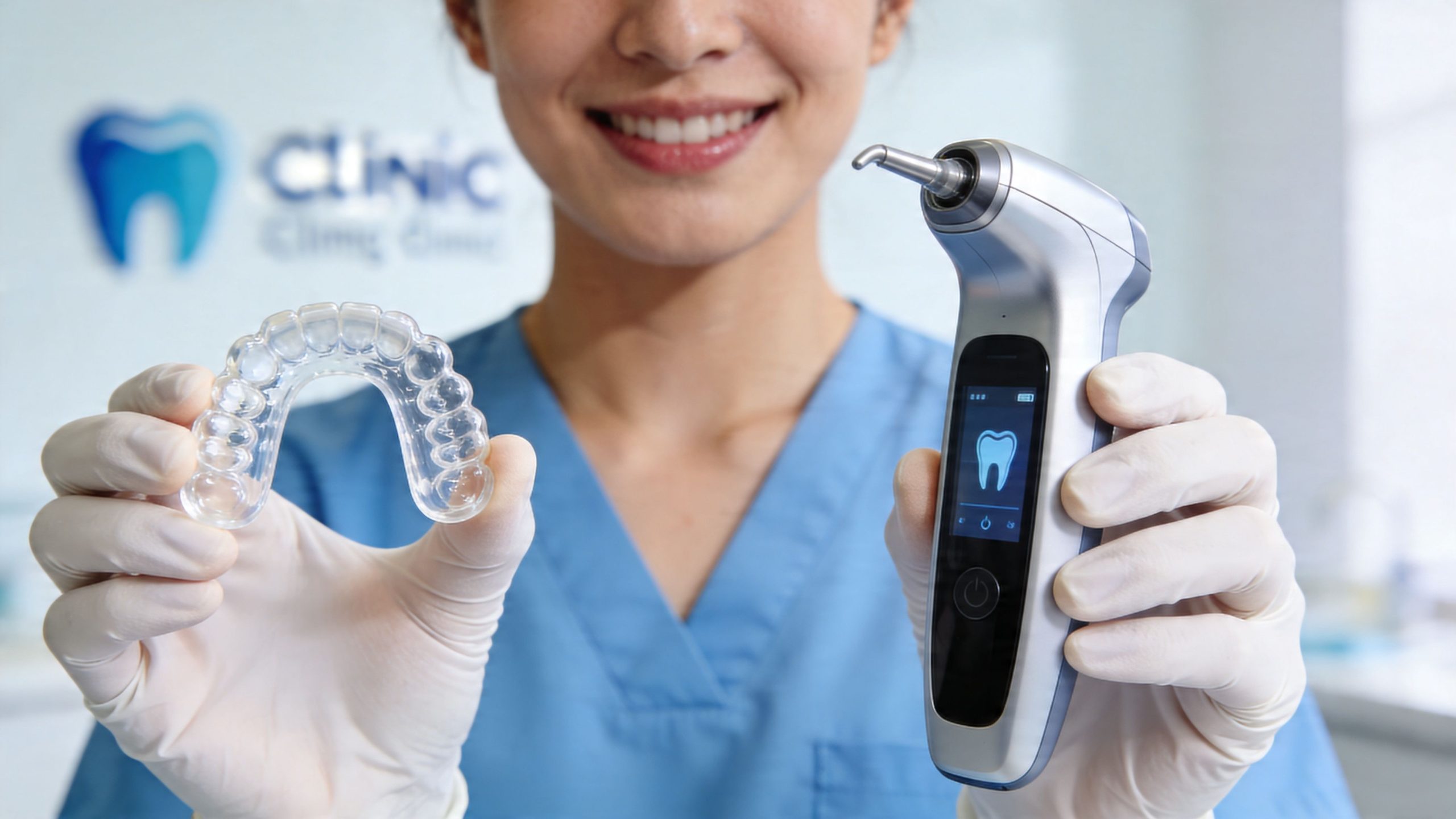
Many people still picture trays of impression material. Some clinics still use traditional moulds, and they can work well. But digital scanning is cleaner, faster, and easier for many patients, particularly children and anyone with a strong gag reflex.
At The Smile Spot, same-day impressions with laser scanning are available for custom mouthguards, which is useful for families trying to organise sport quickly or adults who don’t want repeated visits. The goal isn’t novelty. It’s precision and comfort.
Chairside advice: A good scan or impression should capture the bite clearly enough that the final guard clicks into place without guesswork.
Step three is fabrication and fitting
Once the records are taken, the guard is made to the planned design. The fitting appointment is where the important checks happen. It should sit securely, feel balanced, and allow clear enough breathing for the intended use.
A proper fit review usually covers:
- Retention so it doesn’t drop or float.
- Edges and thickness so it isn’t rubbing the gums or cheeks.
- Bite balance so it isn’t creating pressure points.
- Wear instructions so the patient knows when and how to use it.
This short video gives a helpful visual overview of how dental mouthguards are used in practice:
Special cases need a bit more planning
Patients with braces, erupting adult teeth, implants, or cosmetic work often need a more individualized approach. Children and teenagers may also need replacement sooner because their mouths are still changing. That’s normal. The point of custom care isn’t to make things complicated. It’s to make sure the appliance still fits the person wearing it.
Understanding the Costs and Health Fund Rebates
Cost is one of the first questions families ask, and it should be. A custom mouthguard is a planned purchase, not an impulse buy. But it helps to look at it in the same category as other prevention. You’re paying for fit, function, and a lower chance of needing emergency repair later.
What you’re paying for
The fee for a custom guard usually reflects several parts of care rather than just the physical appliance. That can include the assessment, records or scan, lab work or fabrication method, fitting, and any minor adjustments.
The final amount can vary depending on things like:
- Purpose of the guard for sport versus grinding
- Material choice and design complexity
- Whether braces or dental work need accommodation
- Whether follow-up adjustments are included
A simple way to think about it is this. A professionally fitted guard costs more upfront than a chemist option because it includes professional diagnosis and precision, not just plastic.
How health fund rebates usually work
For many patients, the next step is checking private health cover. Sports guards and occlusal splints are often handled differently by funds, so it’s worth confirming exactly what your policy includes before the appointment.
When you call your health fund, ask:
- Is a custom sports mouthguard covered under my extras policy?
- Is a nightguard or occlusal splint covered differently?
- Do I need item numbers before claiming?
- What waiting periods or annual limits apply?
Policies vary, so there isn’t one universal answer. What helps most is getting the item number from the clinic and asking your fund for the expected rebate before treatment starts.
A clear quote is part of good dental care. You should know what the appliance is for, what appointments are included, and what your likely out-of-pocket cost will be.
If budgeting is a concern, it’s also worth looking at options discussed in this guide to dentists with payment plans near me. Spreading out treatment costs can make preventive care much easier to manage for families.
How to Care for Your Custom Mouthguard
A custom guard works best when it still fits properly and stays clean. Good care doesn’t take long, but poor care can shorten the life of the appliance, create odour, or distort the shape.
The simple do and don’t list
- Do rinse it after every use. Lukewarm water is usually enough straight away.
- Do clean it gently. Use a soft toothbrush and a non-abrasive cleaner if advised.
- Do let it dry before storing. A ventilated case helps.
- Don’t use hot water. Heat can warp the material.
- Don’t leave it loose in a school bag or sports bag. That’s how guards get cracked, dirty, or lost.
- Don’t use toothpaste unless your dentist says it’s suitable. Some products are too abrasive.
When to bring it back for review
Children outgrow mouthguards. Adults may need a review after new fillings, crowns, orthodontic changes, or any dental work that affects the bite. A guard that suddenly feels tight, loose, rough, or uneven should be checked rather than forced back into use.
Watch for a few practical signs:
- Visible wear marks that are getting deeper
- Splits or thinning areas
- A change in fit after dental treatment
- Persistent odour or staining despite cleaning
If you wear a night appliance, proper cleaning matters just as much as fit. This guide on how to clean a mouth splint gives more detailed maintenance advice for long-term use.
Keep the case where you’ll actually use it. For sports, that may be the same pocket of the kit bag every time. For nightguards, it’s usually the bedside table.
Protect Your Smile Today in the Inner West
Generally, the decision comes down to this. If a mouthguard has to protect teeth, jaws, or dental work, it needs to fit properly and suit the reason you’re wearing it. That’s true whether you’re sending a child onto the rugby field, managing grinding after a stressful stretch at work, or trying to protect veneers, crowns, or implants.
Inner West families are busy. School drop-off, commuting, after-school sport, and weekend schedules don’t leave much room for chasing multiple appointments or dealing with gear that doesn’t get worn. The practical option is local care that makes the process simple, explains the trade-offs clearly, and helps you choose the right type of appliance from the start.
What local patients usually need most
Some want a sports guard before the next match. Others want a nightguard because their jaw feels tight every morning. Many just want someone to tell them plainly whether the chemist version is enough or whether custom is worth it.
A check-up is often the easiest place to start, especially if there’s any uncertainty about wear, cracks, old dental work, or grinding. If that’s where you are, booking a check-up and clean can help clarify what kind of protection makes sense before anything is made.
The right mouthguard shouldn’t be a hassle to organise, and it shouldn’t feel like guesswork once it’s in your mouth. Done properly, it becomes one of those simple pieces of prevention you’re glad you sorted early.
If you’re looking for practical advice about sports mouthguards or nightguards in Dulwich Hill, The Smile Spot can help you work out what type of appliance suits your teeth, your activity, and your schedule, then guide you through the fitting process clearly.