

You might be here because your child's front teeth are coming in crooked, or because you've spent years hiding your own smile in photos and you're finally ready to change that. A lot of people ask the same question at this point. Do I need a general dentist, an orthodontist, or both?
That confusion is completely normal. The words sound related because they are related. Both are part of caring for your teeth, gums, bite, and long-term oral health. But they don't do the same job, and understanding the difference makes it much easier to choose the right next step.
In Australia, this matters to a lot of families. The Australian Institute of Health and Welfare reports that in 2022–23, about 12.8 million people used dental services, and dental conditions were one of the most common chronic conditions contributing to overall disease burden, as summarised in this oral health overview. That's a strong reminder that regular dental care isn't only about appearance. It's about prevention, comfort, and catching problems early.
Some people start with a concern about straight teeth, then discover they also need gum care, fillings, or a worn crown replaced. Others come in for a routine check-up and learn that bite alignment is affecting cleaning, jaw comfort, or future cosmetic plans. That's why dentistry and orthodontics work best when they're seen as part of one connected journey, not two separate worlds.
If you've also been thinking about shape, colour, or overall smile balance, our guide to cosmetic dental treatment can help you see how those goals fit into the bigger picture.
Your Guide to a Healthy Confident Smile

A healthy smile usually doesn't come from one treatment alone. It comes from a series of good decisions made at the right time. Sometimes that starts with a simple scale and clean. Sometimes it starts with noticing that teeth don't meet properly when you bite.
People often assume general dentistry is for problems and orthodontics is for looks. That's too narrow. General dentistry protects the health of teeth and gums. Orthodontics focuses on how teeth and jaws line up. Both affect how you eat, clean your teeth, speak, and feel about your smile.
Why the distinction matters
If a tooth is decayed, inflamed, or cracked, moving it with braces or aligners isn't the first priority. It needs to be healthy first. On the other hand, if teeth are crowded or the bite is uneven, cosmetic work or long-term restorations may be harder to plan well until alignment is addressed.
Practical rule: The strongest smile plan starts with diagnosis, not guesswork.
That's where a team approach helps. We look at the full picture. Is the issue mainly decay, gum health, and maintenance? Is it spacing, crowding, or bite position? Or is it a combination of both? Once that's clear, the path forward feels much less overwhelming.
What most patients really want
Most people aren't looking for technical terms. They want clear answers to practical questions:
- Can this be fixed? In many cases, yes, but the order of treatment matters.
- Will my child need braces? Maybe, but not every concern means immediate treatment.
- Am I too old to straighten my teeth? No. Adults seek orthodontic care for many reasons.
- Can I improve my smile and keep it healthy? Yes, if function and health are planned together.
That's the heart of dentistry and orthodontics. One protects the foundation. The other improves alignment and bite. Together, they support a smile that looks better, works better, and is easier to maintain.
Understanding General Dentistry The Foundation of Your Oral Health
Think of a general dentist as the GP for your mouth. This is the clinician who looks after your day-to-day oral health, checks for problems early, and treats many of the issues people face most often across childhood, adulthood, and later life.
General dentistry is broad by design. It covers prevention, diagnosis, maintenance, and repair. If your teeth and gums are the house, general dentistry looks after the structure, not just the paintwork.
What a general dentist does day to day
A general dentist usually helps with:
- Routine care: examinations, cleans, X-rays, fluoride, and monitoring changes over time
- Early treatment: fillings for decay, management of sensitive teeth, and attention to gum inflammation
- Restorative work: crowns, bridges, and other repairs when teeth are worn, damaged, or missing
- Urgent concerns: pain, swelling, cracked teeth, lost fillings, and dental infections
If you've ever booked a check-up and clean, you've already seen this role in action. These visits are where small issues are often found before they become expensive, painful, or disruptive.
Why prevention is such a big part of it
A general dentist doesn't just fix what hurts. We try to stop problems from developing in the first place. That includes checking whether plaque is building up in hard-to-reach areas, whether gums are bleeding, whether an old filling is breaking down, or whether a child's teeth are erupting in a way that might create future crowding.
That preventive role matters because oral health changes gradually. A cavity usually doesn't announce itself on day one. Gum disease can begin without obvious symptoms. A cracked tooth may only show signs under pressure.
Healthy mouths are usually built through regular maintenance, not rescue treatment.
Common examples patients understand quickly
A few simple examples make the role clearer:
| Situation | General dentistry response |
|---|---|
| Your tooth hurts when you chew | We check for decay, cracks, bite trauma, or infection |
| Your child has trouble cleaning crowded back teeth | We focus on prevention and may monitor eruption patterns |
| An old crown feels loose | We assess whether it can be re-cemented or needs replacement |
| A missing tooth affects chewing | We discuss restoration options and whether alignment matters too |
General dentistry also creates the baseline for any later treatment. If someone is thinking about braces, aligners, veneers, or implants, we first want the mouth stable. Teeth should be clean. Gums should be as healthy as possible. Existing disease should be treated.
The foundation before any smile upgrade
People sometimes get surprised by this approach. They come in asking about straightening or whitening, and the first advice is about gum care, a filling, or replacing a failing restoration. That isn't a detour. It's the groundwork.
Without that foundation, cosmetic and orthodontic treatment become harder to plan and harder to maintain. Good general dentistry gives every next step a better chance of lasting well.
Exploring Orthodontics The Art of Aligning Your Smile
Orthodontics is a dental specialty focused on the position of teeth, the way the upper and lower teeth meet, and how the jaws and facial structures work together.
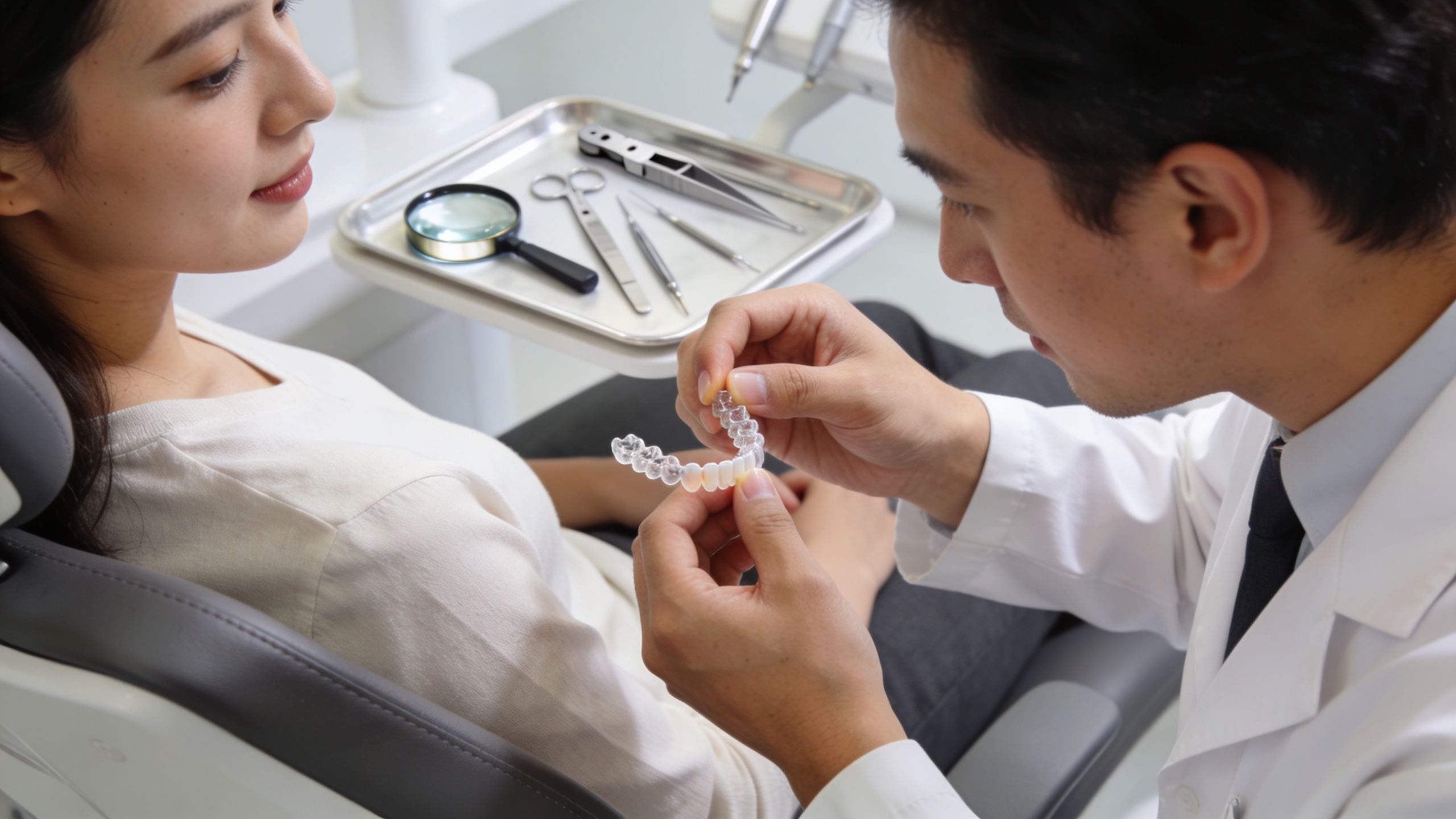
In Australia, orthodontics became formally recognised as a specialty in the mid-20th century. Children and adolescents remain the main users of orthodontic care, but adult demand has risen steadily as clear aligners and cosmetic treatment have become more common, as outlined in this overview of Australian dental care statistics. That's why orthodontics today isn't only about teens with metal braces. It's also about adults who want healthier alignment, a more balanced bite, or a smile they feel comfortable showing.
What orthodontic treatment is trying to change
Orthodontics doesn't treat decay in the way general dentistry does. It changes tooth position and bite relationships.
That may involve:
- Crowding: teeth overlap or twist because there isn't enough room
- Spacing: gaps appear between teeth
- Overbite or underbite: the top and bottom teeth meet in an uneven way
- Crossbite: one or more teeth bite inside where they should bite outside
- Eruption issues: teeth come through in the wrong place or don't come through properly
These problems can affect appearance, but they can also affect cleaning, wear, comfort, speech, and long-term stability.
Braces and clear aligners are tools, not the goal
People often talk about orthodontics as if braces or aligners are the treatment itself. They're really the tools used to achieve a better bite and tooth arrangement.
Some patients need fixed braces because they allow precise control over tooth movement. Others may suit clear aligners, especially when appearance and removability matter. If you're curious about how aligners fit into family care, our article on One Smile Orthodontics explains that approach in more detail.
A short visual overview can help make the distinction clearer:
What patients often misunderstand
A straighter smile doesn't automatically mean a healthier mouth. If teeth are beautifully aligned but gums are inflamed and decay is active, the work isn't complete. The reverse is also true. A mouth can be free from cavities and still have a bite that would benefit from specialist alignment.
Orthodontics is about where teeth should be. General dentistry is about whether teeth and gums are healthy enough to keep them there.
That's why the two areas overlap in real life, even though they remain distinct. Orthodontics brings specialist attention to alignment, jaw relationships, and movement planning. It works best when the rest of the mouth is already being cared for properly.
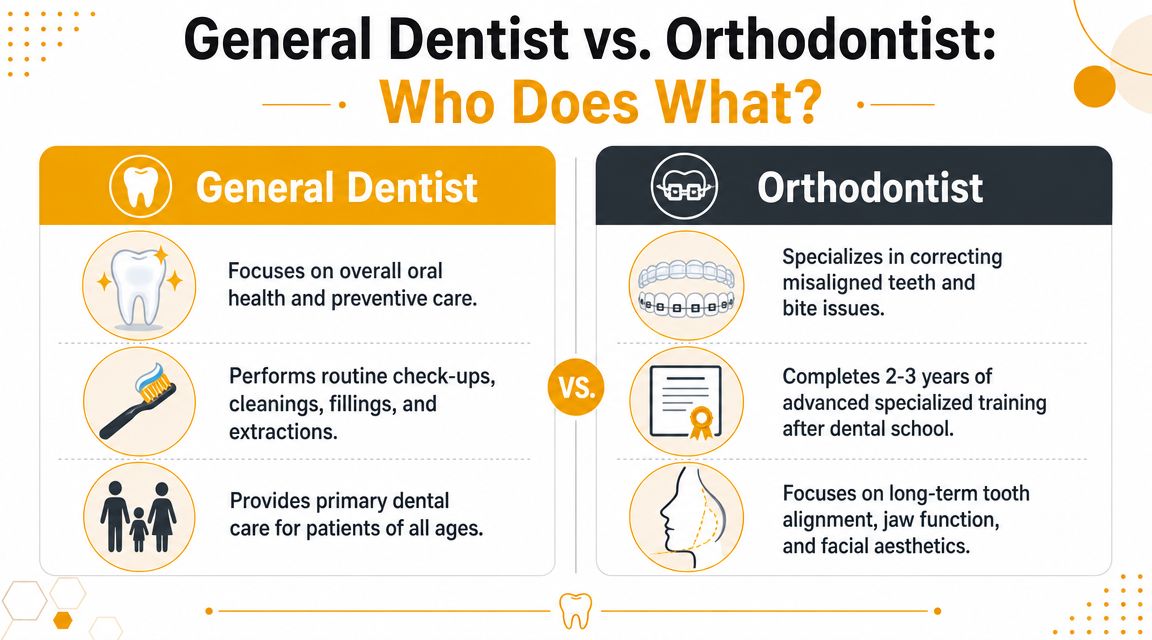
A Quick Comparison General Dentist vs Orthodontist
Some readers want the short version. Here it is.
The clearest difference
A general dentist looks after overall oral health. An orthodontist focuses on alignment and bite correction.
That sounds simple, but it answers most of the confusion patients have. If your concern is decay, gum bleeding, a broken filling, a painful tooth, or routine prevention, you usually start with a general dentist. If the concern is crowding, spacing, bite position, or whether teeth need to be moved, orthodontic input may be needed.
Side by side comparison
| Question | General dentist | Orthodontist |
|---|---|---|
| Main focus | Oral health, prevention, diagnosis, repair | Tooth movement, bite, jaw alignment |
| Common treatments | Examinations, cleans, fillings, crowns, root canal therapy, extractions | Braces, clear aligners, retainers, bite correction |
| Typical role in your care | First point of contact for most patients | Specialist care when alignment is the main issue |
| Who they see | Children, adults, older patients | Children, teens, and adults needing alignment treatment |
| What success looks like | Teeth and gums are healthy, comfortable, and functional | Teeth are straighter and bite relationships are improved |
When one refers to the other
A lot of care starts with a general check-up. During that visit, we might notice crowding that traps plaque, a developing bite issue, or a child whose adult teeth are erupting in a way that deserves closer review. That doesn't mean something is wrong in a dramatic sense. It means timing matters.
Adults often come at it from the other direction. They want to improve crooked front teeth and ask whether it's “worth it” later in life. If that sounds familiar, this article on an orthodontist for adults may answer a lot of the practical questions.
The simple takeaway
Use this rule if you're ever unsure:
- Start with general dentistry if you need an exam, prevention, diagnosis, or treatment for a dental problem.
- Add orthodontics if alignment, spacing, crowding, or bite position is part of the picture.
- Expect overlap because healthy treatment planning often needs both views.
That overlap is where patients usually get the best long-term results.
How Dentistry and Orthodontics Work Together for You
The most useful way to think about dentistry and orthodontics isn't versus. It's sequence and coordination.
A patient might begin with inflamed gums, a few worn fillings, and crowded lower front teeth. If we only talk about straightening, we miss the gum health problem. If we only clean the teeth and repair fillings, we ignore the crowding that makes hygiene harder. The right plan joins both sides.
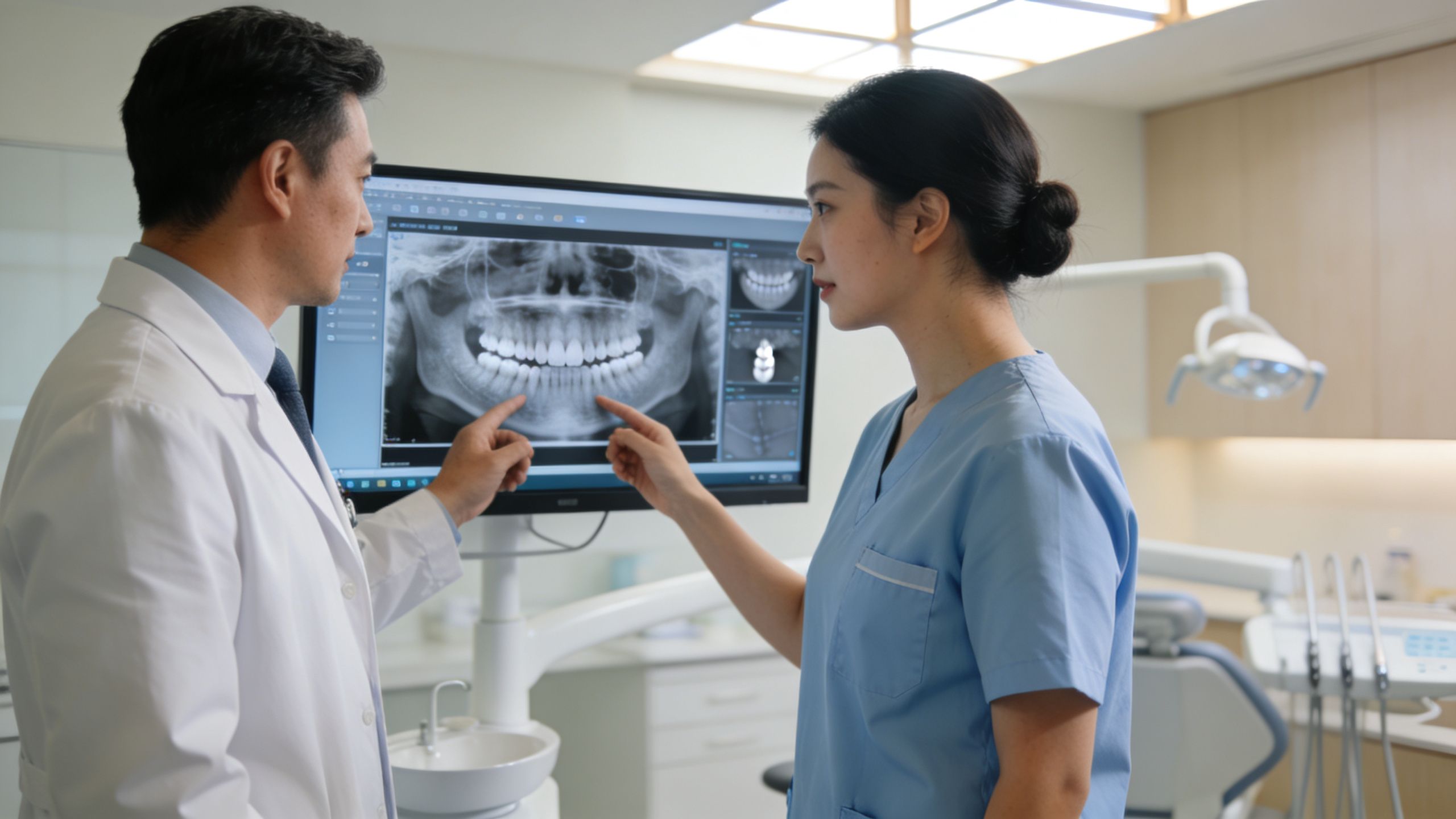
Before orthodontics starts
The first job is making sure the mouth is ready. Teeth should be examined for decay, failing restorations, cracks, and gum problems. If there's active disease, it usually needs attention before planned tooth movement.
This protects the patient in practical ways. Braces and aligners make home care more important, not less. Starting with healthier gums and stable teeth gives treatment a safer base and makes review appointments more meaningful.
A coordinated plan may include:
- Preventive work first: cleaning, oral hygiene coaching, fluoride, and monitoring vulnerable areas
- Restorative treatment where needed: repairing decay, replacing worn fillings, or stabilising damaged teeth
- Assessment of missing teeth: deciding whether spaces should be closed orthodontically or preserved for replacement later
After orthodontics reshapes the space
This is the part many people don't realise. Straightening teeth can make later restorative and cosmetic work more conservative and more predictable.
For example, if a patient is considering veneers, moving teeth into a better position first may reduce how much reshaping is needed. If a patient is missing a tooth, orthodontics can help create or maintain the right space for replacement. That can matter when planning treatments such as implants or broader restorative work.
At The Smile Spot, that kind of planning may sit alongside services such as dental implants, All-on-4 treatment, crowns, veneers, and whitening, depending on what the patient needs. The value isn't in doing more treatment. It's in doing treatment in the right order.
Sometimes the smartest cosmetic plan starts with alignment, not porcelain.
Why digital planning matters
Modern treatment planning relies on digital workflows. 3D imaging such as cone-beam CT and intraoral scans can evaluate bone, tooth position, and facial structures with more precision, improving bracket positioning, appliance design, and planning for complex restorative cases after orthodontics, as described in this review of digital orthodontic workflows and CBCT use.
That matters most in cases where treatment has to do several jobs at once. A patient might need alignment, then implant planning. Another might need orthodontics to improve spacing before cosmetic restorations. Another may have an impacted tooth, asymmetry, or bite complexity that benefits from better imaging and more detailed measurement.
A team journey rather than isolated appointments
The collaborative model usually feels like this for the patient:
- The concern is identified during a check-up or consultation.
- Health issues are stabilised so treatment starts on a sound base.
- Alignment is planned if bite or tooth position needs correction.
- Final restorative or cosmetic work is completed once teeth are where they should be.
- Maintenance continues so the result stays healthy and stable.
That's why the conversation shouldn't stop at “Do I need a dentist or an orthodontist?” The better question is, “What combination of care gives me the healthiest long-term result?”
Planning Your Family's Smile Journey at Every Age
Families rarely experience oral health one person at a time. A parent books a child's check-up, then asks about their own crowding. A teen needs monitoring while a grandparent is thinking about replacing missing teeth. Real dental care happens across life stages, and the decisions are easier when the journey feels connected.
For younger children
Most children start with regular general dental visits. That's where we watch how teeth are erupting, whether there's enough room, how the bite is developing, and whether brushing is effective around newly emerged teeth.
Sometimes the advice is simple. Keep monitoring. Improve brushing in one area. Review again at the next appointment. Other times, a child may benefit from an orthodontic assessment because spacing, crowding, or jaw development deserves closer attention.
Our article on paediatric dental care explains how those early visits build confidence as well as healthy habits.
For teenagers in active treatment
Teen years often bring the most visible orthodontic changes. This is also when families learn that braces or aligners don't replace routine dental care. They add another layer of responsibility.
Parents usually help most by supporting the boring but important parts:
- Daily cleaning: brushing carefully around brackets or aligners
- Regular reviews: keeping both dental and orthodontic appointments on track
- Good communication: letting the clinic know about discomfort, breakages, or hygiene trouble early
One useful way to think about this is managing the continuous patient journey. Even though that resource speaks broadly about healthcare communication, the idea applies well to family dentistry. Patients do better when care is supported between visits, not only during chair time.
Small check-ins and steady follow-up often make treatment feel calmer for both parents and kids.
For adults who waited
Adults often arrive with a different story. They've wanted straighter teeth for years but kept putting it off. Or they're preparing for cosmetic work and have realised that alignment matters first. Some are less worried about appearance than they are about cleaning crowded teeth, uneven wear, or a bite that has never felt quite right.
Adult treatment usually works best when it fits real life. Work schedules, school runs, social confidence, and maintenance all matter. Clear aligners may appeal to some adults because they're removable. Others need a different option based on the complexity of movement required.
The key point is reassuring. It isn't “too late” just because the concern has been there for a long time. The right starting point is a proper assessment, followed by a plan that respects both health and lifestyle.
Start Your Journey with Us in Dulwich Hill
Choosing care for your family shouldn't feel like solving a puzzle alone. You want clear answers, practical options, and a plan that matches what's happening in your mouth now, not a generic template.
For patients in Dulwich Hill, Marrickville, Ashfield, Summer Hill, Petersham, and nearby Inner West suburbs, coordinated care is often the simplest path. One person may need routine maintenance and a filling. Another may need a discussion about aligners. Someone else may be thinking further ahead about implants, cosmetic changes, or full-arch treatment after years of dental problems.
What tends to matter most to patients
Convenience and comfort are not small details. They often determine whether people go ahead with treatment.
Patients usually value:
- Straightforward first steps: an examination that clarifies what's urgent, what can wait, and what options exist
- Comfort-focused care: gentle techniques and sedation options for anxious patients
- Modern tools: technology such as Biolase laser dentistry and digital imaging when clinically appropriate
- Practical scheduling: late evening and Saturday appointments, plus online booking
For new patients, there's also a clear entry point. The clinic offers a $240 exam, X-rays, scale and clean. For many people, that's the easiest way to move from uncertainty to an actual plan.
Why local trust matters
Most families don't want to retell their dental story from the beginning every time they seek care. They want a clinic that understands the history behind the current problem. That might be years of check-ups, a child's eruption pattern, an old crown that's finally failing, or a long-term plan involving alignment and replacement of missing teeth.
Local reputation plays a role there. If you're interested in how businesses build trust through patient feedback, this article on how to boost your local business rating today gives a useful overview of why reviews influence decision-making. In dentistry, people often look for the same things in those reviews that they want in person: clarity, kindness, consistency, and follow-through.
A sensible next step
If you're unsure whether your situation falls under general dentistry, orthodontics, or both, you don't need to decide that alone before booking. The sensible first step is an assessment that looks at oral health, bite, function, and long-term goals together.
That's often how a healthier smile begins. Not with a dramatic treatment. With a clear conversation, a careful examination, and a plan that makes sense for your age, your priorities, and your family.
If you're ready to take that first step, book a consultation with The Smile Spot. We can assess your teeth, gums, and bite, talk through whether general dental care, orthodontic treatment, or a combination makes the most sense, and help you build a practical plan for a healthy confident smile.