The first tiny tooth is exciting until the next thought arrives. Are we brushing properly, when should the first dental visit happen, and is this normal teething or the start of a problem?
That's where many Sydney parents begin. Not with a crisis, but with uncertainty. Then life gets busier, a child becomes more opinionated about toothbrushing, and suddenly you're searching for paediatric dentists sydney because you want a clear answer, not a vague sales pitch.
Children's dental care works best when it feels predictable. Parents need to know when a regular family check-up is enough, when a child may need a specialist, what happens if anxiety gets in the way, and how to think about costs before treatment starts. A good plan removes a lot of stress from the process.
Your Child's Smile Journey Starts Here
A common Inner West scenario goes like this. A parent notices white edges of a first tooth, starts wiping it with gauze or a baby brush, then wonders whether they're already behind. A few months later, that same child clamps their mouth shut at brushing time and the family starts hearing conflicting advice from friends, grandparents, and online forums.
Children's dentistry is built for exactly this stage of life. It isn't just smaller instruments and cartoon stickers. It's care shaped around growing jaws, changing teeth, short attention spans, first experiences, and the fact that a frightened toddler and a relaxed school-aged child need very different approaches.
For some families, the first appointment is reassurance. The teeth are healthy, the brushing needs a few tweaks, and the parent leaves with a much clearer idea of what to watch. For others, the visit picks up an early spot of decay, a bite issue, trauma after a fall, or a habit that could affect future development.
Early visits are rarely about doing more treatment. They're about preventing treatment from becoming bigger later.
In practice, the journey usually starts with three simple questions:
- Is my child due for an assessment once the first tooth appears or around the first birthday?
- Are we seeing a general family dentist or a paediatric specialist based on what's going on?
- If my child is nervous, wriggly, or has additional needs, what's the most comfortable and realistic path forward?
Parents usually feel better once those questions are answered plainly. The goal isn't to make children perfect patients. It's to create a calm, workable routine so dental care becomes part of normal health care, not a last-minute emergency.
Why a Specialist Focus on Children Matters
Children aren't just small adults in a dental chair. Their mouths are changing quickly, their behaviour shifts from one age to the next, and they often can't explain discomfort clearly. That changes how diagnosis, prevention, and treatment should be done.
What child-focused dental care actually changes
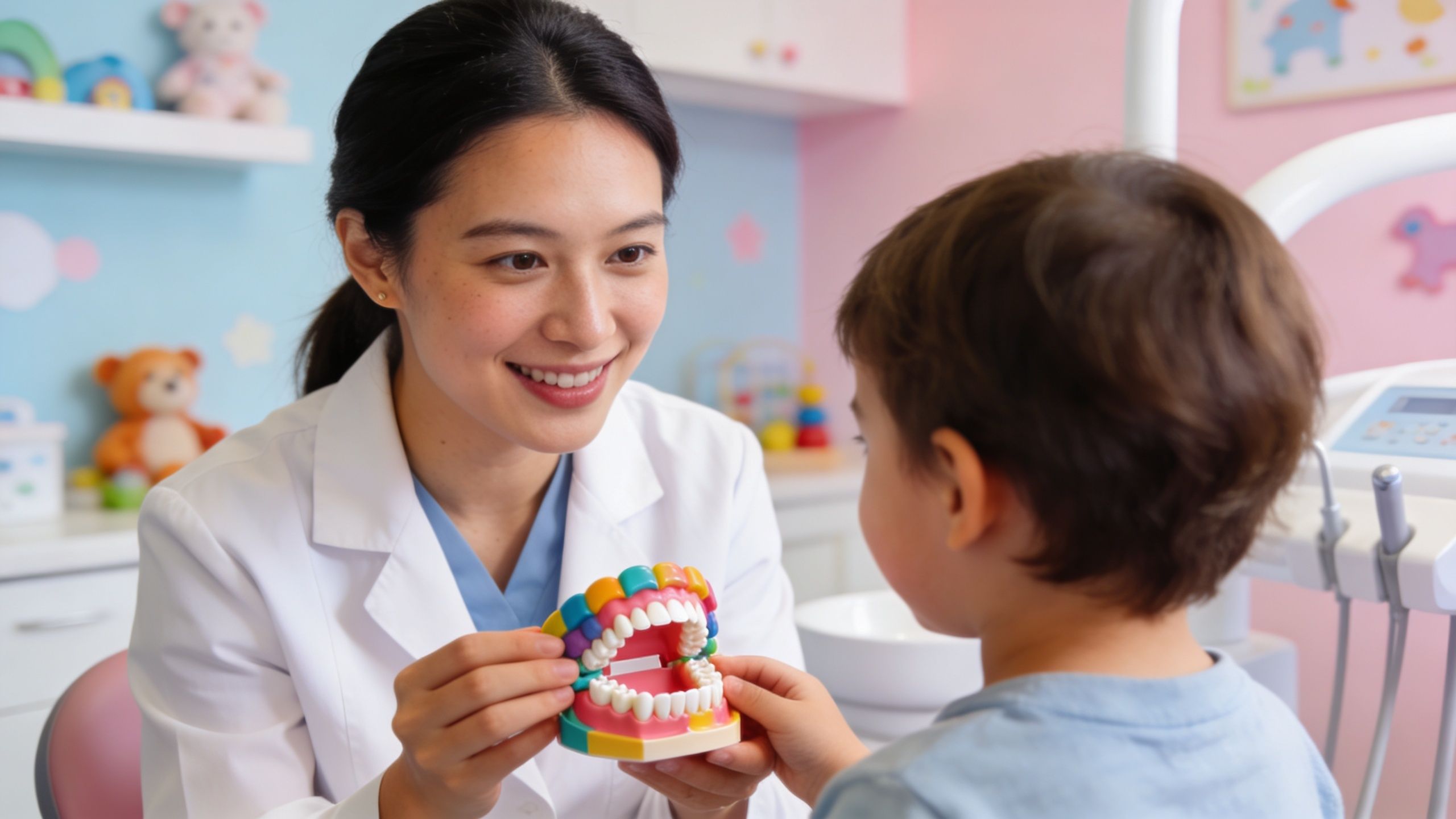
A dentist with a strong focus on children pays attention to more than cavities. They're watching eruption patterns, jaw development, oral habits, trauma risk, diet patterns, and how a child copes in the clinic. The appointment itself is often adapted in pace, language, and sequencing so the child can succeed.
That matters because prevention in childhood has a very different rhythm from prevention in adults. Small changes, like how fluoride is used, when grooves in adult molars need protection, or whether a child can tolerate X-rays yet, can change the plan entirely. You can read more about that approach in this guide to paediatric dental care.
A specialist paediatric dentist comes into the picture when the situation is more complex. That may include extensive decay in a very young child, trauma, developmental conditions, medical complexity, major anxiety, or the likelihood that treatment may need sedation or hospital-based care.
Why this is more than a routine check-up
The public health picture is a reminder that delayed care has consequences. The Australian Dental Association reported that in 2021 to 2022, about 11 in every 1,000 children aged 5 to 9 were admitted to hospital for preventable dental conditions in Australia, according to the ADA report on preventable oral problems in children.
That's why early dental care shouldn't be treated as optional maintenance. Preventable dental disease can become pain, sleep disruption, missed school, distressed families, and in some cases hospital treatment.
Clinical reality: by the time a child is waking at night with tooth pain, the discussion is often no longer about prevention. It's about how to stabilise the problem in the least stressful way.
What works better than waiting
Parents sometimes hold off because they don't want to overreact. That instinct is understandable, but waiting usually helps only when the issue is mild teething discomfort and the child is otherwise comfortable.
A better approach is to act early when you notice any of the following:
- Food trapping in a back tooth that keeps recurring
- Brown, chalky, or white patches that don't brush away
- Pain with cold, sweets, or chewing
- A broken tooth after a fall
- Avoidance behaviours, such as chewing on one side or refusing brushing in one spot
The best children's dental care is often quiet and uneventful. That's a good sign. It means the plan is working before problems escalate.
A Timeline for Your Child's Dental Health
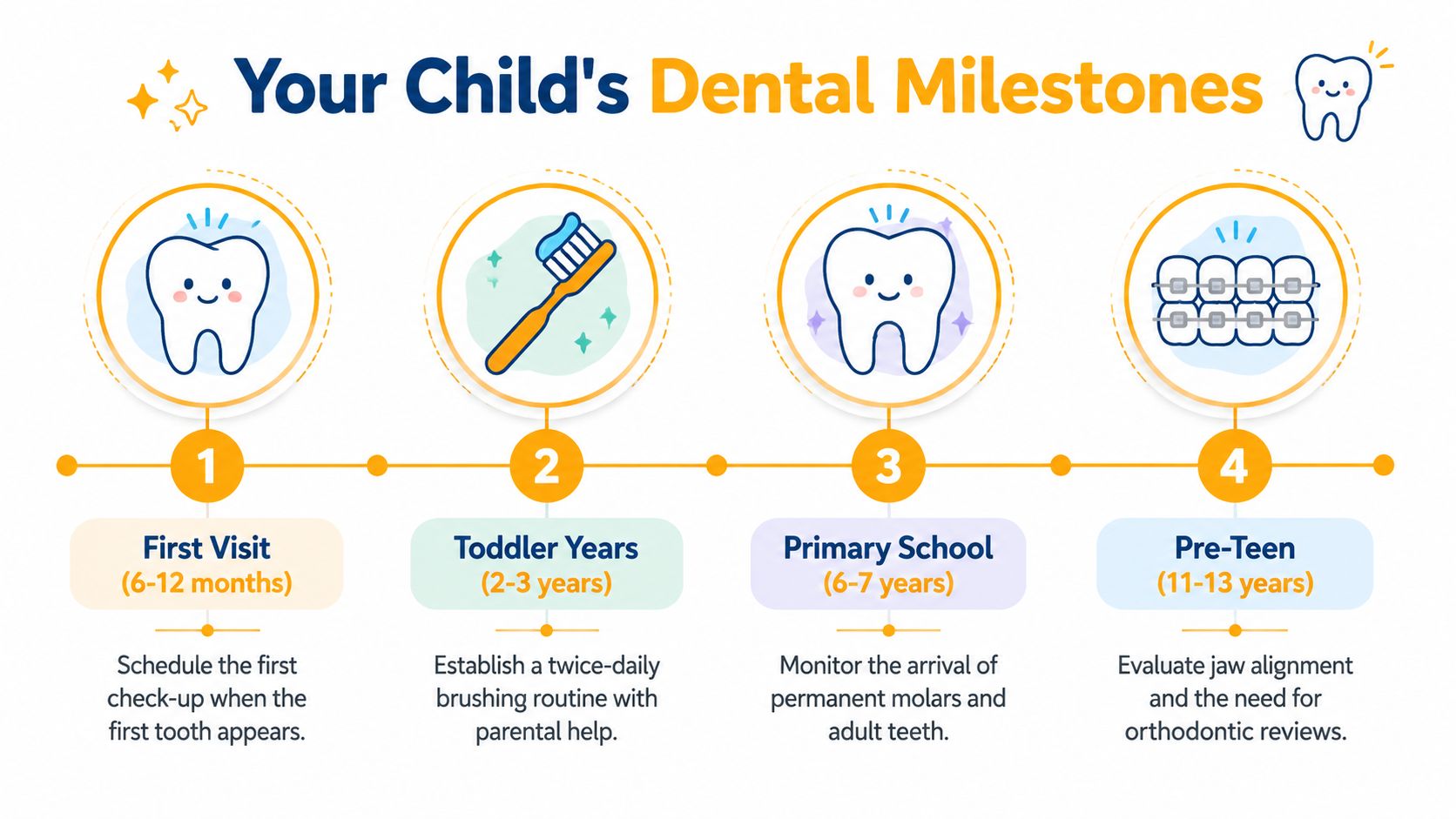
Parents usually feel more confident when the road ahead is visible. Children's dental care isn't one long mystery. It follows recognisable stages, and each stage has its own priorities.
From the first tooth to toddlerhood
The first visit is usually timed around the first tooth or first birthday. For many babies, this is a quick lap visit. The child sits with the parent, the mouth is checked gently, and the focus is on feeding patterns, brushing technique, fluoride advice, and what normal teething looks like.
If you're in the thick of teething and want a parent-friendly overview of timing and signs, this UK parent's guide to baby teething is a useful companion read.
During the toddler years, prevention becomes the main job. This is when night-time milk habits, frequent snacking, resistance to brushing, and early enamel changes can start to matter.
A few practical goals at this age help a lot:
- Keep brushing parent-led even if your child wants to “help”
- Use a routine, not a negotiation, especially before bed
- Mention falls or chipped teeth early, even if the tooth looks fine on the surface
Most toddlers won't cooperate because they understand long-term oral health. They cooperate because the routine is familiar and the adults stay calm.
Primary school years
Once children enter school, the questions change. The first adult molars arrive, baby teeth loosen, sports become rougher, and some children begin showing signs of crowding or bite issues.
This is also the age when preventive tools can make a real difference. Deep grooves in new molars may be better protected, and a general dentist may start watching whether space is being lost too early if a baby tooth comes out ahead of schedule. When that happens, a dental space maintainer may become part of the discussion.
Key checkpoints in the primary school years include:
- New adult molars appearing behind the baby teeth. Parents often miss these because no baby tooth falls out first.
- Brushing independence. Children may insist they can do it alone long before they can do it well.
- Early orthodontic signs. Mouth breathing, severe crowding, crossbite, and uneven wear deserve review.
Pre-teen and early teen years
Older children usually cope better in the chair, but their risks become more lifestyle-driven. Sports injuries, sugary drinks, skipped brushing, and orthodontic concerns become more prominent.
This is the stage where appointments should feel collaborative. A child who understands why a mouthguard matters or why plaque gathers around erupting teeth is more likely to stick with the plan. The aim isn't perfection. It's helping them move from parent-managed care to responsible self-care without losing ground.
How to Choose the Right Paediatric Dentist in Sydney
Choosing a dentist for your child in Sydney isn't only about clinical skill. It's also about matching the clinic to the child, the urgency, and the likely treatment pathway. Parents often assume every children's dental provider offers the same thing. They don't.
Start with the right type of practice
Some children are well served by a family dentist who sees children regularly and has a calm, prevention-first approach. Others need a specialist paediatric dentist because the case is more medically, behaviourally, or technically demanding.
The specialist dental environment in Sydney is a key consideration. Specialist paediatric care is concentrated in metro corridors such as the Inner West, North Shore, and Eastern Suburbs, with listed specialist practices in places including Burwood, Chatswood, Five Dock, Woollahra, St Peters, Liverpool and more, as outlined by Sydney Specialist Dental Group. For Inner West families, proximity can make follow-up much easier when treatment involves multiple short visits or review appointments.
A practical way to think about it is this:
- General family dentist suits routine check-ups, prevention, simple fillings, and early monitoring
- Paediatric specialist suits significant anxiety, complex decay, trauma, special needs, medical complexity, or likely sedation and GA pathways
Referral rules in Sydney
This point confuses many parents. In Sydney, you generally don't need a referral for a private paediatric dental appointment, but public specialist services such as Sydney Dental Hospital require one, according to the Sydney Local Health District paediatric oral health service information.
That distinction affects waiting, access, and planning. Public care can be essential for some families, but restrictions apply for certain services. Private access can be more direct, especially when a child needs timely assessment.
If you're looking locally for routine children's care before specialist referral is even on the table, a clinic offering children's dentistry in Dulwich Hill is often the most practical first stop.
Checklist Questions for Your Potential Dentist
| Category | Question to Ask |
|---|---|
| Experience | How often do you treat children of my child's age? |
| Behaviour support | What do you do if a child is frightened or refuses treatment? |
| Scope | Which problems do you manage in-house, and when do you refer to a paediatric specialist? |
| Urgency | How do you handle dental trauma, swelling, or sudden pain in children? |
| Communication | Do you explain treatment to both the parent and the child in age-appropriate language? |
| Comfort | What options are available for anxious children, including nitrous oxide or staged visits? |
| Cost clarity | Will I receive an estimate before treatment is started? |
| Follow-up | If treatment happens over several visits, how is the plan organised? |
What tends to work best
Parents usually make better decisions when they judge a practice on fit, not branding. A beautifully designed waiting room won't help much if the team can't adapt when a six-year-old bursts into tears halfway through an examination.
A good fit is the clinic that can explain the next step clearly, not the clinic that promises every child will be “fine” no matter what.
Look for a team that gives realistic options. If the child is likely to cope with a simple check-up, they should say so. If the child may need specialist input, they should say that early too. Repeated failed appointments rarely make things easier for the child.
Gentle Solutions for Managing Dental Anxiety
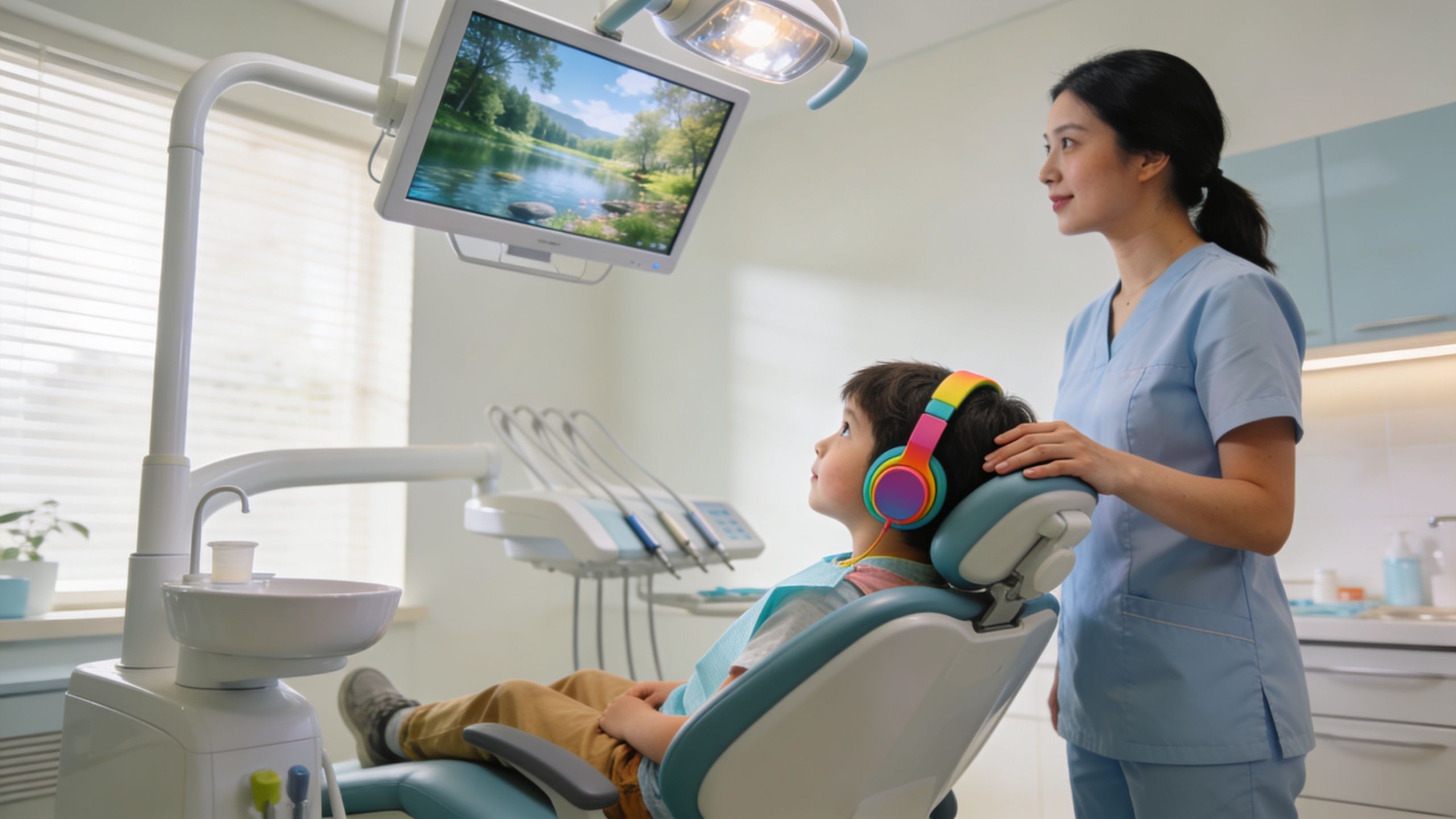
Parents often worry less about the treatment itself than the memory of it. They don't want their child to leave scared, embarrassed, or determined never to come back.
What helps before sedation is even considered
Most anxious children don't need to be “pushed through” treatment. They need a slower introduction, familiar language, and a sense of control. One of the most reliable methods is Tell-Show-Do. The child is told what will happen in simple words, shown the instrument or sensation in a non-threatening way, then guided through the step itself.
Other small changes can make a big difference:
- Shorter first visits help children leave on a good note
- Clear choices such as which flavour fluoride to use can restore a sense of control
- One voice at a time reduces overload when a child is already tense
Some clinics also use quieter technology to reduce the sensory load of treatment. At The Smile Spot, Biolase laser dentistry is one option used in suitable cases because it can mean less drilling, less noise, and a gentler experience for some patients.
When nitrous oxide helps
Nitrous oxide, often called happy gas, can be useful when a child is anxious but still able to communicate and cooperate with guidance. It doesn't replace good behaviour support, but it can take the edge off fear and make treatment more manageable.
Families trying to understand whether this option might suit their child can read more about a dentist with nitrous oxide.
A good pre-appointment conversation matters here. Parents should know what the visit is trying to achieve. Sometimes the goal is full treatment. Sometimes it's a successful examination and one positive memory.
Here's a helpful overview for parents who want to see how calm communication during treatment can look in practice:
When treatment needs to move to hospital
Some children can't safely or realistically complete treatment in the chair. That may be because of severe anxiety, very young age combined with extensive dental work, special needs, or medical complexity. In those cases, specialist paediatric dentists often provide care under general anaesthesia in a hospital setting, as described by Sydney Paediatric Dental Services.
That pathway can sound daunting, but for the right patient it's often the kindest option. It allows complete treatment in one controlled session rather than multiple distressing appointments that don't succeed.
If a child is overwhelmed by repeated attempts, changing the setting is often more compassionate than trying harder in the same chair.
Understanding the Costs of Children's Dentistry in Sydney
Cost is one of the first concerns parents have and one of the least clearly explained parts of children's dentistry. The answer is that the bill changes according to the child's needs, the treatment setting, and whether the care is preventive, restorative, or specialist-based.
What support may be available
For eligible children, the Child Dental Benefits Schedule provides up to $1,095 over two years for basic dental services, and national data also shows that only about one-third of eligible children used the scheme across recent years, according to this overview of children's dental statistics in Australia.
In practical terms, that means some families can reduce out-of-pocket costs for check-ups and basic care, but many don't realise the support is available or assume it covers more than it does. It's worth checking eligibility before the appointment so the treatment plan can be discussed with the rebate in mind.
Private health insurance can also help, particularly if your extras cover includes routine dental for children. The details vary by fund and product, so the useful question isn't “Do I have extras?” but “What item numbers and limits apply to my child's treatment?”
What changes the bill
Parents usually get caught out when they assume all children's appointments are priced like a standard check-up. Costs rise when the visit becomes more clinically involved.
The biggest drivers are usually:
- Complexity of treatment. A preventive review is very different from multiple restorations.
- Behavioural support needs. A child who needs extra time, staged visits, or specific anxiety management will need a different appointment structure.
- Provider type. Specialist paediatric care is different from general dental care.
- Treatment setting. Sedation and hospital-based treatment under GA change the planning and the overall cost significantly.
Public services may help some families, but restrictions can apply, especially around specialist access and treatment under GA. That's why planning matters early. The more advanced the disease becomes, the fewer low-cost, low-intervention options usually remain.
Ask for the sequence, not just the fee
One of the best questions a parent can ask is, “What are the possible pathways from here?” That often tells you more than a single dollar figure.
You want to understand:
- What can be done today
- What might need a later visit
- Whether specialist referral is likely
- How rebates or payment options fit into the plan
For families comparing affordability, it can also help to review clinics that discuss dentists with payment plans near me. A staged payment arrangement doesn't reduce treatment need, but it can make a necessary plan easier to manage.
The most useful fee discussion is the honest one. Not every child needs expensive care. But when a child does need more than a routine appointment, it's far better to know the likely path at the start than to discover it midway through treatment.
Your Paediatric Dental Questions Answered
Does my child need a paediatric dentist or can we see a family dentist?
If the visit is for routine prevention, a family dentist who regularly treats children is often the right first step. If your child has major anxiety, complex treatment needs, trauma, medical issues, special needs, or repeated failed dental visits, a paediatric specialist may be the better fit.
What should I do before the first appointment?
Keep the explanation simple. Tell your child the dentist will count their teeth and help keep them strong. Avoid promising that “nothing will happen,” because even a very gentle visit may involve fluoride, photos, or a closer look with a mirror.
Use calm, ordinary language. Children often borrow their level of concern from the adult bringing them in.
Is thumb sucking or dummy use always a dental problem?
Not always. These habits are common in younger children, and the primary concern is how long they continue and whether they're affecting bite development. It's worth raising early so the advice can be timed properly rather than waiting until the habit is entrenched.
My child fell and chipped a tooth. Can it wait?
It depends on the injury, but don't assume a small chip is minor. Trauma can affect the nerve, surrounding gum, or developing adult tooth underneath. If there's bleeding, pain, mobility, or a colour change later on, the tooth should be assessed promptly.
What if my child won't open their mouth at the appointment?
That happens often enough that it shouldn't embarrass you. A good children's dental team will adapt. Sometimes the first visit becomes a familiarisation session, and that's still useful. Forcing treatment in a frightened child usually creates a bigger problem for the next visit.
Are baby teeth really that important if they fall out anyway?
Yes. They help children eat comfortably, speak clearly, and hold space for the adult teeth developing underneath. Infected or painful baby teeth can also affect sleep, behaviour, and the child's willingness to brush or eat.
When should I worry about crowding or crooked teeth?
If teeth seem severely crowded, the bite looks uneven, the front teeth don't meet properly, or your child breathes mostly through their mouth, mention it sooner rather than later. Not every child needs orthodontic treatment, but early review can help with timing.
Begin Your Child's Confident Smile at The Smile Spot
Good children's dentistry is rarely about doing the most. It's about making smart decisions early, keeping care calm, and knowing when routine family treatment is enough and when specialist support makes more sense.
For Inner West families, convenience matters more than people admit. A clinic that's close to home, able to see children at sensible times, and comfortable managing both routine prevention and anxious patients makes the whole process easier to maintain. That's especially true when appointments need to fit around school, work, and the ordinary chaos of family life.
Dr. Dimitrios Thanos and the team at The Smile Spot provide family-focused dental care in Dulwich Hill, with preventive appointments for children, gentle treatment options, and technology that can support a less stressful experience for suitable cases. Late evening and Saturday availability also help parents keep care consistent instead of postponing it until a small concern becomes a bigger one.
If you've been putting off a first visit, wondering whether your child's behaviour in the chair will be manageable, or trying to work out whether you need routine care or a referral, the next useful step is an assessment. Clarity changes everything.
If you're ready to organise your child's next dental visit, book with The Smile Spot for practical, family-friendly care in Dulwich Hill.