If you are reading this with a missing tooth, or several, you are probably not thinking about dentistry in abstract terms. You are thinking about dinner. About smiling in photos. About whether people notice the gap when you talk. You may also be wondering whether dental implants are worth it, or whether they are just the expensive option everyone talks about.
The honest answer is that implants are worth it for many patients, but not for everyone. They solve problems that bridges and dentures do not solve in the same way. They also require surgery, healing time, commitment to maintenance, and a clear understanding of cost.
For Australian patients, the decision usually comes down to five things. Your oral health, your bone support, your budget, your comfort with treatment, and how much you value a fixed long-term solution over a removable or shorter-term one. When those pieces line up, dental implants can be one of the most dependable investments you make in your health and confidence.
Understanding the Anatomy of a Dental Implant
A dental implant is not just a fake tooth. It is a replacement for the root and the visible tooth.
That distinction matters. A denture sits on the gums. A bridge spans across a gap. An implant is placed into the jawbone so the replacement tooth has its own support.
The three parts that make it work
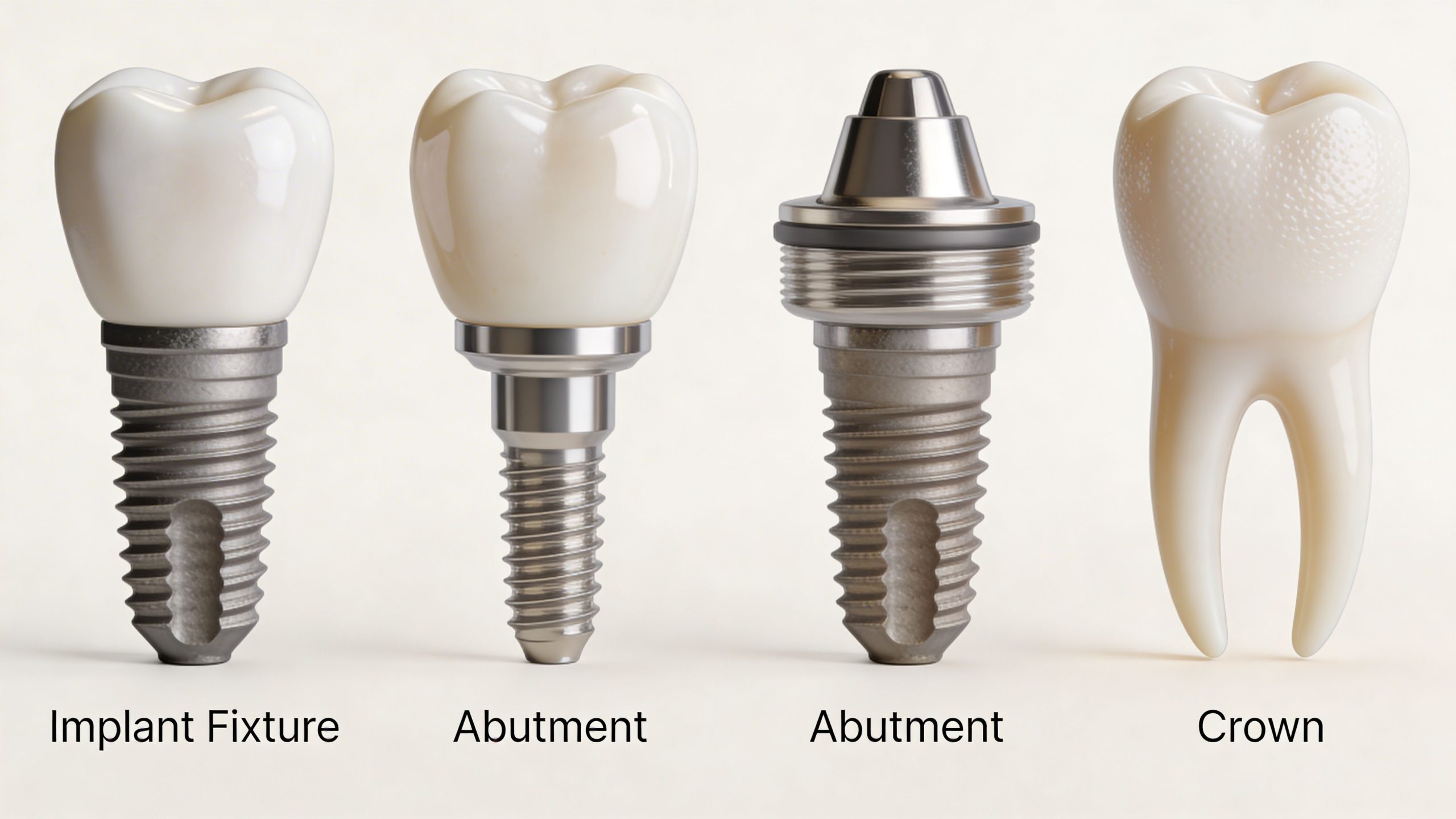
A standard implant restoration has three main components.
- The implant fixture sits in the jawbone. This is usually made from titanium, a material chosen because it is biocompatible and integrates well with bone.
- The abutment connects the implant fixture to the final tooth.
- The crown is the custom-made visible tooth that is shaped and shaded to blend with the rest of your smile.
This is why implants feel different from many other replacements. They do not just fill a space. They create a new support system from the bone upward.
Why bone matters so much
The key biological process is osseointegration. That means the implant becomes anchored to the jawbone during healing.
A simple way to think about it is a wall anchor. If you screw something into plaster without a proper anchor, it stays loose. With the right anchor, it becomes stable because the surrounding material grips it. An implant works on the same basic principle, except the jawbone heals around the fixture and secures it.
That root-like support is what allows an implant to handle biting forces more like a natural tooth.
A well-planned implant is not only a cosmetic replacement. It is a structural replacement.
Why this design changes everyday life
Patients often first focus on the visible gap, but the bigger issue is usually function. Missing teeth can make chewing awkward, cause food to trap in the space, and leave nearby teeth with less support. Some people start chewing on one side only. Others avoid certain foods altogether.
Implants address that problem at the source because they replace the missing support under the gum as well as the tooth above it. That is why they are widely regarded as the closest option to replacing a natural tooth.
If you want the shortest possible definition, it is this. A dental implant is a fixed tooth replacement built in layers, with the jawbone supporting the foundation.
Weighing the Benefits and Potential Risks
A common patient scenario is simple. Someone wants to eat comfortably, smile without thinking about the gap, and avoid a plate that moves around. An implant can do that well, but the decision should still be made with a clear view of the time, cost, healing, and maintenance involved.
The practical advantage is stability. An implant restores a fixed tooth without asking neighbouring teeth to carry the load, and that matters in day-to-day life far more than many patients expect.
According to this implant review, dental implants show a 95 to 98% success rate over 10 to 15 years, poor oral hygiene raises peri-implantitis risk by more than four times, and consistent professional maintenance can keep that risk below 2%. Those figures are encouraging, but they do not replace careful case selection or good habits at home.
Where implants tend to outperform alternatives
The benefits are usually easiest to understand after a patient has lived with a missing tooth for a while.
Chewing often becomes more even because the replacement is fixed. Speech can feel more natural than it does with a removable option. Nearby teeth usually do not need to be cut down for support, which is one reason many dentists prefer implants over a conventional bridge when the site is suitable. Patients also like the sense of security. The tooth does not come out at night, and it does not shift while eating.
That said, not every implant case is a single-tooth case. For patients comparing full-arch treatment, our guide to All-on-4 dental implants cost in Australia explains how the value equation changes when several teeth are being replaced at once.
If you want to see how restorative treatment can change appearance and confidence, these dental implants before and after examples help show the difference a fixed solution can make.
The risks patients should know before deciding
Implants are a surgical treatment, so there are real short-term considerations. Soreness, swelling, healing time, and temporary diet changes are all part of the conversation. Some patients also need extra procedures, such as bone grafting, before an implant is the right option.
For anxious patients, comfort matters just as much as the clinical plan. Sedation options and gentle techniques, including laser dentistry in selected parts of treatment, can make the process easier to manage, but they do not remove the need for healing or follow-up.
Longer term, the main concern is not decay of the implant itself. It is inflammation in the surrounding gum and bone. That is why smoking, untreated gum disease, uncontrolled medical issues, heavy clenching, and poor cleaning habits all need to be discussed thoroughly before treatment begins.
What improves the odds of success
Successful implant treatment starts well before the day of surgery. I look closely at gum health, bone support, medical history, bite forces, and whether the patient is likely to keep the area clean for years, not just for the first few months.
That last point matters.
Implants reward patients who attend reviews, clean carefully around the implant, and come back early if something feels different. In practice, the long-term result depends just as much on maintenance as on the implant placement itself.
Decoding the Cost of Dental Implants in Australia
Cost is usually the turning point in the conversation. Even patients who like the idea of implants often pause when they hear the price.
That pause is reasonable. Implants are a larger upfront expense than several other tooth replacement options. In Australia, the upfront cost of a dental implant can be significant, and private health fund rebates may cover a portion of that, reducing out-of-pocket expense. A recent Australian Health Economics Review found implants to be more cost-effective over a long period compared with alternatives because of their durability and longevity.
What you are paying for
Patients sometimes assume they are paying for a single item. In reality, implant treatment usually involves several parts.
- Diagnostic planning such as imaging, clinical assessment, and treatment design
- The surgical phase including placement of the implant
- The restorative phase where the final crown or prosthesis is fitted
- Custom components and lab work designed for your bite and smile
- Follow-up care to review healing and function
A cheap quote can leave out important steps, materials, or aftercare. That is why comparing implant fees line by line matters more than comparing a single headline figure.
Why the cheapest option is rarely the best value
Implants are highly technique-sensitive. Good planning, careful placement, and a restoration that fits properly all affect long-term performance.
A lower upfront fee can become expensive if the case is poorly planned, the prosthesis is difficult to clean, or the final bite places too much force on the implant. A durable solution is about more than putting a titanium post in bone. It is about building a restoration that works in the mouth you have.
For patients exploring full-arch treatment, this guide to All-on-4 dental implants cost in Australia can help frame the financial side of treatment more clearly.
A better way to think about affordability
Many patients do not need to make the decision on raw price alone. They look at a mix of health fund support, staged treatment, and the expected lifespan of the work.
Ask practical questions such as:
What does the quote include
Does it cover the implant, abutment, crown, reviews, and any additional procedures?Can treatment be staged
Some cases can be planned in phases to spread costs over time.Will my health fund contribute
Private extras cover can change the out-of-pocket amount significantly.Is this replacing a repeating expense
A lower-cost option may need more repair, adjustment, or replacement over the years.
For the right patient, implants are often less about buying the most expensive option and more about buying the option with the strongest long-term logic.
Comparing Your Tooth Replacement Options
A patient will often sit down and say the same thing in three different ways: “I want to chew properly, I do not want this to look obvious, and I do not want to make the wrong long-term choice.” That is the core comparison.
The right option depends on what is missing, what condition the surrounding teeth are in, how much support the jaw can provide, and whether you want something fixed or removable. In practice, the decision usually comes down to dental implants, bridges, and removable dentures.
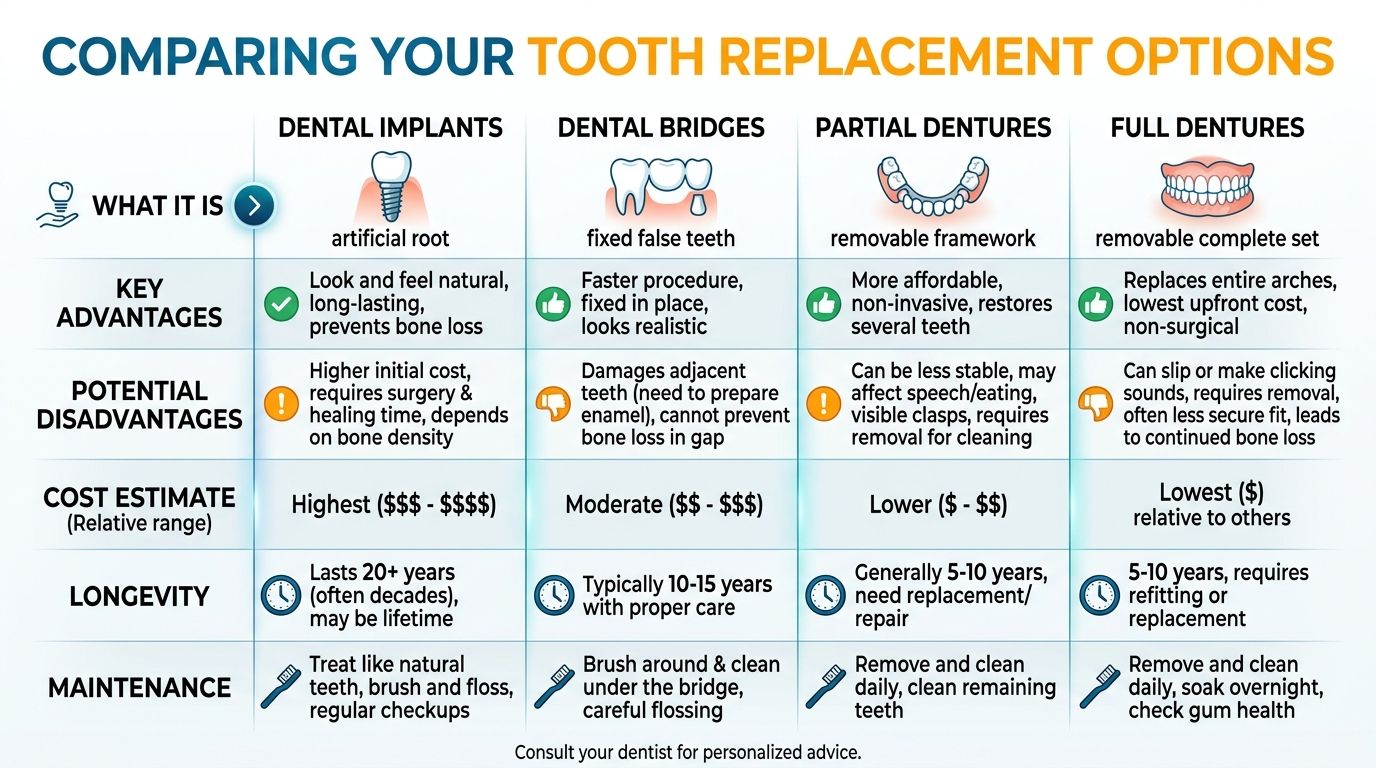
Dental implants vs bridges vs dentures at a glance
| Feature | Dental Implant | Dental Bridge | Removable Denture |
|---|---|---|---|
| How it is supported | Anchored in the jawbone | Supported by neighbouring teeth | Rests on gums |
| Feel in the mouth | Fixed and closest to a natural tooth | Fixed, but relies on adjacent teeth | Removable and may feel bulkier |
| Effect on nearby teeth | Usually preserves adjacent teeth | Often requires preparation of neighbouring teeth | Does not prepare teeth in the same way, but may place pressure on gums |
| Cleaning | Needs careful brushing and flossing around the implant | Needs careful cleaning under the bridge | Must be removed and cleaned |
| Best for | Single missing teeth, multiple teeth, or full-arch cases | A gap where adjacent teeth already need crowns or suit bridge support | Broader tooth loss or when a removable option is preferred |
| Main trade-off | Higher upfront cost and surgery | Involves neighbouring teeth | Less stability and comfort for some patients |
When a bridge makes sense
A bridge is often a practical choice if the teeth on either side of the gap already need crowns. In that situation, using those teeth as support may be reasonable and efficient.
The compromise is clear. A bridge usually requires reshaping neighbouring teeth, and those teeth then carry more of the load over time. For some patients, that is acceptable. For others, especially where the adjacent teeth are healthy and untouched, preserving them matters.
When a denture is the right choice
Dentures still solve real problems well. They can be the best fit when several teeth are missing, when surgery is not suitable, or when keeping treatment costs lower is the main priority.
They also ask more of the patient day to day.
- Movement can affect confidence while eating or speaking
- Pressure on gums can create sore spots or fatigue
- Adaptation time is common, especially for lower dentures
- Maintenance includes removal, cleaning, and periodic adjustment as the mouth changes
Some patients adapt quickly and function well with dentures. Others remain aware of them every day.
Where All-on-4 changes the discussion
For patients missing most or all teeth in one arch, treatment does not always mean placing a large number of individual implants. All-on-4 uses a smaller number of carefully positioned implants to support a fixed full-arch bridge.
This is significant because bone grafting is often a barrier for patients. In selected cases, angled posterior implants can make treatment possible with the bone already available, which may reduce the need for additional grafting procedures. That can shorten treatment, lower complexity, and make the process feel more manageable for anxious patients.
If you are comparing full-arch options, this explanation of what All-on-4 dental implants are is a useful next step.
A practical way to decide
Choose the option that solves your actual problem, not the option that sounds most advanced.
If you want a fixed replacement for one missing tooth and you want to avoid cutting down neighbouring teeth, an implant is often the strongest candidate. If the teeth beside the space already need major work, a bridge may make sound clinical and financial sense. If you want to avoid surgery, need a faster replacement, or need to keep costs within a tighter range, a denture may be the better fit.
For anxious patients, comfort matters as much as design on paper. Sedation options, gentle surgical planning, and tools such as laser dentistry can make implant treatment more approachable than many people expect, but that still does not mean implants are automatically the right answer.
The best tooth replacement is the one that suits your oral health, budget, comfort level, and ability to maintain it for years.
That is why “are dental implants worth it” is really a comparison question. The answer depends on what you are asking the replacement to do for you.
Your Dental Implant Journey from Diagnosis to Recovery
Most anxious patients do not ask first about titanium or crowns. They ask what the process feels like, how long it takes, and whether it is going to be difficult.
The process is more manageable when you know the sequence.
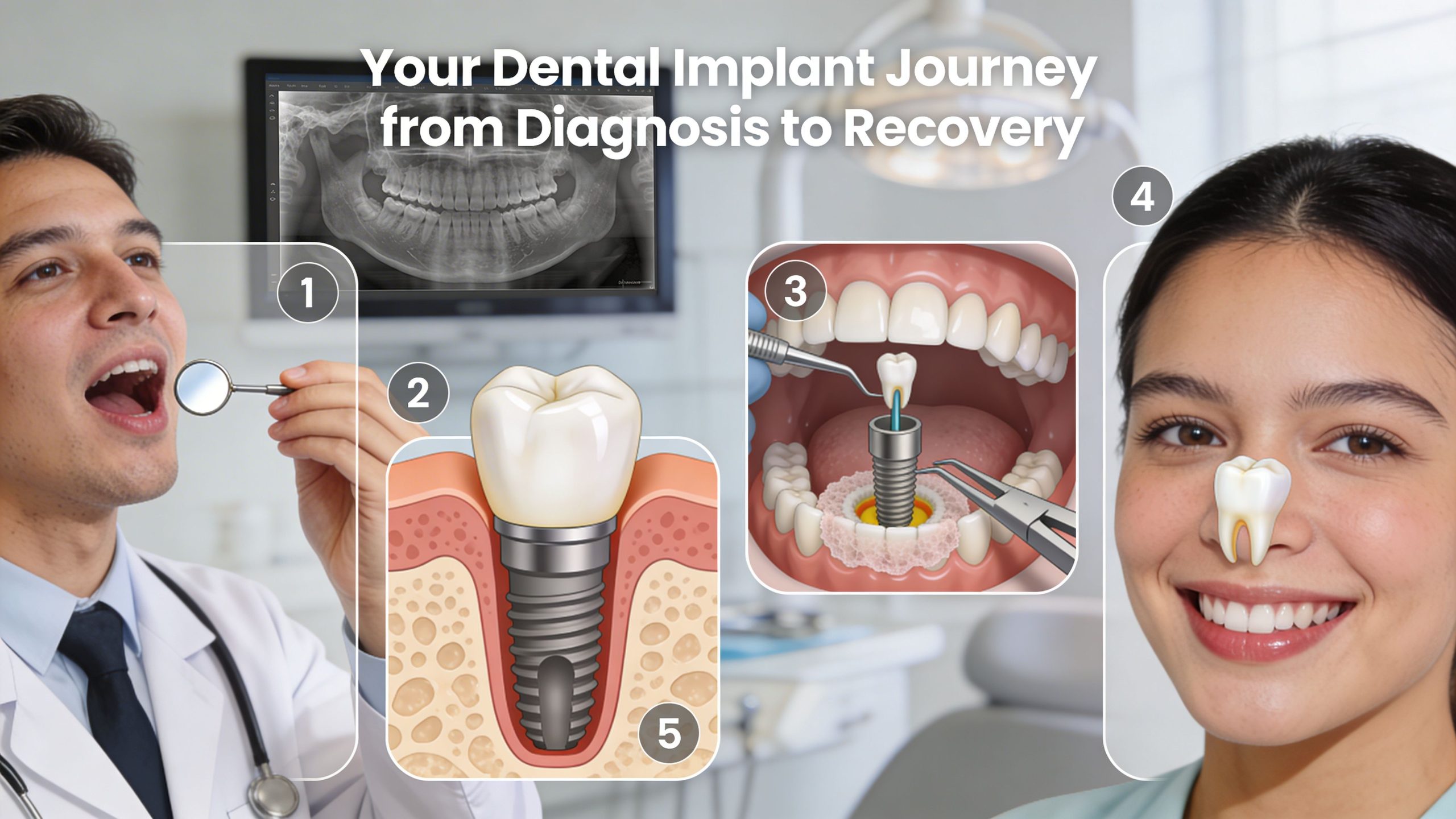
Step one with diagnosis and planning
Implant treatment starts with assessment, not surgery.
This usually includes a clinical examination, imaging, review of your medical history, and discussion of what kind of restoration is being planned. Bone quality, gum health, bite forces, and habits such as smoking all matter.
Research shows smokers face a 140.2% higher risk of implant failure, while female patients and non-smokers generally have better outcomes. The same research found that thorough diagnostics help identify and manage these risks, making implant placement predictable and successful in over 95% of properly screened cases, according to this National Library of Medicine review on implant survival factors.
Step two with preparation before surgery
Some patients are ready for implant placement after the first planning phase. Others need preparation first.
That preparation may include:
- Cleaning and stabilising gum health
- Removing failing teeth
- Managing bite issues
- Reviewing healing risks such as smoking or medical conditions
For anxious patients, this is also the time to talk through comfort options. Gentle local anaesthetic, a slower pace, and sedation where appropriate can make the appointment far less daunting than expected.
Step three with implant placement
The surgical appointment is often shorter and more controlled than patients imagine.
Once the site is numb, the implant is placed into the jawbone in the planned position. In many cases, patients report that the anticipation is worse than the procedure itself. Post-operative tenderness is expected, but it is usually manageable with normal aftercare and clear instructions.
Techniques that reduce tissue trauma can make recovery smoother. When soft tissue management is precise and conservative, healing tends to be easier.
Anxiety often drops once patients understand that implant surgery is planned in detail before the day of treatment.
Step four with healing and integration
After placement, the jawbone needs time to heal around the implant. During this period, the implant is becoming biologically stable.
Depending on the case, you may have a temporary tooth or temporary prosthesis while healing progresses. The key during this phase is protecting the site and keeping the area clean.
Step five with the final tooth
When healing is confirmed, the final crown, bridge, or full-arch prosthesis is fitted.
At that stage, attention shifts from healing to refinement. The bite is checked, the fit is reviewed, and home care instructions become a major part of long-term success.
Patients usually find that the process feels most worthwhile at this point, because the replacement begins to function as part of daily life rather than as a treatment in progress.
Ensuring Your Investment Lasts a Lifetime
The long-term value of an implant is not secured on the day it is placed. It is secured by how well it is maintained afterwards.
This is why the most successful implant patients treat maintenance as part of the treatment, not something extra.

What daily care involves
Daily care is straightforward, but it needs to be consistent.
- Brush thoroughly around the implant and gumline
- Clean between teeth using floss or other aids recommended for the design of your restoration
- Attend regular reviews and professional cleans
- Report bleeding, tenderness, or bad taste early, rather than waiting
An implant crown cannot decay the way a natural tooth can, but plaque can still inflame the surrounding tissues. That is the area that needs protection.
Why longevity changes the value equation
Dental implants have an exceptional track record, with survival rates between 92 and 98% over 10 to 20 years, and a well-maintained implant can last 25 years or more, according to this review of implant success and longevity.
That durability is a major reason many patients decide they are worth it. They are not choosing a short-term patch. They are choosing a restoration designed for the long haul.
For a closer look at what affects long-term performance, this guide on how long dental implants last is worth reading.
What shortens an implant's lifespan
The main threats are rarely dramatic. They are usually gradual.
Poor plaque control, missed maintenance visits, untreated gum inflammation, and ongoing smoking can all undermine otherwise good implant work. Problems are much easier to manage when picked up early.
The best way to protect an implant is to care for the gums and bone around it as carefully as you would protect a natural tooth.
When patients do that, the investment makes sense over decades, not just months.
Begin Your Smile Restoration at The Smile Spot
For the right candidate, dental implants are worth it because they offer something other options often cannot. A fixed replacement that supports function, confidence, and long-term oral health.
At The Smile Spot in Dulwich Hill, treatment is planned with the full picture in mind. That means candid discussions about suitability, costs, healing, maintenance, and comfort. Dr. Dimitrios Thanos has led the practice since 1996, and the clinic combines long-standing experience with modern tools, gentle care, laser dentistry, and options for anxious patients.
If you have been weighing implants against bridges or dentures, the next step is not guessing. It is getting a personalised assessment. If payment flexibility is part of your decision, this guide to dentists with payment plans near me may also help you plan with more confidence.
Frequently Asked Questions About Dental Implants
Do dental implants feel like real teeth
They feel closer to natural teeth than removable options because they are fixed in place. The sensation is not identical to a natural tooth root, but most patients adapt well and describe the implant as stable and natural in daily use.
Can an implant get a cavity
The crown itself does not decay like a natural tooth. The important issue is the gum and bone around the implant. If plaque control is poor, the tissues around the implant can become inflamed and that can threaten the implant over time.
Is getting a dental implant painful
The procedure is usually done with local anaesthetic, so the goal is for you to feel pressure rather than pain during treatment. Afterwards, some soreness is expected, but most patients cope well when they have clear aftercare instructions and the right pain management plan. For anxious patients, discussing sedation beforehand can make the whole experience easier.
Am I too old for dental implants
Age alone is not usually the deciding factor. Overall health, healing capacity, bone support, and gum condition matter more than the number on your birthday card. Many adults are good candidates when those factors are assessed properly.
How do I know whether an implant or bridge is better for me
That depends on what the neighbouring teeth look like, whether you want a fixed solution, and how suitable the implant site is. If the teeth beside the gap are already heavily restored, a bridge may make sense. If they are healthy and you want to preserve them, an implant is often the stronger option.
What should I read if I am researching clinics online
Patients often compare websites before they book, and that is sensible. If you are curious about how dental practices present information online, the ultimate SEO dental playbook gives useful context on how dental content is structured and why some clinics are easier to find than others.
If you are ready to find out whether implants are the right fit for your smile, book a consultation with The Smile Spot. You will get a clear assessment, practical guidance on your options, and a treatment plan built around your health, comfort, and budget.