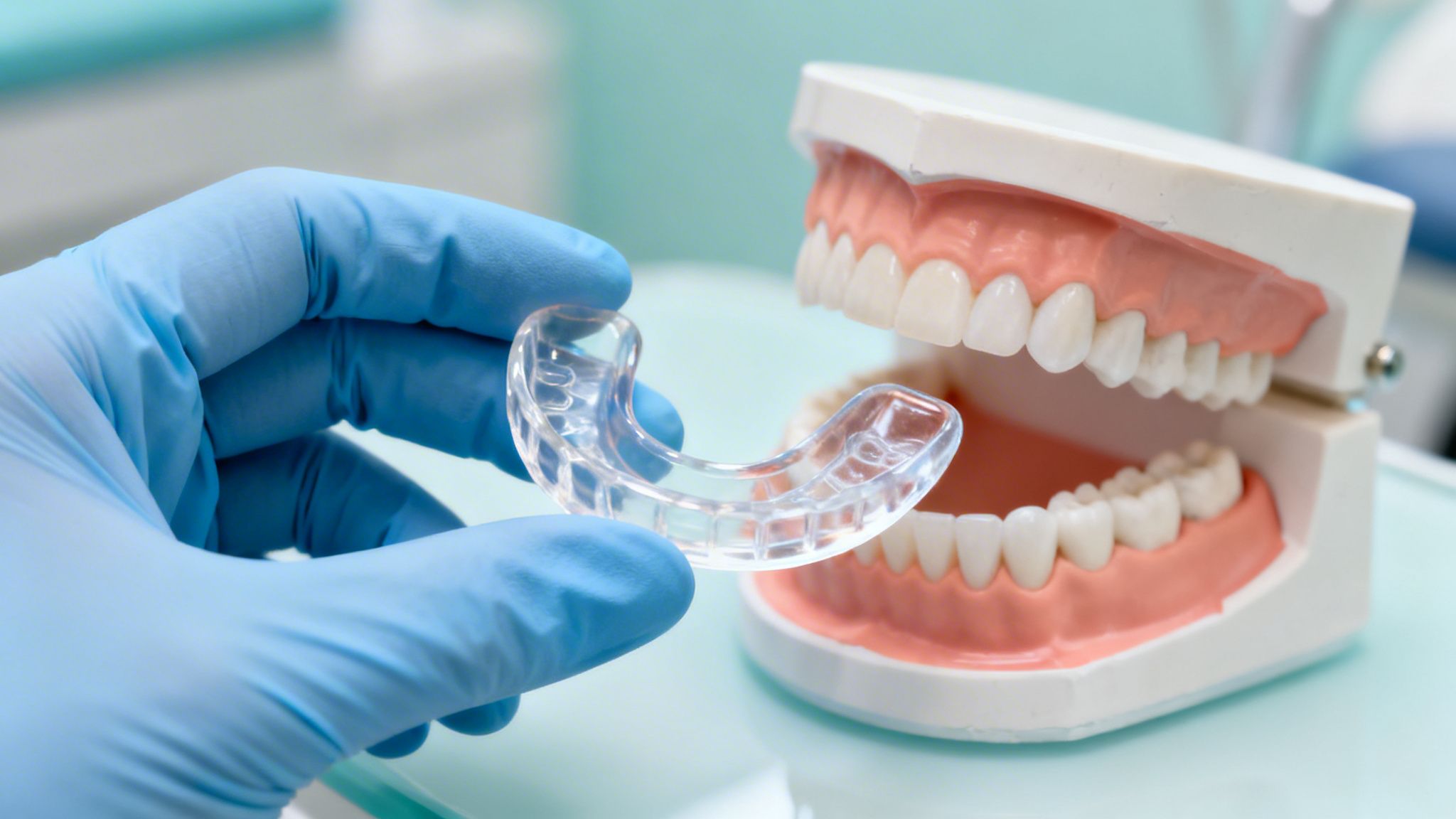
A custom dentist mouth guard is far more than just a piece of plastic. Think of it as a personalised helmet for your smile, expertly designed to absorb shock and shield your teeth and jaw from significant damage.
It’s one of the most effective investments you can make in your long-term oral health, providing a level of protection that generic, over-the-counter options simply can’t match.
Why a Dentist-Made Mouth Guard Is Your Best Defence
You wouldn’t wear a one-size-fits-all helmet for a contact sport, so why do it for your teeth? Store-bought mouth guards offer a basic level of protection, but they’re often bulky, uncomfortable, and fit poorly. Because they don’t conform perfectly to your teeth, the protective forces aren’t distributed evenly, leaving you vulnerable.
A professional mouth guard, on the other hand, is crafted from a precise mould of your unique bite. This ensures a snug, comfortable fit that stays in place when you need it most, acting as a powerful shock absorber to prevent devastating injuries. For our patients in Dulwich Hill and the Inner West, we see it as a non-negotiable part of maintaining a healthy, confident smile for life.
When Do You Need a Custom Guard?
While most people think of mouth guards for boxing or footy, the need for one is much broader. There are a few key situations where a custom-fitted guard is essential for protecting your teeth and jaw.
- Contact & High-Impact Sports: Any sport with a risk of collision, falls, or flying equipment puts your smile at risk. This includes obvious ones like rugby and hockey, but also basketball, netball, and even skateboarding. A well-fitted guard can be the difference between a close call and a dental emergency.
- Night-Time Teeth Grinding (Bruxism): Many people clench or grind their teeth in their sleep without even realising it. This habit places enormous pressure on your teeth, leading to worn-down enamel, fractures, and sore jaw muscles. A custom night guard (or occlusal splint) creates a protective barrier to absorb these forces.
- TMJ & Jaw Pain Management: For those suffering from temporomandibular joint (TMJ) disorders, a specialised guard can provide significant relief. It helps guide your jaw into a more relaxed and stable position, easing muscle tension and reducing symptoms like headaches and clicking jaws.
Not sure if you fit into one of these categories? This table can help you quickly assess your needs.
Quick Assessment: Do I Need a Mouth Guard?
| Activity or Symptom | Common Signs | Recommended Mouth Guard |
|---|---|---|
| Contact Sports | Playing footy, rugby, hockey, martial arts, etc. | Custom Sports Guard |
| Non-Contact Sports | Playing basketball, netball, skateboarding, gymnastics. | Custom Sports Guard |
| Waking with a Sore Jaw | Jaw muscle tightness, headaches in the morning. | Custom Night Guard |
| Worn or Chipped Teeth | Unexplained wear, fractures, or flattened tooth surfaces. | Custom Night Guard |
| Jaw Clicking or Popping | Audible sounds when opening or closing your mouth. | TMJ Splint / Night Guard |
If you answered yes to any of these, a chat with your dentist is a great next step.
The infographic below puts the risk of dental injuries into perspective, especially for younger, active people.
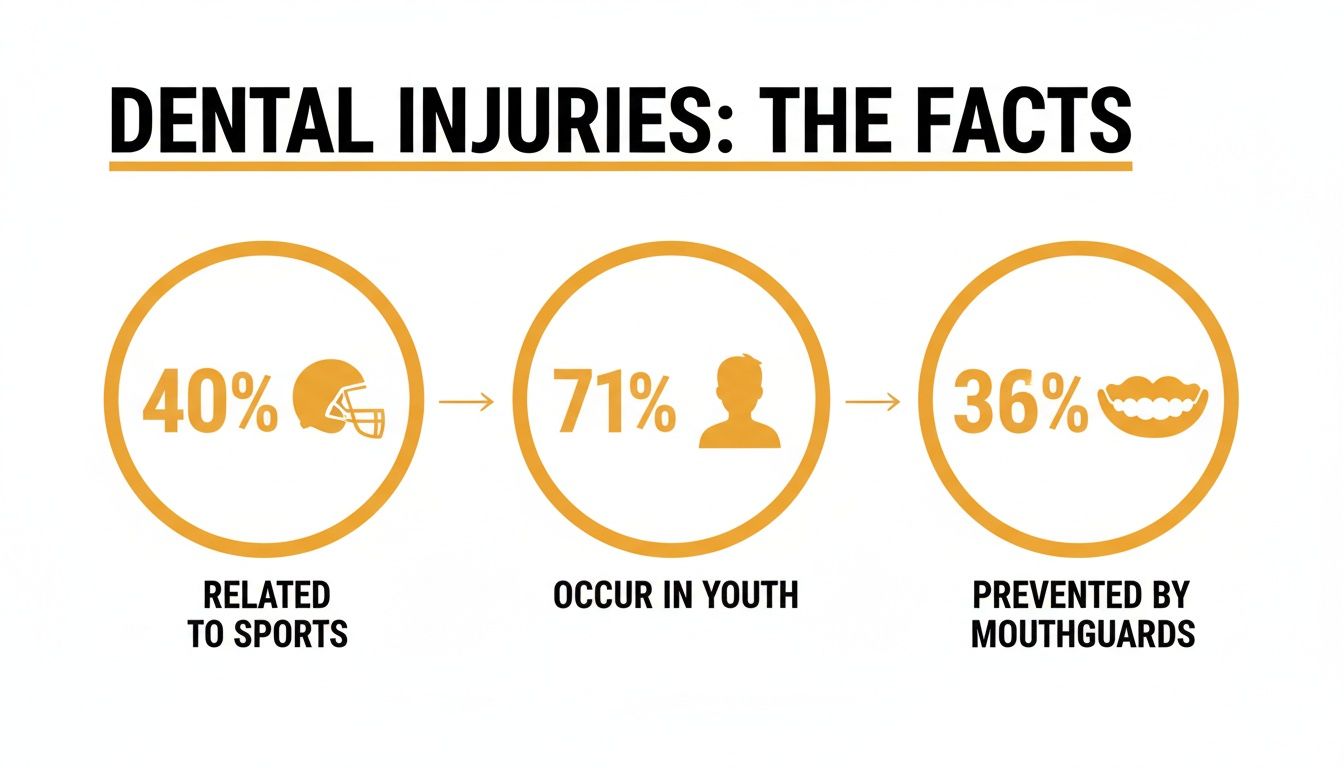
These numbers tell a clear story. In Australia, a huge number of dental injuries happen on the sports field, yet many players still don't wear the right protection.
We know that approximately 40% of all dental injuries in Australia are sports-related, and a staggering 71% of those affect people under 25. Despite this, only 36% of Aussies playing contact sports regularly wear a mouth guard.
Forgoing proper protection puts you at a much higher risk of an accident that requires urgent dental care. If you do find yourself in that situation, it’s important to know what to do. You can learn more in our guide to handling a dental emergency.
Custom-Fitted Guards vs Over-the-Counter Options
It’s always tempting to grab a cheap mouth guard from the chemist, but this common choice can create a false sense of security. While over-the-counter (OTC) options seem like a quick fix, a professional dentist mouth guard provides a level of safety that generic products simply can't match. The difference isn't just about comfort—it's about real, effective protection.
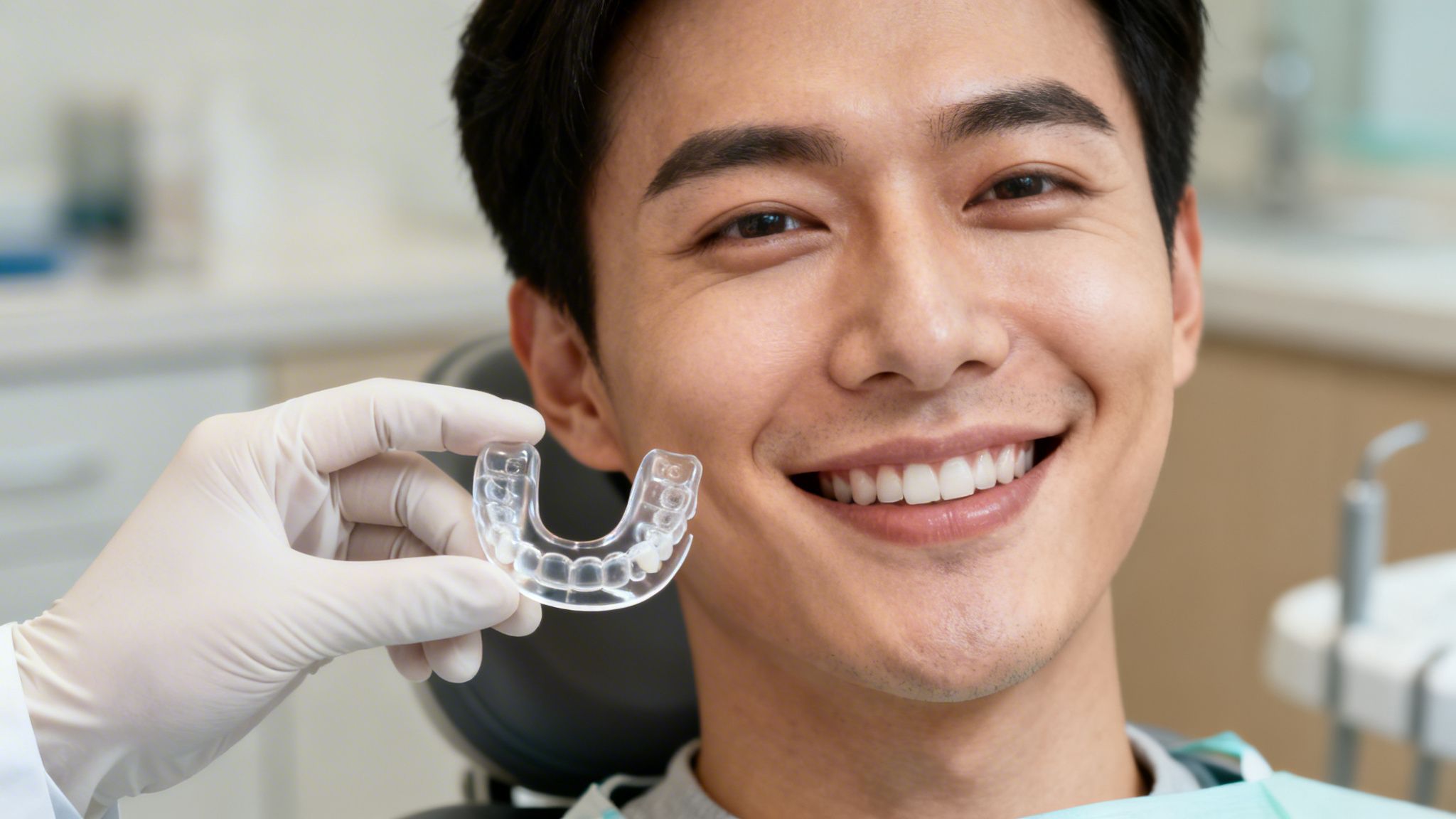
When you compare a professionally fitted device to a standard "boil-and-bite" model, you quickly see why the initial investment in a custom guard pays off in safety and long-term oral health.
The Science of a Perfect Fit
Think of it like this: you wouldn't try to catch a cricket ball with oven mitts. They’re bulky, ill-fitting, and offer clumsy, unreliable protection. An OTC mouth guard works in a similar way, providing a generic barrier that isn’t designed for your unique teeth and bite.
A custom dentist mouth guard, on the other hand, is like a bespoke glove moulded perfectly to your hand. It's crafted from a precise 3D scan or physical impression of your teeth and gums, and this exact fit is the key to absorbing impact correctly.
When a blow occurs, a custom-fitted guard distributes the force evenly across all your teeth, directing it away from the more vulnerable front teeth. A poorly fitting OTC guard can’t do this. Instead, the force might get concentrated on one or two teeth, increasing the risk of a serious fracture or even a knocked-out tooth.
Materials and Retention: The Winning Combination
The materials used in a custom guard are also fundamentally better. A dentist uses high-quality, durable materials designed for specific needs—whether that’s absorbing a heavy hit in sport or withstanding the immense pressure of night-time grinding.
OTC guards are usually made from a single layer of cheaper, softer plastic. This material offers minimal shock absorption and wears down very quickly. Most importantly, a custom guard’s precise fit gives it excellent retention, meaning it stays securely in place without you needing to clench your jaw to hold it in.
Better retention directly translates to better safety. An athlete shouldn't have to worry about their guard falling out during a critical moment. It also allows for easier breathing and clearer speech, which is essential for communication on the field.
The Drawbacks of Over-the-Counter Mouth Guards
While the low price of OTC guards is appealing, their limitations create significant risks that far outweigh the initial savings. Understanding these drawbacks is crucial for anyone serious about protecting their smile.
- Inadequate Protection: Their poor fit and flimsy material simply don't provide reliable protection against dental trauma, creating a false sense of security that can lead to devastating injuries.
- Airway Obstruction Risk: Because they are bulky and loose, OTC guards can shift during sport or sleep. In a worst-case scenario, a dislodged guard could become a choking hazard.
- Jaw Problems: Constantly clenching your jaw to hold a loose guard in place can lead to muscle fatigue and pain. For some people, it can even worsen TMJ symptoms.
- Lack of Durability: Boil-and-bite guards often need to be replaced every few months as they quickly lose their shape and integrity, making them far less cost-effective over time.
Research consistently shows that while wearing any mouthguard is better than none, the level of protection is not equal. Studies have demonstrated that custom-made mouthguards are significantly more effective at preventing harm. It's a real concern that in sports like Australian football, around a third of players reportedly use boil-and-bite guards, which are widely considered unsatisfactory for proper dental protection.
Choosing the Right Type of Dental Mouthguard
Thinking about a mouthguard? It’s a common misconception that they’re all the same. The reality is, the right mouthguard depends entirely on what you need it to do. It’s a bit like choosing shoes – you wouldn't wear running shoes to a construction site, and you wouldn't wear steel-toed boots for a marathon.
A professionally made dentist mouthguard is never a one-size-fits-all solution. The materials, the shape, and the very way it functions are all tailored to a specific job. Is it meant to take a hard knock on the footy field, or does it need to stand up to the slow, intense pressure of teeth grinding every night? Let’s walk through the main types we use to protect our patients’ smiles.
Sports Guards for Impact Absorption
First up, the classic sports guard. Think of this as an essential piece of your athletic kit, designed for one critical job: absorbing the shock from a sudden impact. It acts like a personal crumple zone for your mouth, protecting your teeth, gums, and jaw from blows that could easily lead to chips, cracks, or even a knocked-out tooth.
Unlike the flimsy boil-and-bite guards from the chemist, a custom sports guard is built with different layers of a resilient thermoplastic. We create a softer inner layer for comfort against your gums and a tougher outer layer to spread out the force of an impact. This design makes a world of difference.
- Its Job: To cushion the teeth from any direct or indirect hit. The snug fit is key, ensuring it stays firmly in place right when you need it most.
- What It's Made Of: A durable, multi-layered material that provides both comfort and serious protection.
- When You Need It: A stray elbow during basketball, a tackle in rugby, or a fall from a bike. The guard takes the hit, spreading the force to prevent it from concentrating on a single tooth.
Night Guards for Bruxism Protection
While a sports guard protects you from outside forces, a night guard—which we often call an occlusal splint—defends your smile from something you’re doing yourself. It’s made for people with bruxism, the habit of clenching or grinding your teeth, usually while you sleep. The forces involved can be huge, causing worn-down enamel, cracked teeth, sore jaw muscles, and persistent headaches.
A night guard for grinding isn't soft and spongy like a sports guard. It’s actually the opposite. We make them from a hard, smooth, and incredibly durable acrylic.
The goal isn't to be soft, but to create a tough, low-friction barrier. This durable surface allows the opposing teeth to slide freely instead of "gripping" and grinding, which protects the enamel and helps relax the jaw muscles over time.
This type of dentist mouthguard is built to last, designed to withstand nightly grinding for years. To get the most out of it, proper care is essential, and you can find our top tips in our guides on dental splint care.
TMJ Splints for Therapeutic Relief
TMJ splints are the most specialised type of guard we make. While they also protect your teeth from grinding, their main job is therapeutic. We design them for patients who are struggling with temporomandibular joint (TMJ) disorders, which can lead to chronic jaw pain, clicking sounds, and difficulty opening or closing your mouth.
Unlike a standard night guard, a TMJ splint is precisely crafted to guide your jaw into a healthier, more relaxed position. This subtle repositioning helps to take the pressure off the jaw joint and allows the surrounding muscles to ease up, often bringing significant pain relief. The design is completely customised to your unique jaw anatomy and symptoms.
It's also worth knowing that sometimes grinding and sleep issues go hand-in-hand. In these cases, your dentist may discuss the use of custom oral devices. These are also fitted by a dentist and can be an effective way to manage certain breathing-related sleep disorders like sleep apnea.
The True Cost of a Dental Injury vs a Custom Guard
It’s easy to see a professional dentist mouthguard as just another expense. But when you look at the bigger picture, it’s one of the smartest investments you can make for your health and your wallet. The upfront cost is tiny compared to the potentially massive, ongoing expenses of fixing a serious dental injury.
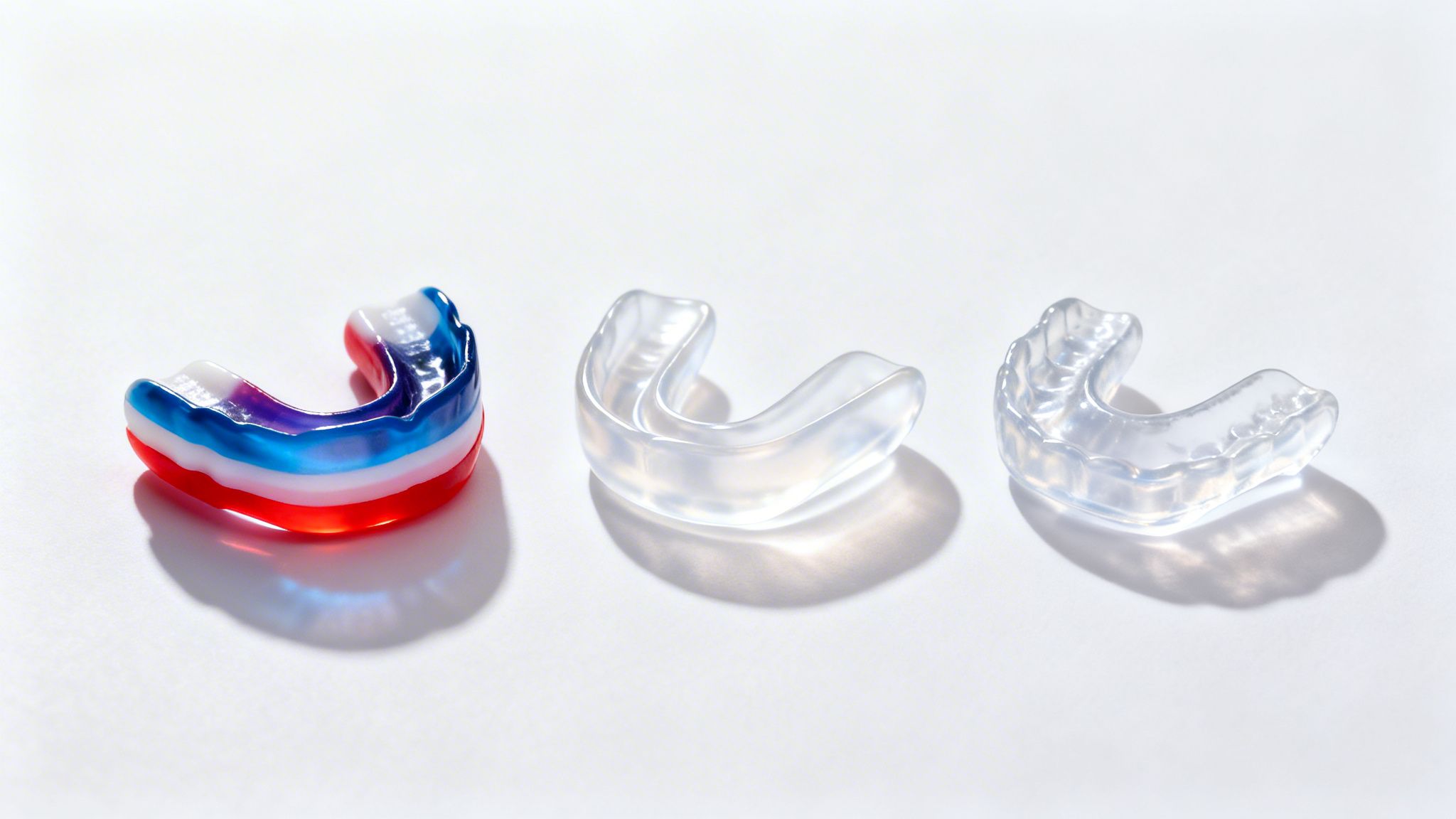
All it takes is one moment—a rough tackle on the sports field, an unlucky fall, or even a night of clenching your jaw—to cause damage that needs immediate, complex and expensive dental work. Let’s break down the real difference between prevention and cure.
The High Price of Dental Trauma
Without proper protection, injuries from accidents or untreated teeth grinding can be truly devastating. We’re not just talking about minor chips; these are often serious problems that demand equally serious solutions.
Some of the most common outcomes include:
- Fractured or Cracked Teeth: A sharp impact can easily crack a tooth, sometimes right down below the gum line. This often requires a crown to hold the tooth together or, in severe cases, removal.
- Knocked-Out Tooth (Avulsion): Losing a tooth completely is a major dental emergency. While it can sometimes be saved if you act fast, it almost always means root canal therapy and careful long-term monitoring.
- Jaw Damage: A heavy blow or chronic grinding puts immense strain on your temporomandibular joint (TMJ), leading to persistent pain, clicking sounds, and difficulty opening and closing your mouth.
Each of these situations translates to a lot of time in the dental chair, not to mention a significant financial hit.
The cost isn’t just about money. It’s also about the pain, the time taken off work or school, and the stress of going through multiple dental procedures. A custom mouthguard helps you sidestep this entire chain of events.
Comparing the Financial Impact
To really put it in perspective, let's talk numbers. A single dental trauma can easily set off a lifetime of follow-up treatments, with costs that dwarf the price of a mouthguard. In Australia, a professionally fitted custom mouthguard typically costs between $240 and $400—a small price for priceless protection. You can find out more about our preventive dental costs and charges on our fees page.
Now, let’s compare that one-time investment to the potential costs of fixing the damage after it’s done.
Cost Comparison: One-Time Prevention vs. Lifetime Treatment
| Item/Procedure | Typical Cost Range (AU$) | Description |
|---|---|---|
| Custom Mouthguard | $240 – $400 | A one-off investment to prevent injury. |
| Emergency Dental Visit | $150 – $350+ | The initial appointment for assessment and pain relief after an accident. |
| Root Canal Therapy | $1,500 – $3,000+ | Required to save a badly damaged or knocked-out tooth. |
| Dental Crown | $1,800 – $2,500+ | Needed to restore and protect a fractured or root canal-treated tooth. |
| Dental Implant | $5,000 – $7,500+ | The gold-standard treatment for permanently replacing a lost tooth. |
As the table shows, the cost of treating just one knocked-out tooth with a dental implant can be more than 20 times the cost of a custom mouthguard. And that doesn't even factor in potential extras like bone grafts, follow-up visits, or replacing crowns and implants years down the track. It's clear that when it comes to your teeth, prevention is always better—and far more affordable—than a cure.
Health Fund Rebates Make It Even More Accessible
Another key thing to remember is your private health insurance. In Australia, most health funds with ‘extras’ cover offer rebates for custom-fitted mouthguards, usually falling under their “General Dental” or "Preventive" category. This can significantly reduce your out-of-pocket cost, making this essential piece of protective gear even more affordable.
We can give you the specific dental item codes so you can check your exact rebate with your health fund. It just goes to show that both dentists and insurers see a custom dentist mouthguard not as a luxury, but as essential preventive care.
Your Custom Mouth Guard Journey Explained
Getting a professional dentist mouth guard is a brilliant investment in your oral health, and the process is far more straightforward and comfortable than you might think. We’ve designed every step to be simple and stress-free, so you feel looked after from your first visit to your final fitting.
Think of it less as a complex procedure and more like getting a custom-tailored suit—it’s all about precision, comfort, and getting a perfect end result. Here’s a clear walkthrough of what to expect when you get a custom-fitted guard at The Smile Spot.
Step 1: The Initial Consultation
It all starts with a conversation. Your first appointment is about us understanding exactly what you need. Are you an athlete looking for protection on the field? Do you wake up with a sore jaw from grinding your teeth at night? Or are you trying to find relief from TMJ pain?
Our dental team will carry out a thorough check of your teeth, jaw, and bite. This helps us figure out the best type of guard, the right material, and the ideal thickness to give you maximum protection and comfort. We’ll listen to your concerns, answer every question, and make sure you’re completely in the loop before we move forward.
Step 2: The Digital Impression
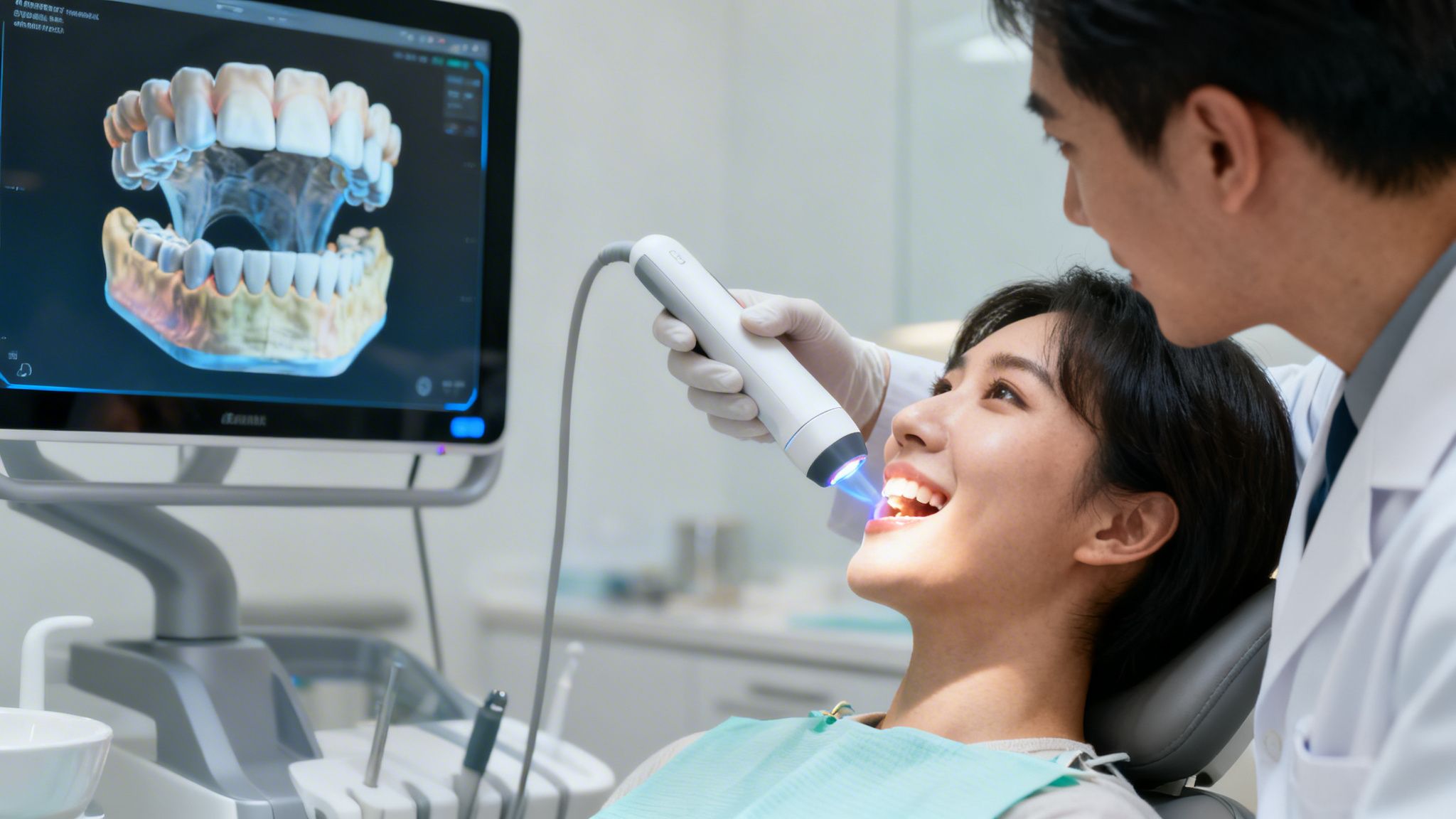
Gone are the days of messy, goopy impression trays. We’ve replaced them with advanced technology that makes this step fast, clean, and incredibly precise. Using a small, handheld intraoral scanner, we create a 3D digital impression of your teeth.
The process is quick and totally comfortable. As we move the scanner around your mouth, it captures thousands of images per second to build a perfect, high-resolution digital model. It’s far more accurate than old-school moulds and completely avoids any mess or gag reflex, which makes for a much better experience.
This digital blueprint is the key to a flawless fit. Because the 3D model is exact, the final mouthguard will hug every contour of your teeth securely, providing superior retention and comfort without feeling bulky or loose.
This modern approach ensures the foundation for your custom dentist mouth guard is as accurate as it gets.
Step 3: The Custom Crafting
With your digital scan complete, we send the precise 3D model to our trusted Australian dental laboratory. Here, skilled technicians use your unique dental blueprint to handcraft your mouthguard. It’s a lot like a master tailor using a specific pattern to cut fabric—every detail is based on your exact measurements.
The guard is made from high-performance, medical-grade materials chosen for your specific situation.
- For Sports Guards: We use a multi-layered, shock-absorbing material that’s tough on impact but soft and comfortable against your teeth and gums.
- For Night Guards: We use a dense, highly durable acrylic built to withstand the powerful forces of grinding and clenching night after night.
This careful crafting process guarantees your guard isn’t just effective, but also durable enough to last for years.
Step 4: The Final Fitting
In a short time, your custom mouthguard will be ready. You’ll come back for a quick final fitting appointment so we can make sure everything is perfect. We'll have you try the guard on, checking that it sits snugly and comfortably over your teeth without any rubbing or sharp spots.
Our dentist will assess the fit, feel, and your bite to ensure it works exactly as intended. If any minor tweaks are needed for an even better fit, we can usually make them right here in the clinic. We want you to walk out feeling confident that your new guard is ready for action, whether that’s on the sports field or while you get a restful night’s sleep.
Our commitment at The Smile Spot is to provide a gentle, positive, and efficient experience for all our patients. If you're looking for a dedicated and experienced dentist in Dulwich Hill, our team is here to help.
How to Care for Your Custom Mouth Guard
Your professional dentist mouth guard is a valuable piece of your oral health kit, custom-made from high-quality materials to last. A little bit of care goes a long way, and with the right daily habits, you can keep it hygienic, comfortable, and working effectively for years to come.
Just like your teeth, your guard can build up bacteria, plaque, and odours if it isn't cleaned regularly. A neglected guard can become discoloured or develop an unpleasant taste, which might make you less likely to wear it. Luckily, a few simple steps will keep it in top condition.
A Simple Cleaning Routine
The best approach is to build a quick cleaning habit into your daily routine. It only takes a minute or two but makes a huge difference in keeping your mouth guard fresh and effective.
- Rinse Immediately After Use: The moment you take it out, rinse your guard under cool, running water. This simple step washes away saliva and debris before it can dry and harden.
- Gentle Brushing: Next, grab a separate, soft-bristled toothbrush (not your usual one) and use a non-abrasive soap or a specialised retainer cleaner. Gently brush every surface, inside and out.
- Rinse Thoroughly: Once it's brushed, give it another good rinse with cool water to wash away any leftover cleaning solution.
- Air Dry Completely: Place your guard on a clean surface and let it air dry completely before you store it. Putting a wet guard in its case creates a damp environment where bacteria and mould love to grow.
For a deeper clean, you can also soak your guard in a denture or retainer cleaning solution from time to time. Just be sure to follow the product's instructions for how long to soak it. Our guide on how to properly clean a mouth splint has even more detailed tips.
What to Avoid When Cleaning Your Guard
Knowing what not to do is just as crucial as knowing the right steps. A few common mistakes can permanently damage your custom guard, warping its precise fit and making it useless.
The single most important rule is to avoid hot water at all costs. Your guard is made from a special thermoplastic material that was moulded to your teeth using heat. Exposing it to hot water, leaving it on a hot car dashboard, or placing it in direct sunlight can cause it to warp and lose that perfect custom fit.
You should also steer clear of these cleaning agents:
- Toothpaste: Most toothpastes are abrasive and can create tiny scratches on the guard’s surface, giving bacteria a place to hide and multiply.
- Mouthwash with Alcohol: Alcohol can dry out the plastic material, making it brittle and more likely to crack over time.
- Harsh Chemicals: Never use bleach or other strong household cleaners, as they will degrade the material and can be harmful.
The Importance of Storage and Regular Check-Ups
Proper storage is the final piece of the puzzle. Always keep your dentist mouth guard in its ventilated, protective case when you're not wearing it. This keeps it clean and safe, protecting it from being lost, accidentally thrown out, or chewed on by a curious pet.
Finally, remember to bring your mouth guard along to your regular dental check-ups. Our team can give it a professional clean and inspect it for any signs of wear and tear. We'll make sure it still fits perfectly and continues to provide the premium protection your smile deserves.
Your Questions About Mouthguards, Answered
Deciding on a professional dentist mouthguard is a great step, and it's natural to have a few questions. To help you feel completely confident, we’ve put together straightforward answers to the queries we hear most often at our Dulwich Hill clinic.
How Long Will My Custom Dentist Mouthguard Last?
A custom-made guard is built for the long haul. With the right care, a night guard we create for teeth grinding (bruxism) can easily last between 5 to 10 years. The durable acrylic material is specifically designed to stand up to heavy forces night after night.
For sports mouthguards, the timeline is a bit different. We usually suggest a replacement every 1-2 seasons. This is particularly important for our younger athletes, as their teeth and jaws are still growing and changing the fit. A great habit is to bring your guard to every dental check-up so we can inspect it for wear and make sure it’s still offering you the best protection.
Can I Wear a Mouthguard with Braces?
Absolutely—in fact, we highly recommend it. Protecting your smile during sports is always important, but it’s even more critical when you have braces. A knock to the mouth can cause the brackets and wires to cut your lips, cheeks, and gums quite badly.
We create a specific type of mouthguard just for orthodontic patients. It’s custom-moulded to fit perfectly over your braces, leaving enough space for the hardware while still protecting your entire mouth from impact.
Will My Private Health Insurance Cover a Mouthguard?
In most cases, yes. The majority of Australian private health funds that include 'extras' cover will provide a rebate for a custom-fitted dentist mouthguard. You’ll typically find this listed under your "General Dental" or "Preventive" services.
The exact rebate amount comes down to your individual fund and your level of cover. We can give you the necessary dental item codes ahead of time, so you can check directly with your insurer and know exactly what your out-of-pocket costs will be.
Is a Custom Mouthguard Uncomfortable to Wear?
It’s actually the complete opposite. That bulky, awkward feeling is a trademark of over-the-counter guards that don’t fit properly. Because a professional mouthguard is made from a precise 3D scan of your unique smile, the fit is snug, secure, and surprisingly slim.
It won't feel like it's about to fall out, and it won’t get in the way of breathing easily or speaking clearly—which is a huge plus for athletes on the field. While any new appliance takes a day or two to get used to, most of our patients are surprised at how quickly they adapt and how comfortable their new guard feels.
Ready to invest in the ultimate protection for your smile? At The Smile Spot, we create high-quality, custom-fitted mouthguards for sports, teeth grinding, and TMJ relief. Book your consultation today to get a guard that’s perfectly made for you.