Figuring out pain relief after a tooth extraction is a top priority for most people, and it’s a question we get asked all the time: "Should I take Panadeine Forte for tooth extraction?" While it was once a go-to for strong pain, dental care has moved on, and we now have a much better—and safer—first line of defence.
Your Guide To Pain Management After Tooth Extraction

Getting a tooth removed, whether it's a simple extraction or wisdom teeth surgery, is a big deal, and it’s completely natural to be thinking about what comes next. Your main goal is a recovery that’s as smooth and comfortable as possible. For years, strong painkillers were common, but our understanding of post-extraction pain has come a long way.
At The Smile Spot, your comfort and safety are what matter most. That’s why we lean on modern, evidence-based strategies for managing pain. We’ve found that the best approach is to treat the cause of the pain, not just cover up the symptoms.
The Gold Standard: Multimodal Analgesia
So what’s actually causing the ache? Most of the discomfort you feel after an extraction comes down to one thing: inflammation. Think of it like a sprained ankle—the area gets swollen, tender, and sore. The smartest way to manage the pain is to get that inflammation under control.
This is why the current gold standard in dental pain relief is a technique called multimodal analgesia. It might sound complicated, but the idea is simple. Instead of relying on one single, heavy-hitting medication, we use a combination of different pain relievers that work together as a team.
Our recommended first line of defence is a simple but powerful duo:
- Anti-inflammatories: A medication like ibuprofen is brilliant at targeting the inflammation right at the source—the extraction site. This directly reduces the swelling and tenderness that cause pain.
- Paracetamol: This works on a different pathway in your brain to block pain signals. When you combine it with an anti-inflammatory, the two work together to provide relief that is often far more effective than an opioid alone.
This one-two punch not only manages dental pain better but does it with a much lower risk of side effects. While this guide is focused on post-extraction care, understanding broader strategies can be helpful.
By getting ahead of the inflammation, we can often manage pain so well that stronger medications like Panadeine Forte simply aren't needed. Your comfort is our priority, and that starts with a smart, safe, and modern approach to your recovery. You can also explore our wider collection of oral hygiene tips to support your overall dental health.
What Is Panadeine Forte and How Does It Work?
To figure out if Panadeine Forte is the right choice for tooth extraction pain, it helps to understand exactly what it is. It’s not just one painkiller, but a team of two different ingredients working together. This is what we call a compound analgesic.
Panadeine Forte contains a combination of two active ingredients:
- Paracetamol: A very common and effective pain reliever you’re probably already familiar with.
- Codeine: A type of mild opioid medication used for stronger pain.
This pairing is designed to tackle moderate to severe pain from two different angles, which is why dentists have often prescribed it after surgical procedures.
A Dual-Action Approach to Pain
The effectiveness of Panadeine Forte lies in how its ingredients work together. Think of your pain as a message travelling along a nerve pathway to your brain.
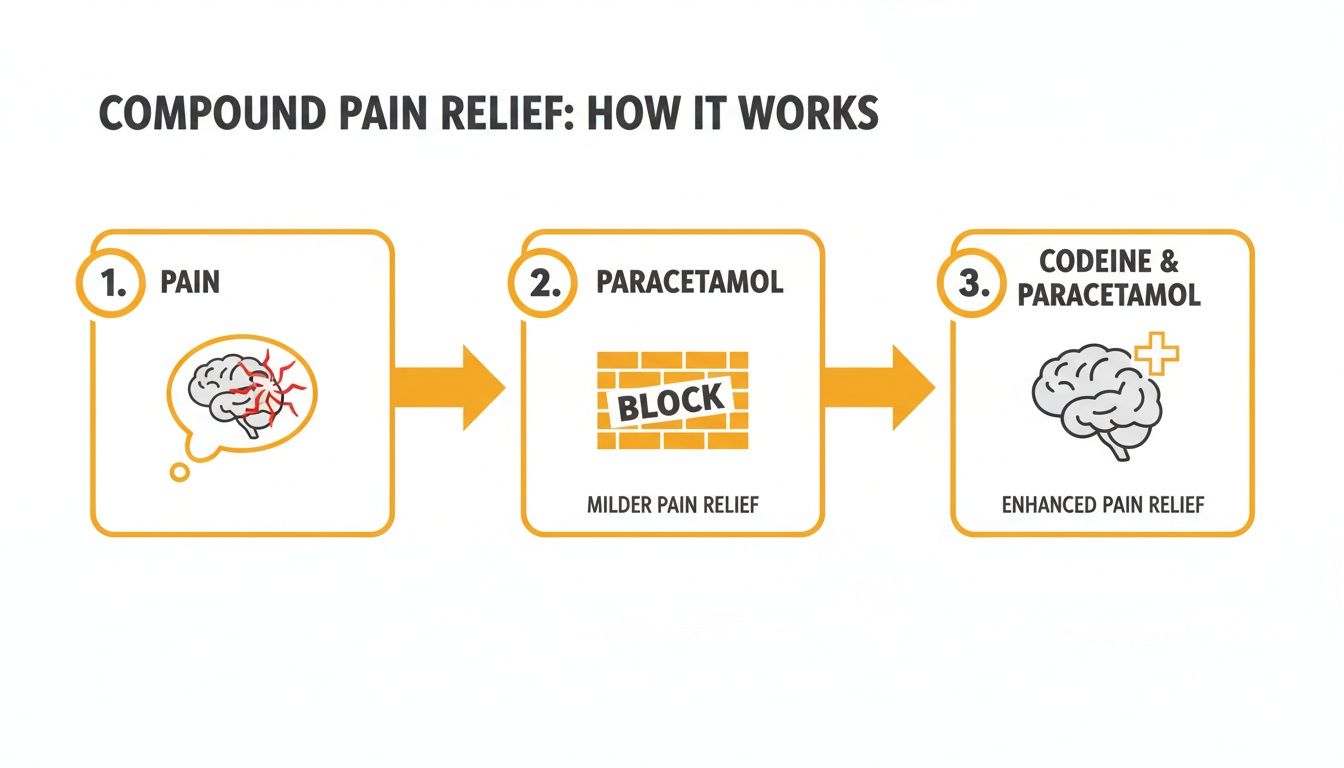
Paracetamol works at the site of the injury—your healing tooth socket—to block the production of chemicals called prostaglandins. These are the chemicals that send pain signals in the first place. By getting in their way, paracetamol effectively reduces the volume of the pain message.
Codeine, on the other hand, works directly in your brain and central nervous system. As an opioid, it changes how your brain actually perceives pain and your emotional response to it. It doesn’t stop the signal at the source, but it makes you feel the pain much less intensely.
This two-pronged approach is what makes it feel so effective. Paracetamol dulls the pain signal itself, while codeine changes how your brain processes any signal that manages to get through, providing a more comprehensive layer of relief.
Why It Is a Prescription-Only Medicine
In Australia, a standard Panadeine Forte tablet combines 500mg of paracetamol with 30mg of codeine. For years, it was a go-to prescription for managing significant pain after procedures like wisdom tooth removal.
However, because codeine is an opioid, it comes with risks of side effects and the potential for dependence. To ensure it’s used safely and only when genuinely needed, all medications containing codeine are now more strictly regulated.
Panadeine Forte is classified as a Schedule 4 medication in Australia. This simply means it is a Prescription Only Medicine. You can only get it with a valid prescription from a doctor or dentist, who will assess your specific situation and weigh the benefits against any potential risks before recommending it.
The Best Strategy For Post-Extraction Pain Relief
While Panadeine Forte can be useful in some situations, the best game plan for managing pain after a tooth extraction usually starts with a different approach. Modern dental advice focuses on a strategy that directly targets the source of your discomfort, rather than just masking the symptoms.
The main reason you feel pain after an extraction isn’t the empty socket itself—it’s inflammation. As your body begins to heal, the area naturally becomes swollen, tender, and sore. The most effective way to manage your recovery, then, is to get control of this inflammation right from the start.
Prioritising Anti-Inflammatory Medication
The first line of defence we recommend is a non-steroidal anti-inflammatory drug (NSAID), like ibuprofen (Nurofen). Unlike opioids, which work by changing how your brain perceives pain signals, NSAIDs go straight to the extraction site to reduce swelling and tenderness. This tackles the root cause of the pain head-on.
By taking an anti-inflammatory before your local anaesthetic even wears off (always following your dentist’s specific advice), you can get ahead of the inflammation cycle. This simple, proactive step can make a huge difference to the peak pain you might otherwise feel in the first 24-48 hours.
The Power Of An Alternating Schedule
For more consistent and effective relief, many dentists suggest an alternating dosage schedule. This smart approach involves taking an NSAID (like ibuprofen) and paracetamol at different times. Because they work on different pain pathways in the body, you can create a more stable level of comfort without over-relying on a single type of medication.
This is a far more effective method for most people, preventing the "peaks and troughs" of pain that happen when you wait too long between doses. It helps you stay comfortable around the clock. If you’re also dealing with issues like jaw clenching, our articles on bruxism offer some extra insights.
To help you visualise this, here is a sample schedule. Remember, this is just a guide—always follow the exact instructions provided by your dentist.
Effective Pain Management Plan After Tooth Extraction
| Time | Action | Notes |
|---|---|---|
| 12:00 PM | Take Ibuprofen (e.g., Nurofen) | Take with food to protect your stomach. |
| 2:00 PM | Take Paracetamol (e.g., Panadol) | This dose helps "top up" relief as the ibuprofen starts to wear off. |
| 4:00 PM | Take Ibuprofen | Continue alternating every 2-3 hours. |
| 6:00 PM | Take Paracetamol | This staggered approach provides consistent relief. |
Following a schedule like this helps maintain a steady level of pain management, making your recovery much smoother.
The infographic below shows how a compound painkiller like Panadeine Forte works by targeting pain in two different ways.
While the combination of paracetamol and codeine can be effective, recent studies show it’s not always the superior choice for dental pain. Research has found that for post-surgical dental pain, such as after wisdom tooth removal, codeine provides no significant extra benefit when added to a standard ibuprofen and paracetamol schedule.
At The Smile Spot, we also use advanced technology like Biolase laser dentistry. This minimally invasive tool helps seal blood vessels and nerve endings during a procedure, which dramatically reduces post-operative swelling and inflammation from the outset. Many of our patients find they need far less pain medication as a result, making for a quicker and more comfortable recovery.
Understanding the Risks and Safe Dosage of Panadeine Forte
While Panadeine Forte is a powerful tool for managing significant pain, its strength means we have to be extremely careful with how it's used. The codeine in the tablet is an opioid, which comes with potential risks and side effects you need to understand when recovering from a tooth extraction.
The most common side effects from the codeine can interfere with your day-to-day life. These often include:
- Drowsiness and Dizziness: This is a big one. It's why you absolutely must not drive or operate any machinery after taking it.
- Constipation: Opioids are known for slowing down your digestive system, which can become quite uncomfortable.
- Nausea: Some people find they feel a bit sick to their stomach after a dose.
Beyond these more immediate effects, there's also a risk of developing dependence if you take the medication for longer than a few days. Panadeine Forte is only ever intended for short-term relief.
Who Should Avoid Panadeine Forte
For some people, taking codeine isn't just uncomfortable—it's genuinely dangerous. This is particularly true for children and some teenagers who have a specific genetic makeup.
Some of us are what's known as "ultra-rapid metabolisers." The simplest way to think about it is that their liver has a super-efficient factory (thanks to an enzyme called CYP2D6) that converts codeine into morphine far more quickly and completely than the average person. For these individuals, a standard dose can create a dangerously high level of morphine in the bloodstream.
This rapid conversion process creates a serious risk of overdose and severe breathing difficulties. It's the reason Panadeine Forte is strictly not recommended for children under 12, or for some teens between 12 and 18, especially if they already have breathing issues.
Sticking to the Recommended Dosage
Following the dosage instructions to the letter is crucial. Taking too much can lead to an accidental overdose, especially of paracetamol, which can cause severe and irreversible liver damage in high amounts.
Health authorities are very clear on this: the maximum dose for an adult is no more than 8 tablets within a 24-hour period. This limit keeps you safely under the daily threshold for both paracetamol (4 grams) and codeine (240 mg). The tragic reality of these risks was highlighted by fatal cases in children who were ultra-rapid metabolisers, so it's a guideline we take very seriously. You can discover more insights about these official guidelines to understand the safety protocols in full.
If you find that the prescribed dosage of Panadeine Forte for your tooth extraction isn't controlling your pain, do not take extra tablets. This is a red flag. It’s a sign that you need to call your dentist right away, as it could point to a complication like a dry socket that requires professional care.
A Smarter Approach to Dental Pain: Beyond Opioids
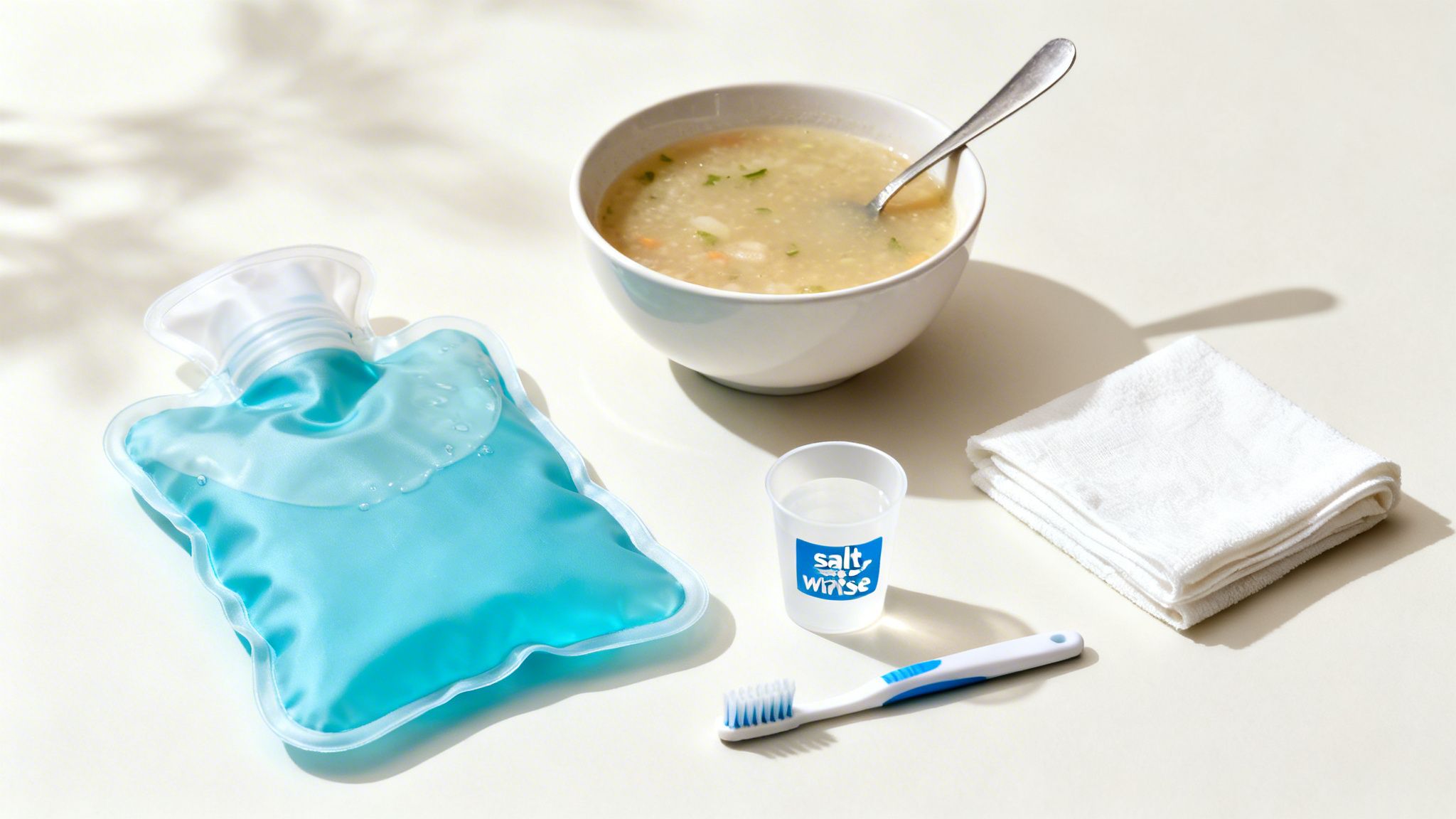
While stronger painkillers like Panadeine Forte have a role in managing short-term, severe pain, they aren't always the best or safest first choice after a dental procedure. In fact, years of clinical experience show us that a more targeted strategy often provides much better relief without the added risks of opioids.
The secret isn’t a single powerful drug, but a simple combination of two common over-the-counter medications. This one-two punch is proven to be incredibly effective for dental pain, especially after a tooth extraction.
The Winning Combo: Paracetamol and Ibuprofen
The most effective way to manage discomfort after an extraction is to combine a standard pain reliever with an anti-inflammatory. This pairing gives you the best of both worlds:
- Ibuprofen: This is a non-steroidal anti-inflammatory drug (NSAID). Its main job is to go straight to the source of the pain—the inflammation at the extraction site—and calm it down.
- Paracetamol: This works on a different track, blocking pain signals in your brain before they have a chance to register.
When you take these two medications on an alternating schedule, you build a consistent and powerful layer of pain relief. Study after study confirms this combination often provides better pain control than codeine-based medications for dental pain, all with fewer side effects. You’re tackling both the swelling and the pain signals at the same time.
The goal is always to stay ahead of the pain. Using ibuprofen to manage inflammation and paracetamol for any breakthrough discomfort creates a strong foundation for a comfortable recovery. Often, this makes stronger medications like Panadeine Forte for tooth extraction completely unnecessary.
Simple Steps for a Smoother Recovery
Pain medication is only one part of the picture. Your recovery toolkit should also include some simple, practical habits that help your body heal and reduce discomfort naturally. These steps work hand-in-hand with your medication to soothe the area and prevent complications.
A well-rounded aftercare plan includes a few key things:
- Cold Packs: In the first 24-48 hours, applying a cold pack (or a bag of frozen peas wrapped in a tea towel) to your cheek for 15-20 minutes at a time is a game-changer. It dramatically reduces swelling and provides a gentle numbing effect.
- A Soft Food Diet: Give the extraction site a break by sticking to soft, cool foods. Think yoghurt, smoothies, lukewarm soups, and mashed potatoes. Steer clear of anything hot, spicy, or crunchy that could disturb the fragile blood clot protecting the socket.
- Gentle Salt-Water Rinses: After the first 24 hours, start gently rinsing your mouth with a warm salt-water solution (half a teaspoon of salt in a cup of warm water) 2-3 times a day. This keeps the area clean and promotes healing. Don’t swish vigorously—just tilt your head side to side to let the water flow over the site.
- Plenty of Rest: Your body’s healing process requires energy. Take it easy for a couple of days, avoid any strenuous exercise, and try to keep your head elevated when you rest to minimise throbbing. Just as protecting your teeth with a dentist mouth guard is key for long-term health, resting properly is crucial for short-term healing.
Your Tooth Extraction Aftercare Plan
A smooth recovery after a tooth extraction is a team effort between you and us. Here at The Smile Spot, your comfort and safety are our top priorities. We achieve this by using modern, evidence-based techniques that are as minimally invasive as possible, but what you do at home is just as important.
Think of your aftercare as the final, crucial step in your treatment.
If your pain feels like it's getting worse instead of better, or you have any worries at all about how you're healing, please contact us directly. It's really important not to take more medication than prescribed. Severe pain can sometimes be a sign that something needs a closer look from our team.
A great recovery is our shared goal. By following a smart aftercare plan and staying in communication with us, you can ensure a safe and comfortable healing journey.
We're here to support you every step of the way. Proper aftercare, which includes keeping the area clean exactly as we've shown you, is essential for avoiding complications. For related advice, you might find our guide on how to clean a mouth splint helpful.
For our patients in Dulwich Hill and across the Inner West, we offer convenient online booking and flexible hours to fit your schedule. Whether you need to book a follow-up or require an emergency appointment, our team is ready to provide the high-quality, gentle care your family deserves.
Frequently Asked Questions
It’s completely normal to have questions about your recovery after a dental procedure. We've put together some quick, clear answers to the most common queries we hear about managing pain after a tooth extraction.
Can I Take Panadeine Forte Before My Tooth Is Extracted?
Generally, no. We don't recommend taking Panadeine Forte before your extraction unless your dentist has specifically told you to. Pre-emptive pain relief usually works better with anti-inflammatories like ibuprofen. They get ahead of the inflammation before it starts, which is a more effective strategy for managing post-procedure discomfort.
How Long Should I Take Panadeine Forte After Wisdom Teeth Removal?
Panadeine Forte is only meant for short-term relief from moderate to severe pain, typically for 1-3 days at most. The goal is to transition to over-the-counter options like ibuprofen and paracetamol as soon as that initial, intense pain starts to settle down. You should never use it for longer than your dentist has prescribed.
Think of Panadeine Forte as a temporary bridge to get you over the most acute phase of pain. As your body heals, your pain management plan should adapt right along with it.
Can I Drive After Taking Panadeine Forte?
Absolutely not. You must not drive, operate any machinery, or make important decisions after taking Panadeine Forte. The codeine in the medication is known to cause significant drowsiness, dizziness, and cloudy judgment, making these activities unsafe for you and everyone else on the road.
What If The Pain Is Not Controlled By The Medication?
If your pain is severe and the prescribed dose isn't helping, please don't take extra tablets. It’s important that you contact your dentist immediately. Pain that isn’t getting better can sometimes be a sign of a complication, like a dry socket, which needs to be looked at by a professional. Getting it sorted out quickly is key, and our team is always ready to help with emergency dentist appointments to make sure you’re comfortable and healing properly.
At The Smile Spot, your health and comfort are our top priorities. If you have any more questions about your recovery or would like to book a consultation, please get in touch with our friendly team at The Smile Spot.