You notice a little blood when you spit after brushing. It’s not dramatic. It happens once, then again a few days later. Maybe your gums feel puffy near a back tooth, or your breath never seems as fresh as it should. You tell yourself you’ll keep an eye on it.
Then someone mentions gum surgery, and your stomach drops.
That reaction is common. Many people in Dulwich Hill and across the Inner West don’t ignore bleeding gums because they don’t care. They delay treatment because they’re picturing scalpels, stitches, swelling, and days of discomfort. If that’s where your mind goes, it helps to know that modern periodontal care can look very different from the old image of gum surgery.
Laser gum treatment uses focused light energy to treat infected gum pockets with much less trauma to the surrounding tissue. For patients who are busy, anxious, or tired of putting off care, it can feel like a much more manageable step.
A Modern Approach to Gum Health in the Inner West
A patient might come in after months of hesitation. They’ve noticed a metallic taste when flossing, or their gums bleed around one side every morning. They’re worried, but they’re also worried about treatment itself. Often, they’ve heard stories about painful gum surgery from years ago and assume that’s still the standard.
The conversation changes once they learn there’s another option.
Laser gum treatment is a modern way to manage gum disease that focuses on precision and comfort. Instead of cutting wide areas of tissue and stitching them back into place, the laser targets the diseased pocket lining and bacteria while preserving far more of the healthy gum.
Why patients respond well to it
For many people, the biggest relief is emotional before it’s physical. Hearing that a treatment may involve no stitches and a lower infection risk makes the whole experience feel less threatening. A 2023 Australian Periodontology Society survey found that 65% of patients preferred laser gum treatment over conventional methods, mainly because of no stitches and lower infection risk (details noted here).
That preference makes sense in a community full of parents, commuters, and professionals who can’t easily disappear for a long recovery. It also matters for people who already feel tense in the dental chair and need a gentler experience from the start.
A patient who’s been avoiding care often doesn’t need a lecture. They need a treatment path that feels safe enough to begin.
What makes it feel different
The shift isn’t only about technology. It’s about how the treatment fits real life.
- Less confronting care means many patients feel more willing to address gum problems early.
- Quicker healing can make treatment easier to schedule around work and family commitments.
- A calmer appointment matters if you’ve had difficult dental experiences before.
If dental fear has kept you from acting on bleeding gums or gum tenderness, reading about a gentle dentist near me can be a helpful first step. Many patients don’t need more bravery. They need a more comfortable model of care.
Understanding Gum Disease and Its Traditional Fixes
Gum disease often begins subtly. You may see a little blood when brushing, notice tenderness near the gumline, or feel like your teeth look slightly longer than before. None of that seems urgent. That’s why it’s easy to let it slide.
The better way to think about gum disease is this. It’s like termites in the foundation of a house. The early signs can look small, but the damage happens under the surface where you can’t easily see it.
What’s actually happening under the gums
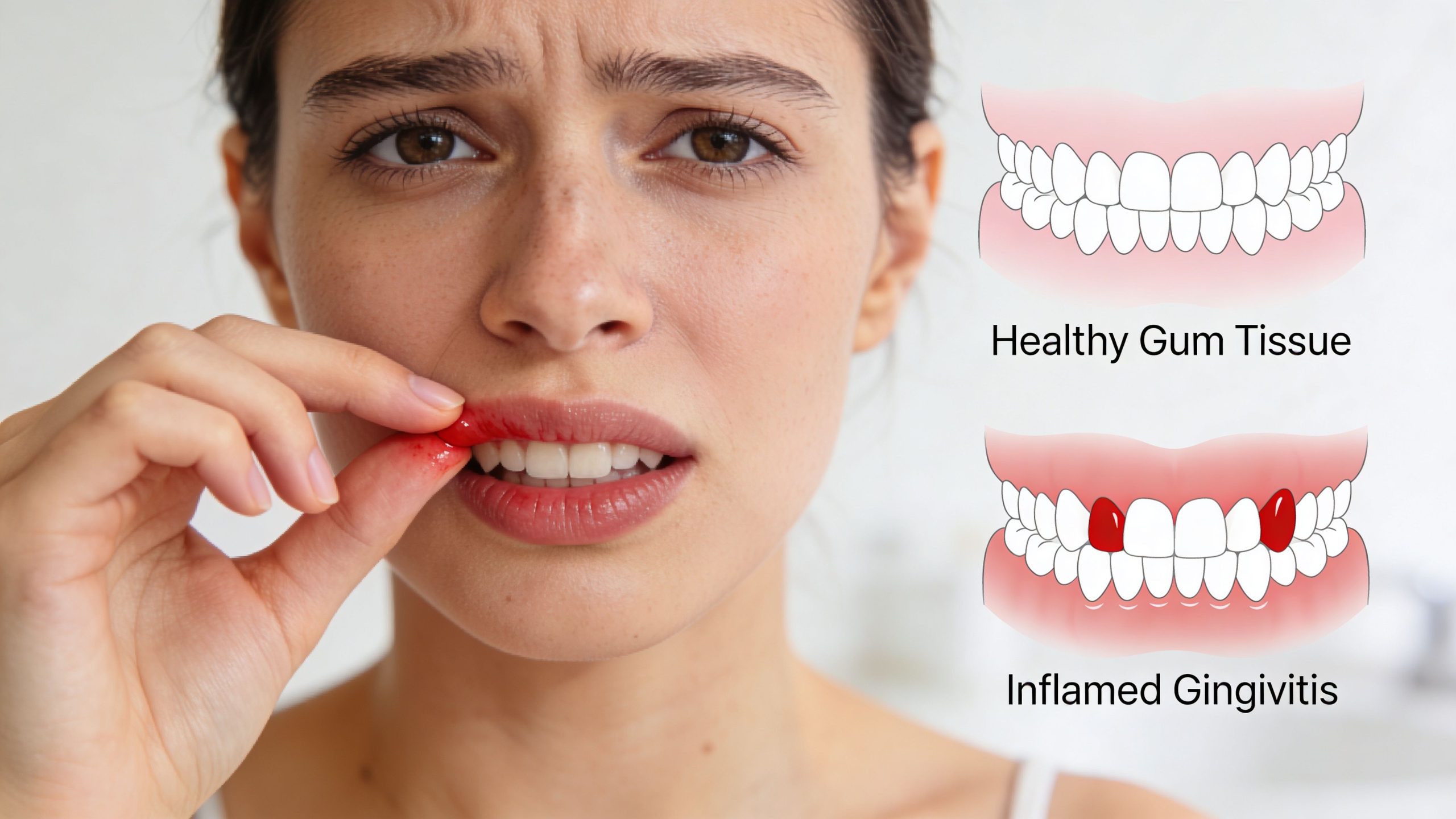
In the beginning, plaque and bacteria irritate the edge of the gums. That stage is often called gingivitis. Gums may look redder, feel swollen, or bleed during brushing.
If the infection keeps sitting there, the problem can deepen into periodontitis. The gum starts to pull away from the tooth, creating a pocket where more bacteria can collect. That pocket is hard to clean at home, so the infection can keep going.
A 2024 Sydney University study found that 25% of adults in NSW have untreated periodontal pockets greater than 4 mm, which shows how common this hidden stage can be (reported here).
Signs people often miss
Some symptoms are obvious, but many aren’t. Patients often assume gum disease has to hurt badly before it’s serious. It often doesn’t.
- Bleeding when brushing or flossing can be an early warning, not “just sensitive gums”.
- Bad breath that keeps returning may come from bacteria sitting deep around the teeth.
- Gum recession can make teeth look longer and expose more sensitive root surface.
- Loose-feeling teeth or changes in bite can happen later, when support has been affected.
If recession is one of your concerns, this article on What Causes Gum Recession and How to Protect Your Smile gives a useful patient-friendly overview of why gums can pull back and what habits help protect them.
What traditional treatment usually involves
Conventional gum treatment has an important role, especially when infection needs to be removed thoroughly. A routine check-up and clean may be enough in mild cases. Once pockets deepen, treatment becomes more involved.
Traditional approaches often start with scaling and root planing, where hardened build-up and bacteria are cleaned from below the gumline. In more advanced cases, a flap procedure may be recommended. That means lifting the gum tissue to access deep areas, then placing it back with sutures.
That kind of surgery can work, but it’s the part many patients fear. The idea of scalpels, stitches, post-operative bleeding, and a slower recovery puts people off. For anxious patients, the mental barrier can be almost as significant as the gum disease itself.
Gum disease isn’t a sign you’ve failed. It’s a condition that often progresses quietly until someone finally notices the clues.
How Biolase Laser Treatment Gently Restores Your Gums
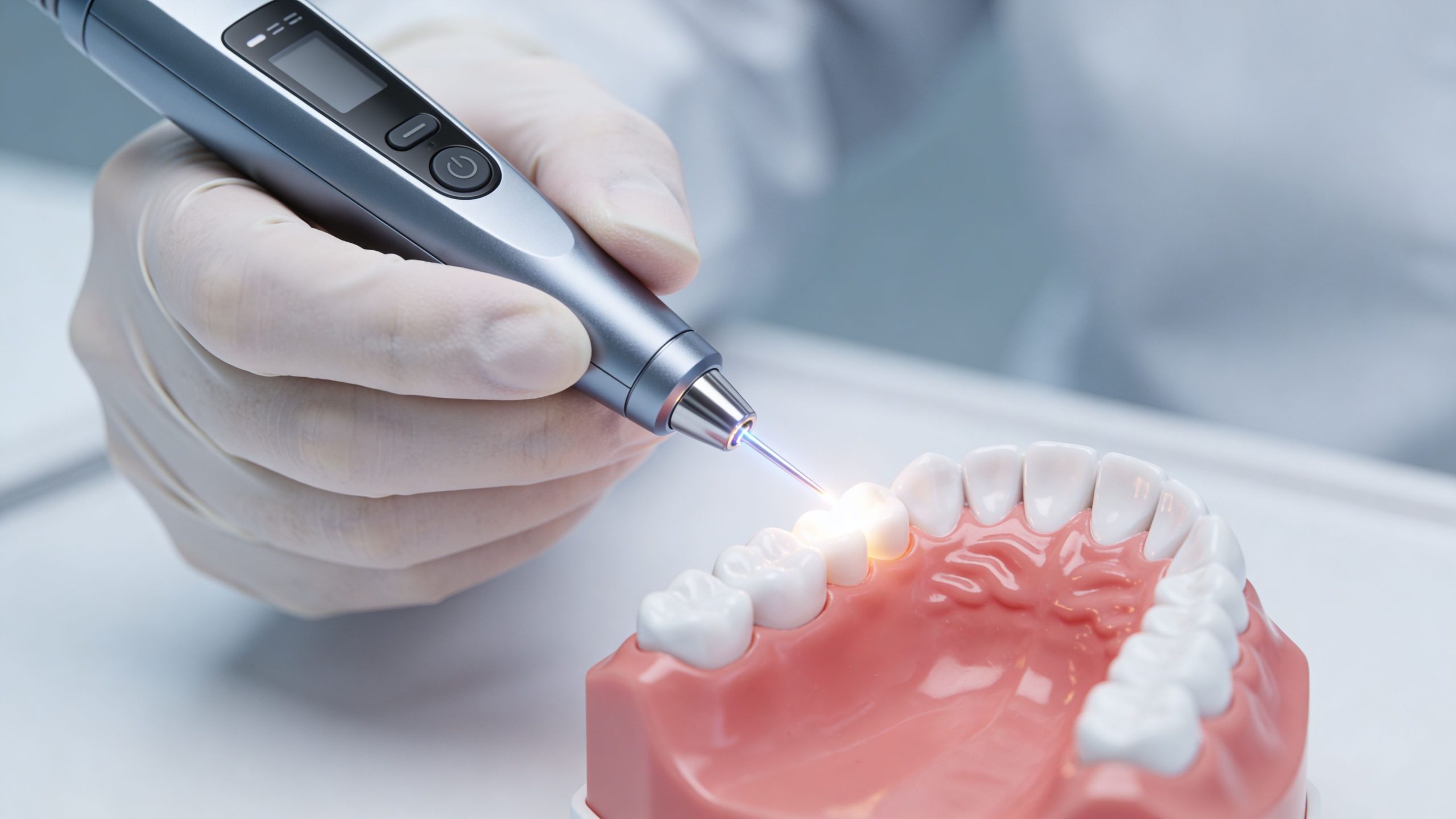
The easiest way to understand laser gum treatment is to stop thinking of it as a dramatic beam and start thinking of it as a very precise power wash.
A traditional approach may need wider manual access to reach diseased areas. A laser approach uses focused energy to clean and disinfect deep within the pocket with much more selectivity. That’s why many patients are surprised by how conservative it feels.
What the laser is doing
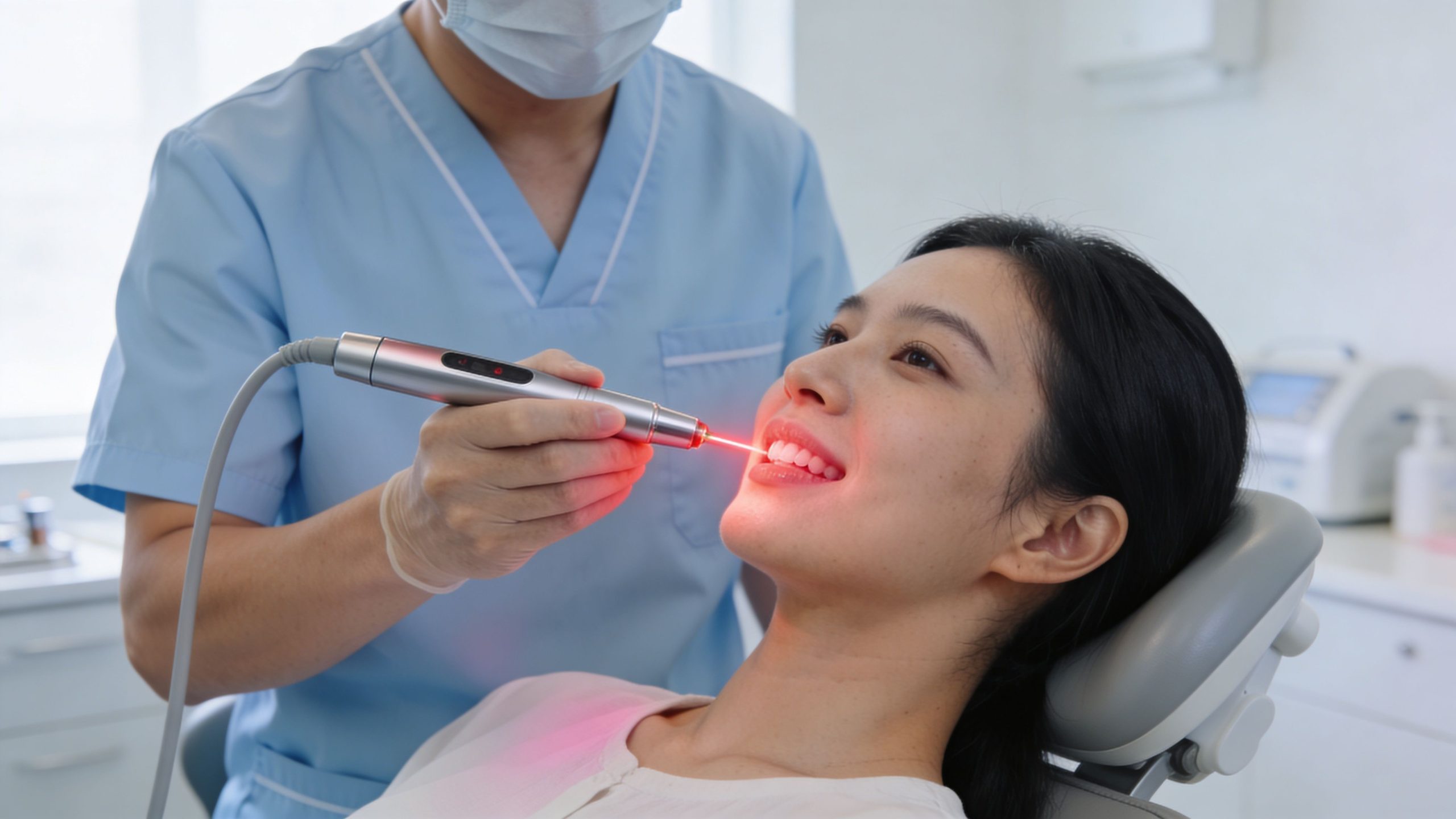
With a system such as Biolase Waterlase, the goal isn’t to remove healthy gum. The goal is to target infection, diseased pocket lining, and bacteria while preserving the tissue you want to keep.
A helpful way to picture it is this:
- The clinician guides the laser into the infected pocket around the tooth.
- The laser energy disrupts bacteria and diseased tissue in that narrow space.
- The area is cleaned with a high level of precision.
- The treated tissue is left in a better state to heal and reattach.
That precision matters because healthy gum is not just extra material. It’s part of the seal that protects the tooth and underlying bone.
Why precision changes the experience
The reason patients often describe laser gum treatment as gentler is simple. The treatment is more selective.
The LANAP protocol, which is similar in principle to Biolase laser periodontal procedures, has been reported to achieve a 99.9% bacterial kill rate against periodontal pathogens and preserve 80 to 90% of healthy gum tissue (clinical overview here). That means the procedure is designed around removal of disease, not broad removal of surrounding tissue.
For a patient, that can translate into:
- Less trauma to healthy gum
- Reduced bleeding and swelling after treatment
- A smoother healing phase
- A procedure that feels less invasive overall
Some people like to read an additional plain-language overview before deciding. This LANAP laser treatment guide is a useful external explainer of how laser periodontal therapy works and what patients can expect.
How the body helps after the laser work
Once the infected area has been cleaned and decontaminated, the body can do what it’s meant to do more effectively. The laser isn’t “healing” the gums by itself. It’s creating better conditions for healing.
That matters because chronic gum infection doesn’t just irritate tissue. It interferes with the gum’s ability to sit tightly against the tooth. When the infection burden is reduced and the tissue is treated conservatively, the gum has a better chance to recover and form a healthier seal.
This short video gives a visual sense of the treatment approach and why many patients find it less intimidating than old-style surgery.
What patients often get confused about
People commonly ask whether a laser means there’s no cleaning involved. There is. Laser treatment isn’t a shortcut that replaces periodontal principles. It’s a more refined way of carrying them out.
Here’s where confusion usually clears up:
| Question | Straight answer |
|---|---|
| Does the laser just burn the gums? | No. In periodontal care, the laser is used in a controlled, targeted way to treat diseased tissue and bacteria. |
| Is it cosmetic only? | No. It can be used for gum health treatment, not only smile reshaping. |
| Will the gum grow back instantly? | Healing still takes time. The benefit is that the area is treated more gently and set up for better recovery. |
| Is it only for severe disease? | Not always. Suitability depends on the depth of the pockets, tissue condition, and overall oral health. |
The best way to think about laser gum treatment is not “high-tech for the sake of it”. It’s targeted periodontal care with less collateral damage.
Your Laser Gum Treatment Journey at The Smile Spot
Most anxious patients don’t want more theory. They want to know what the appointment feels like.
The journey usually starts with a conversation, not a procedure. You arrive, settle in, and talk through what you’ve noticed. Bleeding. Sensitivity. A bad taste. Gum recession. Worries about pain. If you’ve been putting it off for months, that’s common too.
The first visit
At the consultation, the gums are examined carefully. The key question isn’t just “Are the gums inflamed?” It’s how deep the pockets are, which areas are active, and whether laser gum treatment is the right fit.
You’ll typically be shown where the problem areas are and how they differ from healthier sites. That matters because once patients can see what’s happening, treatment feels less mysterious and more logical.
The planning stage usually covers:
- Which teeth or areas need the most attention
- Whether the infection appears mild, moderate, or more advanced
- What kind of comfort support will help you cope best
- What the healing period will likely involve
The day of treatment
This is the part many people overestimate.
Patients often expect a noisy, aggressive appointment. Instead, the experience is usually much calmer than they imagined. There’s no scalpel-based cutting in the way people associate with traditional surgery, and that changes the emotional tone of the whole visit.
Anaesthesia may still be used, but often in a conservative way. The goal is comfort, not endurance. If you’re nervous, say so early. That changes how the appointment is paced and explained.
Practical rule: The more your dental team knows about your anxiety triggers, the easier it is to tailor the appointment around them.
If you’re a very nervous patient
Some patients cope well once they understand the process. Others need more support, and that’s reasonable.
For families and anxious adults, sedation can make the difference between delaying treatment and finally getting it done. Australian data reports that 18% of families seek sedation dentistry, and pairing laser treatment with nitrous oxide can reduce patient anxiety scores by up to 60% (reported here). That’s one reason laser treatment often feels much more accessible to people who’ve avoided periodontal care.
Right after the appointment
Many patients expect to feel wiped out. What they often feel instead is relief. The appointment they dreaded is over, and it wasn’t the ordeal they had built up in their head.
You may notice tenderness, but the experience is typically much easier than recovery from stitched gum surgery. You’ll be given clear instructions about eating, cleaning, and what sensations are normal in the first phase of healing.
If cost has been part of your hesitation, it’s worth asking early about options. Articles on dentists with payment plans near me can help patients understand how to spread treatment into something more manageable instead of delaying needed care.
Laser Versus Traditional Surgery A Clear Comparison
For most patients, the decision comes down to one question. If both options aim to treat gum disease, what feels different in real life?
The answer is easiest to see side by side. Traditional flap surgery has long been used to gain access to deep infection. Laser gum treatment aims to treat diseased pockets with greater precision and less physical trauma to the surrounding tissue.
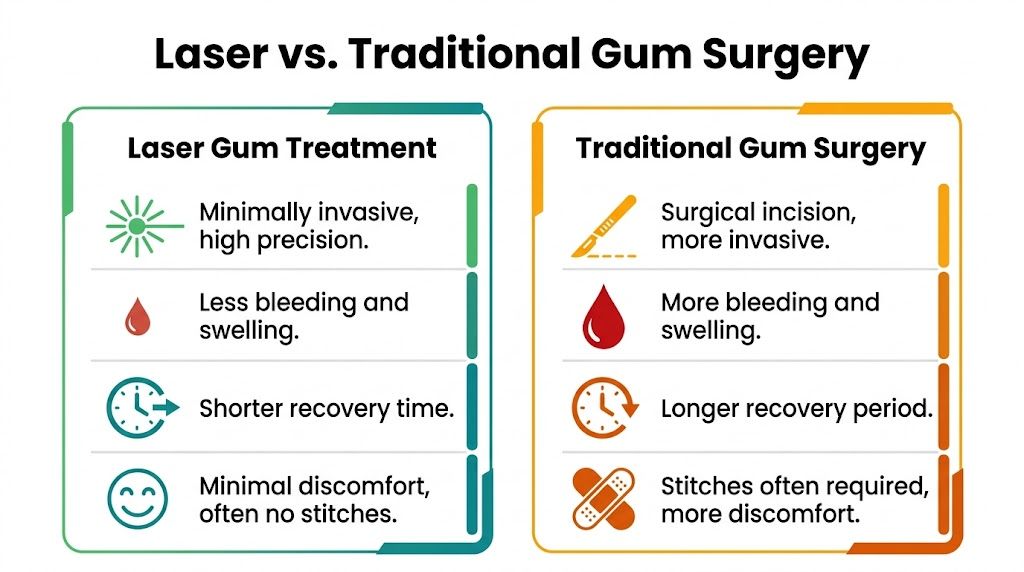
The comparison patients care about most
| Treatment factor | Laser gum treatment | Traditional gum surgery |
|---|---|---|
| How it feels emotionally | Usually less confronting for anxious patients | Often sounds and feels more surgical from the outset |
| Instruments used | Focused laser energy | Scalpels and sutures are commonly involved |
| Bleeding and swelling | Typically reduced because treatment is more selective | Usually more noticeable because tissue is cut and reflected |
| Healing experience | Often easier to manage | Often more disruptive in the first recovery phase |
| Tissue preservation | Designed to conserve healthy gum wherever possible | Access can require broader tissue manipulation |
| Return to routine | Often faster | Often slower because of the more invasive nature of surgery |
This comparison isn’t about saying older treatment is “wrong”. It’s about matching the method to the patient and using a technique that reduces unnecessary trauma when possible.
Comfort and recovery
This is usually the first thing patients ask about, and for good reason.
Traditional flap surgery often carries the psychological weight of surgery before the appointment even begins. People imagine the numbing, cutting, repositioning of the gums, sutures, and the after-effects. That mental picture alone causes many patients to postpone treatment.
Laser gum treatment changes that picture. Because the approach is more precise and usually less invasive, patients often describe it as easier to accept and easier to recover from. There’s less of the “I’ve just had surgery” feeling.
Bleeding and inflammation
One of the clearest clinical differences is what happens in the gum pocket itself. Laser treatment can reduce the bacterial burden while working conservatively around healthy tissue.
Clinical trials have shown that adding laser therapy to traditional care produced significantly better outcomes, reducing deep gum pockets and cutting bleeding on probing by up to 50% more than scaling and root planing alone (clinical trial summary here). For patients, that doesn’t just mean better numbers on a chart. It means gums that are less inflamed and less likely to bleed with everyday cleaning.
Precision versus access
Traditional surgery often relies on wider physical access. The gum is opened so the clinician can directly clean and treat deep contaminated surfaces.
Laser gum treatment approaches the same disease with a different philosophy. Instead of broad access first, it prioritises targeted decontamination and selective tissue management. That can be especially appealing if your main concern is preserving your natural gumline and avoiding the “long tooth” look that some patients fear after more aggressive tissue removal.
What each option is best suited to
A simple way to frame it is this:
- Laser gum treatment suits patients who value a more conservative experience, especially when comfort and tissue preservation matter.
- Traditional surgery still has a place when anatomy, severity, or specific clinical findings call for direct surgical access.
- A blended plan is sometimes the most sensible route, where conventional deep cleaning and laser support are used together.
That’s why a proper examination matters. The right treatment isn’t chosen by trend. It’s chosen by what your gums need.
The best periodontal treatment is the one that controls infection effectively and gives the patient the best chance of actually following through.
Long-term thinking matters
Patients sometimes assume the decision is only about the day of treatment. It isn’t. The method chosen can influence how easy the healing period feels, how willing you are to attend follow-up care, and how confident you feel cleaning properly afterwards.
That matters because gum disease isn’t solved by one appointment alone. A treatment that feels manageable often leads to better patient cooperation in the months that follow. For many people, that’s where the significant value of laser gum treatment becomes clear. It lowers the barrier to getting started and makes long-term care feel more achievable.
Aftercare and Ensuring Your Long-Term Success
The first thing to know after laser gum treatment is that healing still deserves respect. Gentler treatment doesn’t mean careless recovery. It means the tissues usually have less trauma to recover from.
In the early phase, the main job is to protect the treated area while letting the gums settle. You’ll usually be guided on what to eat, how to clean, and what signs are normal while healing progresses.
What helps in the first phase
Patients do best when they keep the first few days simple.
- Choose softer foods that don’t scrape or jab the gumline.
- Clean exactly as instructed rather than guessing or overbrushing.
- Avoid testing the area with fingers, tongue, or vigorous flossing.
- Stick to your review plan even if everything already feels better.
A lot of people make the same mistake after any dental procedure. If discomfort is low, they assume the area is fully recovered. It isn’t. The tissue may feel calmer before it has fully stabilised.
What discomfort should you expect
Most patients don’t need to prepare for the sort of recovery they associate with traditional surgery. Still, some tenderness is normal, and your dentist will explain what level is expected and how to manage it.
If you’ve ever looked up stronger post-operative pain relief, such as Panadeine Forte for tooth extraction, it’s worth noting that laser periodontal care is a different experience and should be managed only with the advice given for your specific procedure.
Healing goes better when patients follow the instructions they were given, not the instructions they remember from a different dental treatment.
The real key to long-term success
Laser gum treatment can clean and reset the environment around the teeth. It can’t brush for you at home, and it can’t replace maintenance visits.
Long-term success usually depends on a partnership:
| Your role | Your dental team’s role |
|---|---|
| Clean carefully at home | Monitor pocket healing |
| Attend maintenance visits | Remove build-up in hard-to-reach areas |
| Report bleeding early | Adjust your maintenance plan if needed |
| Follow advice on habits | Track whether the disease stays stable |
That’s the honest version of periodontal care. The treatment can be advanced and conservative at the same time, but it still works best when daily home care and regular maintenance support it. Patients who understand that tend to keep their results longer and feel more in control of their gum health.
Frequently Asked Questions About Laser Gum Treatment
Is laser gum treatment painful
Most patients find it much easier than they expected. The treatment is designed to be more conservative than traditional gum surgery, and that usually means less tissue trauma. You may still need local anaesthetic, but the overall experience is often calmer and more comfortable than a stitched surgical procedure.
How much does it cost and what are the payment options
The cost depends on how many areas need treatment and how advanced the gum disease is. A proper examination is the only reliable way to quote accurately. It’s best to ask for a written treatment plan so you can see what’s essential now, what can be staged, and whether payment options are available.
Am I a good candidate for laser gum treatment
You may be, especially if you have bleeding gums, deeper periodontal pockets, early to moderate gum disease, or you’ve been delaying treatment because you’re frightened of surgery. It can also be relevant in some cosmetic gum reshaping situations or as part of preparing the gums for restorative treatment. The deciding factors are your pocket depths, tissue condition, bone support, and overall oral health.
Is it suitable if I’m very anxious
Often, yes. That’s one of the strongest reasons patients ask about it. The more conservative feel of the procedure can already make it easier to tolerate, and some patients also do well with sedation support when appropriate. If your anxiety is severe, it may also help to read about options such as a full anesthesia dentist so you understand the broader spectrum of comfort care available.
How do I know if I should book now or wait
If your gums are bleeding regularly, feel swollen, or seem to be receding, waiting usually doesn’t improve the situation. Gum disease tends to advance subtly. A consultation doesn’t commit you to treatment on the spot. It informs you of the problem's seriousness and your options.
If you’re noticing bleeding gums, recession, or bad breath that won’t settle, the next step is a proper assessment with The Smile Spot. A personalised consultation can show whether laser gum treatment is suitable for you and what a comfortable plan would look like for your smile.