Professional teeth whitening in Sydney typically costs $600 to $1,200 for in-chair treatment and $300 to $700 for dentist-supervised take-home kits. If you’re comparing ads, clinic websites, and pharmacy options right now, the question isn’t just what whitening costs. It’s what you’re getting for that money.
Many begin their search identically. They notice staining from coffee, tea, red wine, age, or old habits, then type teeth whitening cost sydney into Google and find a messy spread of prices that don’t seem to match. One clinic looks cheap, another looks expensive, and it’s hard to tell whether you’re comparing the same treatment or two completely different services.
That confusion is understandable. Whitening sounds simple, but the cost changes depending on the method, the strength of the whitening system, whether your teeth need preparation first, how sensitive your teeth are, and whether the fee includes custom trays, reviews, or aftercare. A low headline price can leave out important parts of treatment. A higher quote can include far more value.
Your Guide to a Brighter Smile in Sydney
If you want a cleaner, whiter smile without guessing your way through the options, start with the broad Sydney range and then narrow it down based on your teeth, your timeline, and your tolerance for sensitivity.
Professional whitening in Sydney generally sits in two main brackets. In-chair whitening usually costs more because it’s done under direct clinical supervision and aims for a fast result in a single appointment. Dentist-supervised take-home whitening costs less upfront and gives you more gradual control over the shade change.
What often throws patients off is that all whitening gets talked about as if it’s one thing. It isn’t. A premium light-accelerated treatment, a standard in-chair session, and a custom take-home system can all be called “professional whitening”, but they involve different materials, different chair time, and different levels of immediacy.
Why Sydney prices vary so much
Sydney is a premium dental market, and whitening fees reflect that. Urban practices carry different overheads, and many clinics use advanced systems that are designed to improve comfort, efficiency, and predictability. That’s one reason the spread can look wide even among reputable providers.
The better approach is to ask practical questions:
- What method is included. Is it in-chair, take-home, or a combination?
- What preparation is needed. Do you need a check-up or clean before whitening?
- What’s part of the fee. Are custom trays, sensitivity products, and review appointments included?
- What result is realistic. Will your type of staining respond well?
A useful rule: never compare whitening prices without comparing what the package includes.
If you want a more general starting point before deciding which method suits you, this overview of how much teeth whitening costs is a helpful first read.
The rest of the decision comes down to value. Some people want speed because they’ve got photos, a wedding, or work events coming up. Others want a lower initial cost and the flexibility to whiten more gradually at home. Both can be worthwhile when they’re chosen for the right reason.
Professional Teeth Whitening Prices in Sydney for 2026
The most reliable Sydney pricing data places professional in-chair whitening at $600 to $1,200 and dentist-supervised take-home kits at $300 to $700, based on Sydney clinic pricing discussed by Bigger Smiles’ teeth whitening cost guide. That same source notes that professional treatments use 15–35% hydrogen peroxide and can whiten by up to 8 shades when the case is suitable.
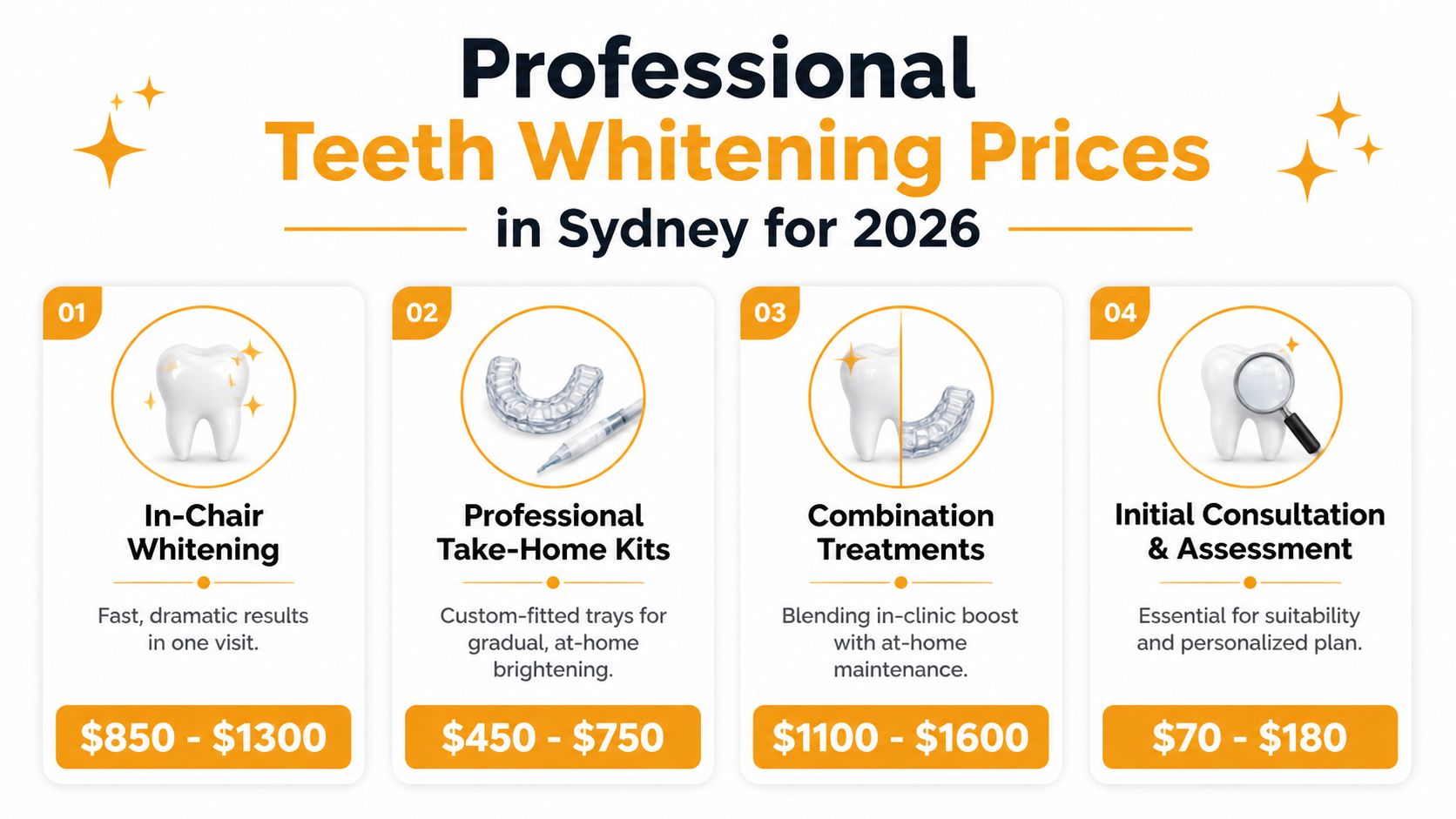
Those figures are useful, but they only become meaningful when you understand what sits behind them. Whitening fees aren’t just a charge for gel. You’re paying for diagnosis, safe application, the right concentration, protection of the gums and soft tissues, and a treatment plan that fits the condition of your teeth.
What in-chair whitening usually includes
In-chair whitening is the higher-cost professional option because it compresses the process into one visit and places the whole procedure under clinical control.
A proper in-chair appointment usually covers:
- Suitability screening so untreated decay, cracks, leaking fillings, exposed roots, or gum inflammation aren’t ignored
- Shade assessment before treatment, so the change can be measured properly
- Isolation and soft-tissue protection to reduce the chance of chemical irritation
- Controlled whitening cycles using professional-grade gel
- Sensitivity management if your teeth react during or after treatment
Patients often focus on the number at the bottom of the quote. Clinically, the more important issue is whether the treatment is likely to work evenly and safely on your teeth.
What take-home whitening pays for
Professional take-home kits aren’t the same as pharmacy strips or generic online kits. The fee usually reflects the work involved in creating a treatment that fits your mouth and minimises waste, leakage, and gum contact.
What you’re usually paying for includes:
| What’s included | Why it matters |
|---|---|
| Custom trays | A close fit helps the gel sit where it should and reduces seepage onto the gums |
| Professional-strength gel | This is stronger and more predictable than most non-professional products |
| Written instructions | Patients need to know how often to wear the trays and what to do if sensitivity appears |
| Monitoring | If something isn’t responding as expected, the plan can be adjusted |
That’s why a dentist-supervised home system can still represent strong value even though it’s the lower-priced professional option. You’re buying control and suitability, not just convenience.
Whitening works best when the method matches the patient. The wrong method can cost less upfront and still be poorer value.
Why over-the-counter products are cheaper
Over-the-counter options sit at the cheapest end of the market, but the low price reflects their limitations. The same Sydney pricing discussion linked above notes that these products are the least expensive category and generally produce inferior results compared with dentist-supervised whitening.
That doesn’t mean every pharmacy product is dangerous. It means they’re broad, non-personalised solutions. They don’t account for:
- existing restorations that won’t whiten
- uneven staining patterns
- tooth sensitivity
- tray fit
- gum protection
- whether whitening is even appropriate yet
If you’re deciding between speed, control, and budget, this guide to professional teeth whitening can help you think through the options in a more practical way.
The value question patients should ask
A better question than “What’s the cheapest whitening?” is “What gives me the safest and most predictable result for my situation?”
For some people, the answer is a single in-chair visit. For others, it’s custom take-home trays because they want gradual change and easier touch-ups later. Cost matters, but it only makes sense when it’s tied to the result, the safety of the process, and how well the plan suits your teeth.
In-Chair vs Take-Home Kits What Are You Paying For
The biggest choice in whitening isn’t whether to do it. It’s whether you want speed or control.
In-chair whitening appeals to people who want to walk out of the clinic with a visible change. Take-home whitening appeals to people who prefer a slower pace, a lower entry price, and more flexibility. Neither is automatically better. Each works best for a different kind of patient.
In-chair whitening for speed and convenience
Sydney’s demand for cosmetic dentistry has pushed clinics toward more advanced systems. According to Cosmic Smile’s guide to teeth whitening costs in Australia, premium in-clinic options such as Philips Zoom! or laser-assisted whitening cost $900 to $1,500, while standard in-chair services sit at $450 to $900. The same source notes that 70–80% of patients achieve their desired shade in a single session.
That doesn’t mean every patient gets a dramatic Hollywood-white result. It means many suitable patients reach the level they were hoping for without needing repeated clinic visits.
A typical in-chair appointment suits someone who:
- has an event coming up
- wants the fastest visible change
- would rather not manage trays and gel at home
- values close supervision, especially if sensitivity is a concern
Some clinics use systems such as Philips Zoom! or laser-assisted whitening to accelerate the process. Those systems often cost more because of the equipment involved and the way the treatment is delivered.
Take-home whitening for gradual control
Professional take-home whitening has a different strength. It gives you the ability to brighten your teeth in a slower, steadier way using custom trays made for your mouth.
That tends to suit people who:
- want more flexibility around work or family life
- prefer gradual improvement over one stronger session
- want to stop and restart more easily if sensitivity appears
- like having trays available for maintenance later
Take-home whitening is often underestimated because it happens outside the clinic. In reality, it can be an excellent option when the trays fit properly and the patient follows instructions carefully. It’s less about instant transformation and more about controlled progress.
If your schedule is packed and your goal date is close, in-chair whitening often makes more sense. If you want a measured approach, take-home trays are usually the smarter fit.
Side-by-side comparison
| Feature | In-Chair Whitening | Professional Take-Home Kit |
|---|---|---|
| Cost | Higher professional fee | Lower professional fee |
| Time commitment | Single appointment | Worn over a home treatment period |
| Speed of result | Fastest visible change | Slower, progressive brightening |
| Supervision | Direct clinical supervision during treatment | Dentist-prescribed and monitored, but used at home |
| Best for | Busy patients, upcoming events, people wanting immediate improvement | Patients wanting flexibility, gradual control, and easier top-ups |
| Sensitivity management | Managed during the appointment | Managed by adjusting wear time and gel use |
What patients often overlook
People usually compare whitening by price first. Clinically, there are other issues that matter just as much.
For example:
- Discipline matters with take-home kits. If you know you won’t use trays consistently, a cheaper take-home option may become a waste.
- Sensitivity tolerance matters with in-chair whitening. Fast whitening can be the right choice, but not everyone wants a more intensive single session.
- Maintenance matters after both methods. Whitening isn’t permanent on natural teeth that are exposed to coffee, tea, red wine, and everyday wear.
If sensitivity is part of your concern, it’s worth reading about teeth bleaching for sensitive teeth before choosing the faster option just because it sounds more impressive.
Which one tends to be better value
Value depends on whether the method fits the patient.
In-chair whitening is often better value for the person who wants results quickly and is happy to invest more for convenience. Take-home whitening is often better value for the person who wants a lower starting cost and the ability to maintain the result with the same trays later.
The mistake is choosing based on the cheapest advertised number instead of choosing based on habits, timing, and dental history.
Key Factors That Influence Your Final Whitening Cost
Two patients can ask for whitening and receive different quotes for good reasons. The final fee depends on what your teeth need before, during, and after treatment.
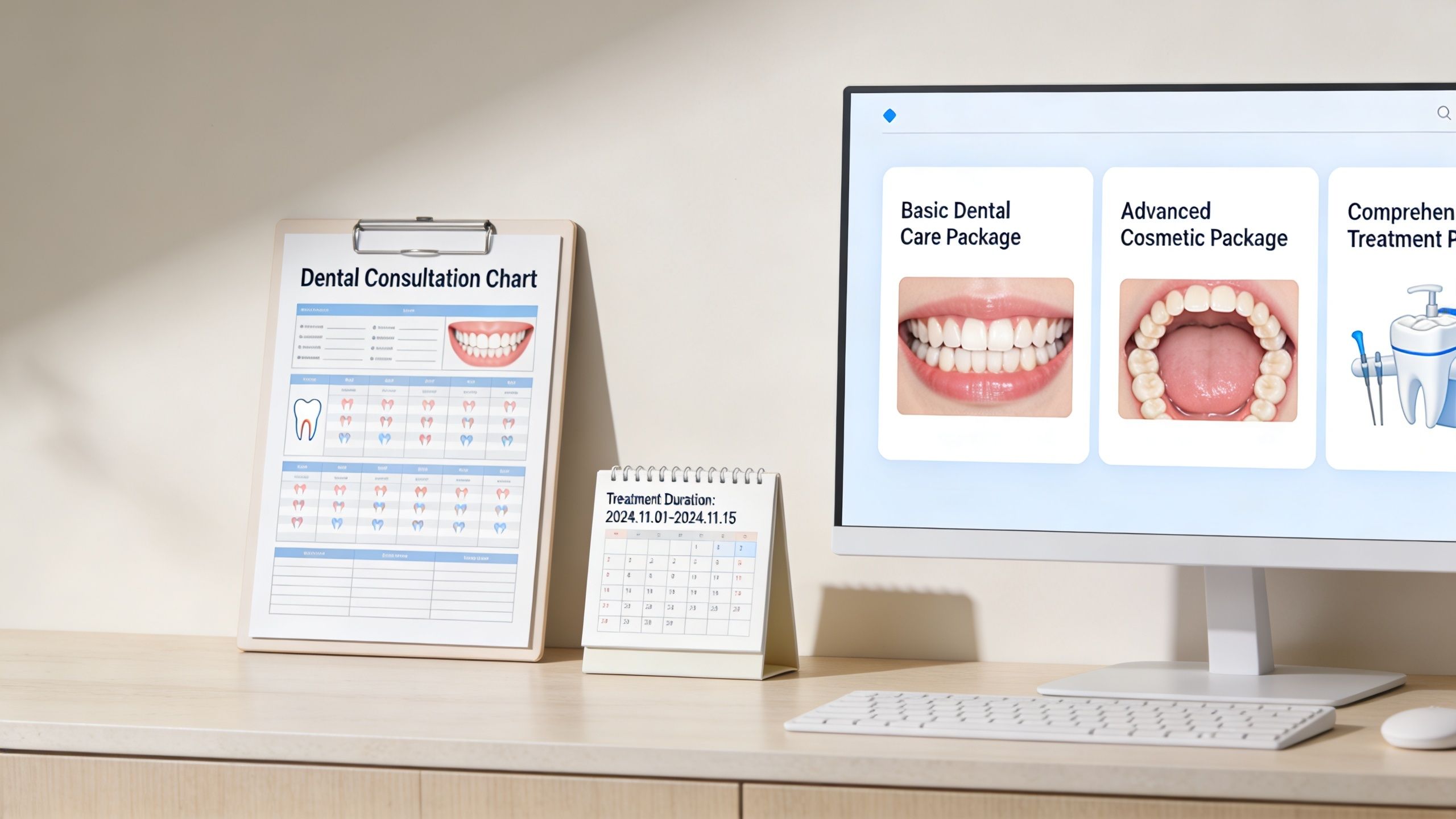
That’s why a simple price list only tells part of the story. Whitening works best when it starts with a proper assessment rather than a generic package.
Your teeth may need preparation first
Whitening shouldn’t be the first step if plaque, calculus, gum inflammation, or untreated dental problems are getting in the way. A check-up and clean can improve how evenly whitening gel contacts the enamel and can identify issues that should be treated first.
This is also where fee transparency matters. Some clinics separate the examination, imaging, scale, fluoride, and whitening. Others bundle parts of that pathway. If you’re planning treatment and budgeting carefully, it helps to understand whether you’ll need a pre-whitening visit before the whitening fee even begins. Patients who want to spread the cost of dental care often look into dentists with payment plans near me before committing to cosmetic treatment.
The starting shade changes the plan
Some staining responds quickly. Some doesn’t.
Common surface staining from coffee, tea, and similar habits often behaves differently from deeper intrinsic discolouration. If the teeth start darker or the staining is more stubborn, your dentist may recommend a slower approach, a stronger system, or a combination of methods. That can affect both cost and expectations.
Existing dental work matters
Whitening changes the colour of natural teeth. It doesn’t lighten crowns, veneers, white fillings, or bonding in the same way.
That matters because a patient may whiten successfully and then notice older dental work no longer matches. In some cases, whitening is still worthwhile. In others, it changes the cosmetic plan and the discussion around timing.
Clinical insight: the cheapest quote can become the most expensive pathway if no one checks whether your existing restorations will match afterwards.
Sensitivity management can change the experience
Some patients have no issue with whitening. Others feel sharp, temporary sensitivity, especially if they already react to cold drinks, have exposed root surfaces, or have worn enamel.
When sensitivity is likely, the treatment may be adjusted. That might mean a gentler take-home approach, modified wear times, or using technology intended to make treatment more comfortable. The point isn’t to sell add-ons. It’s to avoid pushing a patient into a whitening method that sounds efficient on paper but feels miserable in practice.
Questions worth asking before you commit
A consultation becomes much more useful when you ask specific questions, not just “How much is it?”
Try these instead:
- Do I need a clean first or can I whiten straight away?
- What type of staining do I have and how well is it likely to respond?
- Will my crowns, veneers, or fillings still match afterwards?
- What happens if I get sensitivity during treatment?
- Does the quoted fee include review, trays, or aftercare products?
Those questions usually tell you more about value than the headline price ever will.
Are Cheaper Teeth Whitening Options Worth the Risk
Cheap whitening is tempting because the difference in upfront price can look dramatic. The problem is that “cheap” often means one of two things. Either the result is weak and uneven, or the treatment bypasses the checks that protect your teeth and gums.
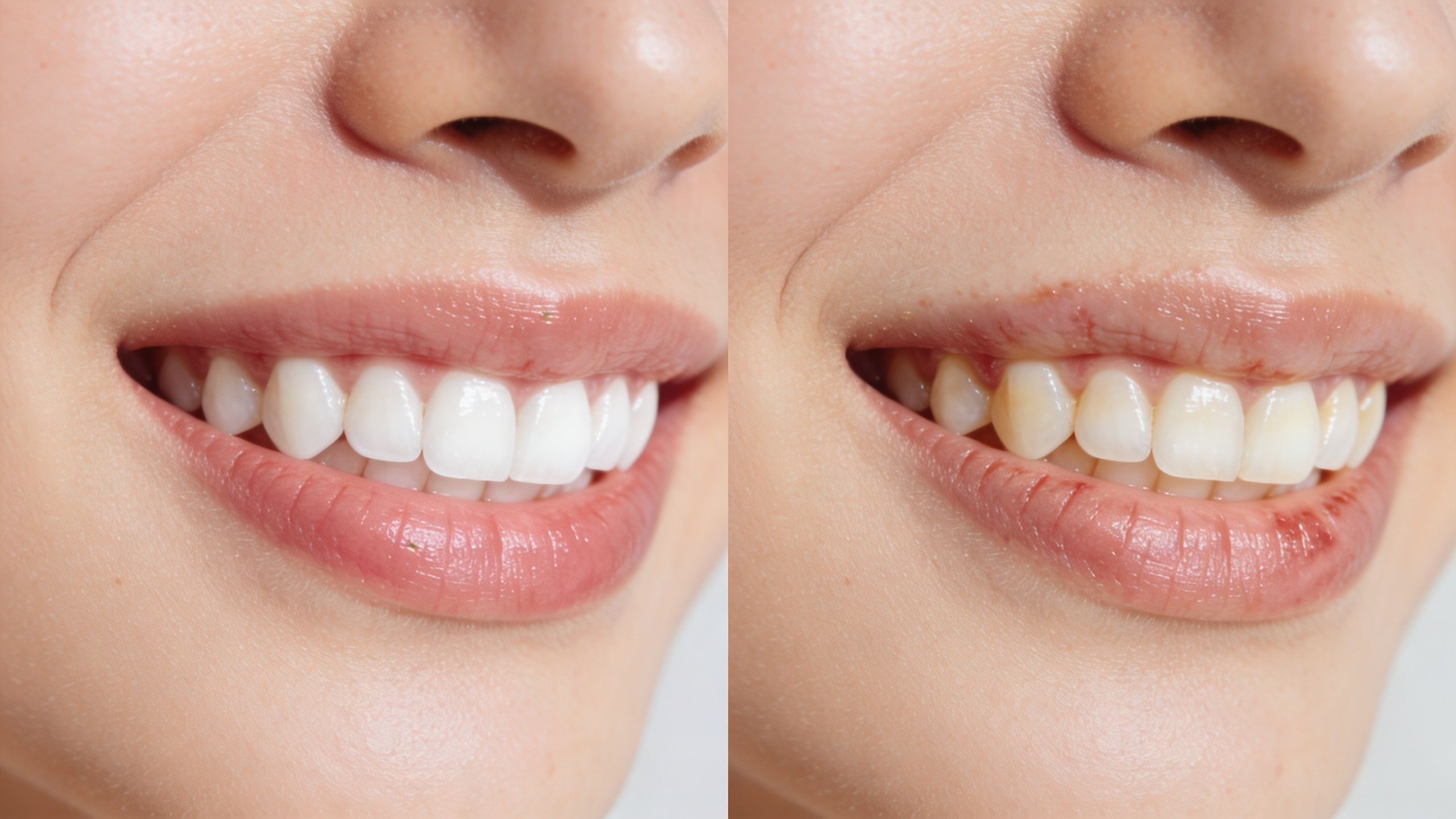
A low price doesn’t automatically mean unsafe. But if there’s no dental assessment, no record of your restorations, no plan for sensitivity, and no one checking whether you’re even a suitable candidate, the risk rises quickly.
The limits of pharmacy strips, pens, and generic kits
Over-the-counter products appeal to people who want a quick fix. They’re easy to buy and they sound simple. What they don’t do well is account for the shape of your teeth, your gum line, your staining pattern, or your dental history.
The most common problems are practical ones:
- Uneven application because one-size-fits-all products don’t adapt well to the teeth
- Gum irritation if the whitening material spreads where it shouldn’t
- Disappointing improvement when the product is too weak for the kind of staining you have
- False economy when you buy several products chasing a result a dentist-supervised system would have handled more predictably
That same pattern shows up in skincare. People often spend repeatedly on low-cost products that don’t suit their needs instead of following a structured, realistic plan. If you like practical beauty advice grounded in routine rather than hype, this guide to effective affordable anti-aging routines makes a similar point from a skin health perspective.
The bigger concern with non-dental whitening providers
The more serious issue is whitening offered outside a dental setting. Whitening sounds cosmetic, but it still involves chemicals, soft tissues, tooth structure, and judgement about suitability.
A non-dental provider can miss important problems, such as:
- cracks that make whitening painful
- leaking fillings that expose sensitive areas
- gum disease that needs treatment first
- patchy restorations that won’t lighten with the surrounding teeth
If those issues are ignored, a “bargain” whitening treatment can leave the patient with discomfort, a poor cosmetic result, or both.
Patients don’t regret paying for proper screening. They regret whitening teeth that weren’t ready to be whitened.
What works and what doesn’t
What tends to work is straightforward. Professional whitening works best when a dentist confirms you’re suitable, chooses the right method, protects the gums, and sets realistic expectations.
What doesn’t work well is guessing. Guessing with product strength, guessing with wear time, guessing with stain type, and guessing whether old restorations will match afterwards. Whitening isn’t complicated when it’s done properly, but it is easy to get wrong when it’s treated like a casual retail purchase.
Your Teeth Whitening Journey at The Smile Spot
A good whitening experience should feel organised from the start. Not rushed, not vague, and not built around a one-size-fits-all package.
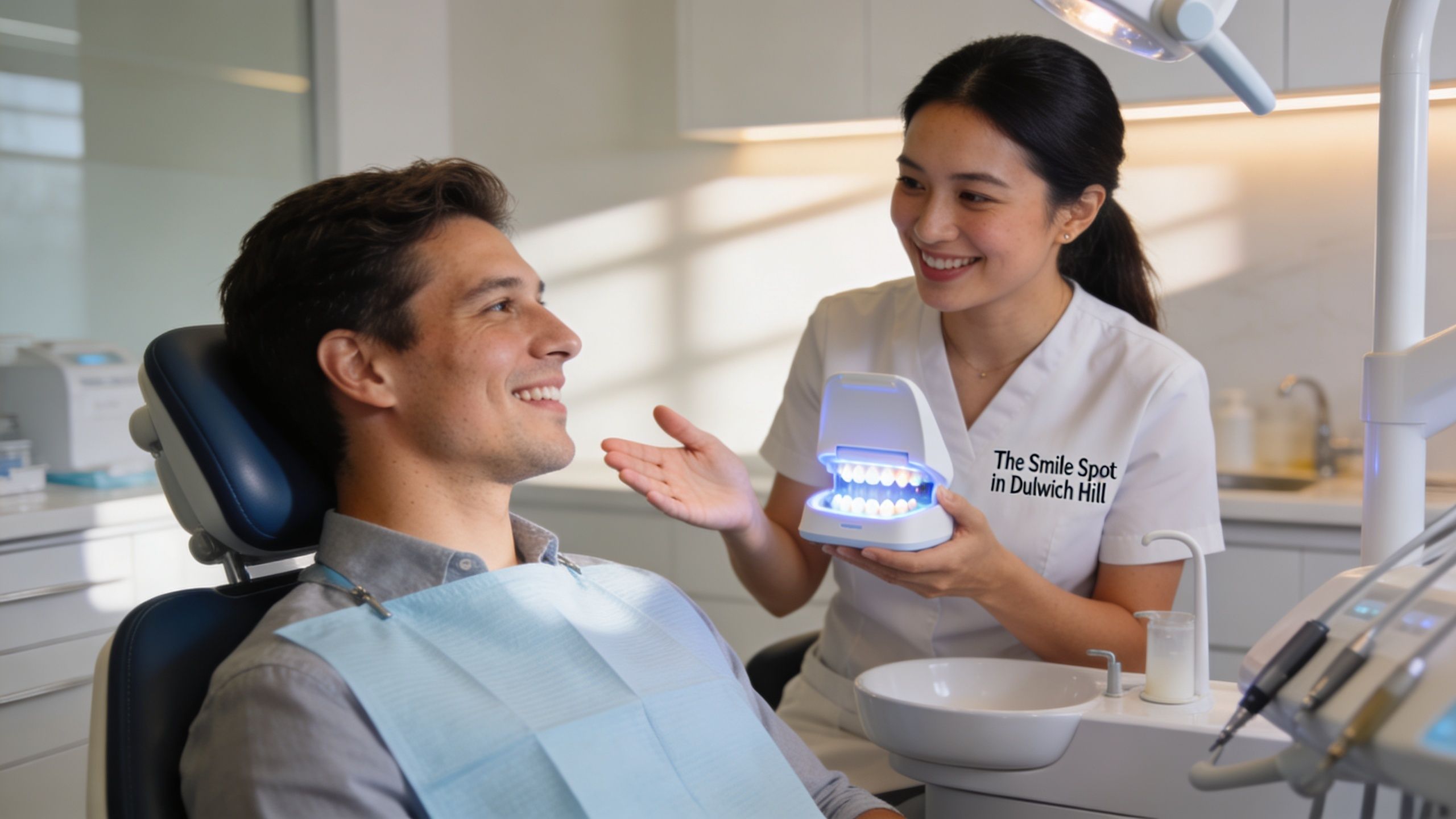
At The Smile Spot, the process begins with the same principle that should guide any cosmetic treatment. Make sure the teeth and gums are healthy enough first, then choose the whitening method that suits the patient rather than forcing the patient into a preset option.
Step one is a proper assessment
The first appointment is about clarity. You talk through what’s bothering you, whether it’s general yellowing, staining before an event, or frustration with over-the-counter products that didn’t do much.
The clinician then checks the factors that matter before whitening:
- current tooth and gum health
- existing crowns, veneers, fillings, or bonding
- sensitivity history
- likely stain type
- whether you’d be better suited to in-chair or take-home whitening
For many patients, the natural starting point is a check-up and clean so the mouth is healthy and the whitening plan can be based on a cleaner, more accurate baseline.
Choosing the right method for your lifestyle
Not everyone wants the same thing from whitening. Some patients want the fastest possible improvement because they’ve got a wedding, job interviews, or photographs coming up. Others care more about flexibility and would rather brighten their smile gradually.
That conversation matters because whitening only feels “worth it” when it fits your life. If the plan clashes with your schedule, your budget, or your sensitivity level, even a clinically sound treatment can feel like the wrong choice.
At The Smile Spot, that choice is made transparently. You’re guided through the likely pros and cons of each pathway so you know what you’re paying for and why.
Comfort matters during treatment
Cosmetic dentistry shouldn’t feel theatrical. It should feel controlled and comfortable.
That’s especially important with whitening, because patients often worry about zingers, soreness, or that chalky sensitivity some people have heard about from friends. Gentle technique, careful isolation, and case selection make a major difference. The clinic also offers Biolase laser dentistry, which reflects a broader focus on minimally invasive care and patient comfort.
The best whitening appointment is the one where the patient understands the plan, feels looked after, and doesn’t leave wondering what just happened.
Aftercare is part of the value
Whitening doesn’t end when the gel is removed or the trays are delivered. Patients need practical aftercare advice that matches everyday life.
That includes guidance on:
- managing short-term sensitivity if it appears
- avoiding immediate restaining while the teeth settle
- knowing whether future top-ups are likely to help
- understanding that natural teeth continue to age and pick up stain over time
That support is what separates a professional service from a product sale. The treatment is only part of the value. The planning, safety, and follow-through matter just as much.
Frequently Asked Questions About Teeth Whitening Costs
Does private health insurance cover teeth whitening
Usually, whitening is treated as a cosmetic procedure rather than essential dental treatment. That means many policies won’t cover it, or they may only provide limited support depending on your extras and your fund’s rules.
The practical answer is to check your own policy before booking. Don’t assume it’s covered because another dental service was.
How long do whitening results last
Results vary with habits. Coffee, tea, red wine, smoking, vaping, and inconsistent oral hygiene all make teeth pick up stain faster again.
Professional results generally last longer than impulse retail whitening because the treatment is stronger, better fitted, and supervised. Maintenance still matters. Patients who keep their custom trays and use them appropriately for future top-ups often find it easier to maintain the result.
Can everyone have their teeth whitened
No. Whitening isn’t appropriate in every situation.
You may need to delay or avoid treatment if you have active decay, gum disease, cracks, exposed roots, or unresolved sensitivity. Pregnancy can also change the conversation. Existing crowns, veneers, fillings, and bonding need special consideration because they won’t whiten like natural enamel.
Will whitening make my teeth sensitive
It can, but that doesn’t mean it will be severe or long-lasting. Some patients feel very little. Others feel temporary sharp sensitivity during or after treatment.
The key is proper selection and a customized plan. If you already have sensitive teeth, that should shape the choice of system, timing, and aftercare from the beginning.
Is in-chair whitening always better than take-home whitening
Not always. In-chair whitening is better for speed. Take-home whitening is often better for flexibility and gradual control.
The better option is the one that suits your teeth, your timeframe, and how you feel about sensitivity. “Better” depends on the patient, not the marketing.
Why did a friend pay less than the quote I received
Because whitening quotes reflect individual factors. One person may need little preparation and suit a straightforward treatment. Another may need a clean first, have more stubborn staining, or require a gentler approach because of sensitivity or existing dental work.
That’s normal. Whitening isn’t just a product. It’s a treatment plan.
If you’re thinking about whitening and want clear advice without the guesswork, The Smile Spot can help you understand your options, what they cost, and which approach makes the most sense for your teeth. Book a consultation to get a personalised assessment and a transparent plan that fits your smile, your comfort, and your budget.