You catch your reflection after whitening and something feels off. Your teeth look bright, but not in a healthy, natural way. Maybe they seem chalky. Maybe the edges look oddly translucent. Maybe every sip of cold water now makes you wince.
That concern is common, especially now that whitening products are easy to buy and easy to overuse. “Over-whitening” isn't only about teeth looking too white. It can also mean your enamel and gums need a break, and in some cases, a proper clinical check.
If you're in that in-between stage of wondering whether to wait, panic, or book in, start with this. Over whitened teeth can often be managed, and sometimes corrected, but the right next step depends on whether you're dealing with short-term dehydration and sensitivity or actual enamel and restoration issues. If you're also weighing up whitening options more broadly, this guide on how much teeth whitening costs can help put treatment choices into context.
Introduction
A patient will sometimes tell me the same story in different words. They wanted a fresher smile for photos, work, a wedding, or because stains had built up over time. The whitening worked, then they kept going. A few more strips. Another round of gel. One more “touch-up” that wasn't really a touch-up.
What they notice next is usually one of two things. Their smile no longer looks natural, or their teeth have become uncomfortable to live with.
That's the point where over whitened teeth stop being a cosmetic question and become a dental one. The good news is that not every alarming change means permanent harm. Some changes settle. Others need treatment. The key is knowing which is which, and what to do next without making things worse.
Recognising the Telltale Signs of Over-Whitening
Some people assume over whitening just means “very white teeth”. Clinically, it's broader than that. The appearance changes matter, but so do the texture changes, the sensitivity, and the way existing dental work starts to stand out.
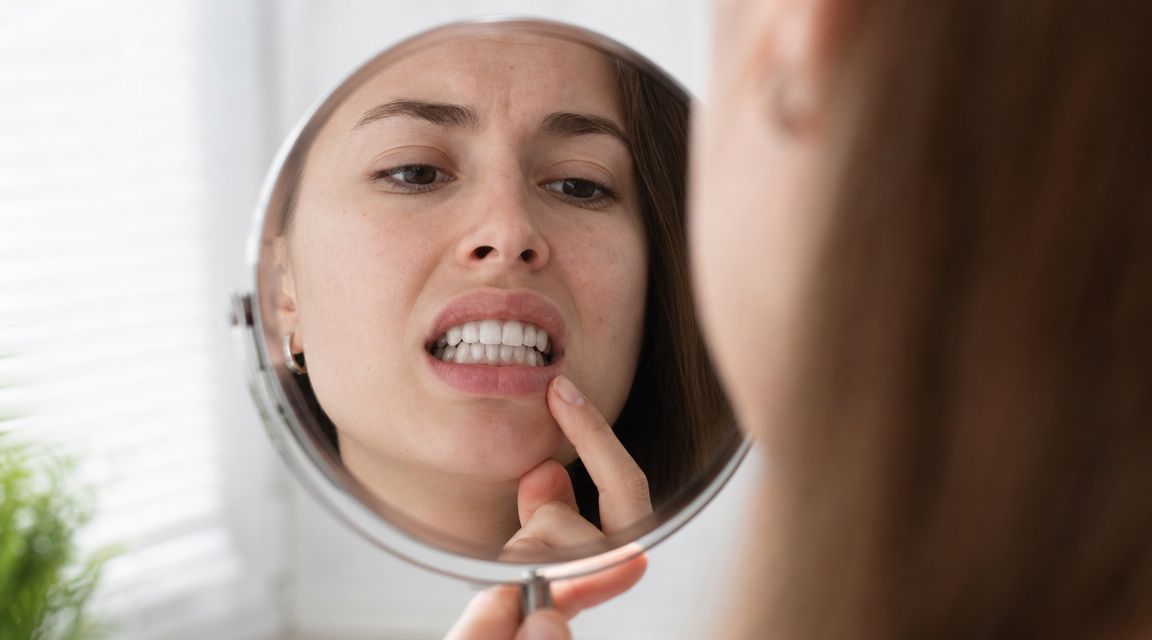
What over whitened teeth often look and feel like
Look for patterns like these:
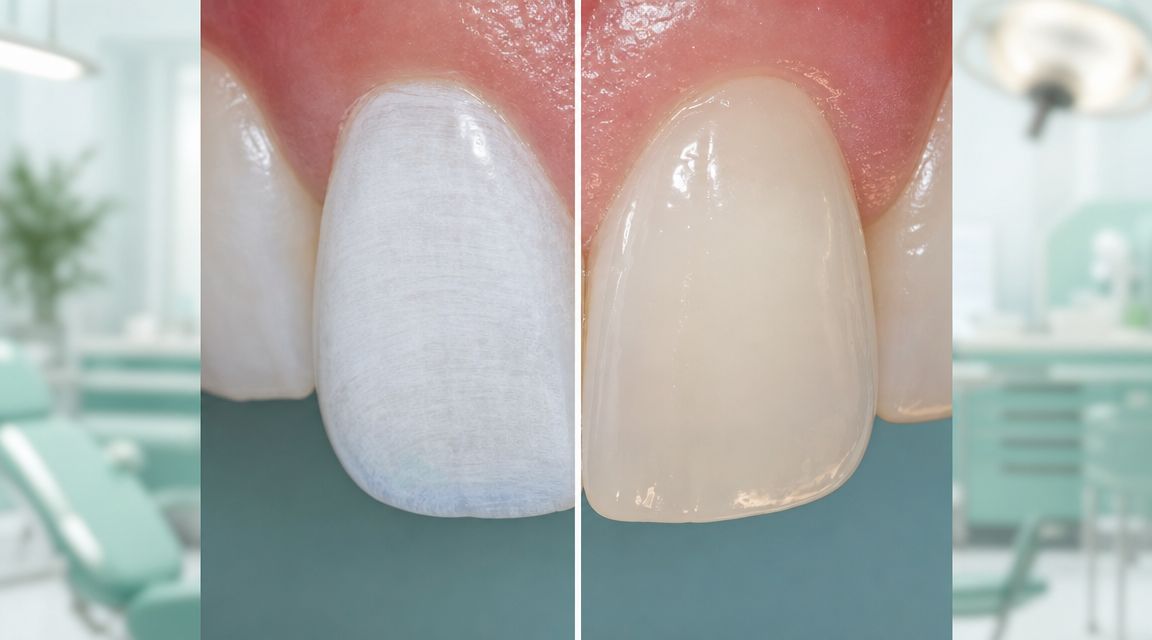
- Chalky or opaque enamel. Teeth can lose that natural lustre and start to look flat, powdery, or unnaturally matte.
- Blue or grey undertones. Instead of looking brighter, the teeth can take on a colder, artificial shade.
- Translucent biting edges. The edges may appear thinner, glassier, or less solid than before.
- Patchy colour. Some areas look brighter than others, especially if whitening has been uneven.
- New sensitivity. Cold drinks, sweet foods, or even breathing in cool air can trigger discomfort.
- Gum irritation. Whitening gel that repeatedly contacts the gums can leave them sore or irritated.
- Mismatch with old dental work. Fillings, crowns, and veneers don't whiten like natural teeth, so they can suddenly look darker or out of place.
Over-whitening usually announces itself before it causes a crisis. The earlier you stop, the simpler the recovery tends to be.
Why it happens
Whitening agents use hydrogen peroxide or carbamide peroxide to break down stains. The Australian Dental Association notes that the risks, including sensitivity and gum irritation, are concentration- and time-dependent, and that fillings and crowns don't whiten like natural enamel, which can leave the final colour uneven, as outlined in this guidance on how teeth whitening works and what its limits are.
In practice, the common triggers are usually easy to spot:
| Situation | What tends to go wrong |
|---|---|
| Repeated OTC use | Teeth are exposed again before they've settled |
| Stronger-than-needed products | More irritation without a better-looking final result |
| Whitening over old restorations | Natural teeth change, restorations stay the same shade |
| DIY schedules | People keep whitening because they're chasing a “perfect” white |
A useful rule is this. If your teeth look brighter but less healthy, that's not a good whitening result.
Immediate Steps for Tooth Sensitivity Relief
If your teeth are sore after whitening, the first aim isn't to push through it. It's to calm things down.
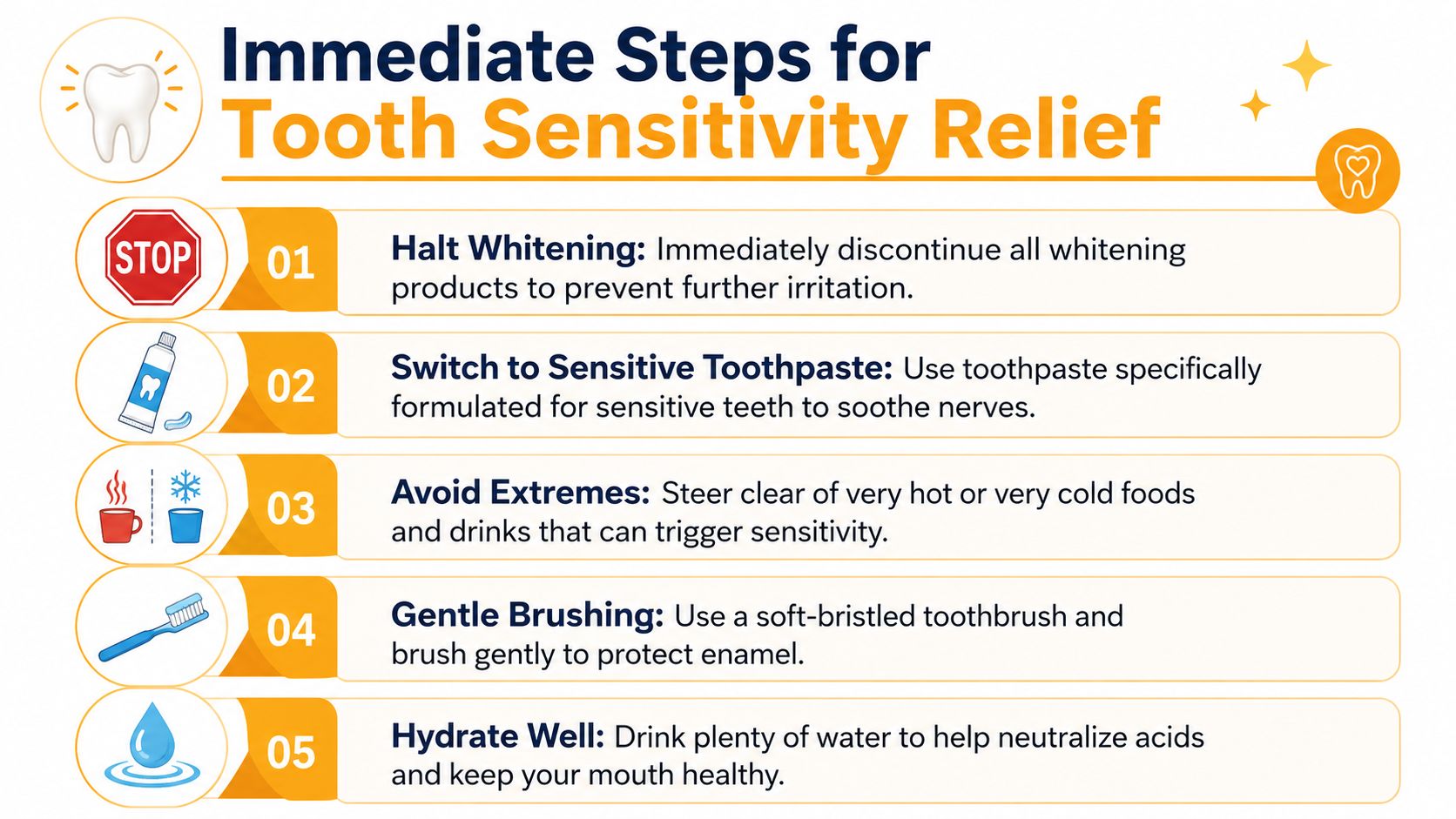
What to do today
Start with simple first aid:
Stop all whitening products
Don't switch brands. Don't reduce the time and keep experimenting. Give the teeth a break.
Use a toothpaste made for sensitive teeth
A product with ingredients such as potassium nitrate or stannous fluoride can help settle the nerve response over time.
Avoid temperature extremes
Very hot coffee and icy drinks are common triggers when enamel has been irritated.
Brush gently with a soft-bristled brush
Scrubbing harder won't clean better. It often makes sensitive teeth and tender gums feel worse.
Drink water often
Water helps rinse the mouth and is a better choice than acidic drinks while your teeth are recovering.
Whitening-related sensitivity is common. Reports summarised in clinical-facing material place it at about 30% to more than 78% of patients, depending on the product and protocol, and it's usually mild to moderate and settles within a few days after stopping treatment, according to this summary of teeth whitening sensitivity incidence.
For people whose teeth have always reacted quickly, this guide on teeth bleaching for sensitive teeth is worth reading before you attempt any future whitening.
A short explanation can also help if you're trying to understand why the pain shows up so suddenly:
What not to do
- Don't use abrasive whitening toothpastes while your teeth are reactive.
- Don't test the sensitivity by repeatedly sipping cold water.
- Don't assume more whitening will “even it out”. That often deepens the problem.
- Don't ignore sharp pain if it's localised to one tooth. That can point to a separate issue, not just whitening irritation.
Practical rule: If the discomfort is easing day by day, observation may be reasonable. If it's worsening, lingering, or focused in one spot, get it checked.
Assessing the Situation Your Guide to Next Steps
The most challenging question is whether the damage is temporary. The answer depends on what changed, and whether those changes improve after you stop whitening.
Right after bleaching, teeth can look unnaturally bright because they're dehydrated. Think of enamel like a sponge that has temporarily dried out. When that happens, the surface can appear chalkier and lighter than it really is. Saliva gradually helps the teeth rehydrate and remineralise, so some of that “too white” look may soften over the next few days.
Signs that may settle with time
These changes often improve if you stop whitening and let the teeth recover:
- A freshly chalky look that appeared immediately after treatment
- Generalised mild sensitivity across several teeth
- A flat, dehydrated appearance without obvious roughness
- Minor unevenness that seems less obvious once the teeth rehydrate
Signs that need a dentist to assess them
Other changes deserve closer attention. Frequent whitening can damage enamel and gums, and it may lead to translucent teeth that reveal more of the inner dentin layer. Aggressive bleaching has also been linked with enamel softening, surface roughness, and increased susceptibility to demineralisation, with some changes possibly settling and others requiring professional repair, as discussed in this article on the risks of frequent teeth whitening.
A review is sensible if you notice:
- Persistent translucency, especially at the edges
- Surface roughness when you run your tongue across the tooth
- Sensitivity that doesn't improve
- A single tooth that hurts more than the others
- Visible mismatch with fillings or crowns
- Cracks, wear, or erosion you hadn't noticed before
If one tooth feels dramatically different from the rest, whitening may have exposed an underlying problem rather than caused the whole issue.
That matters because not all post-whitening pain is about bleaching alone. Sometimes whitening brings attention to an already vulnerable tooth. If the symptoms include lingering pain, pain on biting, or pain centred on one tooth, these signs you need a root canal are worth comparing with what you're feeling.
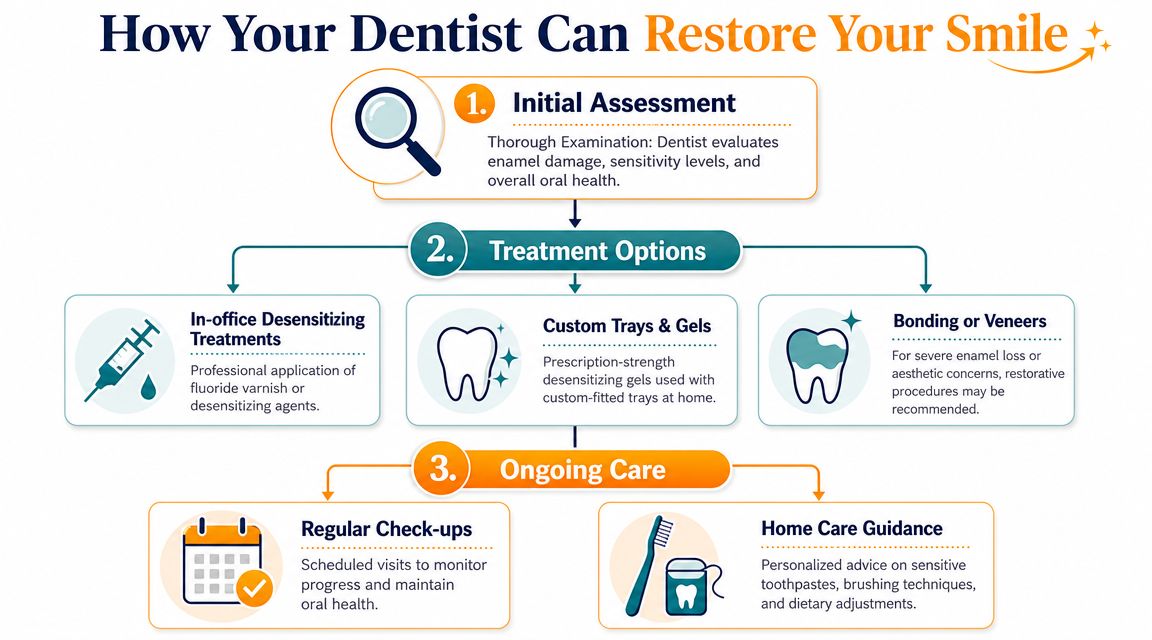
How Your Dentist Can Restore Your Smile
Once over whitened teeth have moved past “just wait and see,” the next step is matching the solution to the actual problem. There isn't one universal fix. A patient with temporary dehydration needs a different approach from someone with visible restoration mismatch or surface changes in the enamel.
If the main issue is sensitivity
The first clinical goal is comfort. That may involve in-chair desensitising treatment and a home plan that reduces triggers while the teeth recover. Fluoride-based support and remineralisation strategies can help when enamel has been stressed but not structurally compromised.
Therefore, a proper exam matters. A dentist can check whether the pain is broad and expected, or whether one area suggests a crack, exposed root surface, leakage around a filling, or another issue unrelated to whitening.
If the problem is colour, texture, or white spots
Some patients don't complain of pain at all. They complain that their teeth look wrong. Chalky areas, uneven shade, and white spots often need cosmetic correction rather than more whitening.
Possible options include:
- Observation and review. When dehydration is the main driver, waiting can improve the appearance.
- Remineralisation-focused care. This may help if the enamel looks stressed rather than permanently altered.
- Dental bonding. Composite can mask localised chalky or patchy areas and improve how the light reflects off the surface.
- Veneers. Where translucency, shape issues, or colour problems are significant, porcelain or composite veneers may be the more predictable cosmetic answer.
For some patients, veneers become part of the long-term fix because they allow the final shade to be selected intentionally instead of endlessly chasing a brighter enamel colour. If that's the path being considered, this article on how long porcelain veneers last helps explain the maintenance side of the decision.
If restorations no longer match
This is one of the most common and most overlooked problems. Fillings, crowns, and veneers don't bleach the same way natural teeth do. Aggressive whitening can make old restorations stand out more, and review literature also notes that some restorative materials may lose stability or show unacceptable colour change, making professional assessment important, as explained in this discussion of how tooth whitening affects restorations and appearance.
That means the fix may be restorative, not whitening-based.
| What you see | Likely clinical response |
|---|---|
| One front filling now looks darker | Replace or re-shade the filling |
| An older crown looks yellow beside whitened teeth | Review and potentially replace the crown |
| Veneers no longer blend with adjacent teeth | Reassess the whole smile design, not just one tooth |
| Uneven colour across natural and restored teeth | Build a staged plan rather than “spot fix” guessing |
At The Smile Spot, that sort of review usually starts with checking the enamel surface, existing restorations, bite forces, and the shade relationships across the smile before recommending any cosmetic correction.
The best repair is often the least aggressive one that restores comfort and natural-looking colour.
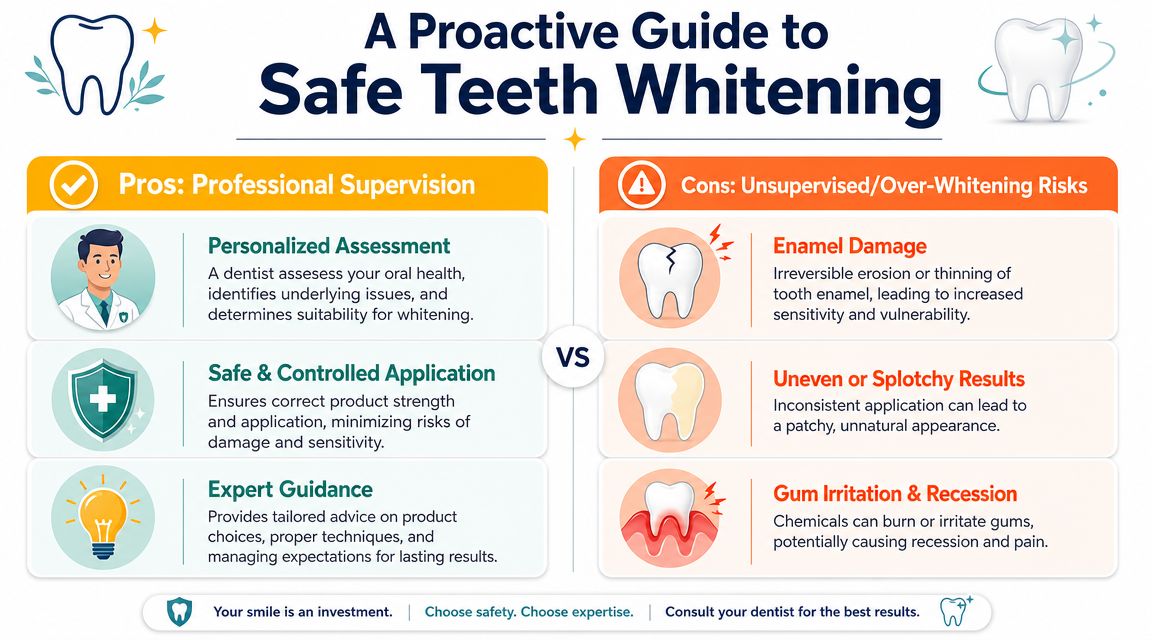
A Proactive Guide to Safe Teeth Whitening
The safest way to avoid over whitened teeth is to stop treating whitening like a beauty product and start treating it like a dental procedure. The protocol matters. The timing matters. Your existing fillings, crowns, gum health, and enamel condition matter.
What tends to work better
Clinical research has shown that whitening safety is closely linked to peroxide concentration and treatment duration, and that dentist-guided home bleaching often produces less sensitivity than aggressive in-office treatment, according to this peer-reviewed review of bleaching side effects and protocol safety.
That lines up with what works well in practice:
- Start with an exam. Cavities, gum recession, cracks, and old restorations change the risk profile.
- Choose the method based on your teeth, not the ad. A custom plan beats a generic one-size-fits-all product.
- Aim for a natural shade. Harmonious colour usually looks better than the brightest possible white.
- Use touch-ups conservatively. Maintenance should be planned, not impulsive.
What usually goes wrong
People run into trouble when they chase speed, repeat whitening before their teeth have settled, or compare themselves to filtered photos rather than their own natural tooth structure.
A better standard is healthy enamel, balanced colour, and a smile that still looks like yours. If you're interested in broader appearance habits that support a fresher look overall, this piece on natural anti-aging and smile care is a sensible companion read because it places teeth in the context of overall facial appearance rather than treating whitening as a stand-alone fix.
Good whitening doesn't announce itself. It just makes your smile look healthier, cleaner, and more in proportion.
Your Path to a Confident Smile in Dulwich Hill
Over whitened teeth can feel alarming when you first notice them, but they aren't something you need to guess your way through. Some cases settle with time and sensible home care. Others need a dentist to assess enamel changes, sensitivity, or the way old restorations now sit within your smile.
The important point is this. A beautiful smile isn't just a white smile. It's a healthy smile with colour that suits your face, your teeth, and your dental work.
If you're in Dulwich Hill or the Inner West and you're unsure whether to wait, repair, or redesign the result, a professional assessment will give you clarity. You can learn more about professional teeth whitening in Dulwich Hill and what a safer, more controlled approach looks like.
If your teeth look too white, feel sensitive, or no longer match your fillings or crowns, book a consultation with The Smile Spot. A proper assessment can identify whether you need time, desensitising care, remineralisation, or cosmetic correction, and help you get back to a smile that looks natural and feels comfortable.