You might be looking in the mirror, pulling your lip back slightly, and focusing on the same few teeth every time. A chip that catches the light. Staining that whitening never seems to fully lift. Small gaps that feel much bigger in photos than they probably do in real life. When considering veneers, the aim is rarely perfection. They want their smile to look like their own, only fresher, cleaner, and more balanced.
That's where veneers can be helpful. They can reshape teeth, soften wear, close spaces, and improve colour in a way that looks natural when the case is planned well. But choosing the best veneers isn't as simple as asking which material looks nicest on day one. The more important question is which option gives you the right aesthetic result while protecting as much healthy enamel as possible.
That balance matters. Some patients suit porcelain beautifully. Others are better served by a more conservative composite approach. If you want a feel for how different smile journeys and outcomes can look from a patient perspective, the collection of Arquiteta De Sorrisos testimonials is a useful place to see how people describe the emotional side of cosmetic treatment.
Your Guide to a More Confident Smile
A confident smile changes small moments first. You stop covering your mouth when you laugh. You speak in meetings without thinking about one dark tooth near the front. You agree to a photo without asking to stand at the back.
Veneers are one of the most versatile cosmetic treatments because they can improve several concerns at once. Instead of whitening one issue, bonding another, and leaving shape discrepancies untouched, veneers can bring colour, symmetry, and proportion into the same treatment plan. That's why many patients see them as a shortcut to a more polished smile.
The detail that often gets missed is that the best veneers are not always the most expensive or the most heavily marketed. A senior cosmetic dentist looks at the whole picture first. How much enamel is available. Whether the bite is stable. How much change is needed. Whether a patient wants maximum longevity, the most lifelike translucency, or the most conservative option possible.
Some smiles need a full redesign. Others need restraint.
A patient with broad old fillings, deep staining, and visible edge wear may benefit from ceramic veneers planned with precision. A younger patient with small chips, slight unevenness, and otherwise healthy teeth may be better off preserving more natural structure with composite. The right answer depends on what the teeth can support long term, not just what looks impressive on a treatment brochure.
What Are Veneers and What Can They Fix
Veneers are thin, custom-made coverings bonded to the front surface of teeth. Their job is cosmetic first. They improve how teeth look in colour, shape, width, length, and alignment appearance. They don't move teeth like orthodontics, and they don't rebuild heavily damaged teeth the way crowns can. They sit in a very specific space in cosmetic dentistry, where artistry and conservative planning matter just as much as the material itself.
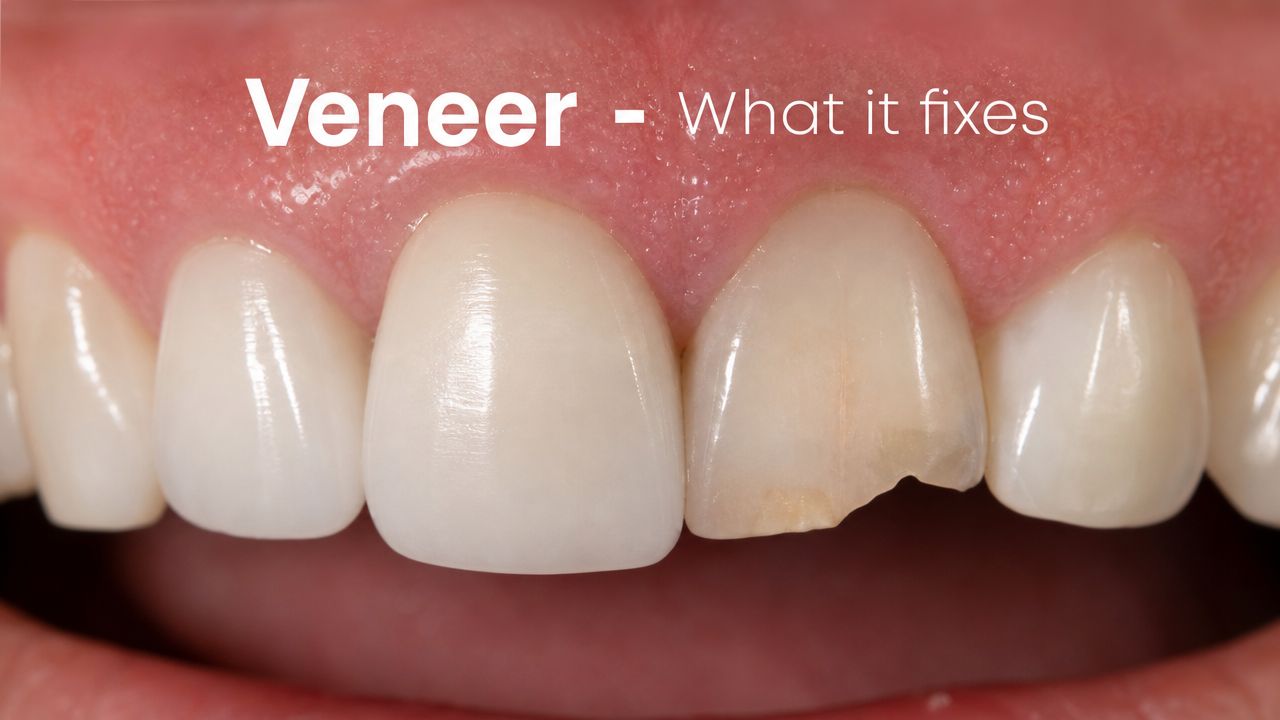
In Australia, interest in veneers continues to grow. The Australian dental veneers market is projected to reach revenue of US$112.1 million by 2030, growing at a CAGR of 8.4% from 2024 to 2030, reflecting stronger demand for cosmetic dentistry, with porcelain veneers still widely regarded as the gold standard for durability and natural appearance, according to Australian veneers market projections and pricing data.
What veneers can correct
Veneers can be a strong option for concerns such as:
- Permanent discolouration that hasn't responded well to whitening, including teeth darkened by ageing, older dental materials, or internal staining.
- Chips and worn edges where the front teeth look shortened, flattened, or uneven.
- Small cracks and surface irregularities that affect the look of the smile.
- Gaps between teeth when the spacing is mild and the bite allows cosmetic closure.
- Minor misalignment where teeth appear slightly rotated, narrow, or uneven in position.
- Uneven tooth shape such as peg laterals, asymmetrical incisors, or teeth that look too small for the smile.
- Mismatched restorations when a front tooth no longer blends with the neighbouring teeth.
What veneers can't fix well
Veneers are not the right answer for every cosmetic complaint. They are less suitable when the main issue is severe crowding, active gum disease, large untreated decay, or a bite problem that places too much force on the front teeth.
Veneers work best when the foundation is healthy. Good gum health, stable bite forces, and enough enamel for bonding matter more than the material label.
If your concerns are limited to colour alone, whitening may be enough. If the issue is a tiny chip or a small shape correction, bonding may be more conservative. For patients weighing those smaller cosmetic changes, this guide on dental bonding vs veneers is worth reviewing before deciding.
Detailed Veneer Comparison Emax vs Zirkonzahn vs Composite
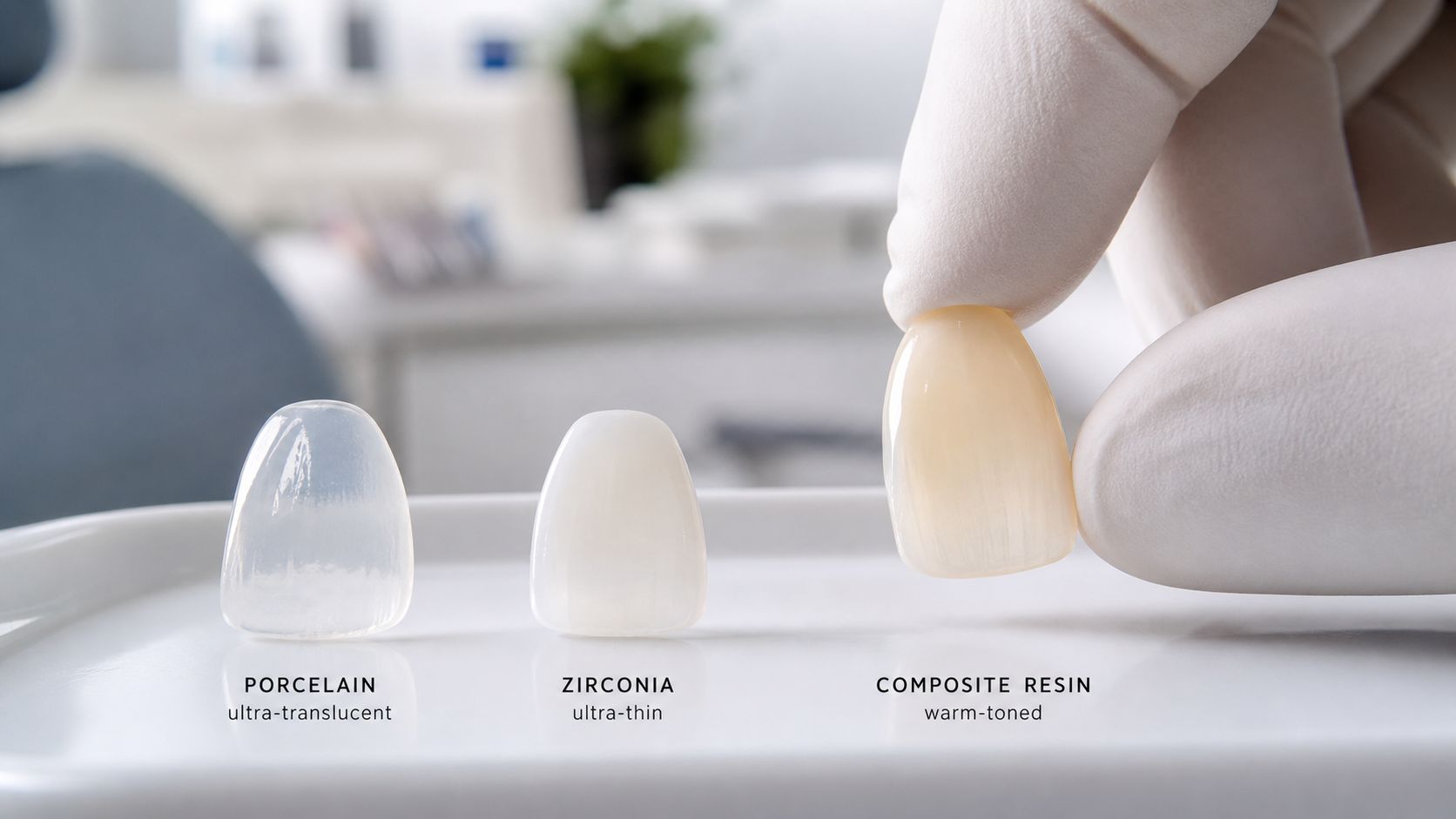
Choosing the best veneers usually comes down to three options in everyday clinical practice. E.max, Zirkonzahn Skin, and direct composite resin. Each can produce a beautiful smile. Each also asks for a different compromise in aesthetics, strength, stain behaviour, repairability, and enamel preservation.
Here's the quick comparison first.
| Feature | E.max (Porcelain) | Zirkonzahn Skin (Zirconia) | Composite Resin |
|---|---|---|---|
| Aesthetics | Excellent translucency and lifelike appearance | Very refined appearance with strength-focused ceramic properties | Good aesthetics, highly operator-dependent |
| Enamel preservation | Usually requires some preparation | Can be very conservative in selected cases | Often the most conservative approach |
| Durability | Strong and predictable for smile design cases | Strong material choice, especially where extra resilience matters | Lower long-term durability than porcelain |
| Stain resistance | Strong resistance to staining | Strong resistance to staining | More prone to picking up stain over time |
| Repairability | Repairs are possible but often less simple than composite | Repairs may be more limited than composite | Easiest of the three to modify and repair |
| Best suited to | Patients prioritising realism and long-term polish | Patients needing a refined ceramic option with thin-profile strength | Patients wanting a lower-cost, conservative, more reversible style of treatment |
E.max for natural light and high-end aesthetics
E.max is a lithium disilicate porcelain. In cosmetic dentistry, it has a strong reputation because it can reproduce the brightness, depth, and edge translucency people usually associate with premium smile makeovers. If a patient wants that polished but believable ceramic look, E.max is often part of the conversation.
It's also regarded as a gold standard material in Australian veneer pricing discussions, where material choice influences both cost and longevity, as noted in this overview of porcelain veneer costs in Australia and material options. If you want a closer look at this specific ceramic option, see the page on E.max veneers in Dulwich Hill.
The trade-off is simple. Ceramic beauty often comes with some tooth preparation. That preparation may be minimal in the right case, but it still needs careful judgement.
Clinical reality: E.max is often the best choice when shade control, surface texture, and natural translucency matter most, but it should never be selected casually if a more conservative option can deliver the result.
Zirkonzahn Skin for thin, strong ceramic planning
Zirkonzahn Skin sits in a different part of the conversation. It's an ultra-thin zirconia-based ceramic veneer option designed for conservative smile enhancement in suitable cases. Zirconia is known for strength. In veneer form, the value is not just durability but the possibility of keeping preparation restrained when tooth position and smile design allow it.
This makes it appealing for patients who want ceramic, but who are also concerned about preserving enamel. It's particularly useful when the existing tooth form supports an additive approach rather than a subtractive one.
That said, material science doesn't replace diagnosis. If a tooth is too prominent, too rotated, or too bulky, even a very thin ceramic veneer may still require preparation to avoid an overcontoured result.
Composite for conservative treatment and easy repairs
Direct composite veneers are built directly on the teeth with layered resin. They are generally the most conservative of the three because they can often be placed with very limited reduction, and in some cases with no significant drilling at all.
That conservative advantage matters. According to a summary discussing long-term trade-offs, modern ultra-thin composite alternatives at 0.3 to 0.5 mm thick can preserve up to 90% of natural tooth structure, and a randomised controlled trial on composite types reported an 87% survival rate over three years. The same discussion also notes that porcelain still demonstrates excellent aesthetic outcomes, which is why material selection should depend on priorities rather than marketing claims alone, as outlined in this review of veneer types, enamel preservation, and survival considerations.
Composite also has a practical advantage in maintenance. If one edge chips, a dentist can often add or refine material directly. That flexibility is valuable for younger patients and for anyone who wants to keep future changes simple.
The most conservative veneer is often the one that leaves the most options open later.
What works best for different patients
The best veneers for one patient can be the wrong choice for another. A useful way to think about it is by priority:
- If natural light reflection and premium ceramic aesthetics lead the list, E.max often stands out.
- If you want ceramic but want to stay as conservative as the case allows, Zirkonzahn Skin may be the better fit.
- If preserving enamel and keeping treatment adjustable matter most, composite deserves serious consideration.
What doesn't work
Problems usually start when veneers are chosen for the wrong reason.
- Chasing the brightest white often leads to teeth that look flat and obvious.
- Ignoring bite forces can shorten the life of any veneer, no matter how premium the material.
- Over-preparing healthy teeth for a result that could have been achieved more conservatively is poor long-term planning.
- Using composite where heavy wear is unmanaged can lead to repeated repairs and frustration.
No single material wins every category. Good veneer dentistry is less about choosing a fashionable product and more about matching the material to the tooth, the bite, and the patient's expectations.
The Smile Makeover Journey Step by Step
Most patients feel better about veneers once they understand the sequence. The process is methodical, not rushed, and each stage has a purpose. Good planning is what makes the final smile look effortless.
A visual overview helps before getting into the detail.
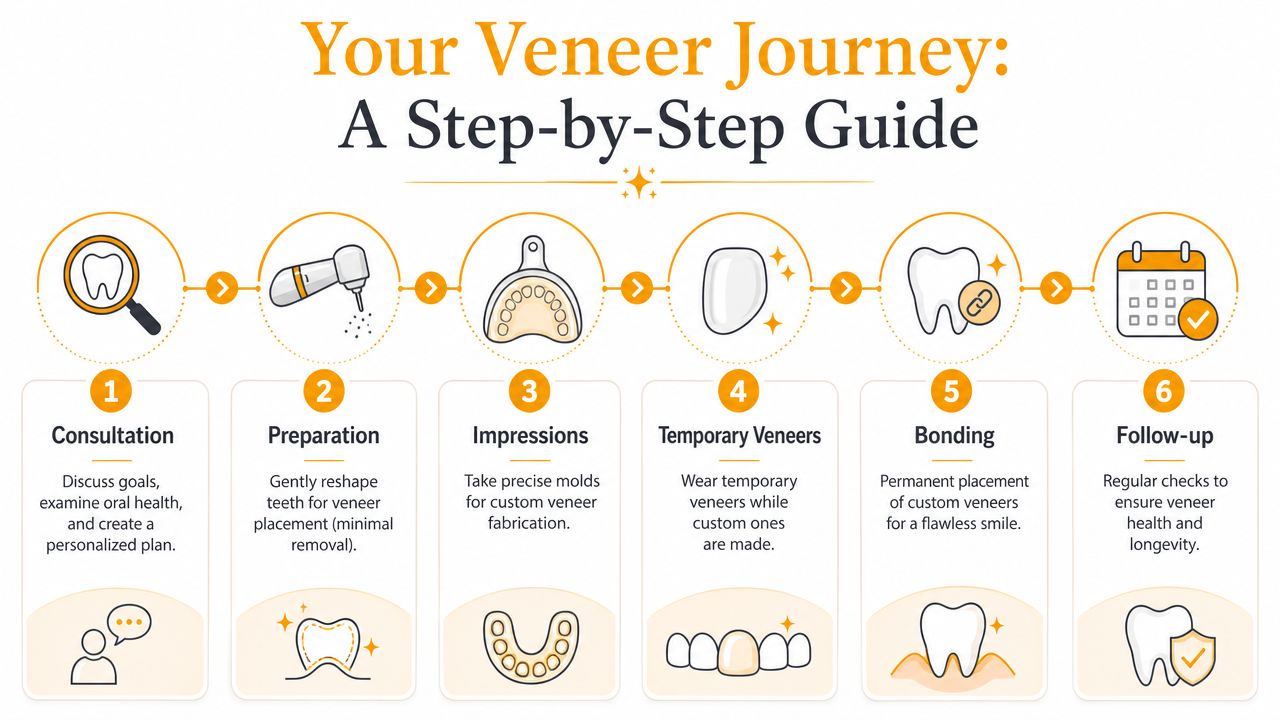
Consultation and smile design
The first appointment is about diagnosis, not sales. Teeth, gums, bite, old fillings, wear patterns, and facial proportions all influence whether veneers are appropriate and which type makes sense. This is also where the desired look gets clarified. Some patients want a noticeable cosmetic upgrade. Others want a result no one can identify as dental work.
A good plan also considers alternatives. Sometimes whitening, reshaping, aligners, or a small amount of bonding will achieve the goal with less intervention. Patients thinking through broader cosmetic options can also explore how a smile makeover in Sydney is usually planned across multiple treatments when veneers alone aren't the full answer.
Preparation and impressions
If veneers are the right choice, the next stage is tooth preparation. In conservative cases, that may mean very slight contouring rather than aggressive reduction. The goal is to create room for the veneer so the final teeth don't look bulky.
Modern techniques matter here. When minimal-prep treatment is possible, precision is everything. Practices using tools such as Biolase laser dentistry can support gentler soft tissue management and a cleaner workflow around cosmetic procedures, which can help comfort and healing.
After preparation, detailed impressions or scans are taken so the veneers can be fabricated accurately.
A veneer should look like it belongs to the tooth, not like it has been placed on top of it. That's why preparation and records matter so much.
Temporary veneers are often placed when ceramic work is being made. These protect the prepared teeth and give you a preview of shape and length.
Later in the process, many patients like to see the procedure itself explained visually. This video gives a straightforward look at veneer treatment:
Bonding and follow-up
At the fitting appointment, each veneer is checked for fit, colour harmony, edge position, and bite contact before being bonded permanently. This is the stage where small refinements make a large difference. Midline, smile arc, and incisal edge symmetry all need attention.
After bonding, there's usually a short adaptation period. Teeth can feel different because their contours have changed. Follow-up visits matter because they allow small bite adjustments and confirm that the gums are settling well around the new work.
Comfort for anxious patients
The emotional side of veneer treatment shouldn't be ignored. Some patients are comfortable from the start. Others are uneasy about injections, drilling, or being in the dental chair for longer appointments.
For those patients, clear communication makes a major difference. Sedation options can also help when anxiety is likely to interfere with treatment. The best experience usually comes from combining careful planning, gentle technique, and a pace the patient can manage comfortably.
Veneer Candidacy and Cost Analysis
Not everyone who wants veneers should get them straight away. A good candidate has healthy gums, manageable bite forces, and enough enamel for reliable bonding. That last point is easy to overlook, but it's central to long-term success. Veneers bond best to enamel, and treatment becomes less predictable when the surface is heavily restored or structurally compromised.
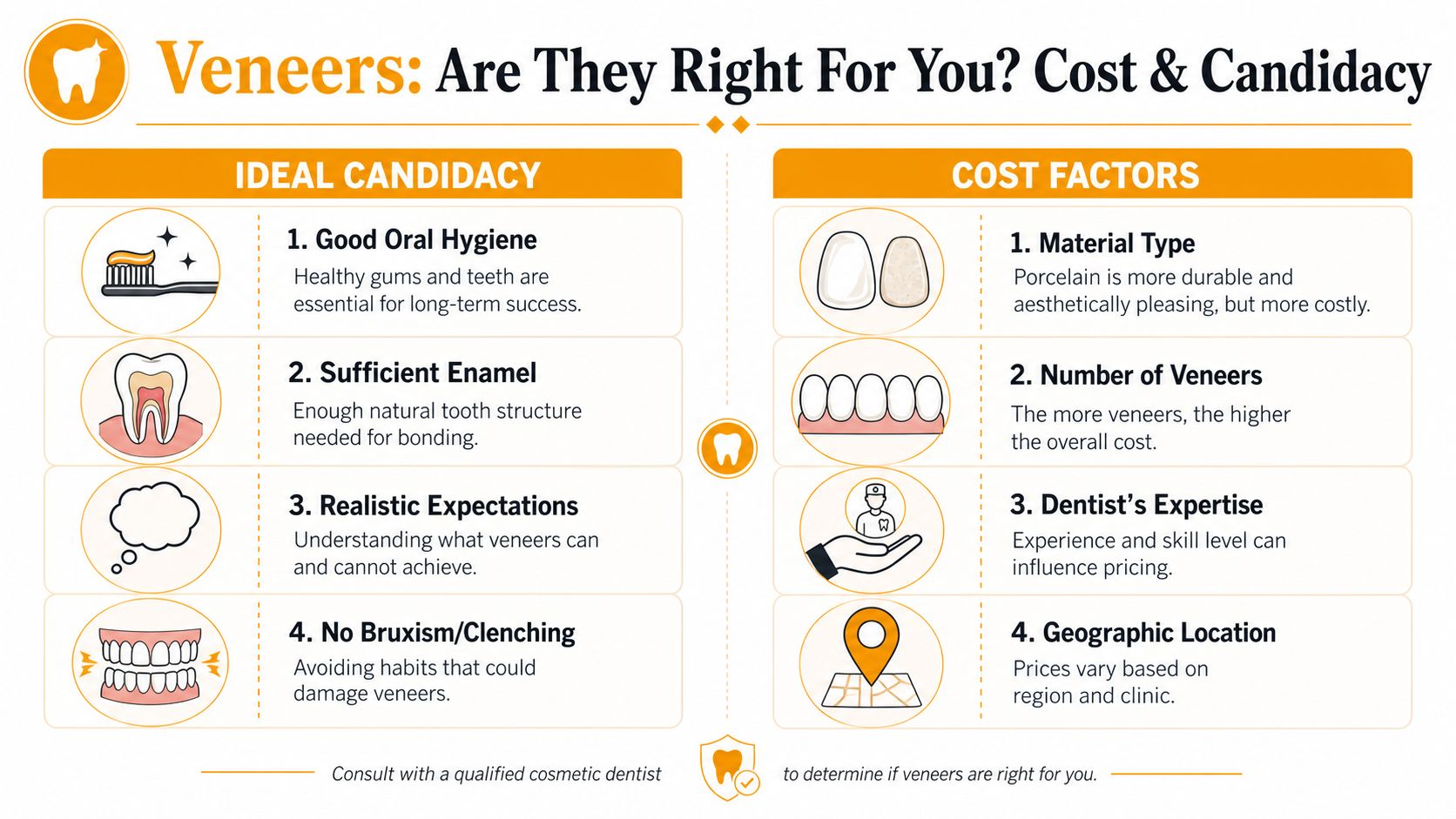
This visual summary captures the big picture.
Who tends to suit veneers well
The strongest candidates usually share a few features:
- Healthy gums and clean teeth because cosmetic work placed onto an unhealthy foundation won't age well.
- Enough natural enamel for predictable bonding.
- Clear cosmetic goals such as improving shape, colour, spacing, or mild alignment appearance.
- Stable habits with no unmanaged grinding, clenching, or nail-biting.
- Realistic expectations about what veneers can improve and what they can't.
Patients may need preliminary treatment before veneers if they have active decay, gum inflammation, bite instability, or major crowding. In some cases, whitening or orthodontic treatment is a better first move. In others, a crown may be more suitable for a tooth that has already lost too much structure.
What veneers cost in Australia
Cost varies with the material, the complexity of the case, the number of teeth involved, and the level of planning required. In Australia, porcelain veneers typically range from $1,300 to $3,500 per tooth, while composite veneers range from $250 to $850 per tooth. For a full upper arch of 6 to 8 porcelain veneers, the typical range is $9,000 to $20,000, according to this breakdown of veneer costs in Australia.
Why prices differ so much
A veneer fee doesn't just pay for the final tooth covering. It usually reflects:
- Material choice such as ceramic versus composite
- Diagnostic planning including photos, records, bite assessment, and smile design
- Clinical skill in preparation, shaping, and bonding
- Laboratory work when custom ceramics are being fabricated
- Review appointments for refinement and maintenance
At a practical level, patients should also ask what is included. Consultation fees, X-rays, temporaries, reviews, and protective appliances can affect the overall investment. Transparent planning matters more than finding the cheapest headline number.
Cost rule: compare total treatment value, not just the per-tooth figure. A cheaper veneer can become more expensive if it needs repeated repairs or early replacement.
Protecting Your Investment Aftercare and Longevity
Veneers don't stay attractive by accident. They last because patients treat them like precision dental work, not indestructible cosmetic covers. Good aftercare protects both the veneers and the teeth underneath them.
Daily habits that matter
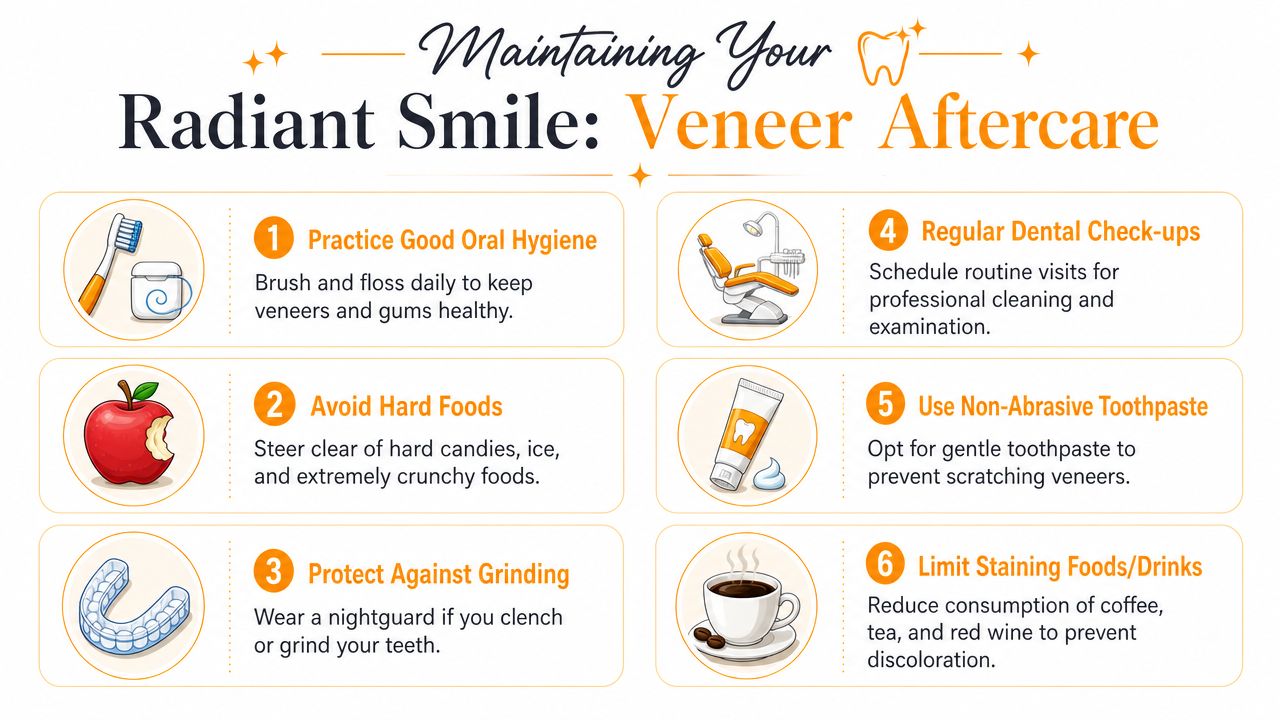
Start with the basics. Brush twice a day with a non-abrasive toothpaste and clean between the teeth properly. Veneers can't decay, but the natural tooth margins and the gums around them still need careful maintenance.
Food habits matter too. Veneers are strong, but they're not tools. Avoid biting ice, opening packaging with your teeth, or repeatedly loading the front teeth with very hard foods.
Protecting veneers from wear and staining
If you grind or clench, a custom nightguard can make a major difference. This is especially important for patients with ceramic veneers, because repeated heavy force can damage either the veneer or the opposing teeth.
Composite veneers need extra attention around stain control. Coffee, tea, and red wine can affect the surface appearance over time more readily than ceramic. Polishing can help, but prevention is better.
Professional maintenance
Routine check-ups are not optional after veneer treatment. Dentists monitor the margins, the gums, the bite, and any small changes before they become bigger problems. If you want a broader view of expected service life and maintenance considerations, this article on how long porcelain veneers last is useful reading.
Veneer longevity is usually decided by habits. Night grinding, poor hygiene, and using the front teeth roughly will shorten the life of even excellent work.
Well-made veneers can serve beautifully for years, but they need partnership from the patient. The best result is one that still looks balanced and healthy long after the excitement of the final fitting has passed.
Your Veneer Questions Answered
Do veneers ruin your natural teeth
Not when they're planned appropriately. The concern is valid because some veneer designs do require enamel removal. That's why conservative case selection matters so much. If a tooth can be improved with less invasive treatment, that option should be considered first.
Can I get just one veneer
Yes, in the right case. Matching a single veneer to neighbouring natural teeth can be very successful, but it requires careful shade selection, shape design, and assessment of how the surrounding teeth reflect light. Single front-tooth cases often demand more artistic precision than larger smile cases.
How do you choose a natural shade
The most natural smiles usually aren't the brightest. Shade selection should suit skin tone, lip mobility, age, and the brightness of the surrounding teeth. Surface texture and translucency matter just as much as colour.
Are veneers reversible
Some composite approaches can be relatively conservative and easier to modify. Porcelain veneers are generally not considered reversible if enamel has been removed for placement. That's one reason diagnosis should never be rushed.
What if I feel nervous asking questions at the appointment
That's common, especially when treatment feels cosmetic and personal at the same time. Writing down concerns beforehand helps. This guide from Patient Talker LLC for confident visits is a practical resource for organising questions and speaking up clearly during healthcare appointments.
If you're weighing veneer options and want advice grounded in aesthetics, enamel preservation, and long-term dental health, book a consultation with The Smile Spot. A careful assessment can show whether porcelain, zirconia, composite, or a more conservative alternative is the right fit for your smile.