Your smile might be healthy, but still not look as bright as it once did. Tea, coffee, red wine, smoking, ageing, and even old trauma to a tooth can all change colour over time. By the time many people start looking into whitening, they've usually already tried a toothpaste, a chemist kit, or a social media recommendation and they're still unsure what delivers results.
That uncertainty is reasonable. Teeth bleaching services can make a noticeable difference, but they're not one-size-fits-all. The right approach depends on your enamel, your gums, your existing fillings or crowns, your sensitivity history, and the kind of staining you're dealing with. A good result starts well before any gel goes on the teeth.
Achieve Your Brightest Smile Safely
A lot of patients start in the same place. They've got a wedding, work event, family photos, or they catch themselves hiding their smile in pictures. Their teeth don't necessarily look unhealthy, just duller than they used to.

What usually surprises people is that professional teeth bleaching services aren't only about getting a stronger product. They're about getting the right diagnosis first. That matters because yellowing from coffee is different from staining caused by ageing, and both are different again from a tooth that has darkened after previous dental work or trauma.
Why professional treatment feels different
Store-bought options often promise speed. What they don't do well is tell you whether whitening is sensible for your teeth in the first place. If you already deal with sensitivity, our guide to teeth bleaching for sensitive teeth can help you understand what to ask before you start.
Professional care aims for three things at once:
- A safer plan that checks for decay, gum inflammation, worn enamel, and exposed root surfaces before treatment
- A more even result by identifying crowns, veneers, and fillings that won't lighten with bleaching
- A more comfortable experience because the method can be adjusted if your teeth are prone to sensitivity
Practical rule: If a whitening product can be bought without anyone checking your teeth first, it can't account for the hidden reasons whitening sometimes goes wrong.
That's why the consultation is often the most important part of the whole process. It protects you from chasing a brighter smile in a way that creates pain, patchiness, or disappointment.
What Professional Teeth Bleaching Really Means
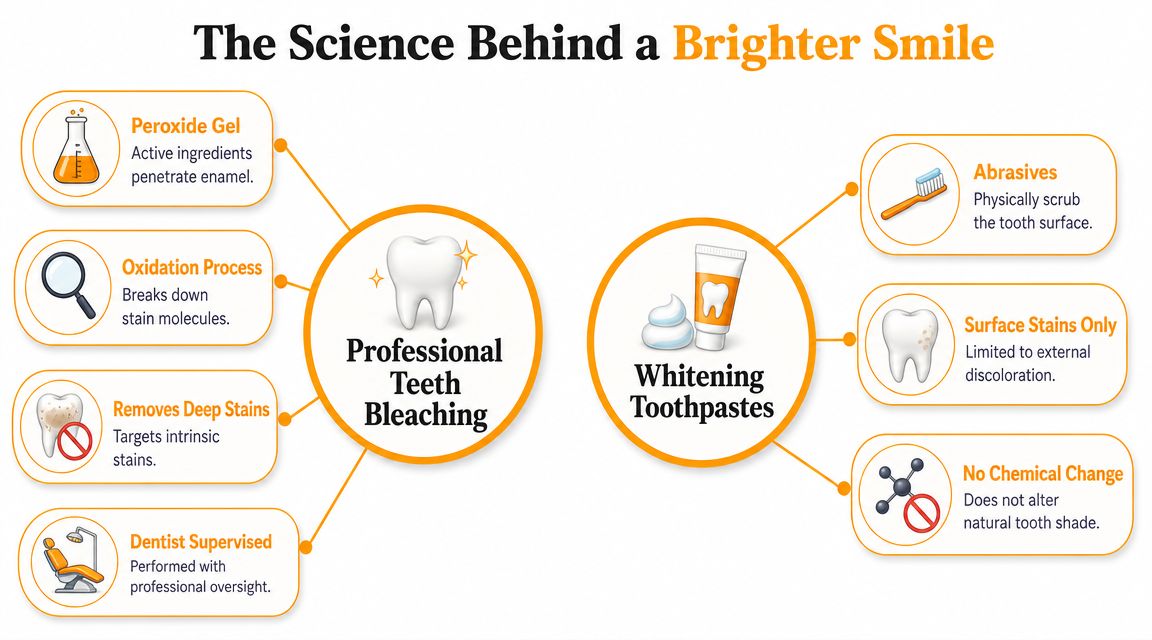
Professional bleaching works differently from products that only polish the outside of the tooth. Peroxide-based bleaching agents, usually hydrogen peroxide or carbamide peroxide, move into the enamel and break down stain compounds below the surface. Whitening toothpastes, by contrast, mainly work on external stain and don't change the internal colour of the tooth.
Deep bleaching versus surface cleaning
A simple way to think about it is this. Bleaching is like treating the stain within the fabric. Whitening toothpaste is more like cleaning the top layer.
That distinction matters because not all discolouration behaves the same way. The Australian Dental Association notes that whitening can treat both extrinsic and intrinsic staining, but also makes an important point: only natural teeth respond. Crowns, veneers, and fillings do not bleach, which is why anyone with existing dental work needs a proper shade assessment first (ADA whitening guidance).
What this means in real life
If you've got bonding on a front tooth, an old white filling near the edge, or a crown that shows when you smile, bleaching may still help. But the plan may need to include:
- Shade mapping so the dentist knows which teeth can change and which can't
- Expectation setting about whether restorations will look darker after natural teeth lighten
- Sequencing decisions on whether whitening should happen before replacing visible dental work
Whitening is often straightforward. Matching a bleached tooth to an unbleached restoration is the part people don't see coming.
For people comparing professional care with retail kits, it's useful to discover professional at-home whitening as part of that broader decision. The value isn't only the gel. It's the customisation, supervision, and ability to avoid an uneven result.
Your Professional Whitening Options Explained
A patient will often say, “I just want the fastest whitening you do.” Speed matters, but the better question is which option will whiten your teeth safely and predictably. That decision is usually made at the consultation, after checking your enamel, gum health, existing dental work, and history of sensitivity.
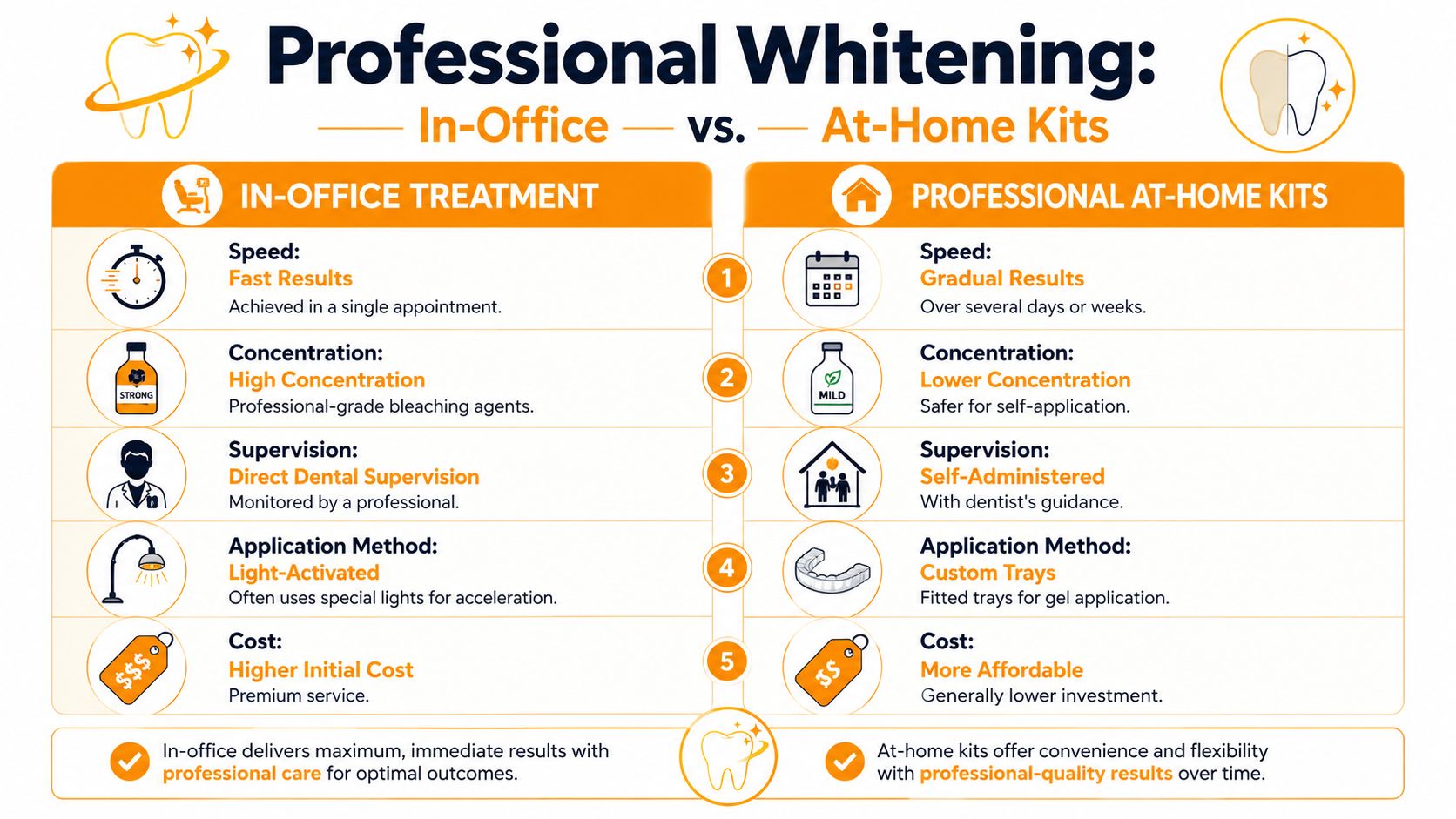
Professional bleaching generally falls into two categories. In-chair treatment is done at the clinic under direct supervision. Custom take-home trays are made by your dentist and used at home with a prescribed gel and clear instructions. Both can work well. They solve different problems.
In-chair bleaching
In-chair whitening suits patients who want a noticeable change quickly and prefer the whole process to be managed for them. The gel used in practice is stronger than retail products, and soft tissues are protected before treatment begins. Some systems also use a light as part of the protocol, although the gel and the clinical setup do most of the work.
The main advantage is convenience. You attend, we isolate the gums carefully, apply the gel evenly, and monitor how your teeth respond throughout the visit. A clinical overview from the Cleveland Clinic notes that in-office whitening is the fastest professional option, which matches what we see in day-to-day practice (Cleveland Clinic teeth whitening guide).
This option often suits people who:
- Want faster results for a wedding, photos, interviews, or another fixed date
- Prefer supervision rather than managing trays and gel themselves
- Need careful application because gum irritation or patchy placement is a concern
Custom take-home trays
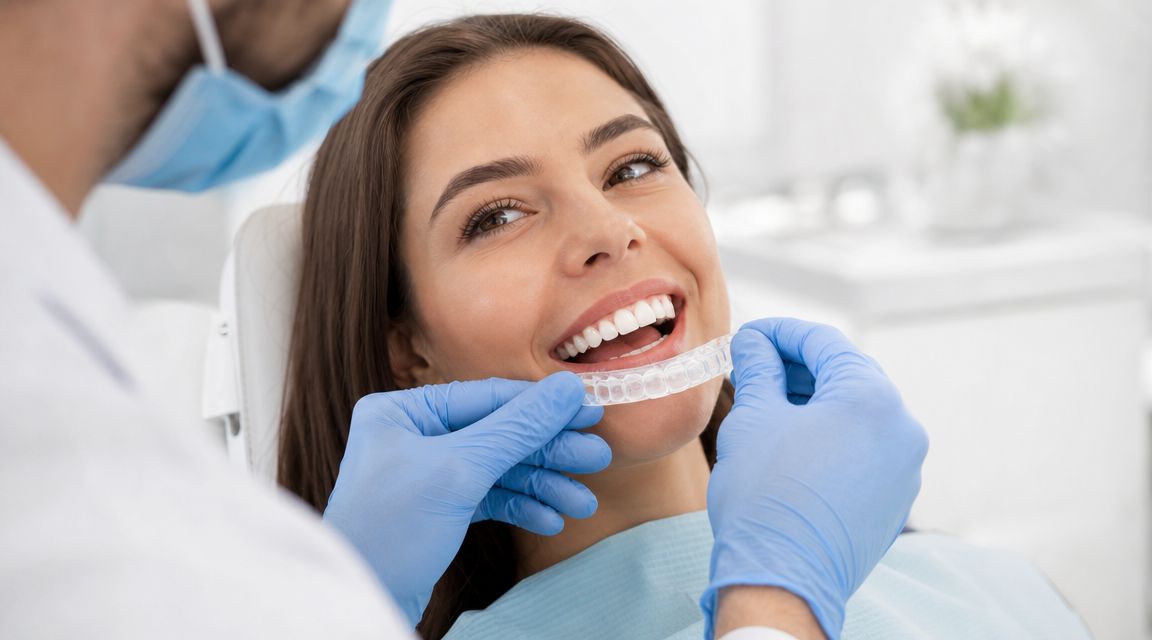
Custom trays are the more flexible option. They are made from an impression or scan of your teeth, so the fit is close and the gel sits where it should. That usually means better coverage and less overflow onto the gums than one-size-fits-all kits.
I often recommend trays for patients who want more control over the pace of whitening. If teeth start to feel sensitive, wear time can be shortened or paused for a day or two. That makes this option easier to tailor, especially for patients with a history of sensitivity or a smile that needs gradual shade improvement rather than a rush.
How to choose between them
The better option depends on more than how white you want your teeth to look. It depends on timing, sensitivity, compliance, and whether the current shade is likely to change evenly.
| Option | Main advantage | Main trade-off | Best fit |
|---|---|---|---|
| In-chair bleaching | Faster visible change | More intensity in a single appointment | Patients with a deadline or those who want full supervision |
| Take-home trays | More control and flexibility | Slower change over several days or weeks | Patients who prefer a gradual result and easier sensitivity management |
A proper consultation is what makes that choice smarter. DIY kits skip that step, which is why they can disappoint even when the ingredient looks similar on the box. The tray may not fit well, the gel may sit on the gums, and no one has checked whether the teeth you want lighter are natural teeth, restorations, or surfaces already prone to sensitivity.
If you're also comparing bleaching with gentler stain-control methods, our guide to natural teeth whitening approaches explains where home habits can help and where they fall short.
Are You a Good Candidate for Teeth Bleaching
Not everyone who wants whiter teeth should start whitening straight away. A good candidate usually has healthy teeth and gums, realistic expectations, and discolouration affecting natural tooth structure rather than restorations.
Signs you may be suitable
Bleaching often works well for people with:
- Surface staining from coffee, tea, red wine, or smoking
- General darkening that has built up gradually over time
- Healthy enamel and gums with no untreated decay or active inflammation
- A smile without prominent visible restorations in the whitening zone, or a plan to manage them
Reasons to pause first
The Australian Dental Association advises that whitening can cause temporary tooth sensitivity and gum irritation. It also warns that people with untreated decay, gum disease, or worn enamel shouldn't proceed without a dental check-up, because bleaching can aggravate hidden problems. The same caution applies if you have fillings or crowns that won't whiten and may leave the smile looking uneven (guidance on tooth whitening safety).
A pause doesn't always mean “no”. Often it means “not yet”.
For example, if someone has:
- A cavity near the gumline, the tooth may become more reactive during whitening
- Receding gums, exposed root surfaces may feel quite sensitive
- Old bonding or a front crown, the final colour may look patchy unless the treatment sequence is planned properly
The safest whitening patients aren't the ones who want the brightest result. They're the ones whose mouth is ready for it.
Teenagers, pregnant or breastfeeding patients, and people with a history of strong sensitivity also need a more individual discussion. The aim isn't to exclude people. It's to avoid turning a cosmetic treatment into an uncomfortable one.
The Treatment Process and Aftercare
A smooth whitening result usually starts before any gel touches the teeth. The consultation shapes the treatment. It tells us whether to whiten now, adjust the plan, or deal with a small issue first so the outcome is safer and more predictable.
What happens before bleaching
The pre-whitening appointment is the part DIY kits skip, and it often makes the biggest difference.
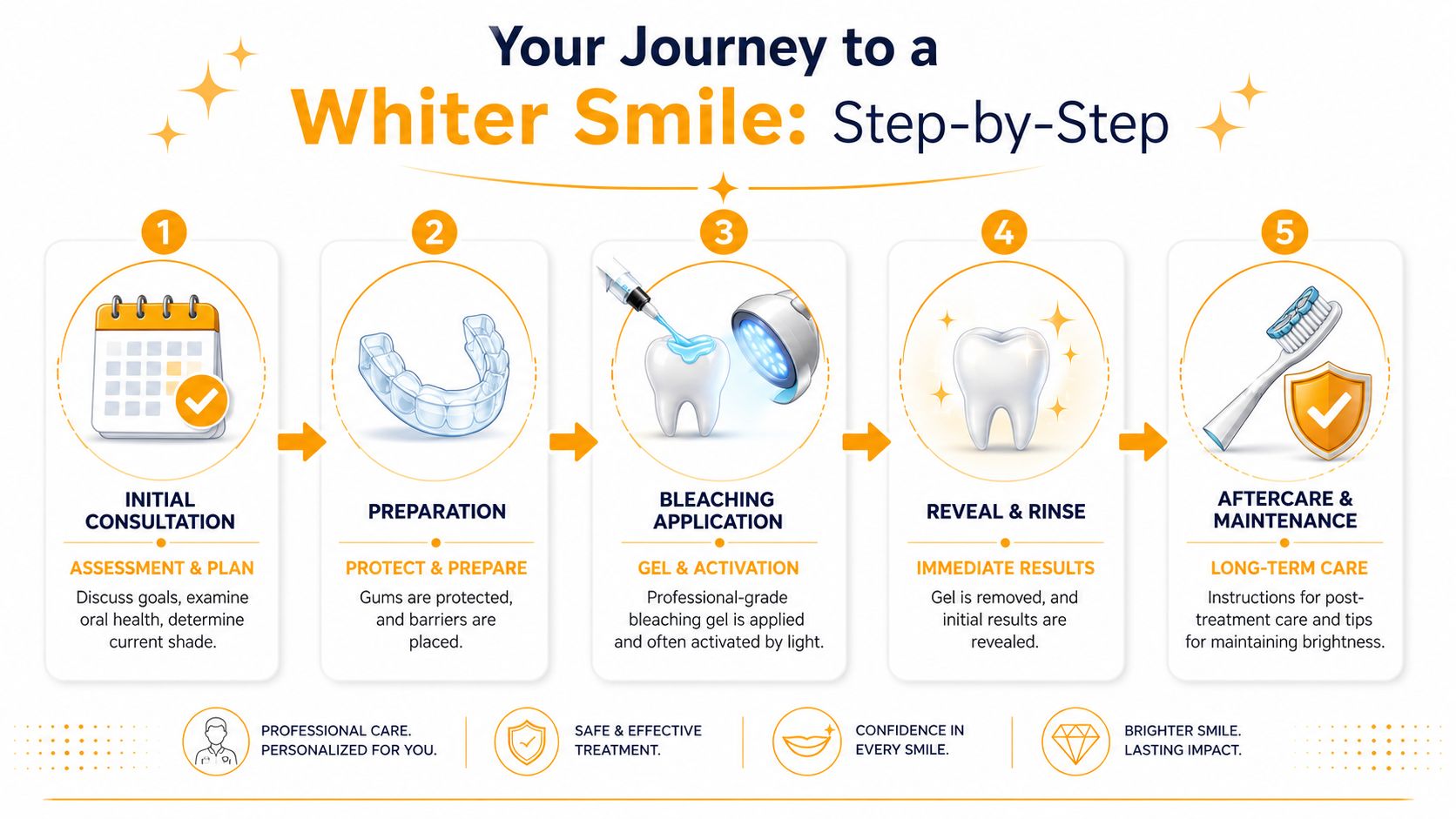
At that visit, the dentist checks for plaque build-up, gum irritation, worn enamel, leaking fillings, and old dental work that may not change colour with bleaching. We also look at the pattern of staining. Yellowing from age or diet often responds better than grey discolouration or colour change linked to trauma or certain medications. That matters because the right plan depends on what is causing the darkness in the first place.
This is also when expectations are set properly. Some patients want a fresh, natural improvement. Others ask for the brightest shade possible, even when that would look uneven against crowns or bonding. A short conversation here can prevent disappointment later.
What happens during treatment
In-chair bleaching is controlled and closely monitored. The lips and gums are covered first so the whitening gel stays where it should. The gel is then applied to the enamel for a set period, and the teeth are reviewed as treatment progresses. Some systems use a light, while others do not. The main factor is the bleaching agent and how carefully it is used, not the gadget attached to it.
A typical appointment includes:
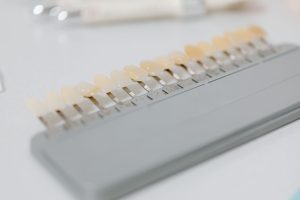
Shade assessment and photographs
Your starting point is recorded so progress can be judged accurately, not guessed.Isolation of the soft tissues
Protective barriers help reduce the chance of gum irritation.Careful gel application
The product is placed evenly and checked throughout the appointment.Rinse, reassess, and adjust if needed
The teeth are reviewed before deciding whether the session is complete or whether a gentler staged approach makes more sense.
Home whitening with custom trays follows a different schedule, but the same principles apply. The trays need to fit properly. The strength needs to suit your teeth. The instructions need to be clear enough that you do not wear them longer than advised just because faster sounds better.
For a closer look at what happens when whitening is pushed too far, our guide to the signs of over-whitened teeth explains what to watch for and why a controlled result usually looks better.
Here's a short visual walkthrough of the general process:
Aftercare that protects your result
Freshly whitened teeth can be temporarily more prone to picking up new stains. That is why the first few days matter.
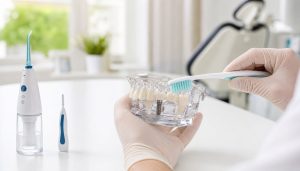
Patients are usually advised to keep food and drink choices simple at first, especially anything strongly coloured such as coffee, red wine, curry, soy sauce, and berries. Gentle brushing, a non-abrasive toothpaste, and steady oral hygiene help protect the result without adding extra irritation. If sensitivity appears, it is usually short-lived, but persistent pain or sharp zingers should be reported rather than ignored.
Repeated top-ups without guidance are where many people run into trouble. Bleaching works well when the timing, product strength, and tooth condition have been checked first. Used too often, it can leave teeth sore and the final colour less natural than intended.
Understanding the Cost and Value of Professional Whitening
The price of professional bleaching is higher than a box from the chemist. That part is obvious. The part people often miss is what they're paying for.
What the fee usually covers
With professional teeth bleaching services, the cost generally includes more than the whitening material itself. It covers clinical assessment, shade planning, protection of the gums, professional-strength products used appropriately, and a method chosen to suit your teeth rather than the average buyer.
That has practical value because whitening isn't just a purchase. It's a judgement call. The cheapest option can become expensive if it causes irritation, doesn't work, or creates a mismatch with visible dental work.
Value over time
Professional whitening is described as one of Australia's most requested cosmetic dental treatments, and the effects can last from several months up to three years depending on diet and oral hygiene (cosmetic dentistry whitening trends). That range is why maintenance habits matter so much.
When people compare value, it helps to think in these terms:
- Safety value from a proper exam before treatment
- Outcome value from more even, predictable whitening
- Longevity value if results last well with sensible maintenance
- Comfort value when the plan reduces the risk of avoidable sensitivity
If you're trying to budget for treatment, our guide to teeth whitening costs gives a clearer picture of what can affect the final fee.
Why Choose The Smile Spot for Your Whitening Treatment
A bright smile is cosmetic. The decision-making behind it should still be clinical.
At The Smile Spot teeth whitening service in Dulwich Hill, whitening is approached as part of overall oral health, not as an isolated add-on. That matters for families and adults in the Inner West who want a result that looks natural and feels comfortable, especially if they already have dental work or a history of sensitivity.
What patients should look for in a clinic
When choosing where to have whitening done, these details make a real difference:
- An exam-first approach so problems are found before bleaching starts
- Experience with mixed smiles that include fillings, crowns, veneers, or worn enamel
- Comfort-focused care for anxious patients or those who've had sensitivity before
- Flexible options including in-chair whitening or take-home systems where appropriate
The Smile Spot is led by Dr. Dimitrios Thanos, principal dentist since 1996, and the clinic also uses Biolase laser dentistry as part of its broader patient-care approach. For patients who are nervous about treatment generally, that emphasis on gentler care and careful planning can be just as important as the whitening itself.
A good whitening result should fit your face, your age, and the rest of your smile. It shouldn't look disconnected from your existing teeth.
Convenience matters too. Late evening and Saturday appointments, online booking, and family-focused care make it easier to fit cosmetic treatment into normal life rather than delaying it indefinitely.
Common Questions About Teeth Bleaching
Is some sensitivity normal after whitening
Yes, temporary sensitivity can happen. Some people notice short, sharp responses to cold air or cold drinks for a brief period after treatment. Mild gum irritation can also occur if whitening material contacts soft tissue.
What matters is the pattern. Temporary sensitivity that settles is common. Pain that's strong, worsening, or lingering should be reviewed rather than ignored.
Is professional whitening safer than DIY kits
In practical terms, yes. The key issue isn't only strength. It's supervision.
Peroxide-based products are the agents that lighten tooth colour, while most whitening toothpastes mainly remove surface stains. Consumer guidance also notes that higher-concentration peroxide products are regulated because misuse can cause chemical burns on the gums or damage to teeth, which is why professional supervision adds an important safety layer (professional and DIY whitening differences).
Do LED kits make teeth whiter
Some kits may include peroxide. Others rely heavily on the device marketing rather than the chemistry doing the work. The important question isn't whether a light is included. It's whether the product contains an effective bleaching agent, whether it fits properly, and whether your teeth were suitable candidates to begin with.
Will whitening work on crowns, veneers, or fillings
No. Restorations don't bleach the way natural enamel does. If visible dental work is part of your smile, the consultation should identify that before treatment starts so you don't end up with mismatched shades.
What if my teeth already feel sensitive
Sensitive teeth don't automatically rule whitening out, but they do change how the plan should be made. A dentist may suggest a gentler protocol, a slower approach, or treating underlying issues first. The wrong whitening method can make sensitive teeth miserable. The right one can still be manageable.
How long do results last
That depends heavily on diet, oral hygiene, and whether staining habits return quickly. Dark drinks, smoking, and inconsistent cleaning will shorten how long the result stays bright. Maintenance works best when it's planned, not improvised.
If you're thinking about whitening and want clear advice before committing to treatment, book a consultation with The Smile Spot. A proper assessment can tell you whether bleaching is suitable, which option fits your teeth, and how to get a brighter result without unnecessary sensitivity or uneven colour.