A sharp toothache at 6:30 pm. A crown that comes loose during dinner. A child who runs in from sport with a chipped front tooth. These are the moments when people type emergency dental clinics near me and hope the nearest result can help tonight, not next week.
If you're in Dulwich Hill or the Inner West, the first priority is simple. Stay calm, protect the tooth or the area around it, and get proper care quickly. Panic makes people do unhelpful things, like putting aspirin on the gum, scrubbing a knocked-out tooth, or waiting overnight with a swelling that should be seen urgently.
In Australia, dental pain is common enough that it affects everyday life on a very large scale. About 38% of Australians aged 15 and over experienced dental pain or discomfort in the past 12 months, and in NSW, dental emergencies accounted for 5.2% of all emergency department presentations in 2021-22, including high incidence in Inner West suburbs such as Marrickville and Ashfield, according to the Australian Institute of Health and Welfare oral health data and NSW Bureau of Health Information emergency department reporting. That's one reason local access matters.
Facing a Dental Emergency in the Inner West?
You're not overreacting if dental pain has taken over your evening. It can be intense, fast-moving, and hard to judge. Some problems are painful but stable for a few hours. Others worsen by the minute.

A common Inner West scenario goes like this. Someone in Dulwich Hill ignores a tooth that has been “niggling” for days. By the time they finish work, the pain is throbbing into the jaw, eating on one side no longer helps, and they start searching for a clinic close enough to reach before closing.
Another version is less dramatic but still urgent. A veneer chips before a meeting. A filling falls out on a Saturday morning. A wisdom tooth flares up just before a family event. Not every emergency looks like trauma. Many are infections, pressure, cracked restorations, or pain that suddenly crosses the line from manageable to impossible.
Local reality: In the Inner West, convenience isn't a luxury in an emergency. The best clinic is the one you can reach quickly, understand clearly, and trust under pressure.
If you're trying to work out whether a nearby clinic is legitimate, practical signs matter more than glossy promises. Can they explain what to do before you leave home? Can they tell you what to bring? Can they assess pain, swelling, trauma, and broken restorations without making you guess?
That's also why dental practices invest in clear patient communication. If you're curious how clinics think about attracting the right urgent patients and making access easier, this overview of digital marketing for dental patient acquisition gives useful industry context.
For people searching locally, it helps to know whether a practice serves your area day to day, not just on a map. If you're in the surrounding suburbs, this Inner West Sydney dentist page shows the kind of community-focused access many families and commuters are looking for.
What matters most in the first few minutes
Three questions help settle the panic:
- Is there swelling, bleeding, or trauma? Those can shift a problem into urgent territory quickly.
- Is the pain worsening or waking you? Pain that escalates usually means don't wait casually.
- Can the tooth still be protected? Fast, correct handling can make a major difference, especially with a knocked-out tooth.
What to Do Right Now Before You Leave Home
The best first aid is simple and controlled. Don't try home fixes that irritate the tooth more. Don't delay because the pain briefly eases.
If it's a severe toothache
Start with the least aggressive steps.
- Rinse gently with warm salt water. This can help clear debris and soothe inflamed tissue.
- Floss carefully around the sore tooth. Food caught between teeth can mimic or worsen severe pain.
- Use a cold compress on the outside of the cheek. Keep it external, not directly on the tooth.
- Don't place aspirin on the gum. It can burn the tissue and won't treat the cause.
Pain from pressure, heat sensitivity, or a throbbing pulse often points to inflammation inside the tooth. If it keeps building, it needs a dentist, not a stronger home remedy.
If a tooth has been knocked out
This is one of the few true dental situations where minutes matter.
- Pick the tooth up by the crown, not the root.
- If it's dirty, rinse it gently with water for a few seconds. Don't scrub it.
- If possible, place it back in the socket.
- If you can't reinsert it, store it in milk or saliva.
- Go straight for urgent care.
The reason this matters is straightforward. Tooth replantation success can be 78% if handled correctly, particularly when the tooth is managed properly and treated quickly, based on IADT guidance and Australian dental benchmark reporting.
Keep the tooth moist. Dry storage is one of the quickest ways to reduce the chance of saving it.
If you've chipped or cracked a tooth
A small chip may be mainly cosmetic. A deeper crack can expose sensitive inner tooth structure.
- Rinse with warm water
- Save any fragments
- Avoid chewing on that side
- Use a cold compress if the lip or cheek is swollen
If the crack is painful with cold air, biting, or pressure, don't wait too long. Cracks can worsen under normal chewing.
If a filling or crown has come out
This often feels less dramatic than a broken tooth, but it can become painful fast.
Keep the area clean. Chew on the other side. If you still have the crown, bring it with you. Don't glue it back with household adhesive.
If the tooth underneath is sharp, sensitive, or painful to air and temperature, treat it as urgent. If you think the tooth may be beyond repair, this guide on an emergency tooth pull explains when extraction enters the discussion.
If there's swelling or an abscess
Swelling is not something to “watch and see” for too long. Rinse gently. Stay upright. Don't apply heat. Don't press on the swelling to drain it.
If the swelling is spreading, affecting swallowing, or making you feel unwell, seek urgent care immediately.
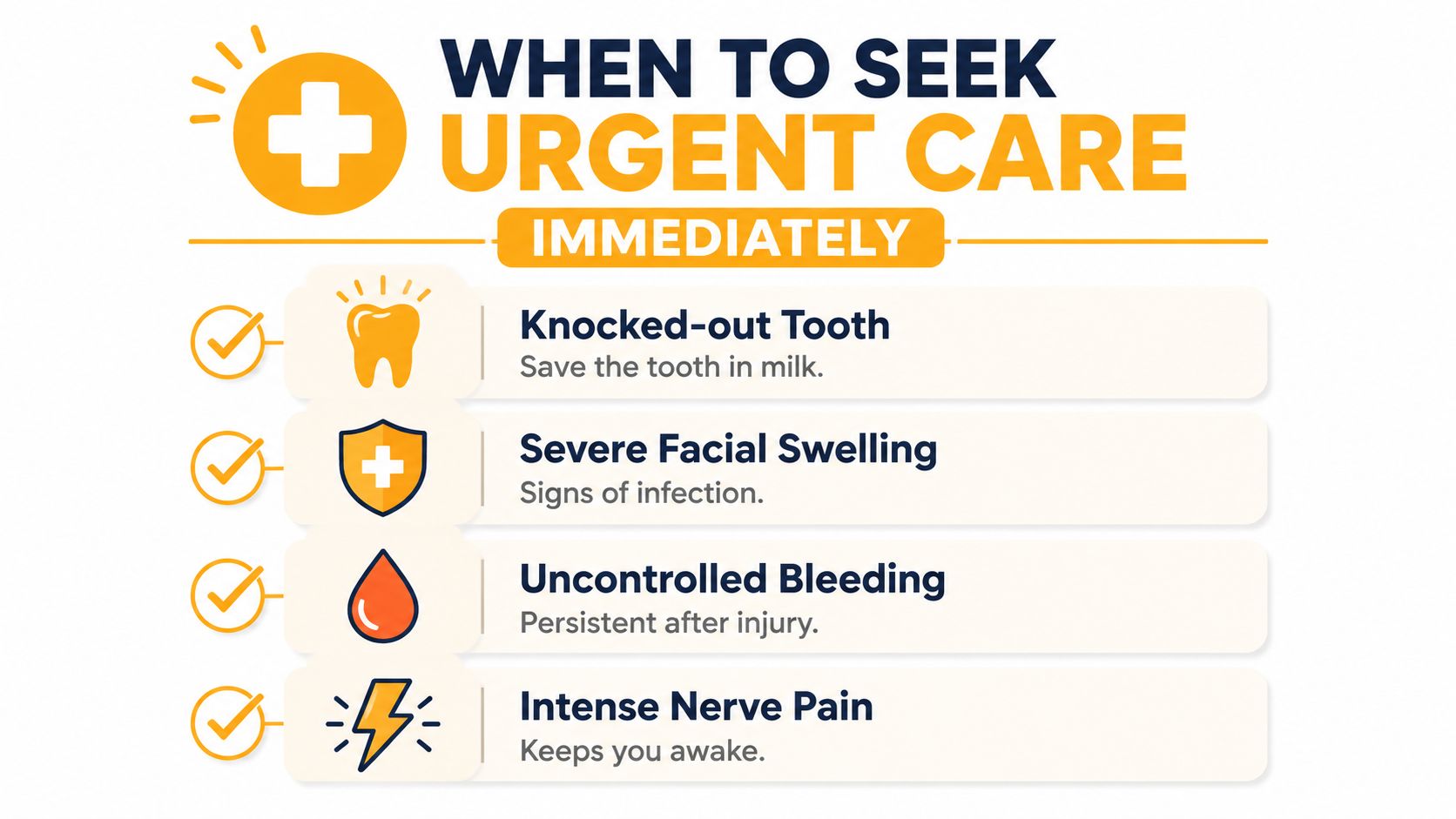
When to Seek Urgent Care Immediately
Some dental problems feel dramatic but can wait until the next available appointment. Others shouldn't. The goal is to separate distress from danger so you act quickly when it matters and avoid unnecessary panic when it doesn't.
Dental Emergency Triage Guide
| Symptom | Level of Urgency | Action to Take |
|---|---|---|
| Knocked-out adult tooth | Immediate | Keep it moist in milk or saliva and attend urgently |
| Severe facial swelling | Immediate | Seek urgent dental care straight away |
| Bleeding that won't stop after injury | Immediate | Apply clean gauze and get urgent care |
| Intense tooth pain that keeps you awake | Same day urgent | Call for the earliest appointment |
| Broken tooth without major pain | Urgent but not always immediate | Protect the area and attend promptly |
| Lost filling or crown with mild sensitivity only | Soon | Keep the tooth clean and book the next available visit |
Problems that shouldn't wait
There are four situations where delay is risky:
- Knocked-out tooth
- Rapid swelling of the face or gum
- Bleeding that continues after pressure
- Pain that is severe, escalating, or impossible to sleep through
These presentations can involve infection, nerve inflammation, trauma, or tissue damage that gets harder to manage the longer it's left.
Problems that are urgent, but sometimes stable for short periods
A lost filling, a cracked molar, or a broken denture can still need fast care, but not every case means rushing out the door that second. If there's no swelling, no uncontrolled bleeding, and pain is manageable, the problem may be suitable for the next available urgent slot.
If biting makes the pain sharp and immediate, or if hot and cold trigger lingering pain, the issue is usually more than “just a chip”.
For some patients, severe pain comes from inflammation inside the tooth rather than the outer enamel. If you're not sure whether your symptoms sound like nerve involvement, these signs you need a root canal can help you recognise the pattern.
One trade-off people often get wrong
Many people wait because they're hoping to avoid treatment. That sometimes does the opposite. A tooth that might have been stabilised earlier can become harder to save after additional fracture, swelling, or infection.
On the other hand, not every chipped edge at 8 pm needs panic. Good triage means matching the response to the problem, not to the fear.
What to Expect at Our Dulwich Hill Clinic
You call with a throbbing tooth, a swollen gum, or a broken front tooth after dinner. The first priority at The Smile Spot is to work out how urgent it is, get you into the right appointment slot, and make the next hour feel more controlled.
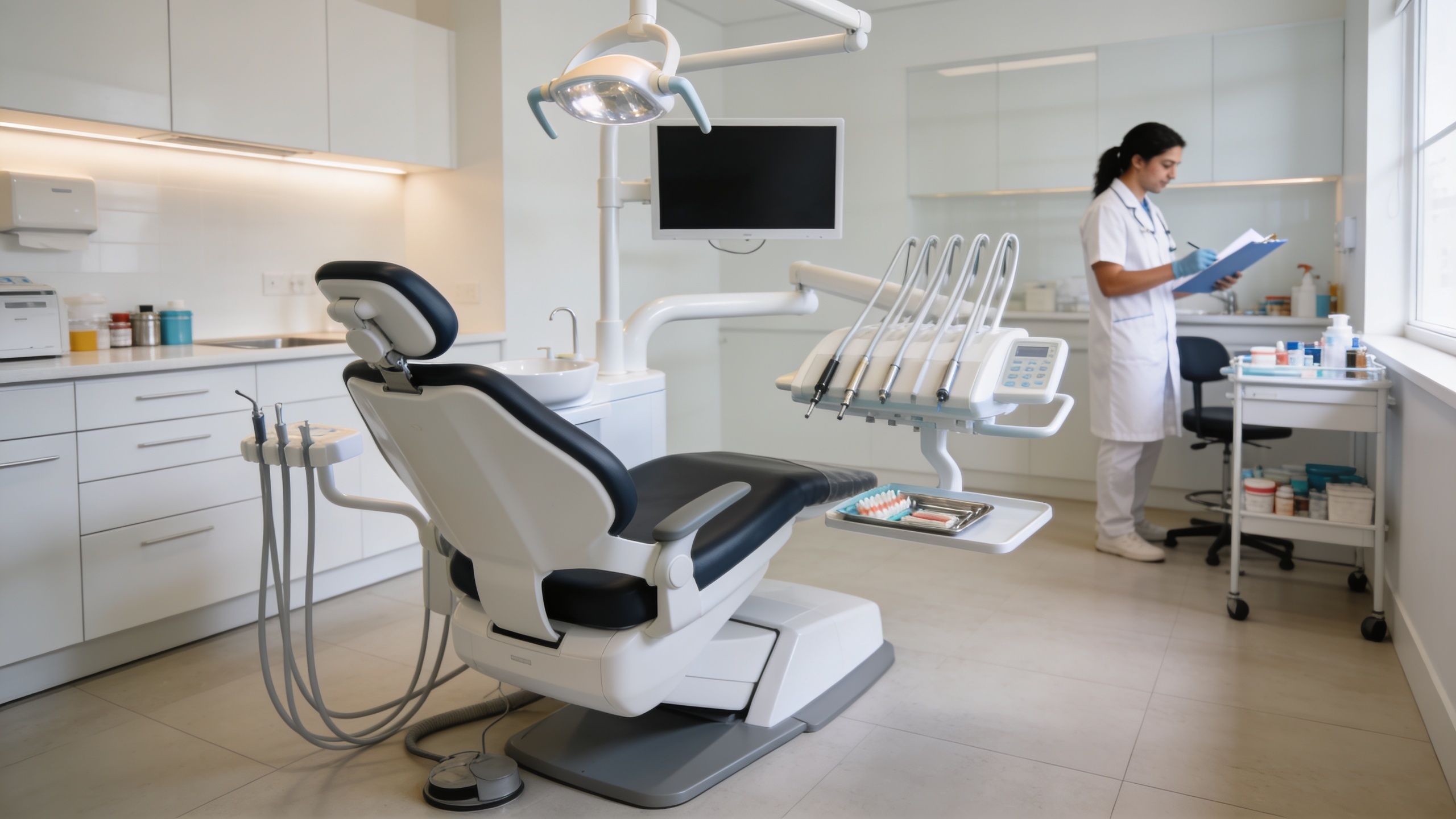
A good emergency visit is organised before you arrive. If you are coming from Dulwich Hill, Marrickville, Ashfield, Summer Hill, or Petersham, call before leaving home if you can. That gives the team time to prepare the room, flag whether imaging is likely, and tell you if you should avoid eating in case sedation becomes part of the plan.
What to have ready when you call
Keep the summary short and specific. The clearer the information, the faster the triage.
- Your main problem. Severe toothache, swelling, trauma, broken tooth, lost crown, bleeding
- When it started. Suddenly, overnight, after biting, after a fall
- Whether the pain is constant or triggered by biting, cold, or heat
- Any swelling, bleeding, fever, or bad taste
- What pain relief or antibiotics you have already taken
- Your regular medications, allergies, and major health conditions
- Your health fund card and photo ID if available
If anxiety is part of the emergency, say that plainly. It changes how the appointment is paced. It also helps us discuss sedation options for nervous dental patients early rather than after you are already in the chair and overwhelmed.
What happens once you arrive
The appointment usually starts with reception confirming your details, consent, and any payment or claiming questions that could delay treatment later. Some clinics also use secure appointment payment solutions to make upfront deposits or urgent booking payments easier to handle before treatment begins.
Clinical care follows a practical order. First, the dentist listens to the history and pinpoints the source of pain. Then comes an examination of the tooth, gums, bite, and surrounding tissues. If the cause is not obvious from the exam alone, digital X-rays are taken. The Australian Commission on Safety and Quality in Health Care supports appropriate diagnostic imaging and clear communication as part of safe care planning in Australian health settings.
Once the diagnosis is clear, treatment is matched to the problem in front of us. That may mean draining an abscess, dressing a fractured tooth, re-cementing a crown, adjusting a painful bite, starting root canal treatment, or removing a tooth that cannot be saved. In other cases, the right decision is to stabilise the problem today and book the definitive repair once the pain and inflammation are under control.
That trade-off matters. Finishing everything in one visit sounds ideal, but in emergency dentistry the best result often comes from doing the right amount on the day, not the maximum possible.
Comfort and pacing during the visit
Patients in pain often expect to be rushed. A well-run emergency appointment feels focused, not hurried.
You should expect a clear explanation of:
- What the problem appears to be
- What needs to be done today
- What can wait until follow-up
- What the likely recovery over the next 24 to 48 hours will look like
For anxious patients, comfort measures are part of treatment planning, not an extra. Sedation may be appropriate in selected emergency cases, especially where fear, a strong gag reflex, or previous traumatic dental experiences would otherwise make urgent treatment difficult.
A quick look at the patient experience can also help settle nerves:
What you should leave knowing
Before you head home, you should have a diagnosis, a written or verbal plan, and a clear sense of what happens next if symptoms change.
That is the standard to expect. In an emergency, reassurance is helpful. Clear answers, pain relief, and a workable next step are what calm people down.
Navigating Payments and Health Funds
Cost worries are one of the main reasons people hesitate, even when they know they need help. That hesitation is understandable. A dental emergency is stressful enough without wondering what the bill will look like at the end.

Why fee clarity matters
In Australia, 12.4% of people delayed or avoided dental visits due to cost, according to the ABS Patient Experience Survey. Separate affordability reporting from the Grattan Institute on dental costs also notes rising out-of-pocket expenses. In real terms, that means many patients arrive worried about two kinds of pain at once: dental pain and financial uncertainty.
The better approach is straightforward communication before treatment starts. In an emergency setting, patients should know:
- What today's assessment is likely to include
- Whether imaging may be required
- Which part is urgent relief versus full repair
- Whether private health fund claiming can be processed on the spot
- What payment options exist if more than one visit is needed
How health fund and payment logistics usually work
Bring your private health fund card if you have one. Clinics that process on-the-spot claims can often tell you the gap after the item is run through the system. That's much easier than trying to sort reimbursement after the fact.
If you're comparing systems behind the scenes, businesses in healthcare often look for secure appointment payment solutions that reduce friction and protect patient transactions. From the patient side, what matters is simpler: clear totals, reliable claiming, and no confusion at the desk while you're in pain.
A practical way to think about emergency costs
The cheapest decision in the moment isn't always the least expensive overall. Waiting with an infection, fractured tooth, or unstable restoration can lead to more extensive treatment later. At the same time, patients deserve transparency before agreeing to anything.
That's why it helps to ask direct questions:
- What do you need to do today to stop the problem getting worse?
- What can safely wait for a follow-up visit?
- What will my likely out-of-pocket be today?
If staged treatment or budgeting matters to you, this article on dentists with payment plans near me is a useful starting point.
Aftercare and Follow-Up for a Healthy Recovery
Once the urgent pain is under control, the next 24 to 72 hours often determine whether recovery stays straightforward or turns into another emergency.
Patients in the Inner West often feel relief after the first visit and assume the problem is finished. Sometimes it is. Often it is only stabilised. A temporary filling, drainage for an abscess, splinting after trauma, or the first stage of root canal treatment is designed to get you comfortable and safe. The tooth still needs protecting while the area settles.
The first day after treatment
Use the instructions from your appointment, even if you feel much better by that night.
- Take prescribed medication exactly as directed
- Choose soft foods if the tooth, jaw, or gum is sore
- Chew on the other side if we advised that
- Brush and rinse gently so the area stays clean
- Keep your review appointment if one was booked
One common mistake is testing the tooth too early. Hard toast, nuts, chips, or chewing on a temporary restoration can undo good work in a few minutes.
If swelling increases, bleeding does not settle, pain becomes harder to control, or you develop trouble swallowing or opening properly, call the clinic. Do not wait and hope it passes.
Why follow-up matters
Emergency care is often done in stages for a reason. The first appointment may remove the immediate problem, reduce infection, calm the nerve, or protect a cracked tooth. The review visit lets us check healing, confirm the diagnosis, and decide whether the tooth needs a final filling, crown, extraction, or full root canal treatment.
I often tell anxious patients this: the emergency visit gets the situation stable. The follow-up visit is where we make it reliable.
That distinction matters at The Smile Spot because we plan the next step before you leave. If you were seen for severe pain, infection, trauma, or a broken tooth, expect clear instructions about timing, warning signs, and whether a second visit should be booked promptly or after the area settles.
Practical recovery advice for common emergencies
Different problems heal differently.
- After an extraction: avoid smoking, vigorous rinsing, and heavy spitting early on, because that can disturb the clot
- After treatment for an abscess or swelling: finish the prescribed course if medication was given and watch for any return of facial swelling
- After a cracked or broken tooth is stabilised: avoid biting hard foods on that tooth until the final restoration is completed
- After emergency root canal treatment: mild tenderness on biting can happen for a short time, but escalating pain should be reviewed
- After trauma: keep the area protected and attend every review, even if the tooth looks normal
According to the NSW Health advice on dental trauma, injured teeth can change over time and may need ongoing review after the initial event. You can read their patient guidance at NSW Health's dental trauma information.
Preventing the next emergency
A lot of dental emergencies start as smaller problems that were easy to ignore. A loose filling holds for another month, then fails on dinner. A minor crack becomes a split tooth. Gum swelling comes and goes until it becomes painful enough to affect sleep.
Prevention is usually ordinary, not dramatic:
- Regular check-ups to spot cracks, decay, and failing restorations early
- Professional cleans to reduce the risk of painful gum flare-ups
- A custom mouthguard for sport or grinding
- Prompt repair of small problems before they turn into weekend pain
Good emergency care does not stop at getting you out of pain. It also reduces the chance of seeing you back in the same situation a few weeks later.
If you need calm, practical emergency dental care in Dulwich Hill, The Smile Spot offers help for urgent pain, broken teeth, swelling, lost restorations, and anxious patients who want gentle treatment with clear next steps.