A lot of people start in the same place. There's a wedding, a work event, fresh family photos, or a moment in the mirror where the smile looks a little duller than it used to. Then the search begins. Strips, pens, LED gadgets, online “professional” kits, beauty promos, pharmacy boxes. The choices look endless, and the claims rarely make things clearer.
That's usually where confusion sets in. One product promises speed, another promises comfort, and another uses the word “professional” so loosely that it's hard to tell whether you're looking at a genuine dental treatment or just premium packaging. Whitening sounds simple, but the wrong product, the wrong fit, or the wrong candidate can lead to sore gums, patchy colour, and disappointment.
A better way to think about whitening is this. It isn't just a product purchase. It's a cosmetic dental treatment that works best when the teeth, gums, bite, restorations, and stain pattern have all been checked first.
The Search for a Brighter More Confident Smile
A patient might be getting ready for an engagement party and want teeth that look fresher in photos. Another might have finished orthodontic treatment and feel that a brighter shade would complete the result. Others aren't preparing for anything special at all. They're just tired of seeing coffee, tea, red wine, or age-related staining when they smile.
The problem is that whitening is often marketed as though every mouth is the same. It isn't. Two people can buy a kit with similar-looking packaging and have completely different experiences. One may notice a pleasing lift in colour. The other may end up with tender gums, sharp sensitivity, or front teeth that still don't match existing fillings.
That's why cosmetic treatments should always be approached with a bit of care, not just excitement. Many of the same ideas discussed in these safe aesthetic treatment insights apply here too. The treatment may be elective, but safety, suitability, and realistic expectations still matter.
Whitening should improve how your smile looks without creating new dental problems to solve later.
For patients exploring a broader cosmetic refresh, it also helps to understand how whitening fits into the bigger picture of smile planning. A smile makeover in Sydney often starts with simple questions. Are the teeth healthy? Are restorations visible? Is whitening the right first step, or would another cosmetic option create a better match?
Professional whitening makes sense when you want a result that is not only brighter, but also more controlled. That control is the key difference. It's what turns whitening from guesswork into treatment.
What Defines a Professional Teeth Whitening Kit
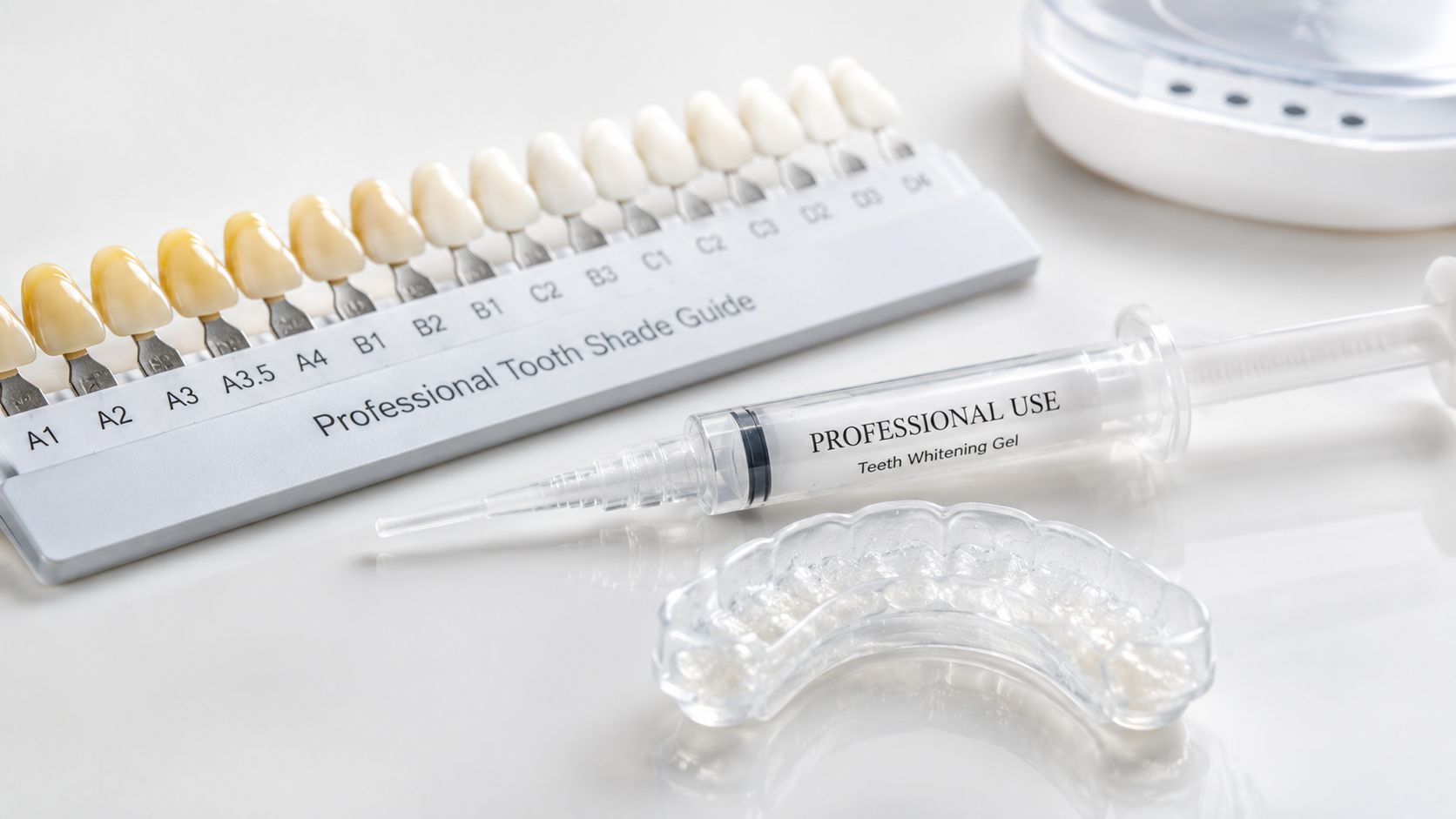
A professional teeth whitening kit isn't just a box of gel. It's a system built around diagnosis, customisation, and supervision.
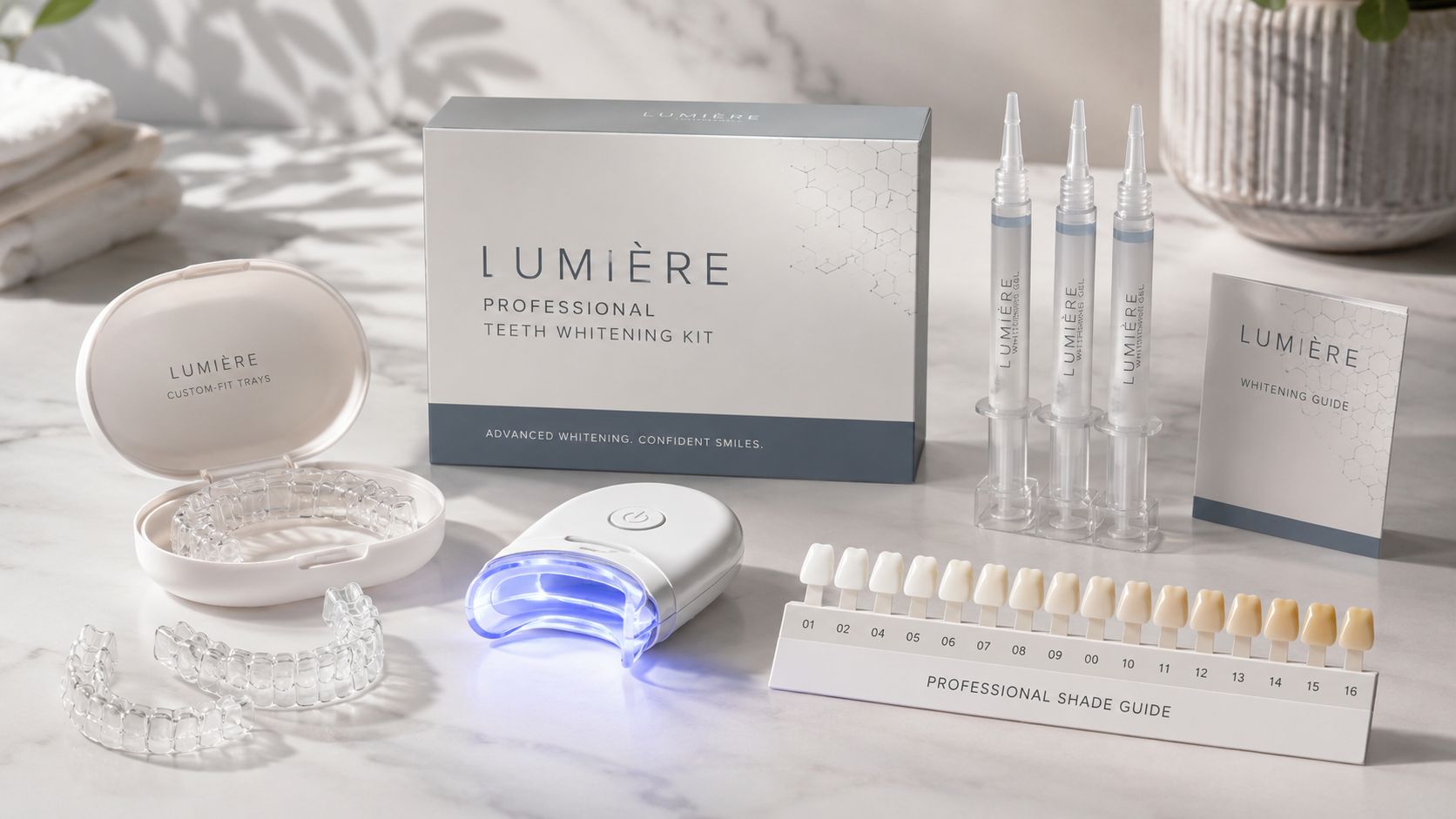
The Australian Dental Association notes that dentist-supervised whitening may be provided as an at-home treatment that takes “anywhere from a few days to a few weeks,” or as chairside bleaching that usually requires one office visit. It also explains that whitening relies on hydrogen peroxide or carbamide peroxide, with dentist-supervised options using stronger concentrations than over-the-counter products, as outlined by the ADA through their teeth whitening guidance.
It starts with an examination
Before a professional kit is prescribed, a dentist checks what's causing the darker appearance. Not all discolouration responds the same way. Surface staining behaves differently from deeper colour change, and neither behaves like a crown, veneer, or tooth-coloured filling.
That assessment matters because whitening only changes natural tooth structure. It doesn't change the colour of existing restorations. If someone has visible dental work on front teeth, a kit can make the surrounding enamel lighter while leaving the restorations unchanged.
Custom trays are a big part of the treatment
The tray is often overlooked, but it's one of the most important parts of a professional system. A custom tray is made to fit your teeth closely, which helps in two ways:
- More even contact so the whitening gel sits where it should
- Better gum protection because excess gel is less likely to spill onto soft tissue
- More predictable wear because the tray doesn't shift the way generic trays often do
This is one reason dentist-supplied whitening tends to feel more controlled. The tray isn't an accessory. It's part of the treatment design.
If you'd like a closer look at how clinical whitening differs from retail products, this overview of teeth bleaching services is a useful next read.
The gel is stronger, but that's not the whole story
A professional kit uses a peroxide-based whitening agent selected for the patient and the treatment plan. Stronger gel matters, but stronger alone doesn't make a result better. Correct application time, tray fit, gum health, and the starting condition of the teeth all affect the outcome.
Practical rule: If a product is sold as “professional” but doesn't involve a dental assessment or a properly fitted tray, it isn't professional in the clinical sense that matters.
Some professional systems are entirely take-home. Others combine chairside treatment with home maintenance. The common thread is that a dentist directs the plan rather than leaving the patient to experiment.
A short demonstration can help make that distinction clearer:
Professional Kits vs Over-the-Counter Options
The easiest way to compare whitening options is to look past the packaging and focus on what defines the experience: ingredient strength, tray fit, supervision, and how predictable the result is.
In Australia, a dentist-prescribed professional kit can legally contain up to 6% hydrogen peroxide or about 16% carbamide peroxide, while over-the-counter retail products are capped at 0.1% hydrogen peroxide, according to this explanation of the professional teeth whitening kit rules. That gap is the main reason the two categories don't perform the same way.
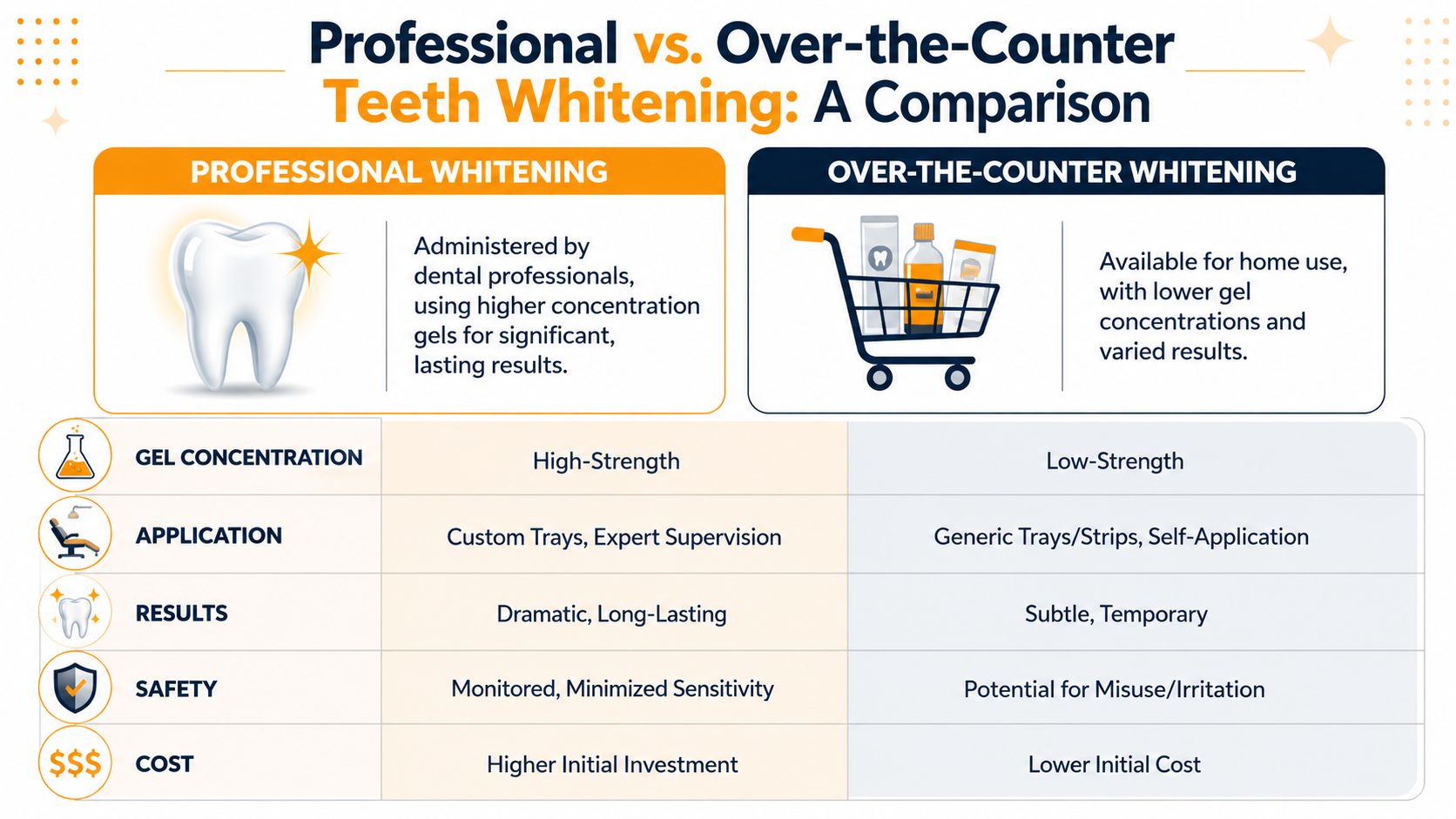
Professional Whitening vs. Over-the-Counter Products
| Feature | Professional Kit (Dentist-Supervised) | Over-the-Counter (OTC) Kit |
|---|---|---|
| Active ingredient strength | Higher-strength peroxide within legal dentist-prescribed limits | Much lower peroxide concentration |
| Tray design | Custom-fitted trays based on your teeth | Generic strips, trays, or applicators |
| Assessment before treatment | Yes, suitability is checked first | No clinical screening built in |
| Gum protection | Better controlled through fit and instructions | More risk of overflow or poor placement |
| Result consistency | More predictable | More variable |
| Existing dental work | Considered in treatment planning | Often overlooked by the buyer |
| Sensitivity management | Adjusted by a dentist if needed | Usually self-managed |
| Upfront cost | Higher | Lower |
| Value over time | Often better if the result is even and maintainable | Can be less satisfying if multiple attempts still underperform |
Why the concentration gap matters
Peroxide needs enough strength, enough contact, and the right delivery method to create a visible change. A stronger professional formula can penetrate stains more effectively than a retail product with much lower allowable peroxide.
That doesn't mean every stronger product automatically gives a better smile. It means the treatment has more potential when it is correctly prescribed and monitored. Without supervision, stronger chemistry can also mean more irritation, more sensitivity, and more uneven whitening.
Where OTC products often fall short
Retail products can be useful for very mild surface staining or for people seeking a subtle cosmetic lift. But they commonly run into practical limitations:
- Poor fit: Generic trays don't adapt to each tooth and gumline.
- Inconsistent coverage: Strips may lift, fold, or miss curved surfaces.
- Wrong candidate: Someone with untreated dental issues may whiten anyway and aggravate them.
- Unmet expectations: The buyer expects a dramatic change and gets only a modest improvement.
For many patients, the frustration isn't that the product did nothing. It's that it did too little, too unevenly, or in a way that created discomfort.
What works better in real life
A professionally supervised approach tends to work better when the patient wants reliability. That includes people with visible staining, a deadline, previous sensitivity, or front teeth with existing dental work that needs to be considered before whitening begins.
If you've been comparing whitening with internet remedies, it also helps to separate evidence-based options from popular myths. This article on natural teeth whitening explains why “gentle” doesn't always mean effective, and “natural” doesn't always mean safe.
Some over-the-counter kits can improve appearance a little. Very few can replace a well-planned professional treatment when the goal is an even, noticeable result.
The Professional Whitening Process and What to Expect
A common scenario in practice is this: a patient wants whiter teeth for an upcoming event, buys a kit online, and ends up with sore gums, patchy colour, or no real change where crowns or fillings sit. Professional whitening is designed to avoid those problems before treatment starts, not just to whiten faster.
Professional whitening usually takes one of two forms. Treatment is either done in the chair for a quicker result, or through a take-home professional kit with custom trays and clear instructions. The right option depends on the teeth, the type of staining, any history of sensitivity, and whether existing dental work needs to be factored into the plan.
In-office whitening
In-chair whitening suits patients who want a faster change and prefer the process to be supervised from start to finish. The appointment is planned to control where the gel goes, how long it stays in contact with the teeth, and how the soft tissues are protected throughout. That supervision matters because strong whitening gel on the gums can cause irritation, and uneven placement can lead to an uneven result.
A typical appointment includes:
Assessment and shade review
The dentist checks the teeth and gums, confirms whitening is appropriate, and records the starting shade.Protection of the lips and gums
Barriers are placed so the gel stays on the teeth rather than the surrounding soft tissue.Careful gel placement and monitoring
The whitening agent is applied in controlled stages and reviewed during the appointment.Rinse, review, and aftercare
The teeth are assessed again, and the patient is given advice on sensitivity, stain management, and what result to expect over the next day or two.
Clinical guidance from the American Dental Association explains that professionally supervised whitening can involve either in-office treatment or dentist-dispensed tray systems, with the method chosen based on the patient's needs and oral health: ADA guidance on tooth whitening options.
Take-home professional kits
A take-home professional kit is slower, but it gives very good control when it is prescribed properly. The trays are made from impressions or scans of the teeth, so they fit closely and keep the gel where it should be. That reduces one of the most common problems with generic kits, which is gel spreading onto the gums or pooling unevenly around certain teeth.
Custom trays also help produce a more even shade change because they are shaped around the actual tooth surfaces being treated. In practice, this is often the better option for patients who want flexibility, have a history of sensitivity, or need a more gradual approach that can be adjusted along the way.
If sensitivity starts, the schedule can be reduced, paused, or modified. That is a real advantage of dental supervision.
What patients usually notice
The first visible change is often a fresher, cleaner appearance rather than a dramatic white jump overnight. Some teeth respond quickly. Others lighten more slowly, especially if staining is deeper or the natural tooth colour is darker to begin with.
Existing crowns, veneers, and fillings do not whiten. That point is easy to miss, but it matters. If the front teeth contain restorations, the dentist needs to plan around that so the final result looks balanced rather than mismatched.
Results are influenced by:
- The original tooth colour
- The cause and depth of staining
- The presence of fillings, crowns, or veneers
- How well the trays fit and instructions are followed
- How the teeth respond to the whitening gel
The best results tend to look natural. Teeth appear brighter and healthier, not artificial. Patients who want a clearer picture of how supervised treatment is planned can read more in this guide to professional teeth whitening treatment options.
Is Professional Whitening Safe and Right for You
A common consultation starts the same way. Someone wants whiter teeth for a wedding, new job, or just to feel better in photos, but they are also worried about sensitivity, patchy colour, or whether a crown at the front will stand out afterwards. That is exactly why whitening should start with an assessment, not a purchase.
Professional whitening is safe for many patients, but only when the mouth is healthy enough for it and the plan matches what is present in the smile. Whitening gel does not treat decay, gum disease, cracks, or worn enamel. It also does not change the colour of crowns, veneers, or fillings. If those details are missed, the result can be uncomfortable, uneven, or disappointing.
A proper review helps answer the questions that matter in practice. Is the darker shade coming from everyday staining, natural ageing, medication, trauma, or a non-vital tooth? Are the gums healthy enough to tolerate treatment? Will visible restorations still match once the natural teeth lighten? The value of supervision is in those decisions.
Good candidates for professional whitening
Professional whitening usually works best for patients with healthy gums, stable teeth, and realistic expectations about the result. The aim is improvement, not a paint-like uniform white.
A suitable candidate typically has:
- Healthy gums without active inflammation
- No untreated decay or leaking restorations
- Natural teeth in the smile line that are the main focus of whitening
- Discolouration likely to respond to peroxide-based treatment
- A willingness to follow instructions on gel use, wear time, and aftercare
Patients in this group tend to get a cleaner, more even result because the whitening plan can be adjusted based on how their teeth respond.
When whitening may need to wait
Some mouths need treatment before whitening begins. That is not a setback. It is how problems are avoided.
Whitening is often delayed or reconsidered when there is:
- Active decay or defective fillings
- Gum inflammation or gum recession
- Cracked teeth or exposed root surfaces
- Moderate to severe pre-existing sensitivity
- Front crowns, veneers, or composite bonding that would no longer match after whitening
- Discolouration from causes that may respond poorly, such as some internal or developmental stains
Timing matters here. Whitening done before other dental work can create a mismatch that then needs to be corrected with additional treatment.
Whitening should fit the condition of the mouth and the treatment plan already in place.
Sensitivity and gum irritation
Sensitivity is the concern I hear about most often, and it is a fair one. It can happen even when whitening is done properly. The difference with professional supervision is that the likely trouble spots are identified early and the treatment can be adjusted before a mild reaction turns into a miserable week.
The usual causes are practical ones:
- Too much gel placed in the tray
- Trays that press gel onto the gums
- Wear time that is too long for that patient
- Untreated dental problems underneath the stain
- Existing recession or exposed root surfaces
Custom trays are essential. A tray made from models or scans of your teeth holds the gel where it is meant to sit and reduces spill onto the gums. That lowers the risk of irritation and helps the teeth lighten more evenly. A dentist can also reduce the frequency, shorten wear time, change the formulation, or pause treatment if sensitivity starts. Patients who want a clearer idea of those adjustments can read this guide on teeth bleaching for sensitive teeth.
Why supervision matters more than the label on the box
The term “professional kit” sounds reassuring, but the safety benefit does not originate from the label. It comes from the examination, the tray design, and the judgement behind the plan.
Clinical guidance from the Australian Dental Association on tooth whitening reflects that approach. Assessment matters because whitening is selective. Natural enamel can lighten. Existing dental work does not. Gums and exposed root surfaces can react differently from intact enamel. Two patients with the same starting shade may need very different schedules.
That is the trade-off. Supervised whitening takes a little more planning, but it reduces common mistakes such as gum burns from excess gel, uneven colour from poor tray fit, and unpleasant surprises when old fillings or crowns no longer blend with the surrounding teeth. For the right patient, it is a straightforward treatment. For the wrong patient, it is better postponed than pushed through.
Achieve Your Whitening Goals at The Smile Spot
The best whitening results usually come from doing the simple things well. Start with a proper assessment. Choose the right method for your teeth, not the trend of the moment. Follow the instructions exactly. Maintain the result with sensible habits rather than constantly changing products.
What to do after whitening
After treatment, the teeth can be more prone to picking up fresh staining for a short period. Patients usually do best when they keep things uncomplicated and consistent.
Helpful habits include:
- Brush gently and thoroughly with a non-abrasive toothpaste
- Keep up daily flossing so plaque doesn't dull the result
- Be selective with dark staining foods and drinks if you want the brightness to last
- Use your maintenance trays only as directed rather than overusing them
- Book regular cleans and reviews so surface staining is managed early
What makes whitening worth it
Whitening is worth doing when the treatment fits the patient. That means the colour change is achievable, the gums are healthy, and the plan accounts for any restorations in the smile line. In that setting, whitening can be a very straightforward cosmetic upgrade.
It becomes less worthwhile when someone buys on marketing alone, expects a veneer-like transformation from bleach, or skips the examination that would have flagged a poor fit. A quick purchase can become an expensive detour.
Taking the next step
If you're considering whitening, the most useful first step isn't choosing a product. It's finding out whether your teeth are good candidates and which route makes the most sense for your smile.
That usually means a consultation that covers:
- Your current shade and staining pattern
- Any fillings, crowns, or veneers that may affect the outcome
- Your history of tooth sensitivity
- Whether in-office or take-home treatment suits you better
- How to maintain the result once whitening is complete

A well-planned whitening treatment should feel clear from the start. You should know whether it's suitable, what kind of result is realistic, and how to avoid the common mistakes that lead to uneven colour or irritation. That's what professional supervision is really for.
If you'd like personalised advice on whitening, book a consultation with The Smile Spot. The team can assess whether a professional kit or in-chair treatment is the right fit for your teeth, your existing dental work, and your sensitivity level, so you can move forward with confidence.