A sudden toothache rarely starts at a convenient time. It might hit late at night, during school pick-up, or halfway through dinner when one side of your mouth suddenly becomes impossible to ignore. In that moment, individuals don't want a lecture on dentistry. They want to know what's happening, what to do next, and whether they need help right now.
That's where clear dental emergency services matter. The right response can mean the difference between settling a problem quickly and spending hours in worsening pain, swelling, or uncertainty. If you're in Dulwich Hill or the Inner West, the first priority is simple: stay calm, protect the area, and work out whether you need an urgent dental appointment or hospital care.
Your Partner in a Dental Crisis
A common emergency call starts the same way. Someone says they thought they could wait until Monday, but the pain kept building. Or a parent says their child fell at sport and a front tooth doesn't look right. By the time they ring, they're often anxious, tired, and worried they've left it too late.
Most dental emergencies are frightening because they're unfamiliar, not because you've done something wrong. Teeth can crack on hard food. Old fillings can give way without warning. Infections can begin as a dull ache and then turn into throbbing pressure that keeps you awake. The important thing is acting on the right signs.
Australia's public dental system already handles care at scale. The Australian Institute of Health and Welfare reports that in 2022 to 2023, more than 6.2 million public dental service occasions were delivered nationally, with about 67% provided to adults and around 33% to children and adolescents in the same period, which shows that urgent dental problems are common and not unusual to need help for (AIHW reporting summary).
Practical rule: If pain, swelling, trauma, or bleeding is making you ask whether it can wait, it's worth calling and getting triage advice rather than trying to guess.
For Inner West families, good emergency care isn't just about finding the next available chair. It's about getting the right treatment for the actual cause. Painkillers may take the edge off for a few hours, but they don't remove an infected nerve, stabilise a broken tooth, or stop a damaged area from worsening.
Calm triage helps. Once you know whether you're dealing with a true emergency, the next step becomes much clearer.
Identifying a True Dental Emergency
Some problems need same-day attention. Others can safely wait for a prompt routine appointment. The key question is not whether something feels annoying. It's whether there is active pain, infection, bleeding, or trauma that could worsen without treatment.
Signs that need urgent dental care
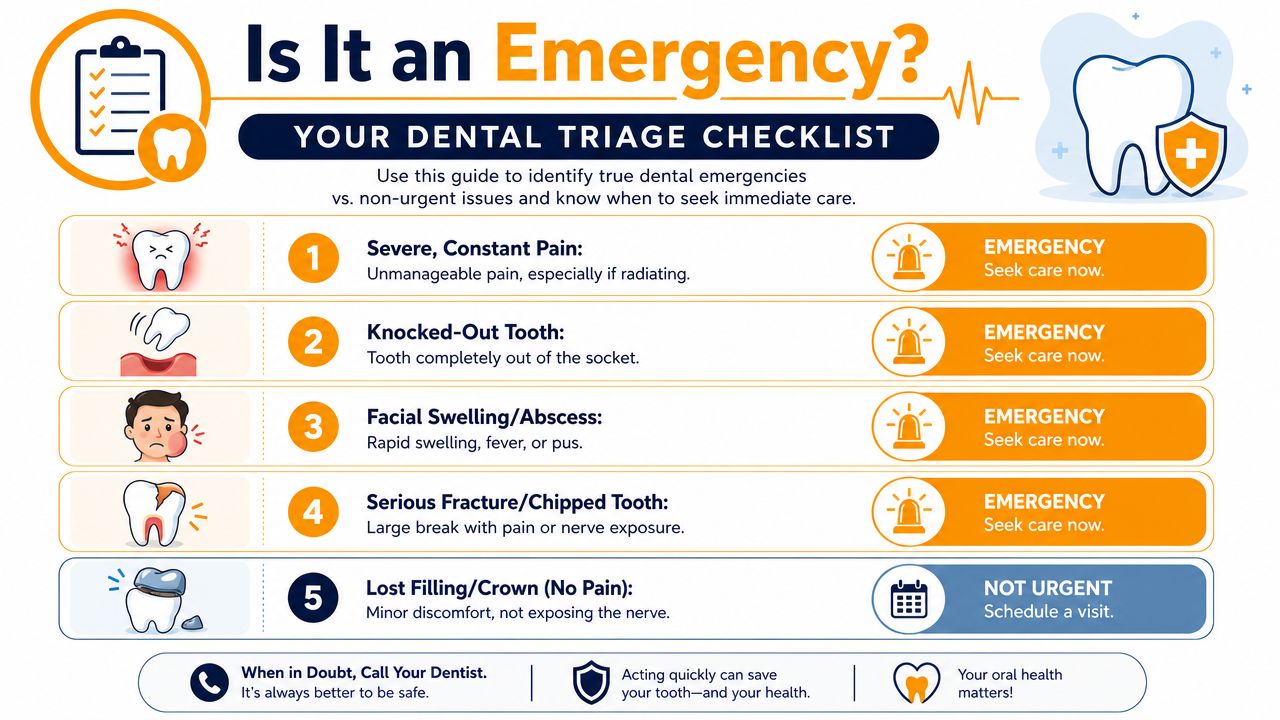
The following problems usually count as a true dental emergency:
- Severe, constant tooth pain. If pain is persistent, radiates, keeps you awake, or isn't settling with simple pain relief, the tooth may have an inflamed or infected nerve.
- Facial swelling or gum swelling with pressure. This is one of the biggest warning signs because infection may be spreading rather than staying localised.
- A knocked-out tooth. This is time-sensitive and needs immediate action.
- A broken tooth with pain or sharp exposed edges. A small chip may wait, but a larger fracture can expose the inside of the tooth.
- Bleeding that doesn't stop. Oozing after treatment can be normal. Ongoing bleeding that won't settle is not.
- Trauma to the mouth or jaw. If your bite suddenly feels wrong, teeth have shifted, or opening and closing is difficult, you need urgent assessment.
A serious infectious emergency is not just “toothache plus swelling”. Dental infections can progress from localised pulpitis to more dangerous conditions, which is why facial swelling or persistent severe pain should trigger urgent dental assessment for diagnosis and source control, as outlined in StatPearls on dental emergencies.
Problems that may be urgent, but not always emergent
Some issues are uncomfortable and still deserve attention, but they may not require immediate after-hours treatment.
| Problem | Often safe to book promptly | Same-day if |
|---|---|---|
| Lost filling | Yes | The tooth is painful or sensitive |
| Lost crown | Often | The tooth is broken, very sensitive, or sharp |
| Small chip | Often | There is pain, bleeding, or a visible deeper crack |
| Mild sensitivity | Often | It becomes severe, spontaneous, or constant |
A good example is a lost filling. If the tooth is open, sensitive to air, and painful when biting, that's more urgent. If the area feels odd but manageable, a prompt booking is usually enough.
If you're not sure whether pain might mean nerve involvement, this guide on signs you need a root canal can help you understand the pattern.
Swelling that spreads, pain that escalates, and bleeding that won't stop are the three signs patients should take seriously straight away.
What doesn't work well
People often try to “watch it overnight” when the trend is already clear. That usually doesn't help if the pain is escalating or the face is becoming puffy. Another common mistake is placing aspirin directly on the gum or tooth. That can irritate the tissue and doesn't treat the cause.
When symptoms are active and worsening, waiting is usually the least comfortable option.
Immediate First Aid Steps You Can Take
The goal of first aid is simple. Protect the tooth or soft tissue, reduce irritation, and get to proper treatment quickly. Good first aid won't fix the underlying issue, but it can improve comfort and sometimes improve the chance of saving a tooth.
If a tooth has been knocked out
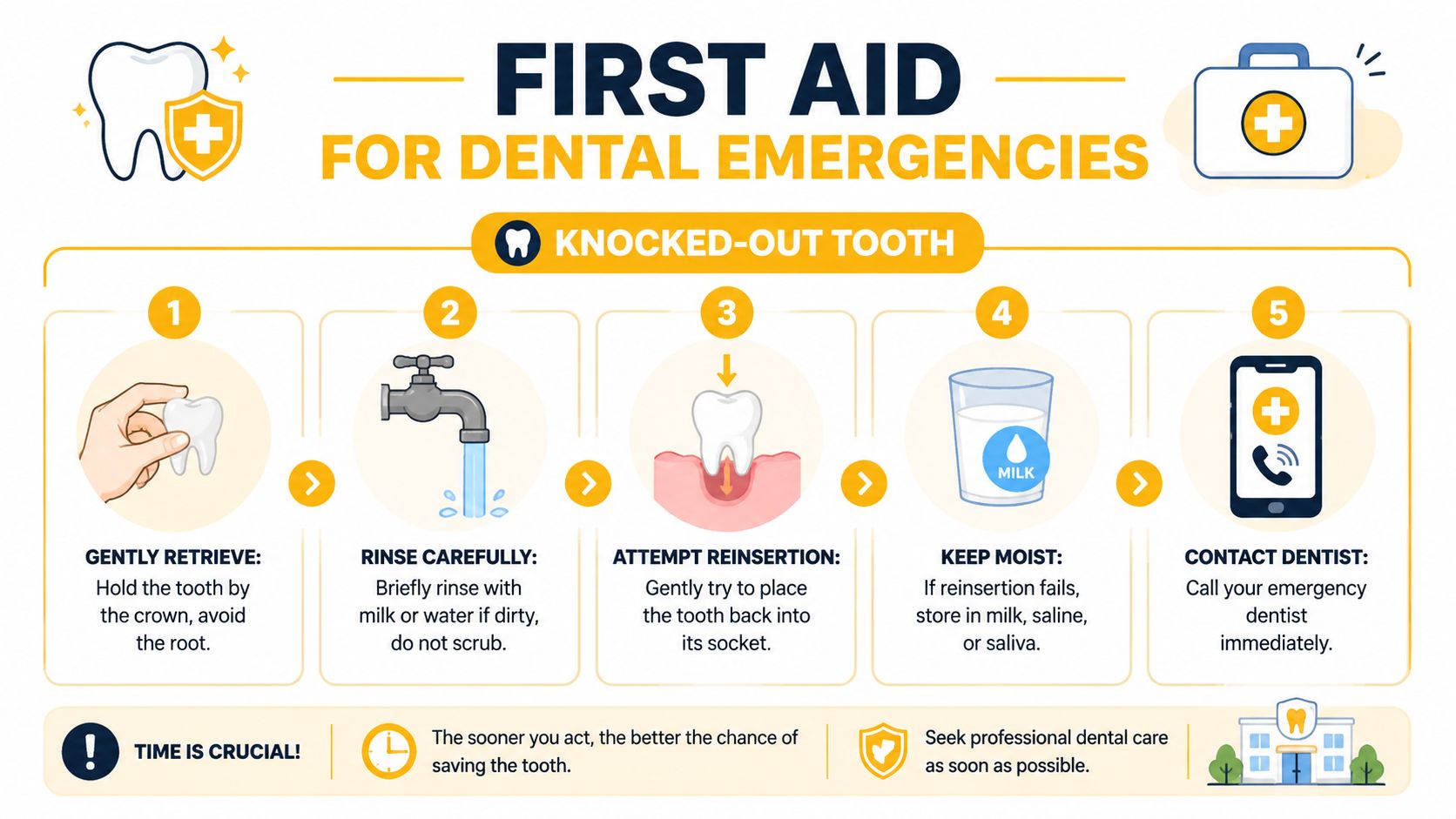
Use this order:
- Pick it up by the crown only. Don't touch or scrub the root.
- Rinse it briefly if dirty. Use water or milk gently. Don't disinfect it and don't wrap it in tissue.
- Try to place it back in the socket if the person is calm and it goes in easily.
- If you can't reinsert it, keep it moist. Milk, saline, or saliva is better than letting it dry out.
- Call for urgent dental care immediately.
This short video walks through the basics clearly:
If you have a severe toothache
Toothache first aid is about limiting irritation while you arrange care.
- Rinse gently with warm salt water if that feels soothing.
- Keep food away from the sore side.
- Use a cold compress on the cheek if swelling is starting.
- Take pain relief as directed on the packet if it's suitable for you.
- Avoid heat. Heat can make a throbbing infection feel worse.
If pain is coming from the back of the mouth and a gum flap or wisdom tooth may be involved, this article on wisdom tooth removal pain may help you recognise the pattern.
If there is bleeding from the mouth
Bleeding often looks dramatic because saliva spreads it quickly. The response should still be methodical.
- Use clean gauze or a clean cloth and apply firm pressure.
- Hold pressure steadily rather than checking every few seconds.
- Use a cold compress externally to help calm the area.
- If blood keeps flowing despite pressure, seek urgent help.
At home advice: Keep the mouth as still as you can. Frequent rinsing, spitting, and poking the area usually restarts bleeding.
If a filling or crown has come off
A lost filling or crown can range from inconvenient to painful.
- Keep the crown or broken piece if you can find it.
- Don't chew on that side.
- Avoid very hot, cold, or sweet foods if the tooth is sensitive.
- Cover sharp edges with dental wax if needed until you're seen.
What doesn't work well is trying to glue dental work back yourself with household adhesive. That creates more problems than it solves. Temporary pharmacy products can sometimes protect the area briefly, but they are only a stopgap until assessment.
Dentist or Hospital Emergency Where to Go
This is the question many people get stuck on. They're in pain, they know something is wrong, and they don't want to choose the wrong place.
For most dental emergencies, a dentist is the right first call. Dentists diagnose the tooth, take dental imaging when needed, and provide source control. That might mean drainage, root canal treatment, stabilising a broken tooth, or removing a tooth that can't be saved. Hospital emergency departments usually can't provide that kind of definitive dental treatment for routine tooth problems.
Go to a dentist for these problems
A dental clinic is usually the right place for:
- Toothache and suspected infection
- Broken, cracked, or chipped teeth
- Knocked-out or displaced teeth
- Lost fillings, crowns, or bridges
- Swelling that is painful but not affecting breathing
- Problems after a recent dental procedure
The practical reason is simple. Dentists treat the cause, not just the discomfort.
Go to hospital for these warning signs
Hospital emergency care is more appropriate if you have:
- Difficulty breathing or swallowing
- Facial swelling that is rapidly worsening and affecting the airway
- Heavy bleeding that won't stop with pressure
- A suspected jaw fracture or dislocation
- Major facial trauma
For children especially, timely treatment matters. Potentially preventable hospitalisations for dental conditions remain a significant issue in Australia, with 8,900 such hospitalisations for children aged 0 to 14 in 2021 to 2022 according to the cited reporting summary, which reflects how important early dental care can be before a problem escalates (Australian dental hospitalisation context).
A local guide to emergency dental clinics near me can also help if you're trying to work out what kind of urgent clinic to contact.
If you can breathe normally, the bleeding is controlled, and the problem is centred on a tooth or gum, a dentist is usually the fastest path to proper treatment.
The wrong setting often means delays, temporary pain relief, and then needing a dentist anyway. The right setting gets you closer to an actual fix.
Our Emergency Dental Services in Dulwich Hill
When urgent dental care is needed, treatment should match the actual problem in front of you. A swollen tooth needs a different response from a sports injury, and a fractured molar needs a different plan from a lost crown. That's why emergency dental services work best when diagnosis and treatment happen in the same visit wherever possible.

At The Smile Spot emergency dentist in Dulwich Hill, urgent care may include assessment, pain relief, emergency root canal treatment, extraction, repair of broken teeth, and management of lost restorations, depending on what the tooth and surrounding tissues need.
Problems we commonly treat urgently
Some emergencies are about pain. Others are about preventing a problem from progressing.
- Acute tooth pain often needs testing, imaging, and a decision between protecting the tooth, treating the nerve, or removing the source of infection.
- Broken teeth may need smoothing, bonding, a temporary build-up, or planning for a crown once the immediate pain is settled.
- Swelling and oral infection need proper examination because the safest treatment depends on where the infection is coming from.
- Wisdom tooth flare-ups can involve inflamed gum, trapped food, infection, or pressure from a tooth that doesn't have enough room.
- Children's dental injuries need careful handling because the right treatment depends on whether the tooth is baby or adult.
What makes emergency care more manageable
Comfort matters, especially when you're already stressed. Gentle local anaesthetic technique, clear communication, and a calm pace make a real difference. In some cases, Biolase laser dentistry can support minimally invasive soft tissue treatment, and sedation may be an option for anxious patients where appropriate.
A useful emergency visit is not just one that gets you numb. It's one that gives you a workable plan. That may mean fixing the issue on the day, or stabilising it safely and scheduling the definitive treatment once pain and infection are under control.
The best immediate result is usually the simplest one. Stop the pain source, protect the tooth if possible, and avoid a repeat crisis a few days later.
Navigating Your Emergency Visit FAQs and Booking
When you're in pain, logistics suddenly feel bigger than they are. What do you bring. Can you be seen after hours. What if it's your child. How much will happen on the first visit. These are normal questions, and having the answers helps people act sooner instead of hesitating.
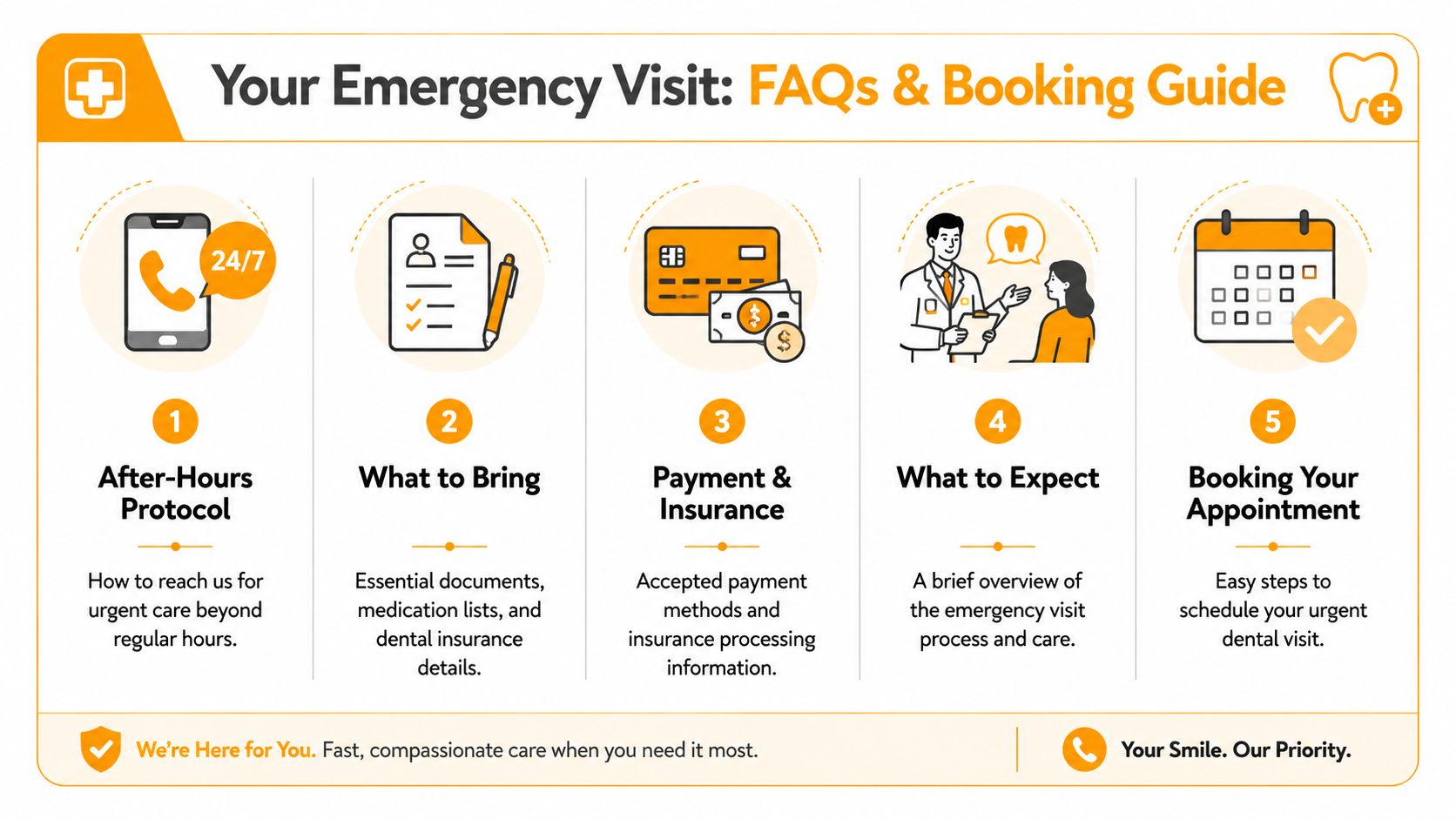
What to have ready before you call
If possible, keep these details nearby:
- Your symptoms. Say whether it's pain, swelling, trauma, bleeding, or a lost tooth.
- Timing. Mention when it started and whether it's getting worse.
- Medical details. Have your medication list and any relevant health conditions ready.
- Health fund information if you use private cover.
- Photos if there is visible swelling, a broken tooth, or trauma. These can help with triage.
If you're interested in how clinics and medical practices handle urgent calls more efficiently after hours, Voicedial.ai's medical answering insights are a useful overview of why clear call routing and response systems matter when patients need timely direction.
Common questions patients ask
Call early, explain the main symptom first, and say clearly if swelling is spreading or if a tooth has been knocked out.
What should I bring to the appointment?
Bring identification, health fund details if relevant, a medication list, and any broken tooth or crown fragment you still have.
Will everything be fixed in one visit?
Sometimes yes, sometimes no. If the problem can be treated safely on the day, that's ideal. If the area is too inflamed or the treatment needs staging, the first visit may focus on diagnosis, pain relief, and stabilising the situation.
Do you see children for emergencies?
Yes. Children can have toothaches, facial swelling, broken teeth, and sports injuries just like adults. The treatment approach depends on the child's age and whether the affected tooth is a baby tooth or an adult tooth.
What about after-hours problems?
If the issue is dental but not affecting breathing, swallowing, or causing uncontrolled bleeding, call the clinic as soon as possible for the next available urgent triage. If there is airway risk, heavy uncontrolled bleeding, or major facial trauma, go to hospital.
How do I book quickly?
Use the clinic's contact page for urgent dental enquiries and call directly if the matter is time-sensitive.
The simplest approach is the best one. Don't wait for certainty. If you have significant pain, swelling, trauma, or bleeding, get triage advice and take the next step.
If you need urgent dental help in Dulwich Hill or the Inner West, contact The Smile Spot for prompt assessment and clear next steps. The aim is simple: relieve pain, treat the cause, and help you feel in control again as quickly as possible.