If you’re reading this before a dental appointment, there’s a good chance you’re not worried about the filling or the scale and clean itself. You’re worried about how it will feel. The sounds. The gagging. The loss of control. The knot in your stomach on the drive in.
That’s exactly why many people look for a dentist with nitrous oxide.
Nitrous oxide, often called laughing gas, can make dental care feel far more manageable without putting you to sleep. You stay awake, you can still respond, and the dentist can adjust it as you go. For anxious adults, nervous children, and people with a strong gag reflex, that can make the difference between delaying treatment and getting it done.
What Is Nitrous Oxide Sedation in Dentistry
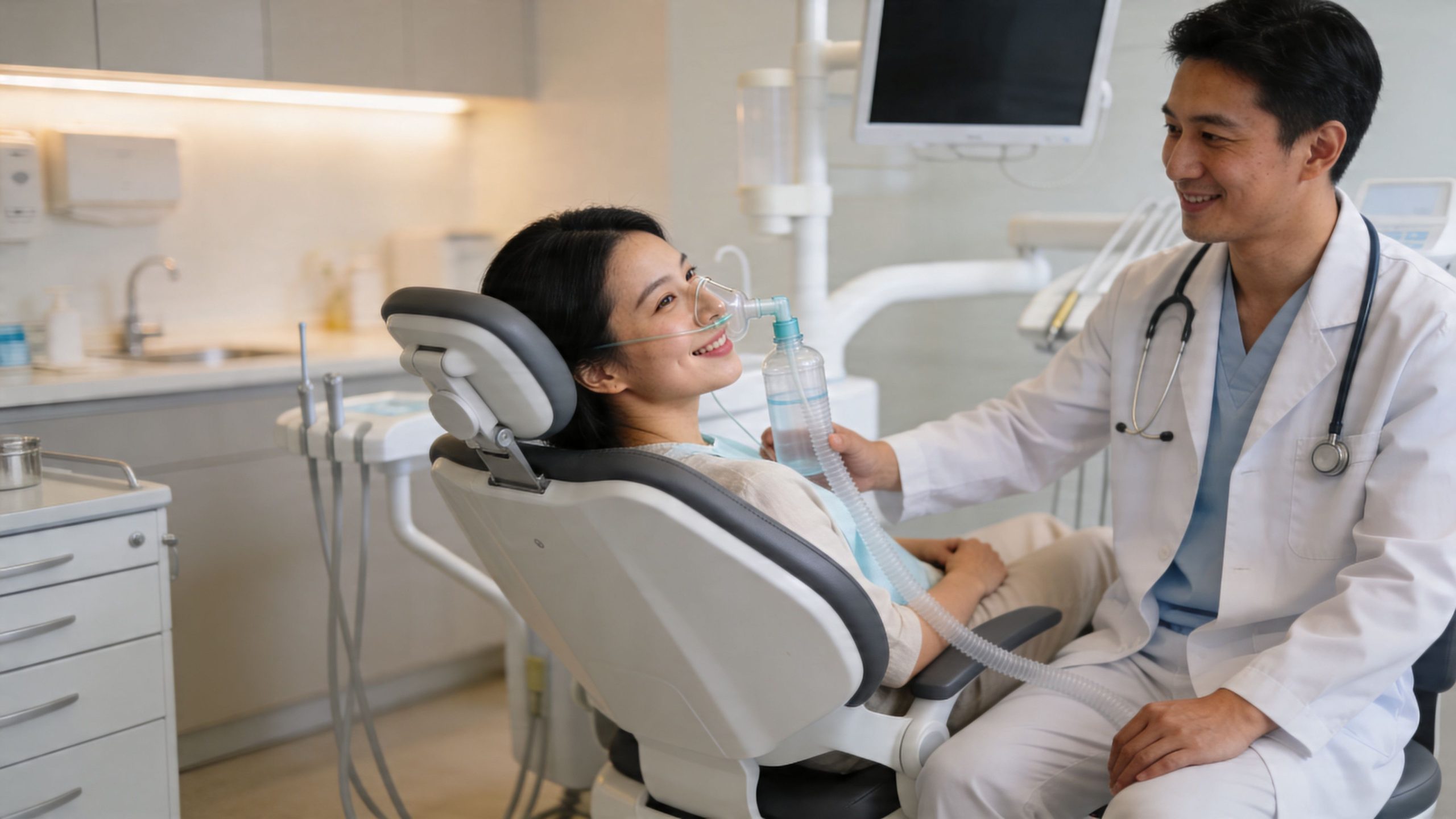
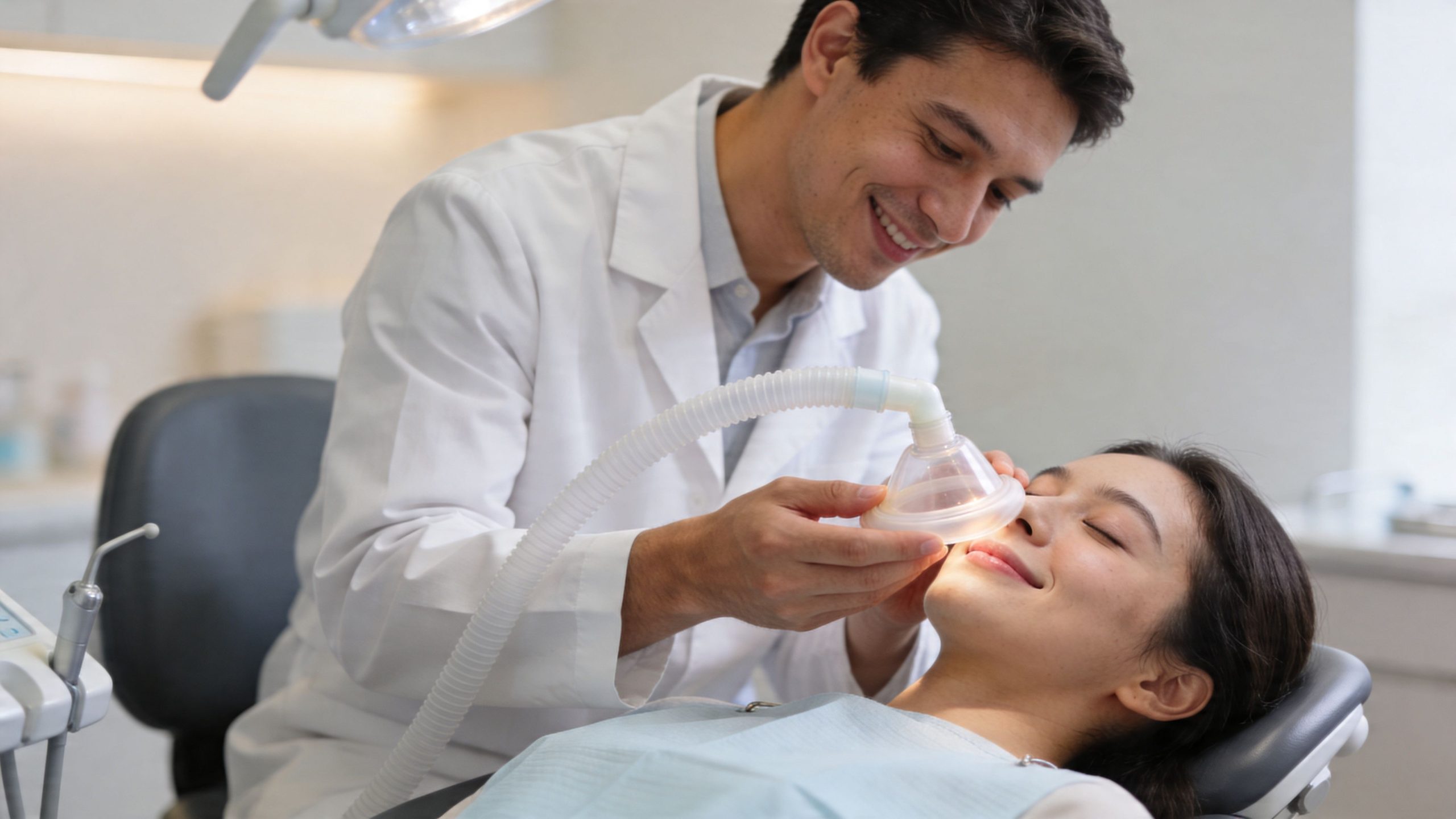
You’re in the chair, your shoulders are tight, and your mind is racing ahead of the appointment. Nitrous oxide sedation is designed for that moment. It is a mild, inhaled sedative that you breathe through a small mask over your nose, and it helps your body settle while you remain awake and able to respond.
It is often called laughing gas, but a better description is a gentle calming gas. The goal is not to make you silly or unaware. The goal is to lower the sense of stress so dental treatment feels more manageable.
What it is, in plain English
Nitrous oxide works like turning down the volume on an overactive alarm. You still know where you are. You can still hear the dentist, answer questions, and let the team know how you’re feeling. What changes is the intensity of the fear response.
That is why many patients prefer it. They want help feeling calm, not full unconsciousness.
How it differs from general anaesthesia
People sometimes group all sedation together, but these are very different types of care.
| With nitrous oxide | With general anaesthesia |
|---|---|
| You stay awake | You are unconscious |
| You can communicate during treatment | You do not respond in the usual way |
| The level can be adjusted during the appointment | It is a deeper medical intervention |
| Recovery is usually quick | Recovery needs closer follow-up |
This difference matters in everyday dental care. For a nervous child, an anxious adult, or someone who avoids treatment because of the feeling of being trapped, nitrous oxide can offer a middle path that feels safer and more predictable.
Why it remains widely used in dentistry
Dentists have used nitrous oxide for many years because it is familiar, adjustable, and well suited to routine care. In NSW and across Australia, its use sits within clear professional and safety standards, which helps explain why it remains a common option in general and paediatric dentistry.
Modern clinics also look at comfort more broadly. At The Smile Spot, nitrous oxide can be part of a calmer appointment, alongside technology such as the Biolase laser, which may reduce the need for some of the sensations patients worry about most, like vibration or pressure from traditional tools. That combination matters if your anxiety is about both the procedure and how it feels.
Environmental concerns also come up more often now, and that is a fair question. Nitrous oxide is useful in dentistry, but clinics should use it thoughtfully, with appropriate equipment and careful clinical protocols, so patient comfort and responsible practice stay in balance.
If you’ve been comparing options, general information on sedation dentistry can help you see where nitrous oxide fits among lighter and deeper approaches.
For many patients, the biggest relief is simple. You do not have to force yourself through treatment with clenched hands and a racing heart. You may have a gentler option.
How Nitrous Oxide Works to Keep You Calm
The process is controlled, gradual, and much less mysterious than it sounds.
You’ll wear a small nasal mask and breathe normally through your nose. The dentist begins with oxygen first, then slowly adjusts the blend. This step-by-step approach is called titration, which means finding the level that helps you relax without giving you more than you need.
The blend is adjusted carefully
According to the ADA’s nitrous oxide guidance, nitrous oxide sedation starts with 100% oxygen and then increases in small steps, with the nitrous oxide concentration never exceeding 50%. The same guidance explains that nitrous oxide has a low blood-gas partition coefficient of 0.47, which is why it has a rapid onset within 2 to 3 minutes and can suppress the gag reflex by up to 70% while creating a sense of euphoria through opioid receptor agonism, as outlined in the ADA overview of nitrous oxide in dentistry.
That sentence sounds technical, so here’s the plain-English version. It works quickly because your body takes it up quickly. It eases anxiety fast, and once the dentist stops it, the effect fades fast too.
What you might feel
Patients don’t typically feel “knocked out.” They often feel lighter.
You may notice:
- A warm sensation in your body
- Tingling in your hands or feet
- Less mental tension about the procedure
- Less sensitivity to gagging during treatment
- A floating or detached feeling, while still knowing where you are
Some patients worry that feeling “floaty” means something is wrong. It doesn’t. That’s usually the sign that the gas is doing its job.
Practical rule: If you can still answer simple questions and breathe comfortably through your nose, that’s the kind of calm, cooperative state dentists aim for with nitrous oxide.
Why control matters
Nitrous oxide isn’t given as one fixed dose for every patient. That’s important, because anxiety affects people differently. One patient may need only a light calming effect for a clean, while another may need more support for a crown preparation or a strong gag reflex during impressions.
This is one reason many patients prefer a dentist with nitrous oxide. The dentist can fine-tune the experience while keeping you conscious, comfortable, and involved.
Key Benefits of Choosing Laughing Gas
For the right patient, laughing gas changes the whole tone of the appointment. It doesn’t just make treatment possible. It can make it feel routine again.
Why patients choose it
- Anxiety becomes easier to manage. Many people feel calmer within minutes, which helps stop the spiral of tense breathing, clenched hands, and overthinking every sound.
- You stay awake and responsive. You can still answer questions, signal if you need a break, and feel more in control of what’s happening.
- It works quickly. There isn’t a long wait to feel the effect, so the appointment can begin smoothly.
- Recovery is usually quick. That matters if you’re fitting treatment around work, school pick-up, or a busy afternoon.
- It helps with gag reflex issues. That can be especially helpful during X-rays, impressions, fillings, and other treatments where mouth sensitivity gets in the way.
Why it appeals to families
Parents often want something gentle for their child, not something overwhelming. Adults often want support without losing the rest of their day. Nitrous oxide sits nicely in that space.
If you’ve been looking for ways to make dental appointments feel less stressful, this idea of calm and comfortable dental visits captures why lighter sedation appeals to so many people.
Where it can help
Nitrous oxide can be useful for a wide range of visits, including preventive and restorative care. It can also be a helpful option for children who are still learning confidence at the dentist. Families exploring child-focused care may also find this guide on a paediatric dentist near me useful when deciding what type of support suits their child.
Some patients don’t need deeper sedation. They need a way to feel steady enough to get started.
That’s where laughing gas often shines. It’s flexible, light, and built around comfort rather than force.
Is Nitrous Oxide Right for You or Your Child
You’re sitting in the car outside the clinic, talking yourself into walking through the door. Or you’re holding your child’s hand, already wondering whether today will end in tears, refusal, or a rushed decision to leave. That is usually the primary question behind nitrous oxide. Not whether it exists, but whether it suits this person, in this chair, on this day.
For many patients, it does.
Nitrous oxide is often a good match for people who need help settling their nerves, managing a sensitive gag reflex, or getting through treatment without feeling overwhelmed. In NSW, its use in dentistry is carefully regulated, which matters to parents and adults who want reassurance that comfort is being handled properly, not casually.
For adults
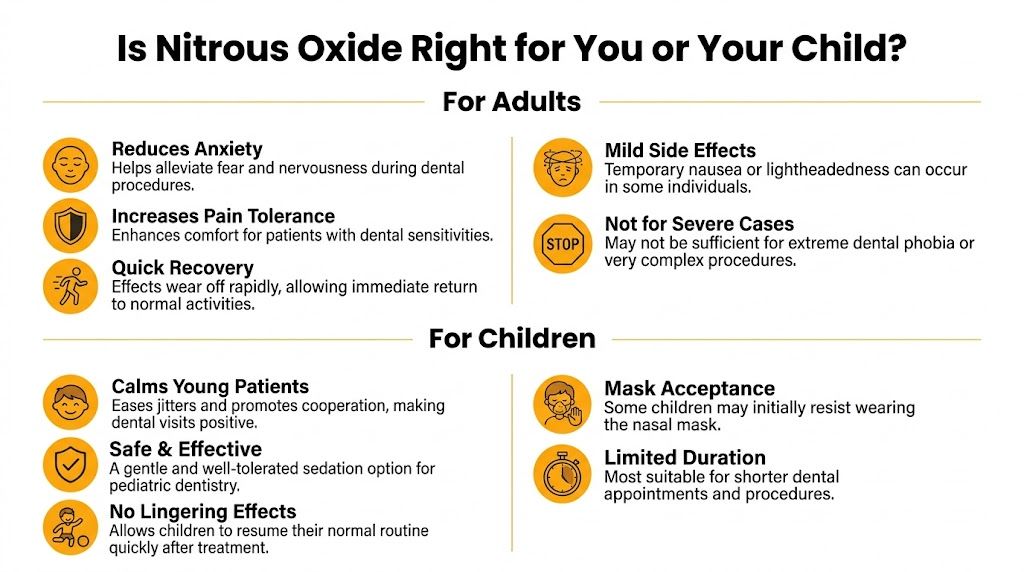
Adults often look for a dentist with nitrous oxide after years of putting care off. The pattern is familiar. One difficult appointment can make every later appointment feel bigger in your mind than it really is. Nitrous oxide can help lower that sense of threat enough for treatment to feel manageable again.
It may be a sensible option if you:
- Feel tense before even simple dental visits
- Have a strong gag reflex
- Struggle with the sounds, sensations, or loss of control that treatment can bring
- Keep delaying treatment because anxiety builds before the appointment
- Want support while still staying awake and able to respond
Some adults need more than light sedation, especially if the phobia is severe or the procedure is more involved. If you are trying to understand the difference, this guide to a full anesthesia dentist for deeper dental sedation options explains when a stronger approach may be discussed.
For children
Parents usually want a clear answer in plain language. Will this help my child cope, and is it a sensible choice?
For many children, nitrous oxide works like training wheels for dental confidence. It does not force cooperation. It softens the fear enough for the child to listen, breathe through the nose, and get through treatment with less distress. That can be especially helpful for children who are anxious, easily overwhelmed, or still learning how to cope in the dental setting.
Suitability depends on a few practical things. A child needs to be able to accept the small nasal mask and follow simple instructions. Age alone does not decide it. Temperament, communication, medical history, and the type of treatment all matter.
Australian families also often ask good, modern questions about safety standards and environmental impact. Both are reasonable. In well-run clinics, nitrous oxide is delivered with equipment designed for controlled dosing and gas scavenging, which reduces stray gas in the room. At The Smile Spot, treatment planning may also include options such as Biolase laser dentistry where appropriate, because less invasive treatment can sometimes reduce the need for extra anxiety support in the first place.
A simple way to judge suitability
| Nitrous oxide may be helpful if… | Another option may be discussed if… |
|---|---|
| Your child is anxious but can still engage | Your child cannot tolerate the nasal mask at all |
| You want a fast-on, fast-off option | The treatment is too complex for light sedation alone |
| You want your child or yourself to stay awake | A deeper level of sedation is clinically needed |
The final decision is always individual. We look at the person, the procedure, and any medical factors together. For many anxious adults and many children, nitrous oxide is the middle ground that makes dental care feel possible again.
Your Nitrous Oxide Appointment What to Expect
Knowing the sequence helps. Most fear grows in the blank spaces, when you don’t know what comes next.
Before you arrive
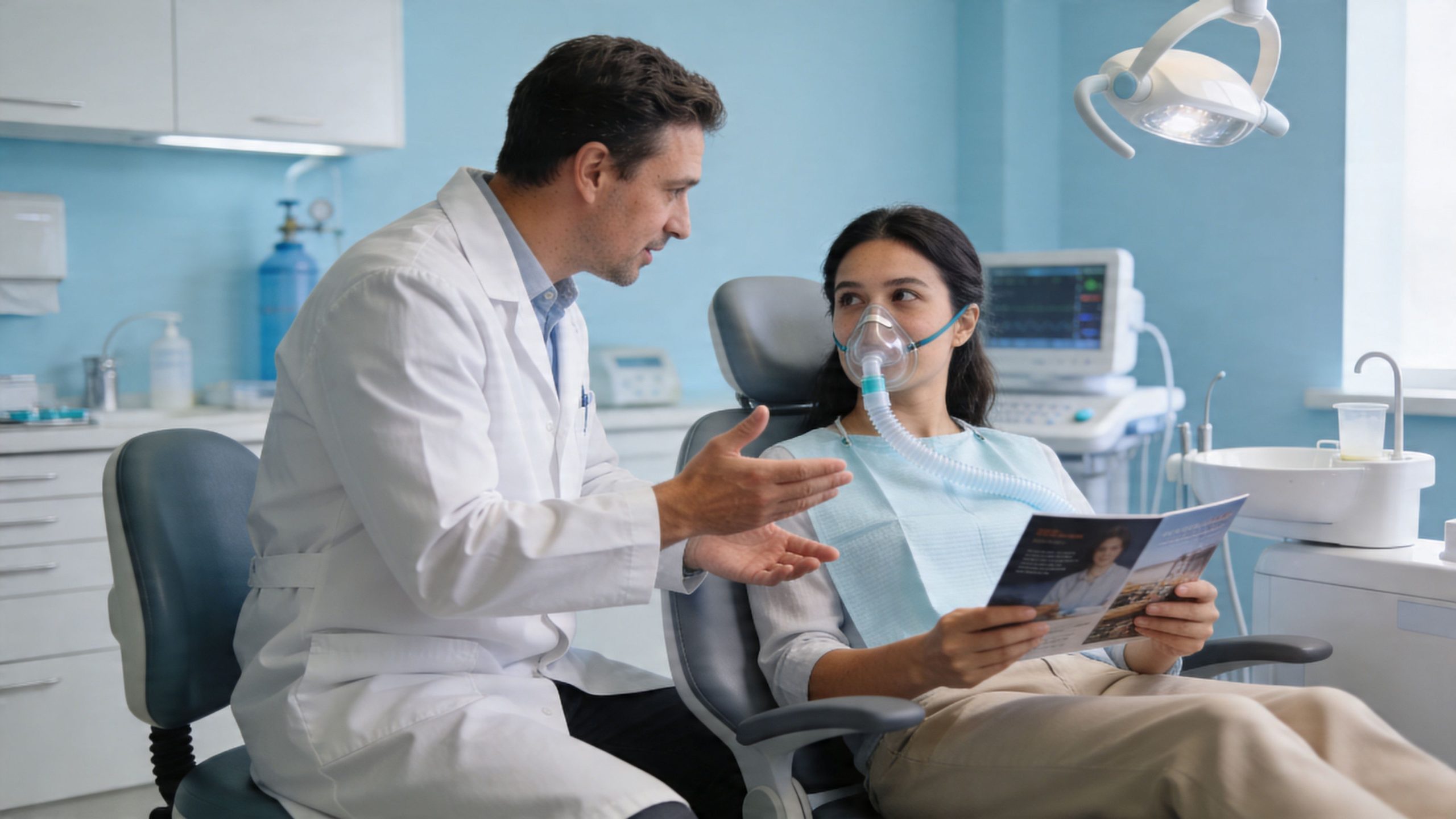
You’ll usually be given simple instructions ahead of time. In many cases, that includes eating sensibly and arriving ready to talk through your medical history and concerns.
The most helpful thing you can do is tell the team what worries you. Some people hate the sound of the drill. Some panic when they feel numb. Some are mainly worried about gagging. Those details help shape the appointment.
In the chair
Once you’re settled, the dentist explains the process and places a soft mask over your nose. You start by breathing oxygen, then the nitrous oxide is introduced gradually.
For the best effect, patients are asked to breathe calmly through the nose because mouth breathing can dilute the nitrous oxide mix and reduce sedation depth by up to 40%. After treatment, a 5-minute pure oxygen flush clears 99% of residual gas from the system, which supports same-day discharge and a return to normal activities without an escort requirement, as described in this nitrous oxide sedation technique overview.
That’s why the mask fit and your breathing matter. You don’t need to do anything special, just slow, steady nasal breathing.
During treatment
Once the gas takes effect, many patients describe:
- Lightness rather than heaviness
- A calmer mind, even if they expected to panic
- Tingling in the fingers, lips, or legs
- Less reactivity to sounds and sensations
- A shorter-feeling appointment, even when treatment is the same length
If you’re having a procedure that tends to make people nervous, such as an extraction, understanding the steps can help too. This overview of wisdom tooth removal pain can make the treatment side feel less unknown.
Here’s a short visual explanation of what nitrous oxide sedation can look like in practice.
After the mask comes off
The end is usually straightforward. The nitrous oxide is stopped, oxygen is given, and the floaty feeling fades quickly.
Breathe through your nose, keep your shoulders loose, and let the team know what you’re feeling. Small adjustments make a big difference.
Most patients are pleasantly surprised by how normal they feel shortly after. That quick recovery is one of the main reasons people ask specifically for this type of sedation.
Your Trusted Dentist with Nitrous Oxide in Dulwich Hill
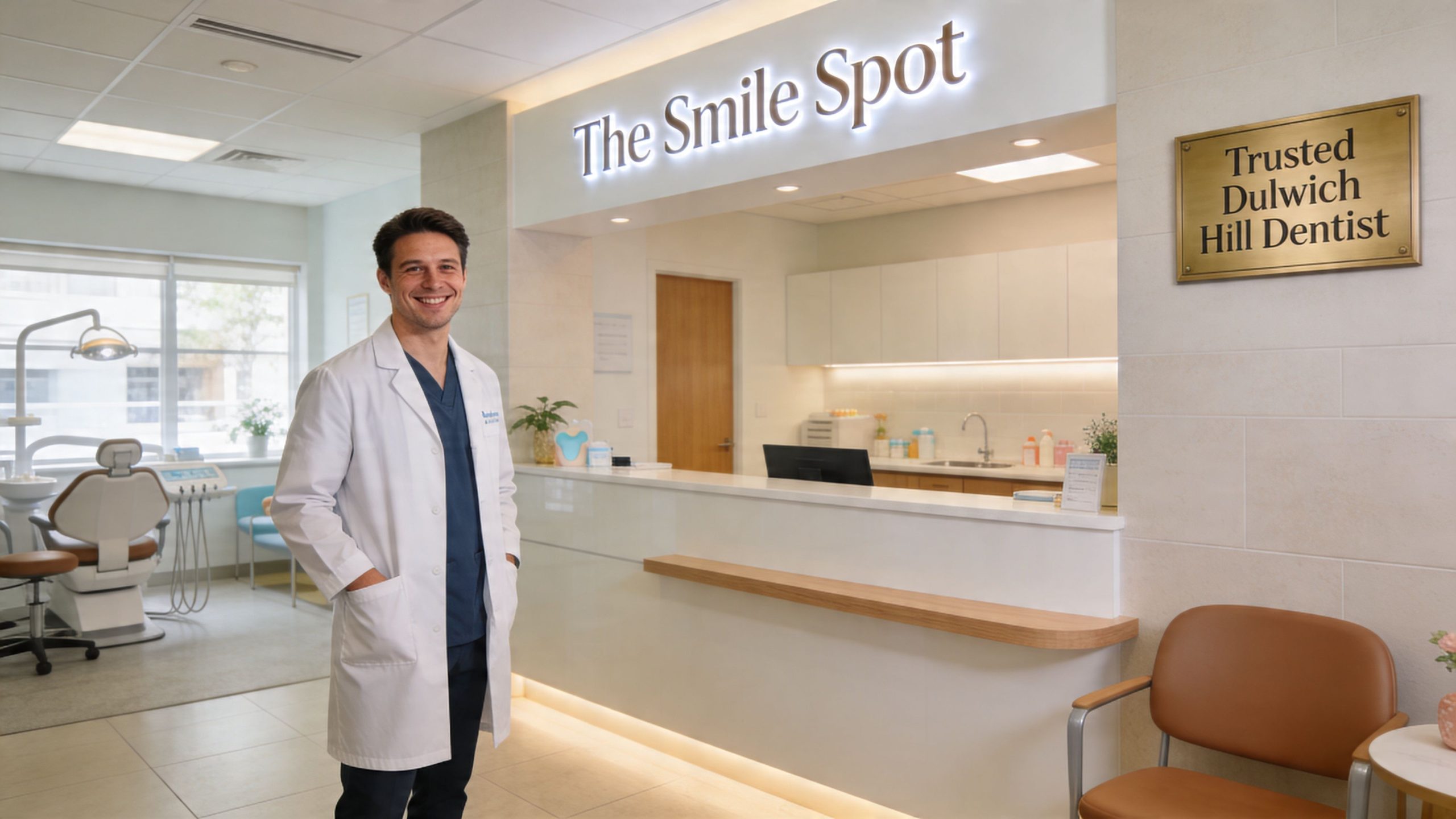
In NSW, nitrous oxide isn’t something every clinic can offer casually. Only dentists with a specific Conscious Sedation Endorsement from the Dental Board of Australia can administer nitrous oxide, and that endorsement requires extensive postgraduate training. That requirement exists to protect patient safety, and it’s a practical reason many people search carefully for a dentist with nitrous oxide.
Why the NSW setting matters
When a clinic offers nitrous oxide in NSW, patients should expect more than a mask and a gas bottle. They should expect proper assessment, careful titration, monitoring, and documentation.
That’s especially relevant for families in the Inner West who want support for:
- Routine check-ups that have become stressful
- Children’s treatment where cooperation is difficult
- Root canal therapy, crowns, or extractions for anxious adults
- Implant treatment where comfort matters throughout a longer visit
A broader comfort approach
Some clinics also combine sedation planning with other technologies that reduce discomfort in different ways. For example, The Smile Spot offers nitrous oxide and also uses Biolase laser dentistry for selected minimally invasive treatments, which can be helpful for patients who are especially pain-sensitive or interested in lower-impact care.
If your main priority is a softer, less intimidating dental experience overall, this article on finding a gentle dentist near me is a useful next read.
The right first step is a consultation. That gives you a chance to talk through your anxiety level, the treatment you need, and whether nitrous oxide is the most suitable option for you or your child.
Frequently Asked Questions About Dental Sedation
Is nitrous oxide covered by private health insurance
Sometimes, but it depends on your fund and the item numbers involved. The easiest approach is to ask the clinic what item numbers apply to your treatment, then check directly with your insurer. If cost planning matters, it can also help to review options for dentists with payment plans near me before booking.
Can I drive myself home afterwards
In many cases, yes. Nitrous oxide is popular partly because the effects wear off quickly after the oxygen flush. Your dentist will still confirm that you’re feeling clear and steady before you leave.
Are there any side effects
Some people may feel mildly nauseous or light-headed. Others don’t like the feeling of the nasal mask at first. These effects are usually temporary, and the dentist can adjust the level if needed.
What about the environmental impact
This is a fair question, and more patients are asking it.
While nitrous oxide has a significant global warming potential, modern dental practices are adopting Dental Board of Australia guidelines from March 2026 that mandate emission tracking and low-flow delivery, which can reduce the carbon footprint. Some clinics also complement this with laser dentistry for selected procedures as a greener sedation approach.
If environmental impact matters to you, ask the clinic whether they use low-flow protocols and whether parts of your treatment could be managed with non-gas comfort options.
That kind of conversation is becoming part of modern, informed dental care. It’s reasonable to ask about both comfort and environmental responsibility.
If dental anxiety has been stopping you from booking, a conversation can make things feel much simpler. The team at The Smile Spot can talk you through whether nitrous oxide is suitable for you or your child, explain what the appointment would involve, and help you choose a comfort plan that fits your treatment and your level of anxiety.