Let's get straight to the point. When you invest in porcelain veneers, one of your biggest questions is naturally going to be about how long they’ll last. With the right care and attention, porcelain veneers can last between 15 and 20 years, sometimes even longer.
Think of them a bit like a high-quality finish on a classic car—they're designed for endurance but need consistent maintenance to keep them looking their best.
How Long Do Porcelain Veneers Really Last?
A smile makeover is a big decision, so understanding the lifespan of your veneers is key. While we often give a general timeframe of 15 to 20 years, the reality is that the true longevity of your veneers comes down to a partnership between you and your dentist.
Several crucial elements influence whether your new smile will reach, or even surpass, that two-decade milestone.
- The Quality of the Material: Not all ceramics are the same. We use high-grade porcelain, like E.max, which is known for its exceptional strength and stain resistance.
- The Dentist’s Expertise: The skill and precision used to prepare your teeth and bond the veneers are fundamental for a secure, seamless, and long-lasting result.
- Your Daily Habits: Ultimately, your lifestyle and oral hygiene routine play the biggest role in preserving your veneers day in and day out.
The Australian Standard for Veneer Longevity
Here in Australia, the dental community sets a high standard for the performance of cosmetic treatments. The Australian Dental Association generally expects porcelain veneers to last between 10 to 15 years, though many cases easily extend to 20 years with proper care. This is a benchmark trusted by dentists across the Inner West, from Dulwich Hill to Marrickville.
Research supports this, showing that around 94.4% of porcelain veneers are still going strong after five years. These high survival rates continue, with about 93.5% to 96% of veneers lasting beyond the 10-year mark. This makes them a very reliable and long-term solution for enhancing your smile. You can find out more about our specific approach to cosmetic dentistry and porcelain veneers.
Think of your veneers as a team effort. We provide the expert installation and high-quality materials, but your commitment to daily care is what truly helps them last a lifetime.
To give you a clearer idea of what to expect, the table below shows how different levels of care can affect the lifespan of your veneers.
Estimated Lifespan of Porcelain Veneers at a Glance
This table provides a quick summary of how different factors and care levels can impact the longevity of porcelain veneers.
| Care Level | Estimated Lifespan | Key Habits |
|---|---|---|
| Excellent | 20+ Years | Daily flossing, biannual check-ups, non-abrasive toothpaste, wearing a night guard if needed. |
| Good | 15–20 Years | Consistent brushing, regular check-ups, avoiding very hard foods, addressing teeth grinding. |
| Fair | 10–15 Years | Inconsistent hygiene, missed dental appointments, habits like nail-biting or using teeth as tools. |
As you can see, simple, consistent habits make a huge difference in getting the most out of your investment and keeping your smile looking fantastic for years to come.
The Factors That Determine Veneer Longevity
Have you ever wondered why some porcelain veneers look fantastic for a solid 15 years, while others are still going strong well past the two-decade mark? It’s not just one thing. Longevity really comes down to a combination of factors: the quality of the material, the dentist's skill, and your own daily habits.
Think of it like building a quality home. You need a skilled builder (your dentist), top-notch materials (the porcelain), and good maintenance (your home care) for it to stand the test of time. If any one of those elements is lacking, the whole structure can be compromised. The same principle applies perfectly to your new smile.
The Quality of Veneer Materials
Not all porcelain is the same. The specific ceramic used for your veneers plays a huge part in how durable they are and how good they look years down the track. At The Smile Spot, we prefer advanced materials like E.max porcelain, and for good reason. It's a type of lithium disilicate ceramic known for its incredible strength and ability to mimic natural tooth enamel.
It’s a bit like comparing a standard dinner plate to fine bone china. One is simply more resilient. High-grade dental porcelain is non-porous, making it highly resistant to staining from coffee, tea, or red wine, which keeps your smile bright. Its inherent strength also helps it stand up to the daily forces of biting and chewing far better than older, lower-quality materials.
A key study found that veneers made from high-quality ceramics have a survival rate of over 93.5% after 10 years. This shows just how reliable modern materials are when they're placed and cared for properly.
The Dentist’s Craftsmanship and Technique
Even the best materials in the world won’t last if they aren’t applied with expertise. The dentist’s skill is arguably the most critical factor during the placement stage. It’s a process that demands meticulous attention to detail and an artistic touch, from preparing the tooth to the final bonding.
Two of the most important parts of the process are:
- Tooth Preparation: A dentist must remove a very precise, minimal amount of enamel. This ensures the veneer sits perfectly flush with your gum line and looks completely natural. Removing too little can make the veneer look bulky, while taking away too much can weaken the tooth. It's a delicate balance that comes with experience.
- The Bonding Process: Attaching the veneer to your tooth is a multi-step chemical procedure that has to be done perfectly. From etching the tooth surface to curing the dental cement with a special light, every single step counts. A strong, complete bond is what prevents bacteria from sneaking underneath and ensures the veneer can handle everyday chewing forces.
Your Personal Habits and Oral Hygiene
Once your beautiful new veneers are in place, looking after them is up to you. Your daily habits and how you care for your teeth have a direct and powerful impact on how long your veneers will last.
Here are some of the most important factors within your control:
- Dietary Choices: While modern porcelain is tough, it’s not invincible. Regularly biting into very hard things like ice, pork crackling, or hard nut shells with your front teeth can cause chips or fractures.
- Parafunctional Habits: Many of us use our teeth for things other than eating—opening packets, chewing on pens, or biting our nails. These habits put unnatural stress on the fine edges of your veneers and are a common cause of small chips.
- Bruxism (Teeth Grinding): This is one of the biggest threats to veneers. The intense, sustained pressure from clenching and grinding, especially at night, can cause serious damage. If you grind your teeth, a custom-made night guard is an absolute must. You can learn more about protecting your smile from the effects of bruxism on our blog.
- Oral Hygiene: This is non-negotiable. Brushing twice a day with a soft-bristled toothbrush and a gentle, non-abrasive toothpaste, plus daily flossing, is essential. Good hygiene prevents plaque from building up around the edges of the veneer, protecting your gums and the underlying tooth from decay. Healthy gums are the foundation for a long-lasting veneer.
Protecting Your Investment With Daily Care
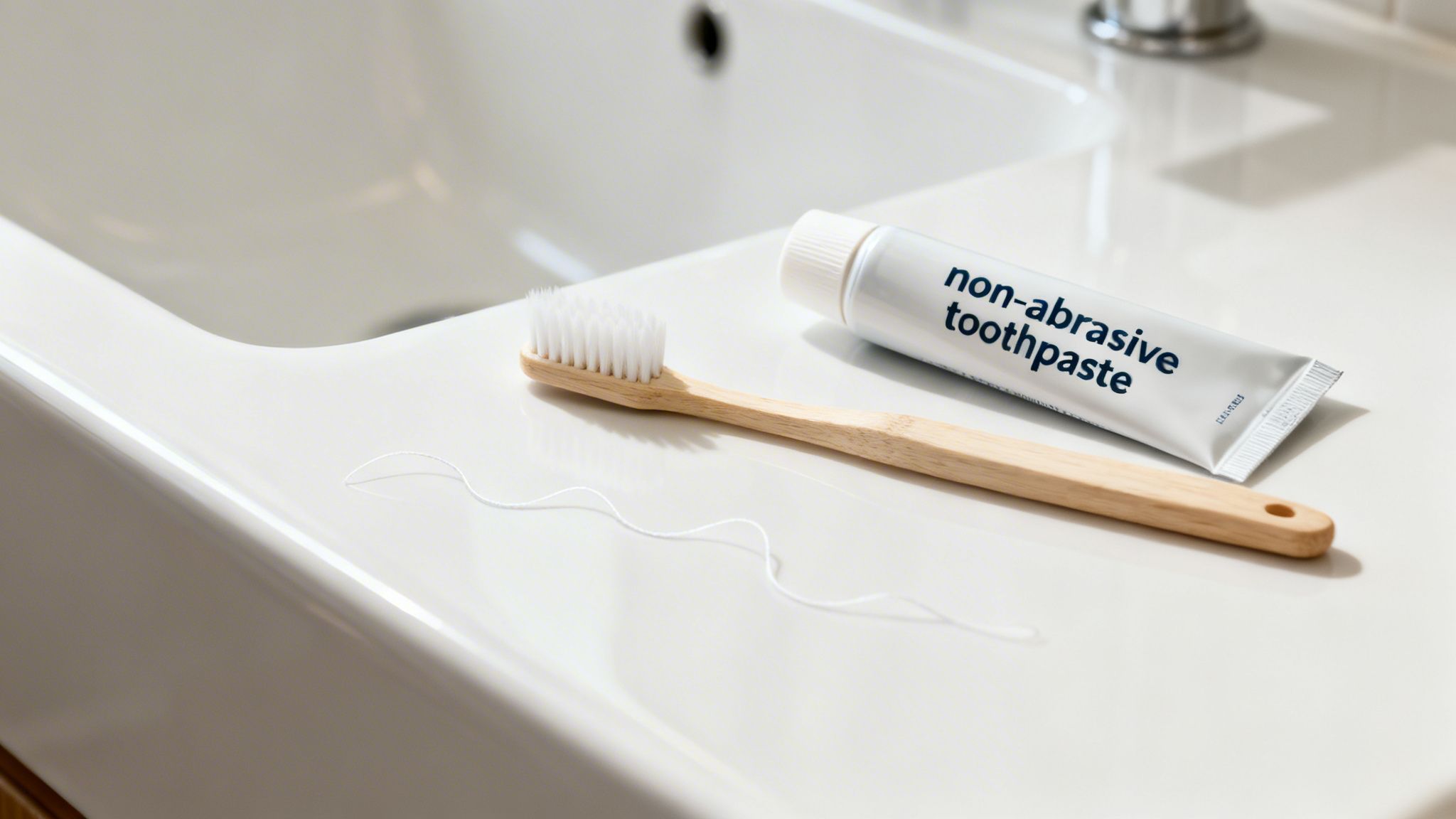
Once your beautiful new porcelain veneers are in place, looking after them becomes the main focus. Think of it as protecting your investment—a few simple daily habits are all it takes to help your veneers last their full 15 to 20 years, or even longer.
Your veneers need the right care to stay pristine, but the good news is that it isn’t complicated. The routine is really just an extension of the excellent oral hygiene that keeps your natural teeth healthy in the first place.
Mastering Your Daily Cleaning Routine
A consistent and gentle cleaning routine is the foundation of long-lasting veneers. The aim is to clear away plaque and prevent decay on the natural tooth underneath, all without damaging the veneer or its bond.
Your daily care should always include these core habits:
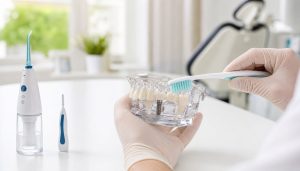
- Gentle Brushing: Always use a soft-bristled toothbrush and a non-abrasive toothpaste. Whitening or gritty pastes can create microscopic scratches on the porcelain, dulling its beautiful lustre over time. Brushing twice a day is key.
- Thorough Flossing: This is a non-negotiable step. Flossing once a day cleans plaque from between your teeth and along the gumline—right where the edge of the veneer meets your tooth. Keeping this area clean is critical for preventing decay and gum inflammation.
- Choose the Right Mouthwash: Not all mouthwashes are created equal. We recommend using an alcohol-free, antimicrobial rinse. Products containing alcohol can, over a long period, potentially soften the dental cement used to bond your veneers.
This simple routine is your best defence, protecting both your veneers and the natural teeth that support them.
Debunking Myths About Veneer Care
There’s a lot of information out there, and it’s easy to get confused. One of the most common questions we hear is about electric toothbrushes. Are they too aggressive for porcelain?
The answer is a definite no. In fact, we often recommend them. Modern electric toothbrushes are perfectly safe and very effective for cleaning around veneers, as long as you use them correctly. The trick is to use a soft brush head and let the toothbrush do the work without applying any extra pressure. Many models even have pressure sensors that alert you if you’re pushing too hard, which is fantastic for protecting your veneers and gums.
Protecting your veneers is less about avoiding things and more about adopting the right habits. Proper brushing technique, daily flossing, and using the right products are far more important than worrying about every little thing you eat or drink.
If you are thinking about upgrading your routine, understanding how to choose an electric toothbrush can make a real difference.
The Importance of Regular Professional Check-ups
While your daily home care is crucial, it’s only half the story when it comes to determining how long your porcelain veneers last. The other half is attending your regular professional check-ups and cleans right here at The Smile Spot.
During these visits, we do much more than a standard clean. We carry out a detailed inspection of your veneers to:
- Examine the margins where the veneer meets the tooth for any signs of leakage or staining.
- Check the bond to make sure every veneer is still perfectly secure.
- Polish your veneers using a special, professional-grade paste that removes surface stains without scratching the porcelain.
- Assess the health of your gums and the natural teeth underneath.
These check-ups allow our team to find and fix tiny issues before they can turn into bigger problems. By partnering with us, you’re ensuring your smile doesn't just look brilliant today but stays healthy and strong for many years to come.
The Hidden Threat of Teeth Grinding on Veneers
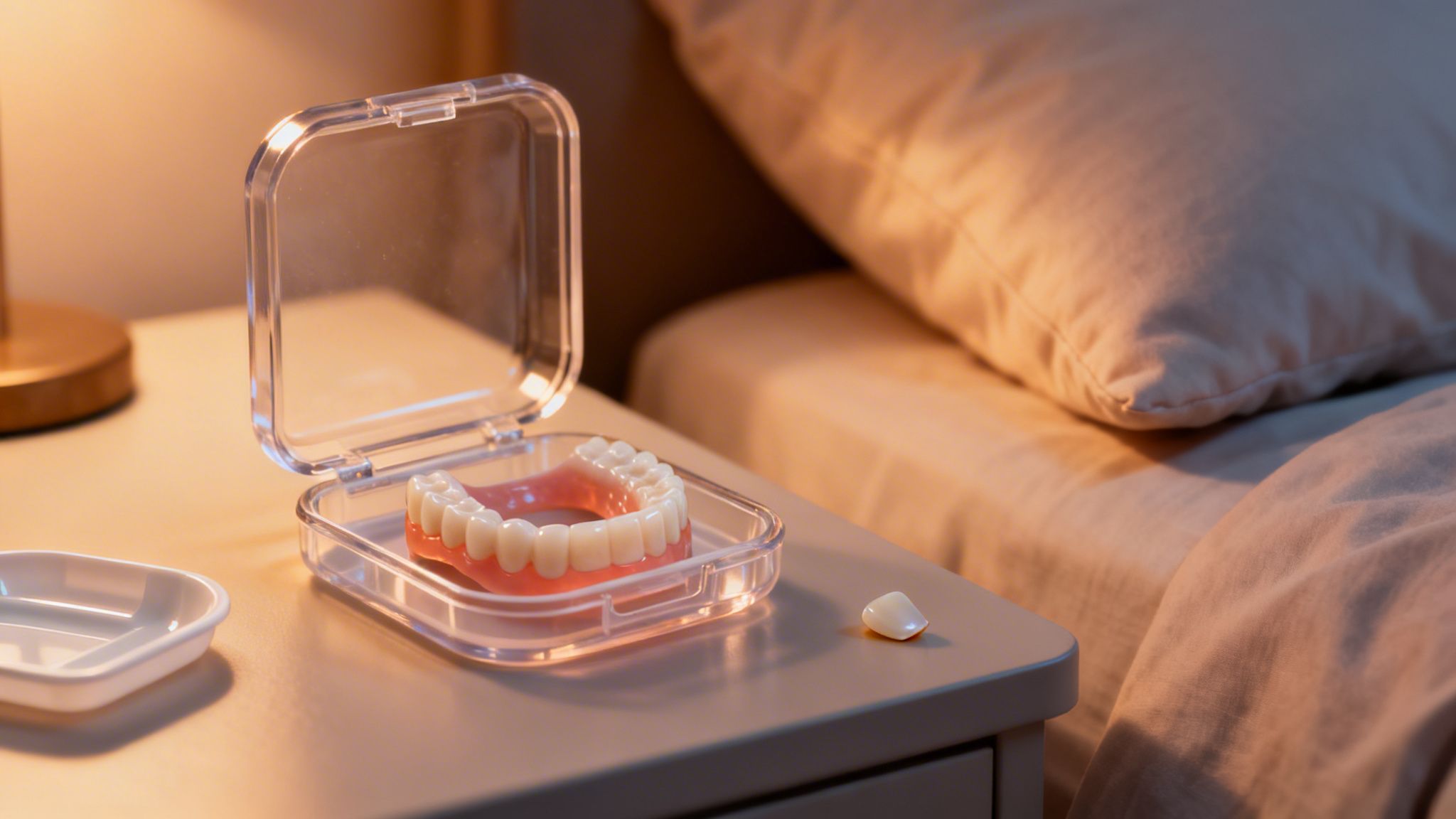
While you can consciously manage your diet and oral hygiene, some of the biggest threats to your veneers happen when you’re not even aware. The main culprit here is bruxism—the medical term for clenching or grinding your teeth. This often happens involuntarily while you sleep, placing your teeth and new veneers under incredible, sustained force.
Think about it this way: your jaw muscles are among the most powerful in your body. When you grind your teeth, you’re unleashing forces far greater than what’s needed for normal chewing. While porcelain is impressively durable, it simply wasn't designed to withstand that kind of intense, nightly pressure.
This constant grinding is a leading cause of premature veneer failure. It can lead to tiny chips, fractures, or even cause a veneer to pop off the tooth entirely. That’s why getting on top of bruxism is a critical step in making sure your porcelain veneers last as long as possible.
Do You Grind Your Teeth? Spotting the Signs
Because bruxism is usually a nighttime habit, many people have no idea they’re doing it. The good news is, your body often leaves clues. Waking up with certain symptoms can be a dead giveaway that you might be grinding your teeth.
Keep an eye out for these common warning signs:
- A dull, persistent headache or sore temples when you wake up.
- Jaw pain or tightness, especially first thing in the morning.
- Increased tooth sensitivity to hot or cold foods and drinks.
- Worn-down or flattened tooth surfaces (something your dentist can easily spot).
- A clicking or popping sound coming from your jaw joint.
If you’re noticing any of these on a regular basis, it's really important to mention it at your next dental visit. Identifying and managing bruxism early on is key to protecting your investment in your smile.
The forces generated during sleep bruxism can be powerful enough to crack not just a porcelain veneer, but natural tooth enamel as well. This makes a protective solution not just recommended, but essential for anyone with the condition who has veneers.
Understanding the root causes of teeth grinding can also be helpful. For those wanting to learn more about the problem, discovering how to stop teeth grinding at night offers valuable insights into potential triggers and management strategies.
The Ultimate Defence: A Custom Night Guard
If you are diagnosed with bruxism, the single most effective way to shield your veneers is with a custom-fitted night guard, sometimes called an occlusal splint. This simple device is your smile’s best line of defence while you’re asleep.
A night guard is a durable, transparent tray that fits perfectly over your upper or lower teeth. It doesn’t stop the grinding reflex itself, but it acts as a protective cushion. It absorbs the immense pressure and distributes the forces evenly, preventing your top and bottom teeth—and your delicate veneers—from making damaging, direct contact.
It is absolutely crucial that this device is professionally made by your dentist. While you might see boil-and-bite guards at the chemist, they simply don’t offer the same level of protection and can sometimes even make jaw problems worse. A custom-fitted night guard guarantees a perfect fit, maximum comfort, and superior protection. For a closer look at this solution, you can explore our guide on the benefits of a dentist-made mouth guard.
Porcelain vs. Composite Veneers: A Lifespan Comparison
When it comes to transforming your smile with veneers, one of the biggest questions is which type is right for you. The two main options, porcelain and composite, both offer fantastic results, but they differ significantly in one key area: how long they last. Understanding this difference is crucial for choosing a solution that fits your lifestyle, budget, and long-term goals.
As we've touched on, porcelain veneers are the gold standard for longevity, often lasting 15 to 20 years with good care. On the other hand, composite veneers generally need replacing every 4 to 8 years. Let's break down why there's such a big gap.
The Science Behind Their Durability
The difference in lifespan really comes down to the materials themselves. Think of it like comparing a solid stone benchtop to a laminate one. Both look good initially, but their resilience to daily life is worlds apart.
Porcelain is a type of high-grade ceramic, custom-fabricated in a dental lab where it's fired at extreme temperatures. This process creates a glass-like, non-porous surface that’s incredibly strong and dense. It’s exceptionally good at resisting stains from coffee, tea, or red wine, and it holds up beautifully against the wear and tear of daily chewing.
Composite resin is a tooth-coloured plastic mixed with fine ceramic particles—the same trusted material we often use for modern fillings. While it’s a durable and reliable material, its structure is naturally more porous than solid porcelain. This makes it more likely to chip, wear down, and absorb stains over the years.
Aesthetics and Natural Appearance
Both options can deliver a stunning smile, but they achieve their beauty in slightly different ways.
- Porcelain Veneers: These are celebrated for their ability to mimic the subtle, translucent quality of natural tooth enamel. Light doesn’t just bounce off porcelain; it passes through it, giving it a depth and vibrancy that’s virtually indistinguishable from a real tooth.
- Composite Veneers: While a skilled dentist can achieve excellent aesthetic results with composite resin, the material is more opaque. It doesn't play with light in the same dynamic way, which can sometimes result in a finish that looks a little less lifelike than its porcelain counterpart.
When we talk about how long porcelain veneers last, it’s not just about function—it's about lasting beauty. The colour and brilliant lustre of porcelain stay consistent for years, whereas composites may need more frequent polishing or replacement to fend off yellowing and staining.
Porcelain Veneers vs Composite Veneers
To make things even clearer, here is a side-by-side comparison to help you weigh the features of each option. This table breaks down the key differences to help you decide what matters most for your smile and your budget. If you're keen to learn more, you might find our other articles on cosmetic dentistry useful.
| Feature | Porcelain Veneers | Composite Veneers |
|---|---|---|
| Average Lifespan | 15–20+ years | 4–8 years |
| Material | High-grade ceramic (glass-like) | Tooth-coloured plastic resin |
| Stain Resistance | Excellent; non-porous surface | Good; but can stain over time |
| Durability | Very high; resistant to chipping | Moderate; more prone to chips and wear |
| Appearance | Highly natural and translucent | Good, but can appear more opaque |
| Treatment Process | Typically two or more appointments | Often completed in a single visit |
| Upfront Cost | Higher initial investment | Lower initial investment |
Considering Lifetime Value
At first glance, the lower upfront cost of composite veneers is certainly appealing. But it’s important to think about the bigger picture and long-term value.
Because they often need to be replaced two, three, or even four times during the lifespan of just one set of porcelain veneers, the total cost over 15-20 years can easily end up being the same or even higher.
For patients looking for a durable, low-maintenance, and brilliantly lifelike solution, the higher initial investment in porcelain veneers often delivers better value and fewer trips to the dentist in the long run. It’s a choice between a short-term fix and a truly lasting smile transformation.
Signs It Is Time to Replace Your Veneers
Porcelain veneers are incredibly strong and built for the long haul, but like all good things, they don’t last forever. Knowing the subtle signs that your veneers are nearing the end of their life is the key to protecting your natural teeth and keeping your smile looking its best.
Think of it like the tread on your car’s tyres. Over time and with daily use, wear and tear is inevitable. Eventually, you replace them for safety and performance. It’s the exact same principle with your veneers—replacing them is simply routine maintenance for a healthy, beautiful smile.
Visible Damage or Wear
The most obvious clue that a veneer needs attention is visible damage. All those years of biting, chewing, and enjoying your favourite foods can eventually start to show.
Keep an eye out for:
- Chips and Cracks: Even tiny chips along the biting edge or fine vertical cracks can weaken the veneer’s structure. They can also create rough spots that irritate your lips or tongue.
- Significant Wear: If you grind your teeth at night, you might start to notice your veneers looking a bit shorter or flatter over time, which can change the overall look of your smile.
This chart shows the typical lifespan difference between porcelain and composite veneers, really highlighting why porcelain is such a durable choice.
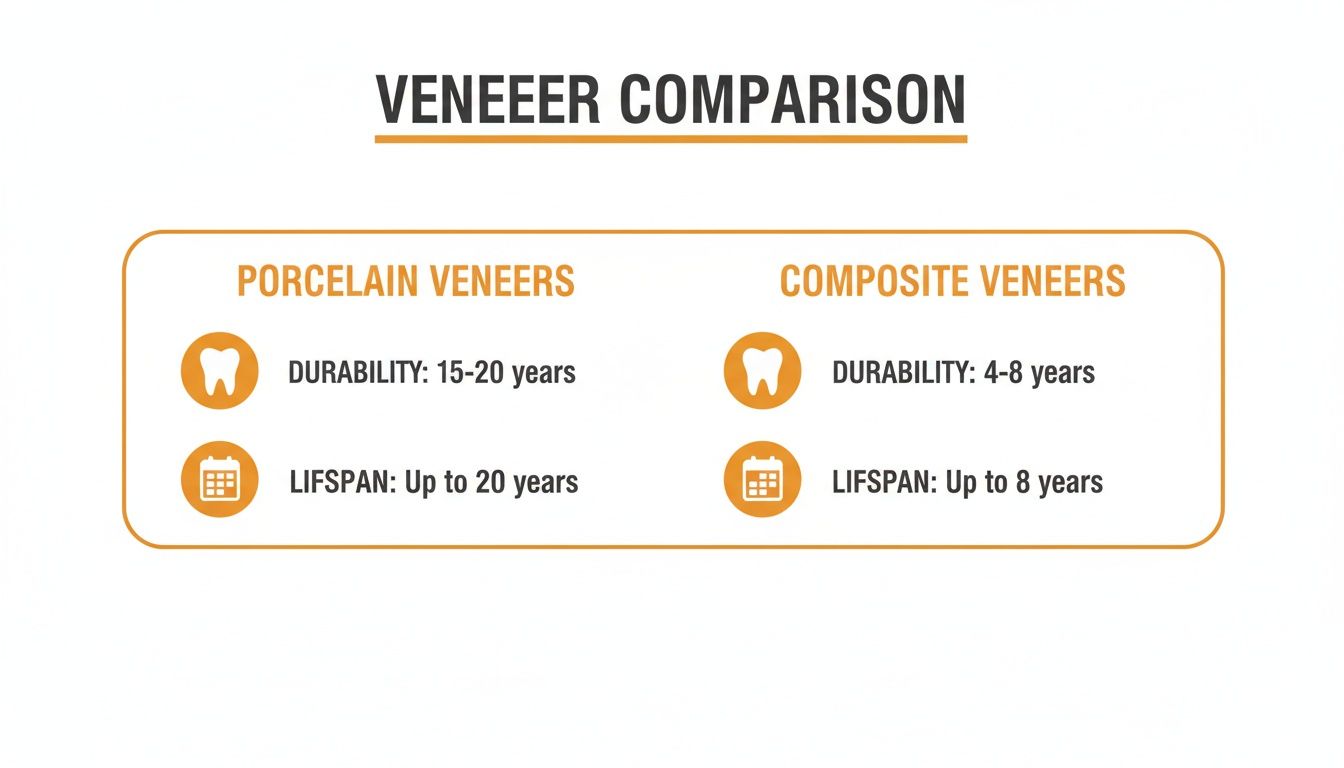
It’s clear that porcelain veneers are designed to last much longer than their composite counterparts, making them a worthwhile investment in your smile’s future.
Changes Around the Veneer
Sometimes, the problem isn’t with the veneer itself, but with the tooth or gums around it. These changes are just as important to spot early.
A common sign of ageing veneers is a dark line appearing right at the gum line. This can happen if your gums recede slightly, exposing the edge where the veneer meets the natural tooth.
You should also watch for persistent staining around the veneer’s border, which could suggest the bonding cement is starting to fail. If a veneer feels loose to the touch, or you notice new sensitivity in the tooth underneath, it’s a definite sign to book a check-up. These are all normal parts of a veneer's lifecycle, and you can learn more about general upkeep in our articles on dental aftercare.
The Replacement Process
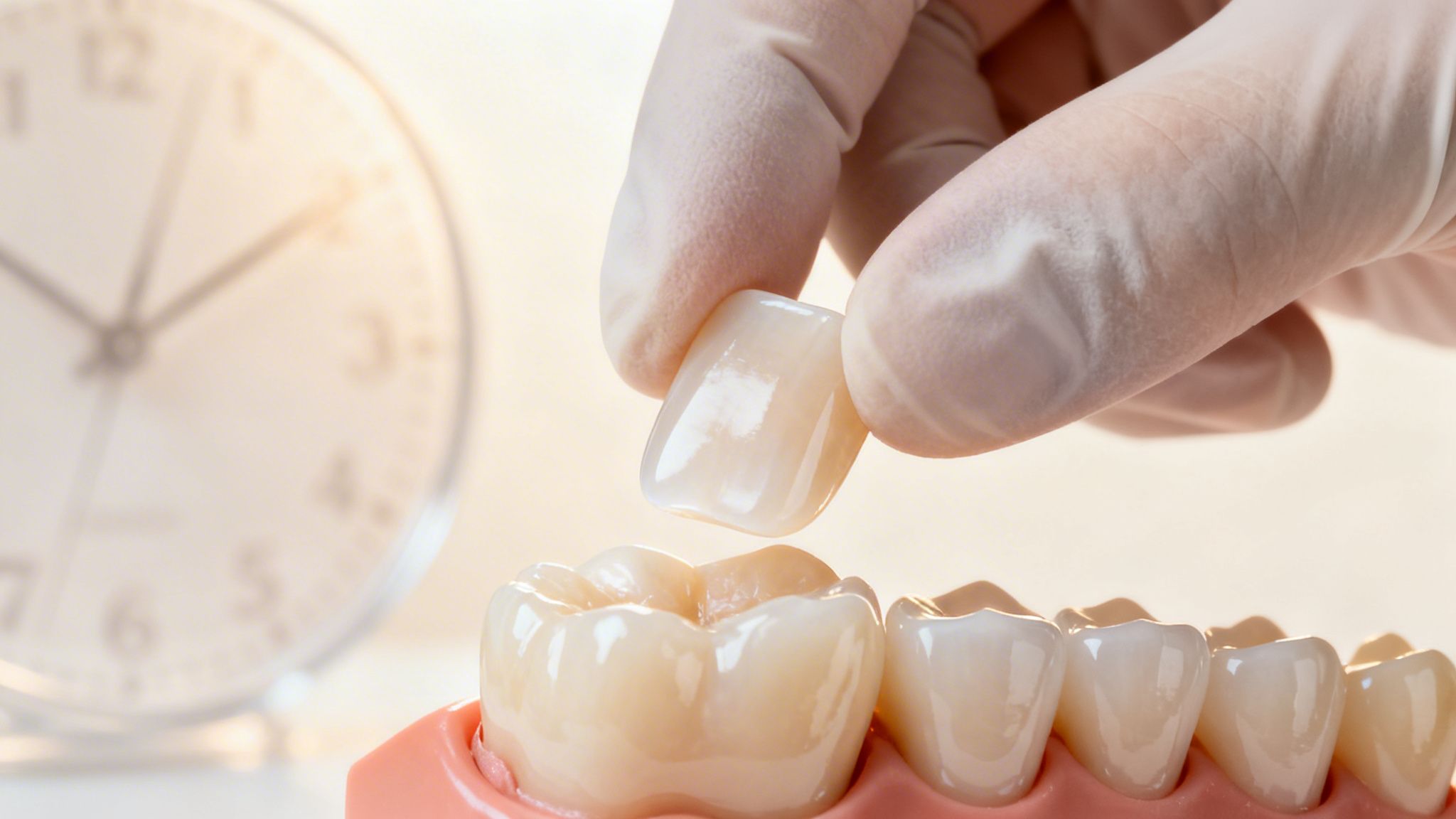
The good news is that replacing old veneers is usually more straightforward than getting them for the first time. Because the tooth has already been prepared, the process generally involves carefully removing the old veneer, cleaning the tooth surface, and then bonding a brand-new, custom-made veneer in its place.
It's a fantastic opportunity to refresh your smile and make sure the foundation underneath remains strong and healthy. Here at The Smile Spot, we make the entire process smooth and comfortable, helping you transition seamlessly to a new set of veneers so you can keep smiling with confidence for another 15 to 20 years.
Your Veneer Longevity Questions Answered
Even after covering the basics of veneer care, it’s natural to have a few more specific questions pop up. We get it. Here, we’ve put together some straight-to-the-point answers to the most common queries we hear from our patients about the longevity and day-to-day reality of living with porcelain veneers.
Think of this as the final chat before you make your decision, giving you the clarity you need to feel completely confident about investing in a brilliant new smile.
Will I Need to Change My Diet with Veneers?
For the most part, you can continue enjoying all your favourite foods. However, to help your veneers last as long as possible, it pays to be a little mindful of exceptionally hard or crunchy items.
While porcelain is incredibly strong, it isn’t indestructible. Making a habit of biting into things like ice cubes, hard nut shells, or pork crackling with your front teeth can put them at risk of chipping. A simple trick is to use your stronger back teeth (your molars) for the heavy lifting when you’re chewing tougher foods.
A good rule of thumb is: if you think it could chip one of your natural teeth, it could probably chip a veneer. Just treat them with the same care you would give your own healthy teeth.
Can Porcelain Veneers Get Cavities?
This is a great question. The porcelain material itself is immune to decay, but the natural tooth hidden underneath it certainly isn't. This is exactly why maintaining excellent oral hygiene is non-negotiable.
A cavity can sneak in along the edges where the veneer meets your tooth, especially if plaque is allowed to build up in that little seam. If decay takes hold, it can weaken the bond and harm the tooth, often meaning the veneer has to be removed to treat the cavity and then replaced.
What Happens if a Veneer Chips or Falls Off?
Accidents can happen, but if a veneer does chip, don’t panic. Small chips can often be easily smoothed and polished by your dentist, restoring their look without needing a full replacement. For bigger fractures or if a veneer comes off completely, a new one will need to be made.
If a veneer ever does come loose, try to save it if you can and give our clinic a call immediately. We’ll get you in to assess the tooth and, if possible, re-bond the original veneer. If not, we’ll get to work creating a new one to get your smile back to its best.
Are Veneers a Good Long-Term Financial Choice?
While porcelain veneers have a higher upfront cost than composite options, their impressive durability often makes them the more sensible financial choice over the long run. A well-cared-for set of porcelain veneers can easily last 15 to 20+ years. In contrast, composite veneers generally need replacing every 4 to 8 years.
When you do the maths, the cost of replacing composite veneers multiple times over two decades can easily add up to, or even surpass, the initial investment in porcelain. By choosing porcelain, you’re investing in durability, which means fewer replacement appointments and a stunningly consistent smile for many years to come.
At The Smile Spot, our goal is to help you achieve and maintain a smile you absolutely love for a lifetime. If you have more questions or you’re ready to explore your options, we invite you to book a consultation at our Dulwich Hill clinic. Visit us at https://thesmilespot.com.au to get started.