You might be reading this with a sore tooth, a half-booked appointment, or a tab open that you still haven’t had the nerve to click. That’s common. For many people, the search for a gentle dentist near me starts after months, or years, of putting things off because the last experience felt painful, rushed, noisy, or embarrassing.
Some patients worry about the drill. Others worry about the injection, the gag reflex, the loss of control, or being judged for how long it’s been. Families often carry a different concern. They don’t just want treatment that works. They want a clinic that can keep a child calm, explain things clearly, and avoid turning one visit into a fear pattern that lasts for years.
Gentle dentistry exists for exactly that reason. It isn’t code for “soft marketing” or a nicer waiting room. It’s a practical way of delivering care that reduces avoidable stress, lowers discomfort, and gives patients more control over what happens in the chair.
The Search for a Gentle Dentist
A lot of people in Dulwich Hill, Marrickville, Ashfield, and the wider Inner West don’t search for a “gentle dentist near me” because they’re casually browsing. They search because something already feels hard. The tooth hurts. The filling has broken. Their child is due for a first check-up. They know they need care, but fear keeps interfering.

That fear is more common than many patients realise. A 2023 Australian Institute of Health and Welfare report found that 15% of NSW adults avoid dental visits due to fear, and only 28% are aware of local sedation availability (rivervistadentistry.com/gentle-dentist). In practice, that means many people are delaying treatment without even knowing that calmer options may exist.
What anxious patients usually mean by gentle
When patients use the word “gentle”, they usually aren’t asking for one thing. They’re asking for a whole experience to feel safer.
That often includes:
- Less pain during treatment
- Less noise and vibration
- More explanation before anything starts
- Permission to pause without feeling awkward
- No judgement about missed appointments or neglected problems
For some people, dental fear overlaps with broader anxiety symptoms. If that sounds familiar, a gentle guide to understanding anxiety attacks and their symptoms can help you put words to what your body is doing when stress ramps up before an appointment.
Many anxious patients aren’t overreacting. They’re responding to a learned pattern, often built from one bad appointment that was never properly addressed.
Local care should feel human
A gentle clinic doesn’t assume every patient needs the same approach. A child coming for a first visit needs something different from an adult with a strong gag reflex. A busy parent with a cracked molar needs something different from someone exploring long-term treatment after years away from the dentist.
If you’re looking for a family-focused starting point, this guide to a family dentist near me can help you think about the kind of support that matters when one clinic needs to work for more than one person in your household.
What Gentle Dentistry Really Means
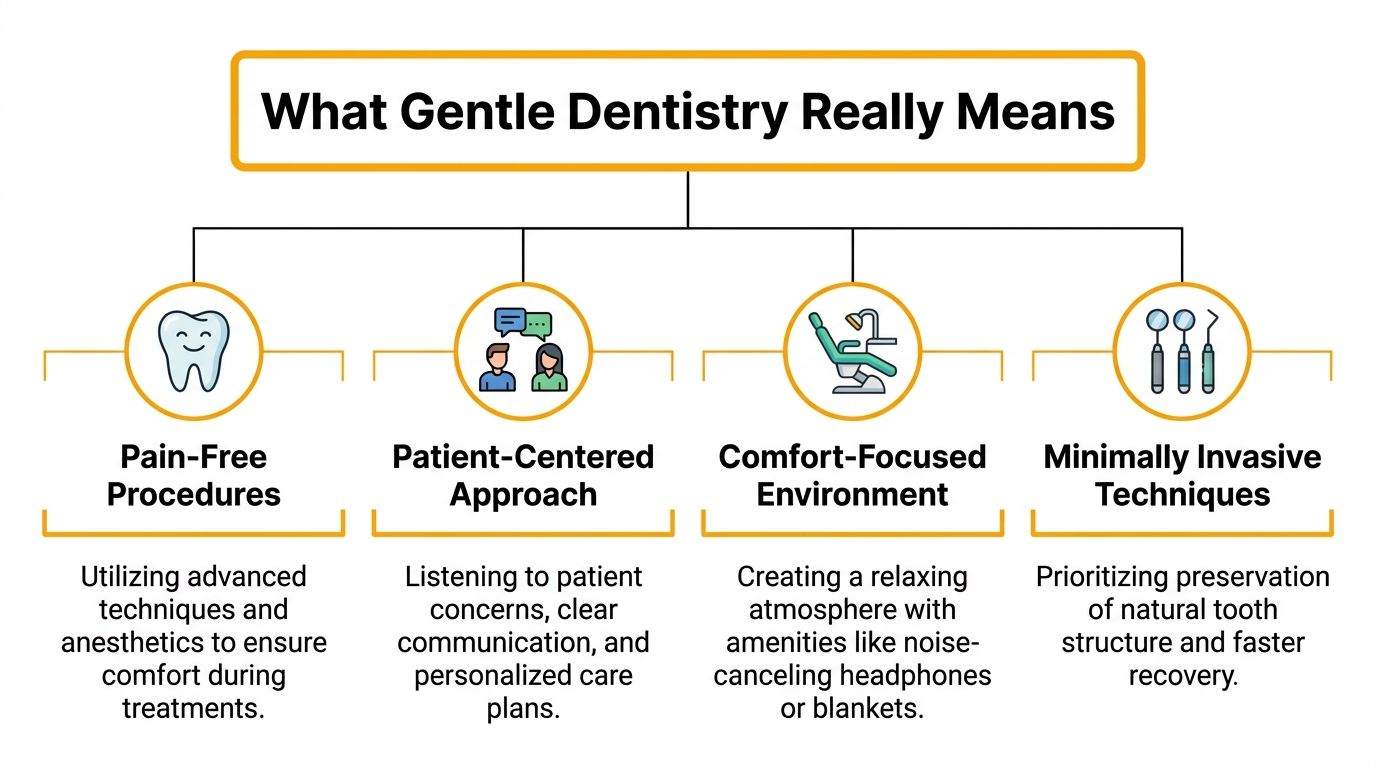
“Gentle dentistry” gets used loosely online. In a good practice, it means something specific. It’s a care model built around comfort, control, and reducing unnecessary trauma to both the patient and the tissues being treated.
Communication comes first
The gentlest tool in any room is often communication.
A calm appointment starts before treatment starts. Patients should know what’s happening, what they’re likely to feel, how long something may take, and what their options are if they become uncomfortable. Vague reassurance doesn’t help much. Clear explanation does.
That includes small things that change the whole tone of a visit:
- Agreeing on a stop signal before instruments come near the mouth
- Explaining sensations clearly, rather than saying “you won’t feel anything” if pressure is likely
- Checking consent step by step, especially for anxious patients
- Naming alternatives, including rescheduling, shorter visits, or sedation where appropriate
Control matters more than many believe
Patients often describe past dental experiences as difficult because they felt trapped, not because every moment was painful. That distinction matters.
A gentle dentist gives control back in practical ways. You can sit up. You can take a break. You can ask for the suction to be repositioned. You can ask the team to slow down. That’s not being difficult. That’s sensible care.
Clinical reality: Anxiety usually drops when the patient knows they can interrupt treatment at any point.
This is especially important for people with sensory sensitivity, a strong gag reflex, or fears linked to choking or nausea. Some patients also deal with related anxieties such as fear of vomiting, which can make routine dental sensations feel much bigger than they appear from the outside.
Technique and environment both count
A practice can have modern equipment and still feel rough if the pace is rushed. The reverse is also true. A kind team can only do so much if the techniques used are outdated or unnecessarily invasive.
Gentle care usually combines both.
| Aspect | What it looks like in practice |
|---|---|
| Patient-centred pacing | Shorter visits, breaks when needed, no pressure to push through distress |
| Pain management | Local anaesthetic used carefully, sedation discussed when suitable, numbness checked properly |
| Minimally invasive treatment | Preserving healthy tooth structure where possible and avoiding more aggressive options when simpler ones will work |
| Comfort-focused setting | Calm language, predictable process, supportive staff, reduced sensory load where possible |
Gentle doesn’t mean passive
There’s a misunderstanding that “gentle” means delaying necessary treatment or avoiding difficult conversations. It doesn’t.
A good gentle dentist still tells you if a tooth is cracked, if gum disease needs attention, or if a failing restoration is likely to get worse. The difference is in how that information is delivered. You should leave informed, not frightened.
For some patients, a discussion about deeper relaxation options is part of that process. If your anxiety is severe, or previous treatment has only been manageable under heavier sedation, it may help to understand how a full anesthesia dentist approach differs from standard in-chair comfort techniques.
Technologies That Deliver a Gentle Experience
You sit down for treatment already tense, and the first thing you notice is the sound of the drill. For many anxious patients, that sound is enough to set off a physical stress response before any treatment begins. The gentler option is not a vague promise. It often comes down to whether the practice uses tools and techniques that reduce the sensations patients fear most.
Laser dentistry can reduce the triggers patients dread
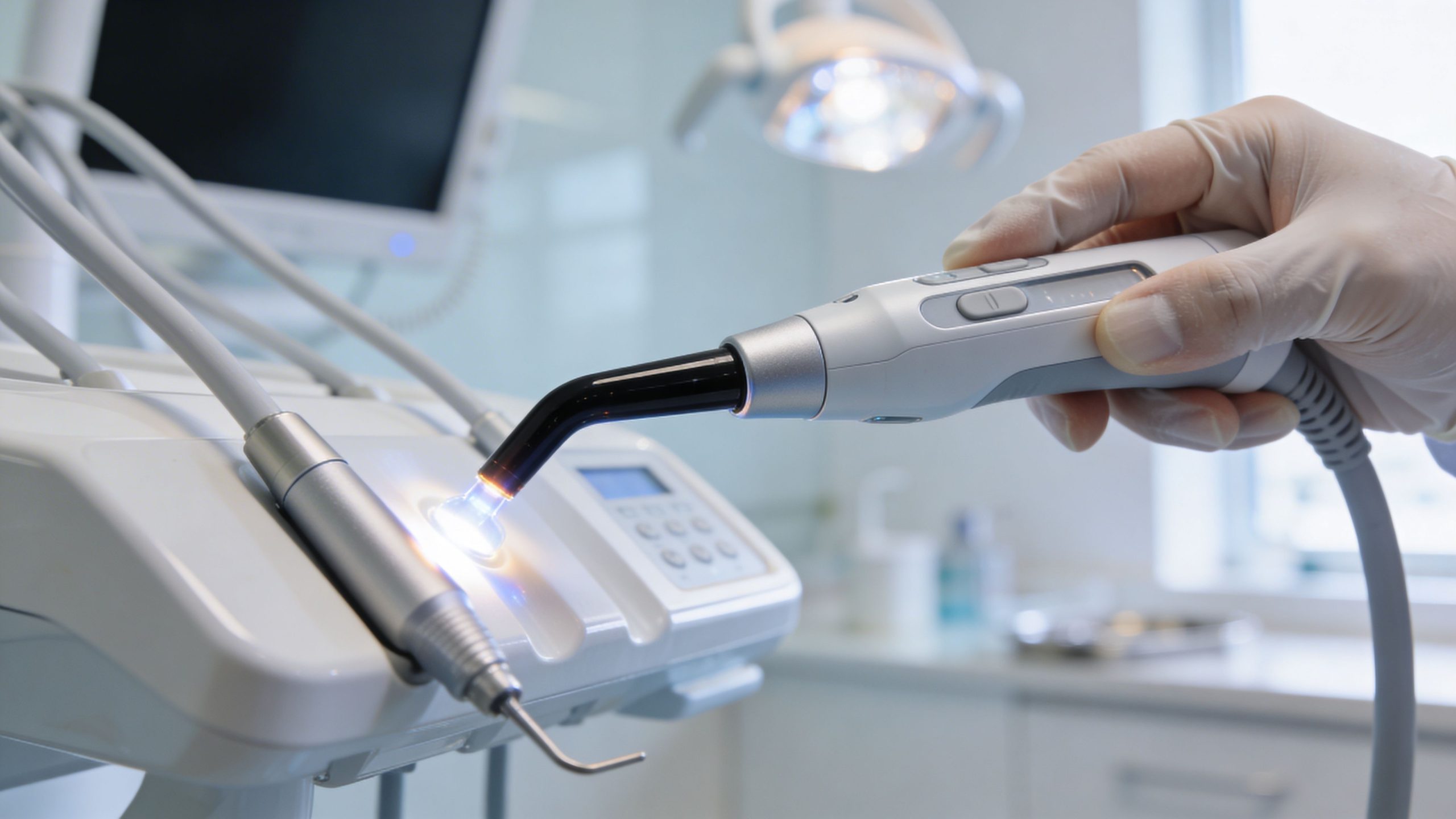
One example is Biolase-type laser dentistry. Used in the right cases, it can make treatment feel very different from conventional drilling. The laser targets water within tissue, which can allow more precise cutting with less disruption to the surrounding area.
In practical terms, that may mean less vibration, less noise, and less irritation afterwards. For a patient who is triggered by the sound of the handpiece or the feeling of pressure through the tooth, that difference is meaningful.
A clinical description of dental laser treatment notes that it may allow anaesthesia-free procedures in selected cases, while also reducing bleeding and supporting faster healing in some soft tissue procedures (deefordentist.com/services/solea-laser-dentistry).
Anxious patients react to more than just pain. They react to noise, smell, pressure, loss of control, and the expectation that something unpleasant is coming. Remove some of those triggers, and the appointment often becomes easier to tolerate from start to finish.
Where laser treatment helps, and where it does not
Laser-assisted care is useful for some gum procedures and selected restorative work. It can be especially helpful when the goal is to reduce bleeding, limit sensory irritation, or make a procedure feel less invasive.
Patients often appreciate it in situations such as:
- Soft tissue treatment where cleaner cutting and bleeding control improve comfort
- Needle-averse cases where anaesthetic may be reduced or avoided in selected procedures
- Drill-sensitive patients who struggle with the sound or vibration of traditional instruments
- Gum-related care where healing comfort matters after the appointment
There is a trade-off. A laser is not a replacement for every conventional tool. Some treatments still require traditional methods, and a clinician should choose the approach that protects the tooth and gives the best result, not the one that sounds newest.
Sedation solves a different part of the problem
Technology such as Biolase helps reduce physical and sensory triggers. Sedation is used for a different reason. It helps patients who know they may panic, freeze, gag, or avoid treatment altogether even when pain control is adequate.
That distinction matters in practice. A patient may be fully numb and still feel overwhelmed. Another may cope well with treatment itself but become distressed in the lead-up to the visit. Sedation can help in those situations because it lowers anxiety and makes the appointment feel more manageable.
Depending on the patient and the procedure, sedation may also help with memory of treatment, tension in the chair, and tolerance for longer visits. It still requires proper assessment, clear instructions, and recovery planning. It also adds cost and may mean arranging an escort home, depending on the method used.
The gentlest option is often a combination
The best comfort plan is usually customized, not standardised. Someone with mild anxiety may do well with careful local anaesthetic, laser use where appropriate, and a slower pace. Someone else may need sedation because the main issue is fear, not the treatment itself.
That is why a proper assessment matters before deciding how to proceed. For many patients, the most useful first step is a low-pressure checkup and clean appointment so the dentist can identify what is causing the anxiety and which comfort measures are likely to help.
At practices such as The Smile Spot, gentle care can include preventive treatment, minimally invasive planning, laser-based options where suitable, and sedation pathways for patients who need more support. The point is not to use every tool. It is to use the right one for the problem in front of you.
Gentle Care for Every Member of Your Family
Gentle dentistry matters most when it adjusts to the person in the chair. The same principles don’t look identical for a six-year-old, a time-poor parent, and someone considering full-arch tooth replacement.
A child’s first visit sets the tone
For children, a primary goal of a first appointment isn’t just checking teeth. It’s building trust.
That usually means a shorter visit, simple language, and a pace that lets the child look, ask, and settle. A child who leaves feeling safe is much more likely to come back cooperative next time. That makes future care easier for the child, the parent, and the clinician.
Parents wanting a clearer sense of what that support should look like can start with a local guide to a paediatric dentist near me.
Adults often need practical calm, not pep talks
An anxious adult usually doesn’t need to be told to “relax”. They need a plan that respects how their anxiety works.
That might mean booking extra time so they don’t feel rushed. It might mean discussing whether a filling can be done with less sensory stimulation. It might mean splitting treatment into manageable visits rather than trying to do too much at once.
Patients who’ve had a rough dental history often respond well when the appointment feels predictable. They know what will happen first, what might feel strange, and when they can ask for a pause.
Complex treatment can still be gentle
This matters even more with larger procedures. Missing teeth, failing dentures, and heavily broken-down teeth can leave patients assuming that any fix will be painful, prolonged, and hard to recover from.
That assumption isn’t always accurate. A 2025 University of Sydney study found that laser-assisted All-on-4 implant procedures reduced post-operative pain by 55% compared with conventional methods, a finding noted in the verified data source at charlottedentist.org. The same verified source states that 18% of Dulwich Hill adults over 50 have untreated tooth loss and many prefer gentler alternatives.
That doesn’t mean every patient is a candidate for laser-assisted implant treatment. It does mean modern planning can materially change the recovery experience for some pain-sensitive patients.
Larger treatment doesn’t have to mean a rougher experience. The method used often matters as much as the procedure itself.
Emergencies need reassurance as much as treatment
Gentle care also matters in urgent situations.
A patient with swelling, a broken cusp, or a sudden toothache is already stressed before they walk in. In those cases, the first job is to reduce distress and establish control. Fast diagnosis matters. So does clear explanation. So does giving the patient a workable path forward instead of adding panic to pain.
Across all these examples, the common thread is simple. Gentle dentistry isn’t reserved for routine cleans or nervous children. It belongs in preventive care, restorative work, implant planning, and emergency treatment as well.
How to Choose the Right Gentle Dentist in the Inner West
A good search result doesn’t always mean a gentle experience. A key difference usually becomes clear before you ever sit in the chair.

A patient might find three nearby clinics, read the same promises about comfort, and still have no idea which one will handle anxiety well. That is why the first phone call matters. A gentle practice should be able to explain how it reduces pain, how it handles fear, and what happens if you need more time or more support.
What to ask before you book
Start with practical questions. “Are you gentle?” is too broad to be useful. A better approach is to ask how the clinic works with anxious patients, children, strong gag reflexes, or people who have avoided care for years.
Useful questions include:
- Can I book a consultation before treatment? Some patients need to meet the dentist first and agree on a plan before anyone picks up an instrument.
- What comfort options do you offer? Listen for clear answers such as topical numbing, slower injection technique, laser treatment where appropriate, or sedation pathways for suitable cases.
- How do you manage gag reflex issues? An experienced team should answer this without sounding surprised.
- Can treatment be split into shorter visits? For some patients, two manageable appointments are better than one difficult one.
- Will you explain each step and let me pause if I need to? Patient control is a large part of what makes treatment feel gentler.
Specific answers matter. If a clinic can explain when it uses tools such as Biolase, when sedation is appropriate, and when a slower non-sedation approach is enough, that usually reflects real systems rather than marketing language.
Pay attention during the first interaction
The first conversation often tells you more than the website does.
If you mention fear, embarrassment, or a difficult past experience, the team should respond calmly and without judgment. They should not rush past your concern to talk only about appointment times or fees. Reception staff do not provide treatment, but they often reveal whether anxious patients are a routine part of the clinic’s care model or an afterthought.
This also helps you judge how organised the practice is. A clinic that regularly treats nervous patients usually has a clear booking process, realistic time allocation, and a straightforward explanation of next steps.
Match the method to the problem
Gentle care is not one single option. It is a good clinical match between your concern and the method used.
A patient with needle anxiety may benefit from a slower start, topical numbing, and step-by-step explanation. Someone with a severe gag reflex may need a different strategy, including position changes, shorter visits, or sedation assessment. A patient avoiding treatment because they expect a long recovery may want to ask whether laser-assisted care could reduce tissue trauma for the procedure they need.
Sedation can help, but it is not the only marker of a gentle dentist, and it is not right for every case. In practice, the better question is whether the clinic can explain the trade-offs clearly. Sedation may reduce awareness of treatment, but it also adds planning, suitability checks, and recovery considerations. Laser dentistry can make some procedures less invasive, but it is not a substitute for judgement, diagnosis, or careful technique.
That balance matters.
This short video can help you think through what a comfort-focused dental experience should look like when you’re comparing providers.
Cost questions are part of comfort
Comfort is not only about the procedure. It also comes from knowing what is being done, what can wait, and what it will cost.
Ask for plain fee explanations. Ask whether treatment can be staged if that is clinically reasonable. Ask what is urgent and what is elective. If budget is part of the reason you have delayed care, this guide to dentists with payment plans near me can help you ask better financial questions before treatment begins.
A calm dental experience includes financial clarity. Uncertainty about fees can make people postpone care just as quickly as fear of pain.
Why Inner West Families Choose The Smile Spot
Local patients usually want the same things. They want competent dentistry, less stress, a practical appointment time, and a team that doesn’t make them feel foolish for being anxious.
That’s where local knowledge matters. A clinic serving Dulwich Hill and the Inner West needs to work for school schedules, work commutes, emergency pain, and multi-person family bookings. It also needs to handle very different kinds of treatment under one roof, from children’s preventive visits to implants and restorative care.
Experience and range matter
Dr. Dimitrios Thanos has served as principal dentist for many years, and that kind of continuity matters to families who don’t want to explain their concerns from scratch every time. Long-term experience doesn’t guarantee a gentle style on its own, but it often improves judgement. That includes knowing when a patient needs reassurance, when they need sedation, and when a minimally invasive option is the better path.
The clinic’s service range is also relevant because anxious patients often want fewer handovers. It’s easier when routine care, restorative work, laser-based treatment, emergency appointments, and implant discussions can happen within one organised system.
Convenience reduces avoidance
For many adults, delay isn’t just about fear. It’s also about logistics.
Late evening and Saturday hours help patients who can’t easily leave work or organise weekday family transport. Online booking lowers the friction of making that first appointment. Acceptance of most private health funds also makes planning simpler.
Those details may sound ordinary, but they often determine whether treatment happens now or gets postponed again.
Transparent entry points help anxious patients start
People with dental anxiety usually cope better when the first step feels finite and clear.
The clinic offers a $240 extensive care package that includes an exam, X-rays, scale, and fluoride. That sort of transparent starting point can make it easier to stop spiralling about what the first visit might turn into.
For families, a reduced children’s rate helps make early preventive care more manageable. That matters because children who begin with calm, routine visits are less likely to develop the fear patterns that make adulthood treatment harder.
Local relevance isn’t a small detail
Patients searching “gentle dentist near me” usually don’t want a broad Sydney answer. They want somewhere accessible from home, school, or work.
That’s particularly relevant for people in:
- Dulwich Hill
- Marrickville
- Earlwood
- Ashfield
- Summer Hill
- Lewisham
- Petersham
- Hurlstone Park
If a child needs a review, a parent breaks a tooth, or someone needs urgent advice before the weekend, local access changes the experience.
What families are really choosing
Most families aren’t comparing clinics by one feature alone. They’re looking at the full equation.
That includes:
- Clinical breadth so they don’t need multiple providers
- Gentle techniques for anxious or pain-sensitive patients
- Practical appointment times
- Fee transparency
- A team that communicates well under stress
When those elements line up, the result feels very different from the old model of “just get through it”.
Begin Your Journey to Comfortable Dental Care Today
If you’ve been delaying treatment, the delay probably makes sense to you. Maybe a past appointment was painful. Maybe you hate the sound of the drill. Maybe your child is nervous and you don’t want to start badly. Maybe cost uncertainty or a strong gag reflex has made every booking feel like a bigger task than it should be.
Modern gentle dentistry gives you better options than just forcing yourself through it.
That can mean clearer communication, slower pacing, minimally invasive methods, laser-assisted treatment, or sedation when anxiety is the main obstacle. It can also mean something simpler. Being listened to properly before anything begins.
A good dental appointment shouldn’t depend on your pain tolerance or your ability to hide fear. It should be designed around safe, respectful care that makes treatment possible.
If you’ve been searching for a gentle dentist near me in Dulwich Hill or the Inner West, use that search well. Ask specific questions. Look for practical comfort measures. Choose a clinic that treats anxiety as a clinical reality, not a personality flaw.
The first step doesn’t have to be major treatment. It can just be a conversation about what’s bothering you, what’s worrying you, and what would help you feel more in control.
If you’re ready to talk through your options, book a consultation with The Smile Spot. A first visit can be a calm starting point, with time to discuss anxiety, comfort preferences, and the treatment approach that fits you or your family.