If you’ve just been told you need a crown, the question in your head is usually simple: How long do crowns last, and is this worth doing properly? That’s a fair question. A crown isn’t just a quick patch. It’s a custom restoration designed to protect a damaged tooth, restore your bite, and help you avoid bigger problems later.
The shortest answer is that crowns can last for many years, but the better answer is more useful. A crown behaves a lot like a protective helmet for a tooth. Its lifespan depends on the material, how accurately it fits, the forces you put on it, and how well the tooth and gums are maintained over time.
Your Dental Crown Investment How Long Should It Last
A broad answer is often heard somewhere along the line. Something like “five to fifteen years”. That range isn’t wrong in general conversation, but it’s incomplete and often discouraging. It misses the fact that some crowns last far longer when the conditions are right.
A landmark 50-year follow-up study tracked 223 restorations and found an estimated mean survival of 47.53 years for metal-ceramic crowns, with gold crowns, ceramic veneers, and all-ceramic crowns showing 100% survival at 50 years under conditions of excellent oral hygiene and annual follow-up care, according to this review of long-term crown data. That’s the most encouraging part of the conversation. A crown is not automatically short-lived. With meticulous maintenance, it can serve for decades.

What a crown is really doing
A dental crown covers the visible part of a weakened tooth. It’s used when a filling won’t provide enough support, or when a tooth has already lost too much structure. The crown takes on the heavy work of chewing while shielding the remaining tooth underneath.
That’s why the right question isn’t only “how long do crowns last”. It’s also:
- What is this crown protecting
- How much force will it need to handle
- How will I look after it over time
Practical rule: A crown lasts longest when the tooth underneath is healthy, the bite is balanced, and the patient keeps up with maintenance.
The same long-term thinking matters for other restorations as well. If you’re comparing options for replacing missing teeth, this guide on how long do dental implants last can help frame the discussion.
Understanding What a Dental Crown Does for Your Tooth
A patient will often tell me, “The tooth feels fine if I’m careful.” That is usually the stage where a crown becomes the sensible option. The tooth may still be comfortable, but once it is badly filled, cracked, worn down, or weakened after root canal treatment, it may not cope well with everyday chewing for much longer.
A crown covers the part of the tooth you see above the gum and restores the shape that has been lost. Its job is to protect what remains, spread biting pressure more evenly, and let you chew without that constant worry that the tooth could split further. It improves the tooth’s odds, but it still depends on the quality of the tooth underneath and how the bite is managed.
At The Smile Spot, that matters a great deal. Long-lasting crowns do not come from the crown alone. They come from careful preparation, precise fit, the right material choice, and prevention-minded follow-up so the tooth and surrounding gum stay healthy for years.
Common reasons a dentist recommends a crown
A crown is commonly the right treatment when a tooth needs more support than a filling can provide:
- After root canal treatment, when the tooth is often more prone to fracture under load
- Over a large filling, when there is not enough healthy tooth left for another filling to hold predictably
- For a broken or cracked tooth, to protect the remaining structure and reduce further breakdown
- To restore shape or appearance, when a tooth is badly worn, misshapen, or discoloured
If you want a plain-English overview of the dental crown procedure, that resource explains the treatment sequence well from a patient perspective.
Crown types compared by purpose
Different crown materials solve different clinical problems. The best option depends on where the tooth sits, how heavy your bite is, how much healthy tooth remains, and how visible the crown will be when you smile.
| Crown type | Durability | Aesthetics | Best placement |
|---|---|---|---|
| Zirconia | Very strong | Very good | Back teeth and selected front teeth |
| Porcelain fused to metal | Strong, but veneer can chip | Good | Some back teeth |
| All-ceramic | Attractive and natural-looking | Excellent | Front teeth and carefully selected cases |
| Metal alloy | Excellent under heavy load | Least natural-looking | Molars and heavy-bite cases |
In my experience, patients do best when the crown matches the demands of the tooth rather than a generic average. That is one reason we place so much value on advanced options such as Zirkonzahn zirconia and precise tissue management with Biolase. Those details can make a real difference to comfort, fit, and how well a crown holds up over time.
For a broader look at treatment options, including where crowns fit compared with replacing missing teeth, see our guide to dental crowns and bridges treatment options.
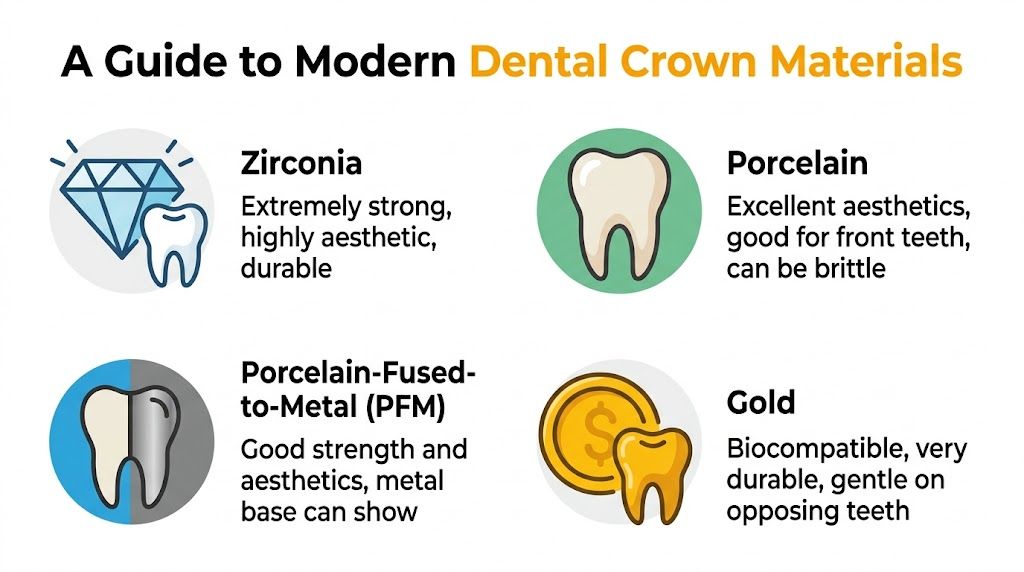
A Guide to Modern Dental Crown Materials
The material you choose has a direct effect on how your crown behaves in daily life. Some materials handle force beautifully. Some blend better cosmetically. Some do both well enough that they’ve become the go-to option in modern restorative dentistry.
The practical strengths of each material
Zirconia is often chosen when strength matters but appearance still matters too. It’s especially useful for back teeth because it tolerates heavy chewing better than more delicate ceramics.
Porcelain-fused-to-metal, often called PFM, has been used for years because it combines a metal substructure with a tooth-coloured outer layer. It can work well, but the porcelain veneer is the usual weak point.
All-ceramic crowns look excellent and are often favoured where appearance is the priority. Their limitation is that some cases place more force on them than they should reasonably carry.
Metal alloys, including gold-based options, remain excellent functional restorations. They’re not chosen for cosmetics, but they perform very well in the right location.
What the long-term data supports
For posterior crowns, zirconia has strong long-term evidence. Australian clinical data cited in this zirconia crown longevity review reports a 97% survival rate at 10 years and 70.5% at 15 years for posterior crowns under typical occlusal loads of 400 to 1,200 psi. In the same review, PFM options drop to 85% functionality by year 15 due to porcelain chipping from flexural stresses exceeding 100 MPa.
That matches what dentists see in practice. A molar crown fails differently from a front tooth crown. On a heavily loaded back tooth, even a good-looking material can become the wrong choice if it isn’t tough enough for the bite.
When a patient asks me to rank crown materials, I don’t rank them by popularity. I rank them by whether they suit the tooth’s actual workload.
Dental Crown Materials A Quick Comparison
| Material | Typical Lifespan | Aesthetics | Best For |
|---|---|---|---|
| Zirconia | Long-lasting with good maintenance | High | Molars, premolars, some front teeth |
| Porcelain | Can perform well in lower-force areas | Excellent | Front teeth |
| PFM | Moderate to long service in selected cases | Good | Teeth needing a balance of strength and appearance |
| Gold | Often among the longest-lasting options | Low | Heavy-bite molars |
Material choice isn’t the whole story
The crown material matters, but it doesn’t act alone. The fit at the margin, the condition of the tooth underneath, and habits like grinding all shape the actual outcome. That’s why material selection should never be done from a brochure alone.
If you’re comparing crown aesthetics with other cosmetic options, this article on how long do porcelain veneers last helps clarify where veneers and crowns differ.
Key Factors That Influence Crown Durability
A strong material can still fail early if the circumstances around it are poor. In everyday dentistry, crown longevity usually comes down to a combination of bite force, tooth position, oral hygiene, and fit.
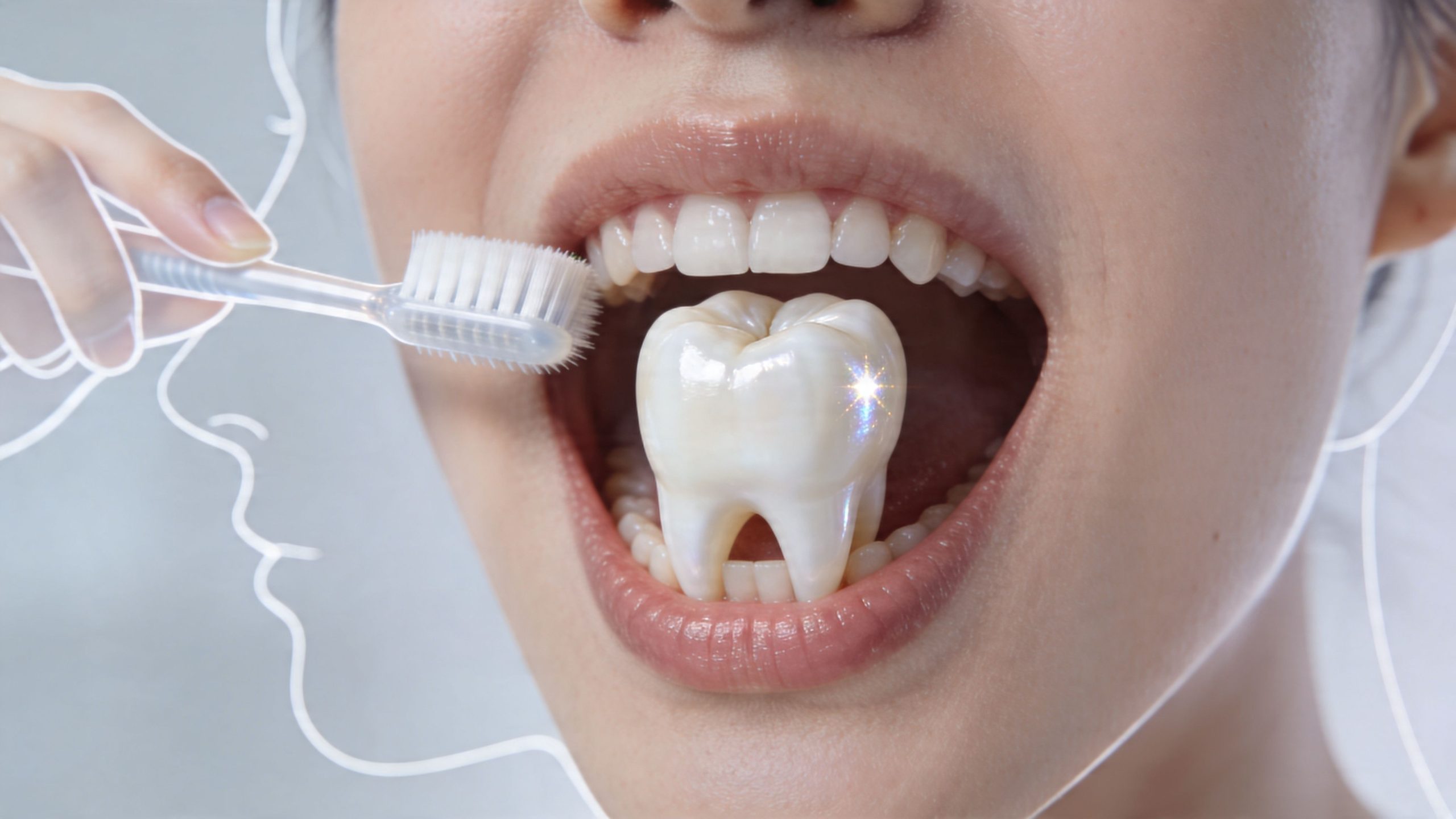
Heavy biting and grinding
Some patients place far more force on their teeth than they realise. Grinding, clenching, and uneven chewing patterns can shorten the life of a restoration that would otherwise do very well.
Australian-specific benchmarks discussed in this guide to crown durability under heavy bite forces note that metal alloy crowns endure 20+ years on molars and can withstand 1,500+ psi occlusal forces. The same source notes 31% in a high-bruxism NSW demographic and explains why metal’s ductility helps reduce fracture risk in these cases. It also notes that pairing a crown with a custom mouthguard can cap forces and significantly extend the crown’s life.
That’s one reason a protective appliance matters so much for grinders. If you clench or grind, a dentist mouth guard isn’t an optional extra. It’s part of protecting the restoration.
The crown’s location in the mouth
Where the crown sits changes the job entirely.
- Front teeth usually experience lower direct chewing pressure, but appearance matters more.
- Premolars sit in a mixed zone where appearance and load both matter.
- Molars absorb the strongest chewing forces, so strength becomes the priority.
A beautiful crown on a front tooth may be completely appropriate there and a poor choice on a grinding molar.
The fit and the tooth underneath
A crown only succeeds if the margin is clean, precise, and maintainable. If plaque sits around the edge or the tooth underneath develops decay, the crown may need repair or replacement even if the visible part still looks intact.
Good crown work depends on:
- Sound tooth structure underneath the restoration
- Healthy gums with stable support around the tooth
- Accurate bite adjustment so one area doesn’t carry too much force
- Regular review so small problems are found before they become large ones
Here’s a short visual explanation of crown protection and maintenance principles:
What works: choosing the right material, checking the bite carefully, wearing a guard if you grind, and maintaining the gum line well.
What doesn’t: assuming the crown itself can compensate for poor brushing, untreated grinding, or a tooth that already has hidden structural problems.
Daily Habits for Extending the Life of Your Crown
The crown may be made in a dental lab, but its lifespan is shaped at home. Daily habits make the difference between a crown that stays stable and one that starts collecting problems around the edges.
The biggest mistake patients make is thinking the crown can’t decay because it isn’t natural tooth. The material itself won’t decay, but the tooth margin under and around it absolutely can. That’s why plaque control matters.
The home routine that protects crowns
A crown does best when your routine is simple and repeatable:
- Brush carefully at the gum line because that’s where plaque collects around the crown margin
- Floss every day to clean the contact points and stop inflammation between the teeth
- Use fluoride toothpaste to protect the exposed natural tooth structure around the crown
- Be mindful with hard foods such as ice, hard lollies, and unpopped kernels
- Avoid using teeth as tools for opening packaging or holding objects
If you’d like another patient-friendly summary of how to care for dental crowns, that guide aligns with the same core principles.
The warning signs people often ignore
Crowns rarely fail without any hint at all. The signs can be subtle at first.
Watch for:
- A new rough edge that may suggest a chip or wear
- Food trapping around the crown which can point to margin changes or gum recession
- A bite that feels different if the crown or the opposing tooth has shifted
- Sensitivity or tenderness around a tooth that was previously comfortable
- A crown that feels slightly loose even if it hasn’t come off
Professional maintenance still matters
Even excellent home care can’t replace regular review. Dentists check the seal, the gum condition, the bite, and the surrounding tooth structure in ways you can’t do in the mirror.
Routine maintenance is one of the easiest ways to protect long-term restorative work. For many patients, a professional checkup and clean is where early wear, plaque build-up, or gum changes are found before the crown is put at risk.
Recognising When Your Crown Needs Attention
A crown doesn’t have to be broken in half to need treatment. In fact, the earlier signs are usually much milder than people expect. That’s good news, because small problems are often simpler to manage than neglected ones.
Symptoms that deserve an assessment
If a crowned tooth starts behaving differently, it’s worth having it checked. Common signs include:
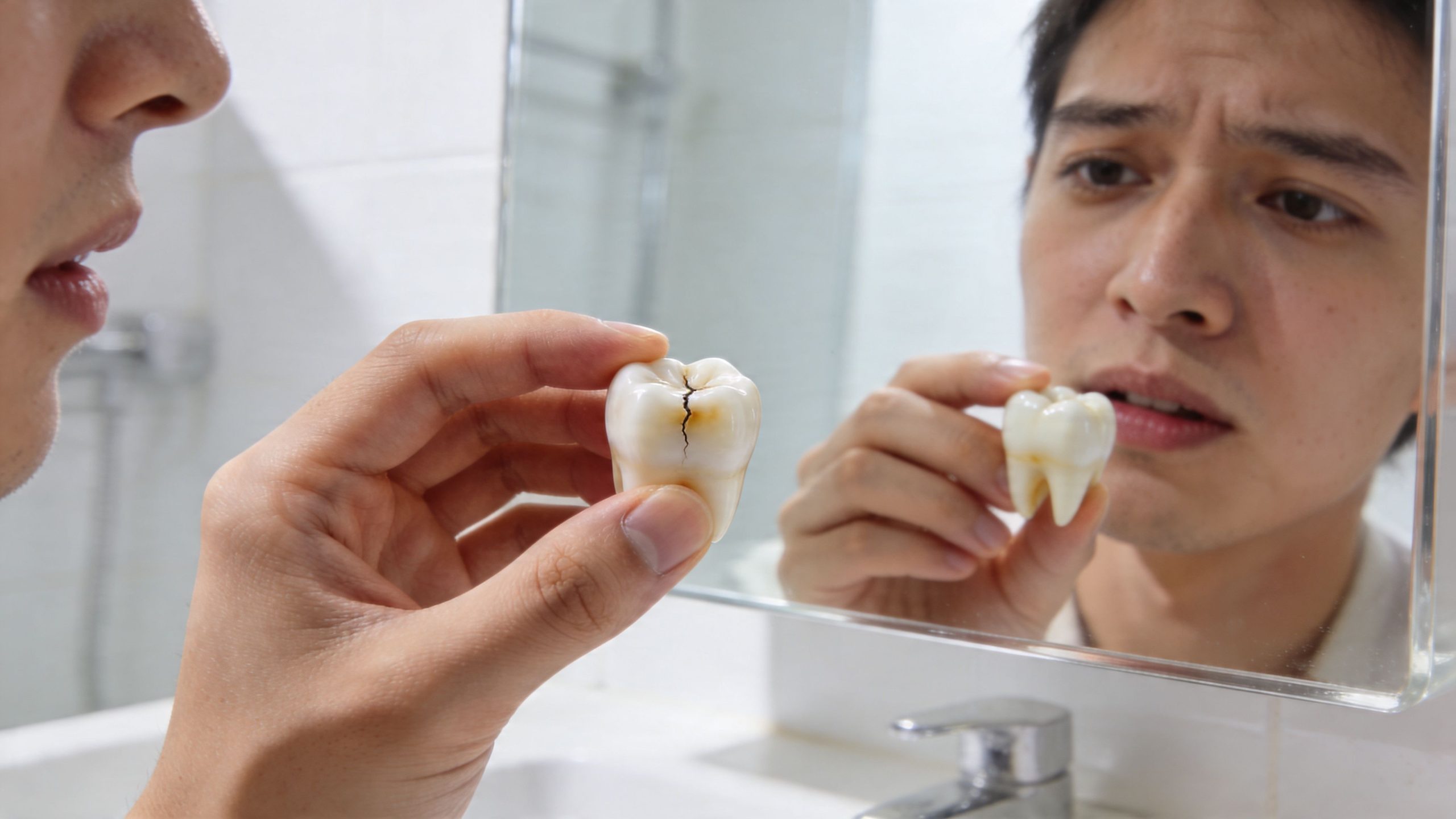
- Pain when chewing, which may indicate bite stress, a crack, or trouble in the underlying tooth
- Hot or cold sensitivity, especially if it’s new
- A loose feeling, which can mean the cement seal has failed
- Visible chipping or cracking, even if it seems minor
- A dark line near the gum line, often seen with some older PFM crowns
- Swelling or irritation in the gum nearby, which can point to plaque retention or leakage at the edge
Why waiting usually makes things worse
Patients often hope a tender crown will settle down on its own. Sometimes it does. But if the issue is a cracked crown, decay under the margin, bite overload, or a loosening seal, time tends to work against you.
A crown protects the tooth only while it remains stable and well sealed. Once bacteria get underneath, the underlying tooth can deteriorate unnoticed.
A crown that feels “not quite right” is worth checking. You don’t need to wait for severe pain before acting.
What a dentist is looking for
When assessing an older or uncomfortable crown, a dentist checks the restoration itself and the structures around it. The key questions are whether the crown still fits properly, whether the tooth underneath is healthy, and whether the bite is loading that tooth correctly.
Sometimes the crown is still fine and only needs a minor adjustment. Sometimes the tooth needs more support. The point is to catch the issue while the treatment options are still straightforward.
Your Crown Consultation at The Smile Spot
A patient often comes in with a simple question. “How long will this crown last?” The useful answer starts with the tooth in front of us, because a crown on a heavily restored molar that carries grinding forces has a different outlook from a crown on a front tooth with lighter function.
At the consultation, I assess more than whether a crown can be placed. I examine the remaining tooth structure, any cracks, old fillings, decay risk, gum health, and the way your bite loads that tooth day after day. That is what determines whether a crown is likely to serve you well for many years or whether the tooth needs a different plan.
If a crown is appropriate, the discussion should be practical and specific to you. We cover:
- Which material suits that tooth best, based on position, bite force, and appearance
- Whether grinding or clenching needs to be managed, so the crown is not carrying more force than it should
- How to keep treatment comfortable, including sedation for anxious patients
- How the treatment fits real schedules, especially for busy families and working professionals
The treatment approach has a direct effect on lifespan. Precision at the margin matters. So does preserving healthy tooth structure wherever possible. At The Smile Spot, Biolase laser dentistry can help in suitable cases by allowing careful soft tissue management and conservative treatment around the tooth. A clean, controlled field helps us capture better detail and place a restoration with margins that are easier to keep healthy over time. Patients usually notice the comfort side of that first, but the long-term value is in accuracy and tissue health.
Material choice matters just as much. We use advanced options including Zirkonzahn when the case calls for high strength with natural aesthetics. In practical terms, that matters most for patients who place heavy load on back teeth, want a metal-free result, or need a restoration that balances appearance with durability. A crown lasts longer when the material matches the job. An attractive material in the wrong position, or an excessively hard choice in a poorly managed bite, can shorten the life of the restoration or the opposing teeth.
Prevention is part of crown treatment, not a separate extra. Regular reviews, professional cleaning, X-rays when indicated, and fluoride support help us monitor the seal around the crown and the health of the tooth underneath it. That is one reason routine maintenance can add years to a well-made crown. The goal is not merely to fit a crown that looks good on day one. The goal is to keep it stable, comfortable, and easy to maintain for decades where conditions allow.
The next sensible step is a personalised assessment. If your crown feels off, if you have been told a tooth may need one, or if you want the longest-lasting option rather than a generic average, book a consultation and get a plan based on your tooth, your bite, and your long-term goals.
A well-planned crown should feel natural, protect the tooth properly, and give you confidence every time you chew.