If you're searching dental sedation near me, there's a good chance you're not casually browsing. You might have a sore tooth you've put off for months. You might have cancelled before. You might even feel tense just hearing the sound of a dental drill in your head.
That reaction is more common than many people realise. Fear around dental treatment isn't weakness, and it isn't something you have to push through. With the right planning, the right sedation option, and gentler modern techniques such as laser dentistry, many patients can finally get treatment in a way that feels manageable.
Anxious About the Dentist? You Are Not Alone
Some patients walk into the surgery apologising before they've even sat down. They say things like, “I know I should’ve come sooner,” or “I’m embarrassed, but I’ve been too scared.” In my experience, those words usually come from people who have been carrying dental fear for a long time.
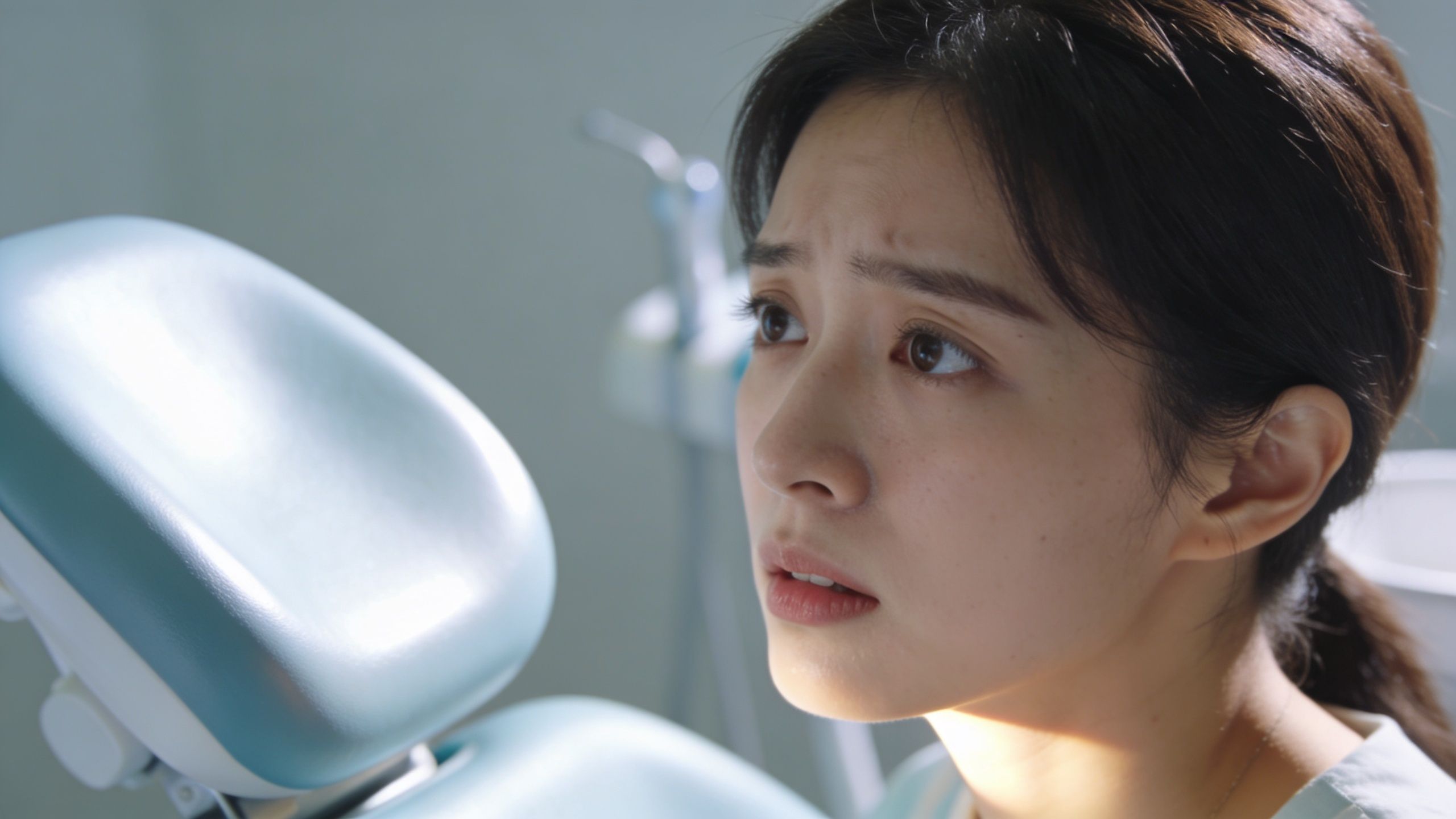
That fear is far from rare. In Australia, dental anxiety affects approximately 40% of adults, and anxious patients have 25% higher rates of emergency dental visits, according to this sedation dentistry overview. The pattern is familiar. Someone delays a check-up because they dread the appointment, then a small issue turns into pain, swelling, or a broken tooth that needs urgent care.
Fear often looks different than people expect
Dental anxiety isn't always panic. Sometimes it looks like:
- Putting off check-ups until “things get busy less”
- Needing moral support just to make a booking
- Feeling sick or shaky the night before an appointment
- Avoiding certain treatments even when you know they matter
- Worrying about judgement because it's been a while
For many Inner West patients, the hard part isn't the treatment itself. It's getting through the door.
A calm dental visit usually starts well before any instrument is picked up. It starts when a patient feels heard.
Sedation can help change that experience. It isn't about knocking everyone out or turning dentistry into something dramatic. It's a practical way to reduce fear, make treatment feel more comfortable, and help patients receive care they may have avoided for years.
If you've been looking for a gentle dentist near you, sedation is often part of that gentler approach. So are clear explanations, slower pacing, local anaesthetic, and minimally invasive techniques that reduce stress in the chair.
The goal isn't bravery
You don't need to “be brave” in the traditional sense. You need a plan that fits you. For one person, that may mean nitrous oxide and a simple filling. For another, it may mean deeper relaxation for a longer appointment. What matters is that fear stops being the thing that decides your dental health.
What Is Dental Sedation and How Does It Work?
Dental sedation helps turn down the volume on anxiety. That's the simplest way to think about it. You stay more relaxed, time often feels easier to manage, and the appointment becomes far less overwhelming.
Sedation and local anaesthetic do different jobs. Sedation helps with fear, tension, and the feeling of being on edge. Local anaesthetic numbs the tooth and surrounding area so you don't feel pain during treatment. In many cases, they work together.
Sedation doesn't mean the same thing for everyone
Many people hear the words “sedation dentistry” and picture being fully unconscious. That's only one end of a much broader spectrum. Most dental sedation is about relaxation, not deep sleep.
A helpful way to picture it is this:
| What it helps with | What it doesn't replace |
|---|---|
| Anxiety and nervousness | Numbing for pain |
| Strong gag reflex | Good treatment planning |
| Difficulty sitting through care | Medical screening |
| Tension during longer visits | Aftercare instructions |
Some forms are very light and wear off quickly. Others are deeper and are better suited to longer or more involved procedures. The right choice depends on your health, your anxiety level, and the kind of treatment you're having.
What sedation may feel like
Patients often describe sedation in simple ways. They say they felt floaty, calm, less aware of time, or less bothered by the usual triggers of dental treatment. With lighter sedation, you can still respond to the dental team and follow directions. With deeper forms, you may remember very little afterwards.
If you'd like a simple patient-friendly explanation from outside the clinic setting, Toothfairy's guide to anxiety-free care gives a useful overview of how sedation fits into modern dentistry.
Practical rule: If your biggest worry is “Will I still know what's going on?”, ask your dentist to explain the expected level of awareness for your specific sedation option.
For people considering oral sedation dentistry, this distinction matters. Oral sedation doesn't replace injections for numbing, and it doesn't remove the need for careful monitoring. What it can do is make the whole experience feel far less confronting.
Why this matters with modern laser dentistry
Sedation becomes even more helpful when it's paired with minimally invasive treatment. Laser dentistry can reduce some of the sensations patients dislike most, such as vibration, pressure, and the feeling that too much is happening at once. When you combine a calming sedation option with a gentler technique, the appointment often feels more controlled and less intense from beginning to end.
Comparing Your Dental Sedation Options
The words dental sedation near me can lead to a long list of clinics, but the main question is simpler. Which type of sedation matches your needs?
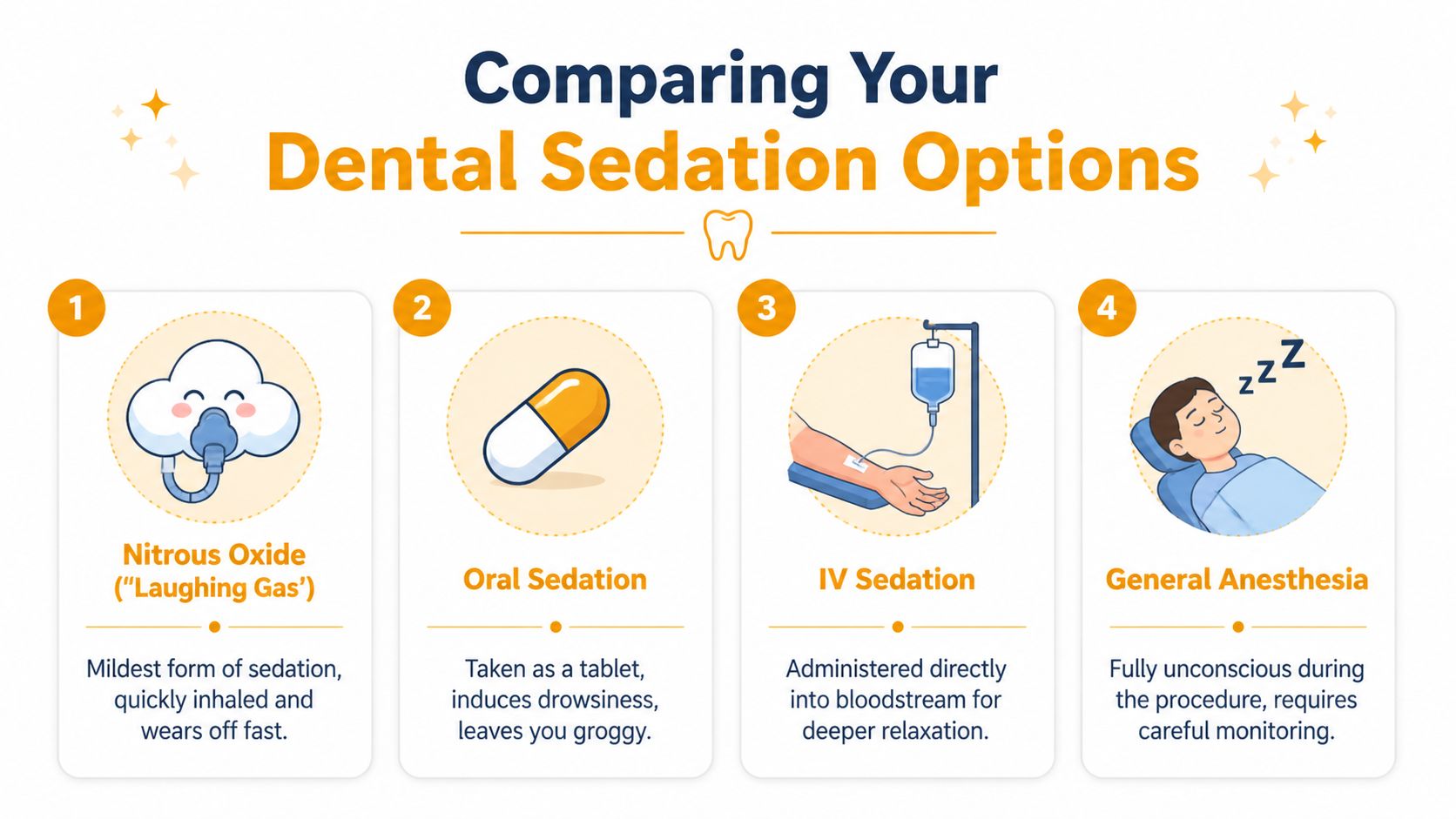
Nitrous oxide
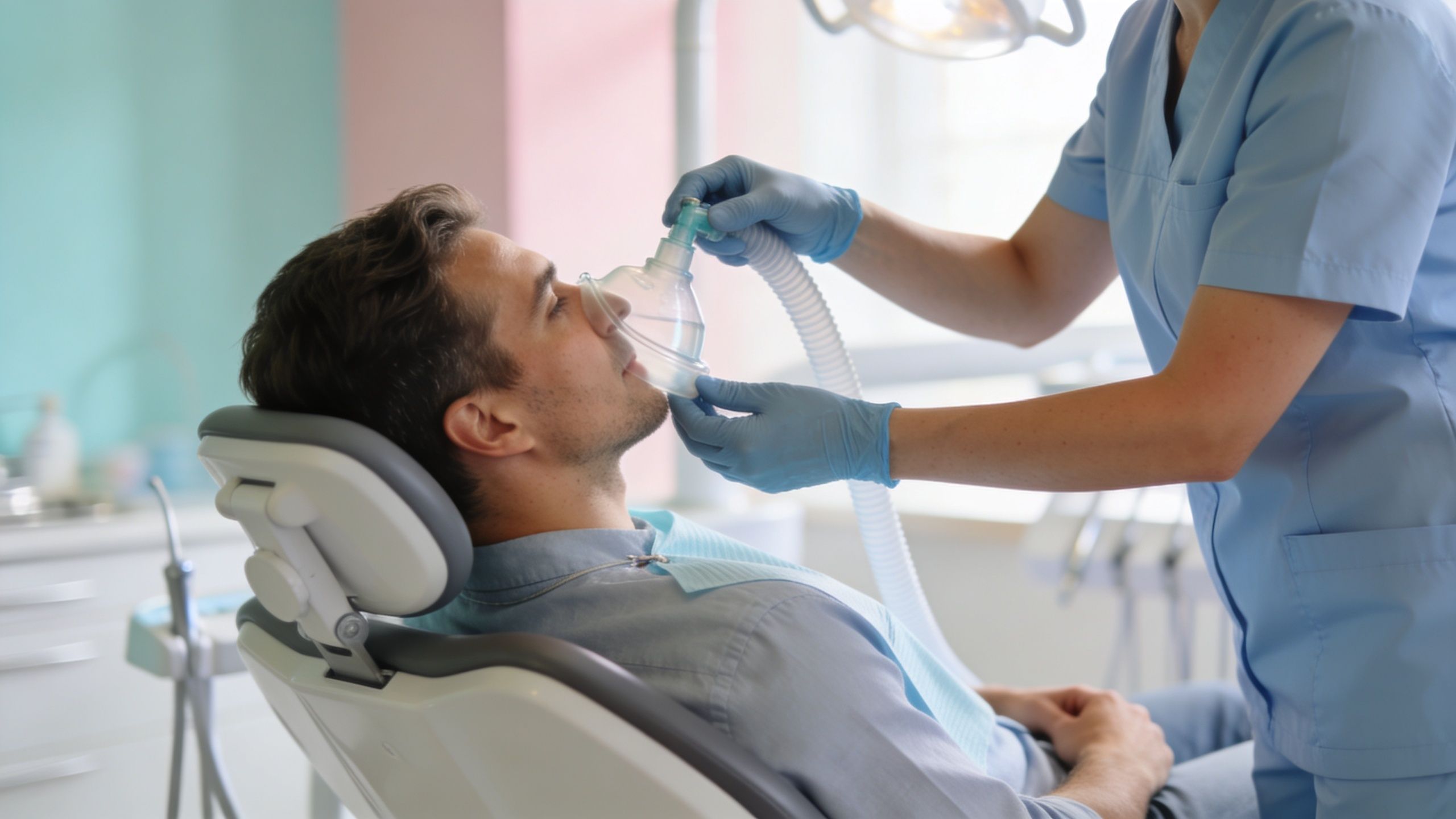
Nitrous oxide, often called laughing gas, is the lightest option discussed most often in general dentistry. You breathe it through a small mask, and it starts working quickly. Its onset is 3 to 5 minutes, and it's been shown to reduce dental fear scores by 65%, according to this sedation review.
Patients usually say they feel calmer, warmer, lighter, or less bothered by the usual stress of treatment. It can suit children, phobic adults, and people who want help taking the edge off without committing to a deeper level of sedation.
Nitrous oxide is often a good fit when:
- You have mild to moderate anxiety
- You want a fast-on, fast-off option
- You dislike the feeling of losing too much control
- You're having shorter treatment
With laser dentistry, nitrous oxide can be especially useful for patients who want a more conservative, lower-stress appointment.
Oral sedation
Oral sedation is usually taken as a tablet before the appointment. It tends to create drowsiness and deeper relaxation than nitrous oxide, but it isn't as adjustable once taken. Some patients remember parts of the visit clearly. Others remember very little.
This option often suits people who feel anxious long before they arrive. If your stress starts the night before or your heart races in the waiting room, oral sedation may help smooth out that whole experience rather than just the moments in the chair.
A trade-off does exist. Recovery is slower than nitrous oxide, and you'll need to plan your trip home carefully.
IV sedation
IV sedation is more precise. Because the medication is delivered through a vein, it can be titrated carefully during treatment. In the same source above, IV sedation reduced anxiety by 78% and increased procedure completion rates by 92% for complex treatments.
Patients often choose IV sedation for:
- Multi-step care completed in one sitting
- A strong gag reflex
- Significant dental fear
- Longer procedures such as more involved surgical or restorative treatment
A detailed consultation matters. If you're considering IV sedation with a dentist, ask how the clinic screens medical history, monitors you throughout the visit, and plans recovery afterwards.
Some patients don't need the deepest option available. They need the option that best matches how they actually feel in the chair.
General anaesthesia
General anaesthesia is different from the other options because it involves full unconsciousness. It's typically reserved for specific situations, such as extreme anxiety, special needs care, or extensive treatment where other methods aren't suitable.
It isn't the first step for most patients searching for dental sedation near me. In many everyday cases, lighter or moderate sedation provides enough comfort without the added complexity of being fully asleep.
A simple way to think about your options
| Sedation type | How it's given | Typical feel | Best suited to |
|---|---|---|---|
| Nitrous oxide | Mask | Calm, light, easy to recover from | Mild anxiety, shorter visits |
| Oral sedation | Tablet | Drowsy, relaxed, groggy later | Ongoing nervousness, moderate anxiety |
| IV sedation | Vein | Deep relaxation, little awareness of time | High anxiety, complex treatment |
| General anaesthesia | Medical anaesthetic setting | Fully unconscious | Selected cases with specific needs |
Is Dental Sedation Safe and Who Is It For?
Safety is usually the first serious question patients ask, and that's the right question to ask.
In Australia, sedation practice is tightly guided, and monitored cases have complication rates below 0.5%. Patient satisfaction in sedated treatments has reached 94%, according to this overview of sedation outcomes. Those figures matter because they reflect two things patients care about most. First, safety. Second, whether the experience helps.
Who often benefits from sedation
Sedation isn't only for severe dental phobia. It can be appropriate for a wide range of patients, including those who:
- Feel panicky before or during appointments
- Have a strong gag reflex that makes treatment hard to complete
- Need multiple procedures and want fewer visits
- Struggle to stay comfortable in the chair for longer sessions
- Have had difficult dental experiences in the past
- Need support with minimally invasive laser procedures because they still feel very nervous
A patient doesn't need to be in tears to be a candidate. Some people are outwardly calm but internally exhausted by the effort of getting through treatment.
Safety depends on proper assessment
Sedation isn't something to choose from a menu without discussion. A responsible clinic will review your medical history, medications, previous experiences with sedation or anaesthesia, and the nature of the treatment planned. That conversation helps decide not just whether sedation is suitable, but which kind is appropriate.
Clinical judgement matters: the safest sedation is the one matched carefully to the patient, the procedure, and the setting.
There are times when extra caution is needed. Certain medical conditions, pregnancy, breathing concerns, or medication interactions may affect the choice. That's why a thorough pre-treatment assessment matters so much.
Why regulation matters locally
When patients search for dental sedation near me, they're often comparing convenience. But convenience shouldn't be the main filter. Training, monitoring, communication, and a conservative approach matter more than flashy wording.
Done properly, sedation supports treatment. It doesn't override good dentistry, clear consent, or careful follow-up. It makes care more accessible for people who might otherwise keep postponing it.
What to Expect Before During and After Your Appointment
The unknown is often worse than the appointment itself. Once patients understand the sequence, they usually feel more settled.
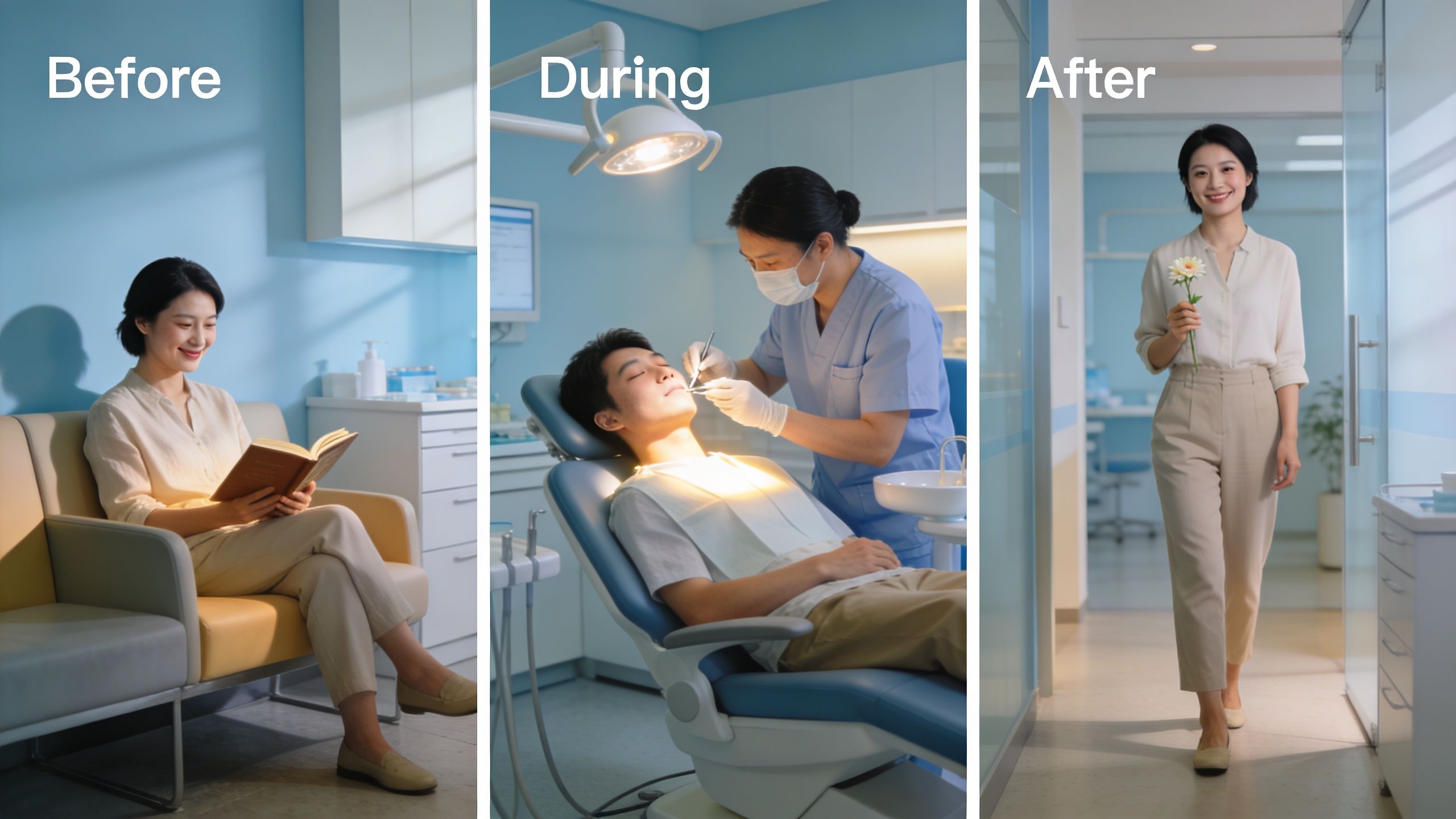
Before your appointment
Your first step is a consultation, a time when you can discuss fear, past experiences, medical conditions, medications, and what type of treatment you need. If you're nervous, say so plainly. That information is useful, not embarrassing.
You may receive instructions about eating, drinking, regular medicines, and what to wear. If you're having oral or IV sedation, organise an adult to take you home and stay with you afterwards if advised.
A practical preparation checklist helps:
- Write down your medications so nothing is missed during the review
- Ask what level of sedation is planned so you know what to expect
- Confirm transport arrangements before the day arrives
- Choose simple meals and rest time for after the appointment
During the appointment
On the day, the team will confirm your details and make sure you're ready before treatment starts. Once sedation begins, most patients notice that the appointment feels less sharp and less emotionally draining than expected.
You'll still be cared for actively throughout the visit. Monitoring, communication, and pacing matter just as much as the sedative itself. If laser dentistry is part of the procedure, patients often appreciate that it can feel less invasive than traditional methods for selected treatments.
This short video gives a general sense of the calm, structured approach many patients find reassuring:
After the appointment
Recovery depends on the type of sedation used. With lighter options, people often feel normal fairly quickly. With oral or IV sedation, expect the rest of the day to be a recovery day.
In NSW, one point is especially important. After oral or IV sedation, you must not drive for the required recovery period set by your clinician and applicable guidance. That isn't just a suggestion. It needs to be planned for before the appointment so there are no rushed decisions afterwards.
Go home, rest, drink water as advised, and keep the day clear. Patients who try to squeeze too much in after sedation usually make recovery harder than it needs to be.
If you've had treatment alongside sedation, you'll also receive procedure-specific instructions about eating, cleaning the area, and managing any discomfort. Read those carefully once you're home, or ask your support person to go through them with you.
How to Choose a Sedation Dentist Near You
A local search can give you dozens of options. The challenge is knowing what matters once those listings appear.
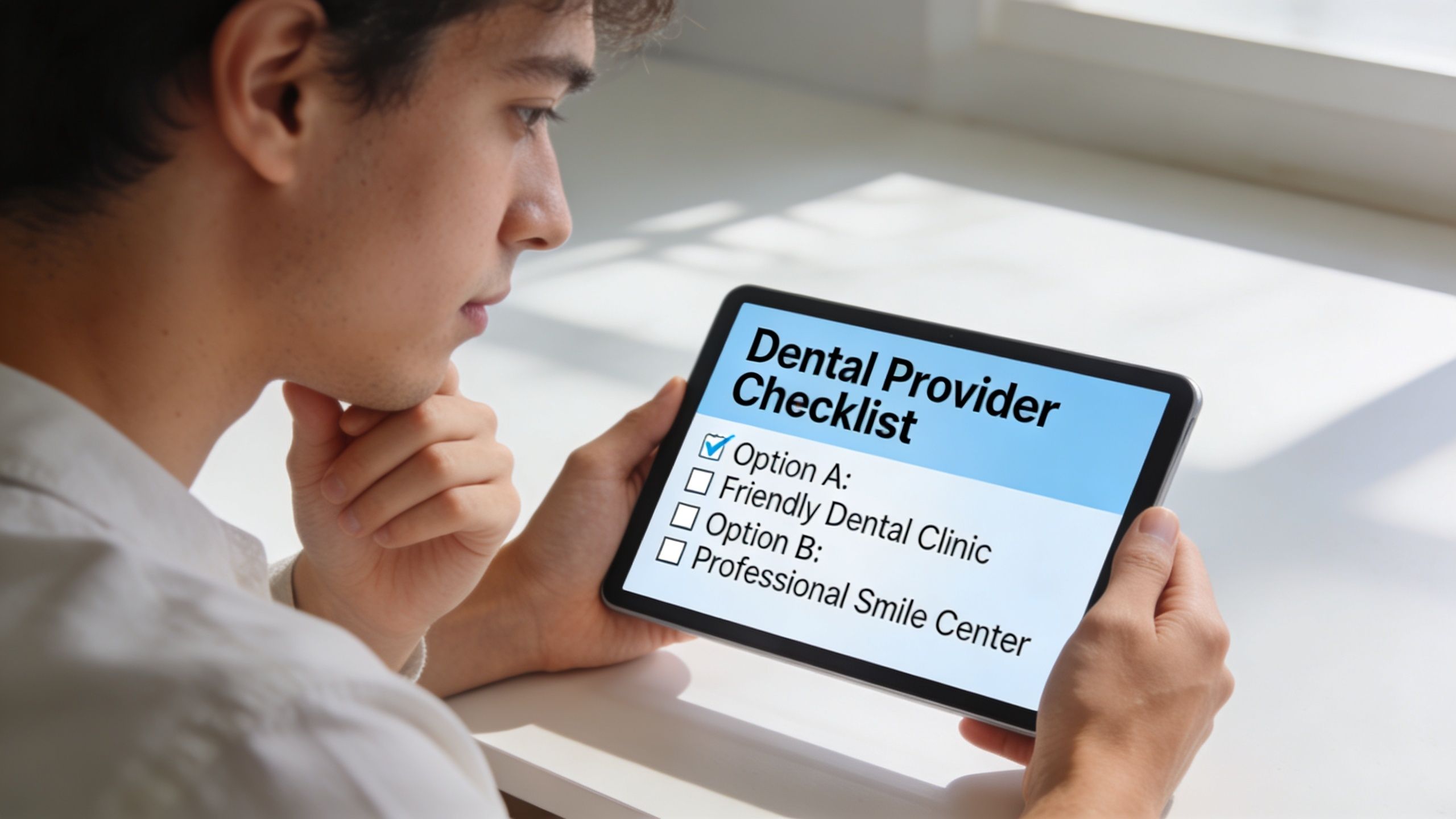
What to look for first
Start with the basics, but don't stop there.
- Training and scope of care. Ask what sedation options the clinic provides and for which procedures.
- Experience with anxious patients. A clinic can offer sedation yet still communicate poorly. Manner matters.
- Assessment process. You want a proper health review, not a rushed booking.
- Technology and treatment style. Minimally invasive tools, including laser dentistry where appropriate, can make a real difference for nervous patients.
- Recovery instructions. NSW-specific advice should be clear, especially about transport and returning to normal activities.
Why the treatment approach matters
Some patients focus only on “Will they sedate me?” A better question is “How gently do they treat me overall?” Sedation helps, but it works best when it's part of a broader patient-centred approach that includes clear explanations, conservative treatment planning, and techniques that reduce stress in the chair.
For example, a clinic that combines sedation with laser dentistry may be able to make selected treatments feel less invasive. That can be valuable for patients who aren't just afraid of pain, but of the whole sensory experience of dental work.
If cost planning is part of your decision, it also helps to review practical options such as dentists with payment plans near you, especially if you've delayed treatment and now need several things addressed together.
Choosing a sedation dentist isn't only about distance from home. It's about whether the clinic has a process that helps you feel safe from the first phone call onward.
In Dulwich Hill and the Inner West, one option is The Smile Spot, where Dr Dimitrios Thanos has been practising since 1996 and where treatment planning can include both sedation options and Biolase laser dentistry for a more conservative approach in suitable cases.
Frequently Asked Questions About Dental Sedation
Will I feel pain with sedation
Sedation helps you relax. It doesn't replace numbing. If you're having a filling, extraction, or similar treatment, the area still needs local anaesthetic so the tooth and surrounding tissue are comfortable. That's why many patients do well with the combination. Their anxiety is reduced, and the tooth is properly numbed.
How much does dental sedation cost
The cost varies depending on the type of sedation, the length of the appointment, and the procedure itself. A short visit using nitrous oxide is different from a longer appointment involving deeper sedation. It's also worth asking what is included in the quoted fee, such as monitoring, review appointments, or procedure costs.
For some patients, the overall affordability question isn't just about sedation. It's about finally dealing with overdue care in a manageable way. That's one reason clinic reputation and patient communication matter. If you're comparing providers, broader reading on effective dental reputation strategies can help you understand what strong patient-centred practices tend to prioritise.
If you're specifically looking at lighter options, this guide to a dentist with nitrous oxide may help you decide whether that style of sedation matches your needs.
Can children have dental sedation
Sometimes, yes. It depends on the child's age, medical history, level of anxiety, and the type of treatment required. For children, the goal is still the same as it is for adults. Safe, calm, appropriate care. In many family settings, lighter sedation options are considered first when suitable.
How long before I can drive or go back to work
This is one of the most important practical questions. In NSW, Austroads Guidelines require no driving for 24 hours after oral or IV sedation, and 22% of Sydney patients were unaware of this rule, according to this summary of post-sedation guidance. If you're booking treatment before work, after work, or on a Saturday, plan with that rule in mind.
Returning to work depends on the sedation used and how you're feeling. With oral or IV sedation, individuals should keep the rest of the day clear. Even if you feel “mostly fine,” you may still be slower, groggier, or not thinking as sharply as usual.
Is sedation a good idea if I've avoided the dentist for years
Often, yes. For many patients, sedation is what breaks the cycle of delay, embarrassment, and worsening dental problems. The key is to start with a consultation, not assumptions. Once your dentist understands your concerns, they can suggest the least invasive and most appropriate way forward.
If you've been putting off treatment because of fear, discomfort, or a bad past experience, a calm conversation is the best place to start. The Smile Spot offers care for anxious patients in Dulwich Hill and the Inner West, with sedation options, gentle treatment planning, and modern technology designed to make dentistry feel more manageable.