
A throbbing tooth rarely waits for a convenient moment. It starts late at night, during work, or just as you're trying to eat, and suddenly your whole focus narrows to one question. Do I need an emergency tooth pull, and what do I do right now?
The good news is that dental emergencies feel more chaotic than they usually are. Most situations become much more manageable once you stop guessing and follow a clear sequence. Control the pain. Protect the area. Get the right kind of professional help.
Navigating a Dental Emergency What You Need to Know
If you're reading this with a swollen cheek, a cracked tooth, or pain that won't let up, the first thing to know is simple. You don't need to solve the whole problem at home. You only need to take the next safe step.
An emergency tooth pull is sometimes the fastest way to stop severe pain or remove a tooth that can't be predictably saved. That said, not every painful tooth needs to come out, and not every emergency belongs in a hospital. In the US, tooth disorders led to an annual average of 1,944,000 emergency department visits during 2020 to 2022, yet those settings often aren't equipped for definitive dental care, which is why a dental clinic is usually the right place for a true tooth problem according to this CDC data brief on emergency visits for tooth disorders.
When pain is high, anxiety usually rises with it. Breathing gets shallow, your thoughts speed up, and every minute feels longer. If that sounds familiar, it can help to use practical anxiety coping guides and tools while you're arranging care, especially if dental treatment makes you tense before you've even left home.
Practical rule: If the problem started in a tooth, gum, or jaw area and you're otherwise medically stable, contact a dentist first.
Most patients need the same kind of guidance in the first hour. Keep the area clean. Avoid making it worse. Seek an emergency appointment promptly. Once you're properly examined, the path usually becomes clear. Sometimes the tooth can be stabilised or treated another way. Sometimes extraction is the cleanest, safest option for pain relief.
Calm action helps more than panic. That's what gets you from distress to treatment.
Your First Moves Managing Pain and Damage at Home
The first goal at home isn't to fix the tooth. It's to reduce irritation and protect the area until you can be seen.
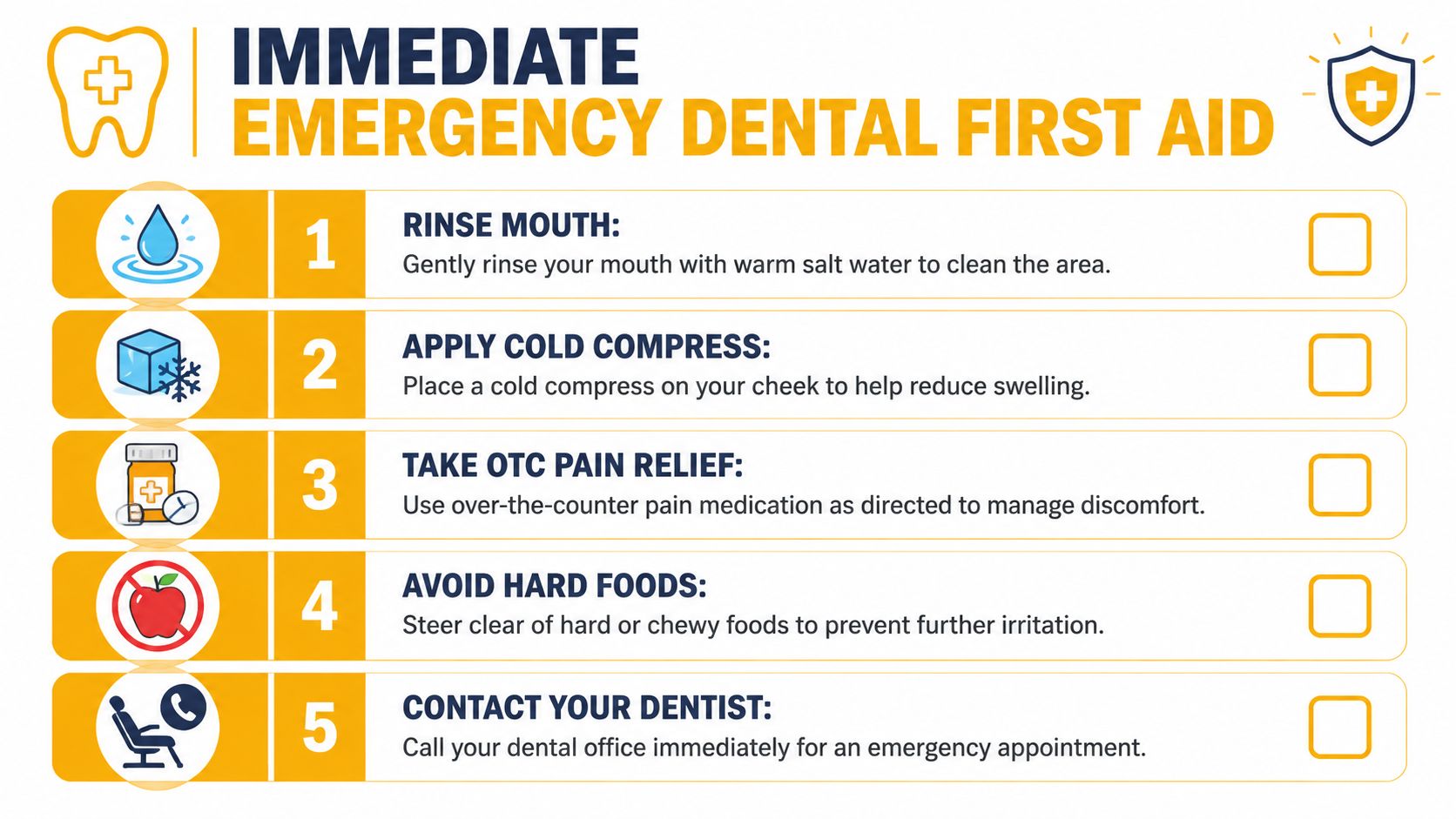
What to do straight away
- Rinse gently with warm salt water if your mouth feels dirty or there's minor bleeding.
- Use a cold compress on the outside of the cheek if swelling is building.
- Take over the counter pain relief as directed on the packet if you're normally able to take it.
- Avoid chewing on the sore side.
- Call for dental advice early, even if you're hoping it settles.
If a tooth has broken, keep any large pieces and bring them with you. If a filling or crown has come away, don't try to glue it back with household products. If the gum is swollen around a painful tooth, don't press on it repeatedly. That usually makes it angrier, not better.
If a tooth has been knocked out
A knocked out permanent tooth is one of the few true dental time emergencies. Handle it by the crown only, not the root. Rinse it gently in lukewarm water if it's dirty. If you can't place it back into the socket immediately, keep it moist in milk or inside the cheek and seek urgent dental care.
Fast action gives the tooth its best chance. Delay and dry storage make successful replantation much less likely.
Dentist or hospital
A lot of patients hesitate here. This is the quick way to think about it.
| Emergency Care Guide Dentist vs Hospital | |
|---|---|
| Call Your Emergency Dentist If You Have… | Go to Hospital Emergency If You Have… |
| Severe toothache, a cracked tooth, a broken filling, a lost crown, gum swelling, or a tooth that feels loose after trauma | Trouble breathing, trouble swallowing, heavy bleeding that won't stop, major facial trauma, or you're medically unwell with spreading infection symptoms |
| A knocked out permanent tooth that needs urgent assessment | An injury involving possible head trauma or other serious bodily injury |
| Pain that keeps building even if swelling is still localised | Rapidly worsening swelling affecting your airway or ability to open your mouth safely |
What not to do
- Don't apply aspirin directly to the gum. It can irritate soft tissue.
- Don't use heat on fresh swelling. Cold is usually the better first move.
- Don't keep testing the tooth. Wiggling it or chewing on it can worsen the damage.
- Don't self-start old antibiotics. Dental infections need proper examination.
If you're unsure about pain medicine after a dental procedure, this guide on Panadeine Forte for tooth extraction covers common questions in plain language.
Securing an Emergency Dental Appointment
Relief usually starts the moment you've booked help. Patients often wait too long because they think they need to have the story perfectly organised before calling. You don't.

What matters most is giving clear essentials. Where is the pain? Is there swelling? Was there trauma? Is the tooth broken, loose, or knocked out? Are you bleeding? Those details help the team judge urgency and prepare the right appointment.
What to have ready when you call
A short note on your phone is enough. Include:
- Your main symptom such as sharp pain, pressure, swelling, or a broken tooth
- When it started, even if you're estimating
- Any trauma from sport, a fall, or biting something hard
- Medicines or allergies that may affect treatment
- Your availability for same day, evening, or Saturday care if offered
A practice that handles urgent care well doesn't just offer treatment. It also makes communication easier under pressure. If you're curious how clinics improve responsiveness during busy periods, this article on optimizing dental practice communication gives a useful look at why fast, clear replies matter so much in healthcare.
Once you've made contact, follow the instructions you receive and resist the urge to keep searching online for worst-case scenarios. At that point, your job is simple. Protect the area and get there.
For local urgent care options, you can review emergency dentist appointments in Dulwich Hill and book the earliest suitable time.
A quick overview can also help settle nerves before you arrive.
The best emergency appointment is the one you book before the pain escalates further.
What to Expect During an Emergency Tooth Extraction
Most extraction appointments are calmer than patients imagine. The uncertainty is usually the hardest part. Once you're in the chair, the process becomes structured and deliberate.
The first conversation
The appointment starts with questions, not instruments. Where is the pain? Has the swelling changed? Did the tooth break suddenly or has it been deteriorating for a while? Then the dentist examines the tooth and surrounding gum, checks how wide you can open, and looks for signs that extraction is the right choice.
An emergency tooth pull is only one option. Some teeth can be stabilised. Some infections need the pressure managed first. Some painful teeth are better treated with root canal therapy or temporary measures before any final decision.
Numbing and comfort
If extraction is needed, the area is numbed thoroughly. Good local anaesthetic changes the experience completely. You may still feel pressure and movement, but you shouldn't feel sharp pain.
For anxious patients, comfort planning is part of the treatment, not an afterthought. If dental fear tends to spiral for you, it's worth reading about a dentist with nitrous oxide before your appointment so you understand what calm, supported care can look like.
How the tooth is removed
A successful extraction depends on technique, not force. Your dentist uses specialised techniques, applying forceps as close to the root as possible and using controlled movements to gently expand the tooth socket. This methodical approach minimises trauma to the surrounding tissue, which supports smoother healing, as described in this clinical overview of extraction technique.
In practice, that usually means the tooth is first loosened carefully. Then controlled rocking or rotational movements widen the ligament space so the tooth can come out with less stress on the surrounding bone and gum. When a tooth is badly broken or the roots are difficult, the approach becomes more surgical and more precise, not rougher.
Where modern techniques help
Minimally invasive tools can make a noticeable difference in some emergency cases, especially when the gum tissue is inflamed or access is tight. The Smile Spot uses Biolase laser dentistry for selected treatments, which can help reduce tissue trauma and improve comfort planning for patients who are already frightened before treatment begins.
Precision matters more than speed. A careful extraction is usually the faster path to a smoother recovery.
After the tooth is removed, gauze is placed over the socket and you'll be asked to bite down firmly. Before you leave, you should know what to eat, what to avoid, what normal bleeding looks like, and when to call back.
Aftercare and Healing Post-Extraction
The extraction is over, but the healing has only just started. The next few days matter because the goal is to protect the blood clot sitting in the socket. That clot is your natural dressing. If it stays in place, healing is usually straightforward.

The first day
Keep firm pressure on the gauze exactly as instructed. Rest. Eat soft foods once the numbness begins to wear off enough for safe chewing. Choose foods that don't crumble aggressively into the socket.
Don't smoke, spit forcefully, drink through a straw, or rinse vigorously in the early phase. Those actions can disturb the clot before it stabilises.
The next few days
Gentle oral hygiene is still important, but be careful around the extraction site. Continue with softer foods and gradually return to normal chewing only when it's comfortable. Mild soreness and stiffness can be normal. Worsening pain is not something to ignore.
In NSW, dry socket affects 3 to 5% of extractions, and climate and lifestyle can increase risk. Avoiding straws and smoking is especially important in the first few days when the clot is most fragile, as noted in this guidance on dry socket risk and aftercare.
What helps and what doesn't
- Cold helps early. Use it on the cheek for swelling control.
- Soft, cooler foods are easier. Think yoghurt, soup once it's not hot, scrambled eggs, mashed foods.
- Hot, spicy, crunchy foods can irritate the site.
- Gentle cleaning is good. Aggressive rinsing isn't.
If you've had a more involved extraction, these wisdom teeth removal recovery tips can also be useful because many of the same healing principles apply.
If the pain suddenly becomes deeper, throbbing, foul tasting, or starts radiating after an initial improvement, call your dentist. That's not the time to wait it out.
When to contact the clinic
Get back in touch if you notice:
- Bleeding that keeps restarting
- Pain that worsens instead of easing
- Swelling that feels like it's spreading
- A bad taste or odour from the socket
- Difficulty opening your mouth or swallowing
Most recoveries are uncomplicated when patients protect the clot and keep the instructions simple.
Costs, Insurance, and Other Common Questions
Cost worries stop many people from seeking care promptly. That's understandable, especially when the problem arrives without warning. Still, delay can turn a manageable issue into a more painful and more complicated one.
For an urgent extraction in Australia, out of pocket costs can range from $250 to $500, and emergency department care can cost three times as much for palliative, non-definitive treatment, according to this report on dental emergency department use and costs. That doesn't mean every case lands at the same fee. The final cost depends on whether the extraction is simple or surgical, whether imaging is required, and whether additional treatment is needed on the day.
What usually affects the cost
The main drivers are clinical, not arbitrary.
- Tooth position: Front teeth, molars, and broken roots present different levels of difficulty.
- Condition of the tooth: A badly fractured tooth is often more complex than one that is intact.
- Infection or swelling: Inflamed tissue can change timing and technique.
- Sedation or comfort options: Extra support for anxiety may affect the total fee.
- Follow-up needs: Some cases need review, dressing changes, or planning for replacement.
Private health fund rebates vary by policy, so it's worth checking your extras cover before the visit if you can do so quickly. If paperwork and approvals ever feel opaque in healthcare more broadly, resources like Simbie AI's prior authorization guide are helpful for understanding why administrative steps can slow treatment in some systems, even though Australian dental claiming often works differently.
For patients trying to spread the cost of treatment, it's sensible to ask about staged care and available payment arrangements. This guide to dentists with payment plans near me is a practical place to start.
Common questions patients ask
Will I need the tooth removed on the same day
Sometimes yes, sometimes no. If the tooth is clearly not restorable and you're in significant pain, same day extraction may be the best route. In other cases, the dentist may recommend another immediate step first, especially if preserving the tooth is still realistic.
Will the extraction hurt
With proper anaesthetic, the goal is that you feel pressure rather than pain. Afterwards, soreness is expected. Sharp, escalating pain after the first phase of healing needs review.
Will I need time off work
Many people can return to desk-based work quickly, but that depends on the complexity of the extraction, your pain levels, and whether you feel comfortable speaking or concentrating afterwards. If your job is physical, rest may be more important.
What if I'm terrified of having a tooth pulled
Tell the team before you arrive if possible. Dental anxiety changes how we pace treatment, explain steps, and plan comfort. Fear is common. It isn't an inconvenience.
What can replace the tooth later
That depends on which tooth is removed and how your bite functions. Some missing teeth need replacement sooner, while others can be monitored and planned more gradually. Common options may include a bridge, an implant, or in some situations no immediate replacement at all.
Is extraction always the best emergency option
No. A painful tooth doesn't automatically mean an emergency tooth pull is the right answer. The right decision comes from examination, imaging if needed, and a realistic discussion about whether the tooth can be predictably saved.
If you're in pain and need clear next steps, The Smile Spot offers family dental care in Dulwich Hill with emergency appointments, modern treatment options, and practical guidance from the first phone call through recovery.