If you've ever had a traditional dental impression, you probably remember the tray first. It felt bulky, the material tasted odd, and you had to sit still while it set. Then came the waiting. Sometimes that meant another visit, another adjustment, and more time away from work or family.
That old process still exists, but modern dentistry has moved well beyond it. Dental 3d printing is one of the biggest reasons why. Instead of relying only on moulds and manual fabrication, dentists can now scan, design, and create highly customised appliances with a digital workflow that is cleaner, faster, and often far more comfortable for patients.
Welcome to the Future of Dental Care
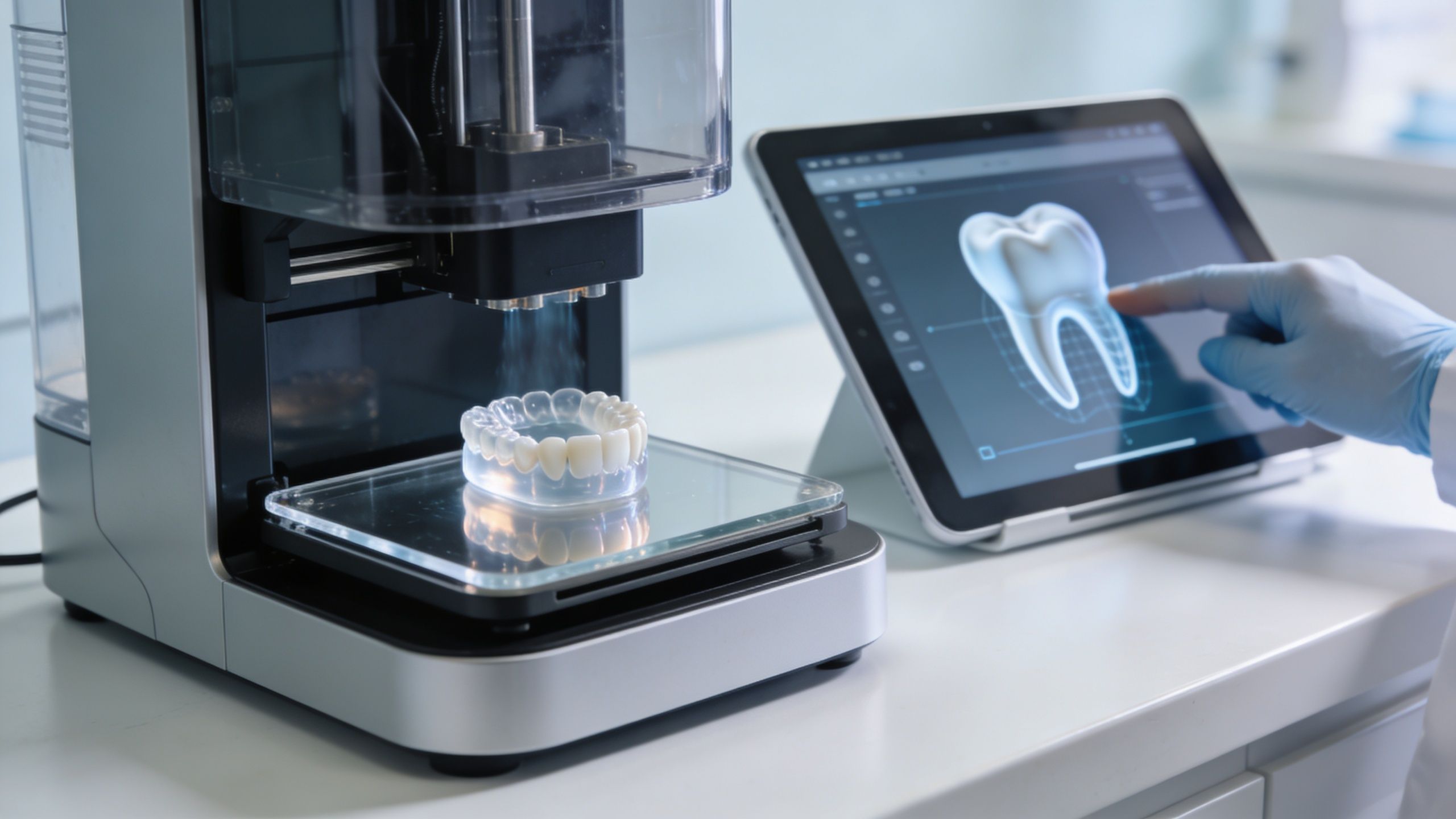
A simple way to think about dental 3d printing is this. A regular printer lays ink onto paper. A dental 3D printer builds an object layer by layer from a digital design. That object might be a model of your teeth, a surgical guide for an implant procedure, a splint, a denture, or part of an orthodontic treatment.
For patients, the technology matters because it changes the experience, not just the equipment in the room. Instead of guessing from a physical mould, the dental team can work from a precise digital file. That makes planning clearer and custom devices more consistent.
Why patients notice the difference
The first benefit is usually comfort. Digital scanning is much easier for people who dislike impression trays, have a strong gag reflex, or feel anxious in the chair. The second benefit is convenience. When the workflow is digital from the start, the team can often move more efficiently from diagnosis to treatment.
There's also a wider shift happening across the region. In 2025, the dental 3D printing market in Asia Pacific, including Australia, reached USD 1.07 billion, reflecting strong demand for more efficient and cost-effective dental care, with resin-based materials playing a major role in applications such as surgical guides and dentures, according to market data on dental 3D printing in Asia Pacific.
Why this matters: when a technology becomes part of everyday dental workflows, patients benefit from smoother appointments, better planning, and more tailored treatment.
It's not science fiction. It's practical dentistry
People sometimes hear “3D printing” and picture an experimental gadget. In dentistry, it's much more grounded than that. It's used to make things that need to fit real mouths with real precision.
That includes:
- Treatment planning models that let your dentist study your bite and tooth position
- Custom appliances such as splints or aligner-related items
- Surgical guides that help place implants more accurately
- Restorative components that support crowns, bridges, and denture workflows
For someone coming in with a broken tooth, missing teeth, bite issues, or cosmetic concerns, the question usually isn't “Is the printer impressive?” It's “Will this make my treatment easier?” In many cases, the answer is yes.
The Digital Workflow from Scan to Smile
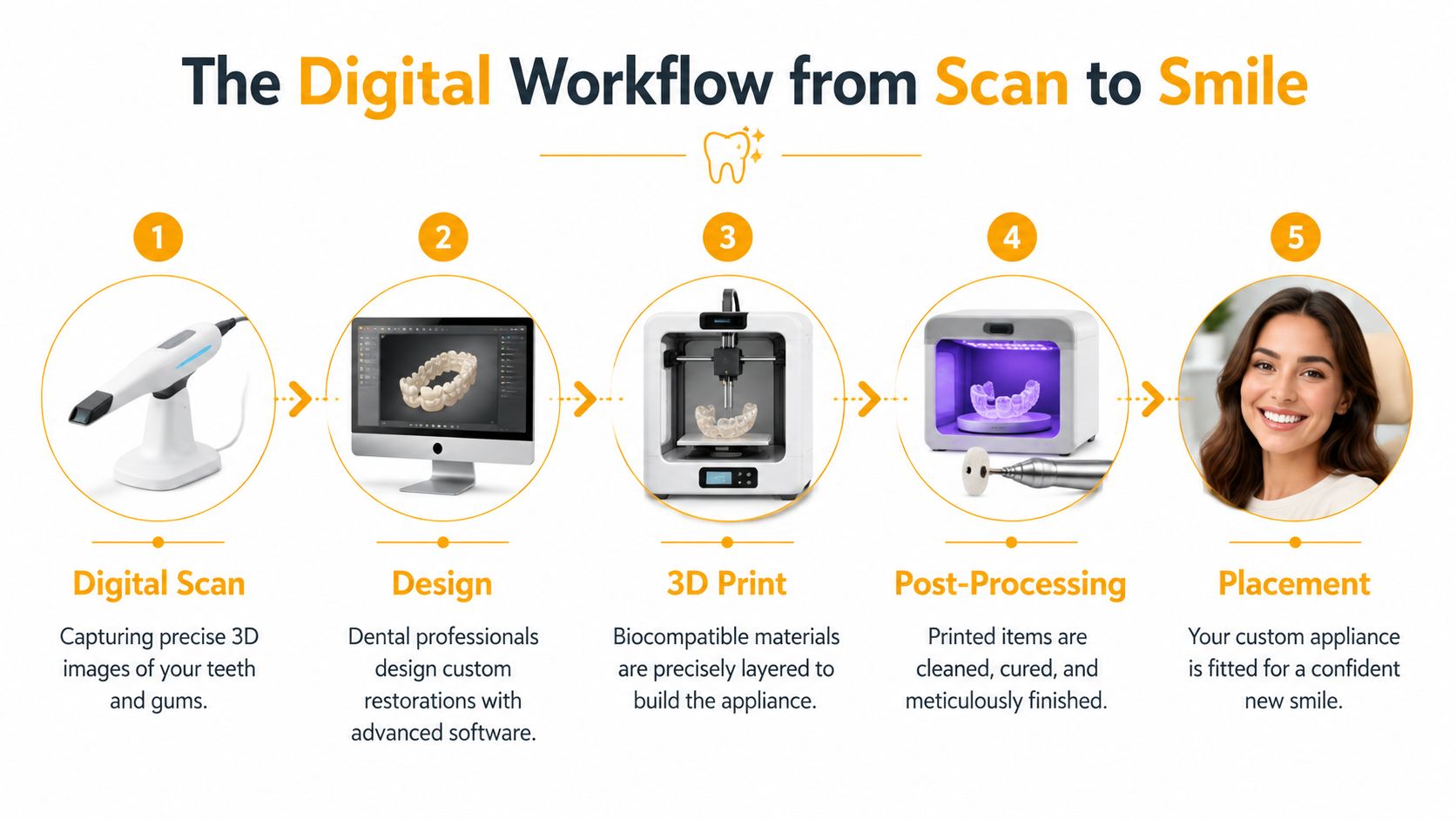
The best way to understand dental 3d printing is to follow the path your treatment takes. It's a lot like building from a digital blueprint. First, the team captures the details. Then they shape the design on screen. After that, the printer creates the item, and the final piece is cleaned, cured, and prepared for use.
Step one with a digital scan
This usually starts with an intraoral scanner. Instead of filling a tray with impression material, the dentist or assistant moves a small scanning wand around your teeth and gums. The scanner captures a detailed digital map of your mouth.
Patients often like this stage because it feels more controlled. If you've ever worried about gagging or feeling claustrophobic during a mould, digital scanning is a welcome change.
Step two on-screen design
Once the scan is complete, the dental team works with specialised software to design the restoration or appliance. Think of it as tailoring a suit on a computer before the fabric is ever cut. The shape, fit, and bite can be assessed in a very visual way.
This is especially helpful when planning tooth movement and smile improvements. If you're curious about discreet orthodontic options, this guide on fixing crooked teeth without braces gives a useful overview of how digital planning fits into modern treatment.
Step three when printing begins
The printer then builds the object in thin layers using a dental material designed for the intended purpose. Depending on the type of item, this could be a model, a guide, or an appliance. The process is precise and repeatable, which is one reason digital dentistry has become so useful.
Here's where people often get confused. The printer usually doesn't produce a finished, ready-to-wear item straight out of the machine. It creates the highly accurate form that still needs finishing steps.
The printed piece is only part of the workflow. Good results depend just as much on the scan, the design, and the finishing process.
Step four with curing and finishing
After printing, the item is cleaned and cured. Curing helps the material reach the properties it needs for clinical use. Then the team checks the fit, smooths surfaces where needed, and prepares it for placement or for the next laboratory stage.
Step five at your fitting appointment
This is the part patients care about most. The appliance or restoration is tried in, adjusted if necessary, and matched to the treatment goal. The result should feel intentional, not improvised.
A simple summary looks like this:
| Stage | What happens | What you notice |
|---|---|---|
| Scan | Digital images of teeth and gums are captured | No messy impression tray |
| Design | The appliance is planned on software | More customised planning |
| The item is built layer by layer | Faster workflow behind the scenes | |
| Finish | Cleaning, curing, and polishing | Safer, smoother final result |
| Fit | The piece is placed or tested | Better comfort and predictability |
Common Applications of Dental 3D Printing
Dental 3d printing becomes much easier to understand when you connect it to everyday treatment. It's not one thing. It's a tool that supports many different kinds of care, from orthodontics to implants to restorations.
Clear aligners and orthodontic planning
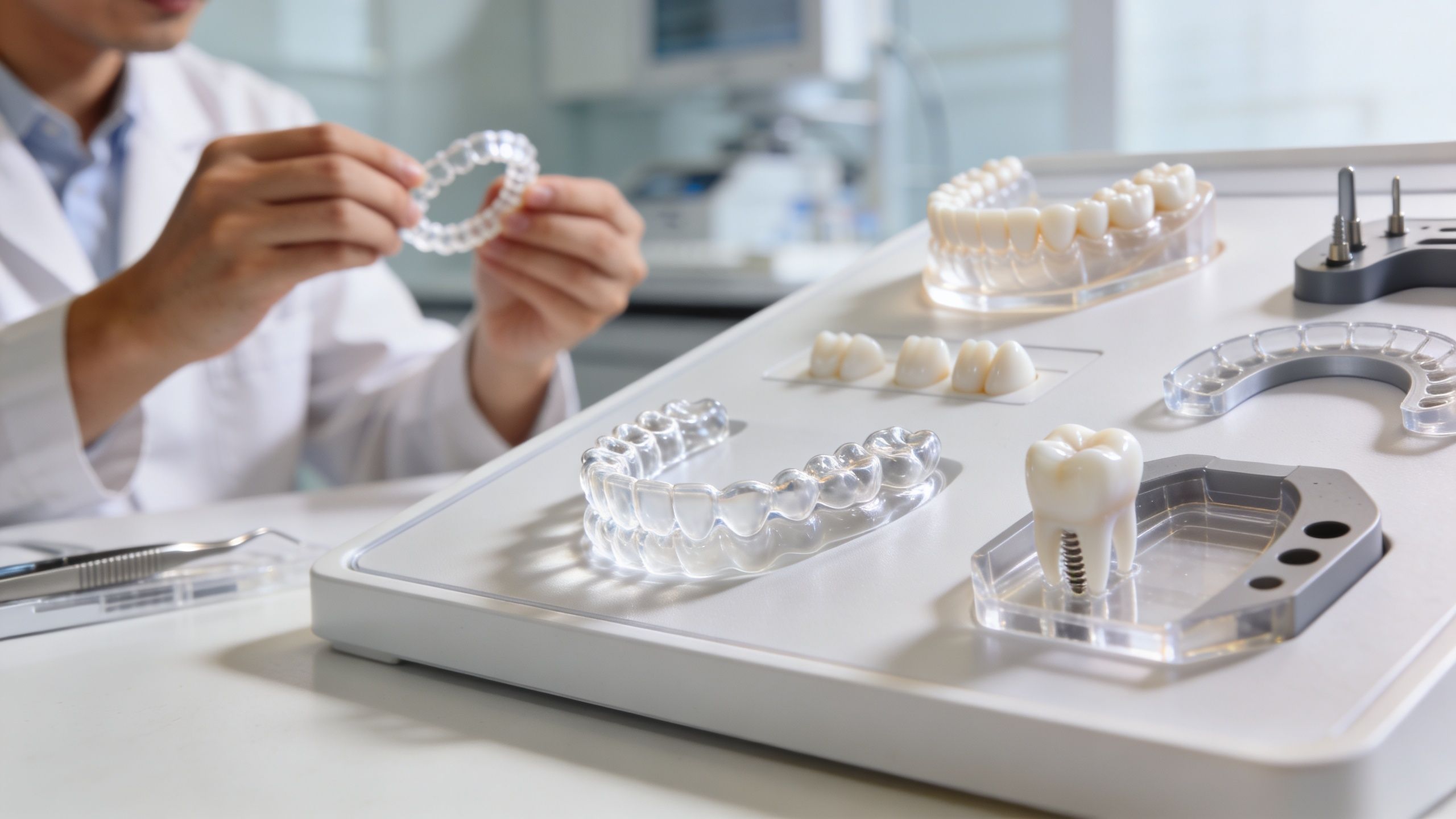
One of the clearest examples is orthodontics. For treatments involving aligners, the fit of each stage matters. DLP-based dental printers can achieve 99% dimensional accuracy with layer thickness controlled to within ±0.1 mm, which improves on traditional thermoforming methods and helps aligners fit more consistently, as outlined in this buyer's guide to dental printer performance.
That sounds technical, but the patient benefit is simple. A more accurate aligner is more likely to sit properly on the teeth and do its job as planned.
Crowns, bridges, and temporary restorations
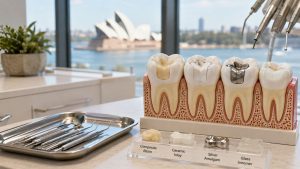
When a tooth is cracked, heavily filled, or weakened, a crown or bridge may be part of the solution. In digital workflows, 3D printing often helps by producing precise models, mock-ups, or temporary components that support the final restoration.
If you want a clearer look at how these restorations work in day-to-day dentistry, this article on dental crowns and bridges breaks it down in simple terms.
Patients usually notice two things here. The process can feel more organised, and the final fit is often easier to refine because the planning was digital from the beginning.
Implant guides and surgical planning
Implant dentistry is another area where printing is especially useful. A printed surgical guide acts like a custom roadmap. It helps the dentist position the implant with a plan that has already been mapped to your anatomy.
That can make complex procedures feel less uncertain. It also helps explain treatment, because patients can often see the guide or model before the appointment.
To see how these kinds of workflows look in practice, this short video gives a helpful visual overview.
Splints, mouthguards, and bite appliances
People who grind their teeth, clench at night, or need sports protection may benefit from custom appliances. Digital design and printing can support appliances that are shaped specifically to the patient's bite.
That matters because comfort often determines whether someone wears the device. A custom-made appliance that fits well is easier to live with.
Dentures and diagnostic models
Printed models are also valuable in treatment planning. They let the dental team assess spacing, bite, and restoration design before anything is placed in the mouth. In denture workflows, printed forms can support more controlled fabrication and clearer communication.
When patients can see a model of their own mouth, treatment becomes easier to understand. That often makes big decisions feel less overwhelming.
Ensuring Safety with Biocompatible Materials
Whenever patients hear the word “resin,” they often have a fair question. Is this material safe in my mouth? In dentistry, the answer depends on using the right material for the right indication, then processing it properly.
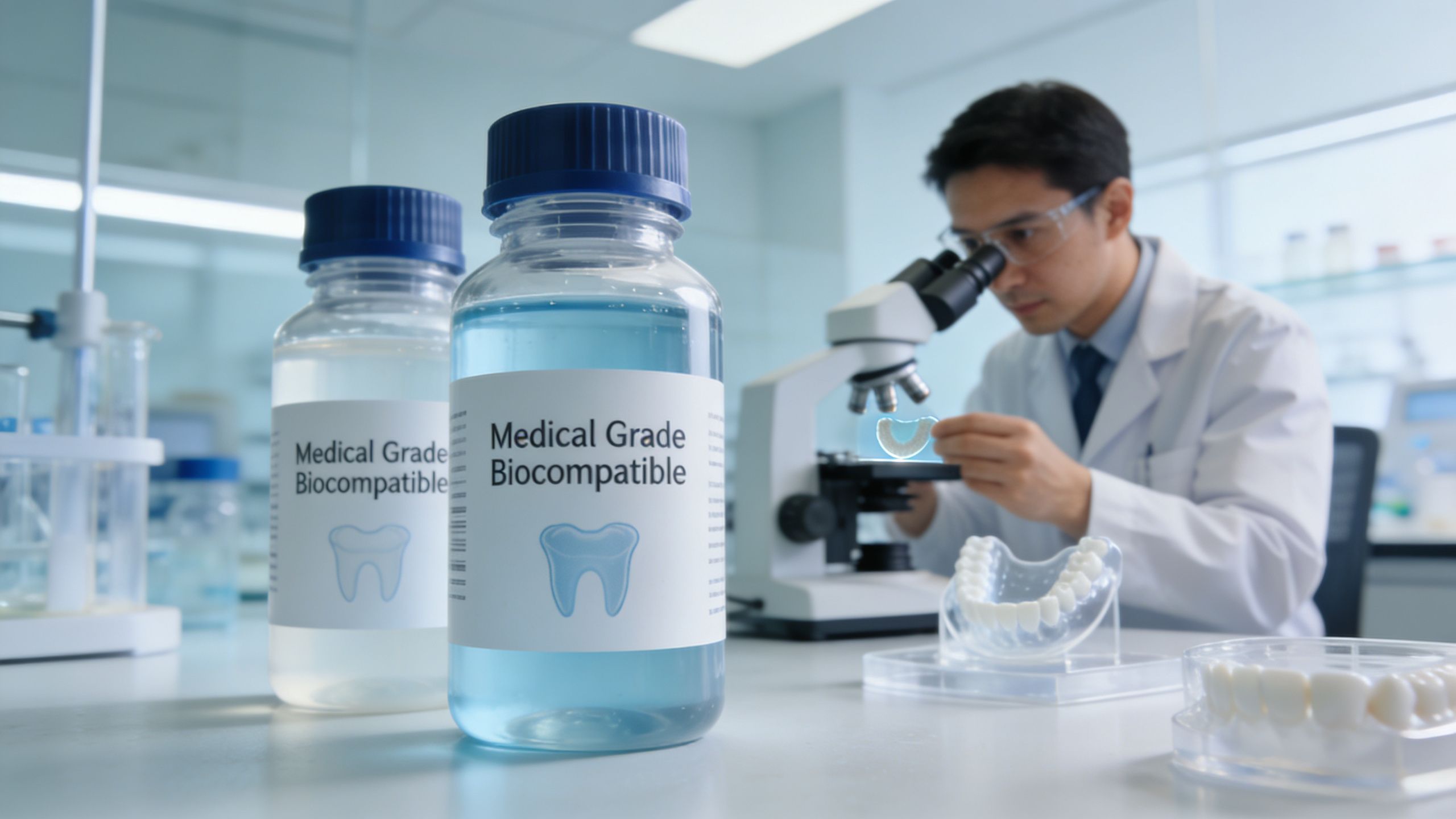
Biocompatible means a material is designed and approved for use in contact with the body in the way it's intended to be used. In practical terms, dental materials must meet strict standards for clinical applications. They aren't hobby plastics or general-purpose printing materials.
What makes a printed dental device safe
Safety doesn't come from the printer alone. It comes from the whole chain of care.
That includes:
- Approved materials used for specific dental purposes
- Controlled printing settings that match the material requirements
- Thorough cleaning after printing to remove residue
- Proper curing so the material reaches its intended final state
- Clinical checks before the device is fitted or used
If any of those steps are rushed, quality can suffer. That's why the finishing process matters just as much as the design.
Why ventilation and handling matter
There's another side to safety that patients don't always see. Resin-based printing needs proper handling inside the clinic or lab environment. A University of Sydney study found that many small practices lacked adequate ventilation, and broader reviews have raised concerns about exposure to VOCs and skin contact. At the same time, The Smile Spot follows strict protocols with proper air filtration and handling procedures to protect both staff and patients, as explained in this discussion of occupational risks of resin-based 3D printing in dentistry.
That's reassuring for patients because it shows responsible clinics don't treat new technology casually. They treat it like healthcare, with protocols, checks, and clear standards.
Safety also affects long-term success
A restoration or appliance isn't just supposed to fit on day one. It should continue to function as expected over time. That's one reason material selection and proper fabrication are so important.
If you're comparing options for restorations, this article on how long crowns last is a helpful read because it explains how planning, materials, and maintenance all shape longevity.
Good dental technology should feel invisible to the patient. You shouldn't have to think about whether it was handled safely. That should already be built into the process.
How 3D Printing Benefits Your Dental Visit
The value of dental 3d printing isn't merely the machine. It's what the technology changes for the person in the chair. Better planning can lead to fewer surprises. Better accuracy can mean fewer adjustments. A digital workflow can make treatment feel calmer and more efficient.
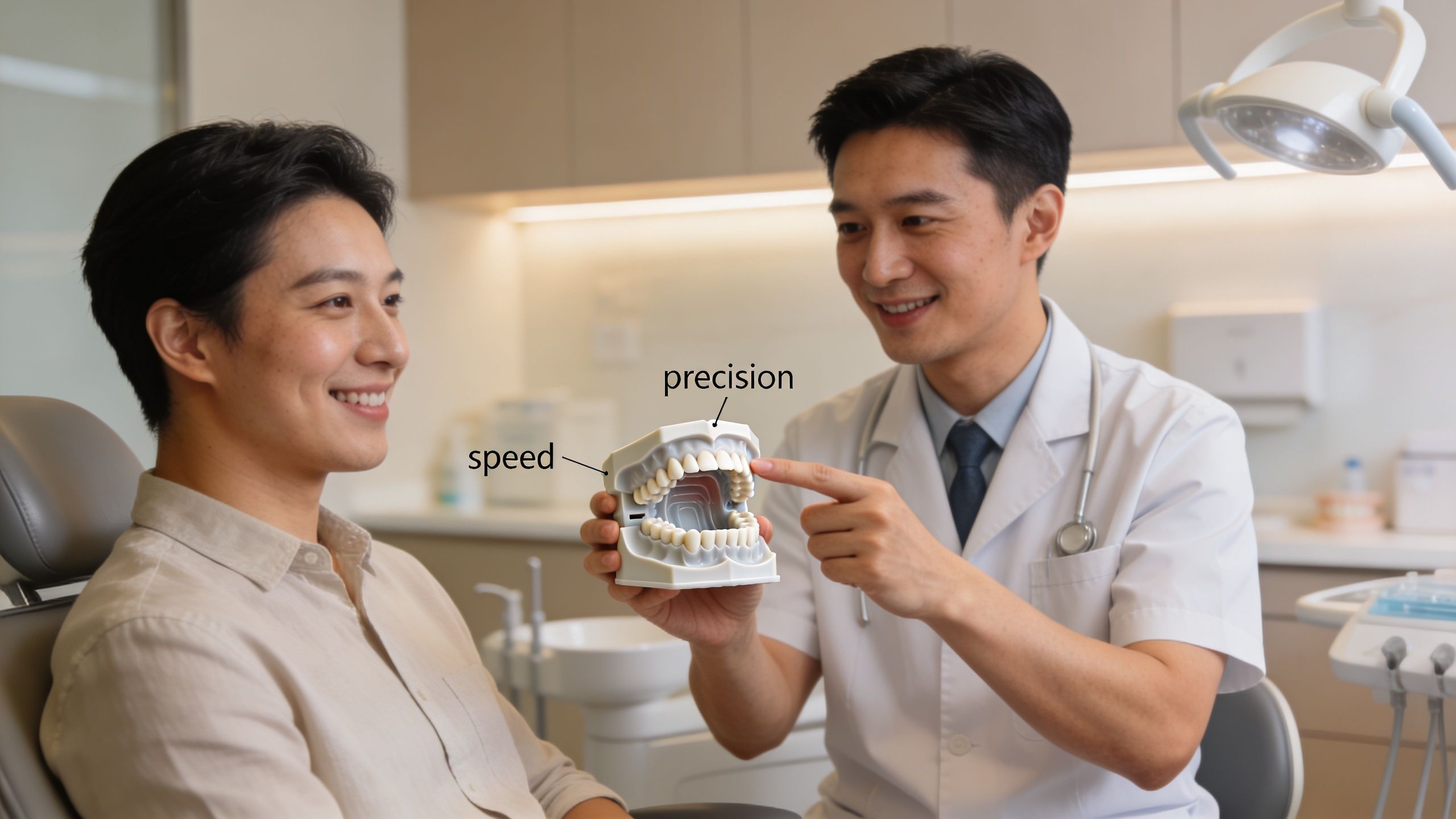
Less mess and more comfort
For many patients, the biggest win is simple. No gooey impressions. A digital scan is often easier for children, busy adults, and anyone who gets anxious about dental procedures.
That comfort matters because it lowers the barrier to treatment. When the first step feels easier, people are more likely to move forward with the care they need.
Better fit and more predictable treatment
Advanced printers using Low Force Stereolithography can achieve over 95% surface accuracy within 50 micrometres of the digital design, and in practice can print up to 36 precise surgical guides in just over an hour, which helps create a strong fit and reduce chair time for procedures such as implants and All-on-4, according to this overview of choosing a dental 3D printer for clinical workflows.
Patients don't need to memorise those figures. What they mean in everyday language is that a carefully planned guide or appliance can seat more accurately and require less guesswork during treatment.
A smoother experience for several types of care
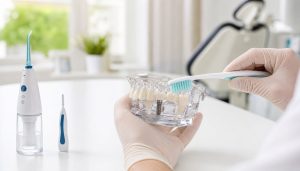
This technology supports a wide range of appointments. It can help with restorative treatment, orthodontic planning, implant procedures, and bite appliances. It's also useful for protective devices. If you play sport or grind your teeth at night, a custom mouth guard is one example of how digital workflows can improve comfort and fit.
Here's how patients commonly feel the difference:
- Shorter planning delays because the workflow is digital from the start
- Clearer communication when dentists can show models and designs
- Fewer uncomfortable steps during records and impressions
- More custom appliances because the design is based on your scan
- Greater confidence when treatment feels organised and precise
Why that matters emotionally too
A lot of dental anxiety comes from uncertainty. Patients worry about whether something will fit, whether they'll need more appointments, or whether the process will be unpleasant. Digital dentistry can't remove every concern, but it often makes the journey feel more understandable.
A well-planned treatment feels different. You can sense when the process has been thought through before you even sit back in the chair.
Experience Modern Dentistry at The Smile Spot
Dental care keeps changing, and patients feel that change most when it improves comfort, clarity, and convenience. The global dental 3D printing market is projected to reach over USD 10 billion by 2030, showing how strongly dentistry is moving toward digital workflows, according to this global dental 3D printing market projection.
For patients in the Inner West, that trend matters because modern technology isn't about novelty. It's about getting care that feels more precise, less messy, and easier to understand. Digital scanning, computer-guided planning, and 3D printing all work together to support a more efficient appointment experience.
The broader shift toward modern practice standards also shapes how people choose a clinic. Tools that help patients evaluate local visibility and trust signals, such as this local seo tool, reflect how much people now look for clinics with a strong, established digital presence before they book.
If you'd like to explore treatment options, compare services, or understand what a digitally guided approach could look like for your smile, you can browse the full range of dental services available at The Smile Spot. From routine care to implants, restorative work, and cosmetic treatment, the goal is the same. Make dentistry more comfortable, more predictable, and easier to fit into real life.
If you're ready to experience a more comfortable, modern approach to dentistry, book with The Smile Spot. Whether you need a check-up, crown, implant consultation, or help with a custom appliance, the team can guide you through the options in clear, practical language.