

The words “you need a root canal” tend to stop people in their tracks. Most patients don't picture relief. They picture pain, long appointments, and a difficult recovery.
That fear usually comes from old stories, not modern dentistry. A root canal is done to remove infection from inside the tooth, settle inflammation, and help you keep the tooth you already have. In other words, it's a treatment designed to end pain, not create it.
If you're reading this with a throbbing tooth, tenderness when you bite, or swelling around the gum, you probably want two things. You want the pain to stop, and you want to know exactly what's going to happen. Clear information helps. So does knowing that the process is far more controlled and comfortable than is commonly expected.
Introduction Why a Root Canal Is Not What You Fear
A root canal has an unfair reputation. The infection inside the tooth is usually the actual source of the pain. The treatment deals with that source directly.
Inside each tooth is a small space that contains the pulp, which includes nerves and blood vessels. When that tissue becomes inflamed or infected, the tooth can become very sensitive, painful, or develop an abscess. Root canal therapy removes that unhealthy tissue, cleans the canals, disinfects them, then seals the space so bacteria are far less likely to get back in.
Why patients feel better once the problem is treated
Many anxious patients expect the procedure itself to be the hard part. In practice, the bigger issue is often arriving with an already painful tooth. Modern local anaesthetic is used to numb the area thoroughly so treatment can be carried out comfortably.
Root canal treatment is one of the main ways dentists save a natural tooth instead of removing it.
That matters because keeping your own tooth usually gives you the most natural chewing feel and helps maintain the way your bite fits together.
The myth that needs retiring
The old idea that a root canal is something to dread doesn't match how carefully the procedure is now performed. Dentists plan the treatment, isolate the tooth, work in a controlled field, and focus on disinfection and sealing.
For patients in Dulwich Hill and the Inner West, the primary question usually isn't “Should I be scared?” It's “What are the RCT treatment steps, and what will I feel at each one?” Once you understand the process, it becomes far less mysterious.
Your Consultation The First Step to Relief
The first appointment is about answers. Before any treatment starts, the dentist needs to confirm whether the pain is coming from the pulp inside the tooth, whether the tooth can be saved predictably, and what type of treatment will give you the safest result.

What happens at the first visit
It usually begins with a conversation, not a drill. Your dentist will ask what you're feeling, when it started, whether the pain is sharp or throbbing, whether heat or cold triggers it, and whether biting makes it worse. Those details help distinguish pulp inflammation, crack-related pain, gum problems, and referred pain from nearby teeth.
Then comes the clinical exam. That may include checking the tooth itself, the surrounding gums, your bite, and how the tooth responds to simple tests. Tapping on the tooth, checking for deep decay, and assessing whether there's swelling near the root all help build the full picture.
Digital X-rays are an important part of that picture because they let the dentist look at the roots and the bone around them. They can show signs that an infection has reached beyond the tooth, whether earlier dental work is close to the nerve, and whether root shape or anatomy could make treatment more involved.
Why this stage matters
Patients sometimes worry that the recommendation for a root canal is made too quickly. Good diagnosis doesn't work that way. The decision should follow the symptoms, the examination findings, and the imaging.
If the tooth is restorable, root canal therapy may be the most conservative way to keep it. If there's a crack extending too far, or not enough healthy tooth left to rebuild, the conversation changes. A careful consultation protects you from unnecessary treatment as much as it guides necessary treatment.
A helpful starting point is learning the signs you need a root canal, because many symptoms overlap with other dental problems.
Practical rule: if a tooth keeps waking you at night, hurts with pressure, or causes swelling, don't wait for it to “settle on its own”.
Questions worth asking at your consultation
If you're nervous, these are sensible questions to bring with you:
- What is causing the pain: Is it decay, a crack, trauma, or an old filling that has affected the nerve?
- Can the tooth be restored properly: A saved tooth still needs enough structure left to function well.
- Will this likely be one visit or more than one: The answer depends on infection, anatomy, and access.
- What will I need afterwards: Many root canal treated teeth need a strong final restoration.
That first visit should leave you clearer, calmer, and able to make an informed decision.
The Root Canal Treatment Steps Unpacked
Knowing the sequence helps one cope much better. The RCT treatment steps are methodical, and each one has a clear purpose.
A visual overview can make the process feel much more straightforward.
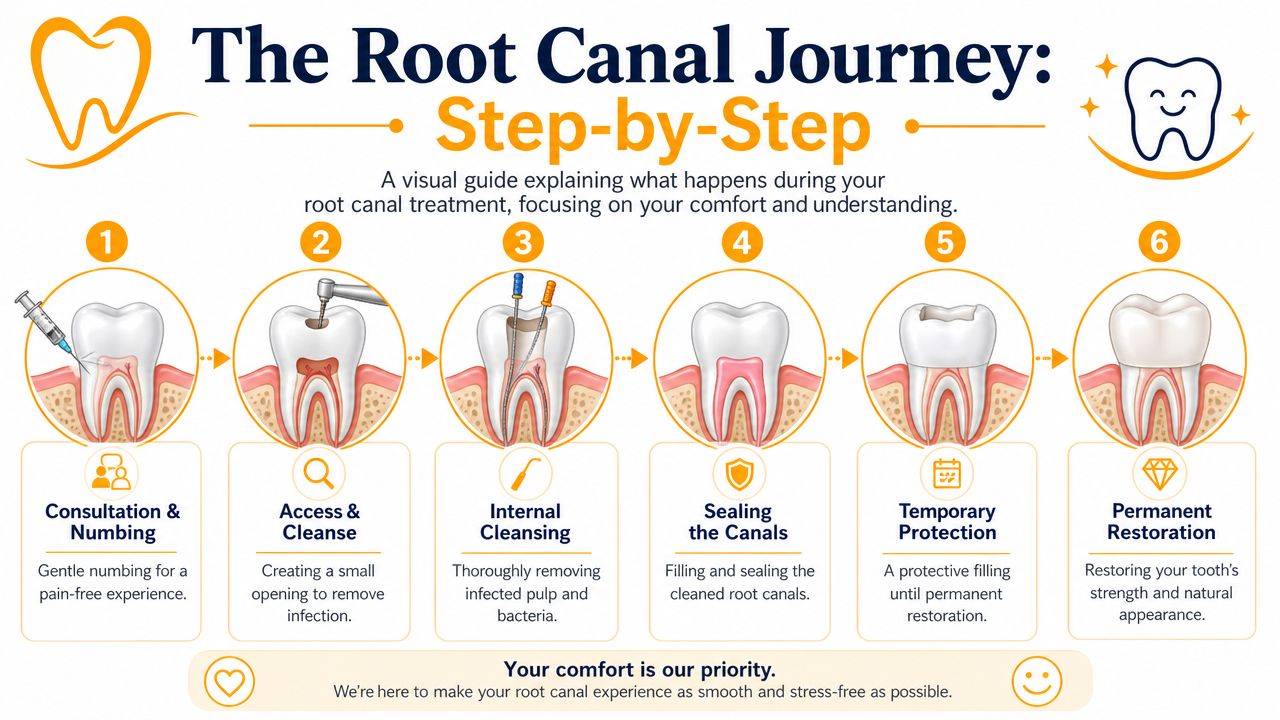
First the tooth is numbed and isolated
The appointment starts with local anaesthetic. The goal is simple. You should feel pressure and vibration, but not pain. If you're anxious, the team should check in with you as the numbness takes effect rather than rushing ahead.
Once the area is numb, the dentist places a rubber dam around the tooth. This small sheet isolates the tooth from saliva and helps keep the field clean and dry. It also protects you from tasting irrigating solutions and makes the procedure more controlled.
Then the dentist creates access and removes the infected tissue
A small opening is made through the top of the tooth to reach the canal system inside. Through this opening, infected or inflamed pulp tissue is removed.
This stage matters because the canals are narrow and often curved. The dentist uses fine instruments to locate each canal, determine working length, and shape the inside space so it can be disinfected properly and then sealed.
If the inside of the tooth isn't cleaned thoroughly, the treatment may not be predictable no matter how good the final filling looks from the outside.
A major outcome study found that treatment was more likely to be unsuccessful when the root filling was technically suboptimal, including fillings of unsatisfactory quality or ones not ending within 2 mm of the radiographic apex, and when the coronal restoration quality was poor, as reported in the International Endodontic Journal study on factors linked to unsuccessful root canal treatment.
Cleaning and disinfection are the heart of the procedure
This is the part patients rarely see but benefit from most. The dentist shapes the canals with specialised endodontic files and uses irrigating solutions to flush away bacteria and debris.
In some practices, advanced tools such as laser-assisted disinfection may be used to support cleaning in selected cases. The purpose isn't novelty. It's to improve disinfection while staying as conservative as possible with the tooth structure.
The video below gives a simple visual explanation of the journey from diagnosis to final restoration.
The canals are filled and the tooth is protected
Once the canals are cleaned and ready, they are filled with a biocompatible material called gutta-percha, used with a sealer to close the space. This stage is often called obturation. The aim is to reduce the chance of bacteria re-entering the canal system.
After that, the access cavity is closed with either a temporary or a more definitive filling, depending on the treatment plan and whether another visit is needed.
One visit or two visits
Patients often expect a fixed script, but appointment count depends on the case. Single-visit and multiple-visit root canal treatments show broadly similar success rates in many cases. However, your dentist may recommend multiple visits if there is significant infection that requires drainage or an extra disinfection stage to ensure the best possible outcome for complex cases, as noted in the root canal treatment overview.
A simple comparison helps:
| Situation | More likely approach | Why |
|---|---|---|
| Mild symptoms, straightforward anatomy | Single visit may be suitable | Cleaning and sealing can often be completed predictably |
| Ongoing drainage or significant infection | Multiple visits may be preferred | The tooth may need additional disinfection time |
| Complex root anatomy | Multiple visits may be safer | Extra time can improve precision |
| Very anxious patient with limited tolerance | Depends on comfort plan | The treatment can be staged to keep it manageable |
The best sequence is the one that lets the dentist clean, disinfect, and seal the tooth properly without rushing.
Gentle Care and Pain-Free Treatment Options
Fear of pain is still the biggest barrier to treatment. It's also the concern that modern dentistry is most equipped to address.
A root canal shouldn't feel like people imagine from old stories. With effective anaesthesia, careful pacing, and the right anxiety support, the experience is usually much calmer than patients expect.
What comfort actually looks like
Comfort starts before the procedure. A patient who understands what's happening tends to feel more in control. During treatment, the area is numbed thoroughly, and the dentist checks that numbness is working before moving on.
For anxious patients, support can include a slower appointment pace, clear stop signals, headphones, breaks, and sedation where appropriate. If dental fear is a major issue, it's worth reading about oral sedation dentistry and whether it suits your medical history and treatment plan.
Where newer technology can help
Biolase laser dentistry is one of the technologies used in modern practices for selected dental procedures because it can support minimally invasive treatment and may help with tissue management and disinfection. In endodontic care, technologies that improve precision and cleanliness matter because they support the main goal of treatment, which is to reduce bacteria and seal the tooth well.
That doesn't mean every root canal needs every device. Good dentistry is not about adding gadgets for the sake of it. It's about choosing tools that improve visibility, control, and patient comfort.
Some of the gentlest appointments happen when the dentist slows down, communicates clearly, and uses technology only where it makes the treatment more precise.
Pain during treatment versus tenderness afterwards
These are different things. During the procedure, the focus is numbness and comfort. After the appointment, it's normal to have some tenderness from the tooth and surrounding tissues settling down, especially if the tooth was very inflamed beforehand.
That tenderness is usually manageable with the aftercare advice your dentist gives you. What patients often notice most is that the deep, pressure-like ache from the infected nerve begins to settle because the source has been treated.
After Your Treatment Recovery and Final Restoration
Once the numbness wears off, the recovery period is usually more manageable than patients expect. The important part is knowing what is normal, what needs a phone call, and why the next stage of restoration matters just as much as the canal treatment itself.
The first day or two
You may leave the clinic still numb. Until normal feeling returns, avoid chewing on that side so you don't accidentally bite your cheek or tongue. Once sensation comes back, mild tenderness is common, particularly when biting.
Soft foods are usually the easiest option at first. Think yoghurt, soup, pasta, eggs, or other foods that don't ask much of the treated tooth. If a temporary filling has been placed, be extra careful with sticky or hard foods.
A simple guide helps:
- Numbness phase: Don't chew until feeling has returned.
- Early tenderness: Follow the pain relief advice given by your dentist.
- Eating: Choose softer foods and chew away from the treated tooth if possible.
- Cleaning: Brush and floss gently, but don't stop cleaning the area.
What should prompt a call to the clinic
Most recovery is straightforward, but some symptoms deserve review.
- Swelling that is increasing: Especially if it's spreading or making you feel unwell.
- Bite that feels very high: This can often be a simple adjustment.
- Temporary filling loss: The tooth needs to stay protected and sealed.
- Pain that doesn't follow the expected course: If something feels off, it's better to ask.
Why the crown or final restoration is not optional
This is the part many people underestimate. A root canal-treated tooth is often already weakened by decay, old fillings, or the fracture that led to treatment in the first place. Sealing the roots is only part of making the tooth last. The top of the tooth also needs a proper final restoration.
A national U.S. dental PBRN study found the overall median survival time for root canal treated teeth was 11.1 years, and 26% survived beyond 20 years. It also found that teeth restored with a crown after root canal treatment survived about 5.3 years longer on median than those without a crown. The same study reported that teeth receiving a filling before a crown had a median survival time of 20.1 years versus 11.4 years with only a crown, 11.2 years with only a filling, and 6.5 years with neither, according to the study on survival of root canal treated teeth and the effect of restoration type.
That's why the final restoration should be treated as part of the treatment plan, not an optional extra added later if convenient. If you'd like to understand how protection is rebuilt after endodontic treatment, this guide on dental crowns and bridges is useful.
Main takeaway: cleaning the inside of the tooth treats the infection. Restoring the outside protects the result.
Answering Your Questions About Root Canal Therapy
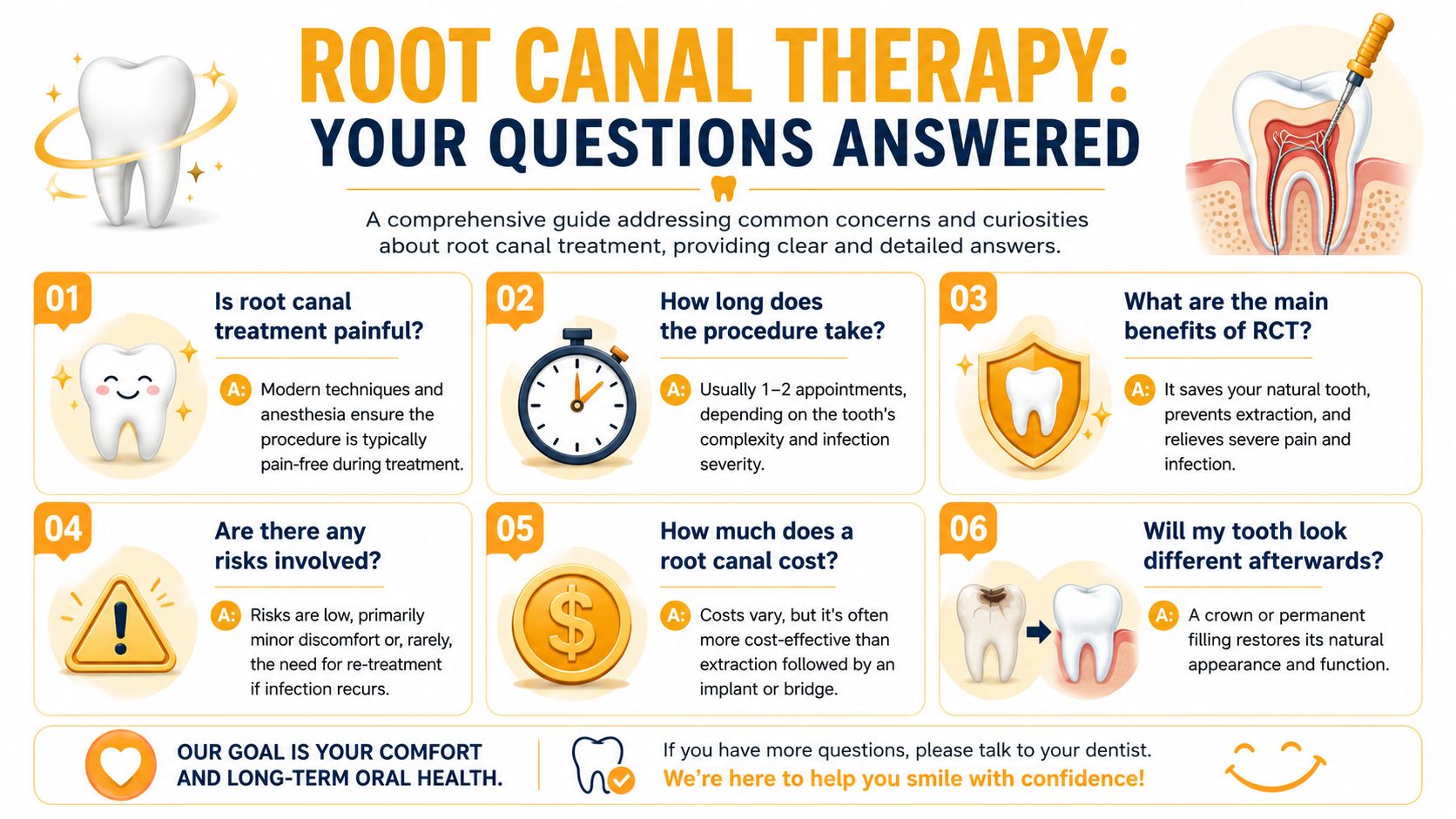
Patients usually have a handful of very specific questions that don't fit neatly into the treatment sequence. These answers tend to be the ones people want when they're weighing up whether to proceed.
Is saving the tooth better than taking it out
In many cases, yes. If the tooth can be treated and restored predictably, keeping your natural tooth is often the most conservative option. It preserves your own bite, avoids a gap, and may help you avoid more extensive treatment.
That said, extraction can still be the right choice if the tooth is split, too broken down to rebuild, or has a poor long-term outlook. The key isn't to force every tooth into root canal treatment. The key is to choose the option with the soundest prognosis.
What if a root canal fails
Failure doesn't always mean the treatment was done carelessly, but precision matters a great deal. As discussed earlier, outcome research has shown that technically suboptimal root filling and poor coronal restoration quality are major treatment-related risks.
Other factors can make treatment more difficult too, including more complex tooth anatomy and more severe disease around the root tip. That's why careful diagnosis, controlled canal cleaning, dense obturation, and a well-sealed restoration all matter. If a problem does recur, retreatment or other endodontic options may be discussed depending on the tooth.
Are antibiotics part of normal root canal treatment
Not routinely. Many patients assume antibiotics are the main solution for toothache, but they don't remove infected pulp from inside a tooth. Mechanical cleaning and sealing of the canal system is what treats the local cause.
Antibiotics are generally reserved for cases where infection is spreading or there are systemic signs that make them appropriate. For uncomplicated root canal problems, they are not a substitute for dental treatment.
What materials are used inside the tooth
The main filling material used inside the cleaned root canals is gutta-percha, along with a sealer. Before that stage, the canals are cleaned using fine endodontic instruments and disinfecting solutions. During treatment, a rubber dam is used to isolate the tooth from saliva and keep the field controlled.
Between visits, some teeth may need a temporary restoration and, in selected cases, an intracanal medicament while further disinfection is completed. The exact combination depends on the tooth, the level of infection, and whether treatment is being done in one visit or more than one.
Will the tooth look normal afterwards
Usually, yes, once the final restoration is complete. A front tooth may sometimes be restored with a filling if enough structure remains, while heavily loaded back teeth often need a crown for strength and protection. The goal is function first, then appearance that blends naturally with the rest of your smile.
How much does a root canal cost
The price depends on several practical factors:
- Which tooth is involved: Front teeth are usually simpler than molars.
- How complex the anatomy is: Extra canals and curved roots can make treatment more involved.
- Whether infection control takes more than one visit: Some cases need staging.
- What restoration is needed afterwards: A simple filling and a crown are different treatments.
A useful way to think about value is to compare the full pathway, not just the first appointment. Extraction can appear simpler at first, but replacing a missing tooth may involve its own sequence of treatment and cost.
Why does the bite sometimes feel strange after treatment
A recently treated tooth and the surrounding ligament can be tender to pressure for a short period. Sometimes the temporary or final filling also needs a small adjustment if it feels high when you bite together. This is common and usually simple to correct if you let your dentist know.
If you're looking at pain medication questions around dental treatment more broadly, this article on Panadeine Forte for tooth extraction gives general context about medication discussions after dental procedures, although your own dentist should always guide what's appropriate for your case.
Your Gentle Root Canal in Dulwich Hill
If you've been putting off treatment because the phrase “root canal” makes you tense, the most important thing to know is this. The procedure is designed to remove infection, settle pain, and save a tooth that might otherwise be lost.
A careful consultation, clear explanation of the RCT treatment steps, reliable anaesthesia, and a strong final restoration all make a real difference to how smoothly the process goes. For anxious patients, comfort planning matters just as much as the clinical steps.
Dr. Dimitrios Thanos has been caring for patients in Dulwich Hill for many years, and local families often want exactly what you probably want right now. They want honest advice, gentle treatment, and a clear plan that doesn't leave them guessing. If anxiety has kept you away, discussing options such as intravenous sedation with a dentist may help you feel more comfortable about moving forward.
If your tooth is throbbing, sensitive, or swollen, don't wait for it to become harder to treat.
If you'd like clear answers about a painful tooth, a calm discussion about whether root canal therapy is the right option, or a plan that takes anxiety seriously, contact The Smile Spot. Online booking, convenient hours, and care for Dulwich Hill and the Inner West make it easier to get help before the problem gets worse.