You're probably here because you brush well, you try to floss more often than you used to, and yet your teeth still don't feel as clean as they should. Maybe there's a rough patch behind the lower front teeth, some staining near the gumline, or that fuzzy feeling that comes back too quickly.
That's common. It doesn't mean you've failed at home care. It usually means you've reached the limit of what a toothbrush and floss can do on their own, and it's time for a professional teeth cleaning that removes what daily cleaning can't.
Why Brushing Alone Is Not Enough
Even careful brushers run into the same problem. Plaque is soft and can be disrupted at home, but once it hardens into calculus, also called tartar, brushing won't lift it off the tooth surface. At that point, the deposit has to be removed mechanically with dental instruments.
That's why professional teeth cleaning matters. It isn't a cosmetic extra. It's a preventive treatment that clears away hardened build-up, reduces the bacterial load around the gums, and gives your mouth a clean surface that home care can maintain more effectively.
What home care does well and where it stops
At home, your job is daily disruption of plaque.
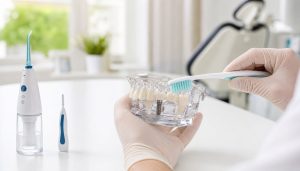
A soft toothbrush, floss, interdental brushes, and good technique make a real difference. Replacing worn bristles matters too, because a tired brush head doesn't clean edges and gumlines properly. If you're unsure what counts as “too old,” this guide on when to replace toothbrushes is a useful practical check.
But home care has limits:
- Brushing removes soft plaque, especially from accessible surfaces.
- Floss and interdental cleaning reach between teeth, where the brush can't.
- Neither can remove tartar once it has mineralised onto the teeth.
Practical rule: If an area always feels rough no matter how well you brush, it often isn't a brushing problem. It's hardened build-up.
There's another reason routine visits matter. In the 2017 to 2018 National Study of Adult Oral Health, 53% of Australian adults aged 15 years and over had attended a dental visit in the previous 12 months, and attendance was significantly lower for adults experiencing financial disadvantage, which means many miss out on preventive care such as professional cleaning (Australian adult dental attendance data).
Why regular attendance changes outcomes
When people come in regularly, we can remove plaque and calculus before they sit around the gumline for too long. That also gives us a chance to monitor areas that are starting to inflame, trap food, or become hard to clean properly.
Patients who want a stronger prevention routine often benefit from learning more about preventive dental care, because the clean itself is only one part of staying ahead of problems.
A clean mouth feels nicer, of course. Beyond that, it's easier to keep healthy once the stubborn deposits are gone.
What Happens During a Professional Teeth Cleaning
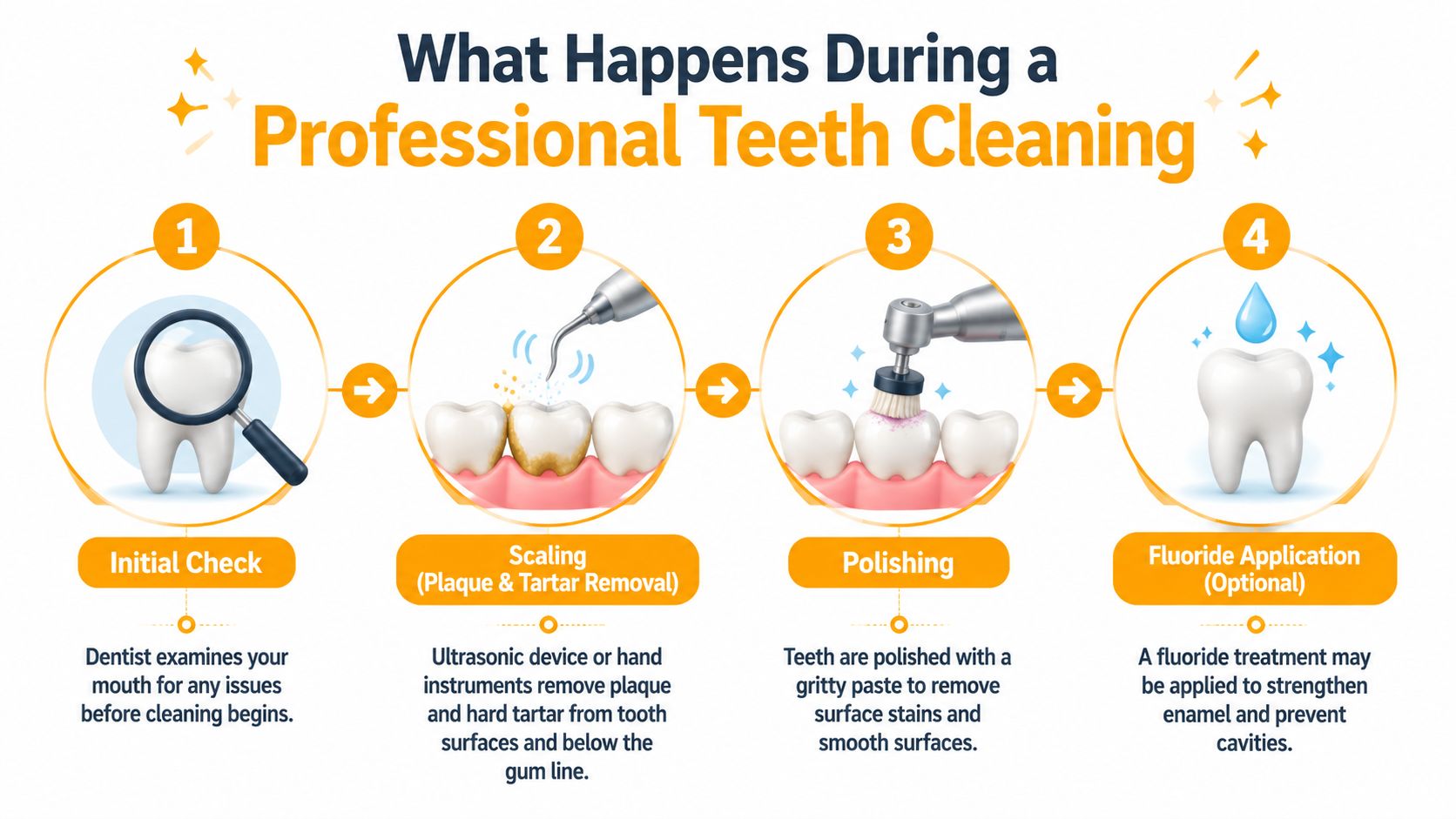
Understanding the process of a dental clean can provide reassurance. The appointment is straightforward, and for a healthy patient it often takes about 30 minutes, though it can take an hour or more if there's heavier tartar build-up because more debridement is needed (routine cleaning time and steps).
Near the start, it helps to see the process visually.
The appointment step by step
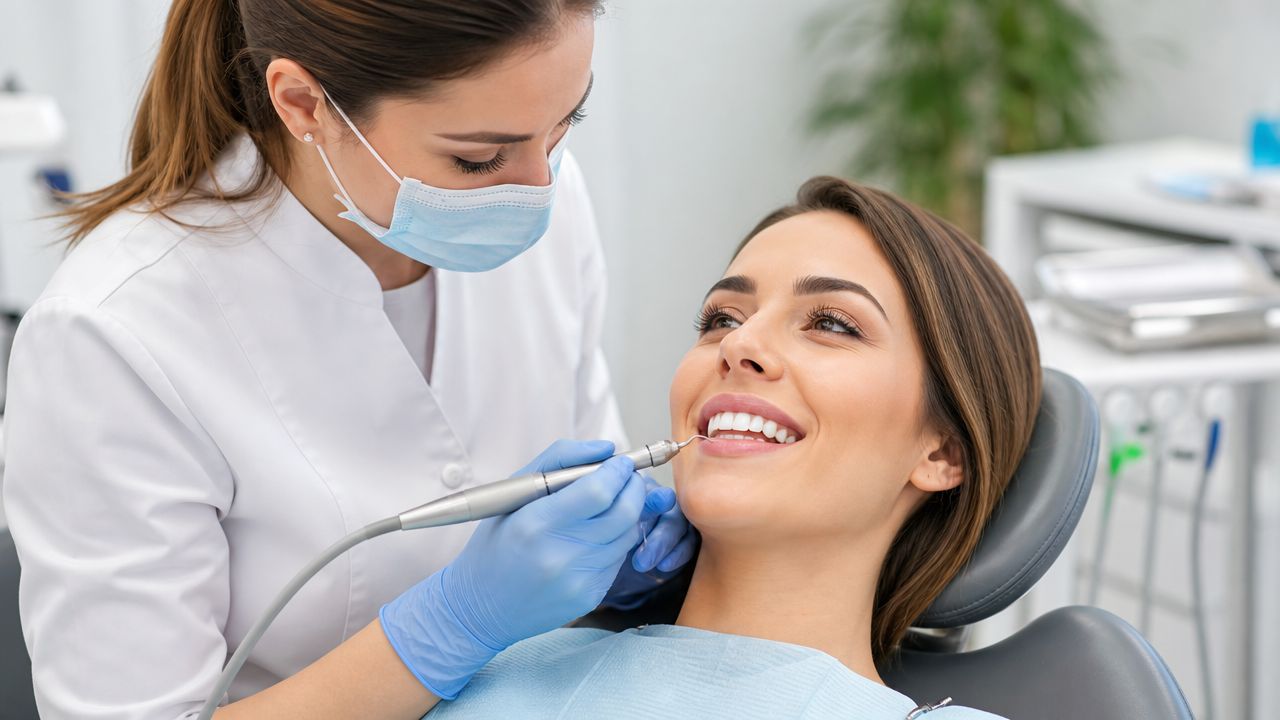
A professional clean usually begins with a quick look around the mouth. We check the gums, the build-up pattern, areas that trap plaque, and whether anything looks sensitive, worn, chipped, or inflamed.
Then comes scaling. This is the part that removes plaque and calculus from the teeth and around the gum margin. Depending on what's present, your clinician may use an ultrasonic scaler, hand scalers, curettes, or a combination of both. I often describe the ultrasonic scaler as a gentle power washer for teeth. It vibrates and flushes, while hand instruments help refine areas that need more control.
After scaling, the teeth are usually polished. Polishing smooths the outer surface and helps lift superficial stain, especially from tea, coffee, red wine, or smoking. It doesn't bleach the teeth, but it can make them look brighter because the surface is cleaner.
Some appointments also include fluoride after cleaning. That final step can help protect enamel and support prevention, especially if someone is prone to decay or sensitivity.
For a quick visual walk-through, this short video gives a simple overview before you come in.
What it feels like in the chair
Patients often ask whether a clean will hurt. The honest answer is that it depends on the amount of build-up, how inflamed the gums are, and how sensitive the teeth already are.
Typical sensations include:
- Tickling or vibration from the ultrasonic scaler.
- Cool water and suction moving around the mouth.
- Pressure rather than sharp pain when hand instruments are used.
- A gritty feeling during polish.
If there's a lot of tartar, especially around the lower front teeth or near the back molars, some spots can feel intense for a moment. Inflamed gums can also bleed a little during cleaning. That usually reflects existing irritation rather than damage from the clean itself.
The cleaner the gums are before the appointment, the easier and more comfortable the appointment usually feels.
If you haven't had a clean for a while, don't let that put you off. We'd rather know and plan for it than have you stay away because you think your mouth will be judged. A detailed check-up and clean is there to reset things properly, not to make you feel bad.
The Health Benefits of Regular Teeth Cleaning
A professional clean does more than leave your teeth smooth. The main value is what it helps prevent and what it helps us spot early while treatment is simpler.
Gum health and fresher breath
Gums react to plaque by becoming red, puffy, and prone to bleeding. When professional cleaning removes the deposits sitting along the gumline, it becomes much easier for the tissue to settle down.
That matters for breath too. Bacteria trapped in plaque and calculus contribute to persistent odour. A mouth with less bacterial build-up usually smells and feels fresher, even before any mouthwash enters the picture.
Earlier detection and fewer surprises
A cleaning visit also gives your dentist a proper chance to examine your mouth in good light, with the plaque and stain out of the way. That makes it easier to notice small changes before they become larger treatment problems.
Common examples include:
- Early decay that hasn't yet caused pain
- Worn or chipped edges that catch food or irritate the tongue
- Gum recession or localised inflammation in areas you may not notice yourself
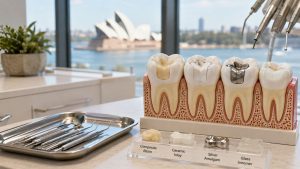
- Old fillings or crowns that are starting to break down
Clean teeth are easier to assess accurately. That sounds simple, but it changes how early we can intervene.
A brighter smile without overdoing it
Many patients are pleasantly surprised after a clean because their teeth look lighter. That's usually due to the removal of surface stain, not a whitening treatment. If your enamel has picked up colour from coffee, tea, spices, or smoking, polishing can improve the appearance noticeably.
Regular cleaning also supports confidence. People tend to smile more freely when their mouth feels fresh, their gums look calmer, and they aren't worrying about visible build-up near the front teeth.
The biggest benefit, though, is long-term. Prevention is almost always gentler than repair.
Understanding Different Types of Dental Cleanings
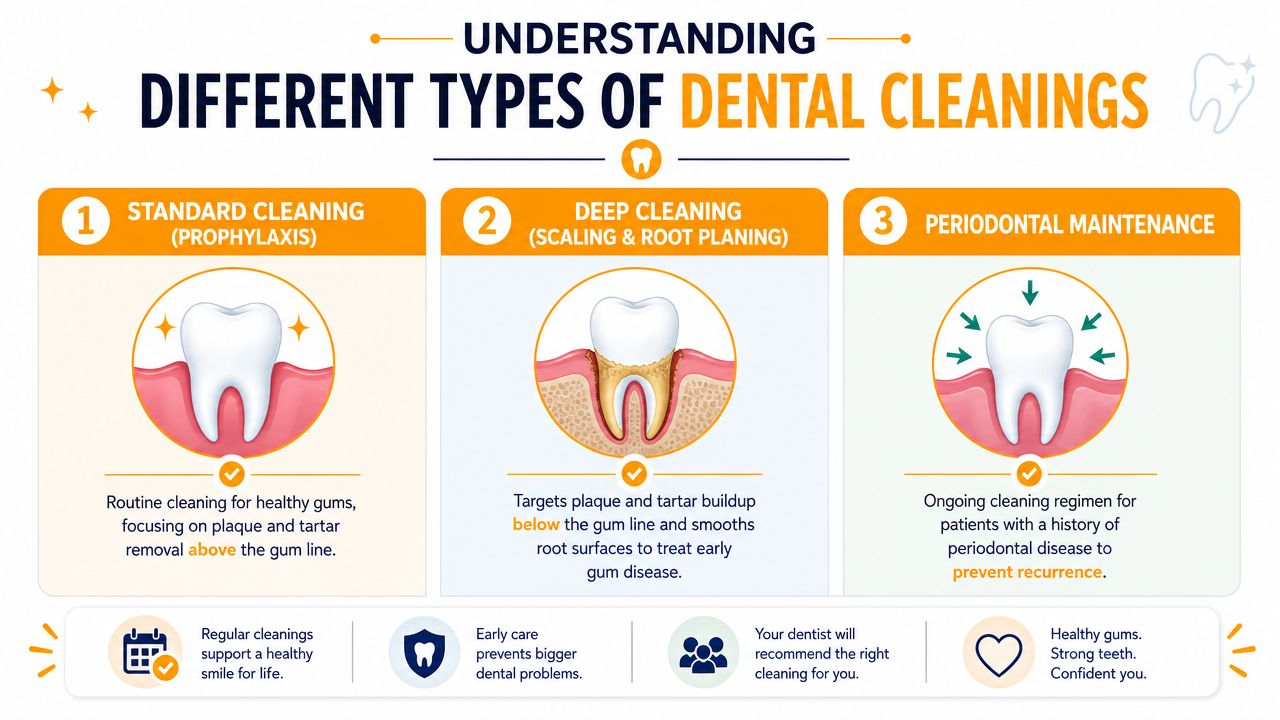
One of the most confusing parts of dentistry is that not every “clean” is the same. Patients often hear terms like prophylaxis, deep cleaning, or periodontal maintenance and assume they all mean a routine polish. They don't.
This comparison helps make the differences clearer.
Comparing dental cleaning treatments
| Treatment | Best For | Goal | Frequency |
|---|---|---|---|
| Standard cleaning or prophylaxis | Patients with generally healthy gums | Prevent disease by removing plaque and tartar from accessible areas | Based on individual risk and routine recall |
| Deep cleaning or scaling and root planing | Patients with signs of gum disease and deposits below the gumline | Reduce inflammation and clean root surfaces below the gums | Based on diagnosis and follow-up response |
| Periodontal maintenance | Patients with a history of periodontal disease | Control re-accumulation and help prevent recurrence | Often every 3 to 4 months |
Standard cleaning compared with deeper treatment
A standard cleaning, also called a prophylaxis, is for prevention. It suits people who don't have active periodontal disease and need routine removal of plaque, tartar, and superficial stain.
A deep clean, usually called scaling and root planing, is different. That treatment is used when the problem sits below the gumline and the tissues are already showing signs of disease. The aim is not limited to making the teeth feel smoother. The aim is to reduce infection, clean the root surfaces, and help the gums reattach more favourably where possible.
Why some patients need maintenance more often
Patients with a history of gum disease usually don't stay on a routine six-month pattern. A standard cleaning is a prophylaxis for preventing disease, while patients with a history of gum disease need periodontal maintenance, often every 3 to 4 months, because bacterial biofilm re-accumulates faster below the gumline when gum pockets are present (periodontal maintenance intervals and rationale).
That shorter recall isn't arbitrary. It's based on what the gums and pocketing are doing, not what the calendar says.
If your dentist recommends maintenance instead of a standard clean, it doesn't mean your mouth is failing. It means your plan is being matched to your diagnosis.
For patients dealing with inflamed gum tissue or more advanced periodontal concerns, newer approaches such as laser gum treatment can also be part of the conversation, depending on the clinical picture.
Frequency Cost and Insurance for Teeth Cleaning
The most common practical question is simple. How often do I need a clean?
For many people, a regular six-month interval is a good starting point. But that's not a law of nature. The right timing depends on how quickly plaque builds up, whether your gums bleed, how crowded the teeth are, whether you smoke, whether you've had gum disease before, and how well you can clean at home.
Frequency should follow risk
A healthy mouth with low build-up may only need routine preventive visits at a standard recall. A patient with heavy tartar, dry mouth, orthodontic retainers, or a history of periodontal disease may need reviews sooner.
What doesn't work is copying someone else's schedule. Your partner's six-month clean and your child's school holiday clean might have nothing to do with what your gums need.
A helpful perspective:
- Low-risk patients may stay comfortable on a routine preventive recall.
- Moderate-risk patients often benefit from closer monitoring.
- Higher-risk patients usually need a more active maintenance plan.
Cost matters, but delay can cost more
Out-of-pocket dental costs are real, and for some households they're the biggest reason preventive care gets postponed. Public health guidance in Australia consistently emphasises that preventive care such as professional cleaning helps reduce the chance of more complex and costly dental issues later on, especially for people who are already at higher risk (preventive care and long-term cost trade-offs).
That doesn't mean every person needs every add-on. It does mean avoiding all preventive care often creates a bigger problem to solve later.
At our Dulwich Hill clinic, one transparent option for new patients is a $240 full care package that includes an exam, X-rays, scale, and fluoride. For many families, clear pricing makes it easier to stop putting the first visit off.
Insurance and payment planning
Private health cover may contribute to preventive care depending on your level of extras cover, annual limits, and whether your policy has waiting periods or preferred-provider conditions. It's worth checking what your fund includes before the appointment so there are no surprises.
If spacing out treatment costs would help, it also makes sense to look at practical options through clinics that discuss fees early and clearly. This guide on dentists with payment plans near me covers the kinds of questions worth asking before you book.
Gentle Professional Cleaning in Dulwich Hill
A lot of adults don't avoid professional teeth cleaning because they doubt the benefit. They avoid it because they're worried about the experience. Some have sensitive teeth. Some have had rough treatment elsewhere. Some feel anxious the moment they hear scaling sounds.
What comfort-focused care should include
For many people, especially those with disabilities or severe anxiety, routine dental care can be hard to access. Finding a general practice that offers specialized support such as sedation dentistry is important for making preventive care more comfortable and manageable (access challenges and tailored dental care).
Comfort-focused care usually means more than “we'll be gentle.” It should include things like:
- A slower pace when needed, especially if you haven't been in for a while
- Clear explanations before instruments are used, so nothing feels sudden
- Options for anxious patients, including sedation where appropriate
- Technology that can reduce invasiveness, depending on the treatment
In Dulwich Hill, some patients specifically look for clinics that use Biolase laser dentistry and offer flexible scheduling such as late appointments or Saturday availability because convenience lowers the barrier to coming in. That's one reason practices such as The Smile Spot are often considered by Inner West families who want preventive care with comfort options built into the appointment process.
A good cleaning appointment should feel organised, respectful, and manageable. It shouldn't feel like something you have to brace yourself to survive.
If you're choosing a local provider, look for a team that communicates well with nervous patients, adjusts technique when sensitivity shows up, and doesn't rush through the visit. Patients who value that approach often start by reading about what a gentle dentist near me should offer in practice.
Frequently Asked Questions about Teeth Cleaning
Will my teeth hurt after a cleaning
Feeling fine straight away is common. If your gums were inflamed beforehand, you might notice mild tenderness or a bit of sensitivity to cold for a short time. That usually settles quickly, especially if you keep brushing gently and avoid very acidic foods for the rest of the day.
Can I eat straight after my appointment
Usually yes. If you've had fluoride applied, your clinician may ask you to wait a little before eating or drinking so it has time to sit on the teeth properly. Soft, non-staining foods are often the most comfortable option if your gums feel a little tender.
What if I'm embarrassed because it's been years
You don't need to be. Dentists see overdue cleanings every day, and the useful question isn't “Why did you wait?” It's “What do we need to do now?”
If you're anxious about making that first call, some practices improve the experience by having organised front-desk communication systems in place. Tools such as an Answering service for dentists reflect the kind of support structure that can make booking and follow-up feel less stressful for patients who already find dental visits hard enough.
If your teeth don't feel as clean as they should, or you've been putting off a visit because you're worried it will be uncomfortable, book an appointment with The Smile Spot. A professional teeth cleaning can be adjusted to your gums, your sensitivity level, and your schedule, with clear advice on what you need and what you don't.