You've noticed the rough edge with your tongue, or maybe your dentist has pointed out that a clean still wasn't quite enough to get everything off the teeth. That moment can feel oddly personal, because calculus is one of those dental problems you can see and feel, but you can't scrub away at home. The good news is that removal of calculus is a routine part of dental care, and when it's done well, the appointment is usually more about comfort, clarity, and prevention than anything dramatic.
What Dental Calculus Is and Why It Forms
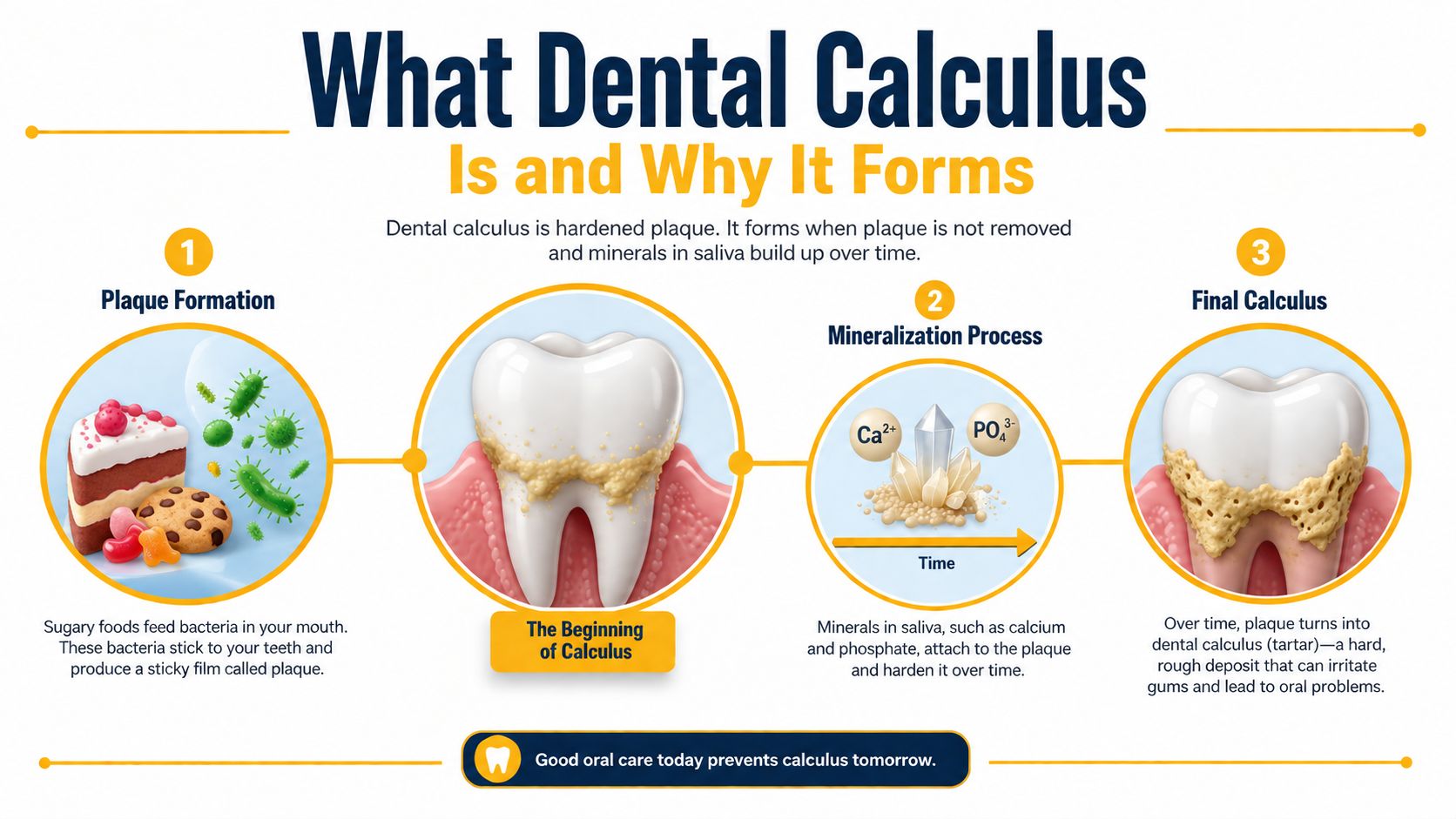
A tooth can feel smooth one day and slightly gritty the next, especially along the gumline or behind the lower front teeth. That roughness is often dental calculus, also called tartar. It starts as plaque, the soft bacterial film that usually brushes away before it hardens.
Plaque hardens the way wet cement sets into concrete. Saliva adds minerals to the deposit, and the layer becomes firmly attached to tooth and root surfaces, which is why brushing alone cannot remove it once it has set. A classic clinical study reported that complete removal of calculus from periodontally diseased root surfaces is rare, so professional care still matters even when home hygiene is steady.
Why it builds up in some mouths faster than others
Calculus does not form at the same pace in every mouth. Diet, brushing and flossing habits, saliva composition, and smoking all affect how quickly plaque mineralises and hardens. Two people can follow a similar routine and still end up with very different amounts of buildup.
The problem is more than appearance. Calculus leaves a rough surface that catches more plaque, which can irritate the gums and contribute to deeper periodontal trouble if it stays in place. For a plain-language home-care overview, what really works for tartar gives useful context, but it also helps to understand the limits of home care. Once the deposit hardens, a dental visit is the safe path.
Gum health around the tooth edges matters too. The guide on gum recession causes can help connect the dots without making every rough spot feel alarming.
Professional Methods for Removing Calculus
A patient sitting back in the chair usually notices that removal of calculus is not one single action. Clinicians often combine tools, because different deposits sit in different places and cling with different strength. The goal is simple to say, but careful to do well. The buildup needs to be broken apart, lifted away, and the tooth surface left smooth enough that new plaque has less to grab onto.
Manual, ultrasonic, and laser approaches
Hand instruments still do an important part of the work. A clinician uses short, overlapping horizontal strokes of about 1–2 mm, keeping the tip parallel to the root surface so the instrument reaches the deposit without scraping the tooth itself (technique reference). For many nervous patients, that feels more controlled and less dramatic than they expect.
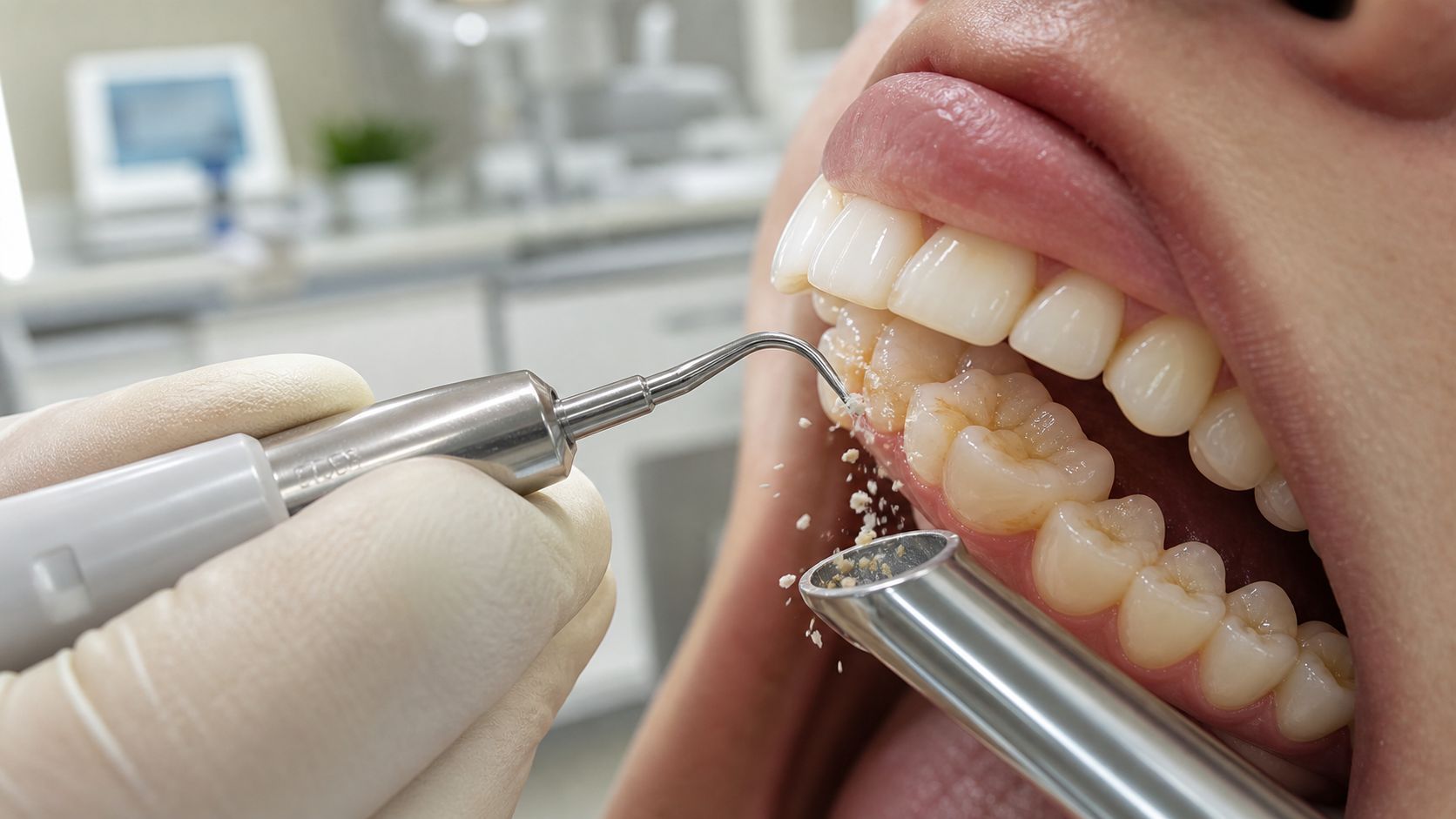
Ultrasonic scaling feels different right away. You hear a light buzzing, feel a fine spray of water, and notice the tip moving quickly as it breaks larger deposits apart and washes debris clear. For heavier buildup above the gumline, that can shorten the appointment and make the cleaning easier to tolerate.
Laser-assisted treatment is another option some clinics use, including Biolase technology where it is available. The clinic's use of Biolase laser dentistry is part of that comfort-focused approach, especially for patients who are anxious about dental instruments or who need a gentler-feeling visit. A review of adjuncts notes an absence of strong evidence supporting laser effectiveness in calculus removal and says higher-quality research is still needed. So lasers may have a place, but they remain an added tool, not a substitute for careful mechanical cleaning.
Practical rule: if a tool makes the visit feel gentler and still helps remove deposits, it has a place. If it sounds advanced but does not improve the cleaning, it does not help the patient.
When root planing enters the picture
Root planing is used when deposits sit deeper under the gumline. The clinician smooths the root surface to remove lingering contamination and make it harder for bacteria to cling. This is often discussed together with root planing and scaling, because the two steps usually work as part of the same treatment approach.
That kind of care is often followed by reassessment later to see whether inflammation has settled or whether more treatment is needed, a point also reflected in the periodontal review. For patients, that follow-up can feel more reassuring than mysterious. It shows the team is not just removing hard deposits once, then hoping for the best. It is checking how the tissues respond, much like checking whether a repair has held.
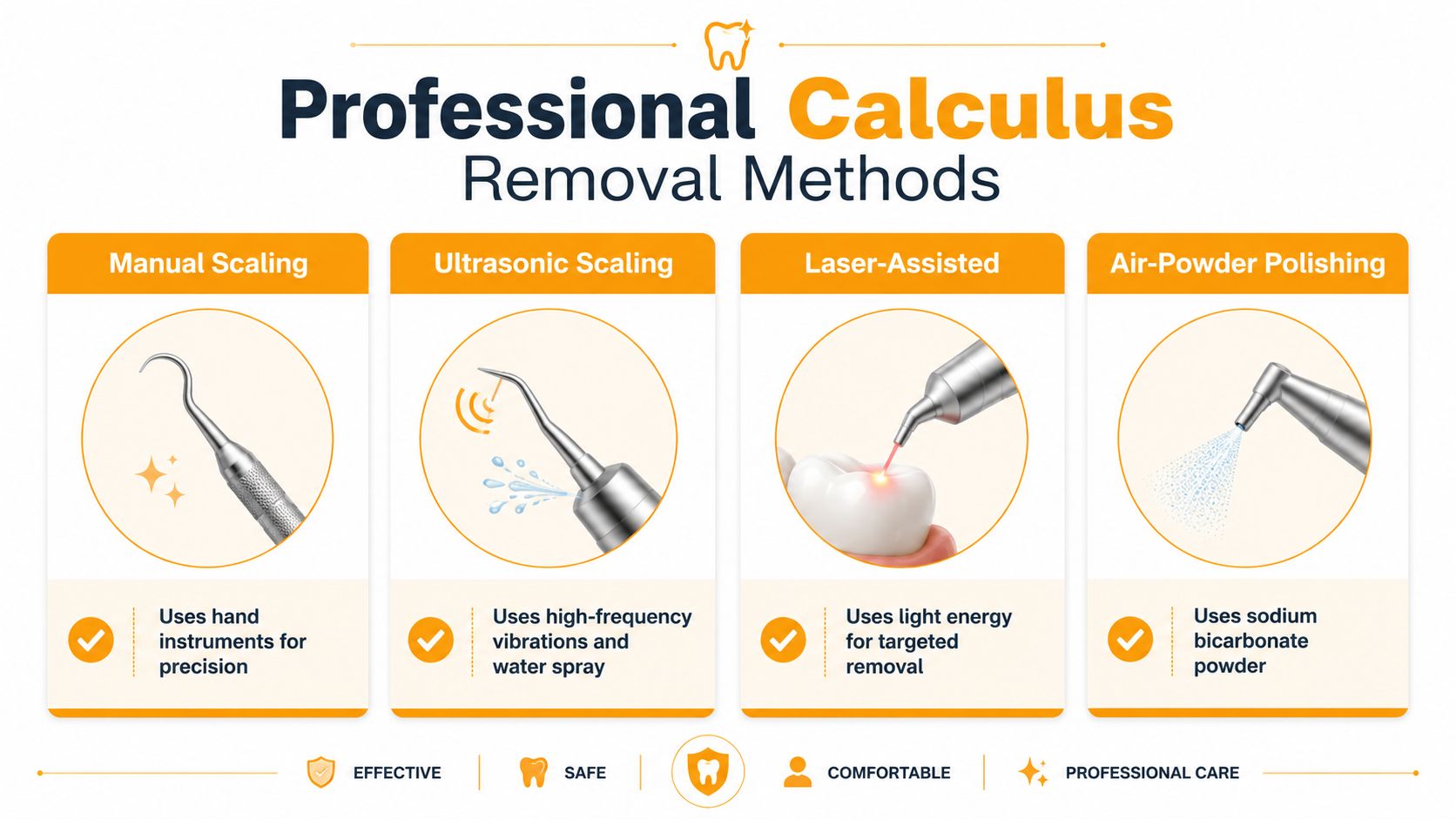
If you are comparing treatment styles, comfort and access are the main trade-offs. Hand instruments give precision, ultrasonic tools handle bulk more efficiently, and lasers may help in selected cases, but traditional scaling and root planing still form the backbone of care.
Why Complete Removal Is Rare and Maintenance Matters
A patient sitting in the chair often expects one thorough clean to leave every root surface perfectly smooth. In periodontal care, that expectation can be too simple. Even with professional debridement, complete removal of calculus is uncommon on diseased root surfaces, because deposits bind tightly to tooth structure and deep pockets make it hard to reach every area.
What that means in real life
That does not mean the treatment failed. It means the problem is stubborn. Once calculus has formed below the gumline, the clinician may be working in a narrow, uneven space where visibility, access, and patient comfort all need attention at the same time. A cleaning visit can remove a great deal, yet still leave behind small traces in hard-to-reach areas, much like dust left in the corners after a careful room clean.
Follow-up is part of periodontal care. After initial scaling and root planing, patients are often checked again to see whether inflammation has improved or whether any residual deposits need more treatment, as reflected in the periodontal review. That review stage is not an extra step added on later, it is part of how the mouth is monitored after treatment.
Useful mindset: maintenance is not proof that the first clean failed. It is more like checking a repaired leak, because the underlying system still needs watching.
For anxious patients, that can be reassuring. The goal of ongoing periodontal maintenance is to keep the mouth stable, comfortable, and easier to clean over time. It is not a quick fix that ends with one appointment. A routine visit can be easier to understand when you know what happens during a check-up and clean, especially if your team talks through comfort options such as local anaesthetic, sedation, or laser dentistry.
What to Expect During Your Calculus Removal Appointment
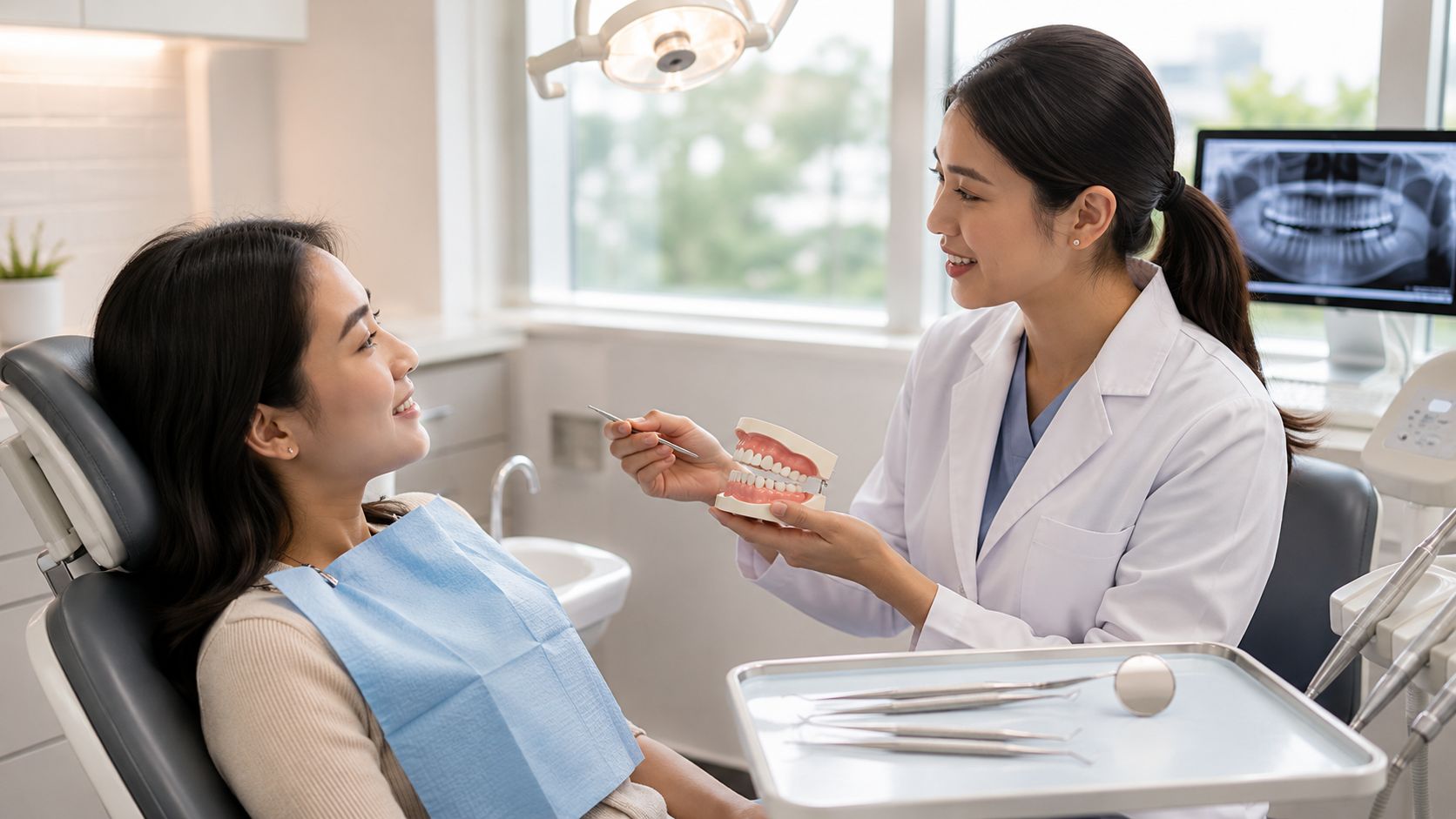
A nervous patient usually wants one clear answer, what happens once you sit in the chair? The visit often begins with a calm conversation about your medical history, any sore spots, bleeding gums, and what you hope the appointment will achieve. At The Smile Spot, that first discussion helps the team shape a plan that feels predictable rather than rushed, and you can read more about the flow of a routine visit in their check-up and clean guide.
The appointment, step by step
The first part is the examination. The dentist or hygienist checks the gums, looks for the rough areas where calculus has built up, and may use digital X-rays or photos when they need a clearer view between teeth or below the gumline. If calculus is easy to see and reach, cleaning begins there. If deeper pockets are involved, the clinician may spend more time in those areas and explain why the work is more detailed there.
Comfort is part of the plan, not an afterthought. Gentle technique, local anaesthetic for sensitive areas, and sedation for very anxious patients can all help the appointment feel more manageable. The clinic's use of Biolase laser dentistry fits that comfort-focused approach, especially when a minimally invasive method suits the case.
What it feels like
A lot of patients describe pressure, vibration, or the sound of scraping, rather than sharp pain. If a tooth feels tender, say so early instead of trying to push through it. Dental teams are used to adjusting suction, breaking the cleaning into smaller sections, and pausing when someone needs a moment to settle.
A simple question can make the visit easier.
Ask this early: “If something feels uncomfortable, what can you do right away?”
That gives the team time to adjust the appointment before you become tense. If you want a clearer picture of a routine cleaning visit, the clinic's routine check-up and clean overview is a helpful companion read.
Aftercare and Daily Prevention Strategies
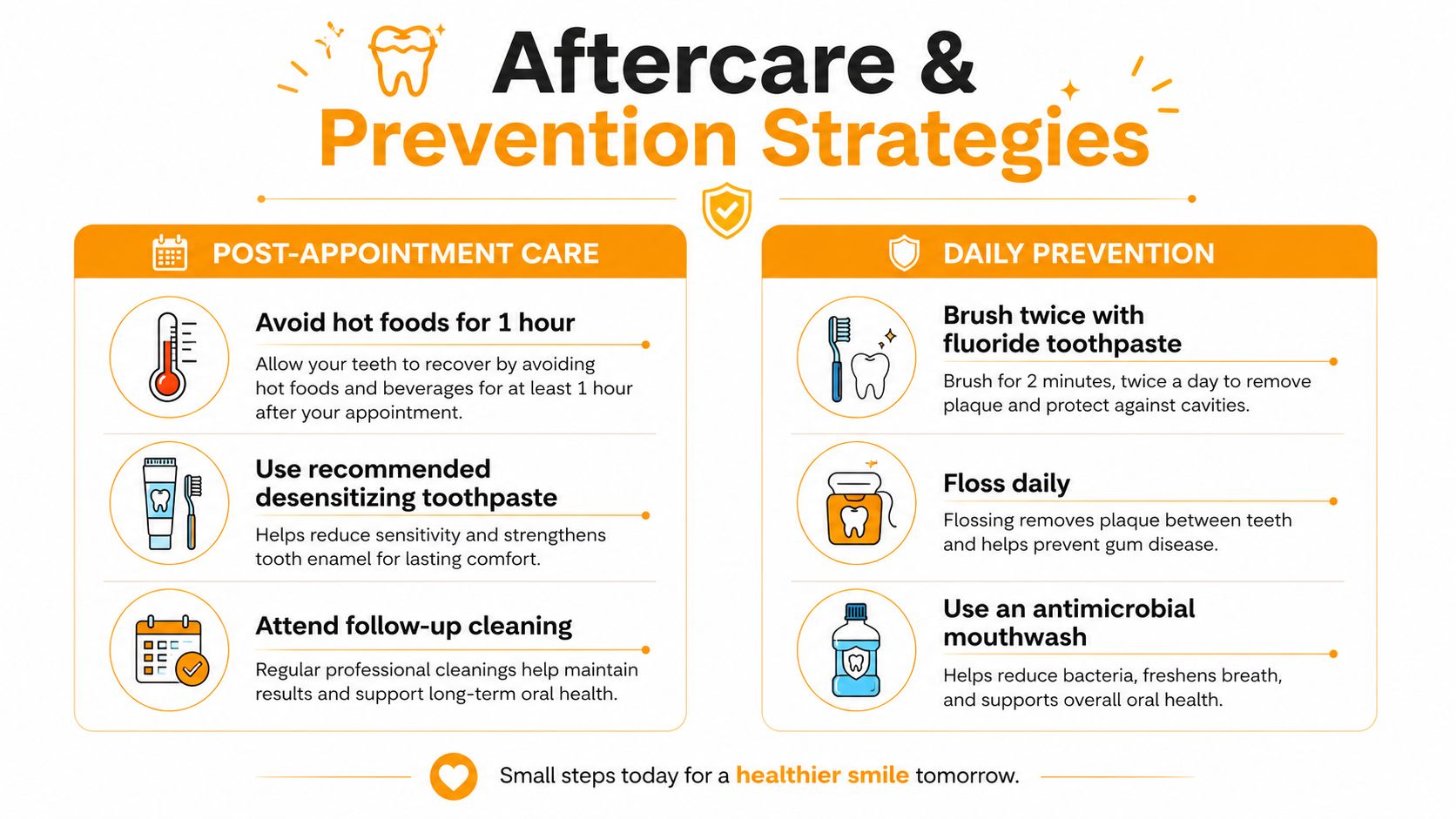
After professional removal of calculus, it's normal for teeth to feel a bit more sensitive for a short time, especially if the gums were inflamed beforehand. Warm drinks, cold water, or brushing too aggressively can make that sensitivity more noticeable. If discomfort lingers or gets worse instead of settling, a follow-up call is sensible.
The simplest aftercare habits
- Use a gentle brush: Soft bristles and light pressure protect sore gums while they settle.
- Clean between the teeth every day: Floss or interdental brushes do the work a toothbrush can't reach.
- Choose fluoride toothpaste: Fluoride supports enamel care as plaque control continues at home.
- Watch the first hour after treatment: Avoid very hot foods if your mouth feels tender.
- Attend the follow-up visit if one is recommended: Maintenance keeps small issues from becoming bigger ones.
These habits are straightforward, but they matter because calculus begins as plaque, and plaque only hardens if it sits long enough. The preventive side of care is covered well in how to prevent tooth decay, especially if you want daily routines that fit real family life rather than a perfect routine no one can maintain.
Brushing twice a day is good. Brushing gently along the gumline and cleaning between teeth is better.
For some people, dietary choices also make a difference, especially when snacks and drinks are frequent through the day. The less often plaque is fed and left in place, the less chance it has to mineralise. That's why routine home care and professional cleaning work best together, not as competing options.
Costs and How Often You Need Professional Cleaning
People often want the practical answer before they book. At The Smile Spot, a full care package includes an exam, X-rays, scale and fluoride treatment, and the clinic also notes a reduced rate for children. That gives families a clearer starting point when they're comparing a routine visit with a more involved periodontal appointment, which may require extra time and treatment steps depending on gum health. You can also compare visit types with the clinic's teeth cleaning Sydney page.
How to think about frequency
For many patients, six-monthly check-ups are the usual rhythm. That timing suits people whose gums are stable and whose plaque control is manageable between visits. If someone has heavier calculus buildup, a history of gum problems, or other risk factors, more frequent maintenance may be suggested, because waiting longer can let deposits harden again.
Private health fund coverage often depends on the level of cover and whether the visit is a standard clean or periodontal treatment. The best move is to ask for a clear itemised plan before treatment, so there are no surprises about what's included.
Convenience matters too
Booking is easier when the clinic fits around work and family life. Late evening and Saturday appointments can reduce the temptation to keep postponing care, and online booking removes one more barrier. For patients who've been meaning to get back on track, convenience is often the difference between “soon” and “never”.
Common Questions About Calculus Removal
Can I remove calculus at home?
Not safely once it's hardened. Home care can remove soft plaque and help prevent new buildup, but hardened calculus needs professional instruments. Sharp tools at home can injure gums and scratch enamel.
Does professional cleaning damage enamel?
When done correctly, it shouldn't. The aim is to remove deposits, not tooth structure, and clinicians use controlled strokes and suitable tips for that reason.
How long does a typical appointment take?
It varies with how much buildup is present and whether deeper cleaning is needed. A routine visit is usually quicker than periodontal treatment.
What's the difference between a scale and clean and a deep clean?
A standard scale and clean focuses on plaque and calculus above, and sometimes near, the gumline. A deep clean reaches further below the gums and is used when periodontal pockets are involved.
If your teeth feel rough, your gums bleed when you brush, or you've been putting off care because you're anxious, book an appointment with The Smile Spot and ask about a calm, personalised calculus removal visit that suits your comfort level.