You wake up with a tooth that won't let you think straight. It throbs when you lie down, flares when you sip water, and makes chewing feel impossible. In that moment, you don't need theory, you need emergency tooth pain relief that makes sense, and you need to know when home care is enough and when a dentist needs to step in.
At The Smile Spot in Dulwich Hill, that usually means moving fast, using the safest short-term measures first, and getting to the cause before the pain drags on any longer. The good news is that Australian dental guidance is fairly clear on what helps, what doesn't, and when the problem has crossed into urgent territory.
The Unmistakable Ache of a Dental Emergency
A severe toothache rarely arrives politely. It can begin as a dull ache after dinner, then turn into sharp, pulsing pain that makes it hard to focus on work, sleep, or even a conversation across the table. People often reach for whatever is nearby, then find the pain keeps returning because the tooth problem itself has not been dealt with.
That is the reality of most urgent dental pain. It needs a short bridge to proper care, not a guess-and-wait approach. Australian clinical guidance puts NSAIDs at the centre of dental pain control, with ibuprofen plus paracetamol preferred over either medicine alone, and opioids kept only as short-term adjuncts because they bring more adverse effects and less useful pain relief Australian Prescriber.
Practical rule: if the pain is pushing you into constant rescue mode, the tooth needs assessment, not just another round of hoping it settles.
In practice, the pattern of the pain matters. A tooth that hurts only when you bite may point to a different issue from one that aches steadily or wakes you at night. Either way, the goal is the same, calm the pain safely, then get a dentist to identify the source before it worsens.
Pain that starts after an old filling, a cracked tooth, or a swollen gum can feel similar at first, but the treatment path is not the same. That is why urgent care starts with the story of the pain, then moves quickly to an exam and a plan that fits what is happening in the tooth. If the problem involves a wisdom tooth, you can read more about the warning signs in our guide to wisdom tooth removal pain.
Immediate At-Home Tooth Pain Relief
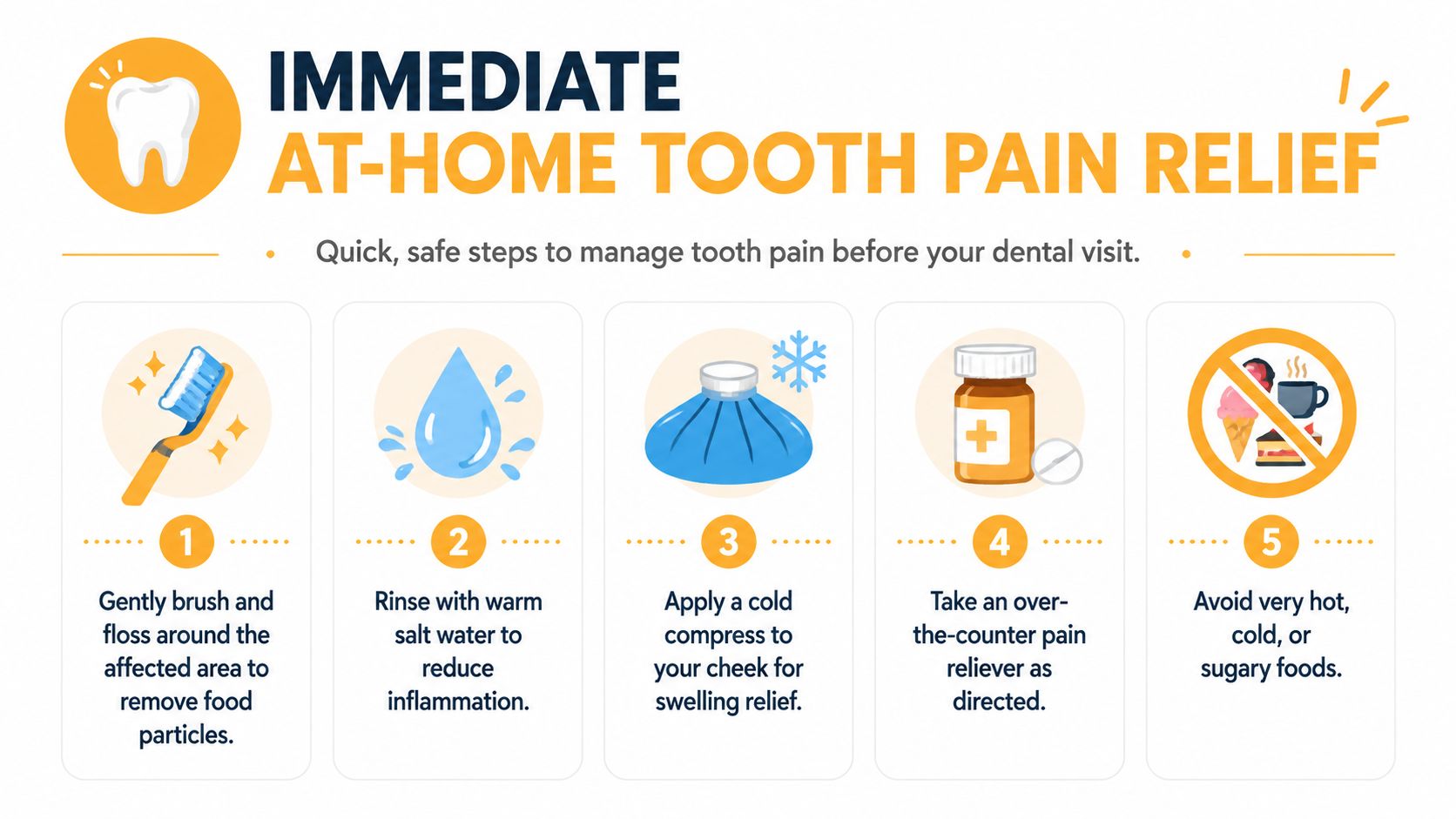
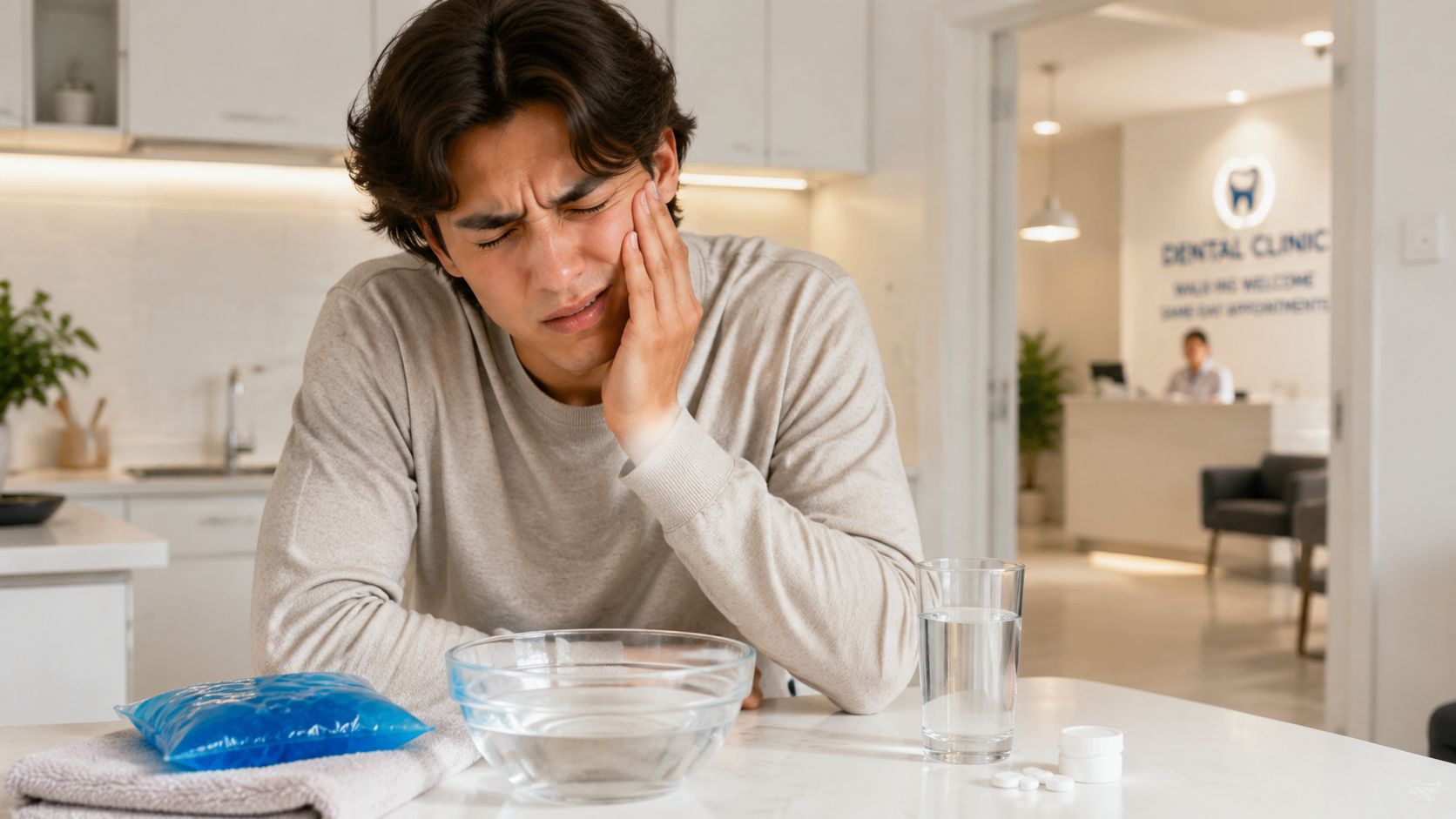
The safest home care is plain and practical. Clean the area, reduce swelling, avoid anything that irritates the tooth, and buy time without making the problem worse. Queensland Health recommends rinsing the mouth with warm water to clear debris, using a cold compress for swelling, and taking standard over-the-counter pain medicine in the usual way Queensland Health emergency dental advice.
A warm salt-water rinse can also help. Australian consumer guidance commonly uses half a teaspoon of salt in a glass of warm water, which may clean the mouth and settle irritation until you can get dental care Lotus Smiles Dental.
What to do first
Start with a gentle rinse, then let the jaw rest. If there is swelling, place the cold compress on the outside of the cheek. Some Australian dental guidance suggests using the compress in short intervals of about 15 minutes, which is a practical way to keep the tissues cooled without overdoing it SF Dental.
Keep your head raised when you are resting, and avoid foods that are very hot, very cold, sugary, or acidic. Those triggers can make an irritated nerve feel much worse.
A few habits matter just as much as the remedies themselves:
- Rinse gently: Use warm salt water after meals to clear debris and calm the area.
- Apply cold, not heat: Swelling usually responds better to a cold compress than a warm one.
- Choose soft foods: Stick to foods that do not require heavy chewing.
- Avoid chewing on the painful side: Pressure can aggravate an inflamed tooth.
- Don't put aspirin on the gum: Queensland Health warns that it can burn soft tissue Queensland Health emergency dental advice.
Warm salt water is useful because it cleans, but it does not cure. If the pain stays strong, the tooth still needs treatment.
If the pain seems tied to a wisdom tooth, the warning signs can be different from a simple bite-related ache. Our guide on wisdom tooth removal pain explains what tends to flare and why.
Safely Managing Pain with Medication
Medication should ease the pain while you arrange treatment, not replace it. For dental pain, Australian guidance favours NSAIDs because they reduce inflammation as well as discomfort. That matters because inflammation is a big part of why a toothache can feel so sharp and relentless Australian Prescriber.
For many people, ibuprofen with paracetamol is the most useful combination. Used together, they can control pain better than either medicine on its own, which can make the difference between getting some sleep and spending the night in agony. If you have been told to avoid ibuprofen for medical reasons, follow that advice and ask a pharmacist or dentist about a safer option for you.
A common error is to put aspirin straight onto the gum or tooth. Queensland Health warns against this because it can burn soft tissue. Opioids are another place people can go wrong. Australian guidance keeps them as a backup, used only briefly and only when non-opioid medicine is not enough, because they tend to bring more side effects without giving better relief for dental pain Australian Prescriber.
That is why the medicine has to match the problem. If the pain is coming from an inflamed tooth, a non-opioid plan is usually the first place to start.
The NSW Health Adult ECAT uses a stepwise approach for dental presentations, with paracetamol 1000 mg orally once only and/or ibuprofen 400 mg once only for mild pain, and the same non-opioid options for moderate pain, with oxycodone immediate release 5 mg only if required NSW Health ECAT. If you are not sure what is safe for your own situation, that is the point to ask a clinician rather than guessing.
If you want a plain-language explanation of stronger pain relief after treatment, our article on Panadeine Forte for tooth extraction is a useful place to start.
When Tooth Pain Becomes a True Emergency
A severe toothache can still be managed at home for a short time, but some symptoms mean you need urgent care straight away. Trouble breathing or swallowing is a red flag, and it needs immediate attention. Isolated tooth pain is usually handled through dental follow-up rather than an emergency department visit Royal Children's Hospital Melbourne guidance.
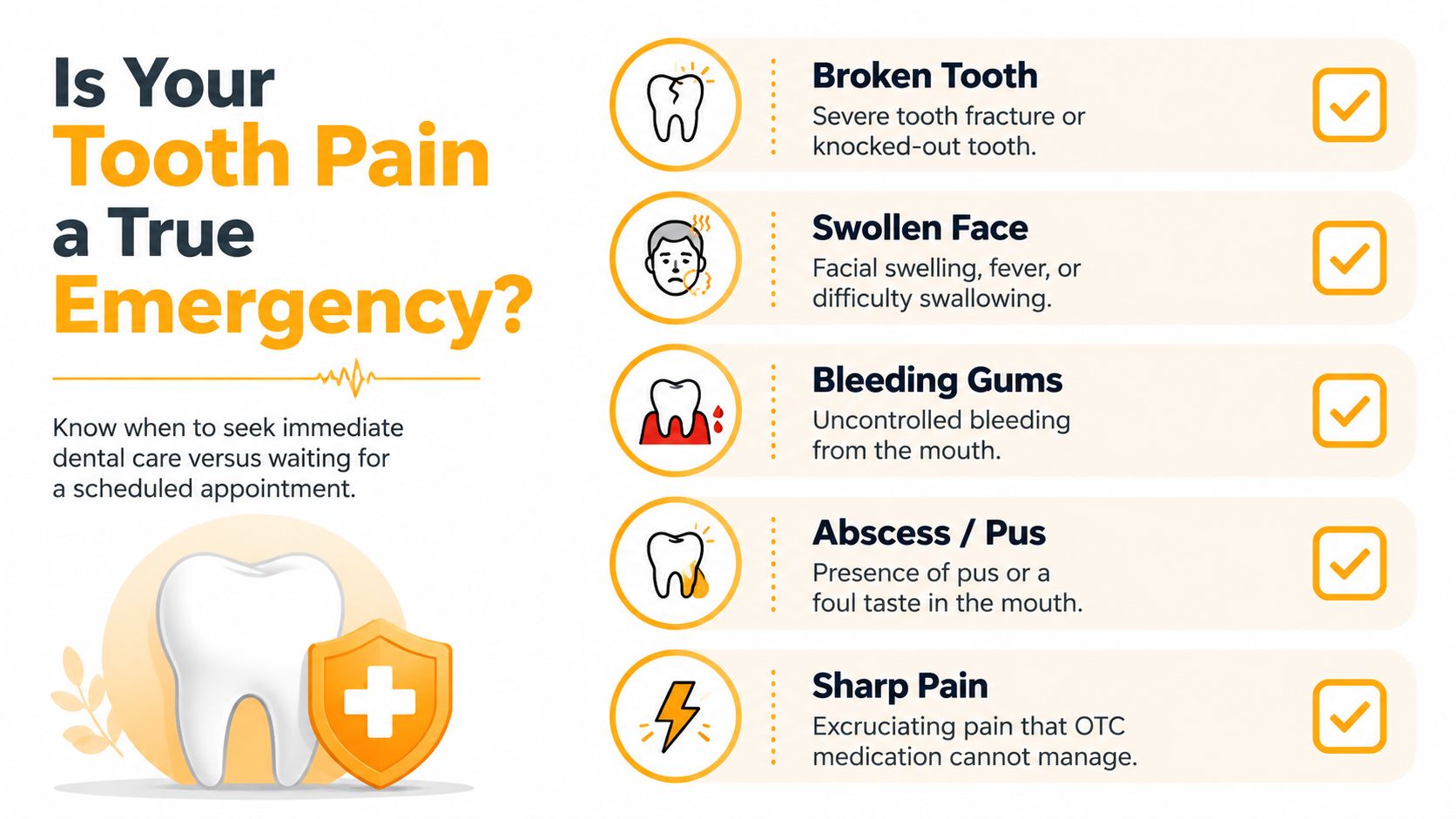
Red flags that need urgent care
A true dental emergency usually involves more than pain alone. Swelling, infection, or trauma can point to a problem that will not settle with basic pain relief.
- Knocked-out or badly broken tooth: Adult teeth need prompt care.
- Difficulty breathing or swallowing: This needs urgent escalation.
- Uncontrolled bleeding: Ongoing bleeding from the mouth is not a normal toothache.
- Pus or a foul taste: That can point to infection.
- Pain that won't settle with standard over-the-counter medicine: That needs professional review.
For a knocked-out adult tooth, time matters. Queensland Health advises that it should be replanted immediately if possible, and the tooth should be kept from drying out Queensland Health emergency dental advice. If it cannot be replanted, Perth Children's Hospital advises keeping it moist in milk, Hank's Balanced Salt Solution, or cling wrap with saliva until a dentist can stabilise it Perth Children's Hospital guidance.
If you are trying to work out how quickly you need to act, our guide to emergency dental clinics near me explains how to judge the urgency.
Your Emergency Dental Visit at The Smile Spot
The first step is usually a phone call, and that call matters. When someone rings with swelling, a broken tooth, or pain that hasn't eased, the team can talk through first-aid steps, confirm whether the situation sounds urgent, and get the appointment moving without unnecessary delay. If you're anxious, that conversation also helps lower the temperature before you even walk in.

When you arrive at the Dulwich Hill clinic, the focus is to find the cause quickly and relieve the pain safely. That usually means a focused exam, checking the surrounding gum and bite, and using imaging if needed to see what's happening under the surface. If the problem is a deep cavity, an inflamed nerve, a cracked tooth, or infection, the next step is chosen around comfort and immediate control.
What treatment can look like
Emergency care is not always a full fix on the same day, but it should make you more comfortable and protect the tooth. Depending on the finding, that may involve a temporary filling, managing infection, starting root canal treatment, or stabilising a damaged tooth. For people who are very nervous, sedation dentistry can be part of the discussion, and minimally invasive options such as Biolase laser dentistry may be appropriate in some situations.
The Smile Spot also offers emergency dentist appointments in Dulwich Hill, which is the right kind of booking when the goal is to stop the pain and deal with the immediate issue.
The aim of an emergency visit is simple, get the pain down, protect the tooth, and make the next step clear.
How to Prevent Future Dental Emergencies
The easiest emergency to manage is the one that never starts. Regular check-ups and cleans let a dentist spot small cavities, worn fillings, gum problems, or early signs of trouble before they turn into the kind of pain that wakes you at 2 am. Preventive care is less dramatic than emergency care, but it saves a lot of stress.
For families, athletes, and anyone who grinds their teeth, prevention also means practical protection. A custom mouthguard helps reduce trauma risk during sport, while steady brushing and flossing reduce the odds that a small issue becomes a painful one. Our article on preventive dental care explains the habits that help keep treatment straightforward.
Why routine care matters
A routine visit is calm, planned, and focused on small corrections. An emergency visit is noisy, uncomfortable, and usually about catching up with a problem that had been building for a while.
Between those two, the first option is usually the better one after you have already dealt with pain. That is why it pays to book check-ups before the pain starts, not after.
For day-to-day prevention, the same simple habits still matter. Rinse with warm water after a knock or a sore spot, use a cold compress for swelling, and take standard over-the-counter pain medicine as directed if you need short-term relief. Avoid putting aspirin on the gum, because it can burn soft tissue. That advice is useful as a short-term bridge, but steady prevention is what keeps you out of the emergency chair in the first place.