
Home/Dental Bonding
Dental bonding uses tooth-coloured composite resin, shaped directly on your tooth, to repair a chip, close a small gap or even out a worn edge. At The Smile Spot in Dulwich Hill it’s usually done in one visit, often without a numbing injection.
Call (02) 9569 0199Dental bonding works well for small, specific changes to one tooth or a few teeth. Your dentist adds tooth-coloured composite resin in thin layers, hardens each layer with a curing light, then shapes and polishes it so it blends with the teeth beside it.

| Concern | Can bonding help? | When something else may suit better |
|---|---|---|
| A small chip on a front tooth | Yes, often in one visit | If a large piece has broken off, a same-visit crown may last longer |
| A small gap between front teeth | Often, if the gap is small | With a wider gap, added resin can make teeth look too broad |
| Worn, uneven or short edges | Yes | If grinding caused the wear, a night guard for grinding protects the repair |
| A small stain or discoloured patch | Sometimes | If the whole tooth is darker, teeth whitening may be the first step |
| A misshapen or slightly small tooth | Often | When several teeth need reshaping, composite veneers cover the whole front surface |
If the chip came with pain, a sharp edge that cuts your tongue, or a crack you can feel, call us before booking a cosmetic visit. A broken tooth that hurts is seen as an urgent dental appointment first, and any cosmetic repair comes after.

Bonding suits healthy teeth and gums and small changes. It suits you less if you grind heavily, if a large part of the tooth has broken, or if you want to change the colour of your whole smile. The Smile Spot offers each of the options below, so we can recommend what fits your tooth rather than one treatment for everyone.
| Option | What it covers | Natural tooth removed | If it chips later |
|---|---|---|---|
| Dental bonding | Part of one tooth, or a few teeth | Little or none | New resin can usually be added |
| Composite veneers | The whole front surface of several teeth | Usually a small amount | Can usually be repaired in the chair |
| E-max porcelain veneers | The front surface, made in porcelain | A thin layer of enamel | Usually replaced rather than repaired |
| Same-visit crown | The whole visible tooth | More than for a veneer | Usually replaced |
We also offer Zirkonzahn veneers. If you want the whole smile lighter, whitening comes first: composite resin doesn’t change colour with whitening gel, so the bonding is matched to your teeth after they’ve been whitened. For a longer comparison, read dental bonding vs veneers.
A single tooth often takes 30 to 60 minutes. Because bonding usually removes little or no tooth, many patients don’t need a numbing injection. If your tooth needs more preparation, your dentist will talk with you about local anaesthetic first.
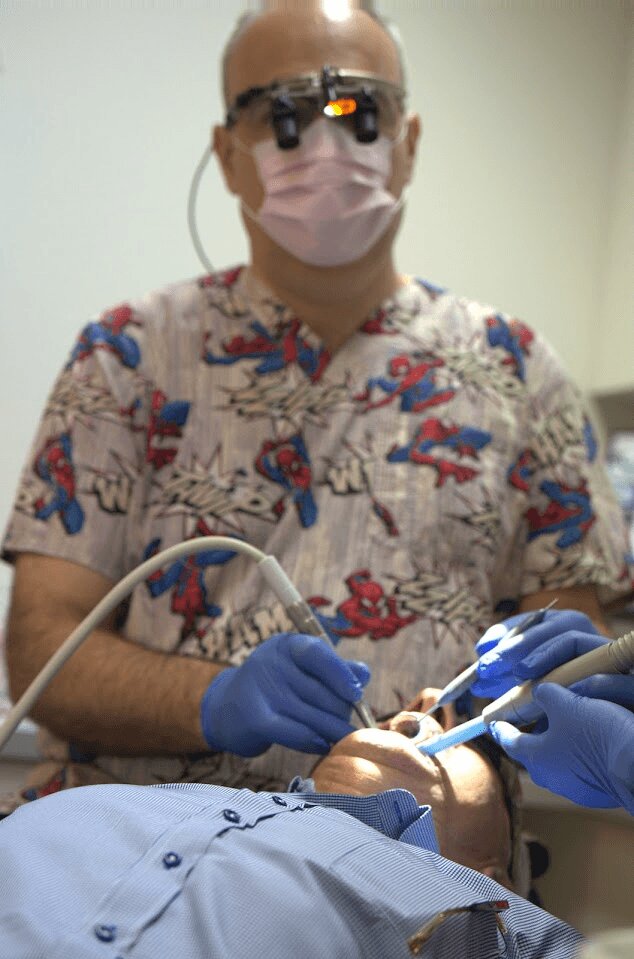
Check and plan
We look at the tooth, your bite and your gums, and take photos so you can see the starting point.
Choose the shade
The resin colour is matched to the teeth around it.
Prepare the surface
The tooth is cleaned and lightly roughened so the resin can grip, often with little or no drilling.
Build and set
Resin is added in thin layers, and each layer is hardened with a blue curing light.
Shape, polish and check your bite
The edge is shaped to match your other teeth and polished, then we check how your teeth meet.

Dental bonding commonly lasts around five to ten years before it needs a repair or replacement. Bonding on front teeth that don’t take heavy biting forces tends to last longer, and how long yours lasts depends mostly on your habits.
A small chip in bonding can usually be fixed by adding new resin, rather than redoing the whole tooth.
Bonding is quick and conservative, but composite resin isn’t as hard-wearing as porcelain. These are the trade-offs to weigh up:
The upside is that bonding usually removes little or no natural tooth, so in many cases it can be adjusted, repaired or removed later. Your dentist will tell you before treatment if your tooth needs more preparation than that.
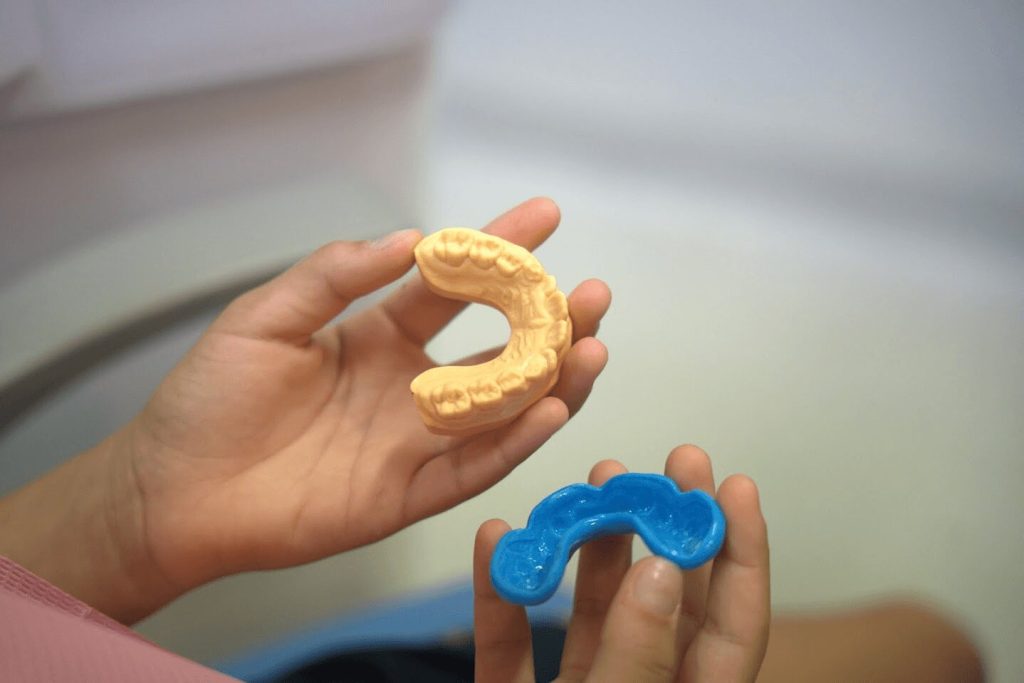
The cost of bonding depends on how many teeth are treated, how many surfaces are covered and how much shaping is needed. We give you a written quote after an examination, so you know the fee before any treatment starts.
Written quote first
Bonding fees depend on how many teeth are treated, how many surfaces are covered and how much shaping is needed, so we give you a written quote after an examination, before any work begins. You can also view our published fees and charges.
Health fund rebates
Bonding to repair a chipped or worn tooth is usually claimed as a tooth-coloured filling under extras cover, while purely cosmetic bonding may be treated differently. Check the item numbers on your quote with your fund. We accept most major health funds.
Interest-free payment plans
Interest-free payment plans are available for eligible treatments.
Use this year's extras
Many funds reset extras limits on 1 January, so if you have cover left, a December appointment can make use of it. Read our guide to what affects composite bonding cost.
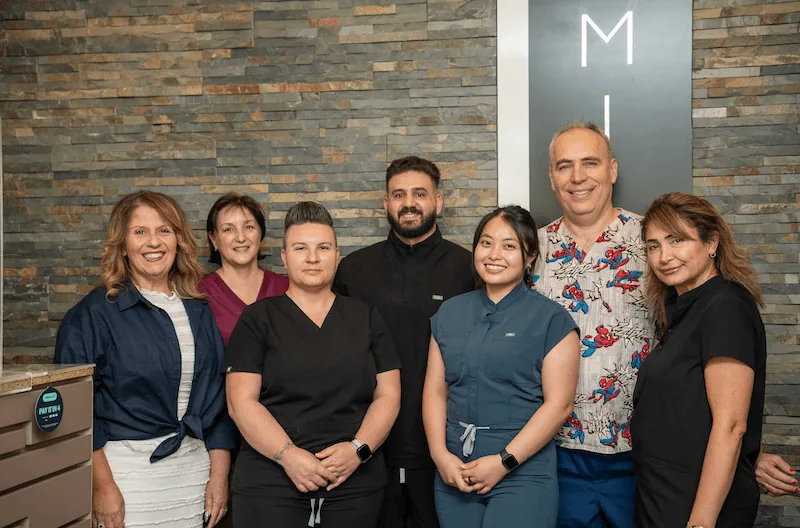
Bonding at The Smile Spot is provided by our dentists, led by principal dentist Dr Dimitrios Thanos. Dr Thanos graduated from the University of Sydney in 1995 and founded the practice in 1996, with a particular interest in cosmetic dentistry, implants and laser treatment.
Veneers, whitening and same-visit crowns are all done here as well. If bonding isn’t the right fit for your tooth, we can explain the alternatives at the same appointment, and you can take time to decide.
Most people feel little during bonding, because the work is on the surface and usually little or no tooth is removed. You may notice some pressure or cold sensitivity while the tooth is cleaned. If your tooth needs more preparation, your dentist will discuss using local anaesthetic first.
Often, yes. A small chip can usually be repaired in a single appointment once your dentist has checked there's no crack reaching deeper into the tooth. Mention the chip when you book on (02) 9569 0199 so enough time is set aside.
No. Whitening gel lightens natural enamel but not composite resin. If you'd like whiter teeth, whiten first and have the bonding colour-matched afterwards. Your dentist will tell you how long to wait after whitening before the shade is chosen.
In many cases, yes. Bonding usually needs little or no removal of natural tooth, so the resin can often be polished off or replaced later. Where a tooth needs more shaping first, the treatment is less reversible, and your dentist will explain that before starting.
Often in part, if you have extras cover. Bonding to repair a chip or worn tooth is usually claimed as a tooth-coloured filling, while purely cosmetic work may be treated differently. Your quote lists the item numbers so you can check your rebate with your fund.
Both use composite resin. Bonding repairs part of a tooth, such as a chip, a worn edge or a small gap. Composite veneers cover the whole front surface, usually across several teeth, to change their shape or colour more broadly.
Yes. Each layer of resin is fully set by the curing light before you leave. For the first day or two, go easy on strongly coloured food and drinks like coffee, tea and red wine, and avoid biting hard things with the bonded edge.
It depends on the work involved. One or two small repairs often fit into a single appointment, while bonding several teeth may need a longer visit or two appointments. We'll plan the timing with you at your examination.

The Smile Spot – Affordable Family Dentist, providing dental services at Dulwich Hill, Marrickville, Canterbury, Sydenham, Petersham, Lewisham, Summer Hill, Enmore, New Town, Earlwood, Wolli Creek, Bardwell Park, Arncliffe, Kogarah, Rockdale, Banksia, Bexley, Bexley North, Tempe, St. Peters, Erskineville, Sydney, Leichardt, Inner West.
Mon - Tue : 9 am -8 pm
Thu : 9 am -8 pm
Fri - Sat : 9 am -3 pm
Closed on Wednesdays and Sundays
Comprehensive Care Package includes examination, X-rays (as many as required), scale/clean and Fluoride treatment at $240 , For children under the age of 17 years $180.