
Home/Gum Disease Treatment
Gum disease is common, and in its earliest stage it is reversible. At The Smile Spot in Dulwich Hill, we assess your gums and treat the cause.
Call (02) 9569 0199Gum disease is quiet early on. Most people notice blood in the sink before pain.
Early signs:
Signs it has advanced:
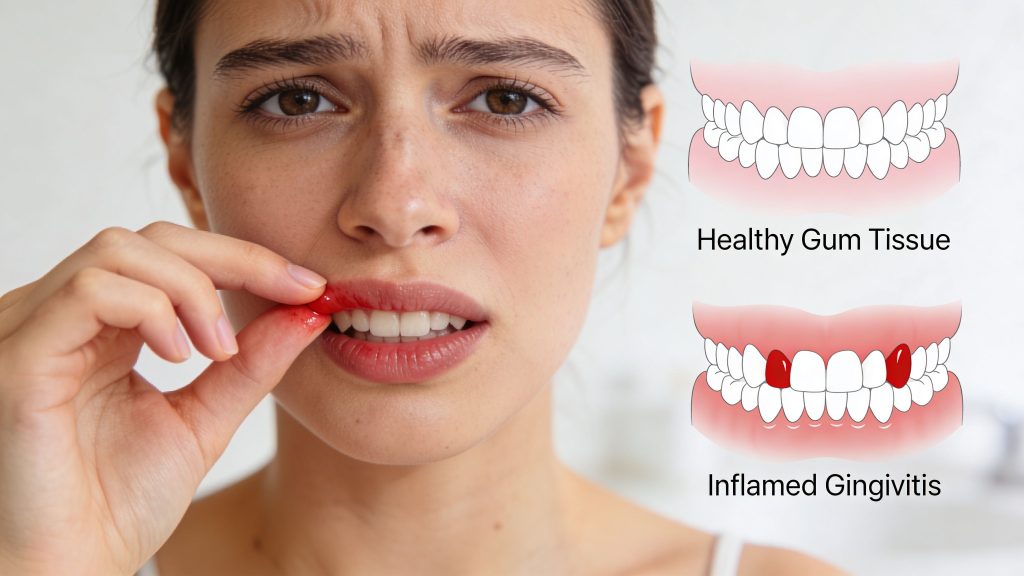
Pain is a late symptom, not an early one. Waiting for it means waiting too long, particularly once gum pain becomes a persistent toothache.
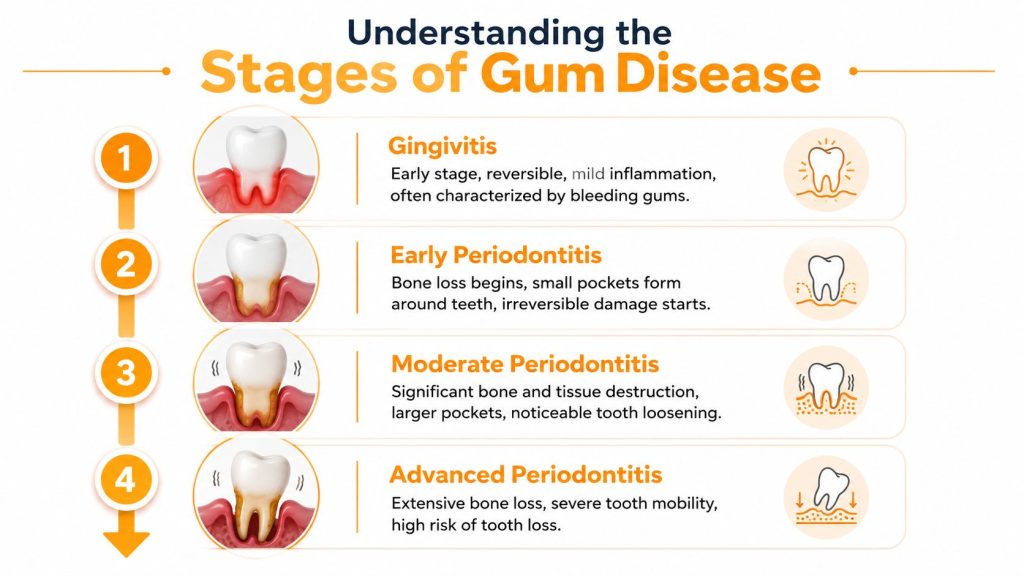
Gingivitis is inflammation confined to the gum tissue, caused by plaque at the gumline. It bleeds and is uncomfortable, but fully reversible with professional cleaning and better home care.
Periodontitis is what gingivitis becomes when left. Inflammation moves below the gumline, pockets form between gum and tooth, and the supporting bone breaks down. Bone already lost does not regrow, so the aim shifts to arresting progression and stabilising what remains.
Only a periodontal examination with pocket measurements establishes which stage applies.
Plaque not removed daily hardens into calculus, which cannot be brushed away and holds bacteria against the gum. Risk factors:
Several are modifiable, which is why home care is part of the treatment.
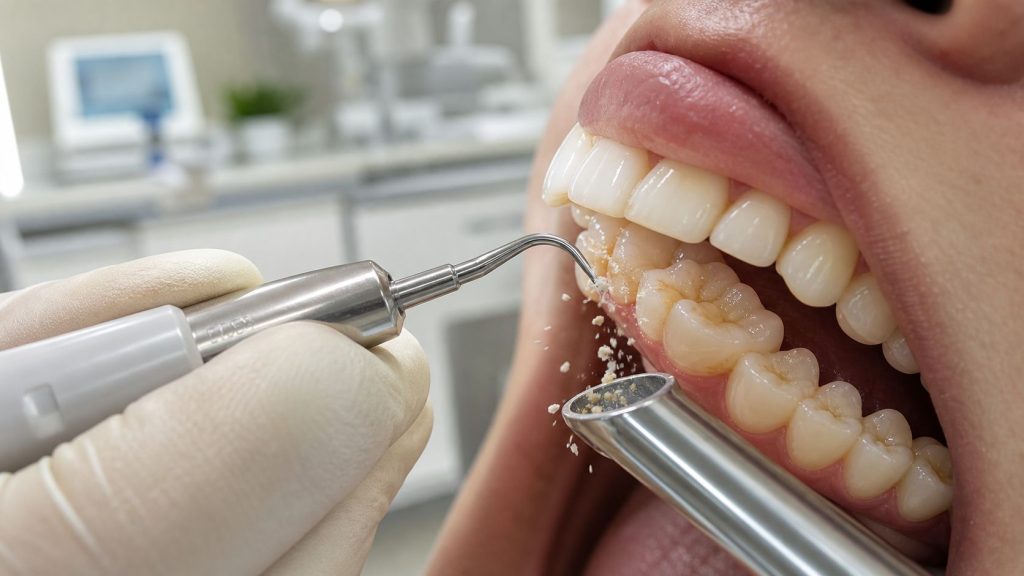
Mild inflammation and established periodontitis are treated differently, so we begin by establishing where you sit.
Your gums are reassessed once healed, to confirm the response and set the ongoing interval. Roya, our dental hygienist, has more than thirty-five years of experience and graduated in Sydney in 1991.

Expect some tenderness, and teeth briefly more sensitive to cold as inflammation settles. This is normal and eases.
What holds the result:
Once progressed, gum disease is managed rather than cured. The maintenance interval protects the work done.
Our fees are published rather than quoted once you are in the chair. The Comprehensive Care Package is $240 for adults and $180 for under-17s, covering a full examination, X-rays, a scale and clean, and fluoride, the natural starting point for gum concerns. A consultation under ten minutes is free, and a full thirty-minute examination is $60. Treatment beyond that is quoted after assessment. Interest-free plans and most major health funds are accepted.
Open until 8pm Monday, Tuesday and Thursday, and 9am to 3pm Friday and Saturday. Call (02) 9569 0199 or visit 504 Marrickville Rd, Dulwich Hill.
Gingivitis, the early stage, is fully reversible with professional cleaning and better home care. Once it becomes periodontitis and bone is lost, treatment arrests the progression rather than reversing it.
No. Healthy gums do not bleed. Bleeding when you brush or floss is usually the first sign of inflammation, and it is worth having assessed rather than ignoring.
A professional clean is generally comfortable. Deeper scaling and root planing is carried out with local anaesthetic. Some tenderness afterwards is normal and settles within a few days.
Our $240 Comprehensive Care Package covers a full examination, X-rays, a professional scale and clean, and fluoride. Treatment beyond that is quoted after assessment. Interest-free plans are available.
Advanced periodontitis destroys the bone that supports the teeth, which can lead to loosening and eventual loss. Treating it early is what prevents that outcome.

The Smile Spot – Affordable Family Dentist, providing dental services at Dulwich Hill, Marrickville, Canterbury, Sydenham, Petersham, Lewisham, Summer Hill, Enmore, New Town, Earlwood, Wolli Creek, Bardwell Park, Arncliffe, Kogarah, Rockdale, Banksia, Bexley, Bexley North, Tempe, St. Peters, Erskineville, Sydney, Leichardt, Inner West.
Mon - Tue : 9 am -8 pm
Thu : 9 am -8 pm
Fri - Sat : 9 am -3 pm
Closed on Wednesdays and Sundays
Comprehensive Care Package includes examination, X-rays (as many as required), scale/clean and Fluoride treatment at $240 , For children under the age of 17 years $180.