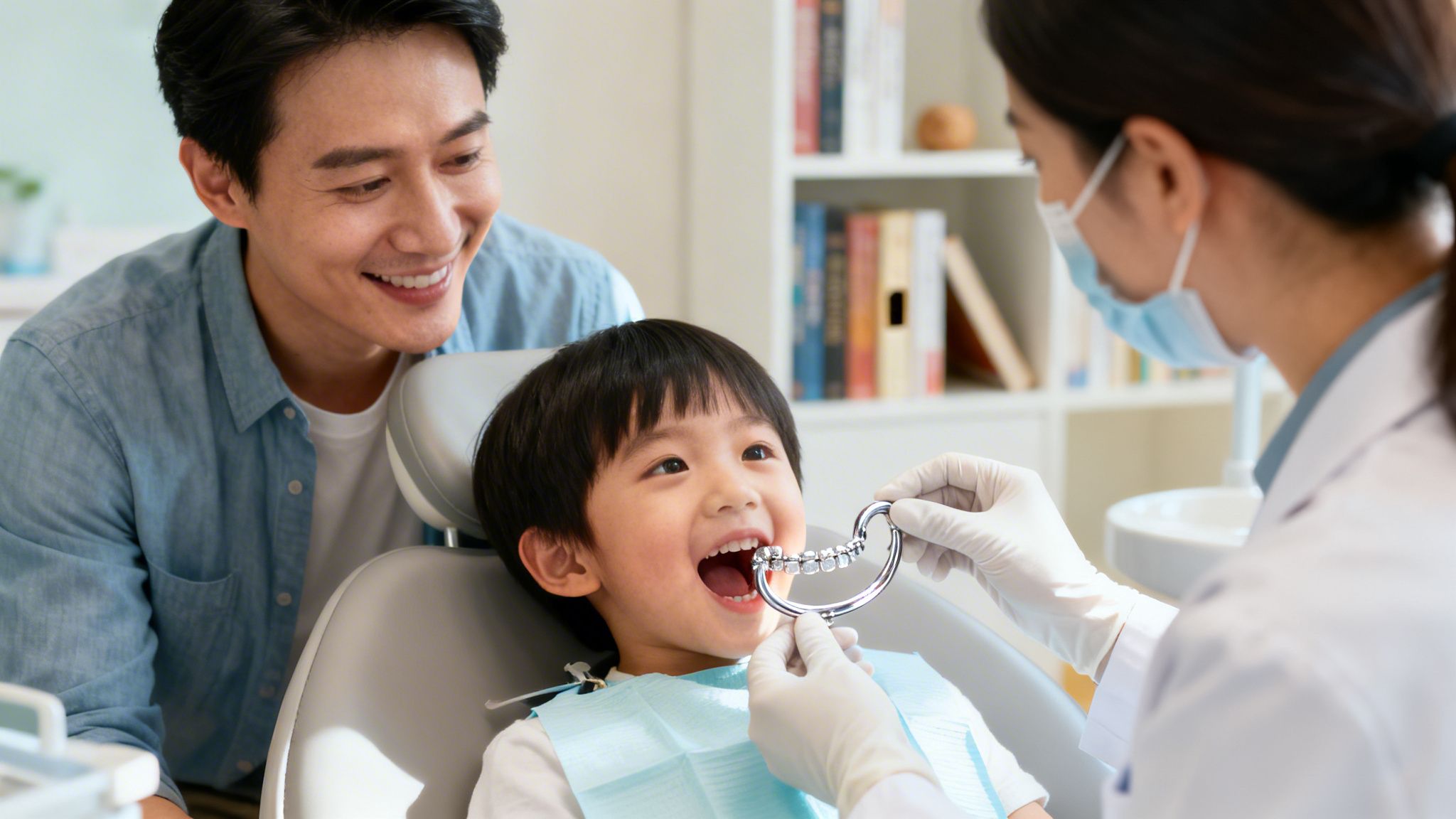
When a child loses a baby tooth earlier than expected, it’s completely normal for parents to feel a little concerned. A dental space maintainer is a small, custom-fitted appliance that does exactly what its name suggests: it maintains the space left by a lost baby tooth.
Think of it as a little placeholder, expertly designed to ensure the new permanent tooth has a clear and open path to come through correctly.
Understanding a Dental Space Maintainer and Its Importance
If you’ve ever pulled a book from a tightly packed shelf, you’ll know what happens next—the neighbouring books start to lean into the empty space. Your child’s teeth do the exact same thing. When a baby tooth is lost too soon, the teeth on either side naturally begin to drift into the gap.
At first, this might not seem like a big problem, but this gradual shift can lead to significant issues down the track by closing the space meant for the incoming permanent tooth.
A dental space maintainer acts as a guard, holding the fort until the permanent tooth is ready to make its appearance. It's a simple, proactive step that prevents a small gap from becoming a major orthodontic issue.
Without this simple appliance, the permanent tooth may not have enough room to erupt properly. This can cause it to come in crooked, sideways, or even get trapped beneath the gum line—a condition known as impaction.
Why Your Child Might Need a Space Maintainer
There are a few common reasons a child might lose a baby tooth prematurely. Understanding what causes this helps explain why a space maintainer can be such a crucial part of their dental journey.
- Tooth Decay: Unfortunately, advanced decay is one of the main reasons a baby tooth might need to be extracted before it’s ready to fall out on its own. Keeping up with oral hygiene is vital, as we discuss in our guide on the importance of regular check-ups and cleans.
- Accidents or Injury: A fall at the playground, a bump during sport, or another simple accident can easily knock out a baby tooth.
- Congenitally Missing Teeth: In some cases, a child might be born without a specific permanent tooth developing underneath. Here, it’s important to either preserve the baby tooth or manage the space carefully.
- Early Extraction: If a baby tooth becomes infected or causes other dental problems, your dentist may recommend removing it to protect your child’s overall oral health.
The need for a space maintainer is surprisingly common. In fact, it’s estimated that up to 60% of kids lose a baby tooth too early. This striking statistic really highlights how frequent this is for children here in Dulwich Hill and the Inner West.
Without a space maintainer, the neighbouring teeth can shift, causing space loss and localised dental crowding. This often leads to more complex and costly orthodontic treatments later—think braces that can cost thousands.
What Are the Different Types of Dental Space Maintainers?
When we talk about space maintainers, it's not a one-size-fits-all situation. Think of it like a custom key made for a specific lock. The type of appliance we recommend for your child depends entirely on their unique needs—like which tooth was lost, where it was in the mouth, and your child’s age.
The first and most important distinction is between fixed and removable appliances. Fixed space maintainers are cemented in place and do their job 24/7, while removable ones can be taken out for cleaning. For most kids, we find fixed appliances are the most reliable choice because they can't be forgotten or lost at school.
To make this clearer, here’s a quick comparison to help you see the main differences at a glance.
Fixed vs Removable Space Maintainers at a Glance
| Feature | Fixed Maintainers (e.g., Band-and-Loop) | Removable Maintainers |
|---|---|---|
| How it Works | Cemented to teeth; stays in place | Can be taken in and out, like a retainer |
| Best For | Younger children; back teeth; long-term space holding | Older, more responsible children; visible gaps |
| Effectiveness | Highly effective as it works continuously | Depends on consistent wear; easy to forget |
| Cleaning | Requires careful brushing and flossing around the appliance | Easy to clean the appliance and teeth separately |
| Durability | Very durable and strong | Can be more easily broken or lost |
Ultimately, the best choice is the one that fits your child’s dental needs and lifestyle, which is something we’ll discuss with you in detail.
Fixed Space Maintainers
These are the workhorses of paediatric dentistry and the most common type we use. They’re discreet, durable, and cemented in place so you can be sure they’re always working to hold that precious space.
Band-and-Loop: This is our go-to for a single missing back tooth. It’s a simple but brilliant design: a small metal band fits around the tooth behind the gap, and a tiny wire loop gently rests against the tooth in front. It acts like a perfect placeholder, stopping the neighbouring teeth from drifting.
Lingual Holding Arch: If your child has lost more than one baby tooth on their lower jaw, this is often the ideal solution. It uses bands on the molars on each side, connected by a wire that runs neatly along the inside (the 'lingual' or tongue side) of the bottom teeth. This maintains the entire U-shape of the lower arch, preventing a collapse.
Distal Shoe: This one is a bit more specialised. We use it in a very specific scenario: when a baby’s second molar is lost before their permanent six-year molar has come through. A small metal arm extends just below the gum line to act as a guide, ensuring that crucial new molar erupts into its correct position instead of tipping forward.
It might seem like a small gap now, but making the right call early on is key to preventing bigger problems down the road.
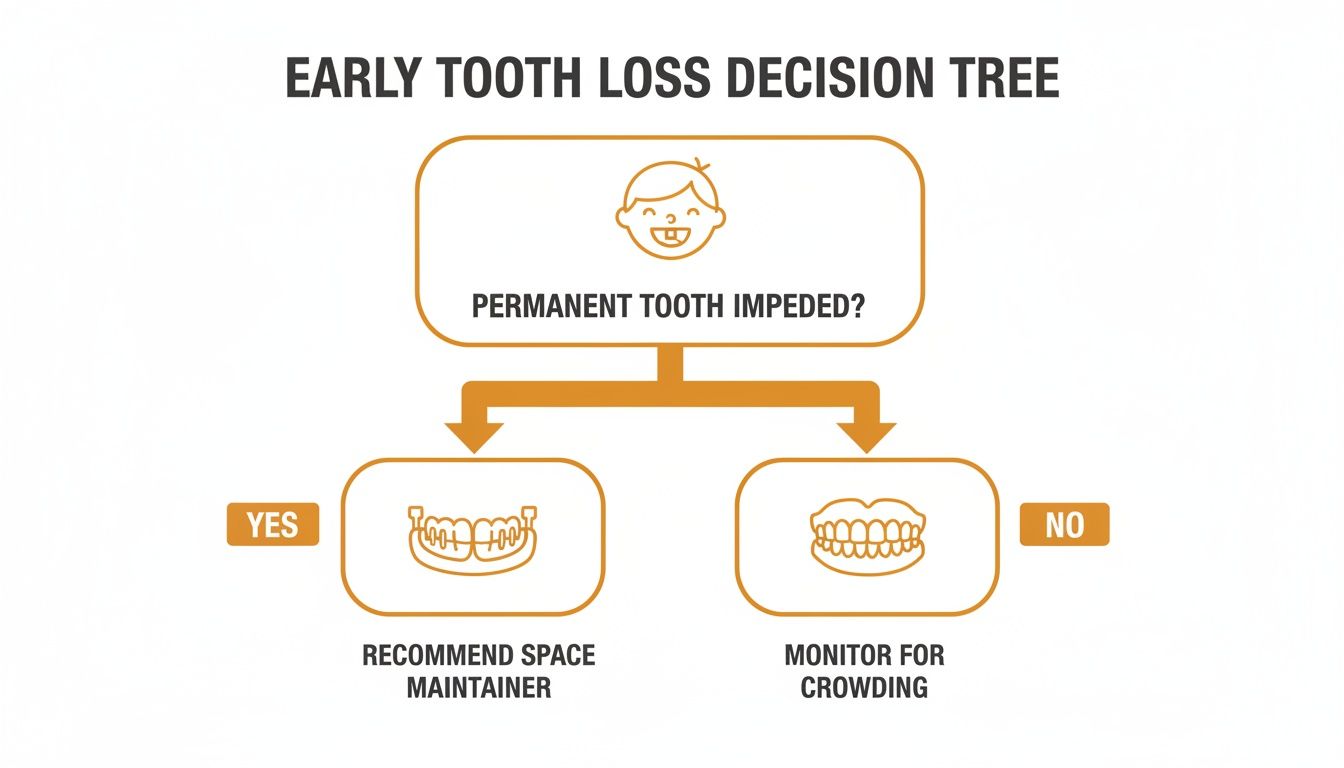
As you can see, a space maintainer is a proactive step that helps guide your child’s dental development. Without one, drifting teeth can quickly lead to crowding and a future need for more complex orthodontic treatment.
Removable Space Maintainers
A removable space maintainer looks a lot like a small retainer or plate, often made of acrylic. Sometimes they even include an artificial tooth to fill a more visible gap, which can be great for a child’s confidence. It holds the space just as effectively as a fixed one—if it’s worn as directed.
While removable options are easier to clean, they require a big commitment from both parent and child. To be effective, they have to be worn almost all the time. This can be a real challenge for younger kids, which is why we usually reserve this option for older, more responsible children.
The best appliance really depends on the situation. For example, a tooth lost to decay might have a different solution than one knocked out during sport. On that note, protecting your child's teeth during any physical activity is so important. You can learn more in our guide to getting a custom dentist mouth guard.
When you visit us at The Smile Spot, we’ll walk you through all the options, explain exactly why we’re recommending a particular space maintainer, and make sure you feel completely comfortable with the plan.
The Treatment Process at Our Sydney Clinic
Knowing what to expect can make any dental visit much easier for both you and your child. At The Smile Spot in Dulwich Hill, we’ve designed the entire space maintainer process to be a calm, straightforward experience that’s typically completed over just two visits.
We understand that you want the best for your child’s smile, and our goal is to provide clear, gentle care that leaves everyone feeling positive. It all starts with a simple chat and a look.
First, we’ll perform a gentle examination to understand what’s happening in your child’s mouth. We’ll also take some digital X-rays to check on the permanent tooth hiding below the gum line. This helps us see if a space maintainer is the right solution and if the timing is perfect.
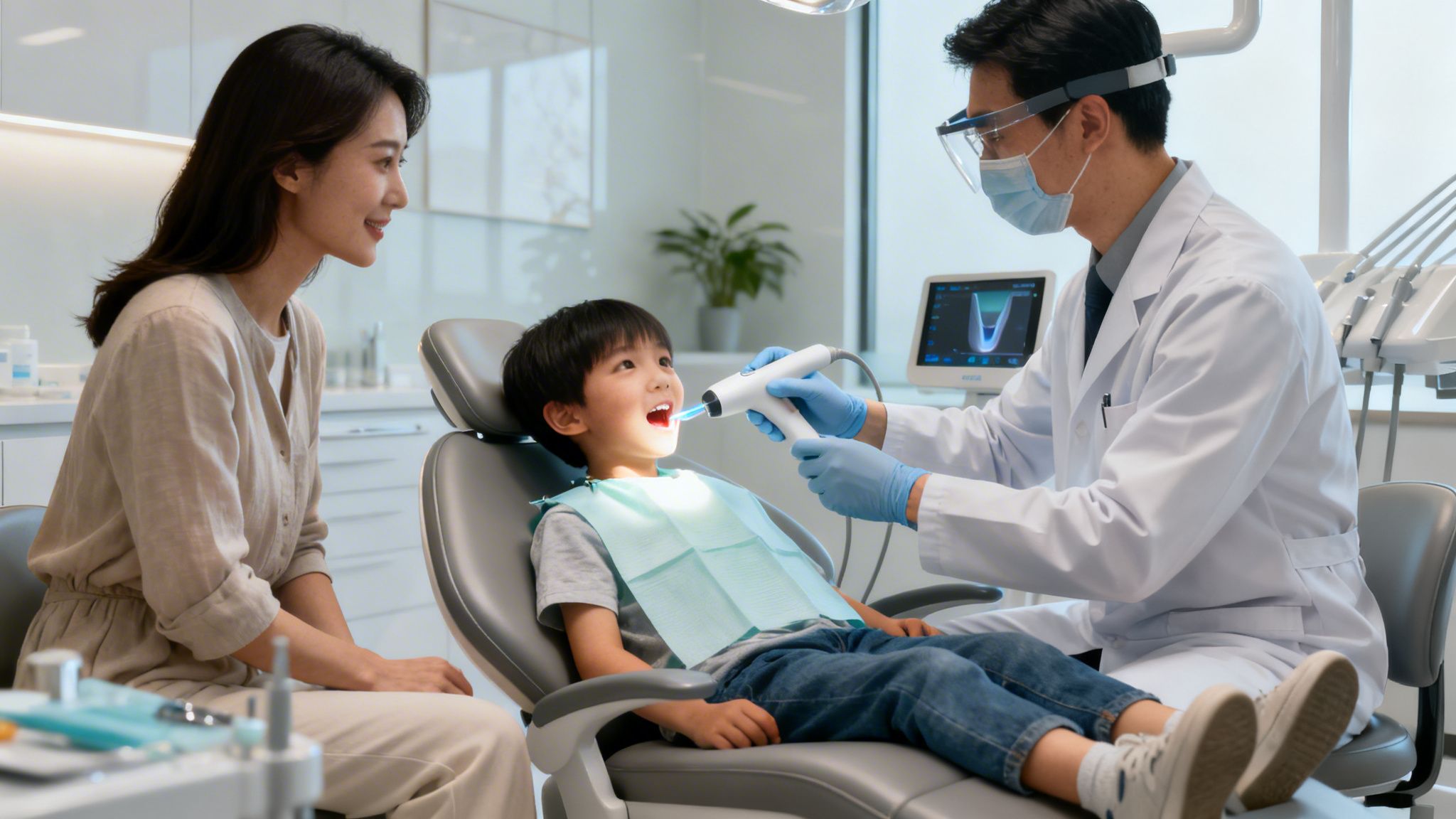
Your Child’s First Visit
The first appointment is all about careful preparation. Once we’ve confirmed that a space maintainer is the best way forward, we need to get a super-accurate impression of your child’s teeth.
We use advanced digital scanning technology to create a precise 3D model of your child’s teeth. This means no goopy, uncomfortable impression trays, which is a big relief for kids and parents alike.
This digital scan is quick and comfortable. From this 3D model, our trusted dental laboratory gets to work crafting a custom-fit space maintainer, made just for your little one.
The Second Visit and Fitting
About one to two weeks later, you’ll pop back into our Sydney clinic for the second and final visit. This is the exciting part where we fit the custom-made appliance.
The fitting process is simple and painless. Here’s what happens:
- We’ll gently clean the teeth that will be supporting the new appliance.
- Next, we’ll try the space maintainer in to make sure the fit is absolutely perfect.
- Once we’re happy with the fit, we secure it in place using a strong, dental-grade cement.
We’ll show both you and your child exactly what the appliance looks like and how it works to hold that important space open. We also know that some kids feel a bit anxious, and their comfort is our top priority. We always use gentle techniques, and for those who need a little extra help to relax, we offer sedation options.
If you’d like to learn more about how we help manage dental anxiety, have a read of our article on dentistry under full anaesthesia.
Caring for a Dental Space Maintainer at Home
Once your child’s space maintainer has been fitted, the next chapter begins: looking after it at home. Proper care is straightforward but absolutely vital for making sure the appliance can do its job effectively, paving the way for a healthy future smile.
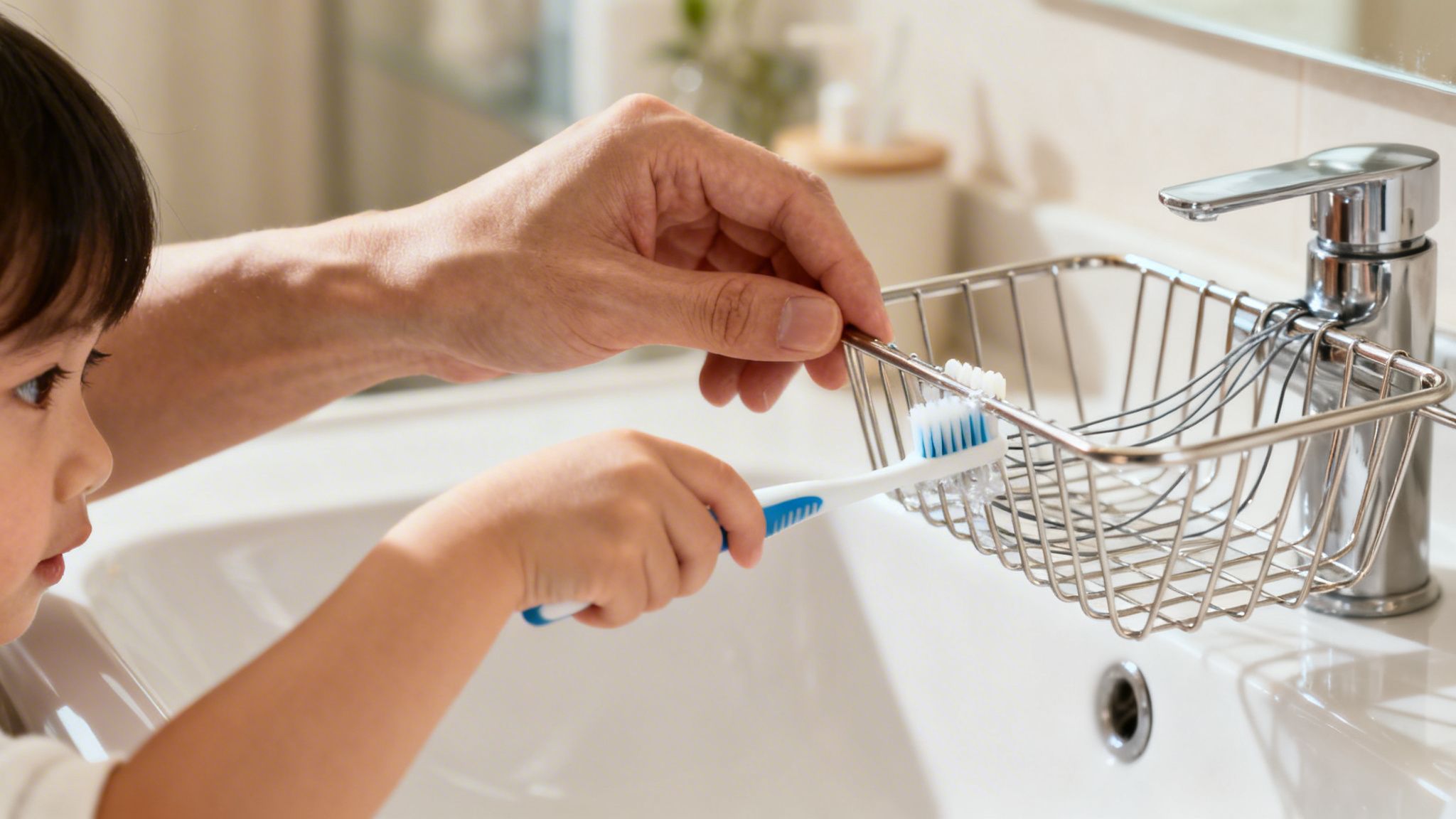
The good news is that caring for a fixed space maintainer usually becomes a normal part of your child’s daily routine very quickly. The main goals are simple: keep the area around it squeaky clean to prevent plaque, and avoid certain foods that could damage or dislodge it.
Dietary Adjustments to Protect the Appliance
The most common culprit behind a damaged space maintainer is food. To keep the appliance firmly in place, it’s best for your child to avoid anything particularly sticky, chewy, or hard.
Here are the main foods to steer clear of:
- Sticky Lollies and Caramels: These can easily grab onto the wires and bands, potentially pulling the appliance loose.
- Hard or Crunchy Foods: Things like nuts, popcorn kernels, and hard muesli bars can bend or even break the metal components.
- Chewing Gum: This is a definite no-go. It can wrap around the wires and become a real challenge to remove.
- Very Chewy Breads: Especially tough crusts can put unwanted pressure on the appliance.
Encouraging your child to be mindful when they eat is a great habit to build. It’s also wise to discourage habits like chewing on ice, pens, or fingernails, as these can easily damage the space maintainer.
Brushing and Flossing Techniques
With a space maintainer in place, excellent oral hygiene is more important than ever. Food and plaque love to hide around the bands and wires, which increases the risk of cavities and gum irritation.
It’s crucial to help your child brush thoroughly around all parts of the dental space maintainer at least twice a day. Pay special attention to the area where the appliance meets the gum line.
While cleaning around the appliance might seem a bit fiddly at first, it’s quite simple once you get the hang of it. Many of the same principles apply as those in our guide on how to properly clean a mouth splint. Of course, regular check-ups are also essential so we can professionally clean any hard-to-reach spots and make sure everything is on track.
Good home care really does make all the difference. While studies in Australian paediatric dentistry show that up to 63% of space maintainers can experience some issues, certain types have a fantastic track record when cared for properly. For instance, band-and-loop maintainers boast a 70% survival rate after 36 months, which shows just how durable they can be with the right attention. To see how we focus on successful, long-term outcomes, you can explore our approach to children's dentistry.
How You Can Help Prevent Premature Tooth Loss
While a dental space maintainer is a fantastic tool for managing a gap, the best approach is always prevention. Helping your child keep their baby teeth healthy and in place until they’re ready to come out on their own is the ideal scenario. It not only supports their long-term oral health but also reduces the chance they’ll need interventions down the track.
The first and most important step is simply empowering your child with great oral hygiene habits right from the start. A consistent routine of brushing twice daily with fluoride toothpaste and learning to floss are the cornerstones of a cavity-free smile.
Key Prevention Strategies
Building a strong defence for your child’s teeth comes down to a few key areas. Focusing on these simple, daily habits can make all the difference.
- Tooth-Friendly Diet: Try to limit sugary snacks and drinks, which feed the bacteria responsible for causing decay. Instead, encourage plenty of water, dairy products, and crunchy veggies.
- Consistent Brushing: Make sure your child is brushing for two minutes, twice a day. For younger kids, you’ll need to lend a hand to ensure they’re reaching all the tricky spots.
- Protecting Teeth During Sport: If your child plays sport, a custom-fitted mouthguard is a must-have. It offers the best protection against dental injuries that could lead to a tooth being knocked out too early.
Understanding the natural timeline for when baby teeth arrive and fall out is a huge part of staying on top of your child's oral health. The timing of baby teeth eruption and loss can vary, so regular dental visits are the best way to monitor your child's specific development.
The Power of Regular Dental Visits
Regular check-ups are another critical piece of the puzzle. These visits allow our team to give your child’s teeth a professional clean and spot any potential issues long before they become serious problems. Think of these appointments as your secret weapon in the fight against tooth decay.
These regular visits, like our teeth cleaning in Dulwich Hill, are incredibly impactful. In fact, studies show that preventive dental care averts up to 80% of space maintainer needs in Australian kids.
With 60% of children facing early baby tooth loss from decay or injury, taking these simple steps can drastically improve the odds. By combining routine check-ups, good home care, and a healthy diet, you can give those precious primary teeth the best chance of staying put. You can learn more about how we partner with families through our preventive dentistry services.
Common Questions About Space Maintainers
It’s completely normal to have questions when your child needs a new dental treatment. We want you to feel confident and informed every step of the way, so we’ve put together answers to some of the most common questions we hear from parents about dental space maintainers.
How Much Does a Space Maintainer Cost in Sydney?
The cost of a space maintainer can vary, as it depends on the type of appliance that’s right for your child’s specific needs.
At The Smile Spot, we believe in total transparency. During your consultation, we’ll provide a clear, all-inclusive quote so there are no surprises. Many private health insurance plans also offer rebates for paediatric dental appliances, and our friendly team is always happy to help you understand and make the most of your coverage.
How Long Will My Child Need to Wear It?
A space maintainer stays in place until the new permanent tooth is ready to break through the gum. This timeline is different for every child—it could be a few months or, in some cases, a couple of years.
Dr. Thanos will keep a close eye on your child’s progress with regular check-ups and X-rays. This helps us know the perfect time to remove the appliance, once it has successfully done its job of holding the space.
Is Getting a Space Maintainer Painful?
Not at all. The procedure itself is not painful. It might take your child a day or two to get used to the new feeling in their mouth, but this awareness fades very quickly.
Our team specialises in gentle paediatric care, and our priority is making sure your child feels safe and comfortable from the moment they walk in.
What Happens If We Don’t Use a Space Maintainer?
This is a really important question. Without a space maintainer, the teeth next to the gap can start to drift inwards and close up the space.
This can block the permanent tooth from coming in correctly, leading to problems like crowding, impaction (where the tooth gets stuck), or misalignment. Fixing these issues later on often requires more complex and costly orthodontic treatment, like braces.
Ready to protect your child's future smile? The expert team at The Smile Spot is here to guide your family with gentle, personalised care. Schedule a consultation to see how we can help. Book your appointment online or give us a call today.