
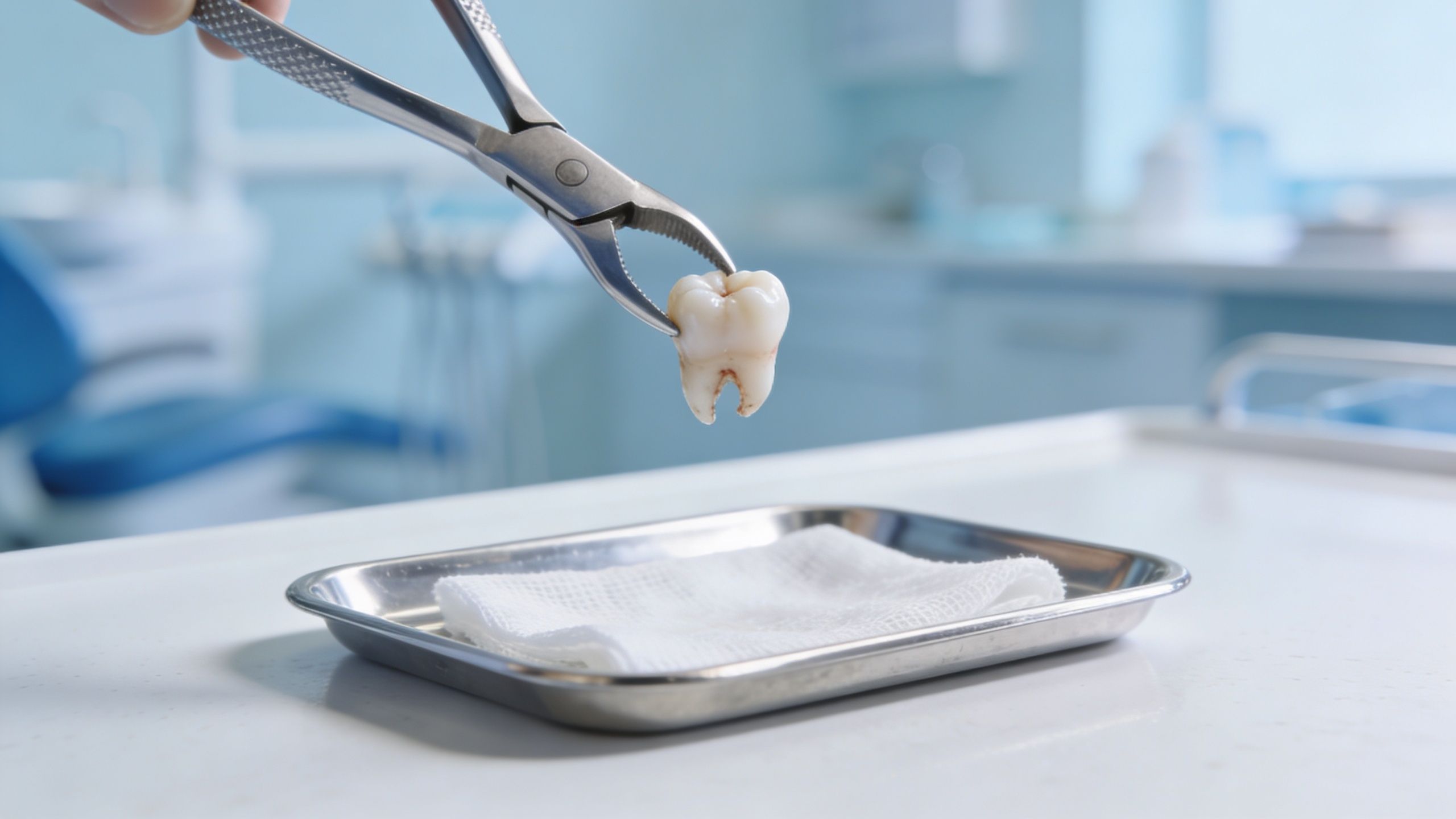
A dull ache right at the back of the jaw often starts the same way. It's easy to ignore at first. Then chewing feels tender, the gum seems puffy, and suddenly you're wondering whether this is something that will settle down or something that needs surgery.
That uncertainty is what makes wisdom teeth stressful. Patients aren't just asking, “How is the tooth removed?” They're asking, “Do I really need this done, how uncomfortable will it be, how long will recovery take, and what will it cost me?”
Those are the right questions. Wisdom tooth surgery is common, but it still deserves a careful, personalised decision. A good consultation should tell you whether removal is necessary, how straightforward or difficult the procedure is likely to be, and what comfort options make sense for you.
Your Guide to Understanding Wisdom Tooth Surgery
If you've landed here because the back of your mouth feels sore, your jaw is tight, or your dentist mentioned an impacted wisdom tooth, you're in familiar territory. In Australia, wisdom tooth surgery is a very common procedure, and the extraction of impacted teeth is described as a routine part of hospital and private dental care in Australian oral health reporting.
That matters because it helps separate two very different ideas. Common doesn't mean casual. It means dentists and oral surgeons assess and manage this problem every day. The process is well understood, and for most patients it follows a standard pathway: examination, imaging, treatment planning, the procedure itself, and follow-up care.
For patients in the Inner West, the first step is usually working out whether your symptoms match a wisdom tooth problem at all. Sometimes the issue is pressure, sometimes it's trapped food around a partially erupted tooth, and sometimes the X-ray tells a different story than the symptoms. If you're still at the early “is this what I think it is?” stage, this guide on finding wisdom tooth removal near you can help you understand what to look for before booking.
Practical rule: Don't judge a wisdom tooth only by pain. Some troublesome teeth ache early. Others stay quiet until the gum becomes inflamed or the neighbouring tooth starts to suffer.
The key is to make a decision based on what's happening in your mouth now, not on fear, guesswork, or old advice that every wisdom tooth has to come out.
Why Wisdom Tooth Removal Might Be Recommended
A wisdom tooth is often removed for a simple reason. It can't come through properly, or it's already causing harm.
The word impacted just means the tooth is blocked, similar to a car stuck in a garage with the door only half open. It may press against the tooth in front, stay trapped under gum or bone, or partly emerge and leave a small flap of gum that catches bacteria and food.
Common reasons removal is advised
A dentist may recommend wisdom tooth surgery when there is a clear clinical problem, such as:
- Repeated gum infection: A partly erupted tooth can trap plaque and food under the gum, leading to swelling, tenderness, bad taste, or difficulty opening the mouth.
- Ongoing pain: Pain may come from pressure, inflammation, decay, or the tooth pushing into the molar next to it.
- Decay that can't be managed well: Wisdom teeth are hard to clean. If the tooth is too awkwardly placed for reliable brushing and treatment, extraction may be the more sensible option.
- Damage to the next tooth: An impacted third molar can create a plaque trap against the second molar, increasing the chance of damage where you can't easily see it.
- Cysts or other surrounding changes: Some impacted teeth need removal because of what is happening around them, not just to the tooth itself.
If you've been told you may need a back tooth removed and want broader context first, this overview of molar extraction near you explains how dentists assess removal decisions in practical terms.
Do you need them out if they don't hurt
Not always. This is one of the biggest changes in modern wisdom tooth care.
Australian dental guidance has moved away from automatically removing symptom-free wisdom teeth. The current evidence-based approach is to remove them when there's a clear reason, such as pain, recurrent infection, cysts, or damage to other teeth, as outlined in Australian guidance discussed in Frontiers in Dental Medicine.
That means a quiet wisdom tooth on an X-ray isn't automatically a surgical problem. If it's asymptomatic and disease-free, monitoring may be more appropriate than booking surgery straight away.
What “watch and monitor” really means
Watchful waiting isn't neglect. It means your dentist keeps checking for signs that the situation is changing.
That usually includes:
- Reviewing symptoms: Pain, swelling, tenderness, or bad taste
- Checking the gum around the tooth: Especially if part of the crown is exposed
- Assessing the neighbouring molar: This tooth often carries the hidden burden
- Repeating imaging when needed: To compare position and surrounding bone over time
If a wisdom tooth is quiet, cleanable, and not damaging anything, surgery may not be the automatic answer.
The right question isn't “Do wisdom teeth usually come out?” It's “What is this wisdom tooth doing in my mouth, and what is the safest long-term choice?”
Your Consultation and Comfort Options
You might arrive expecting to be told, "It has to come out," and leave with a clearer, calmer answer. A good consultation does more than confirm whether surgery is needed. It explains why removal may help, when it can wait, and which comfort option fits both the tooth and the person.
That matters because two patients with "impacted wisdom teeth" can need very different plans. One may be suitable for a simple removal under local anaesthetic in the chair. Another may be better managed with sedation because the tooth is deeper, access is tighter, or anxiety is likely to make the appointment harder than it needs to be.
What happens at the consultation
The appointment usually starts with your story. Pain, swelling, a bad taste, food trapping, jaw stiffness, trouble opening wide, or repeated gum infections all help build the picture. Then your dentist examines the area and reviews imaging to see the tooth's position, the shape of the roots, and how much room there is to work safely.
The goal is to answer a few practical questions:
- Is the wisdom tooth causing the problem
- How difficult is the removal likely to be
- How close is the tooth to nearby structures
- Is treatment better suited to local anaesthetic alone, or would sedation make the experience easier
Lower wisdom teeth often need the most planning. Some are quick to remove. Others are partly buried under gum or bone, angled into the tooth in front, or harder to reach at the back of the mouth. Those details affect the time involved, the level of difficulty, and the recovery discussion.
This is also the point where "if" gets answered properly. If the tooth is not causing damage, pain, or repeated infection, monitoring may still be the better choice. If surgery is recommended, you should understand the reason in plain language.
Comparing your comfort options
Pain is only one part of the experience. Many patients are more worried about pressure, noise, gagging, or feeling tense for the whole appointment. The right comfort plan should match the procedure and your stress level, not just the X-ray.
| Option | What You'll Experience | Best Suited For |
|---|---|---|
| Local anaesthesia | You're awake and the area is fully numb. You may notice pressure and movement, but you should not feel sharp pain. | Straightforward removals and patients who are comfortable staying fully aware |
| Sedation with local anaesthesia | You stay deeply relaxed while the mouth is numbed. Time often feels shorter, and many patients remember less of the procedure. | Anxious patients, longer appointments, or wisdom teeth expected to be more difficult |
| General anaesthesia | You're asleep for the procedure and wake up afterwards. | Selected complex surgical cases or situations where a deeper level of anaesthesia is the better fit |
For many wisdom tooth removals in general practice, local anaesthetic is enough. Sedation can make a real difference when anxiety is high or access is difficult. General anaesthesia is usually reserved for specific cases rather than used as a default option.
If anxiety is one of the main reasons you have been putting this off, it helps to read about oral sedation dentistry before your visit. Patients who understand what sedation feels like usually ask better questions and make decisions with more confidence.
The best comfort option is the one that keeps you relaxed, keeps treatment safe, and fits the level of difficulty involved.
A note on pain relief before and after
People sometimes ask whether numbing creams are enough for wisdom tooth pain. They can dull surface irritation for a short time, but they do not treat an infection, fix pressure from an impacted tooth, or replace proper anaesthetic during surgery. If you want to compare topical pain relief options, that guide is a useful starting point.
For surgery itself, comfort comes from careful planning, profound local anaesthetic, and a recovery plan you can realistically follow at home. That is what helps patients feel prepared rather than overwhelmed.
What to Expect on the Day of Your Surgery
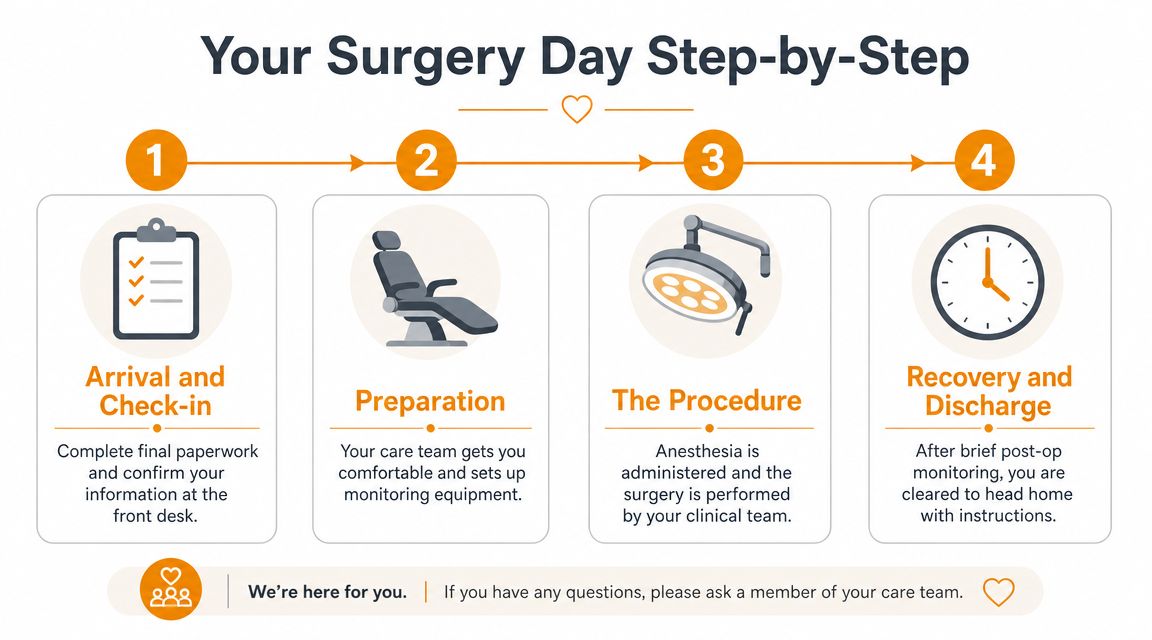
By the time surgery day arrives, most of the important decisions should already be made. You should know which tooth or teeth are being removed, what type of anaesthesia is planned, and what you need to do afterwards.
Arriving and getting settled
When you arrive, the team usually confirms your medical details, medications, allergies, and the treatment plan. If you're having sedation, there may be a few extra checks first. Then you're brought into the treatment room and made comfortable.
This part is often calmer than patients expect. There's no rush. The focus is on making sure you understand what's happening and that the area is fully numb before anything starts.
If you're especially nervous about sounds, sensations, or staying relaxed during treatment, some patients also ask about dentists with nitrous oxide as part of a broader comfort discussion.
What the procedure usually involves
For an easy wisdom tooth, removal may be similar to a standard extraction. For an impacted tooth, the process is more methodical.
A common approach is to make a small opening in the gum, remove a limited amount of bone if needed for access, and divide the tooth into smaller sections so it can be removed with less force. That technique is used to reduce trauma to surrounding tissues, as described in this review of surgical methods for impacted third molars.
What you feel depends on your anaesthesia. With local anaesthetic, you may notice pressure, pushing, vibration, or water from the drill, but you shouldn't feel sharp pain. If you do, you tell the dentist straight away and more anaesthetic is given.
Before you head home
Once the tooth is out, the area is cleaned. Sometimes sutures are placed. Gauze is positioned over the site so you can bite down and help the early clot settle.
You don't need the surgery to feel elegant. You need it to feel controlled, well explained, and uneventful.
Before discharge, you'll be told how to manage bleeding, what medications to take, what to eat, and what to avoid that day. If you've had sedation or general anaesthesia, you'll also need someone to take you home and stay in the background while you rest.
A Guide to Your Recovery and Aftercare
The first thing most patients want to know after wisdom tooth surgery is whether what they're feeling is normal. In most cases, some soreness, swelling, a small amount of oozing, and a tight jaw are part of ordinary healing.

The key is to protect the blood clot, keep the area clean without disturbing it, and stay ahead of discomfort rather than waiting until everything feels worse.
The first 72 hours
These first few days matter more than people realise. Good aftercare won't make surgery disappear, but it does make recovery smoother.
- Control swelling early: Use a cold pack on the outside of the face in short intervals during the early recovery period. This is most useful before swelling peaks.
- Take pain relief as directed: Don't wait until the anaesthetic wears off completely and discomfort builds. Follow the instructions your dentist or surgeon gives you.
- Keep food soft and simple: Think yoghurt, soup once it's cooled, mashed vegetables, smoothies eaten with a spoon, scrambled eggs, or soft pasta.
- Rest with your head propped up: Lying flat can make throbbing feel worse.
- Avoid straws, smoking, and forceful spitting: These can disturb the blood clot and slow healing.
- Go gently with cleaning: Brush the other teeth normally, but don't scrub the surgical site.
- Start salt-water rinses only when advised: Usually this begins after the immediate early period, and the rinse should be gentle, not vigorous.
What tends to feel normal
Many patients are relieved once they know what expected healing looks like.
A typical early pattern is:
- Day one: Numbness wears off. The area feels sore and tender. Mild bleeding or blood-stained saliva may continue for a while.
- Day two to three: Swelling and stiffness often feel most noticeable here. This can be uncomfortable without meaning something is wrong.
- Day four onward: The mouth usually starts to settle. Eating gets easier, jaw movement improves, and pain should trend downward.
For a visual walk-through of practical home care, this video gives a helpful overview of the basics after extraction:
Keeping the site clean without overdoing it
One of the most common recovery mistakes is confusing cleanliness with aggression. Patients sometimes rinse too hard, probe the socket, or brush directly over it because they're worried about infection.
That usually backfires. The goal is a clean healing environment, not a spotless-looking hole.
Leave the extraction site alone more than you think you should. Gentle care beats over-cleaning.
When to call the dentist
Most recoveries are straightforward, but some symptoms deserve a call.
Contact your dentist if you notice:
- Bleeding that doesn't settle
- Pain that is worsening instead of gradually easing
- Bad taste or odour that seems to intensify
- Swelling that is getting bigger rather than slowly improving
- Fever, feeling unwell, or difficulty swallowing
- Persistent numbness or unusual altered feeling after the expected anaesthetic effect should be gone
A common complication patients hear about is dry socket. In simple terms, it happens when the blood clot doesn't stay in place as it should, leaving the socket exposed and very sore. It's not something you diagnose by looking in the mirror. If the pain seems out of proportion or suddenly gets worse after initially settling, call the clinic and get assessed.
Costs, Health Funds, and Common Questions
The cost of wisdom tooth surgery varies because not every wisdom tooth is the same. A fully erupted upper tooth removed under local anaesthetic is very different from a difficult lower impacted tooth that needs surgical access and sedation.
What changes the fee
The main factors usually include:
- How many teeth are being removed
- Whether the teeth are erupted or impacted
- How difficult access is
- Whether you need local anaesthetic only, sedation, or another setting
- Whether imaging and follow-up care are included in the plan
There isn't one meaningful “standard price” that applies to every patient. The sensible way to approach this is to ask for a written quote that lists the treatment clearly.
How to check your health fund
If you have private health insurance, ask for the quote before booking and then check directly with your fund.
That conversation is easier when you have:
- The proposed treatment details
- The relevant item numbers from the clinic
- Confirmation of whether sedation or hospital-related costs are separate
- Any expected gap you may need to pay
If the upfront cost is the main barrier, some patients also look into dentists with payment plans near them so the timing of treatment doesn't become the reason a painful tooth is left too long.
Common questions patients ask
When can I go back to work
That depends on the difficulty of the extraction, the type of anaesthesia used, and what your job involves. Desk-based work is different from physical work, shift work, or a role where clear speech matters all day. Ask for advice based on your specific treatment plan rather than assuming everyone recovers on the same timeline.
Will I look very swollen
Some swelling is common, especially after lower wisdom tooth surgery. The amount varies with the tooth, the surgical access required, and your own healing response.
Can I eat normally that night
Usually not. Start with soft, easy foods and plenty of fluids. Choose comfort over ambition.
Is it better to remove all wisdom teeth at once
Sometimes yes, sometimes no. It depends on which teeth are involved, whether all of them need removal, and what recovery arrangement makes sense for you.
Wisdom Tooth Care at The Smile Spot in Dulwich Hill
Good wisdom tooth care is rarely about rushing to surgery. It's about making the right call, using a careful technique, and giving patients a recovery plan they can follow.
That matters because modern oral surgery increasingly favours minimally invasive techniques. Approaches that use smaller incisions and tissue-sparing extraction methods can help reduce trauma, lessen postoperative swelling, and protect nearby nerves, as discussed in this review of minimally invasive third molar surgery.
For patients in Dulwich Hill and the Inner West, that usually means looking for three things in a clinic. First, clear judgement about whether the tooth should come out at all. Second, comfort options that fit both the surgery and the patient. Third, technology and technique that aim to reduce unnecessary tissue trauma.
At The Smile Spot, wisdom tooth assessments and extractions sit within a broader family dental setting, which is useful when the question isn't only “Can this tooth be removed?” but also “What's happening to the gum, the neighbouring molar, and the rest of the bite?” Dr Dimitrios Thanos has led the practice since 1996, and the clinic also uses Biolase laser dentistry as part of its minimally invasive treatment approach where appropriate.
If your wisdom tooth has started to ache, if your dentist has mentioned impaction, or if you want a clear second opinion before deciding, the best next step is a proper consultation. A good plan makes the whole process feel smaller.
If you want calm, practical advice about whether you need wisdom tooth surgery and what your options are, book a consultation with The Smile Spot. You'll get a clear assessment, an explanation of the treatment choices, and a plan that fits your comfort level, recovery needs, and budget.