Some people notice it in photos first. You smile at a birthday dinner in Marrickville, a work event in the CBD, or a family catch-up in Dulwich Hill, then realise your teeth look duller than you expected. Coffee, tea, red wine, richly coloured foods, and simple day-to-day wear can all leave teeth looking darker over time.
That's usually when the confusion starts. One website says whitening is quick and easy. Another pushes strips or LED kits. A beauty salon offers a cheaper deal. A dental clinic talks about peroxide concentrations, shade guides, and sensitivity management. For most patients, the hard part isn't deciding whether they want a brighter smile. It's working out which option is safe, legal, and worth doing.
That confusion matters because teeth whitening has become one of Australia's most requested cosmetic dental procedures, particularly among adults under 45, and over 15–20% of adults have undergone professional teeth whitening according to Australian survey reporting on whitening trends (teeth whitening trend data in Australia). Demand is high, but good decisions still come down to clear information, not marketing.
A Brighter Smile Starts with the Right Information
A patient sitting in the chair will often say the same thing in different words. “I brush properly, so why do my teeth still look stained?” Usually, the answer isn't poor hygiene. It's life. Flat whites on the run, black tea at work, pasta sauces, soy-based meals, red wine on weekends, and the natural ageing of enamel all change the way teeth reflect light.
What catches many people out is that “whitening” isn't one single category. A registered dental clinic, a cosmetic salon, an online gel kit, and a whitening toothpaste can all use the same word while offering very different products, supervision, and results. That's where patients can end up paying twice. First for something that doesn't deliver much change, then again for proper treatment.
Why clear guidance matters
In practice, the best whitening decisions usually start with three questions:
- What kind of stain do you have. Surface staining from coffee behaves differently from deeper colour changes within the tooth.
- How quickly do you want results. Some people want a visible lift before a wedding or interview. Others are happy to improve gradually.
- How prone are you to sensitivity. This affects product choice, contact time, and whether an in-chair or take-home approach makes more sense.
A brighter smile should feel predictable, not like a gamble.
Patients in the Inner West are often balancing convenience with caution. They want something effective, but they also want to know they won't end up with sore teeth, irritated gums, or uneven colour. That's the right instinct. Teeth whitening works best when it's treated as a dental procedure, not a beauty impulse buy.
How Professional Teeth Whitening Works
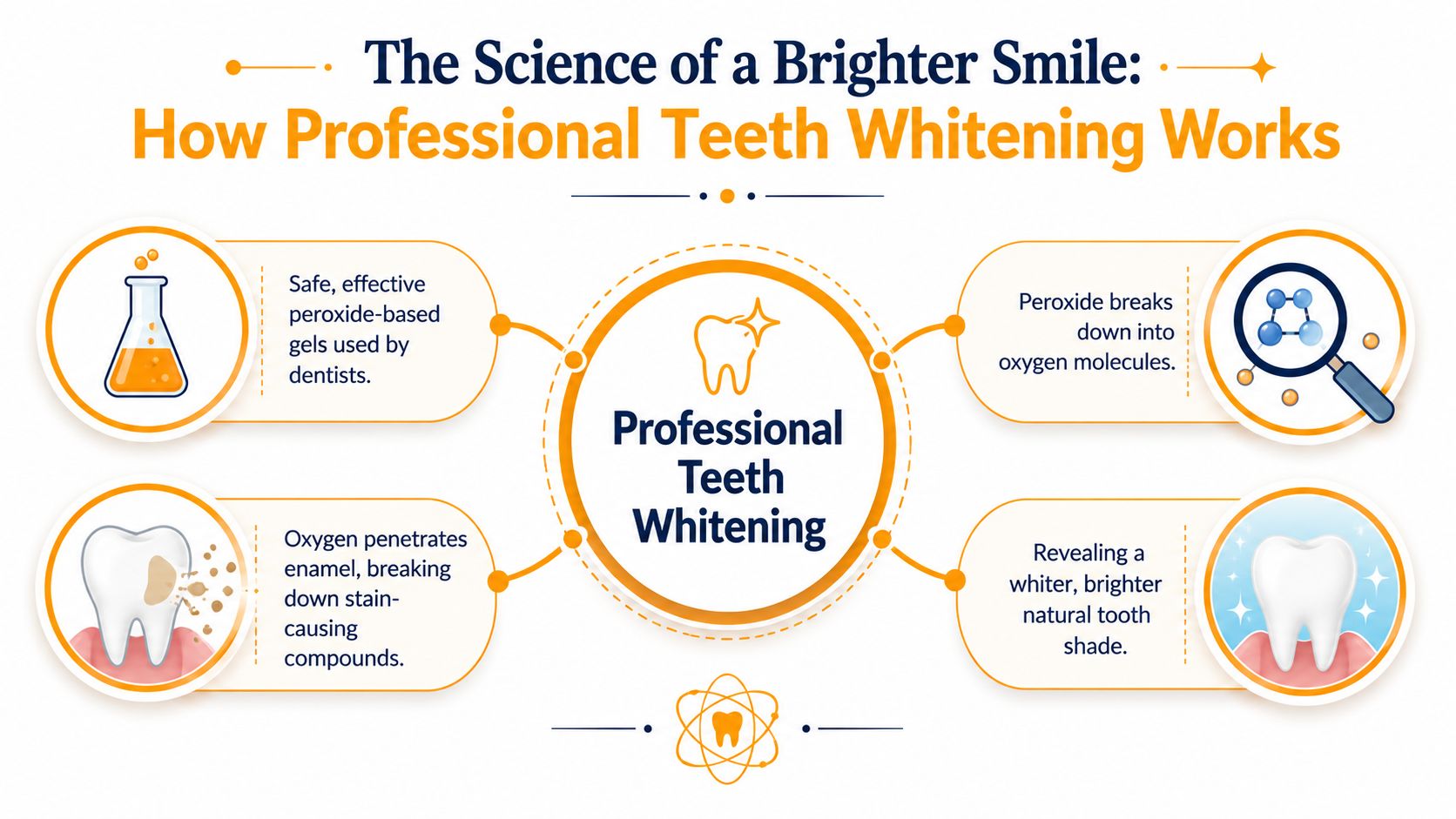
Professional whitening uses peroxide-based bleaching agents to change the colour of the tooth itself. That's the key difference. A whitening toothpaste mainly helps remove some surface stain. A proper dental whitening gel penetrates beyond the surface and breaks down the compounds causing discolouration inside the enamel and dentine.
A simple way to think about it is fabric cleaning. If you spill coffee on a shirt, a surface wipe may lighten the mark a bit. A professional cleaner works deeper into the fibres to lift what's set in. Teeth whitening works in a similar way. Dental gels don't just polish the outside. They target deeper staining.
What the peroxide is doing
When the whitening gel is applied, the peroxide breaks down and releases oxygen. Those oxygen molecules move through the tooth structure and disrupt stain-causing compounds. As those compounds break apart, the tooth appears lighter.
That's why professional systems can produce real colour change rather than just a cleaner-looking surface. It's also why the process needs proper assessment first. Not every dark tooth is stained for the same reason, and not every patient responds at the same pace.
Why clinic treatment behaves differently from shop products
Over-the-counter products usually rely on lower-strength ingredients, shorter contact times, or less accurate delivery. Some can help with mild staining or maintenance, but they often struggle with deeper discolouration. Whitening toothpastes are even more limited. They can improve the appearance of surface stain, but they don't bleach the tooth to the same extent.
If you're weighing up the difference between a dentist-led system and a retail option, this guide to a professional whitening kit versus other approaches is useful background.
Practical rule: If the product is designed for convenience first, it usually trades away strength, control, or consistency.
That doesn't mean lower-intensity options are useless. It means they need to be matched to the right job. For noticeable whitening, deep stain breakdown matters. For mild maintenance, simpler products may have a role. The mistake is assuming they're interchangeable. They aren't.
Types of Treatments at Dental Clinics
When patients ask about teeth whitening clinics, they're usually choosing between two legitimate professional pathways. The first is in-chair whitening done under direct supervision in the clinic. The second is a dentist-supervised take-home kit with custom trays and specific instructions. Both can work well. The right option depends on timing, sensitivity history, staining pattern, and how much structure you want around the process.
In Australia, the regulatory line is important. Whitening agents with more than 6% hydrogen peroxide are prescription-only and must be administered by a dentist, and in-office protocols using 25–35% hydrogen peroxide can achieve an improvement of 3–8 shades (ADA guidance on whitening regulation and clinical outcomes). That's one reason clinic-based treatment is different from salon offers and retail kits.
In-chair whitening
This is the option people usually mean when they say they want fast results. After an examination, the clinician isolates the gums and soft tissues, applies a whitening gel, and monitors the process in timed cycles. Some clinics use light-assisted systems as part of the protocol. The important point isn't the gadget. It's the controlled use of a professional-strength gel with proper protection and supervision.
This suits patients who want a noticeable change in one visit, have an upcoming event, or don't want the hassle of managing trays at home. It also suits patients who prefer treatment to be done for them rather than relying on compliance over several days or weeks.
A detailed look at teeth bleaching services offered in dental settings can help if you're comparing what different clinics include.
Dentist-supervised take-home kits
Take-home whitening from a dental clinic isn't the same as a chemist kit. The trays are custom-made to fit your teeth, which helps the gel sit where it should and reduces unnecessary contact with the gums. You're also given a peroxide formulation and wearing schedule that matches your mouth, goals, and sensitivity profile.
This option is often a good fit for patients who want more gradual change, prefer to whiten on their own schedule, or want a maintenance plan after earlier in-chair treatment. It can also be the better choice for people who need a slower approach because they've had sensitivity before.
Professional Whitening Options at a Glance
| Feature | In-Chair Whitening | Take-Home Whitening Kit |
|---|---|---|
| Who applies it | Dentist or supervised clinical team | Patient, following dentist instructions |
| Strength profile | Uses higher-concentration clinical gels | Uses lower-dose supervised gels in custom trays |
| Speed | Designed for a faster visible result | More gradual improvement over days or weeks |
| Control during treatment | High, with direct monitoring and tissue protection | High when instructions are followed, but relies on patient use |
| Best for | Events, faster change, patients wanting clinic oversight | Gradual whitening, flexible routine, maintenance |
| Sensitivity management | Adjusted during the appointment if needed | Adjusted through wear time and gel selection |
| Convenience | One organised visit, less home effort | More flexible, but requires consistency |
What works well and what tends not to
In practice, these patterns hold up:
- Best for speed. In-chair treatment is better when time matters.
- Best for flexibility. Custom trays are easier for patients who want to whiten around work or family routines.
- Best long-term strategy. A supervised combination often works well, with an initial stronger treatment followed by occasional tray-based maintenance.
- Less reliable choices. Poorly fitted generic trays, beauty salon whitening, and impulse online kits are where uneven outcomes and avoidable irritation show up most often.
The main trade-off is simple. Faster whitening usually means stronger products and closer supervision. Slower whitening gives you more flexibility, but it needs consistency and patience.
Achieving Your Ideal Smile Safely
Safety is where professional care matters most. The two concerns patients raise most often are enamel damage and sensitivity. Both are valid concerns, and both are manageable when whitening is done properly.
A dental clinic doesn't just apply gel and hope for the best. The process starts with checking whether whitening is appropriate in the first place. Exposed roots, leaking fillings, active decay, gum inflammation, erosion, and existing restorations can all affect whether treatment should proceed now, later, or in a modified form.
How dentists reduce risk
Soft-tissue protection is one of the biggest differences between a proper clinic and a non-dental provider. Gums are shielded before stronger gels are used. The gel is applied in a controlled way. Contact time is monitored. If a patient starts to feel more sensitivity than expected, the protocol can be changed on the spot.
That kind of control matters because the most common side effects are temporary tooth sensitivity and gum irritation. They're usually short-lived, but they're far less likely to become a bigger problem when the treatment is customized rather than generic.
If sensitivity is already one of your concerns, this guide on teeth bleaching for sensitive teeth explains the practical adjustments that can make whitening more comfortable.
Teeth whitening should be customised. The same gel strength and wear time won't suit every mouth.
Why the setting matters
Cleanliness, isolation, and cross-infection standards aren't glamorous topics, but they're part of safe care. If you want a simple overview of why treatment environment matters, these Omega Lasers infection control insights are a helpful reminder that good clinical outcomes rely on more than the product alone.
The difference between legal and illegal whitening is also part of safety. In Australia, stronger whitening products are tied to dental supervision for a reason. They can produce better results, but they need appropriate handling.
A short explainer can help if you'd like to see the process in action before booking.
Understanding the Costs and Value
Cost matters, and most patients want a straight answer. The broad reality is simple. In-office teeth whitening is the most effective method for rapid results, often achieving 5–8 shades of lightening in about an hour, but it is also the most expensive option. Dentist-supervised at-home kits improve more gradually over 2–4 weeks at a lower price point (comparison of in-office and take-home whitening).
That price difference exists for practical reasons, not just marketing. In-chair treatment includes clinical time, isolation materials, professional-strength products, assessment, tissue protection, and immediate monitoring. Take-home systems usually cost less because they shift part of the process to the patient, even though they still involve dental oversight and custom planning.
What you're actually paying for
A whitening quote from a proper dental clinic usually reflects more than gel.
- Assessment and suitability checks. Whitening isn't ideal for every mouth on every day.
- Customisation. Product choice, wear time, and sensitivity planning should fit the patient.
- Safer delivery. Gum protection and controlled application reduce avoidable problems.
- Better predictability. The process is built around likely response, not guesswork.
That's why comparing whitening only by sticker price can be misleading. A cheaper option that causes irritation, creates uneven colour, or barely changes the shade isn't necessarily better value.
Value isn't only about speed
For some patients, value means fast improvement before a major event. For others, value means a slower, steadier approach with less interruption to work and family life. There isn't one right answer. There is only the right fit for the person in the chair.
If you're trying to understand the pricing logic in more detail, this overview of teeth whitening cost in Sydney gives a useful framework for what clinics may include.
How to Choose the Right Whitening Clinic
Not all teeth whitening clinics operate to the same standard. That sounds obvious, but many patients still choose based on convenience, a social media ad, or the promise of a bargain. That's risky in Australia because many people still don't understand where the legal line sits. An Australian Dental Association survey found that 42% of consumers couldn't correctly identify when whitening is legally restricted to dental clinics (consumer knowledge gap on dental whitening restrictions).
That one finding explains a lot. If patients can't easily tell who's properly qualified to offer stronger whitening, they can end up comparing unlike services as if they were the same.
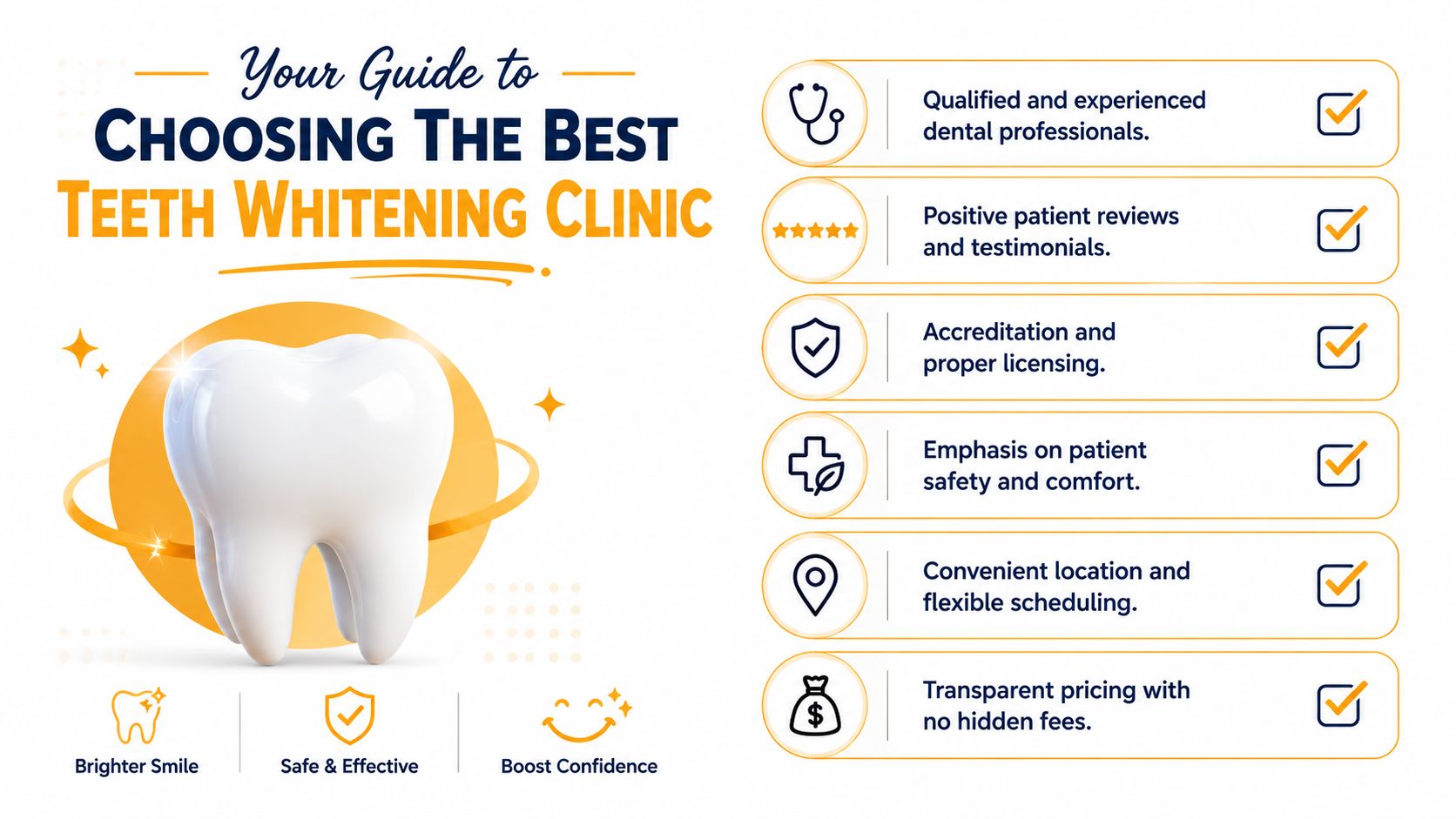
A practical checklist
Use this when you're comparing clinics in Sydney or the Inner West:
- Check the provider's registration. If stronger whitening is being offered, a registered dental practitioner should be involved.
- Ask what happens before treatment. A proper consultation should assess staining type, dental work, gum health, and sensitivity risk.
- Find out how soft tissues are protected. Gum isolation isn't a minor extra. It's part of safe whitening.
- Ask whether the clinic offers more than one whitening option. A clinic that only sells one pathway may push the wrong fit.
- Read reviews carefully. Look for comments about comfort, communication, and realistic expectations, not just “great result”.
- Look for transparent business details. Patients often start with online discovery, so a clinic's public profile should be complete and credible. If you're not sure what a strong local profile looks like, this guide to optimize your Google Business Profile gives useful context for assessing how clearly a business presents itself online.
Questions worth asking on the phone
A quick call can tell you a lot. Ask who performs the whitening. Ask whether a dentist checks suitability first. Ask what they do for patients with sensitivity. Ask whether they explain what whitening won't change, such as some restorations or internal tooth discolouration.
A reputable clinic won't promise the same result for every patient. It will explain the likely range and the limits.
Red flags that should make you pause
Some warning signs are easy to miss because they're packaged as convenience.
- No real assessment. If the service jumps straight to booking without asking about your dental history, that's not careful care.
- Big promises with no nuance. Whitening is effective, but it's not magic.
- Confusion about who supervises treatment. If the answer is vague, move on.
- No discussion of maintenance or sensitivity. Good clinics talk about both before treatment starts.
The best whitening clinic isn't the one with the loudest ad. It's the one that can explain exactly what it's doing, why it's appropriate for you, and how it will keep you comfortable through the process.
Maintaining Your Bright Smile After Treatment
The first two days matter. Freshly whitened teeth are more prone to picking up new stain, so it's sensible to keep foods and drinks light in colour for that period. Water is your friend. So are plainer meals and careful brushing.

Longer term, whitening lasts better when the teeth are kept clean and surface stain is controlled. That means good home care, realistic habits around coffee and red wine, and regular maintenance with your dentist. A professional clean can also help remove fresh external staining before it builds up, and this explainer on professional teeth cleaning shows why that step supports whitening maintenance.
How often can you safely whiten
A lot of online advice becomes too vague. Whitening isn't something to repeat just because the gel is available in the cupboard. A 2024 systematic review in the Australian Dental Journal concluded that repeating in-office whitening more than once every 12–18 months was associated with a significantly higher incidence of transient dentine hypersensitivity (evidence on repeat whitening intervals).
That doesn't mean every patient should wait the exact same amount of time for every touch-up. It means repeat treatment should be based on risk, habits, sensitivity history, and oral health status, not impatience.
A sensible maintenance approach
- Aftercare first. Avoid heavy staining in the first 48 hours.
- Clean consistently. Daily plaque control helps preserve brightness.
- Use touch-ups carefully. Dentist-guided maintenance is safer than constant DIY whitening.
- Don't overdo in-chair sessions. If you're whitening too often, you're increasing the chance of sensitivity without necessarily getting better long-term value.
Frequently Asked Questions About Teeth Whitening
Will whitening work on crowns, veneers, or fillings
No. Whitening changes natural tooth structure, not the colour of restorations. If you have visible crowns, veneers, or fillings at the front, the dentist should discuss this before treatment so you don't end up with a mismatch.
What if my teeth are already sensitive
That doesn't automatically rule whitening out. It usually means the plan needs adjusting. Lower-intensity take-home treatment, shorter contact times, spacing applications further apart, or treating sensitivity triggers first can all help.
Is whitening permanent
No. Teeth continue to pick up stain over time, and natural colour can shift again with diet, age, and daily habits. Whitening is best thought of as a cosmetic treatment that can be maintained, not a one-time permanent change.
Does whitening damage enamel
When it's done properly and under professional supervision, whitening is generally considered safe. Problems are more likely when people use unsuitable products, overuse treatments, or whiten without anyone checking whether their teeth and gums are ready for it.
Why did a friend get a better result than I did
Starting shade matters. So does the type of staining. Yellow-brown external staining often responds better than some grey or internally altered teeth. Existing restorations, enamel thickness, and home habits also affect the final result.
Is the strongest option always the best option
Not necessarily. Stronger, faster treatment can be the right choice for some people, but not for everyone. The best whitening plan is the one that gets a good result while keeping the teeth comfortable and the outcome realistic.
If you're thinking about professional whitening and want advice that's clear, realistic, and specific to your teeth, The Smile Spot can help. Book a consultation to discuss safe options, expected results, and a whitening plan that fits your smile, your comfort level, and your routine.