
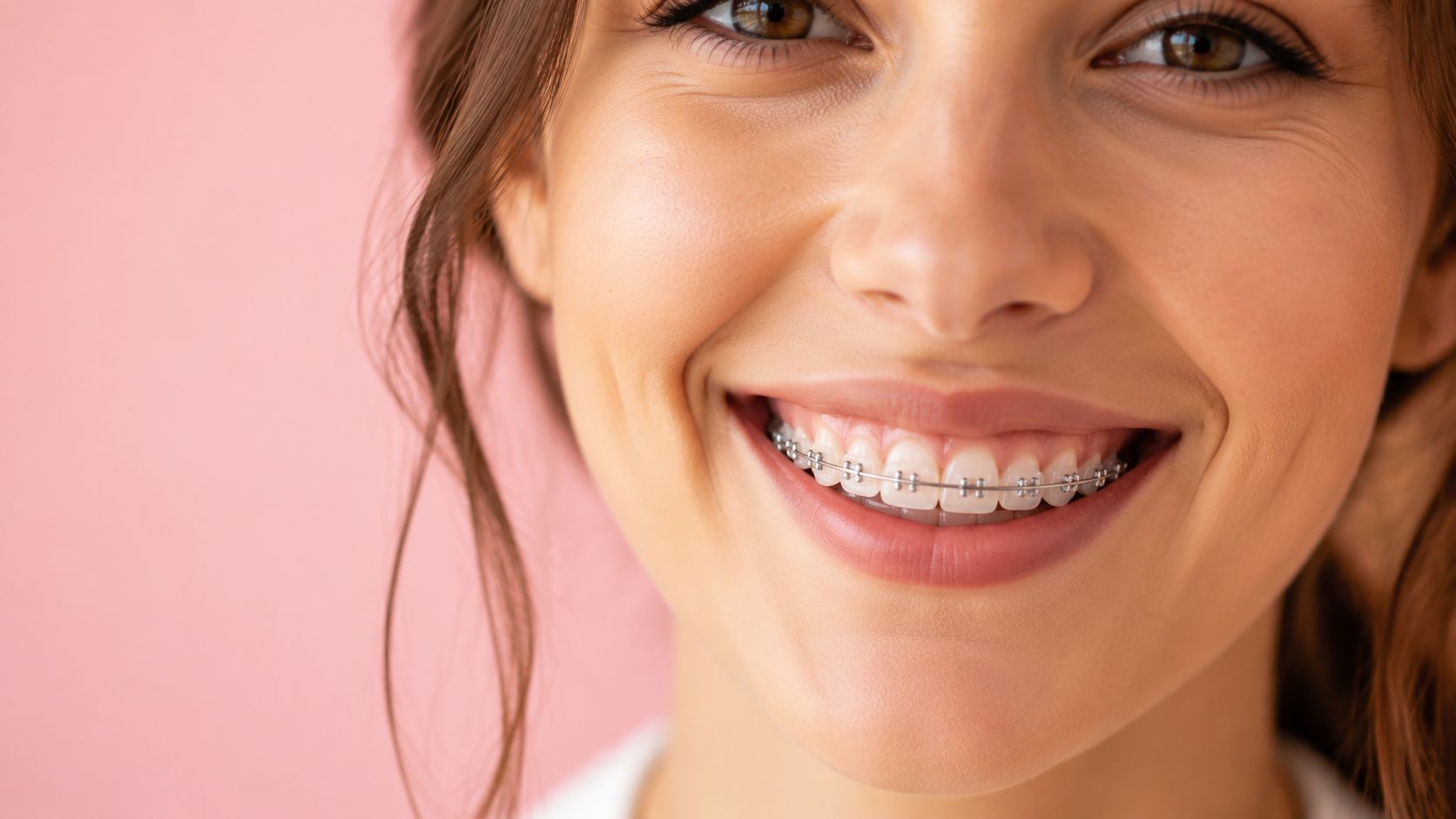
You might be reading this after catching your smile in a photo and focusing on the one thing you wish looked different. Maybe your front teeth overlap. Maybe your bite feels off when you chew. Maybe your child has been told they may need orthodontic treatment, and now you're wondering what that will involve.
That moment is common, and it isn't only for teenagers. Many adults put orthodontic treatment off for years because they assume they've missed the right time, or because the idea of braces still brings to mind bulky metal and uncomfortable visits. Modern care looks very different. Today, braces and smiles are part of a much more personalised, practical conversation about comfort, appearance, and long-term oral health.
A helpful starting point is knowing you're far from alone. Among the 4 million people in the United States wearing braces at any given time, about 1 million are adults over 18, which reflects the growing move towards adult orthodontic care for confidence and function, as noted in this overview of braces facts. If you'd like a broader look at how straightening teeth fits into overall oral care, this guide to dentistry and orthodontics is a useful next read.
The First Step Towards a Confident Smile
A new orthodontic journey usually starts with a very ordinary thought. “I smile with my lips closed in every picture.” Or, “My child's teeth seem crowded, but I'm not sure if it's serious.” Those small observations often matter more than people realise.
Orthodontic treatment isn't only about making teeth look neat in a straight line. It's also about helping your bite work properly, making teeth easier to clean, and reducing the frustration that comes from feeling self-conscious every time someone lifts a camera. For many people, the first appointment is less about treatment and more about relief. Relief that there are options. Relief that the problem has a name. Relief that nobody is judging how long you waited.
Why adults are having this conversation too
Adults often assume braces belong to school years. That idea is outdated. Plenty of adult patients seek treatment because they want to feel more comfortable speaking at work, smiling in social settings, or seeing a reflection that matches how they feel inside.
A confident smile often starts before treatment begins. It starts when someone finally feels comfortable asking the question they've been putting off.
That's one reason the rise in adult orthodontic care matters. It normalises the decision. If you're considering treatment in your thirties, forties, or later, you're not unusual. You're part of a very established group of patients choosing to improve both function and appearance.
What the first step usually feels like
The first consultation is usually much less dramatic than people expect. You talk. The dentist or orthodontic provider looks at how your teeth meet, whether there's crowding or spacing, and what your goals are. Some people want the most discreet option possible. Others care more about treating a complicated bite accurately. Some want to know whether they need treatment at all.
That first step matters because it replaces guessing with clarity. Once you understand what's happening in your mouth, decisions become much easier.
What Braces and Aligners Actually Correct
People often say braces “straighten teeth”, but that's only part of the story. Orthodontic treatment corrects alignment and bite problems, also called malocclusions. These issues can affect appearance, chewing, cleaning, speech, and how evenly force is spread across your teeth.
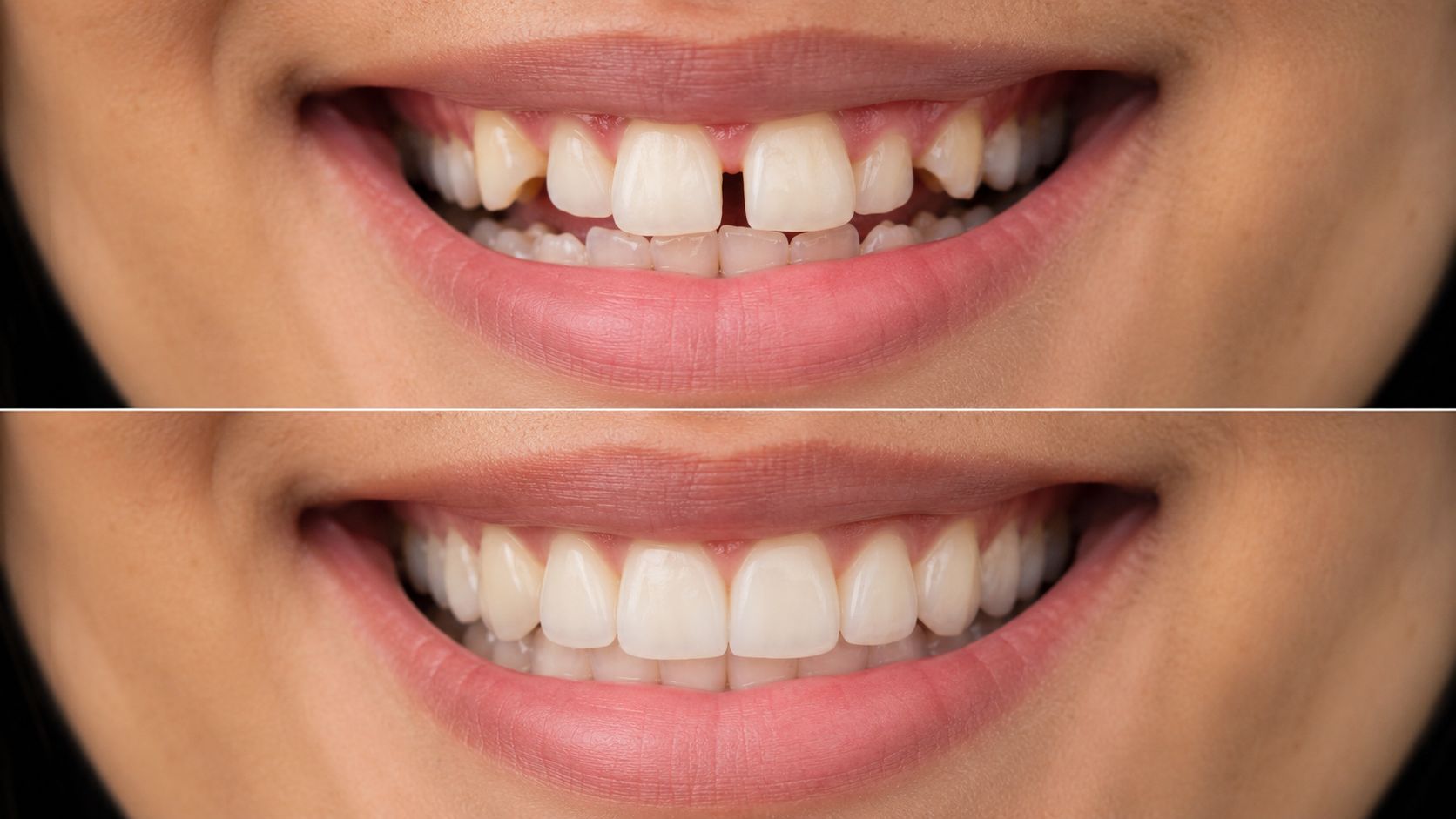
If you've been comparing options, this article on clear dental aligners can help you understand one of the most popular choices in more depth.
Common problems orthodontics can fix
Here's the plain-language version of what dentists look for:
- Crowding means there isn't enough room for teeth to sit neatly. Think of books packed too tightly on a shelf. They overlap, twist, and become harder to clean properly.
- Spacing means there are visible gaps between teeth. Sometimes that's mostly cosmetic. Sometimes it changes how the bite works.
- Overbite means the upper front teeth sit too far over the lower teeth.
- Underbite means the lower teeth sit in front of the upper teeth.
- Crossbite means some upper teeth bite inside the lower teeth instead of outside them.
- Open bite means some teeth don't meet when the mouth closes.
Each of these can range from mild to complex. A small overlap might mainly bother you in photos. A more significant bite issue can create uneven wear, jaw strain, or difficulty biting into certain foods.
Why straight teeth are easier to care for
The health side of orthodontics is easy to miss because people focus on appearance first. But alignment changes hygiene in very practical ways.
When teeth overlap, they create tight corners where plaque can linger. Brushing misses spots. Flossing becomes awkward. That doesn't mean crooked teeth are unhealthy by default, but it can make day-to-day cleaning more difficult.
Practical rule: if a toothbrush can't reach an area easily, that area needs extra attention or a plan to make cleaning simpler.
A well-aligned bite also spreads force more evenly. That can reduce excessive pressure on certain teeth and help the mouth work more comfortably overall.
It's not only about a prettier smile
Many patients begin treatment because they want to like their smile more. That's a perfectly valid reason. The useful surprise is that orthodontics often improves function at the same time.
You may chew more evenly. You may find it easier to brush around previously crowded areas. You may stop noticing one tooth that always seemed to take all the pressure. That's why braces and smiles go together so naturally. The visual change is obvious, but the everyday comfort often matters just as much.
Your Orthodontic Options Braces vs Aligners
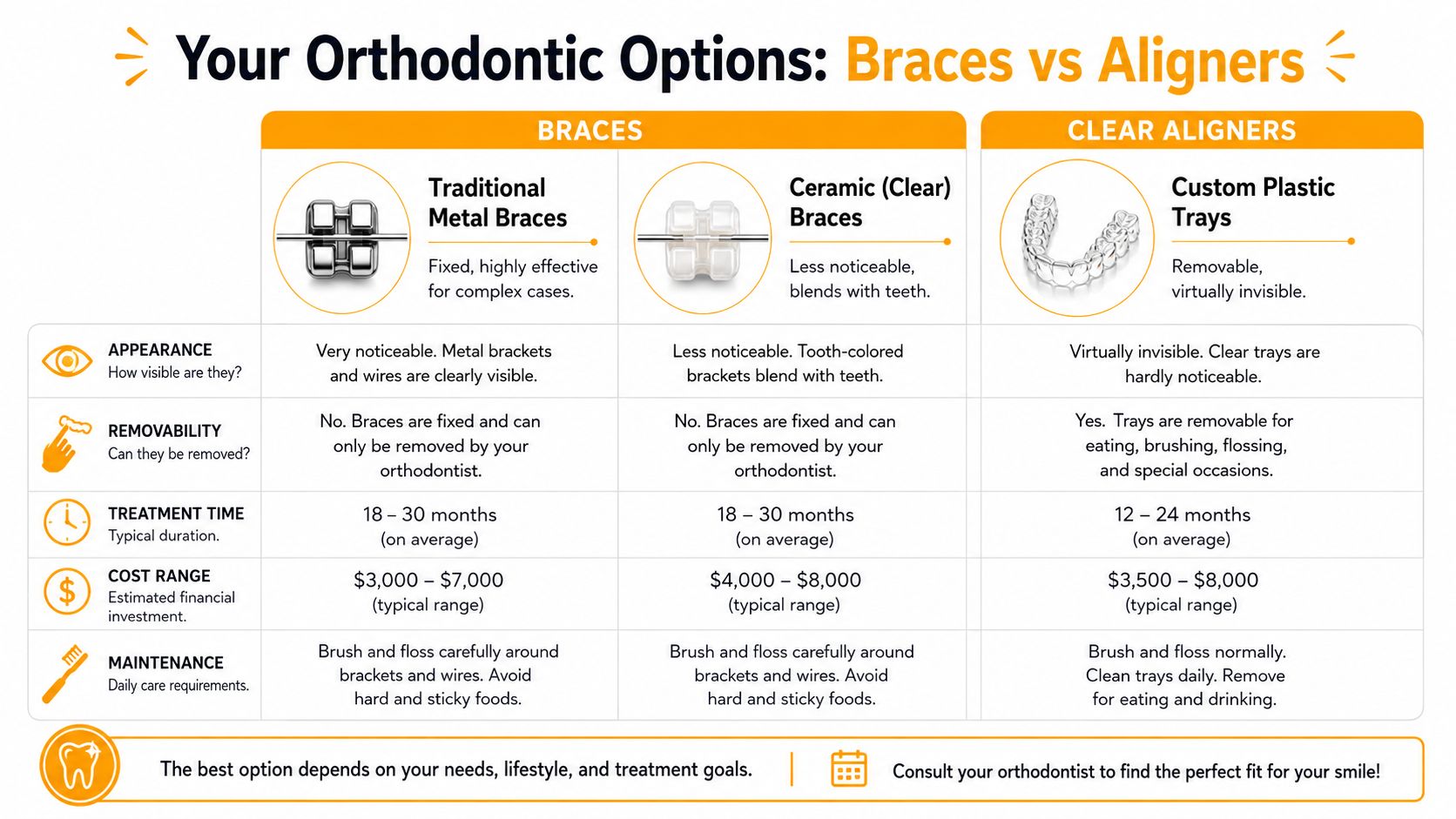
Choosing between braces and aligners is less about which option is “best” in general and more about which one suits your teeth, your routine, and the complexity of your case.
If you want a dedicated overview of fixed treatment, this article on orthodontic braces in Sydney gives more local context.
The main differences at a glance
In Australia, traditional braces typically take 18 to 36 months, while clear aligners can achieve results in 12 to 18 months for mild cases. Costs generally range from $4,000 to $8,000 for braces and $3,000 to $9,000 for aligners, with the right choice depending on clinical complexity, according to this Australian orthodontics overview.
| Feature | Traditional Braces (Metal/Ceramic) | Clear Aligners |
|---|---|---|
| Appearance | More visible, though ceramic options are less noticeable | Very discreet and often hard to spot |
| Removability | Fixed in place | Removable |
| Treatment suitability | Often preferred for more complex corrections | Often suitable for mild to moderate cases |
| Typical timing | 18 to 36 months | 12 to 18 months for mild cases |
| Cost range | $4,000 to $8,000 | $3,000 to $9,000 |
| Daily care | Requires careful brushing around brackets and wires | Requires tray cleaning and disciplined wear |
Braces for control and precision
Traditional braces use brackets and wires to move teeth gradually. They're fixed, so they work all day without relying on you to remember to put them back in after meals.
That makes them powerful for more involved tooth movement and bite correction. Metal braces are the classic version. Ceramic braces work similarly but blend in more with the natural tooth colour, so they're less noticeable.
Braces can be a smart fit if:
- Your bite needs more complex movement and your provider wants maximum control
- You'd rather not think about taking appliances in and out
- You want a fixed option that keeps working without depending on daily discipline
Aligners for discretion and flexibility
Clear aligners are custom plastic trays that fit over the teeth and guide movement in stages. They're popular because they're subtle and removable, which makes eating and brushing more familiar.
That flexibility is useful, but it comes with responsibility. Aligners only work as planned when patients wear them consistently. If you leave them out too often, treatment can slow down.
A clear aligner option may suit you if:
- Appearance matters strongly in work or social settings
- You want to remove the appliance for meals
- Your case is mild to moderate and suitable for tray-based treatment
A short visual explainer can make the differences easier to picture.
The lifestyle question matters
The decision often comes down to daily habits. A fixed appliance asks for more careful cleaning and some food adjustments. Aligners ask for consistency and routine. Neither option is automatically easier for everyone.
Some patients do better with a system they can't remove. Others love the freedom of taking trays out before meals or important events. The best choice is the one that matches both the biology of your case and the reality of your life.
The Orthodontic Journey at The Smile Spot
Individuals feel calmer once they know what happens from beginning to end. Orthodontic treatment is a sequence, not a mystery. When each step is explained clearly, the process feels much more manageable.
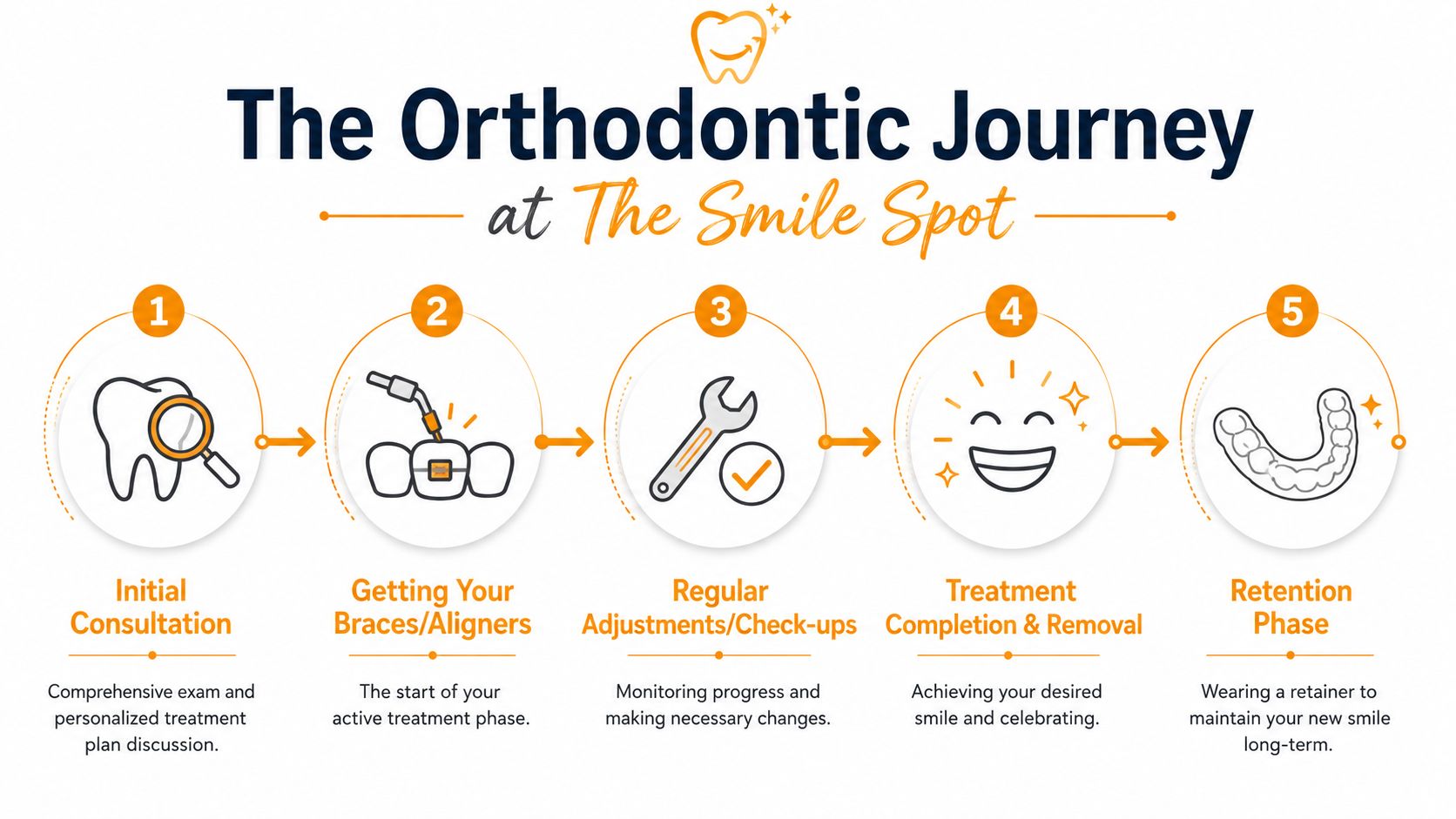
Step 1 and Step 2
The journey begins with an assessment of your teeth, bite, and goals. Here, questions matter. Are you more concerned about crowding, visibility, chewing, or treatment time? A good plan starts with those answers.
Next comes records and planning. Modern Australian orthodontics uses digital intraoral scanning and AI algorithms to plan treatment, and this precise approach has reduced the average aligner treatment time for many cases to 14.5 months by optimising force distribution and reducing adjustment visits, according to this review of orthodontic treatment trends. In plain terms, digital scanning replaces the old messy impressions many people remember. Instead of biting into bulky material, a scanner creates a detailed 3D model of your teeth.
Step 3 and Step 4
Once the plan is ready, the appliance is fitted. For braces, brackets are bonded to the teeth and connected with wires. For aligners, you receive a series of trays designed to move teeth in sequence.
After that, progress visits keep treatment on track. With braces, these appointments usually involve adjustments. With aligners, they focus on monitoring movement and making sure each stage is fitting properly.
Small changes at review visits are what keep the overall plan moving smoothly. Orthodontics works best when the next step is timed properly.
Step 5 and what patients often notice
The final active stage is completion. Braces come off, or the last aligner stage finishes, and you get to see the result that has been building gradually over months.
Patients often say the biggest surprise is how incremental the process felt while it was happening. You may not notice each small movement week by week. Then suddenly, the overall change is obvious.
A few things usually make the journey easier:
- Clear expectations help people know what normal soreness and progress look like.
- Digital planning improves accuracy and fit.
- Regular review appointments catch small issues before they become bigger delays.
- Good home care keeps the teeth and gums healthy during movement.
The process is structured for a reason. Teeth move best with measured pressure, patience, and close monitoring.
Prioritising Your Comfort During Treatment
Pain is one of the first concerns people raise, especially parents. The good news is that orthodontic treatment is usually more about pressure and temporary soreness than sharp pain. You may feel tenderness after braces are fitted, after an adjustment, or when changing to a new aligner tray. That feeling usually settles.
Comfort also depends on preparation. Soft foods help during the first few days. A warm saltwater rinse can soothe irritated areas. Keeping lips and cheeks from rubbing against brackets can make a big difference too.
What helps in real life
Some of the most useful comfort strategies are simple:
- Choose softer meals early on like yoghurt, soup, pasta, eggs, or mashed vegetables
- Carry a small care kit with a toothbrush, floss aids, and orthodontic wax
- Clean gently but thoroughly because irritated gums feel worse when plaque builds up
- Speak up quickly if a wire, tray edge, or bracket is bothering you
If you're new to wax, this guide to understanding orthodontic wax explains when and how to use it well.
Anxiety deserves a real plan
Fear around dental treatment is common, and children aren't the only ones who feel it. According to the 2025 Australian Paediatric Dental Care Report, 28% of children in NSW delay necessary dental treatment due to fear, which reinforces why clinics should explain anxiety support clearly, including sedation and gentler approaches where appropriate.
That matters because “don't worry” is not a strategy. Patients do better when they know what support is available and when the team explains each step before it happens. If you're exploring options for nervous patients, this article about a dentist with nitrous oxide may help you understand one form of support.
Comfort check: if a child seems worried, explain what they'll feel in simple language before the appointment. Predictability lowers fear.
Gentle technology can change the experience
Some associated dental procedures can be made easier with modern tools. Laser dentistry, including systems such as Biolase, can support minimally invasive care in selected situations and may help reduce discomfort and promote smoother healing compared with older approaches for certain soft tissue procedures.
The most reassuring message is this: comfort isn't luck. It comes from planning, communication, and using the right tools for the person in the chair.
Life After Braces Retaining Your New Smile
The day braces come off feels like the finish line, but it's better to think of it as the handover stage. Your teeth have moved into new positions. Now they need support to stay there.
Teeth naturally tend to drift. That isn't a sign treatment failed. It's how the mouth behaves after movement. Bone and soft tissues need time to adapt, and retainers help protect the result while that settling happens.
Why retainers matter so much
A retainer is the insurance policy for all the effort that came before. Without it, teeth can gradually shift back towards their old positions.
That's why retention is not optional. It's part of treatment.
The straighter smile people admire after orthodontics isn't protected by memory. It's protected by retainer wear.
The main types of retainers
There are two broad categories:
- Fixed retainers are bonded behind certain teeth, usually at the front. They're hidden and always working, but they need careful cleaning.
- Removable retainers can be taken out for eating and cleaning. These may be clear tray-style retainers or acrylic-and-wire styles such as Hawley retainers.
Each has benefits. Fixed retainers remove the risk of forgetting. Removable retainers are easier to clean thoroughly and can be replaced if worn out or damaged. The right choice depends on your bite, your habits, and what your provider recommends.
Keeping the result long term
Retainers work best when they become part of your routine rather than a temporary afterthought. Keep them clean. Store them safely. Bring them to check-ups if your dentist asks. If one feels tight after you haven't worn it properly, don't ignore that signal. It often means your teeth are already trying to move.
Ongoing general dental visits still matter after orthodontics. They help monitor gum health, wear patterns, and whether your retainer is still fitting as it should.
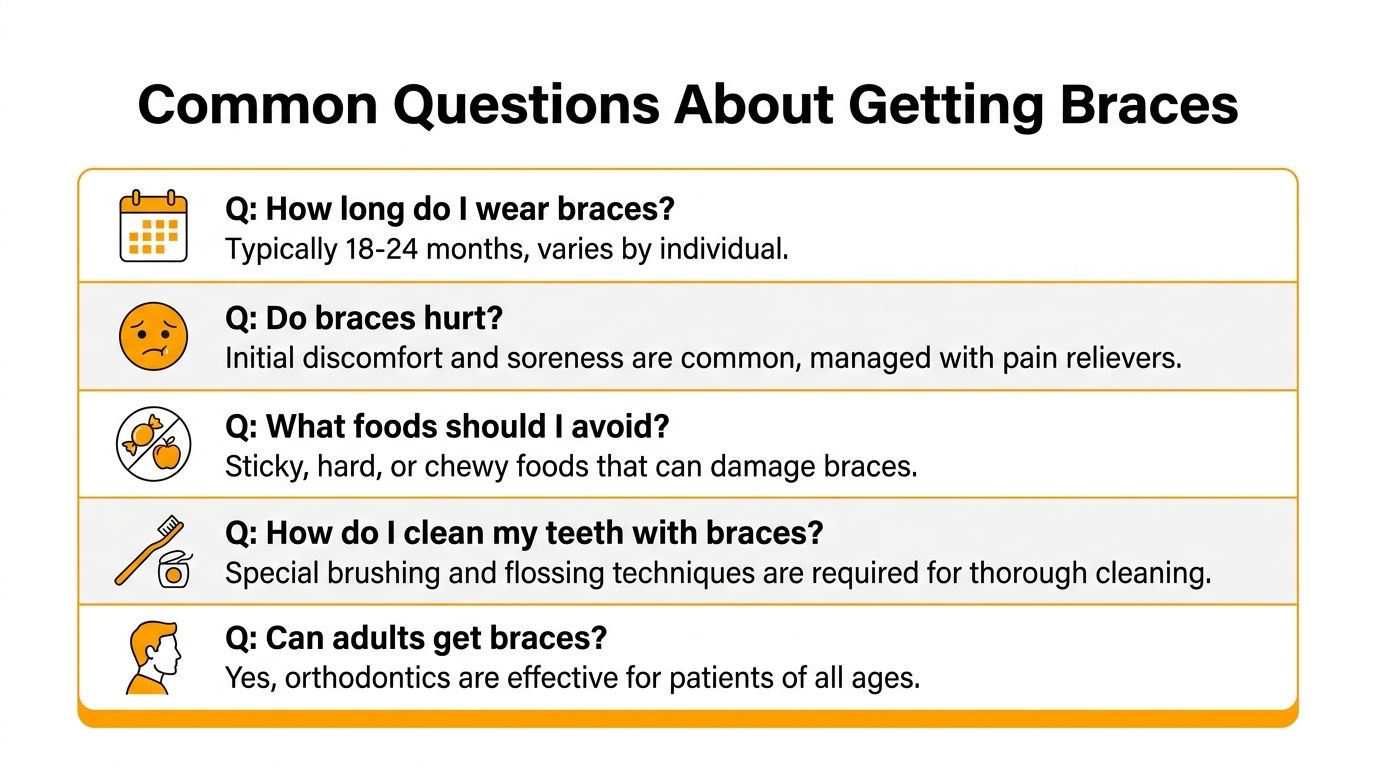
Common Questions About Getting Braces
Some questions come up in almost every consultation. Short answers usually help most.
If you're exploring alternatives first, this guide on how to fix crooked teeth without braces can help you understand what may or may not be possible depending on the cause.
Straight answers to common concerns
Do braces hurt? They can cause soreness, especially at the start or after adjustments, but it's typically described as pressure rather than intense pain. The mouth usually adapts.
How much will treatment cost?
That depends on the appliance, the complexity of movement, and how long treatment is expected to take. A personalised consultation is the only reliable way to get an accurate figure for your case.
Can adults get braces?
Yes. Adult orthodontics is common, and many adults choose treatment for both confidence and function.
Can I still play sport?
Usually yes. If you play contact sport, a properly fitted mouthguard is important for protection.
What foods should I avoid with braces?
Hard, sticky, and chewy foods can damage brackets or wires. Patients with aligners have more flexibility because trays are removed for meals, but careful cleaning afterwards matters.
Questions parents often ask
Parents usually want to know whether treatment will interfere with school, routines, or confidence. In most cases, children adapt quickly once they know what to expect. The bigger issue is usually uncertainty before treatment starts.
A first appointment is often focused on assessment and planning rather than anything invasive. That can be reassuring for both child and parent. If your child is anxious, tell the dental team before the visit so they can pace explanations appropriately.
One final practical point
Orthodontics works best when expectations are realistic. Teeth move gradually. Good results come from consistency, review appointments, and proper aftercare. The process isn't instant, but it is predictable when planned well.
If you're ready to explore your options, The Smile Spot offers family-focused dental care in Dulwich Hill with advanced technology, gentle treatment approaches, and support for anxious patients. Booking a consultation is the simplest way to find out whether braces, aligners, or another option fits your smile, your comfort level, and your goals.