You notice it in small moments first. You cover your mouth when you laugh. You angle your face away in photos. You start thinking about a missing, broken, or failing front tooth every time you speak to someone at work, order coffee, or see yourself in the mirror.
That's why front tooth replacement feels different from losing a tooth further back. It isn't only about chewing. It's about confidence, speech, and whether your smile still feels like yours.
For many people in Dulwich Hill and across Sydney's Inner West, dental implants for front teeth are the option that feels closest to getting a real tooth back. They replace the missing root as well as the visible tooth, and they can be designed to blend with the teeth beside them. Interest in implants has grown sharply worldwide. In the United States, implant prevalence among adults was projected to rise from 5.7% to as high as 23% by 2026 in a major projection study on adoption trends worldwide (projected implant prevalence by 2026).
A front tooth implant, though, is never just a standard replacement. It sits in the part of the mouth everyone sees first. That means the plan has to account for bone, gum shape, colour matching, bite, and healing in a very visible area.
Restoring Your Smile with Confidence
A front tooth changes how people feel about themselves faster than almost any other dental problem. Patients often tell me they can cope with discomfort for a while, but they struggle far more with the social side of it. They don't want to keep hiding their smile, and they don't want a replacement that looks obvious.
That's where implants stand apart. A well-planned implant doesn't just fill a gap. It supports a custom crown from the root level, which gives the final result a more stable and natural foundation than options that only replace the visible part of the tooth.
Why front teeth need a different level of planning
The front of the mouth is the aesthetic zone. Tiny details matter there. A crown can be beautifully made and still look wrong if the gum line sits unevenly, the tooth shape is slightly off, or the colour doesn't catch light like the surrounding teeth.
Patients in the Inner West also tend to want something practical, not flashy. They want to know what will look natural in daily life, what recovery is like, and where the trade-offs are. Those are the right questions.
Practical rule: For a front tooth, success isn't only whether the implant integrates. It's whether nobody notices which tooth was replaced.
What a good result should achieve
A strong front tooth implant treatment should aim for all of the following:
- A natural appearance so the new tooth matches the shade, contour, and translucency of nearby teeth.
- Stable function so biting and speaking feel secure.
- Healthy surrounding tissue because the gum frame around the tooth matters as much as the crown itself.
- Long-term simplicity so the restoration is straightforward to clean and maintain.
If you're considering dental implants front teeth treatment, the most useful starting point is understanding what the implant is, and why it behaves so differently from a bridge or removable option.
What Exactly Is a Front Tooth Dental Implant
A front tooth implant is a replacement tooth built in three parts. The simplest way to think about it is like mounting something securely to a wall. The visible item matters, but what makes it reliable is the anchor hidden underneath.
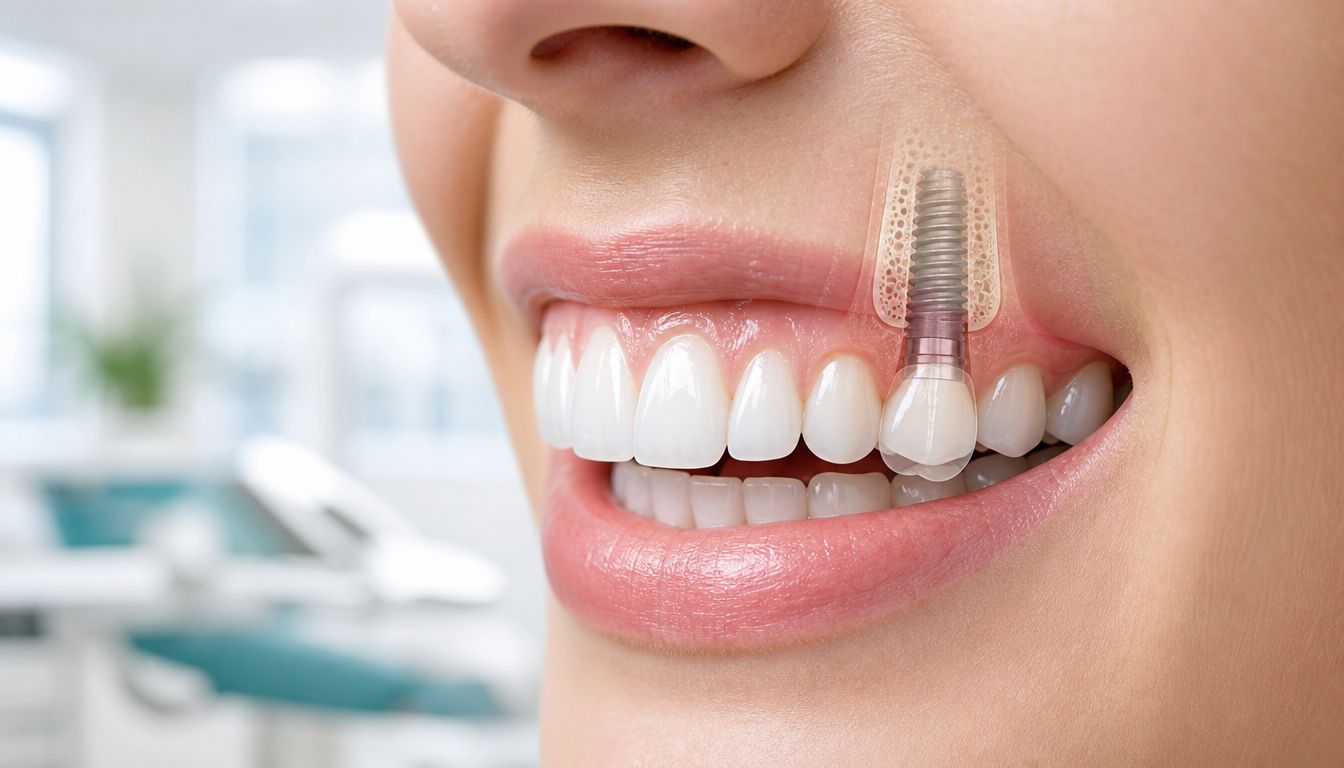
For a front tooth, the same principle applies. A front tooth replacement typically involves three key parts: a biocompatible titanium implant post acting as the root, a connecting abutment, and a custom-made ceramic crown designed to perfectly match the colour and shape of your natural teeth (three-part structure of a front tooth implant).
The three parts working together
- The implant post sits in the jawbone. This is the artificial root. It's usually made from medical-grade titanium because that material can integrate with bone.
- The abutment is the connector. It links the implant post to the visible crown above.
- The ceramic crown is the part you see when you smile. This is shaped and shaded to match the teeth around it.
If you'd like a more technical look at how the implant itself sits within the bone, this overview of an endosseous dental implant is useful background.
Why this design matters more than people expect
A bridge can replace the visible gap. An implant replaces the support under the gap as well. That's why implants often feel more anchored once treatment is complete.
It also changes how the final tooth is designed. Because the crown is attached to a fixed post rather than suspended from neighbouring teeth, the dentist and technician can focus on the tooth's shape, emergence from the gum, and how it aligns with your smile.
The visible crown gets the attention, but the hidden foundation is what makes an implant feel stable.
What patients usually notice
Many individuals don't care about the engineering. They care about whether the tooth looks right and whether it feels secure when they talk and eat. That's fair. The technical design only matters because it supports those day-to-day outcomes.
For front teeth, that engineering has to be combined with aesthetics. And that's where this treatment becomes more demanding than many patients expect.
The Unique Challenge of Front Tooth Implants
Replacing a front tooth is one of the most exacting jobs in restorative dentistry. The implant has to work biologically, but it also has to disappear visually. If a back tooth is slightly imperfect, few people will ever notice. If a front tooth is slightly off, you'll see it every day.
The aesthetic zone leaves little room for error
A front implant sits in a narrow band where tooth colour, light reflection, gum contour, and facial symmetry all interact. The bone here is often thinner, and the gum tissue is more delicate. That means the dentist isn't only placing an implant. They're managing the future shape of the smile.
The crown has to match the neighbouring teeth in ways patients often don't realise. It isn't just basic whiteness. It's edge shape, surface texture, translucency, and how the tooth emerges from the gum.
Gum architecture matters as much as the implant
The small triangle of gum between front teeth has a huge effect on how natural the result looks. If that tissue collapses or recedes, even a nicely made crown can appear artificial.
That's one reason spacing rules are so important in implant planning. Clinicians follow strict spacing rules, such as the 3/2 rule, mandating at least 3mm between implants and 2mm between an implant and a natural tooth, to preserve the bone and gum tissue essential for a natural-looking smile in the front teeth area (clinical spacing rules for front implants).
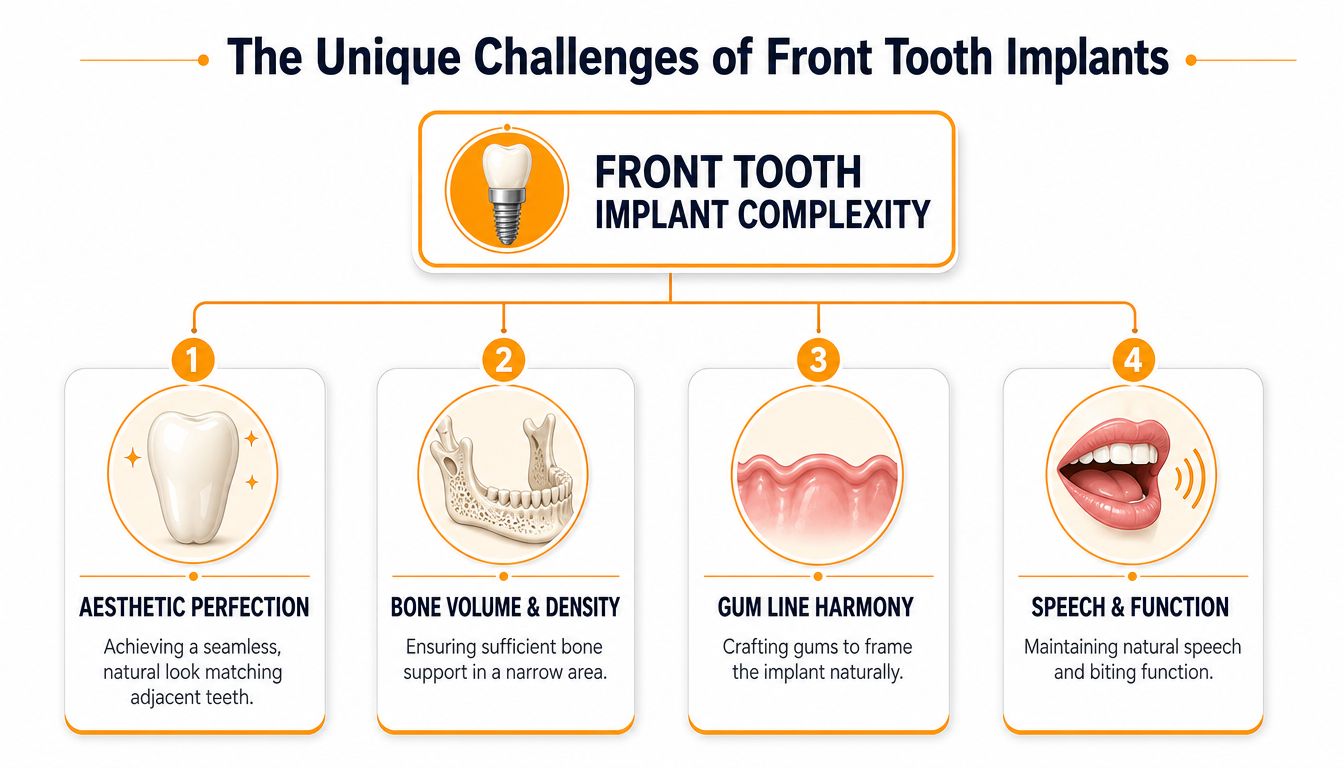
Four pressures shaping the result
| Challenge | Why it matters |
|---|---|
| Aesthetic matching | Front crowns must blend with natural teeth in colour, shape, and light behaviour |
| Bone support | Thin bone can limit placement options and affect long-term tissue stability |
| Gum harmony | The gum line frames the tooth and strongly affects whether the implant looks real |
| Speech and bite | Front teeth guide speech sounds and handle specific biting movements |
What works and what doesn't
Some approaches consistently lead to better front tooth outcomes.
- What works is precise 3D planning, careful tissue management, and realistic crown design that suits the face and adjacent teeth.
- What doesn't is treating a front tooth like a routine back-tooth implant, rushing placement without adequate support, or focusing on the crown while ignoring the gum frame.
- What patients should ask about is how the clinician plans the gum line, not just the implant itself.
Patients who want to understand possible downsides before treatment often find it helpful to read about common dental implant side effects, especially when deciding whether the benefits outweigh the recovery and maintenance involved.
Exploring Your Treatment Options
Not every missing front tooth should be treated the same way. The right choice depends on the condition of the failing tooth, the neighbouring teeth, the available bone, the gum line, and how important immediate aesthetics are to you during healing.
Single implant versus bridge versus removable option
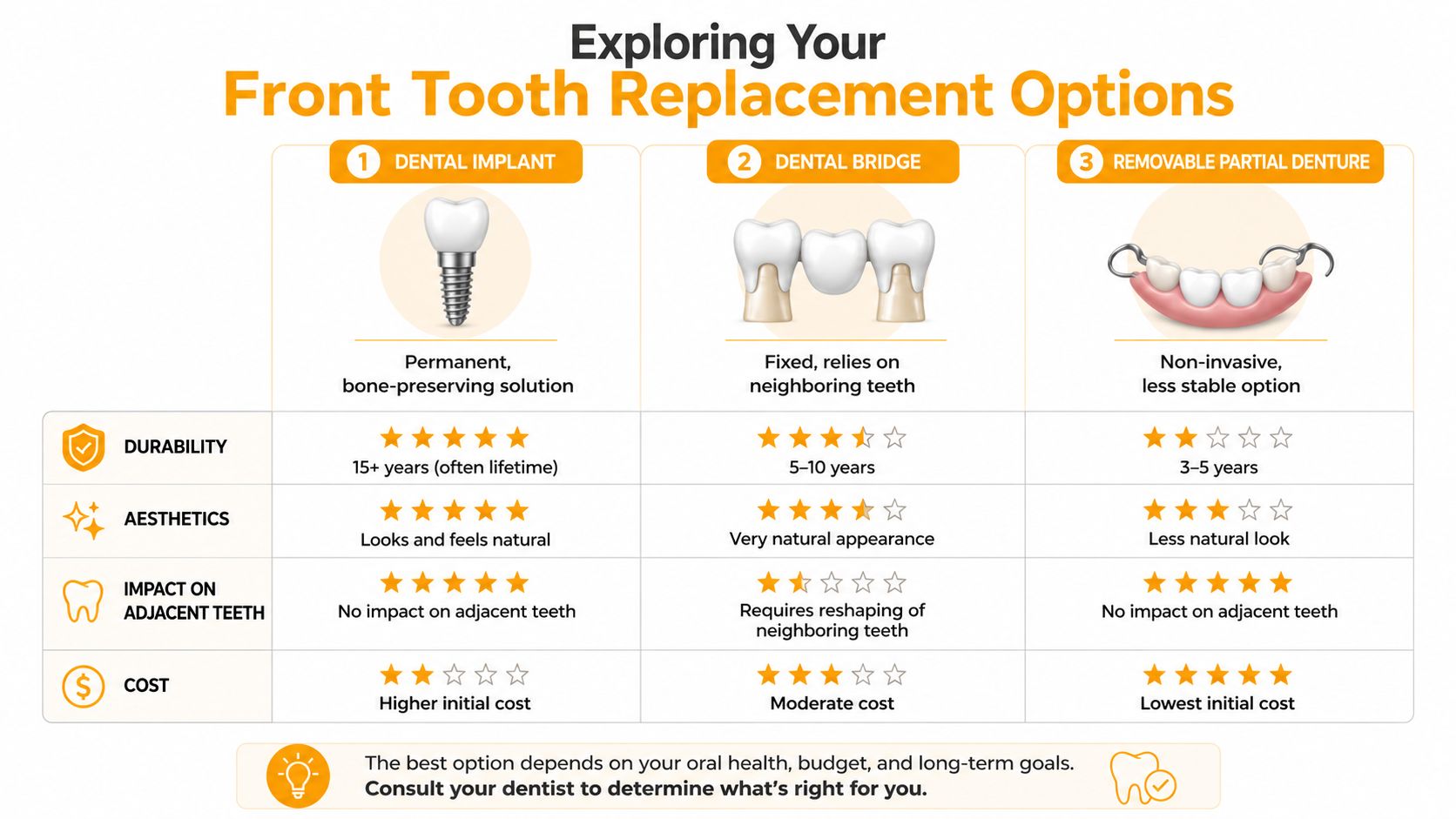
For one missing front tooth, a single implant is often the most conservative long-term option because it replaces that tooth without relying on the teeth next door.
A resin-bonded bridge can also be a sensible choice in selected cases. That matters because some patients are not ideal implant candidates straight away, and some want to avoid surgery. In Australia, a resin-bonded bridge can be a valid alternative in some aesthetic cases, avoiding the higher cost of an implant which can range from $3,049 to $7,175 per tooth with no Medicare rebate (implant versus bridge cost and trade-offs).
A removable partial denture can replace the visible space without surgery, but it's usually the least stable and least tooth-like option for a single front tooth.
Side-by-side trade-offs
- Dental implant
- Best for preserving adjacent teeth and creating a fixed replacement
- Potential downside requires surgery and healing time
- Resin-bonded bridge
- Best for selected aesthetic cases where a less invasive fixed option is preferred
- Potential downside doesn't replace the root structure
- Removable partial denture
- Best for temporary or non-surgical replacement
- Potential downside can feel less secure and less natural in function
If you're weighing a fixed restoration against an implant, this guide to dental crowns and bridges helps clarify how bridges are built and when they're used.
Immediate placement versus delayed placement
Sometimes the implant can be placed at the same time the tooth is removed. In other cases, it's safer to let the site heal first or to rebuild the area before implant placement.
A same-day approach can be attractive because patients don't want a visible gap. But immediate treatment only works well when the bone, gum condition, bite, and infection status all support it. Good candidates aren't chosen by convenience. They're chosen by anatomy and risk.
A fast option is only a good option when it protects the long-term appearance of the smile.
When bone grafting enters the picture
Front teeth often lose supporting bone after trauma, infection, or a long-standing missing tooth. If the ridge has narrowed or collapsed, a bone graft may be needed before or during implant treatment so the implant has proper support and the gum contour looks natural afterwards.
Patients sometimes hear “bone graft” and assume the case has become extreme. Often it means the site needs rebuilding so the final result doesn't look sunken or uneven.
Where All-on-4 fits in
All-on-4 isn't a single front tooth treatment. It's a full-arch solution for people replacing multiple missing teeth, including front teeth. The principle is still relevant, though. It shows how implant dentistry uses stable titanium support to anchor prosthetic teeth in a predictable way.
For full-arch treatment, the cumulative prosthetic survival rate for All-on-4 dental implants is 98.8% (All-on-4 prosthetic survival data). That statistic applies to full-arch solutions, not single front implants, but it highlights how durable implant-supported treatment can be when carefully planned.
Your Step-by-Step Implant Timeline
Patients usually feel better once the process stops being abstract. Front tooth implant treatment is a sequence, not a single appointment. Each stage has a purpose, and each one affects the final look.
A visual walkthrough can help make the journey easier to picture.
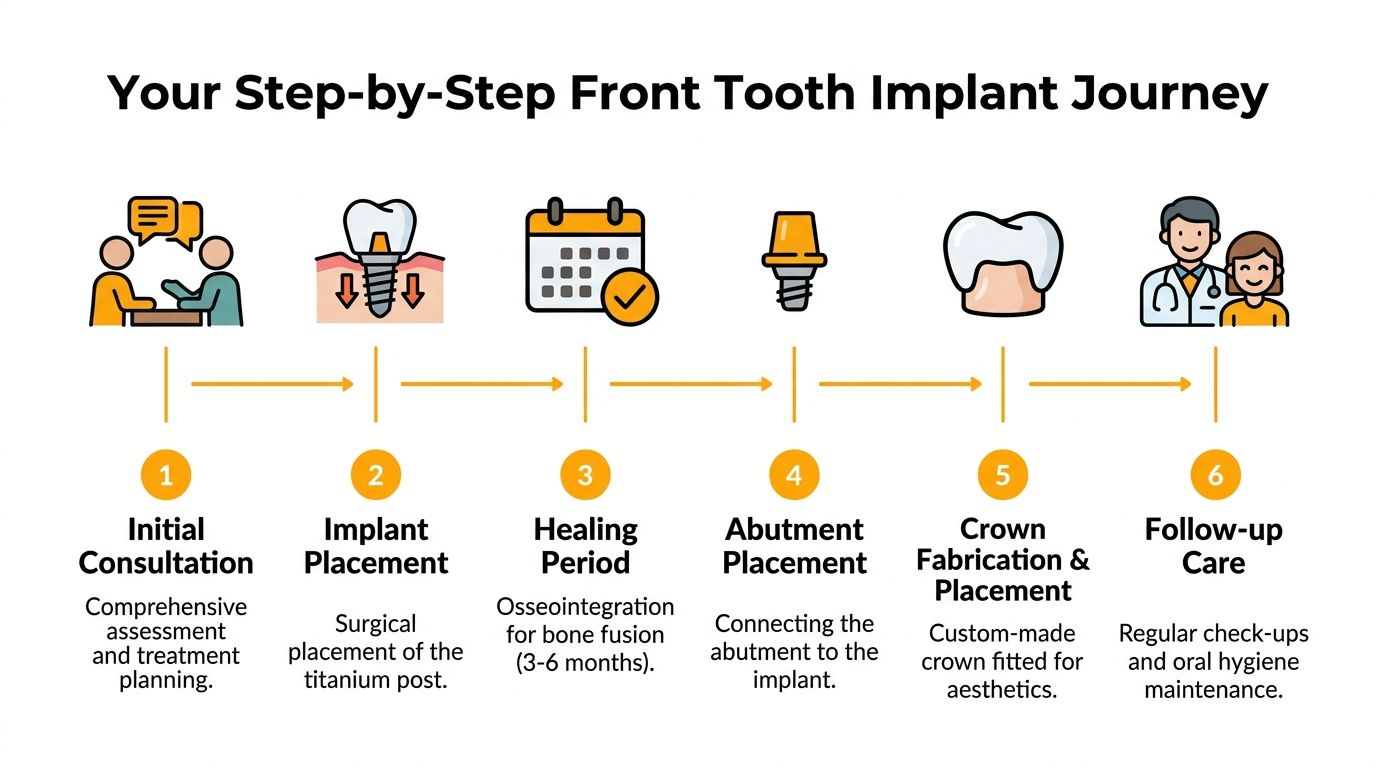
The treatment stages
Consultation and planning
The dentist assesses the tooth, bite, gum line, and available bone. Decisions about extraction, temporary replacement, implant timing, and whether grafting may be needed are made during this consultation.Removal of the failing tooth if required
If the front tooth is still present but can't be saved, it may need to be removed carefully to preserve the surrounding bone and gum tissue.Implant placement
The titanium implant is inserted into the jawbone in a precisely planned position. This stage is surgical, but it's usually more controlled than patients expect.
If you want a detailed overview of what happens during surgery and healing, this explanation of the dental implants procedure is a good companion read.
The next stage often raises the most questions, so it helps to hear it explained clearly.
Healing and integration
After placement, the implant needs time to integrate with the bone. During this period, the area may be protected with a temporary tooth or another provisional solution, especially because the tooth is visible when you smile.
For many implant cases in Australia, patients return to normal daily activities within 1 to 2 days after surgery when aftercare is followed appropriately (recovery expectations and long-term maintenance). That doesn't mean the implant is finished healing. It means patients generally feel well enough to get back to ordinary routines quite quickly.
Final restoration and review
Once the implant has integrated and the tissue is ready, the abutment and custom crown are fitted. This is the stage where bite, shape, and colour are refined.
After that, the work isn't “done” in the sense of being forgotten. Front implants need review, cleaning, and good home care so the crown and surrounding tissue continue to look healthy.
- Brushing twice daily helps control plaque around the gum line.
- Interdental cleaning matters because implants still need careful maintenance between teeth.
- Regular reviews allow the dentist and hygienist to monitor the implant, crown, and tissue stability.
Understanding Costs and Aftercare
Cost matters because front tooth implant treatment is a meaningful investment. Patients deserve clear numbers, not vague language.
In Sydney, a single front tooth implant can cost between $3,000 and $7,000 AUD, with complex aesthetic cases reaching up to $10,000, and this investment has a proven 95% to 98% success rate over 10 years with proper maintenance (Sydney front tooth implant costs and 10-year success rate).
What that fee usually covers
For a standard front tooth implant case, the overall fee commonly includes:
- The implant post placed in the jawbone
- The abutment that connects the implant to the final tooth
- The custom ceramic crown designed for the visible front tooth area
That same cost discussion in Australia also notes that aesthetic crown materials for front teeth, such as porcelain or zirconia, often sit in the $1,200 to $2,500 range for the crown alone, because appearance matters so much in visible areas. More complex cases may involve separate costs for additional procedures such as bone grafting.
Why front cases can cost more than expected
A front implant isn't priced only on the basis of “one tooth”. The complexity often comes from the precision needed around the gum line, tissue support, temporary tooth design, and the crown's aesthetic character.
Here are the usual cost drivers:
| Cost factor | Why it changes the fee |
|---|---|
| Bone condition | Thin or damaged bone may require additional site development |
| Aesthetic demands | Matching a single front tooth is technically demanding |
| Materials used | Porcelain and zirconia options affect crown design and finish |
| Case complexity | Trauma, infection, or difficult gum contours increase planning and treatment needs |
Protecting the investment
A front implant can last for decades if it's cared for properly. That doesn't happen automatically. The implant itself doesn't decay, but the surrounding tissues can still become inflamed if plaque builds up and maintenance slips.
Good implant care is mostly ordinary care done consistently. Careful brushing, interdental cleaning, and regular dental reviews.
Aftercare that actually matters
- Keep the area clean with twice-daily brushing and the cleaning aids your dentist recommends.
- Attend maintenance visits so the crown, bite, and gum health are checked before small issues become bigger ones.
- Follow post-surgical instructions closely in the early healing phase, especially around food, mouthwash use, and cleaning.
- Report changes early if the implant area feels different, looks swollen, or becomes difficult to clean.
What works is consistency. What doesn't work is assuming a well-made implant can be ignored once the crown is fitted.
Finding the Right Implant Dentist in the Inner West
A front tooth implant is not the procedure to choose on convenience alone. The most important question isn't just who offers implants. It's who plans and restores front implants with the level of detail the smile zone demands.
What to look for in a front implant clinician
- Aesthetic judgment matters because front teeth have to blend, not just function.
- Surgical precision matters because placement depth and angulation affect both tissue stability and crown design.
- Technology matters because imaging and minimally invasive tools can improve planning and healing.
- Comfort options matter if you feel anxious about surgery.
Patients in Dulwich Hill, Marrickville, Ashfield, Summer Hill, Lewisham, Petersham, Earlwood, and Hurlstone Park often want someone local, but local alone isn't enough. You want a dentist who understands that front tooth implants are part restorative treatment and part aesthetic reconstruction.
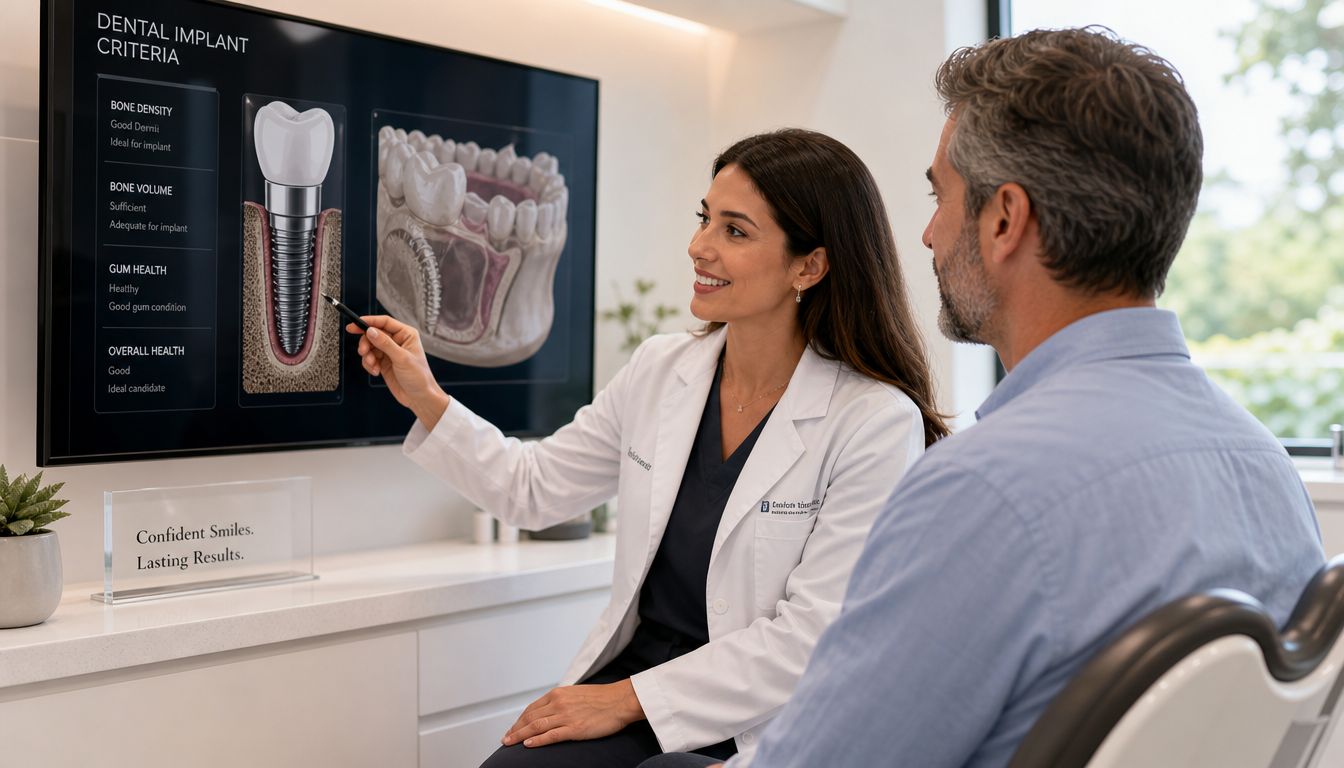
Why advanced tools can make a real difference
Biolase laser dentistry is particularly relevant in cases where soft tissue management needs to be conservative and controlled. For front teeth, that can support cleaner gum shaping and a gentler overall experience when used appropriately as part of a broader treatment plan.
Sedation options matter too. Many patients delay treatment because they're embarrassed or nervous, not because they don't want the result. A dentist who can manage both the technical and emotional side of treatment usually creates a better patient experience.
There's also a wider lesson here for dental patients trying to assess quality online. The way a clinic explains treatment often tells you a lot about how carefully they work. If you're interested in how practices improve patient education and visibility online, this guide on optimising your dental website offers a useful look at how dental information is presented and found.
A sensible local checklist
Before you book, ask these questions:
- How often do you treat front tooth implant cases?
- How do you plan the gum line and final aesthetics?
- What technology do you use for diagnosis and soft tissue management?
- What temporary tooth options will I have during healing?
- What support is available if I'm anxious about treatment?
For patients comparing providers in the area, it also helps to review a practice's dedicated information on dental implants in Inner West Sydney so you can see whether their approach matches what a front tooth case requires.
If you're ready to replace a missing or failing front tooth with a solution designed to look natural and feel secure, The Smile Spot in Dulwich Hill offers experienced implant care for Inner West patients, with advanced technology, gentle treatment options, and a focus on confident, realistic smile outcomes.