In Australia, a typical dental crown replacement cost usually falls between $1,000 and $2,500 per tooth, and premium cases can rise to $4,700. If you're in Sydney's Inner West and you've just been told an old crown needs replacing, that range is broad enough to feel unsettling until you understand what's driving it.
Patients often begin researching this for similar reasons. A crown has come loose. There's a crack you can feel with your tongue. You've had a check-up and your dentist has said the tooth underneath needs attention before the crown fails completely. The hard part isn't only the treatment. It's trying to work out whether the quote you've been given is reasonable, what you're paying for, and whether a lower fee now could mean more problems later.
A replacement crown isn't one standard product with one standard price. The final fee depends on the crown material, the condition of the underlying tooth, whether extra treatment is needed before the new crown can go on, and the quality of the lab and technology involved. In other words, the “why” matters as much as the number.
Understanding Your Dental Crown Replacement Cost
A patient from the Inner West comes in with a crown that has lasted years, then suddenly starts catching floss or hurting when they bite. The first question is usually simple. Why does replacing one tooth cost what it does?
The short answer is that you are not paying for a single item off a shelf. You are paying for the diagnosis, the safe removal of the old crown, the condition of the tooth underneath, the material chosen for the new crown, and the way that crown is designed, made, and fitted.
That is why the fee can vary so much from one case to the next. A crown replacement on a healthy, stable tooth is usually far more straightforward than a case with hidden decay, a fractured build-up, gum changes around the margin, or a tooth that needs extra treatment before it can hold a new crown properly.
What a replacement quote is really covering
A good quote usually includes several parts of care, not only the final crown itself:
- Examination and planning to assess the old crown, the tooth underneath, and your bite
- Removal of the existing crown without causing avoidable damage to the remaining tooth
- Treatment of any underlying problem such as recurrent decay, a weak core, or leakage around the edge
- Preparation and impressions or digital scans so the new crown fits accurately
- The laboratory-made crown based on the material selected for strength and appearance
- Fitting, bite adjustment, and review so the crown feels stable and functions comfortably
Some clinics separate these items. Others bundle them into one figure. That is why two quotes can look similar on the surface but cover different levels of care.
I tell patients to read past the headline number.
A lower fee can be reasonable if the case is simple and the materials are appropriate. It can also mean corners are being cut in areas patients do not see, such as the quality of the lab, the accuracy of the scan, the time spent checking the bite, or whether the tooth has been properly assessed before the old crown comes off.
Why cost differences matter in real treatment
In practice, the most expensive part of a poorly planned crown replacement is often not the first invoice. It is the follow-up treatment when the new crown does not seal well, feels high, traps food, or fails because the tooth underneath was already compromised.
Local experience matters. In the Inner West, patients are often comparing clinics that use different materials, different labs, and different technology. A clinic using precise digital scanning, high-quality ceramics, and a trusted dental lab may charge more than a clinic using a basic workflow. That price difference often reflects fit, longevity, appearance, and the amount of adjustment needed, not marketing gloss.
If you are comparing quotes, ask direct questions. Is build-up work included? Is a temporary crown needed? What material is being recommended, and why? Is the tooth structurally strong enough for a crown, or does it need more treatment first?
For a broader overview of how these restorations work, this guide to dental crowns and bridges explains the options in plain terms.
Signs Your Dental Crown Needs Replacing
Cost matters, but timing matters just as much. Replacing a crown early can be much simpler than waiting until the tooth underneath becomes hard to save.
What patients usually notice first
A failing crown often gives clues before it comes off completely. Watch for:
- Pain when biting. This can point to a crack in the crown, movement in the crown, or a problem in the tooth underneath.
- Sensitivity to cold or sweets. A crown should seal the tooth. New sensitivity can mean leakage at the edge.
- A loose feeling. Even slight movement matters. Crowns shouldn't rock or lift.
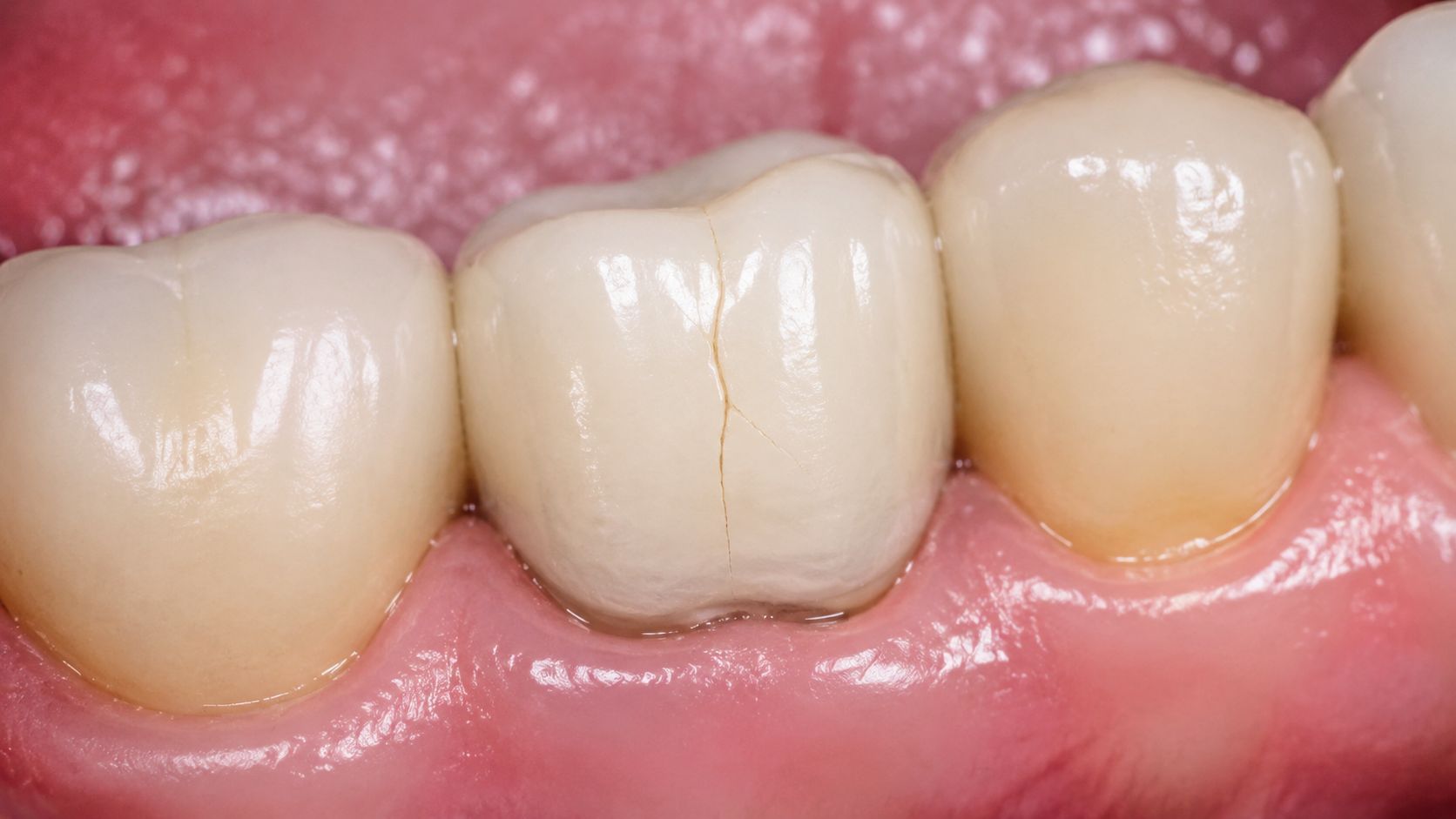
- Visible chips or cracks. Small damage can turn into complete failure surprisingly quickly.
- A dark line near the gum. In some older crowns, especially metal-backed types, the margin can become more noticeable as gums change or the restoration wears.
- Food packing around the crown. If floss catches or food constantly traps there, the fit may no longer be ideal.
These signs don't always mean immediate emergency treatment, but they do mean the tooth needs a proper exam.
Problems you can't always see
Some of the most important reasons to replace a crown aren't obvious in the mirror. Dentists often find:
- decay under the old crown margin
- a weakened tooth core
- fracture lines in the remaining natural tooth
- changes in the bite that place too much force on one area
- gum irritation caused by a poor margin or bulky contour
That's why self-diagnosis only goes so far. A crown can look acceptable from the outside and still be leaking underneath.
Practical rule: If a crown feels different, don't wait for it to hurt. Changes in fit are often the earliest warning sign.
Age matters, but condition matters more
Patients often ask how long a crown is “supposed” to last. There isn't one fixed answer. Some crowns remain stable for many years, while others need earlier replacement because of grinding, decay, cement failure, or changes in the supporting tooth.
What works well in practice is regular review, especially for older crowns on heavily used back teeth. If you're unsure what lifespan is realistic for different materials and situations, this article on how long crowns last gives helpful context.
A replacement is usually recommended when the crown no longer protects the tooth predictably. At that point, delaying treatment rarely saves money.
Dental Crown Cost Breakdown by Material
Two crowns can look similar in the mouth and still sit in very different price brackets. In practice, the difference usually comes down to how the material behaves under pressure, how natural it needs to look, and how much precision is required from the lab and the clinic.
A replacement crown is also not just a material purchase. You are paying for a restoration that has to fit the tooth accurately, seal well at the margin, and handle years of chewing force in a specific part of the mouth.
Estimated Dental Crown Replacement Cost by Material (Sydney 2026)
| Crown Material | Estimated Cost Range (per tooth) | Key Benefit |
|---|---|---|
| Metal | $1,000 and up | Strong option for heavy biting forces |
| Porcelain-fused-to-metal or basic porcelain | $1,300 to $2,000 | Balance of function and aesthetics |
| Porcelain / ceramic | $1,400 to $2,500 | Natural appearance for visible teeth |
| Zirconia | $1,500 to $2,500 | High strength with good aesthetics |
| Premium custom zirconia | $2,500 to $4,700 | Advanced durability and customised lab work |
| Gold | Over $3,000 | Excellent durability and wear characteristics |
Why one material costs more than another
Porcelain and ceramic crowns are usually chosen for visible teeth because they can mimic natural enamel more closely. The trade-off is that the best cosmetic result often depends on higher-end lab work, better shade matching, and careful preparation. That extra time and skill affects the fee.
Zirconia is popular because it handles force well and still looks good. I often discuss zirconia for back teeth, for patients who grind, or for replacements where strength matters more than the last bit of translucency. It is not automatically the right choice for every front tooth, but it is a reliable option in many real-world cases.
Gold remains one of the longest-wearing materials in dentistry. It is kind to opposing teeth and performs well under heavy bite pressure. The obvious drawback is appearance, so it tends to suit back molars rather than teeth that show when you smile.
Metal and porcelain-fused-to-metal crowns can still be sensible in the right case. They are often used where durability matters and the cosmetic demands are lower. The limitation is that they generally do not match natural teeth as well as all-ceramic options, especially near the gumline over time.
What patients in the Inner West should focus on
The right question is which material suits the tooth you are replacing.
A front tooth usually needs a better colour match and a more lifelike finish. A back tooth often needs a material that can tolerate years of load without chipping or wearing poorly. If someone clenches or grinds, that changes the conversation again.
This is why a transparent quote matters. A lower-cost material can be perfectly reasonable in one position and a poor long-term decision in another. I would rather explain that clearly upfront than fit a crown that looks cheaper on paper but performs badly in your mouth.
Technology also plays a part in value. Digital scanning, design software, and modern milling or printing methods can improve fit and consistency when they are used well. If you want to see how that side of crown fabrication works, this guide to dental 3D printing technology explains why precision equipment can affect both quality and cost.
Key Factors That Influence Your Final Price
A patient in the Inner West might be quoted one price for a straightforward crown replacement and a much higher figure after we remove the old crown and inspect the tooth underneath. That difference usually comes down to what needs to be repaired before a new crown can be placed safely.
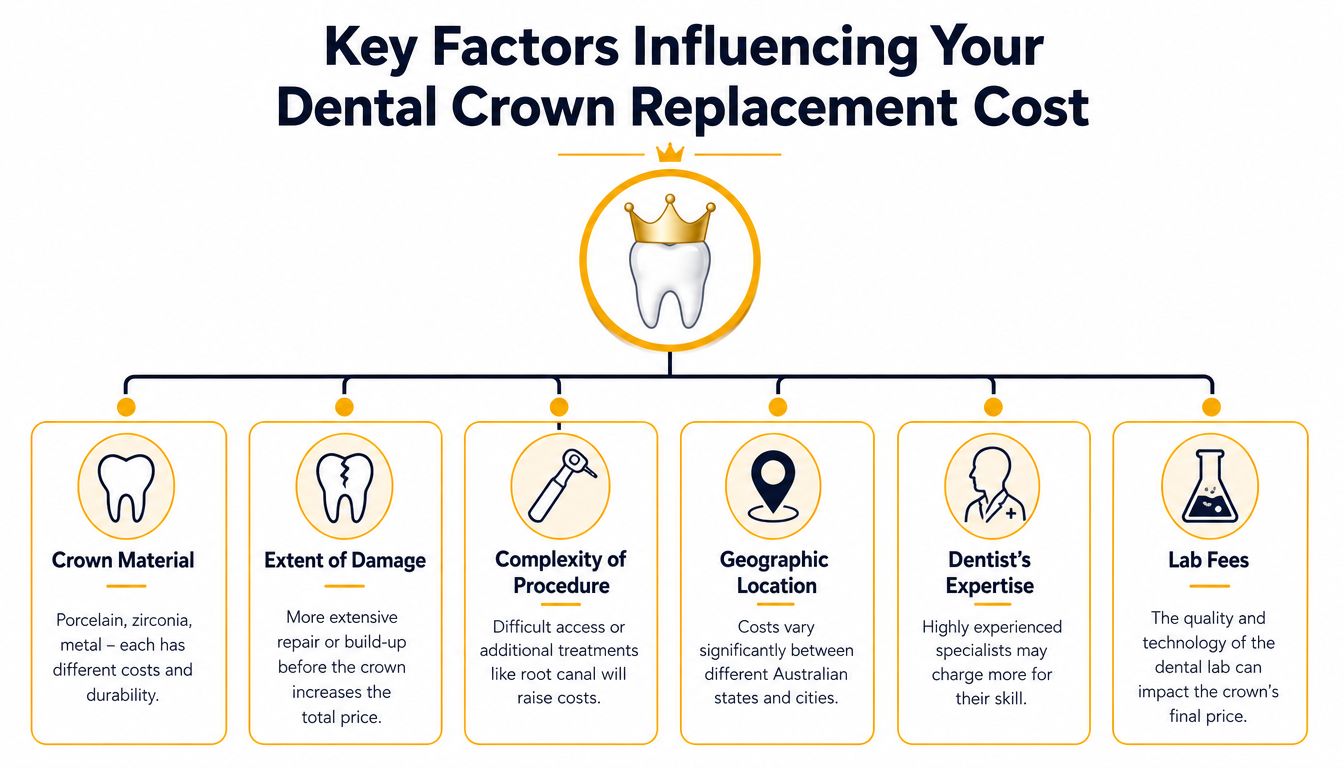
The crown itself is only one part of the fee. The final price also reflects the time, materials, lab work, and planning required to give that crown a stable tooth to sit on. If the old crown lifts off cleanly and the underlying tooth is healthy, the appointment is usually more efficient. If there is decay, a crack, a weak core, or signs of infection, the treatment becomes more involved.
A useful benchmark from an Australian crown cost guide is that extra procedures such as a build-up or endodontic treatment can push the total higher because they are needed to support the new crown properly and protect the seal at the edge of the restoration (Dental Specialists crown cost guide).
The cost drivers patients often do not see
Several factors can change the quote, even when two crowns look similar on paper.
- What is under the old crown. Hidden decay, leakage, or a fracture can turn a simple replacement into a repair and rebuild.
- How much healthy tooth remains. A heavily worn or broken tooth may need a core build-up before it can hold a crown with confidence.
- Whether the nerve is healthy. If the tooth is infected, painful, or has a failing previous root canal, that problem needs treatment first.
- Access to the margin. Sometimes the edge of the tooth sits too far under the gum or is too difficult to isolate cleanly, which adds clinical time.
- The lab making the crown. Higher-quality labs often produce better-fitting crowns with stronger contacts, cleaner margins, and more natural shade matching.
- How complex the bite is. Grinding, clenching, limited mouth opening, and heavily restored back teeth all make replacement more technique-sensitive.
These details matter because a cheaper quote can leave out work that only becomes visible once treatment starts. A more realistic quote often includes those possibilities from the beginning.
Why one clinic's quote can be higher than another's
Price differences are not always about markup. They are often about what is included, how the case is assessed, and what standard of result the clinic is aiming for.
One quote may cover the exam, imaging, temporary crown, lab work, fit adjustments, and review. Another may list only the crown itself, with related items added later. In practice, that can make two prices look far apart even when the final treatment ends up similar.
I tell patients to ask a simple question. If the old crown comes off and the tooth needs extra work, what is already included and what becomes an additional fee? That answer usually tells you more than the headline number.
Technology and clinical judgement affect value
In a local clinic setting, cost is also shaped by how the work is done. Digital scans can improve accuracy and patient comfort. Careful bite records can reduce the risk of a crown feeling high. Good photographs and clear lab communication can improve the final fit and appearance.
Experience matters too. Replacement crowns are not always routine. Older dentistry can hide decay, open margins, short tooth structure, or bite problems that need to be addressed on the day. A careful dentist plans for those possibilities instead of treating the crown like a simple swap.
The lowest fee is not always the lowest long-term cost. A crown that traps plaque, chips early, or never feels right can lead to more adjustments, more time off work, and more treatment later. A transparent fee should show you what you are paying for and why.
The Crown Replacement Process Step by Step
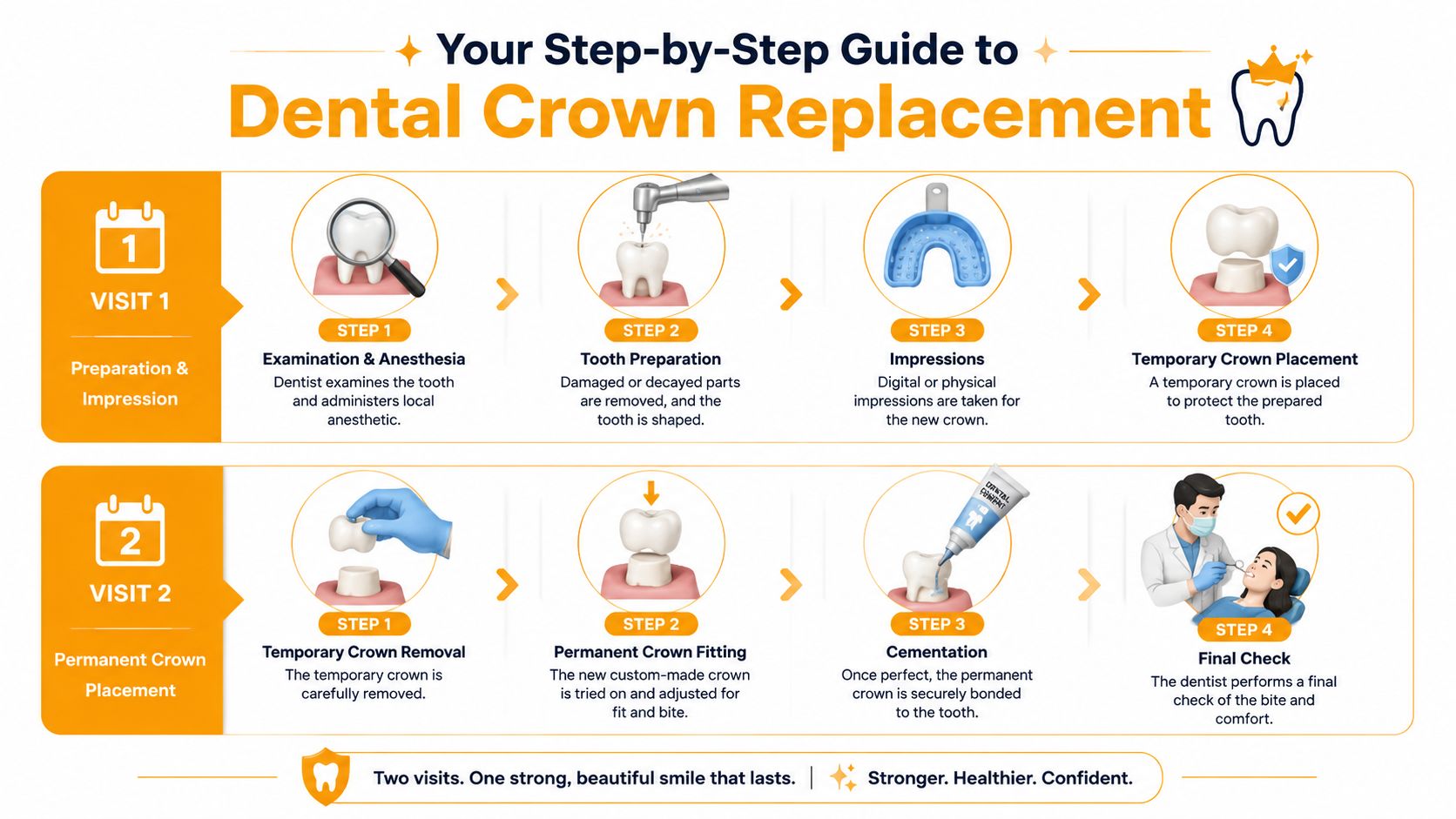
For many patients, the unknown is more stressful than the procedure itself. Crown replacement is usually a structured, staged treatment rather than a chaotic one-off appointment.
To make that easier to picture, here's the process at a glance.
Visit one preparation and planning
The first visit starts with an exam and imaging so the dentist can confirm whether the existing crown can be removed cleanly and whether the tooth underneath is still suitable for restoration.
Then the old crown is carefully taken off. After that, the dentist removes any decay, old cement, or weak material and reshapes the tooth so the new crown will fit properly. If the tooth needs extra support, that's when a build-up or related treatment is done.
Next comes the impression stage. Many clinics now use digital scanning rather than conventional impression trays. That can improve accuracy and comfort, particularly for patients with a strong gag reflex.
A temporary crown is then fitted to protect the prepared tooth while the final crown is being made.
Most discomfort doesn't come from the crown itself. It comes from an unstable tooth that hasn't been protected properly.
For some patients, soft tissue contouring is also part of achieving a clean final margin. Clinics that use tools such as Biolase laser dentistry may do that more precisely and comfortably in selected cases.
Later in the process, the final restoration is fitted and adjusted. This short video gives a useful visual overview:
Visit two fitting and bonding
At the second appointment, the temporary crown is removed and the new crown is tried in.
The dentist checks several things before bonding it permanently:
- Fit at the margins so the crown seals cleanly at the tooth edge
- Contact with neighbouring teeth so floss passes correctly and food doesn't trap
- Bite balance so the crown isn't taking too much pressure
- Colour and shape so it looks natural in the smile
Once those checks are right, the crown is bonded or cemented into place and the bite is reviewed again.
What usually works best after treatment
For the first day or two, most patients do best with a simple approach:
- Chew gently at first until the bite feels familiar
- Keep the area clean with careful brushing and flossing
- Call the clinic early if the crown feels high, loose, or persistently sore
A good crown should settle into the bite, not become something you keep noticing every time you chew.
Navigating Insurance and Payment Options
A common Inner West scenario goes like this. The old crown finally gives way, the tooth is uncomfortable, and the first question after "can it be fixed?" is "what will I have to pay?"

That question deserves a straight answer. In Australia, Medicare generally does not cover routine adult crown treatment. Private Extras cover may contribute, but the final gap depends on your policy, your annual limits, and whether the replacement crown is the only treatment needed. If the tooth also needs a core build-up, decay removal, or root canal treatment, your out-of-pocket cost changes quickly.
This is why I tell patients not to focus only on the rebate. Focus on the full treatment plan.
What to ask your health fund before you book
Ask your fund specific questions so you know where the numbers come from:
- Do I have major dental cover under Extras?
- Is there still a waiting period on crowns?
- What is my annual limit, and how much of it have I already used?
- Is a replacement crown covered in my situation?
- Are related procedures covered, such as x-rays, a build-up, or root canal treatment?
Those details matter more than the headline promise of "cover." Two patients with the same crown material can face very different final bills because their policies work differently.
If you do not have insurance
Plenty of patients pay privately. The key is to get clarity before any work begins.
Ask the clinic for:
- A written treatment plan with each item listed
- A clear fee estimate for the crown and any supporting treatment
- The timing of payments across visits
- A distinction between treatment needed now and treatment that can wait
- Available payment plan options, if the clinic offers them
In practice, the fairest approach is transparency. A lower starting quote can rise once the old crown comes off and hidden damage underneath becomes visible. A good clinic explains that possibility upfront, discusses the likely scenarios, and gets your consent before costs change.
If you are comparing ways to spread out the cost, this Superior Credit Repair dental guide covers financing options people often look at when credit history is a concern.
For local patients, this guide on finding dentists with payment plans near you helps you compare instalment options and ask better questions before you commit.
A manageable dental bill starts with a written plan, a clear explanation of what is driving the cost, and enough detail to choose with confidence.
Your Confident Smile Starts at The Smile Spot
A patient in the Inner West often comes in expecting a simple crown swap, then finds out the underlying question is what is happening underneath the old crown. That is where cost becomes clearer. The fee is not just for the new crown itself. It reflects the condition of the tooth, the precision needed to prepare it well, and the technology used to give the new restoration a better fit and a better chance of lasting.
At The Smile Spot in Dulwich Hill, crown replacement is approached with that full picture in mind. Dr. Dimitrios Thanos has led the practice since 1996, and the clinic combines long restorative experience with modern tools such as Biolase laser dentistry for selected minimally invasive treatment. For anxious patients, gentle care and clear communication matter just as much as the technical work.
Patients usually value one thing first. Straight answers.
Some replacement crowns are straightforward. Others reveal decay at the margin, a crack in the tooth, or the need for extra support before a new crown can be placed. A proper assessment helps explain why one quote may be lower, while another includes the diagnostics, planning, and supporting treatment needed to avoid repeating the problem a year or two later.
If you are comparing providers, look for more than a single price. Ask how the tooth will be assessed, what material is being recommended, how the crown will be made, and what happens if hidden damage is found once the old crown is removed. Our approach to dental crowns in Dulwich Hill explains that process in practical terms.
The next step is simple. Have the tooth examined before you decide based on price alone.
A good consultation should tell you whether the existing crown has failed, whether the underlying tooth is still strong enough to restore, and what treatment gives you the best value over time. Good crown work should feel planned, explained, and worth the investment because it protects the tooth properly.