Living with a missing tooth often starts as a small compromise. You chew on one side, smile a little differently in photos, and tell yourself you'll deal with it later. Then the gap keeps affecting more than appearance. Eating feels less natural, cleaning gets awkward, and confidence can take a quiet hit.
That's usually when people start searching for the dental implants procedure and discover two conflicting stories. One sounds old-fashioned and intimidating. The other reflects what modern implant dentistry is like today: planned carefully, carried out precisely, and often much gentler than patients expect.
Your Journey to a New Smile Starts Here
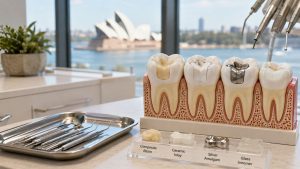
A dental implant isn't just a replacement tooth sitting on top of the gum. It's a structured, staged treatment designed to replace the missing root as well as the visible tooth. That's why implants can feel so stable and natural in day-to-day life.
For many patients, the most reassuring part is that this isn't guesswork. Modern implants have a strong long-term track record. Modern dental implants demonstrate an average long-term success rate of approximately 95%, with cumulative survival rates exceeding 90% over 10 years and up to 92% after 20 years in large-scale studies involving over 10,000 implants (long-term implant success data).
That matters because individuals considering implants aren't looking for a quick cosmetic fix. They want to know whether the result will let them eat comfortably, speak normally, and stop thinking about the gap every day.
What patients usually want to know first
Will it look natural
Yes, when the implant is planned properly and the final crown is shaped to suit your smile.Will it hurt
Most of the fear comes from outdated ideas about oral surgery. Modern care focuses heavily on comfort, anaesthesia, and minimally invasive techniques.How long will it take
The process happens in stages. That waiting period isn't wasted time. It's what allows the implant to become secure in the bone.
A good implant journey should feel organised, not mysterious. You should know what happens next, why it matters, and what your choices are.
The key shift is mental. Instead of seeing the dental implants procedure as one daunting operation, it helps to see it as a roadmap. First, the site is assessed. Then the implant is placed. After healing, the final tooth is fitted. Each stage has a purpose.
If you'd like to see what that transformation can look like in real smiles, browse these dental implants before and after examples. It often helps to connect the treatment steps with the result people are actually hoping for: a smile that feels complete again.
Consultation and Personalised Treatment Planning
The best implant cases usually feel calm long before the day of surgery. That calm comes from planning.
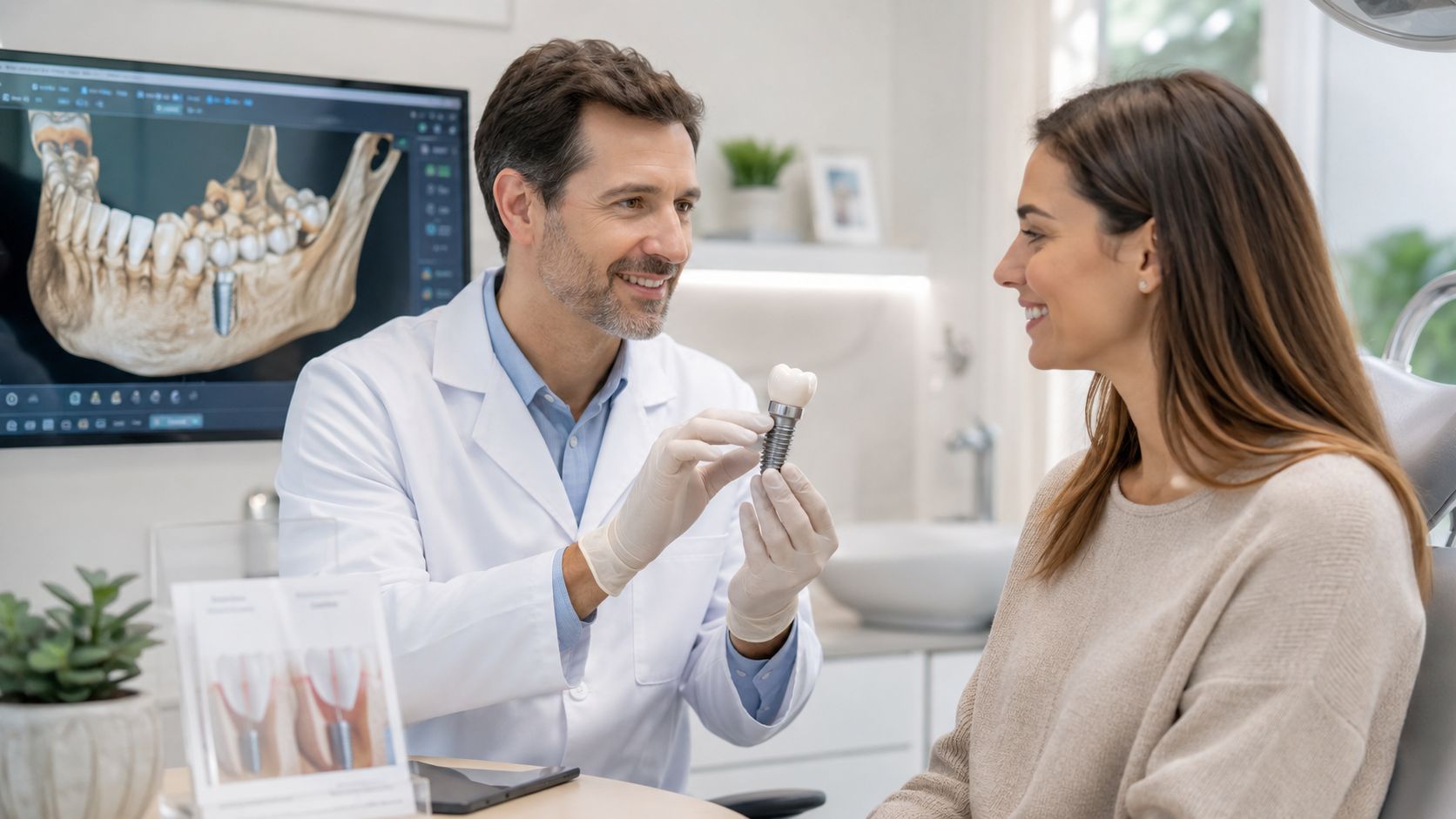
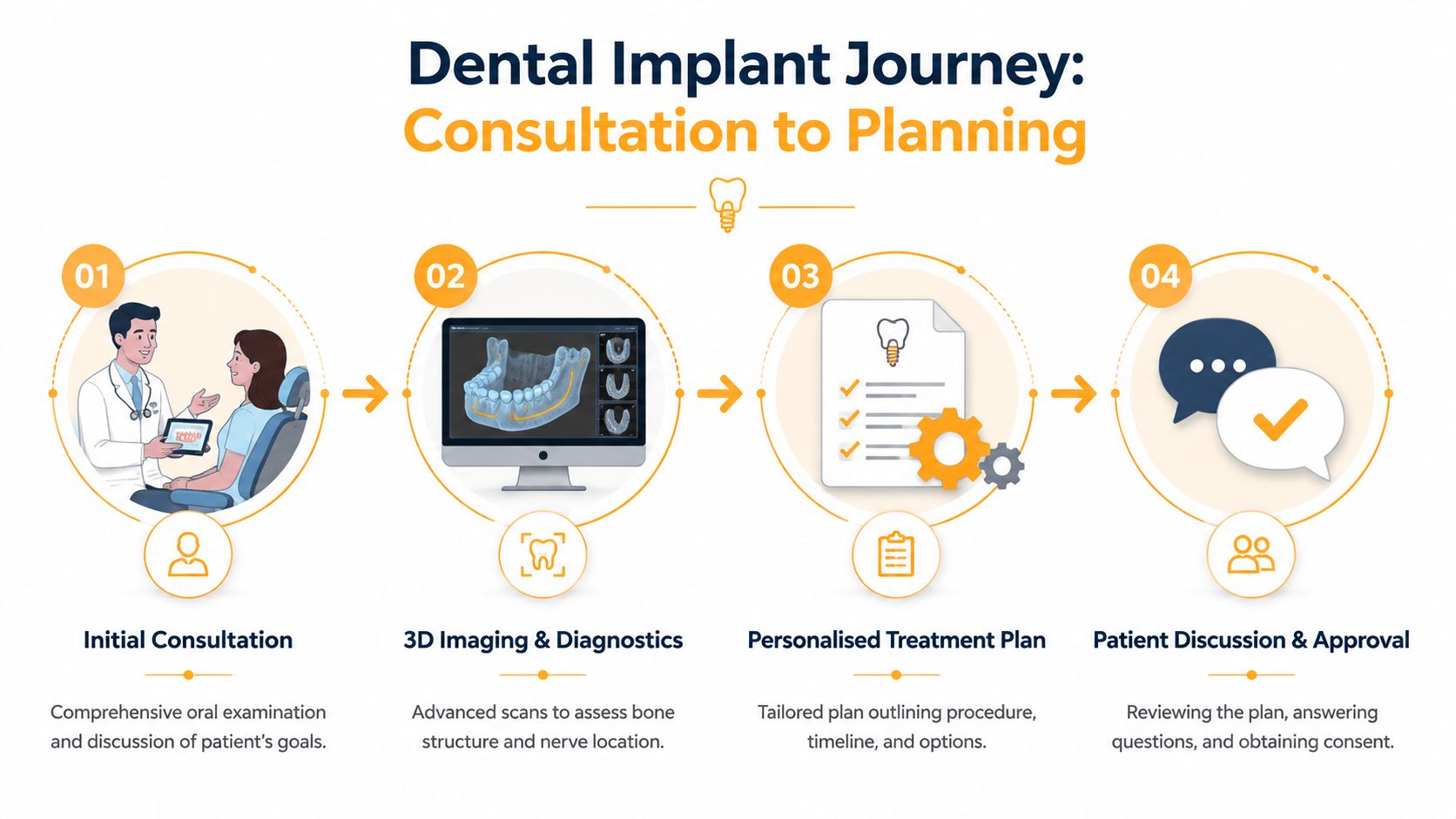
At the first consultation, the discussion is broader than the missing tooth itself. The dentist checks the space, the gum condition, the bite, and the neighbouring teeth. Medical history matters too, because implant treatment isn't just about where the tooth is missing. It's also about how your body heals and what will support a stable long-term result.
What the first appointment is really for
Some patients arrive expecting a simple yes or no answer. In reality, the consultation is where suitability and strategy are worked out.
The key questions are usually:
- Is there enough healthy bone in the area?
- Are the gums healthy enough to support treatment?
- Does the bite put unusual force on the missing tooth site?
- Is any preparation needed before implant placement?
Why 3D imaging matters
Traditional dental X-rays still have a role, but implant planning often needs more detail. A 3D CBCT scan helps the dentist examine bone width, bone height, and the position of important structures such as nerves and sinuses. That information shapes where the implant should go, what size is suitable, and whether extra procedures are needed first.
Patients are often surprised by how much this planning changes the experience. Precision before surgery usually means fewer surprises during surgery.
If you want a clearer picture of how this imaging fits into diagnosis, this guide to an OPG dental X-ray is a useful starting point.
Clinical priority: Implants succeed when the plan respects anatomy, not when the plan tries to force anatomy to cooperate.
When extra treatment is needed first
Not every implant can be placed immediately. Sometimes the site needs preparation.
That may include:
- Tooth extraction if a damaged tooth is still present
- Gum treatment if there's active inflammation or periodontal disease
- Bone grafting if the jawbone has thinned after tooth loss
- Timing adjustments if healing needs to happen in stages
This can feel frustrating to patients who want the final result quickly, but skipping foundation work is one of the worst shortcuts in implant dentistry. If bone or gum support isn't adequate, the implant is being asked to do too much too soon.
Personalised planning beats one-size-fits-all treatment
A single front tooth implant, a back molar implant, and a full-arch case are completely different clinical problems. They shouldn't be treated as if they follow the same formula.
Here's how planning decisions usually differ:
| Situation | Main planning focus |
|---|---|
| Single front tooth | Appearance, gum symmetry, crown shape |
| Single back tooth | Bite force, access for cleaning, bone support |
| Multiple missing teeth | Spacing, load distribution, restoration design |
| Full-arch treatment | Implant positioning, stability, prosthetic strategy |
By the end of the planning stage, patients should know the sequence, the likely timeline, the expected healing phases, and any optional choices. That clarity reduces anxiety because uncertainty is usually harder than treatment itself.
The Implant Placement Surgery Explained
Surgery day rarely matches the dramatic version people imagine in their heads. In a modern setting, the appointment is usually quiet, methodical, and focused on keeping you comfortable from the first few minutes onward.
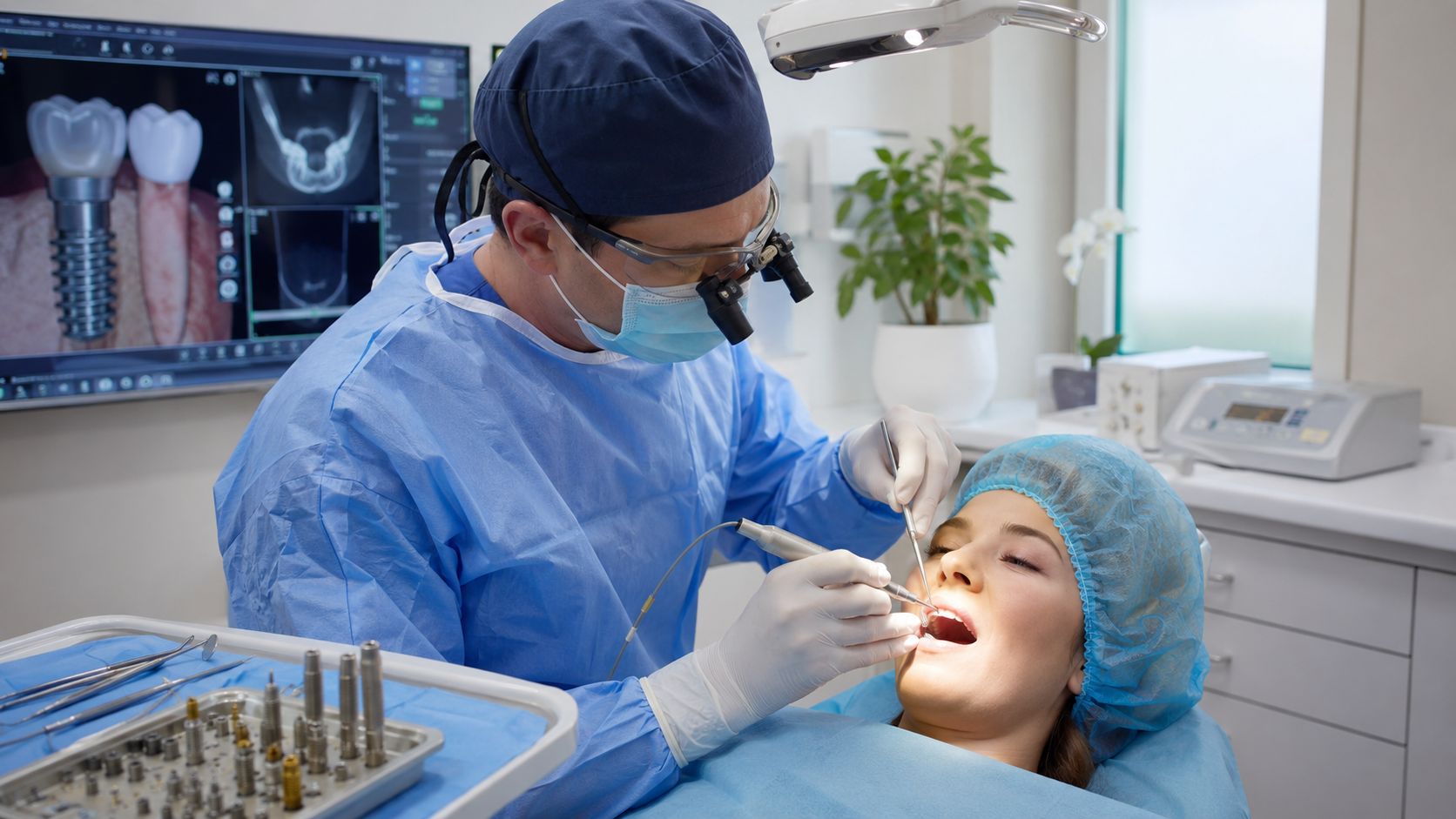
For a straightforward case, the implant placement itself is a minor procedure. The initial surgical placement of the implant itself is a minor operation lasting approximately 1 to 2 hours, depending on the number of implants being placed (Australian implant timing and cost overview). The implant is a titanium screw placed into the jawbone to act as the new tooth root.
What the appointment usually feels like
The area is numbed thoroughly with local anaesthetic before treatment starts. That means you may feel pressure and movement, but you shouldn't feel sharp pain. For anxious patients, sedation can also make the appointment feel far more manageable.
Some people are relieved by knowing they don't have to “push through” fear. If dental treatment has felt difficult in the past, learning more about IV sedation dentistry can help you understand what gentler support can look like.
Why modern implant surgery feels different now
A lot of the scary reputation around implants comes from older stories. Today, clinicians often use digitally guided workflows and less invasive techniques to reduce trauma to the surrounding tissues.
Modern techniques like flapless surgery and digitally guided workflows can reduce healing time and discomfort by up to 40%, a significant improvement over older methods that many patients still associate with implant procedures (guided and minimally invasive implant techniques).
That doesn't mean every case is flapless or every patient heals the same way. It means the treatment can now be planned and executed with far more precision than many people realise.
Where laser dentistry fits in
Laser-assisted dentistry can help in selected cases by improving soft tissue management and making treatment less invasive. In practical terms, that can mean a gentler surgical experience and a smoother recovery for some patients.
What works well in modern implant surgery is usually a combination of factors:
- Precise planning through digital imaging and guided placement
- Tissue-friendly technique that avoids unnecessary trauma
- Reliable anaesthesia and sedation support for comfort
- Clear aftercare instructions so healing isn't disrupted at home
Here's a helpful visual overview of how implant treatment is carried out:
What doesn't help on surgery day
Patients sometimes think the hardest part is the procedure itself. More often, the primary problem is arriving tense, under-informed, or expecting a dramatic recovery.
These assumptions tend to make the day feel harder than it needs to:
“It's going to be very painful”
With proper anaesthesia, the procedure itself is usually more comfortable than expected.“I'll be out of action for ages”
Recovery varies, but modern techniques are designed to reduce downtime where possible.“If I'm nervous, I just have to tolerate it”
You don't. Good implant care includes managing anxiety as well as managing the tooth.
Most patients don't leave saying the procedure was worse than expected. They leave saying the anticipation was worse than the procedure.
Healing, Osseointegration and Your Final Crown
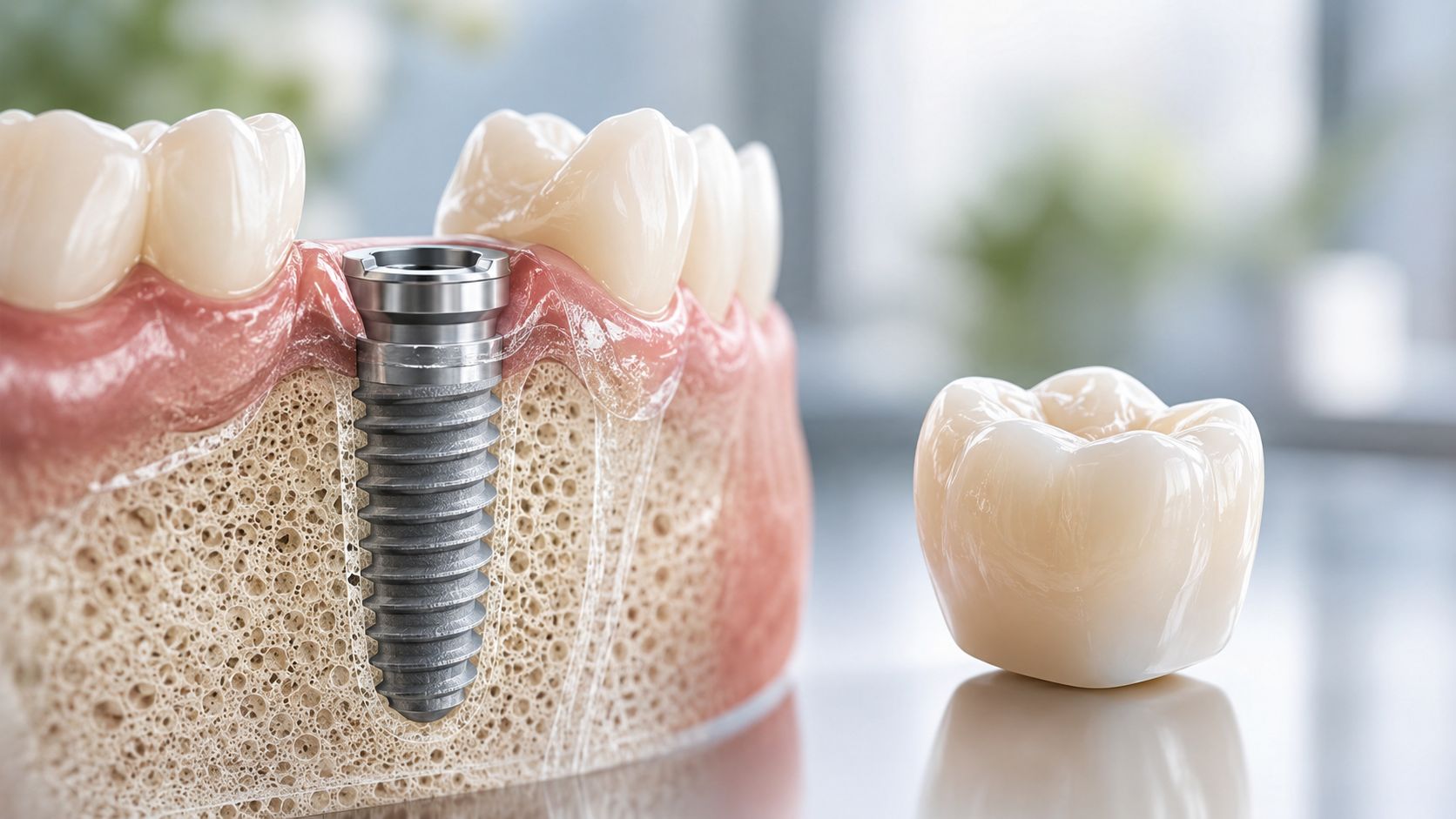
Once the implant has been placed, the most important part unfolds under the gum. This stage is called osseointegration. It means the bone gradually bonds to the titanium implant and locks it into place.
The success of the procedure hinges on the 3-to-6-month osseointegration phase where bone fuses with the titanium screw. While success rates are very high, risk factors like osteoporosis can increase failure risk, which is why a thorough pre-operative assessment is essential (osseointegration and implant risk factors).
What healing usually involves
Healing has two parts. The first is the visible recovery from the surgical appointment. The second is the deeper biological process where the bone secures the implant.
Patients often feel better well before the implant is ready for the next stage. That's why feeling normal isn't the same as being fully healed.
A simple way to think about it:
| Stage | What's happening |
|---|---|
| Early recovery | Gum and soft tissue settle after surgery |
| Osseointegration | Bone bonds to the implant surface |
| Restoration stage | The connector and final tooth are fitted |
What to expect while you wait
During healing, you may have a temporary tooth option depending on the site and treatment design. The goal is to protect the implant while keeping appearance and function manageable.
A few practical habits matter during this period:
- Choose softer foods early on so the area isn't overloaded
- Keep the site clean carefully according to your dentist's instructions
- Avoid testing the implant by chewing hard foods before you've been told it's safe
- Turn up to review appointments even if everything feels fine
For a closer look at what recovery can feel like week by week, this guide on dental implants recovery time is worth reading.
Healing isn't passive. Patients protect the result every day through food choices, hygiene, and follow-up care.
The abutment and crown stage
Once the implant is stable, the next step is fitting the abutment, which is the connector between the implant and the final crown. After that, the custom crown is designed to match the colour, shape, and proportion of the surrounding teeth.
This is the point where treatment starts to feel complete. The crown is the visible part people notice, but it only works because the foundation underneath has had time to become secure.
Why patience pays off
The temptation to speed up implant treatment is understandable. Patients want the gap gone. They want to chew normally again. They want the process finished.
But implants reward patience. Rushing the restorative stage before the bone is ready can compromise stability and comfort. The waiting period is what turns a placed implant into a dependable one.
Understanding Dental Implant Costs and Payments
Many patients reach this point feeling relieved about the clinical side, then tense again when the conversation turns to fees. That reaction is normal. Clear numbers and clear inclusions matter just as much as good surgery.
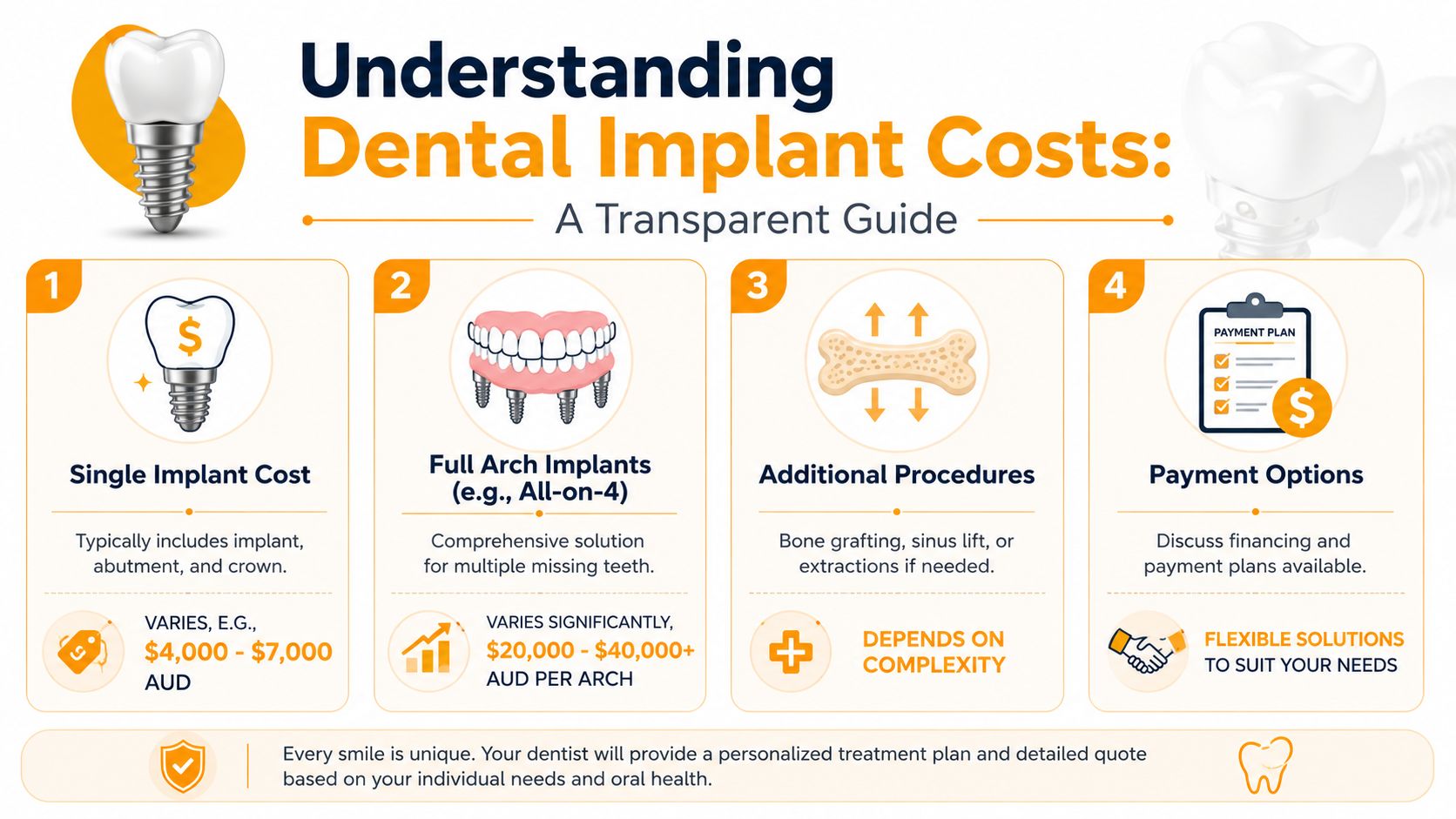
A single dental implant in Australia often sits in the range of several thousand dollars, and Medicare generally does not cover dental implants, so patients usually rely on private health rebates, personal funds, or payment plans (Medicare position on dental implants).
What the fee usually includes
For a straightforward single-tooth case, the quote often covers the planning phase, the implant placement, the abutment, and the final crown. Some clinics also include review appointments and standard imaging. Others separate those items, which is why two quotes can look similar at first and still represent different treatment.
Full-arch treatment costs more because it involves more planning, more materials, and tighter control over bite, gum support, and long-term function. The Australian Dental Association notes that fees vary with the complexity of treatment, the number of implants, the type of restoration, and whether extra procedures are needed (ADA guide to dental fees and factors affecting cost).
Why quotes vary
Lower pricing is not always better value. In implant dentistry, the question is what has been allowed for, and what has not.
Common cost variables include:
- Bone grafting or sinus work if the site needs more support
- Tooth removal if a damaged tooth is still present
- Temporary teeth during healing for appearance or function
- Front tooth aesthetics, where matching shape and gum contour takes more work
- Guided surgery or advanced imaging, which can improve accuracy and comfort but may affect the fee
At The Smile Spot, modern planning tools often make treatment more precise and less stressful for patients. They can also prevent surprises. That does not always make a case cheaper on paper, but it can make it more predictable, gentler, and more efficient overall.
Medicare, health funds, and payment options
Patients are often surprised by how limited Medicare is for dental treatment. Private health insurance may contribute to parts of the process, but annual limits and policy rules vary widely, so it helps to check item numbers before treatment starts.
Some patients prefer to stage treatment. Others want to complete it sooner and spread the cost through finance. If you are comparing payment options for a larger plan, an AI-powered dental loan assessment can be a practical external resource to review before making a decision.
Ask for the total expected fee in writing. It should show planning, surgery, parts, final restoration, and any likely additional procedures.
Price matters, but value matters more
Implants are rarely the lowest-cost option upfront. Patients choose them because they can feel more stable, preserve independence from neighbouring teeth, and offer a fixed result that many people find easier to live with than a removable alternative.
If budget is a major concern, our guide to affordable dental implants in Sydney explains practical ways to compare options without missing the details that affect comfort, longevity, and total cost.
Long-Term Care for a Lifetime of Smiles
Once the implant is complete, the job shifts from building the result to protecting it. An implant can't decay like a natural tooth, but the surrounding gums and bone still need proper care. If plaque is allowed to build up around the implant, inflammation can threaten the tissue supporting it.
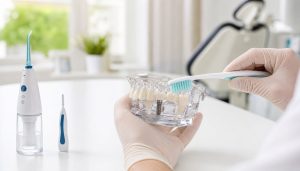
The good news is that the maintenance routine is familiar. Brush thoroughly, clean between the teeth every day, and keep up with regular dental reviews and professional cleans. Patients who do well long term usually don't do anything fancy. They do the basics consistently.
Daily habits that make the difference
- Brush gently but properly around the gumline, not just the visible crown
- Clean between teeth with floss, interdental brushes, or a water flosser if recommended
- Watch for bleeding gums because that's a sign the tissues need attention
- Use check-ups well by asking whether the implant, bite, and surrounding gum health still look stable
Don't treat the implant like it's indestructible
An implant is strong, but it still depends on the bone and gum around it. Grinding, poor hygiene, and skipped maintenance can all shorten the life of an otherwise good restoration.
If your gums tend to get sore or inflamed, it can help to discover at-home gum care tips alongside your dentist's advice. Home care won't replace professional reviews, but it can support healthier tissues between visits.
A well-made implant doesn't ask for perfection. It asks for consistency.
The biggest payoff isn't only cosmetic. Patients often notice they eat more comfortably, stop thinking about the missing tooth, and feel more like themselves again. That's why the dental implants procedure matters. Done properly and maintained well, it restores more than a smile.
If you're considering implants and want clear advice without pressure, The Smile Spot can help you understand your options, your likely treatment steps, and what a gentle modern approach may look like for your smile.