A lot of people first notice gum recession in an ordinary moment. You catch your reflection while brushing and one tooth looks a little longer than the others. Or you sip cold water and feel a sharp zing near the gumline that wasn't there before. It's easy to wonder whether you're overreacting, or whether it means something serious.
Usually, the right response sits in the middle. Don't panic, but don't ignore it either. Gum recession is common, and in many cases it can be managed well when the cause is identified early. A simple check-up and clean appointment is often the fastest way to find out whether you're dealing with irritation, grinding, gum disease, or a combination of factors.
Your Guide to Understanding and Managing Gum Recession
Gum recession means the gumline has moved back, exposing more of the tooth than before. Sometimes that change is subtle. Sometimes it shows up as sensitivity, a notch near the gumline, or a tooth that suddenly looks uneven.
What matters most is understanding that gum recession causes aren't all the same. One person may have recession from long-term periodontal inflammation. Another may be brushing too hard every day without realising it. A third may have thin gum tissue and a heavy grinding habit that puts extra strain on already delicate areas.
Practical rule: If a tooth looks longer, feels sensitive, or seems harder to clean near the gumline, it's worth having it assessed.
In practice, the best outcomes come from matching the treatment to the cause. Gentle home care helps, but it won't reverse a structural problem caused by bone loss. A deep clean can stabilise gum disease, but it won't fix damage from ongoing clenching if the bite force is still there every night. That's why a proper diagnosis matters more than guessing.
Here's the reassuring part. Even when gums have receded, dentists can often stop the progression, reduce sensitivity, improve comfort, and protect the tooth for the long term. The earlier you act, the more conservative the options usually are.
What Is Gum Recession
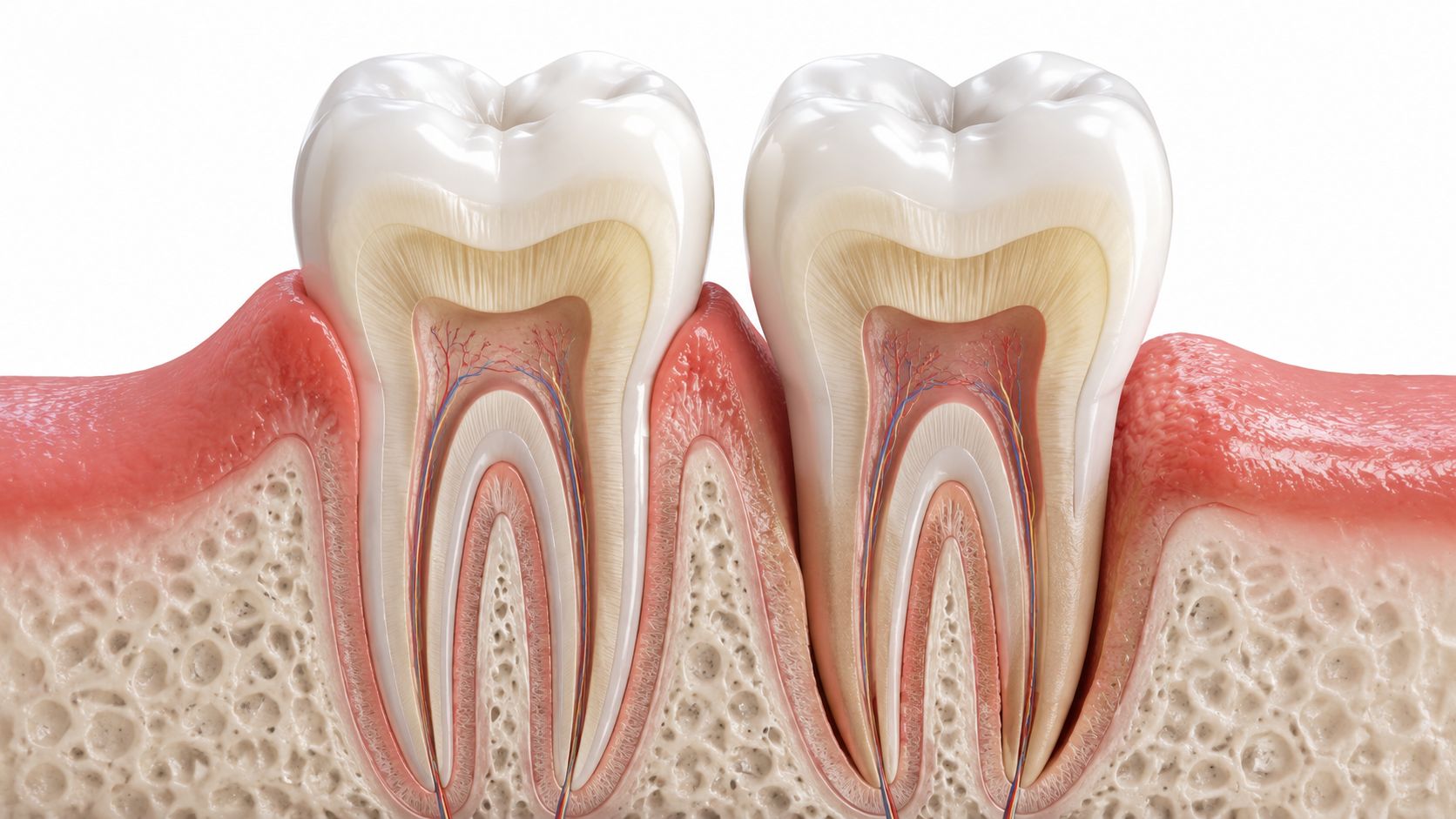
Gum recession happens when the gum tissue pulls away from the tooth, exposing more of the surface and sometimes the root. The root is not covered by enamel the way the crown is, so it tends to feel more sensitive and is more vulnerable to wear and decay.
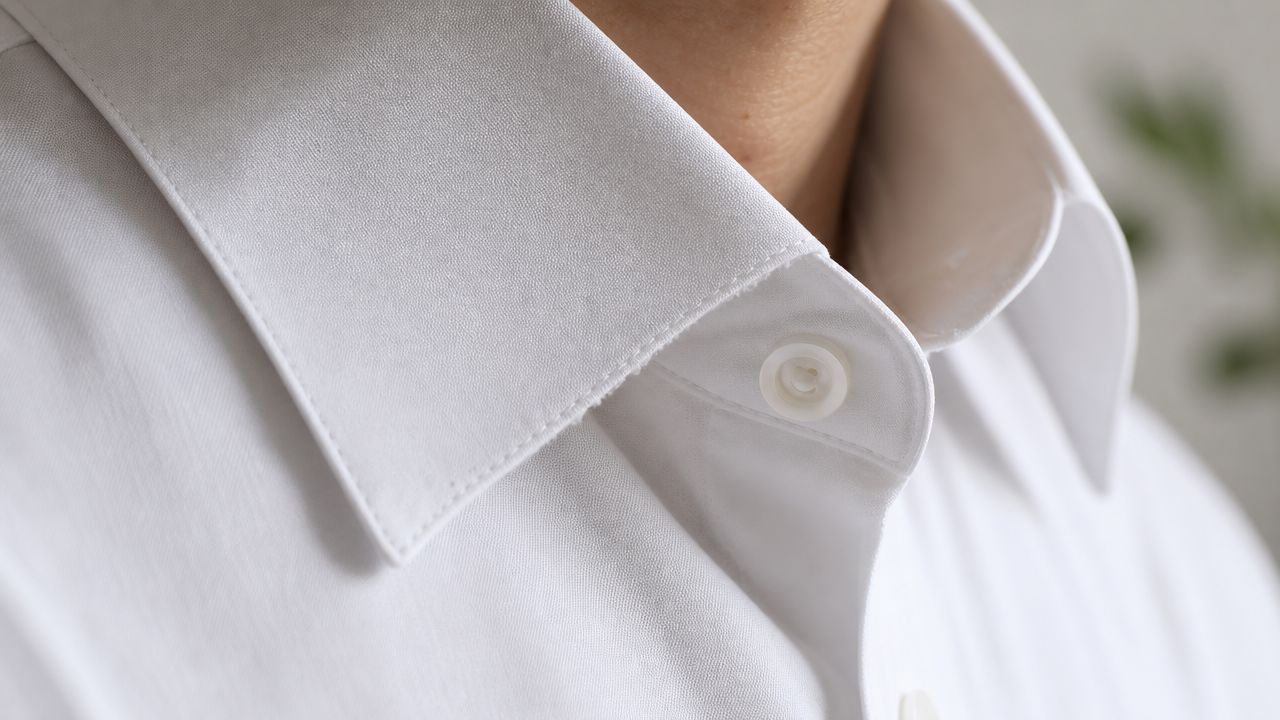
A simple way to picture it is to think of a shirt collar. If the collar frays and starts pulling away from the neck, more of the shirt underneath becomes visible. Receding gums work in a similar way. The gumline shifts, and the part of the tooth that used to be covered becomes exposed.
It's not just a surface problem
This is the part many patients don't realise at first. Gum recession is often a structural consequence of untreated periodontal inflammation. Once the supporting alveolar bone crest is lost due to gum disease, the soft gum tissue tends to follow, migrating down and exposing the root surface.
That's why recession shouldn't be thought of as only a cosmetic issue. Sometimes the visible gumline change is the clue that deeper support around the tooth has already been affected.
Receding gums often reflect what's happening underneath, not just what you can see at the edge of the gumline.
Why exposed roots feel different
When the root becomes exposed, patients often notice:
- Cold sensitivity when drinking water or eating chilled food
- A rough or notched feeling near the gumline
- A darker or yellower tone near the base of the tooth
- More plaque build-up in that area because the surface is harder to keep clean
If you're unsure whether you're seeing true recession or just inflammation, regular dental check-ups are the best way to get a clear answer. A dentist looks at gum levels, signs of inflammation, areas of wear, and whether the exposed area is stable or still changing.
The Most Common Gum Recession Causes
Some gum recession causes are biological. Others are mechanical. Many patients have more than one at the same time, which is why recession can seem confusing unless each factor is assessed carefully.
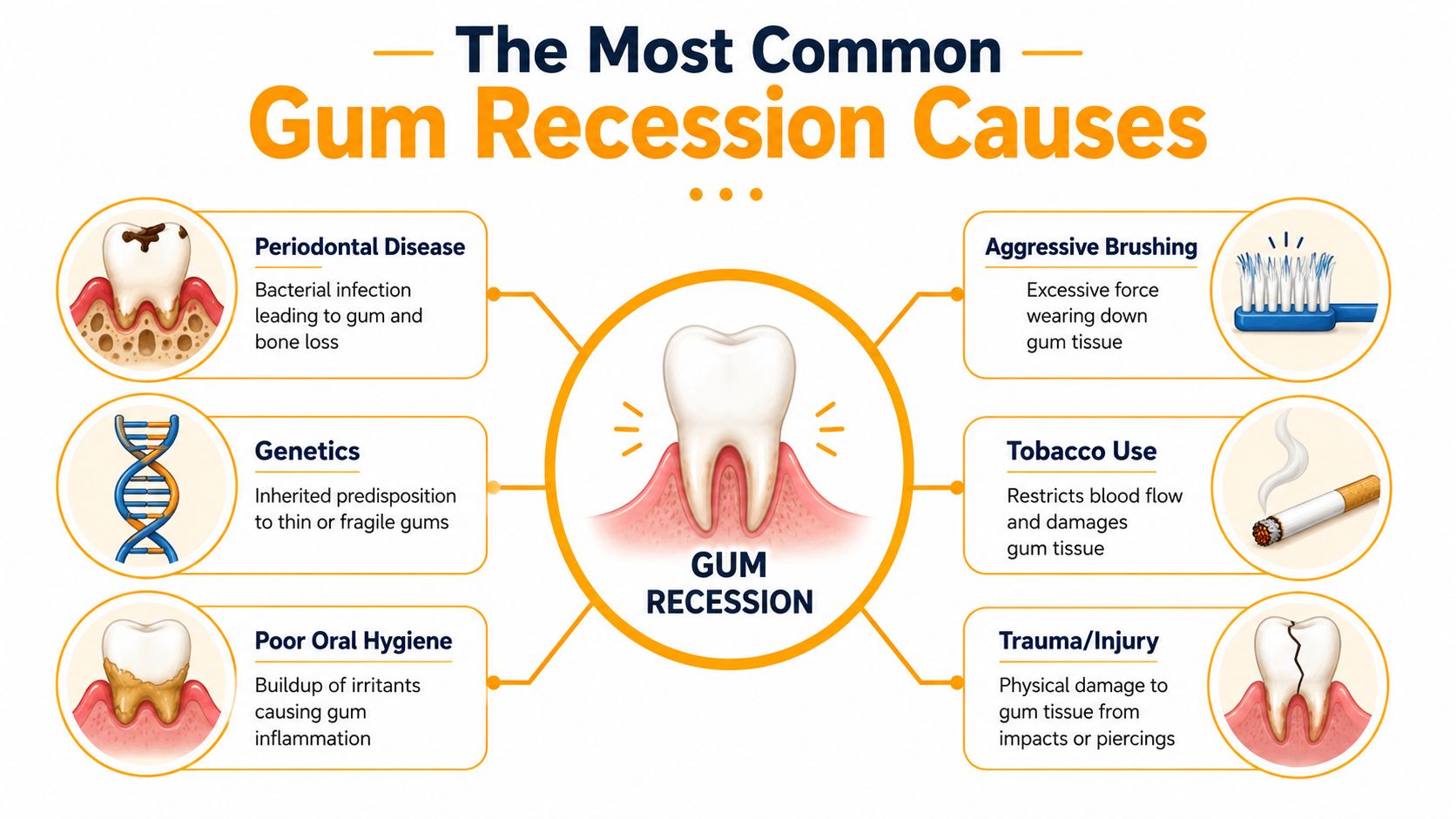
Periodontitis is the leading driver
In Australia, the clearest population-level explanation is periodontitis, the advanced form of gum disease. The Australian Institute of Health and Welfare reported that 29% of Australians aged 15 and over had periodontitis in 2017–18, and the rate rose to 64% in people aged 55 and over (Cleveland Clinic reference page citing AIHW data). That age pattern helps explain why recession becomes more common later in life.
A separate Australian review also noted that 21.0% of adults had severe periodontitis, and recession commonly follows because inflammatory periodontal destruction causes alveolar bone loss, after which the gum margin shifts apically and root surfaces become exposed (Australian periodontal review).
What works here is treating the disease process. What doesn't work is trying to scrub the area cleaner at home while infection and inflammation remain under the gumline.
For a visual overview of how these factors connect, this short video is useful.
Mechanical wear and bite stress
Not all recession starts with infection. Some cases are driven by repeated physical stress.
Aggressive brushing is a common example. People often think harder brushing means better cleaning, but the opposite is usually true. A heavy hand, especially with a firm brush or a sawing motion, can gradually wear down delicate gum tissue near the neck of the tooth.
Grinding and clenching matter as well. Excess force can stress the teeth and the surrounding attachment. If you wake with jaw tightness, flattened teeth, or tension headaches, it's worth considering whether a grinding habit is part of the picture. A custom appliance can help protect against that ongoing pressure, and a night guard for grinding is often part of a long-term plan when bruxism is involved.
Tissue quality, alignment, and newer irritants
Some people have thinner gum tissue. In those mouths, even mild friction or minor inflammation can lead to visible recession more quickly. Genetics doesn't mean recession is unavoidable, but it does mean prevention needs to be more deliberate.
Other contributors can include:
- Crowded or misaligned teeth that place the gum in a less stable position
- Poor plaque control that keeps the tissue inflamed
- Smoking and other tobacco exposure that worsen periodontal damage
- Vaping or oral piercings which may irritate tissue in some patients
- Local trauma from habits or repeated rubbing
Recent consumer guidance has also pointed to tobacco use, vaping, and lip or tongue piercings as possible contributors, alongside grinding and misalignment (discussion of common and less common causes). In real life, that matters because many patients don't have one clean textbook cause. They have a mix of inflammation, force, and tissue fragility.
Signs of Gum Recession and When to See a Dentist
The earliest signs are often easy to dismiss. A bit of sensitivity. A small notch. A tooth that looks slightly different in photos. Those changes are worth attention because early intervention is usually simpler and more comfortable than waiting.
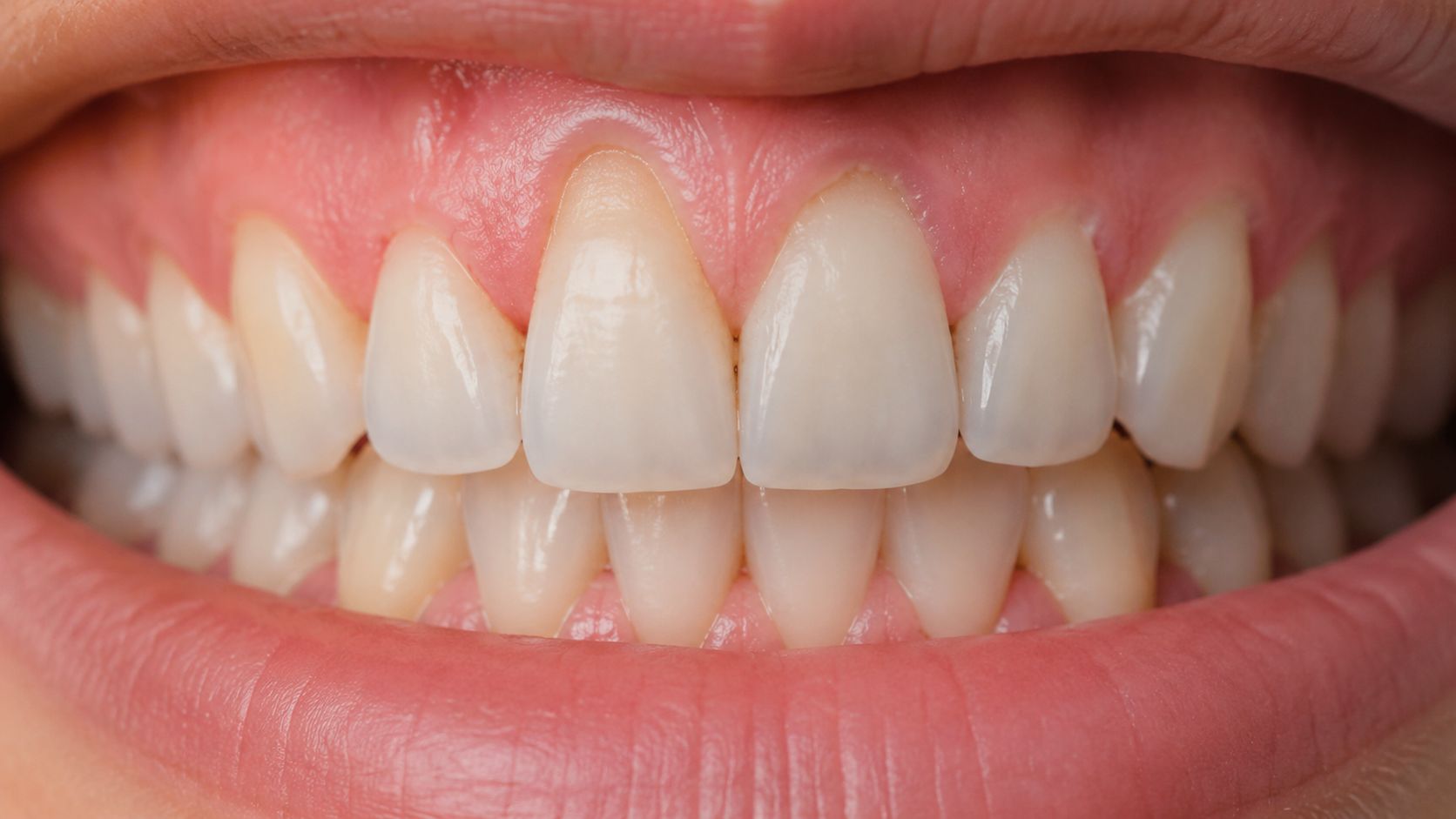
Signs you might notice at home
Watch for these clues:
- Teeth that look longer than they used to
- Sensitivity to hot, cold, or sweet foods near the gumline
- A notch or groove you can feel with your fingernail
- A yellower area near the base of the tooth where the root is showing
- Small gaps between teeth that seem more noticeable than before
- Bleeding or tenderness if inflammation is also present
When it's time to book
If you notice one of these signs once, monitor it. If it persists, worsens, or appears in more than one spot, book an assessment. That's especially important if you also have bleeding gums, bad breath, or a history of grinding.
A dentist can tell the difference between stable recession, active gum disease, toothbrush abrasion, and bite-related trauma. That distinction matters because the treatment pathway changes depending on the cause. If deeper periodontal inflammation is suspected, root planing and scaling may be recommended to clean below the gumline and help the tissue settle.
If the area is sensitive, changing shape, or harder to keep clean, don't wait for pain. Gum recession often progresses quietly.
Practical Ways to Prevent Gum Recession
Prevention works best when it focuses on habits you can keep up. A complicated routine is often unnecessary. What's needed is a gentler technique, better consistency, and the right support if a hidden habit like grinding or smoking is adding pressure.
The habits that make the biggest difference
A strong prevention plan usually includes:
- Use a soft-bristled brush and light pressure. If the bristles splay quickly, you're probably brushing too hard.
- Clean along the gumline daily with floss or another tool your dentist has shown you how to use properly.
- Keep professional reviews regular so small changes are picked up before they turn into deeper attachment loss.
- Address grinding early if you clench at night or notice jaw fatigue in the morning.
- Manage inflammation, not just stains. Gums stay healthier when plaque is disrupted consistently.
For a broader look at long-term habits that protect the whole family, these tips for children's dental care are useful because many of the same preventive principles start young and carry into adulthood.
Lifestyle trade-offs that matter
Some risk factors deserve direct attention. In Australia, 11.0% of people aged 15 and over were daily smokers in 2022–23, and smoking remains a major modifiable risk for the gum disease that leads to recession (Australian smoking context). Quitting doesn't repair existing recession on its own, but it removes a major obstacle to gum healing and long-term stability.
What tends not to work is relying on whitening toothpaste, harsher brushing, or “natural” home remedies to toughen up the gums. Those approaches can irritate already vulnerable tissue. What does work is a preventive routine built around gentle cleaning, regular professional monitoring, and reducing the forces or exposures that keep the area inflamed.
If you want a simple place to start, preventive dental care is the right mindset. The goal isn't perfection. It's keeping small gum changes from becoming structural ones.
Modern Treatments for Receding Gums at The Smile Spot
Treatment depends on two things. What caused the recession, and how much support has already been lost. The right option for mild inflammation is different from the right option for advanced root exposure.
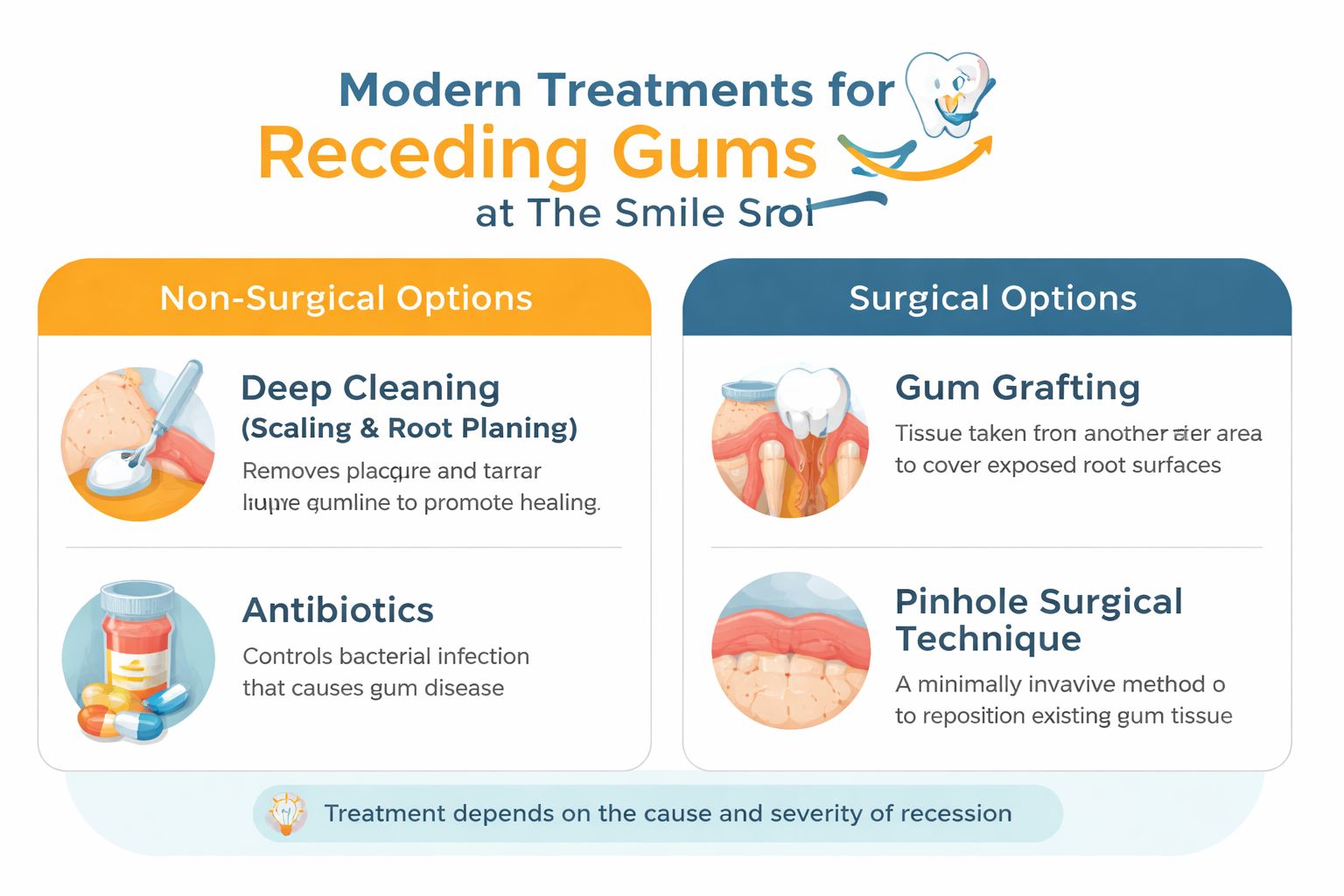
Non-surgical and surgical options
A practical comparison looks like this:
| Approach | Best suited to | Main goal |
|---|---|---|
| Deep cleaning | Recession linked to gum disease or tartar below the gumline | Remove bacterial build-up and reduce inflammation |
| Antibiotic support | Selected cases with active infection | Help control bacterial activity |
| Gum grafting | More advanced recession with exposed roots | Cover vulnerable root surfaces and improve tissue thickness |
| Pinhole-style repositioning | Selected cases depending on anatomy | Move tissue with a less invasive surgical approach |
Deep cleaning, often called scaling and root planing, is usually the first step when periodontal inflammation is present. It helps create a cleaner root surface so the gum can settle and heal. If the recession is already advanced, a graft may be the better option to add tissue and protect the exposed root.
Where laser treatment fits
Modern laser dentistry can be valuable when inflamed tissue and periodontal infection need precise treatment. Compared with more traditional approaches, laser therapy can be gentler on surrounding tissue and may support a more comfortable recovery experience for suitable cases.
That doesn't mean lasers replace every other treatment. They're a tool, not a cure-all. If a patient has recession from thin tissue and severe root exposure, grafting may still be the most appropriate answer. If the main issue is inflamed periodontal pockets, laser-assisted care may help alongside deep cleaning. The decision should be based on what the mouth needs, not on using the newest device for every situation.
If you'd like to learn more about this approach, laser periodontal therapy explains how it's used to manage gum infection with a minimally invasive focus. In more severe cases where recession has contributed to tooth loss, replacement options such as dental implants may also become part of the conversation.
If you've noticed sensitivity, longer-looking teeth, or changes at the gumline, The Smile Spot can help you find the cause and the most suitable treatment. From careful diagnosis and deep cleaning to modern laser-based periodontal care, the focus is on protecting your teeth, improving comfort, and giving you a clear plan forward.