Early-stage gum disease treatment can be as low as AUD $160 to $340 for a standard scale and clean, while advanced cases that need surgery can rise to AUD $1,000 to $3,000+ and, in some situations, higher. That's why the biggest cost-saving move isn't shopping around for the cheapest quote. It's acting early.
If you're reading this after noticing bleeding when you brush, gums that look puffier than usual, or a bad taste that won't settle, you're probably worried about two things at once. Is this serious, and how much is this going to cost me?
The answer is usually more reassuring than people expect. Treatment for gum disease cost isn't one fixed fee. It changes with the stage of the disease, the type of treatment needed, and whether the problem is still limited to inflamed gums or has already started affecting the bone and support around the teeth.
That difference matters. A simple early intervention is very different from deep cleaning across multiple areas, and both are very different again from grafting, flap surgery, or laser-assisted treatment. Once you understand where your mouth sits on that spectrum, the pricing starts to make sense.
Worried About Your Gums and Your Wallet
Bleeding gums can feel minor right up until you search the symptoms online. Then the concern changes fast. The worry isn't typically about gum disease itself. Rather, it centers on what it might become, and what the bill might look like if left too long.
The first thing to know
The main rule is simple. Earlier disease means simpler care. Simpler care usually means lower cost.
In Australia, gingivitis is commonly treated with a standard scale and clean costing AUD $160 to $340, which makes it one of the more affordable preventive dental treatments available, according to this Australian gum disease cost overview.
That early phase is where many people still have room to turn things around without invasive treatment. If you've also noticed your teeth looking longer or the gumline changing shape, it's worth understanding the common causes of gum recession because recession can be a sign that the issue has moved beyond simple inflammation.
Practical rule: If your gums bleed repeatedly, don't treat that as normal. Healthy gums don't regularly bleed from routine brushing or flossing.
Why the quote can vary so much
Two patients can both say, “I have gum disease,” and need completely different care. One may only need a professional clean and better home maintenance. Another may need treatment below the gumline over several appointments, followed by ongoing periodontal reviews.
That's why asking “what does gum disease treatment cost?” often gets vague answers online. The honest answer depends on stage, extent, and method. A useful estimate starts with diagnosis, not with a generic price list.
What usually helps most
If you want the shortest path to lower fees, focus on three things:
- Book an assessment early: Small problems are cheaper to manage than advanced ones.
- Don't wait for pain: Gum disease often progresses without strong pain signals.
- Ask for a staged plan: Many dentists can separate urgent treatment from later review and maintenance.
That approach gives you clarity. It also stops the situation from drifting into the more expensive end of periodontal care.
Understanding the Stages of Gum Disease
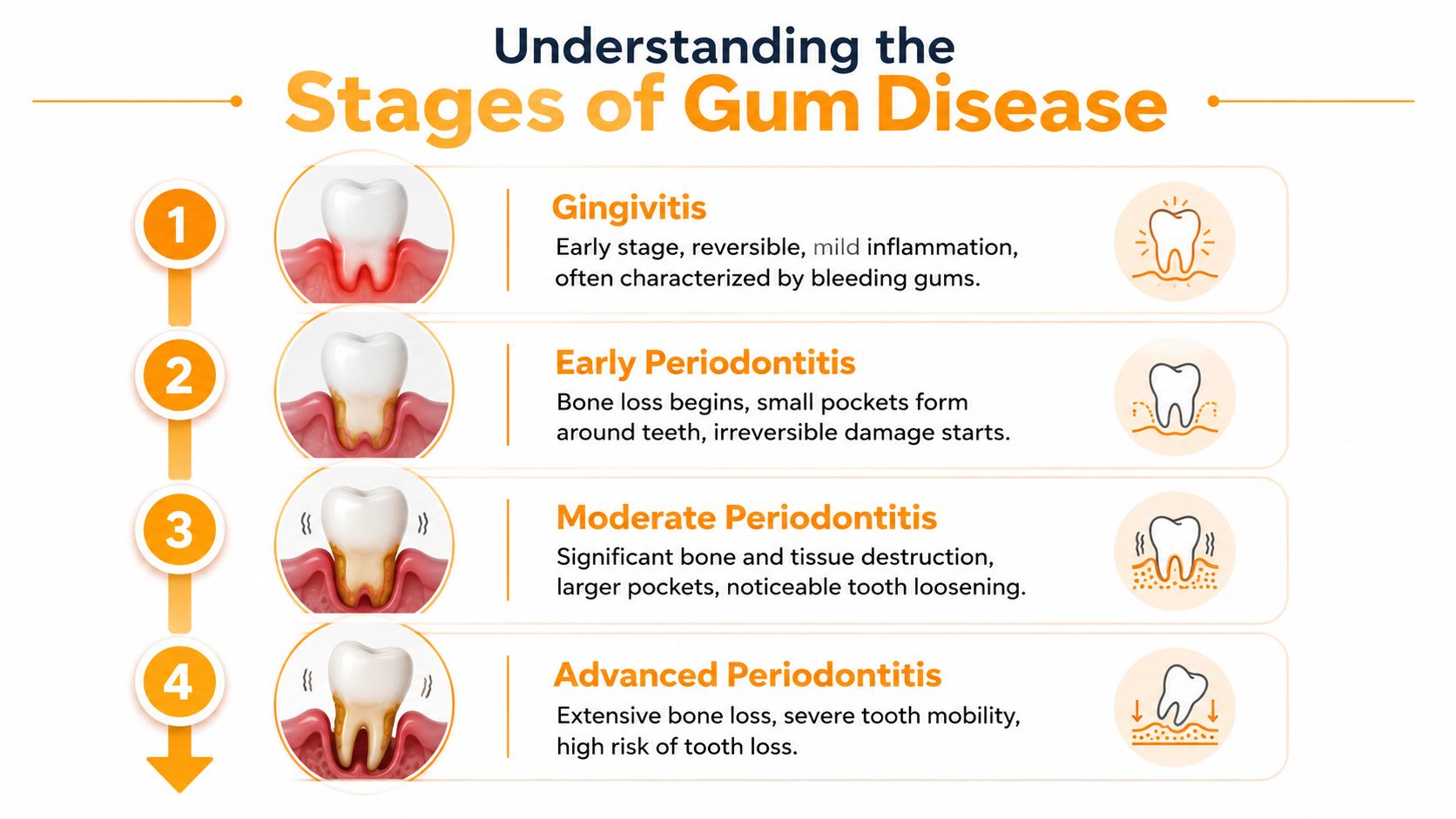
Gum disease usually doesn't jump from healthy to severe overnight. It moves in stages. A good way to think about it is like a foundation problem in a house. At first, you might only see a small crack. Ignore it, and the structure underneath starts changing.
Gingivitis
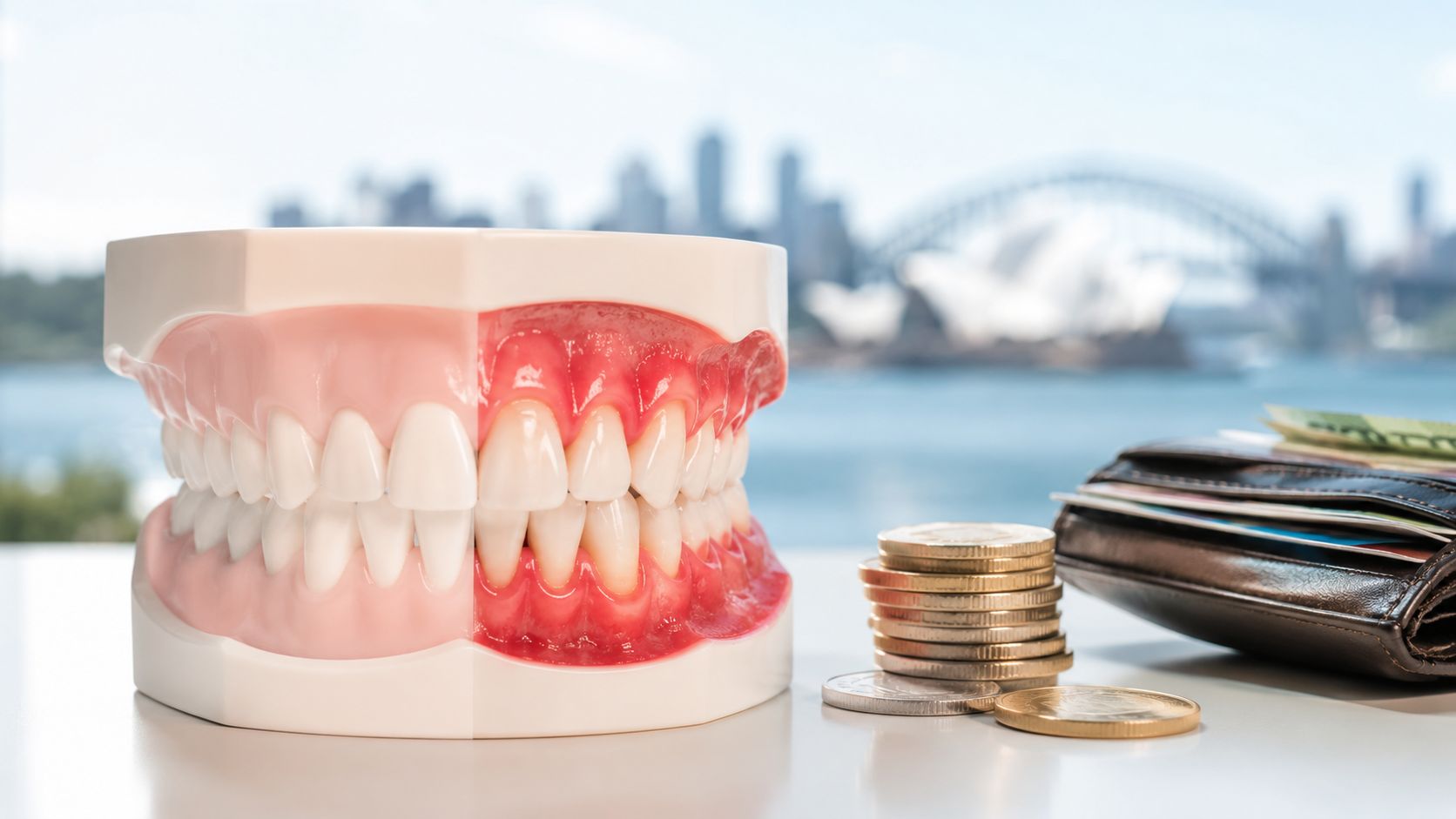
This is the earliest stage. The gums become red, puffy, or tender, and they may bleed when you brush or floss. The key point is that gingivitis is the reversible stage if you remove the plaque and bacteria properly and improve daily cleaning.
At this point, the support structures around the teeth haven't been permanently damaged. That's why treatment is generally straightforward.
Early periodontitis
At this stage, the disease stops being only a surface gum problem. The inflammation starts affecting the attachment around the teeth, and small pockets can form between the tooth and the gum.
You might notice:
- Bleeding that keeps recurring
- A change in gum height
- Bad breath that doesn't improve enough with brushing
- Areas that trap food more easily
The damage now becomes harder to reverse fully. Treatment shifts from a routine clean to more targeted care under the gumline.
Once bacteria settle deeper around the roots, a standard clean isn't enough. The goal changes from prevention to active disease control.
Moderate periodontitis
At this stage, the supporting bone and soft tissue have been affected more significantly. The pockets around teeth usually become deeper, and keeping those areas clean at home gets much harder.
Patients may notice that certain teeth feel different when chewing, or that the gumline appears uneven. Some develop visible recession. Others only realise something is wrong when a dentist measures the pockets and shows where the disease has spread.
Advanced periodontitis
This is the most destructive stage. The support around the teeth can be reduced to the point that teeth become mobile, uncomfortable, or at real risk of being lost.
Signs can include:
- Marked gum recession
- Loose teeth
- Shifting teeth or bite changes
- Persistent swelling or infection in certain areas
At this point, treatment often needs specialist-level planning. The aim may include controlling infection, preserving strategic teeth, rebuilding tissue where appropriate, and deciding whether some teeth are still predictable to keep.
The stage matters because it shapes everything else. It affects the type of treatment, how many visits are needed, whether surgery enters the picture, and how much the final cost is likely to be.
Mapping Treatments to Costs A Detailed Breakdown
Once the stage is clear, the treatment path becomes much easier to understand. With this clarity, people usually get the most relief. The unknown turns into a plan.
For Sydney patients, the biggest pricing jump happens when care moves from routine cleaning into scaling and root planing, and then again into surgery. According to this Sydney periodontal treatment cost guide, non-surgical scaling and root planing for a full mouth in Australia typically costs $800 to $1,900, while severe cases that need surgery such as osseous surgery can add $800 to $2,500 per quadrant.
Gum disease treatment costs in Sydney 2026 estimates
| Stage of Gum Disease | Common Treatment | Estimated Cost Range (AUD) |
|---|---|---|
| Gingivitis | Standard scale and clean | $160 to $340 |
| Mild to moderate periodontitis | Scaling and root planing, localised per quadrant | $100 to $400 per quadrant |
| Mild to moderate periodontitis in Sydney | ADA item 222 scale and root plane, per quadrant | Approximately $300 per quadrant |
| Full-mouth active periodontal therapy in Sydney | Scaling and root planing across four quadrants | $900 to $2,500 |
| Full-mouth non-surgical treatment in Australia | Scaling and root planing | $800 to $1,900 |
| Advanced periodontitis | Surgical flap surgery, grafting, or related advanced treatment | $1,000 to $3,000+ |
| Severe periodontitis | Osseous surgery | $800 to $2,500 per quadrant |
What each treatment actually involves
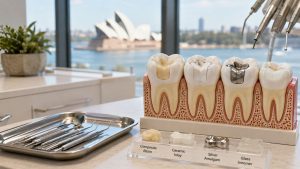
A scale and clean is usually appropriate when the problem is limited to gingivitis. The clinician removes plaque and calculus around the gumline, checks areas you're missing at home, and helps reset the mouth before deeper damage occurs.
Scaling and root planing is different. It's not a “better clean” in the marketing sense. It's treatment for active periodontal disease. The instruments go below the gumline to remove deposits and smooth the root surfaces so the tissue has a better chance to heal and tighten.
If your dentist has recommended root planing and scaling, that recommendation usually reflects pocketing, deeper inflammation, or root surface contamination that a standard clean won't solve.
Cost clue: Per-quadrant pricing often means treatment is being delivered in sections of the mouth because the disease is localised or because the procedure is more involved.
Why surgery costs more
When gum disease has caused significant tissue or bone changes, the dentist or periodontist may need better access to the roots and underlying structures. That's where flap procedures, grafting, or osseous surgery can enter the plan.
The fee rises for a practical reason. These treatments are more technically demanding, often take longer, and are commonly handled by a specialist periodontist. They're not an upgraded clean. They're a different category of care.
If you're trying to compare quotes, make sure you compare like with like. A lower estimate may cover only the initial phase, while another may include review, maintenance, or more advanced procedures already built into the plan.
What Factors Change the Final Price Tag
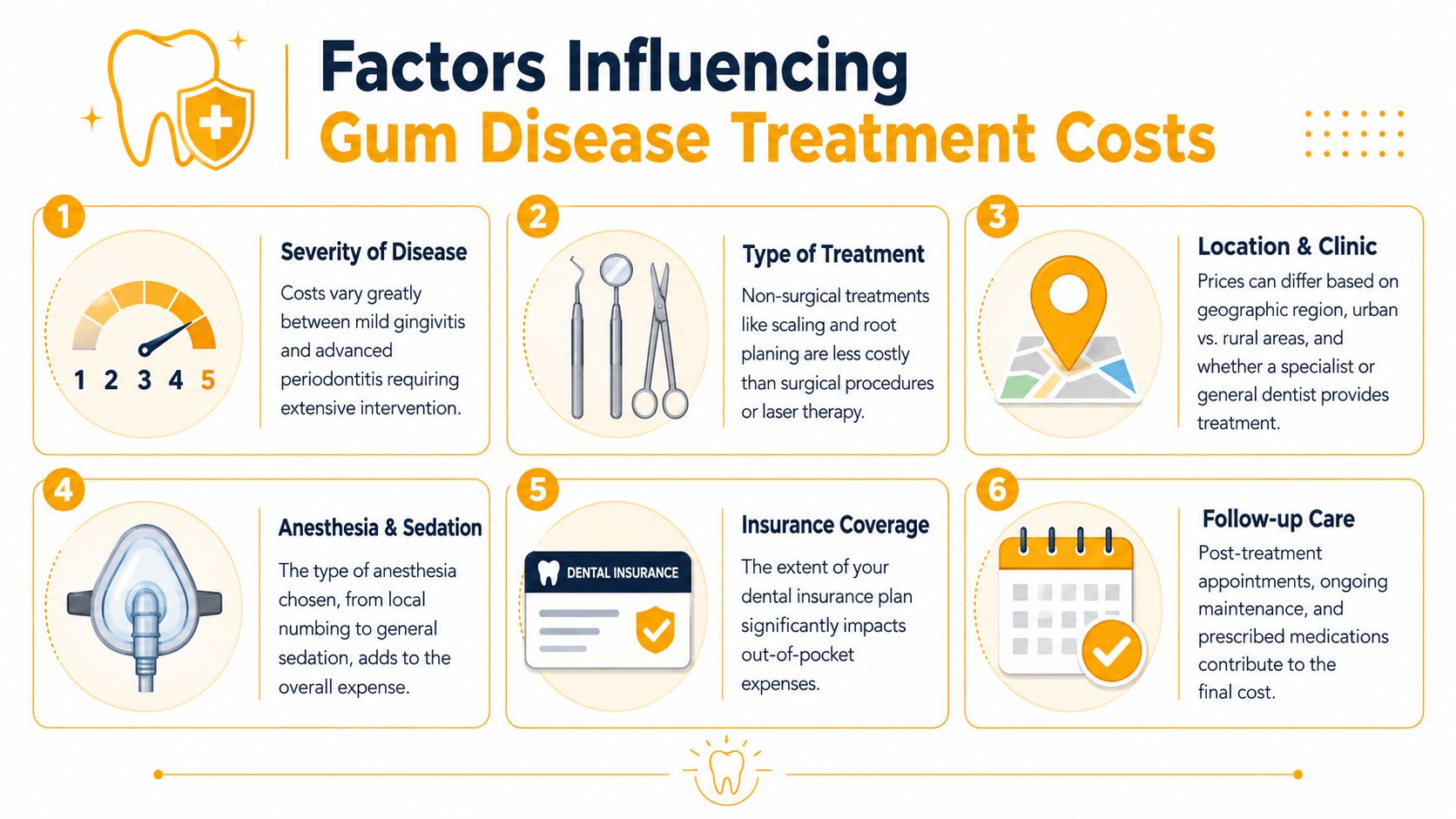
No two periodontal quotes look exactly the same because no two mouths present the same way. Even when the diagnosis sounds similar, the final fee can move substantially depending on what the clinician finds and how the treatment is delivered.
Disease spread and treatment scope
One of the biggest pricing variables is how much of the mouth needs active treatment. A patient with one or two affected areas may receive a very different estimate from someone needing full-mouth care.
Sydney pricing also tends to sit higher than many other Australian cities. A separate Sydney gum disease treatment pricing overview notes that a full course of active periodontal therapy in Sydney ranges from $900 to $2,500, and that a per-quadrant scale and root plane averages $300 in Sydney.
General dentist or specialist periodontist
Specialist involvement usually affects fees. That isn't automatically a red flag. It often reflects the complexity of the case.
For moderate to severe periodontitis, especially when surgery or regeneration is being discussed, specialist training can be the right move. The quote may be higher, but the treatment plan is also built for more advanced disease control.
Traditional instruments or laser-assisted care
Laser treatment is one of the most misunderstood parts of periodontal pricing. Some patients assume laser always replaces conventional methods. It doesn't. In many cases, it's used as part of the broader periodontal approach.
Laser gum surgery in Australia can cost AUD $1,500 to $6,000 per quadrant, and private health insurers often cover only 60 to 80 per cent of medically necessary periodontal treatment, which can leave a notable out-of-pocket gap for advanced technology options, according to this review of laser gum surgery costs and cover in Australia.
That said, laser-assisted care can offer a different patient experience. Many people value the reduced invasiveness, the precision, and the way tissues often feel afterwards. If you're comparing methods, it helps to read about laser periodontal therapy so you understand what the technology changes and what it doesn't.
Advanced technology can improve comfort and access in the right case, but it doesn't make diagnosis less important. The disease still has to be mapped properly first.
Sedation and follow-up needs
Sedation can also affect the bill, particularly for anxious patients or longer appointments. The same applies to follow-up visits, review appointments, and maintenance once active treatment is complete.
A quote that looks higher upfront may include more post-treatment support. One that looks cheaper may only cover the initial appointment. Ask what is included, what is separate, and whether maintenance has been factored in.
How Insurance and Payment Options Can Help
A common scenario in my surgery is this. A patient is prepared to treat the infection, then pauses when they realise the quote may involve more than one visit, more than one item number, and a gap payment even with extras cover. The stress usually comes from uncertainty, not from the idea of paying for care.
What private health insurance usually does
Private health insurance can reduce the upfront hit, but the level of help depends on the policy, the annual limit, and how the treatment is classified. Periodontal cleaning, deeper non-surgical treatment, gum surgery, and laser-assisted procedures are not always grouped the same way by insurers.
The key point is simple. Cover is often better for standard item numbers than for newer technology or more complex surgical care. If a patient chooses a laser-based option, the clinical benefits may still make sense, but the rebate may not rise with the fee. The Australian Dental Association's information on health insurance and dental fees explains why rebates can vary so much between policies and providers.
Before treatment starts, ask the practice to outline the likely item codes, the estimated rebate, and the expected gap. That gives you something concrete to compare, especially if your care plan changes as the stage of disease becomes clearer.
Where confusion usually happens
Confusion usually starts when patients assume all gum treatment sits under one dental category. It rarely does. A routine clean may attract one level of extras cover, while scaling and root planing, periodontal reviews, or surgical treatment can sit under different limits or waiting periods.
Medicare offers limited support for routine adult dental care, so many adults pay through private cover, personal funds, or staged care through the clinic. A practical question to ask is whether the treatment needs to be done all at once or whether it can be broken into manageable phases without compromising the result.
For readers comparing health funding systems more broadly, this guide on how to boost retirement savings with HSAs gives useful background on health savings accounts in countries where they are available. It does not replace Australian private cover, but it can help if you manage family finances across different systems.
Why maintenance matters financially
The first invoice is only part of the picture.
Gum disease treatment often includes an active phase and a maintenance phase. If the gums stabilise after treatment but the reviews are skipped, the disease can return and the long-term cost usually rises with it. Smile.com.au notes in its overview of gum disease treatment and maintenance that ongoing periodontal maintenance is part of keeping the condition under control.
That is why I advise patients to ask one direct question. Does the quote cover only the initial treatment, or does it also account for reviews, maintenance cleans, and any reassessment needed if pockets do not respond as expected?
If spreading the cost would make treatment easier to start, it helps to look at dentists with payment plans near me and ask whether your plan can be staged around both the clinical priority and your budget.
A good financial conversation in dentistry should leave you with clear numbers, clear phases of care, and no surprises about what your insurance is likely to reimburse.
Practical Ways to Reduce Your Gum Disease Treatment Costs
The cheapest gum disease treatment is the one you never need because the disease never gets established. The second cheapest is the one you catch early.

Focus on prevention that actually works
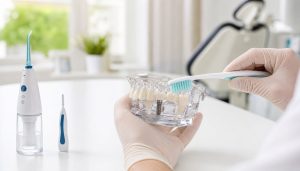
At home, the basics still do the heavy lifting. Brush carefully along the gumline, clean between the teeth daily, and don't ignore recurring bleeding. Mouthwash can support your routine, but it won't remove the bacterial build-up that causes the problem.
The more consistent approach is this:
- Brush with intent: Angle the bristles toward the gumline rather than skimming the tooth surface only.
- Clean between teeth daily: Floss or interdental brushes matter because gum disease often starts where toothbrushes miss.
- Act on changes quickly: Bleeding, tenderness, recession, and bad breath that persists all deserve a proper check.
Use check-ups as a financial tool
Many people think a dental check-up is an expense to avoid when money feels tight. In periodontal care, that logic usually backfires. The exam is what separates a minor issue from a treatment plan that grows more complex every few months.
A clear entry point can make that easier. The Smile Spot offers a $240 complete care package that includes an exam, X-rays, scale and fluoride. For patients who've been putting things off, that kind of package can be a sensible way to get answers before costs climb.
This short video gives a helpful overview of day-to-day gum care habits that support professional treatment.
Don't chase the lowest quote blindly
A low headline fee can be misleading if it excludes review visits, maintenance, or the treatment needed to stabilise the disease properly. A better question is whether the plan is complete, realistic, and designed for what your gums need.
If you're trying to lower the treatment for gum disease cost, prevention and early diagnosis still beat every other strategy.
Your Next Step to Healthy Gums in Dulwich Hill
A common situation looks like this. Someone notices bleeding when brushing, puts it down to brushing too hard, then waits a few months because they are worried the treatment will be expensive. By the time they book, the cost is often higher because the disease has moved from early inflammation into deeper infection.
That is the part I want patients to understand clearly. Gum treatment fees usually follow the stage of disease. Mild gingivitis may only need a professional clean, specific home care advice, and review. Periodontitis can mean deeper cleaning below the gumline, more than one visit, ongoing maintenance, and in some cases advanced treatment such as laser therapy or surgery. The price changes because the work changes.
For later-stage disease, treatment can become significantly more involved. Surgical care, grafting, and specialist periodontal treatment sit in a very different price range from an early check-up and clean. The practical takeaway is simple. Getting an accurate diagnosis early usually gives you more choice, a simpler treatment plan, and a lower overall bill.
What a good next step looks like
Start with a proper assessment. That means a clinical exam, measurements around the teeth where needed, X-rays if they will change the diagnosis, and a clear explanation of what stage your gums are in.
A patient should leave that appointment understanding:
- What the diagnosis is
- Which treatment is needed now
- Whether any part of the plan can safely wait
- What the likely fees will be
- How maintenance visits affect long-term cost
That last point matters. In practice, the total cost is not just the first appointment. It is the full plan needed to settle the infection and keep it stable. Modern options such as Biolase laser treatment can also affect both cost and experience. Some patients value it because treatment may feel gentler and recovery can be easier in selected cases, but it is not automatically the right choice for everyone. The right approach depends on the severity of disease, the areas involved, and what will give the most predictable result.
For Inner West patients who want clarity
If you live in Dulwich Hill or nearby, the best next step is a proper assessment close to home, with fees explained before treatment begins. A check-up and clean for bleeding gums or early gum concerns gives you a starting point based on evidence, not guesswork.
Healthy gums usually come from timely care, regular maintenance, and a treatment plan that matches the stage of disease before it becomes more complex.
If you're concerned about bleeding gums, gum recession, or the likely treatment for gum disease cost, The Smile Spot in Dulwich Hill offers a practical next step. The clinic provides transparent fees, gentle care for anxious patients, advanced options including Biolase laser dentistry, and personalised treatment plans so you can understand exactly what's needed before committing to care.