If you're reading this with a knot in your stomach, you're not alone. Many people put off the dentist because they expect pain, bad news, or that trapped feeling of not knowing what's about to happen.
Gentle dental care is designed for exactly that moment. It doesn't mean pretending dentistry is effortless or promising that every procedure feels the same for every person. It means your visit is planned around comfort, clear communication, and control, so you can get the care you need without feeling rushed or overwhelmed.
Redefining the Dental Experience with Gentle Care
For many patients, the hardest part of a dental visit isn't the treatment. It's the anticipation. The sounds, the smells, the memory of a difficult appointment years ago, or the worry that you'll be judged for leaving things too long.
Gentle dental care changes the starting point. Instead of asking, “How quickly can we get through this?”, it asks, “What does this patient need to feel safe enough to begin?” That shift matters because dental care works best when people can return regularly, speak openly, and stop problems early.
In Australia, oral health has increasingly moved towards prevention and tooth preservation. AIHW oral health reporting shows that more than half of Australian adults have had at least one affected tooth, and tooth loss becomes more common with age, which is why minimally invasive and maintenance-focused care matters so much in modern practice, as noted in this overview of adult dentistry trends.
What gentle care actually looks like
A gentle visit usually includes a few simple but important features:
- A slower beginning so you can explain past experiences, fears, or sensitivity before anything starts.
- Clear consent before X-rays, cleaning, injections, or treatment.
- Options for comfort such as breaks, numbing choices, sedation, or quieter techniques where appropriate.
- A prevention focus so small concerns are managed before they become painful and more invasive.
Gentle care isn't only about reducing pain in the chair. It's about reducing the stress that keeps people away from the chair.
That's why this approach helps children, anxious adults, and busy families alike. It also helps people who don't think of themselves as “nervous” but still dread dental appointments.
Partnership, not endurance
A traditional dental visit can feel passive. You arrive, sit back, and brace yourself. A gentler model is different. You ask questions. Your dentist checks in. You can agree on a stop signal. You can spread treatment over more than one visit if that feels manageable.
For many Inner West families, that kind of relationship matters just as much as the technical side of care. If you're comparing clinics, it helps to start with a practice that already understands family-focused, prevention-led dentistry, such as this guide to finding a family dentist near me.
The Technology and Techniques Behind a Calmer Visit
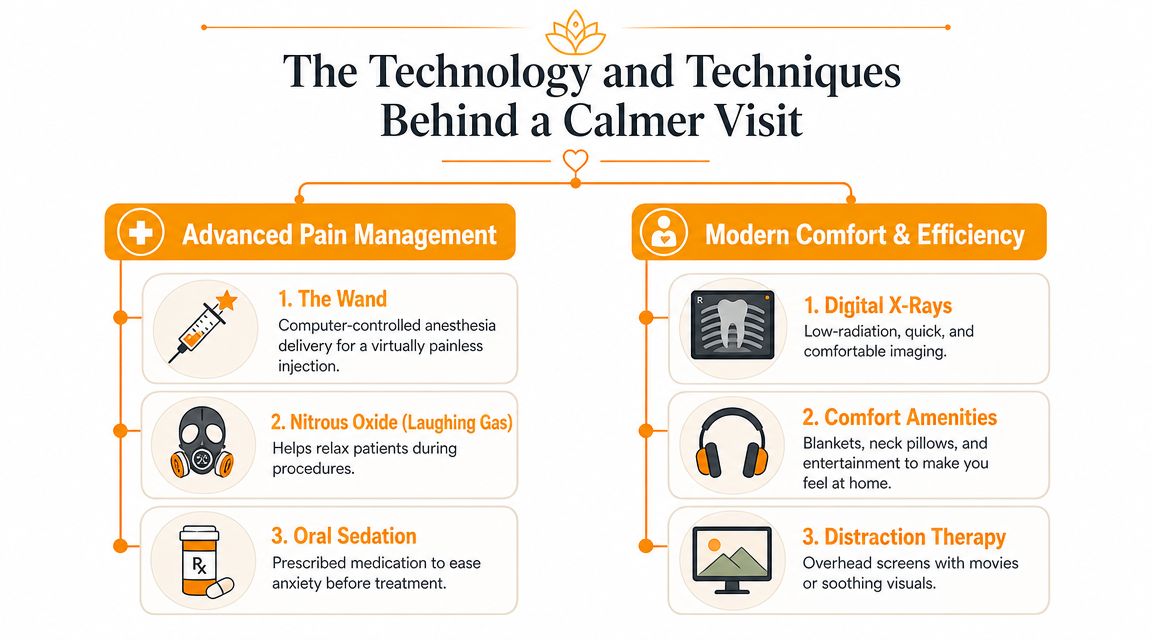
Technology doesn't replace a caring dentist. It supports one. The right tools can make treatment quieter, more precise, and easier to tolerate, especially if you're sensitive to noise, vibration, or needles.
How modern tools reduce discomfort
One of the clearest examples is computer-controlled local anaesthetic delivery. For pain-sensitive or anxious patients, this can reduce the pressure-related discomfort that often comes from changes in manual injection speed. Australian guidance on needle anxiety also identifies avoidance of painful procedures as a major reason people delay care, which is why slow, controlled injection is an important part of gentle dentistry, as explained in this discussion of gentle dental care techniques.
That matters because many people assume the needle itself is the whole problem. Often, it isn't. The pressure in the tissue, the speed of delivery, and not knowing when it's coming can make the experience harder than it needs to be.
Where Biolase lasers fit in
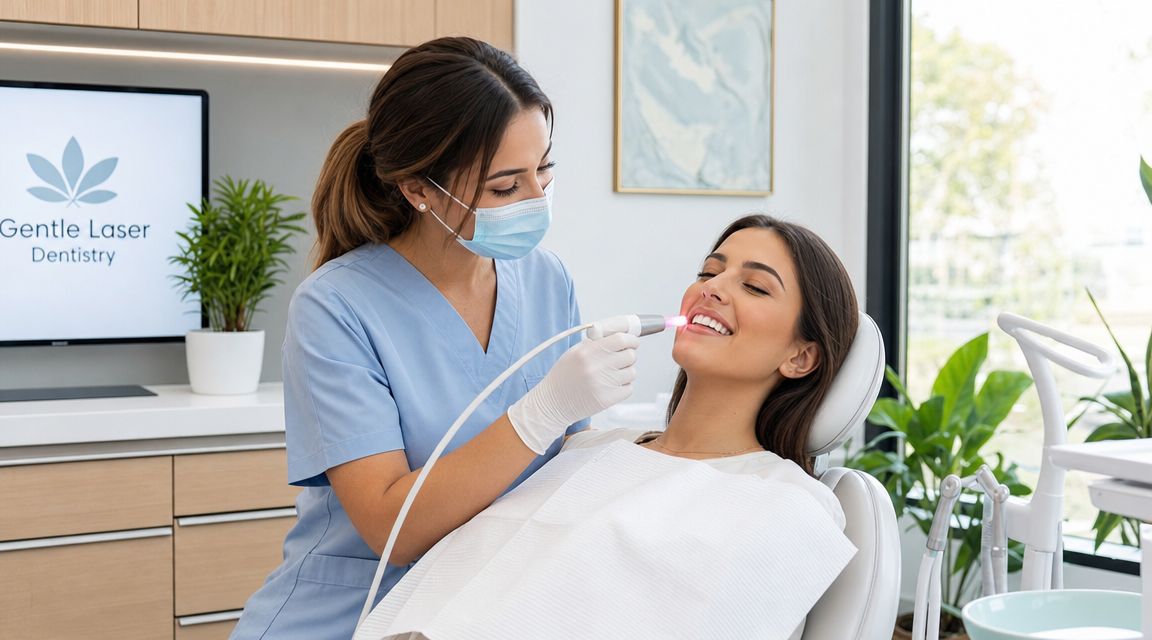
Laser dentistry is another tool that can make treatment feel less intimidating for selected procedures. A Biolase laser can allow certain soft tissue and conservative dental treatments to be performed with less vibration and less of the high-pitched drill sound that many patients dislike.
Patients often describe the difference in practical terms:
| Concern | Traditional worry | Gentle alternative |
|---|---|---|
| Noise | The sound of a drill increases tension | Laser-assisted care may feel quieter for suitable treatments |
| Tissue irritation | Sore gums after treatment | Precise soft tissue work can be more conservative |
| Healing | Concern about post-treatment tenderness | Minimally invasive techniques aim to reduce trauma |
Not every procedure can be done with a laser, and a good dentist will tell you that plainly. Gentle care means choosing the least traumatic effective option, not forcing one tool into every case.
Sedation and comfort supports
Sometimes the best technology is the one that helps you stay calm enough to continue. That might include nitrous oxide, oral sedation, headphones, blankets, or breaking treatment into shorter appointments.
If your main concern is feeling tense or panicky in the chair, it helps to understand whether a clinic offers a dentist with nitrous oxide, and how they decide if it's appropriate for you.
Practical rule: The gentlest technique is the one that keeps treatment predictable, tolerable, and early enough to avoid a bigger procedure later.
A Compassionate Approach for Anxious Patients and Children
Some groups need gentle care more urgently than others. Two stand out. Adults who've built up fear over time, and children who are still learning what a dental visit means.

In Australia, dental decay remains one of the most common chronic diseases of childhood. AIHW reporting shows that around 1 in 3 children aged 5–6 had experienced tooth decay in their baby teeth, which underlines why prevention-first, low-stress dental experiences matter so much early on, as noted in this summary of childhood oral health.
Why anxious adults need a different pace
A fearful adult doesn't usually need a lecture. They need a plan that feels manageable. That might mean booking a consultation first, agreeing that no treatment will happen on the first visit unless they want it, or dividing care into stages so trust can build.
A calm routine outside the clinic can help too. If your body goes into high alert before appointments, it may help to discover effective anxiety meditation and use a short breathing practice before you leave home.
Adults often think they should “just push through”. In reality, forcing yourself through a frightening visit can reinforce the fear. A gentler pace gives your nervous system a different memory to attach to dentistry.
Why children remember the feeling
Children rarely judge a visit by the technical quality of a cleaning. They remember whether the room felt friendly, whether the dentist explained things clearly, and whether they felt surprised or pressured.
Many paediatric dentists use a tell-show-do method. First, the child hears what will happen. Then they see the mirror, suction, or toothbrush. Then the dentist does the action gently and briefly. That sequence reduces uncertainty.
Parents looking for a clinic that treats these early visits as part of long-term oral health can learn more about paediatric dental care.
Later in the appointment journey, visual familiarity can also help children settle more easily:
What to Expect During Your Gentle Dental Appointment
The unknown makes people tense. A predictable appointment lowers that tension straight away. If you know what happens first, what happens next, and when you can speak up, the visit usually feels more manageable.
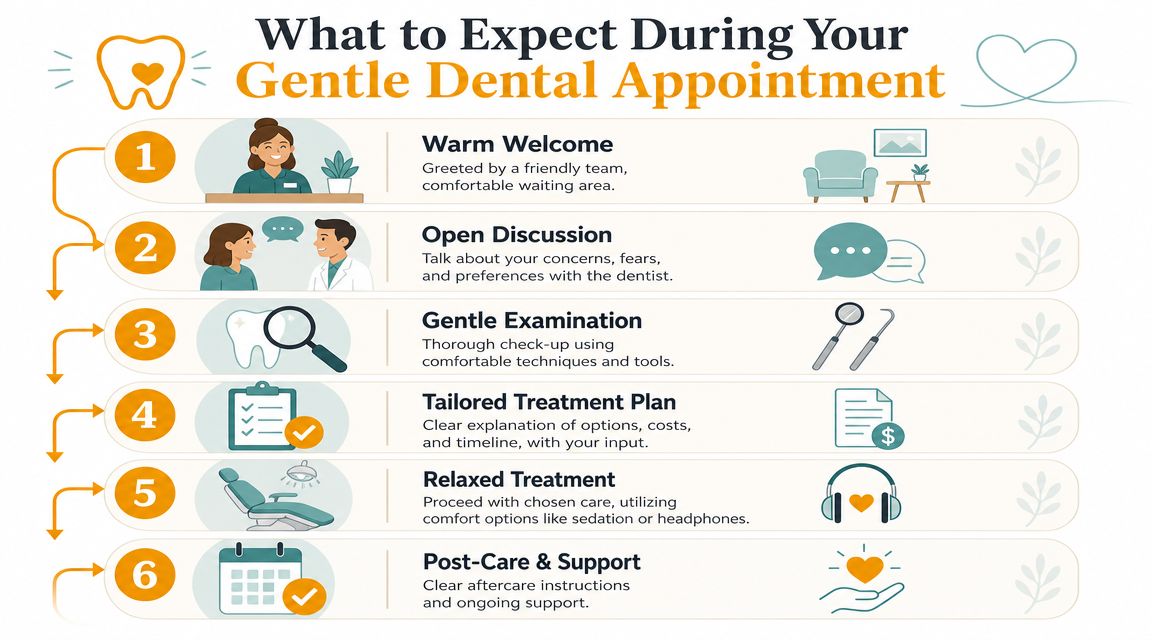
The first conversation
A gentle appointment often begins before you even sit in the chair. When booking, you can usually mention if you're anxious, have a strong gag reflex, dislike injections, or haven't been in for years. That gives the team a chance to plan appropriately.
When you arrive, the first goal is usually understanding your concerns, not jumping straight into treatment. For anxious adults who avoid care until pain becomes severe, gentle dentistry is about more than a “pain-free” procedure. It's about how anxiety is managed before and during treatment. Australian data also show many adults delay visits because of cost or fear, which makes predictable, low-trauma visits important for attendance and prevention of emergencies, as discussed in this article on access barriers in dental care.
The examination and your options
A typical visit may include an examination, digital X-rays if needed, and a careful explanation of what's been found. If a clean is appropriate that day, the dentist or oral health practitioner can usually tell you what you'll feel before each step begins.
You should also expect choices, not pressure. For example:
- If you want time first, the visit may stay focused on assessment and planning.
- If you need treatment soon, the dentist can explain the simplest way to relieve the immediate issue.
- If anxiety is the main barrier, they may discuss comfort supports or oral sedation dentistry for future appointments.
If you know you're allowed to pause, ask questions, or split treatment into stages, you're far less likely to feel trapped.
After the appointment
Before you leave, you should know what happens next. That includes aftercare, likely follow-up timing, and what can safely wait versus what shouldn't.
At a clinic such as The Smile Spot, a new patient may also have the option of a $240 complete care package that includes an exam, X-rays, scale and fluoride. For many nervous patients, having a clear starting point like that makes the first booking feel more approachable.
Finding Gentle Dental Care You Can Trust in the Inner West
Not every clinic that says “gentle” means the same thing. The easiest way to judge it is to ask specific questions. A practice committed to patient comfort should be able to answer clearly, without vagueness or pressure.
Questions worth asking before you book
Use this checklist when comparing dentists in Dulwich Hill and the wider Inner West:
How do you help anxious patients at the first visit
Look for an answer that mentions conversation, pacing, stop signals, and options for deferring treatment if needed.What pain-management options do you offer
Ask about local anaesthetic technique, nitrous oxide, oral sedation, and whether treatment can be staged.Do you provide minimally invasive options
This is where tools like laser dentistry may matter, especially if you're trying to avoid a more traumatic experience where clinically appropriate.How do you treat children or nervous teens
A family-focused clinic should be comfortable discussing child-friendly explanations, prevention, and behaviour guidance.What happens if I need appointments outside standard work hours
Convenience matters. When care is hard to fit in, people postpone it.
What a prevention-first clinic should offer
Australian oral health data show why this matters. AIHW reporting notes that around 1 in 3 adults had untreated tooth decay in 2017–18, supporting the case for early, low-trauma preventive visits that reduce the need for more extensive treatment later, as outlined in this review of technology and gentle dentistry.
A clinic that takes gentle care seriously usually combines practical access with modern methods. That may include:
| What to look for | Why it matters |
|---|---|
| Preventive focus | Early checks and cleans can catch problems before they become painful |
| Sedation access | Helpful for patients whose fear stops them attending |
| Modern equipment | Supports more precise, lower-trauma treatment in suitable cases |
| Family care | Makes it easier to organise children's and adults' visits together |
| Flexible hours | Reduces delays caused by work, school, or travel |
Applying that checklist locally
For Inner West residents, the key is finding a clinic that can match your needs rather than making you fit a rigid system. If you need a child-friendly environment, sedation discussions, late evening appointments, Saturday availability, or online booking, ask those questions first.
One local option is The Smile Spot in Dulwich Hill. The practice provides family dentistry, preventive care, sedation options for anxious patients, and Biolase laser dentistry for minimally invasive treatment where suitable. It also serves nearby suburbs including Marrickville, Earlwood, Ashfield, Summer Hill, Lewisham, Petersham, and Hurlstone Park.
If sedation support is one of your main priorities, it's worth reading more about dental sedation near me before you book.
A trustworthy gentle dentist won't rush to prove how brave you can be. They'll focus on making care feel safe enough that you can come back.
The right clinic should leave you with a simple feeling. You know what's happening, you know your options, and you don't feel judged for being nervous. That's what turns one appointment into a healthier long-term habit.
If you've been delaying treatment because you're worried about discomfort, fear, or not knowing what to expect, The Smile Spot offers a practical starting point for families and anxious patients in Dulwich Hill and the Inner West. You can explore your options, ask about sedation or laser treatment, and book a visit that focuses on comfort, clear communication, and prevention.