You've just had a check-up, and your dentist said you need a “deep clean”. That phrase can sound bigger, scarier, and more mysterious than it really is. It's natural to immediately wonder the same things. Is something seriously wrong? Is it going to hurt? Didn't I just have my teeth cleaned not that long ago?
Those questions are normal. Root planing and scaling is a common non-surgical treatment for gum disease, and it's recommended for a very specific reason. It isn't a fancier version of a standard clean, and it isn't something dentists suggest just because there's a bit of tartar around.
If you're feeling unsure, the most helpful thing is to understand what's happening under the gumline, why your dentist measured your gums so carefully, and what the treatment is trying to achieve. Once that part makes sense, the recommendation usually feels a lot less confronting.
Your Dentist Mentioned a Deep Clean Now What
A lot of patients feel confused at this point, especially if they've been coming in for regular cleans. That confusion makes sense. A routine professional clean removes plaque and tartar above the gumline. Root planing and scaling is used when gum disease has created pockets that are too deep for a normal cleaning to reach, as explained by the American Dental Association on scaling and root planing.
If gum disease is still at the gingivitis stage, a professional clean may be enough. Once the problem has started affecting the structures below the gumline, your dentist may recommend deeper treatment instead.
Why the recommendation can feel surprising
Gum disease doesn't always cause dramatic pain early on. Many people only notice a few subtle signs:
- Bleeding when brushing that seems easy to ignore
- Bad breath that keeps returning even after cleaning your teeth
- Tender or puffy gums that come and go
- A feeling that your teeth are longer because the gums have pulled back
That's why a “deep clean” can seem to come out of nowhere.
A deep clean isn't about making teeth look cleaner. It's about treating infection where a toothbrush and a routine scale can't reach.
Why this is different from your usual clean
Think of your regular visit like maintenance. It helps keep things stable. If bacteria and hardened deposits have moved below the gumline, the goal changes. Your dentist is no longer just polishing the visible surfaces. They're trying to stop ongoing damage to the supporting tissues around the teeth.
If you want a refresher on what a standard appointment usually covers, check-up and clean visits are designed for prevention. Root planing and scaling is for active disease management.
What Is Root Planing and Scaling
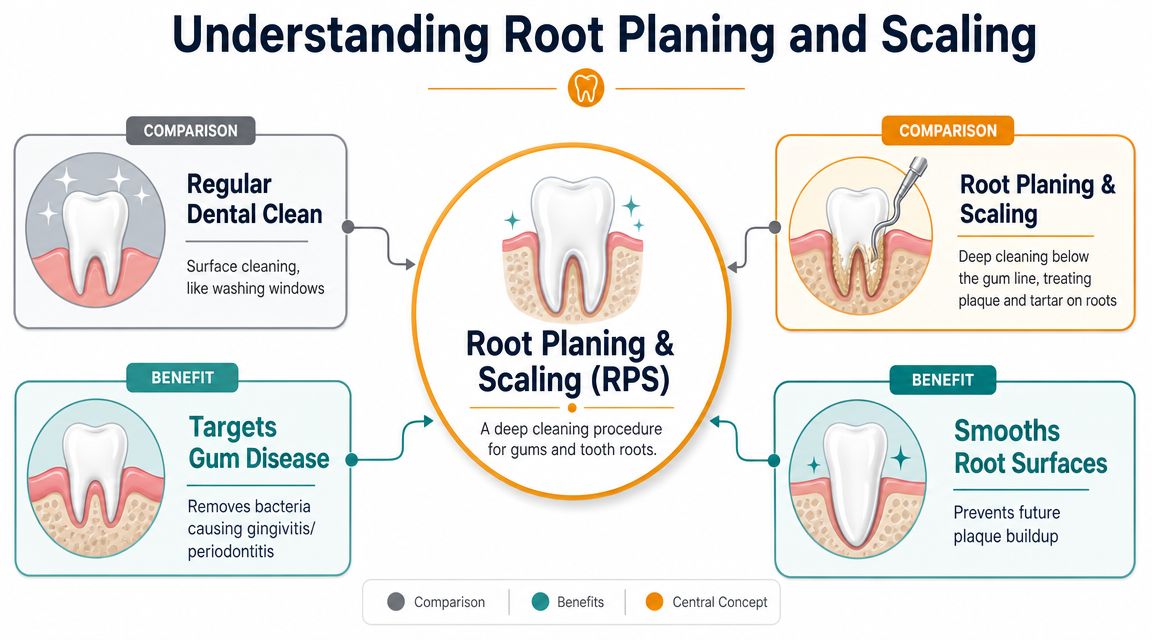
A regular clean is a bit like washing the windows of a house. It keeps visible surfaces fresh and tidy. Root planing and scaling is more like repairing the foundation. It targets the area under the gums, where periodontitis can progress undetected.
The two parts of the treatment
The name sounds technical, but it describes two practical steps.
Scaling means removing plaque, bacteria, and hardened tartar from the tooth surface, especially below the gumline.
Root planing means smoothing the root surface once those deposits are removed. A smoother root gives bacteria fewer rough places to cling to, and it creates a healthier surface for the gum tissue to settle against as healing begins.
What the treatment is trying to fix
The main target is inflammation. The procedure removes subgingival biofilm and calculus, which are sitting below the gums and keeping the area irritated. It also smooths the root surface so bacteria are less likely to recolonise quickly, helping the gums heal and reattach. That therapeutic goal is described in this overview of the importance of effective scaling and root planing.
A simple way to picture it is this:
| Situation | What happens |
|---|---|
| Routine clean | Removes build-up on exposed tooth surfaces |
| Root planing and scaling | Removes infection-related deposits from below the gums and treats the root surface |
Why brushing alone can't do this
Once deposits are trapped in deeper pockets, home care can help control new plaque but can't reliably remove the hardened material already attached to the roots. That's why the treatment has to be so precise.
Afterwards, daily home care becomes much more effective again. If you're comparing preventive cleaning with deeper periodontal therapy, this guide to professional teeth cleaning helps show where each one fits.
Practical rule: If the problem is above the gums, prevention may be enough. If the problem is established below the gums, treatment has to reach below them too.
Signs You Might Need This Gum Disease Treatment
Dentists don't recommend root planing and scaling based on appearance alone. They look for measurable signs that gum disease has moved beyond simple surface irritation. That's important, because this is a medical treatment for periodontitis, not a cosmetic add-on.
What you might notice at home
Some signs are obvious. Others are easy to dismiss.
- Bleeding gums during brushing or flossing
- Swelling or tenderness along the gumline
- Persistent bad breath
- Gum recession, which can make teeth look longer
- Sensitivity near the gumline
- Food trapping more often between certain teeth
None of these signs proves you need root planing and scaling on its own. They prompt your dentist to investigate more closely.
What your dentist measures
The most important part of the diagnosis is usually periodontal probing. Your dentist or hygienist uses a fine measuring instrument to check the depth of the space between your tooth and gum.
According to the ADA's claims guidance for scaling and root planing, the procedure is generally indicated when probing depths are at least 4 mm, often with radiographic evidence of bone loss. Documented 5–8 mm pockets are commonly used to justify treatment, and missing radiographic bone loss is a frequent reason claims are denied.
That matters because it shows your dentist isn't making a judgement based on “a bit of tartar”. They're measuring attachment loss and looking for evidence that the disease has affected deeper support.
Why X-rays matter too
A gum pocket tells part of the story. X-rays help show what's happening to the supporting bone. When your dentist combines probing depths, bleeding, and radiographs, they can separate:
- Gingivitis, where a regular clean may be enough
- Periodontitis, where deeper treatment is often needed
If your dentist talks about pocket depths, they're not using jargon for effect. They're describing the actual reason the treatment has been recommended.
The Procedure A Step by Step Walkthrough
It's often comforting to know exactly what will happen. Root planing and scaling is methodical, not dramatic. It's usually done in a calm, staged way so the area can be cleaned thoroughly while you stay comfortable.
Step one, getting you comfortable
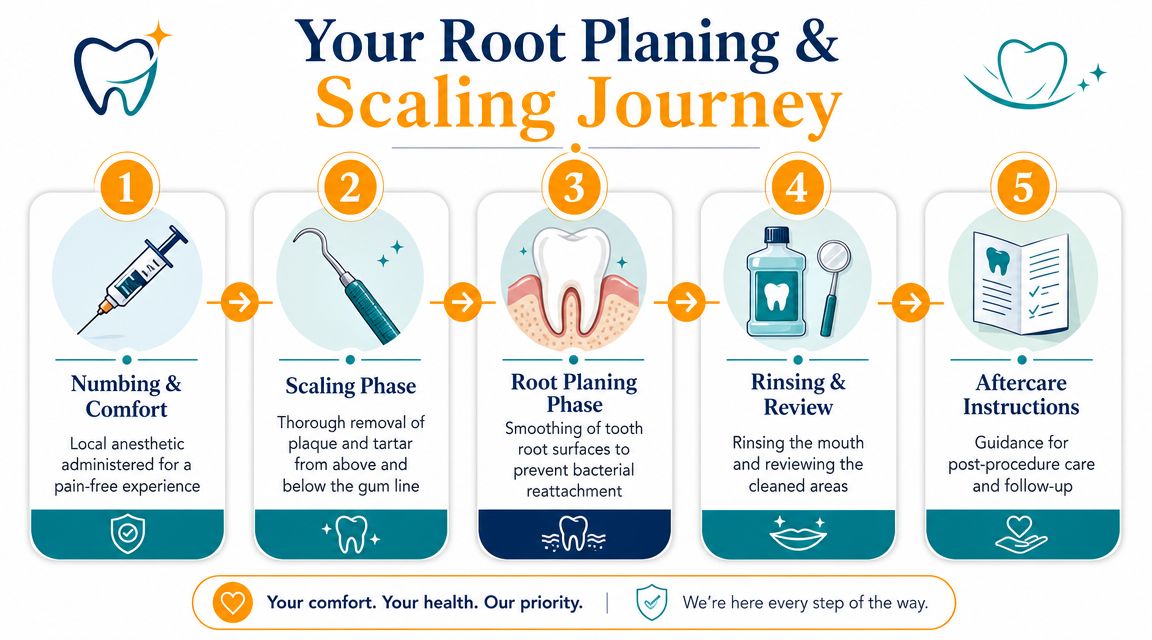
The first priority is comfort. This treatment usually involves a local anaesthetic, so the area being worked on is numb. You may still notice pressure, water, vibration, or movement, but sharp discomfort shouldn't be the goal.
For people who feel nervous even before treatment begins, it can help to ask about options like oral sedation dentistry, especially if dental anxiety has made it hard to get care in the past.
Step two, scaling below the gumline
Your clinician then removes plaque and tartar from the tooth surface and from below the gumline. They may use an ultrasonic scaler, hand instruments, or a combination of both. Ultrasonic instruments use vibration and water to loosen deposits, while hand tools help refine the cleaning in specific areas.
The point isn't speed. The point is thoroughness.
Here's a simple breakdown:
- The gum area is numbed so treatment is tolerable.
- Deposits are removed from above and below the gums.
- Deeper areas are checked carefully to avoid leaving rough build-up behind.
A visual overview can help if you prefer to see the sequence before your appointment:
Step three, root planing
Once the major deposits are removed, the root surfaces are smoothed. This is the part many patients don't realise matters so much. If a root stays rough or contaminated, bacteria can settle back quickly and keep the tissue inflamed.
Step four, treating the mouth in stages
This treatment is often spread across multiple visits rather than done all at once. That gives the clinician time to work thoroughly and keeps the appointment manageable for you. In many practices, one side of the mouth or one section is treated at a time.
Some modern clinics may also incorporate technologies such as dental lasers in selected cases to support a gentler experience and tissue management.
Step five, review and aftercare
Before you leave, you'll get instructions about cleaning the area, eating, and what sensations are normal afterward. A follow-up review is often part of the process because the success of treatment isn't judged on the day. It's judged by how the gums respond over time.
Benefits Risks and Aftercare Advice
The biggest benefit of root planing and scaling is that it gives inflamed gums a chance to stabilise before the disease causes more serious damage. In Australia, periodontal disease is a major issue. The Australian Institute of Health and Welfare has reported that about 1 in 3 adults show signs of moderate-to-severe periodontitis, highlighted in this periodontal health report published through the Journal of Periodontology.
That's why this treatment matters. It targets the source of the problem before gum disease progresses further.
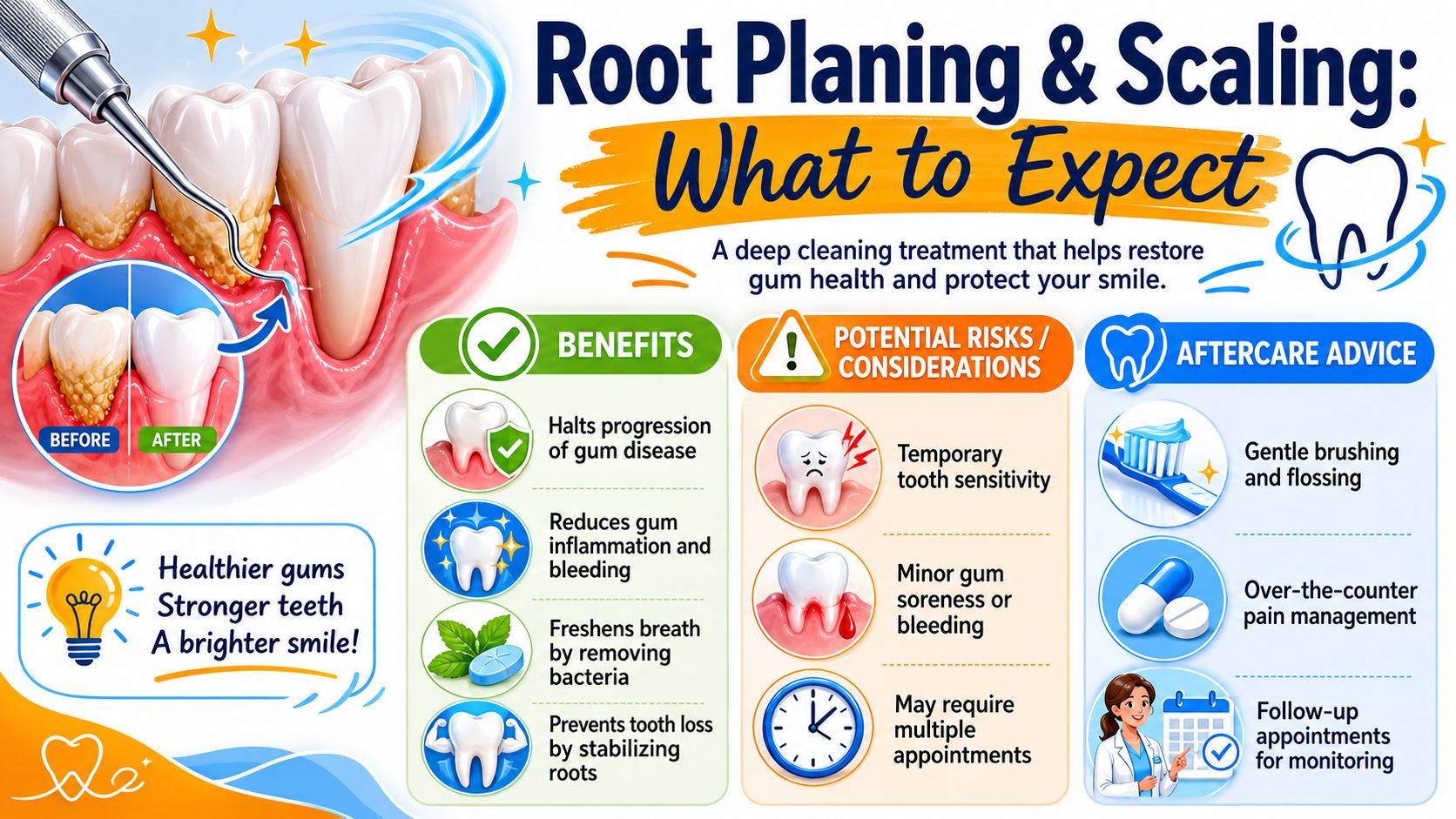
The main benefits
When treatment goes well and home care improves, patients often notice:
- Less bleeding when brushing or flossing
- Calmer gum tissue with less swelling
- Fresher breath because bacterial deposits have been removed
- A better chance of avoiding more invasive care later on
This doesn't mean the procedure reverses every bit of past damage. It means it can help stop active disease from continuing unchecked.
Temporary downsides to expect
It's also worth being straightforward about the short-term effects. After treatment, some people notice:
| Common short-term effect | What it can feel like |
|---|---|
| Sensitivity | Teeth may react more to hot or cold |
| Tender gums | Mild soreness, especially when eating |
| Minor bleeding | Usually settles as the tissue starts healing |
These reactions are usually manageable and temporary.
Your gums may feel different before they feel better. That doesn't mean the treatment failed. It often means the tissue is responding to a much cleaner environment.
Aftercare that actually helps
A few simple habits make recovery smoother:
- Choose gentler foods at first such as softer meals if your gums feel tender
- Keep brushing carefully because stopping oral hygiene lets plaque build up again
- Use a soft brush and light pressure around the treated area
- Follow your review schedule so your dentist can check how the pockets are responding
Dry mouth can also make healing and plaque control more difficult for some people. If you often wake with a sticky or dry mouth, it may help to learn why you wake up parched, because persistent dryness can make gum care harder.
Costs Alternatives and Long Term Care
Cost is one of the first practical questions people ask, and rightly so. Root planing and scaling isn't usually priced like a basic clean because it's more involved, often staged over more than one appointment, and based on the number of areas that need treatment.
A U.S.-based guide reports an average scaling and root planing cost of $242 per quadrant, with a range of $185 to $444, and notes that treatment commonly takes multiple visits with local anaesthetic and follow-up reassessment. That benchmark comes from this scaling and root planing cost guide. Australian fees differ, but the guide is useful for understanding why total cost changes with complexity.
What affects the cost
Your final fee often depends on things like:
- How many quadrants need treatment
- How much subgingival build-up is present
- Whether review visits and maintenance are included
- How much time the clinician needs to treat the area properly
That's why one person's quote may look quite different from another's.
Are there alternatives
Sometimes, yes. Sometimes, not really.
If the issue is only gingivitis and there's no deeper attachment loss, a routine professional clean and improved home care may be enough. If the disease is more advanced, the practical alternative to root planing and scaling is often doing nothing, and that usually means ongoing inflammation, deeper pockets, and a higher chance of more complex treatment later.
In more advanced cases, surgery may eventually be considered. Non-surgical therapy is still commonly the first step before moving to surgical options.
For readers curious about newer approaches in periodontal care, laser periodontal therapy can be part of that broader conversation, depending on the case.
The treatment isn't the finish line
This is the part patients often underestimate. Root planing and scaling starts the repair process, but long-term stability depends on maintenance.
Think of it this way:
| Phase | Purpose |
|---|---|
| Initial treatment | Removes the infection load below the gums |
| Home care | Slows bacterial build-up every day |
| Maintenance visits | Helps prevent the disease from quietly returning |
If you treat the disease once but don't maintain the result, the same problem can come back.
Frequently Asked Questions About Deep Cleaning
Is root planing and scaling painful
Most patients tolerate it well because the area is usually numbed with local anaesthetic. You may feel pressure, vibration, or water, but the goal is to keep you comfortable. Afterwards, some tenderness or sensitivity is common for a short period.
How long does healing take
Initial soreness usually settles fairly quickly, but your gums continue healing beyond that early phase. What matters most is whether inflammation reduces and the tissue responds well at review appointments. Healing also depends on how well plaque is controlled at home.
Will my gums grow back
That depends on what type of damage has already occurred. The procedure helps gums heal and tighten around cleaner tooth surfaces, but it doesn't magically replace every bit of tissue or bone that's been lost. Its main job is to stop ongoing disease and create healthier conditions.
Can't I just brush and floss better instead
Improving your home care is essential, but it doesn't remove hardened deposits deep below the gums once they're established. Brushing and flossing work best after those deeper deposits have been professionally removed.
Why do I need this if I already get regular cleans
Because a regular clean and periodontal therapy do different jobs. A standard clean is preventive care. Root planing and scaling treats disease below the gumline when pockets are too deep for routine instruments to reach.
Better brushing is part of the solution. It isn't a substitute for removing the deposits that are already trapped below the gums.
Will I need it again
Some people only need an initial course of treatment followed by maintenance. Others need repeated periodontal care if gum disease remains active or plaque control is difficult. Your review results help determine that.
Your Path to Healthy Gums in Dulwich Hill
If you've been told you need a deep clean, clarity helps. So does having a dental team that explains findings calmly, answers questions directly, and treats gum disease with a gentle, modern approach.
At The Smile Spot, patients in Dulwich Hill and the Inner West can access experienced care that focuses on prevention, comfort, and personalized treatment planning. Dr. Dimitrios Thanos has led the practice since 1996, and the clinic combines long-standing clinical experience with modern tools, including Biolase laser dentistry where appropriate.

If your gums bleed, feel tender, or you've been advised to have deeper periodontal treatment, booking a proper assessment is the next sensible step. You can also learn more about teeth cleaning in Dulwich Hill if you're deciding whether you need routine preventive care or something more involved.
Healthy gums don't always get attention until there's a problem. Acting early is what gives you the best chance of keeping treatment simpler and protecting your smile long term.
If you're ready to get answers about bleeding gums, periodontal pockets, or root planing and scaling, book a consultation with The Smile Spot. The team can assess your gum health, explain your options clearly, and help you move forward with confidence.