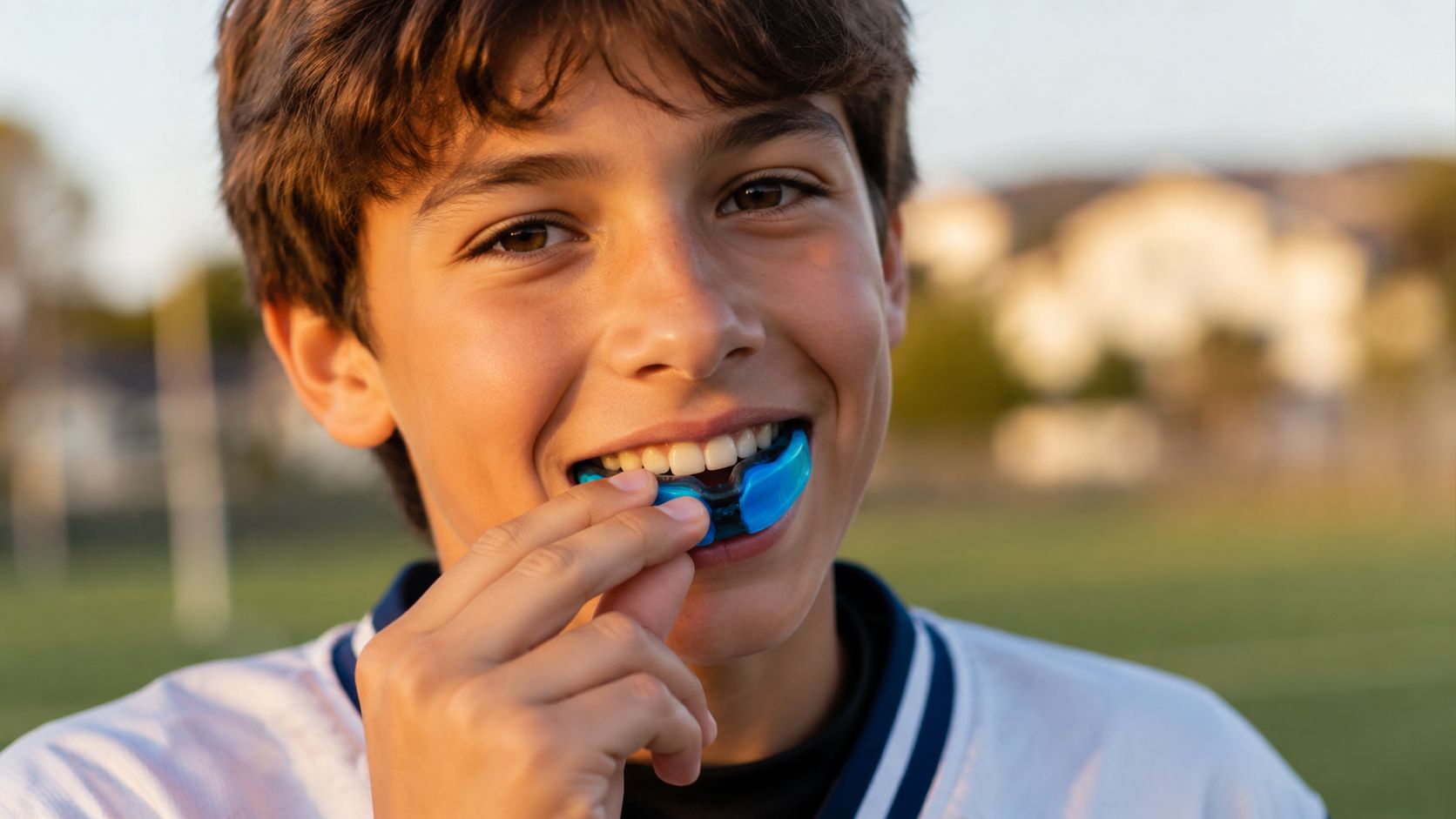
Saturday sport in the Inner West often starts the same way. Someone's tying laces in the car, someone else is looking for a water bottle, and a parent is doing a quick scan for the gear that matters most. Boots, shin pads, headgear if the sport calls for it, and the small item that's easiest to forget. The mouthguard.
That little piece of protective equipment tends to be treated like an optional extra until a player takes a stray elbow, cop a stick to the face, or collides with another child chasing the same ball. Then it stops feeling optional very quickly. In family dentistry, that's why a proper mouthguard for sports sits firmly in the prevention category, alongside routine check-ups and early treatment. Families who want practical guidance on broader prevention often find value in this overview of family dental care.
Mouthguards have also come a long way. They're no longer just a bulky lump of plastic clenched between the teeth. Properly fitted designs are made to stay in place, protect vulnerable areas, and let the player breathe and speak more normally. That matters whether your child plays school rugby, trains in hockey, does martial arts after class, or turns up to weekend basketball with plenty of enthusiasm and not much regard for personal space.
The broad clinical position is clear. Mouthguard use is recognised as a key preventive measure across recreational and competitive activities, and properly fitted mouthguards reduce both the frequency and severity of dental and orofacial trauma, as noted by the American College of Prosthodontists in its position statement on mouthguard use in sports. For martial arts families, these essential BJJ safety tips for kids are also worth a read because they cover the realities of training safely without taking the fun out of it.
Protecting Your Family on and off the Field
A sports mouthguard does two jobs at once. It protects teeth and soft tissues during impact, and it gives parents and athletes more confidence to enjoy the game.
That second part matters more than people think. Children play better when they're comfortable. Adults train better when they're not distracted by loose, bulky gear. A mouthguard that fits properly tends to become part of the routine rather than something that gets pulled out of the sports bag only when the coach notices.
A good mouthguard should be easy to wear, easy to keep in place, and boring in the best possible way. If a player is constantly fiddling with it, the fit is probably the problem.
For Inner West families, the practical question usually isn't whether protection matters. It's which type of protection is proven effective in practical situations, which sports need it most, and how to make sure the mouthguard your child starts the season with is still doing its job a few months later.
Why a Mouthguard Is Non-Negotiable for Aussie Sports
Australian sport includes a lot of contact, collision, and high-speed play. That means dental injuries aren't rare mishaps. They're predictable risks.
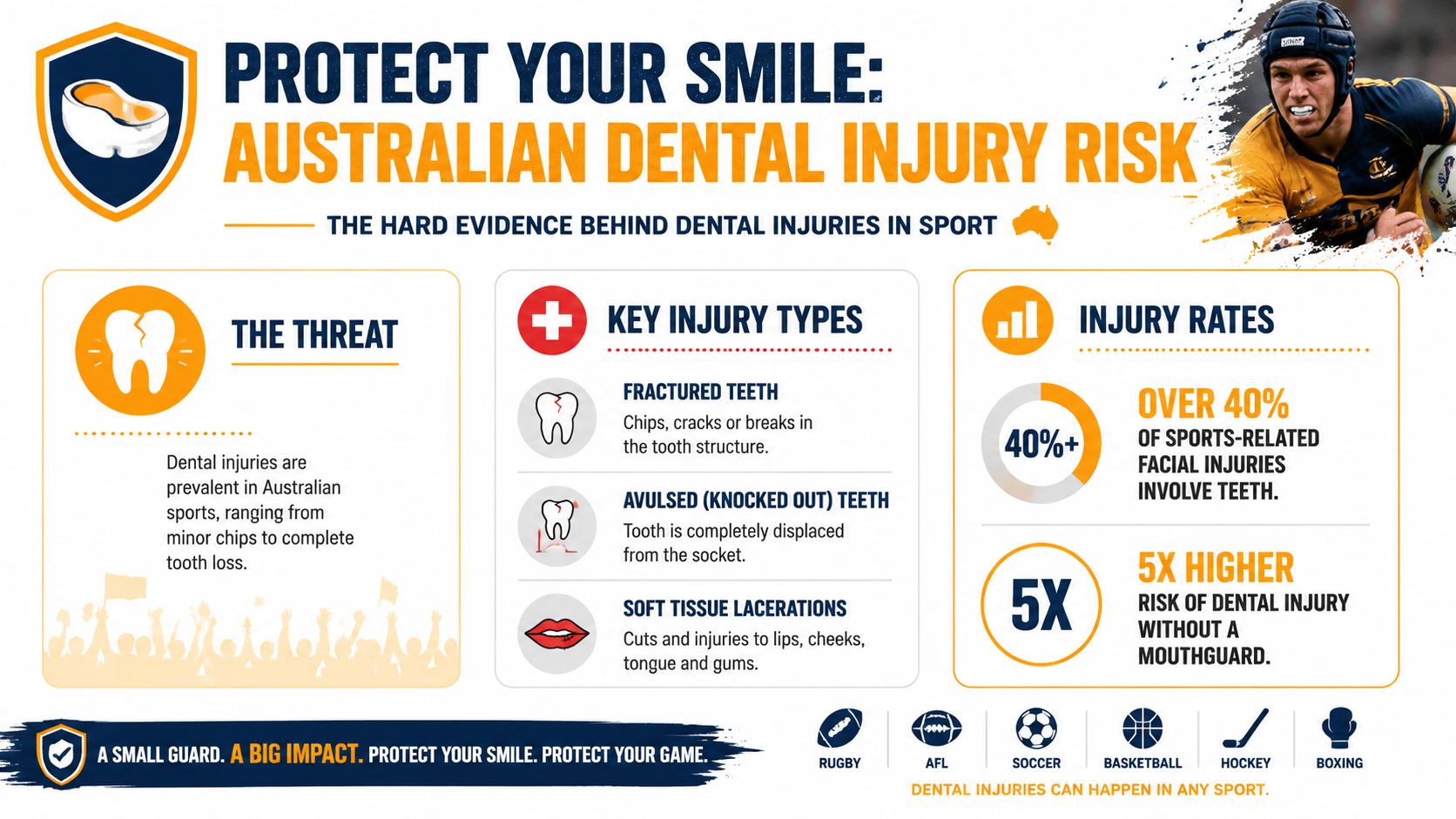
The strongest reason to wear a mouthguard is simple. The difference in injury risk between wearing one and not wearing one is too large to ignore. The Australian Dental Association reports that the overall prevalence of dentofacial injuries among collision-sport participants is 27.6%, and a systematic review it cites found that people who did not use mouthguards had more than twice the risk of orofacial injury. In the same review, dental-trauma rates were 7.5% to 7.75% among mouthguard users compared with 48.31% to 59.48% among non-users, and users were 82% to 93% less likely to suffer dentofacial injuries, according to the ADA's summary of athletic mouth protectors and mouthguards.
The injuries dentists see most often
A sports impact doesn't have to look dramatic to cause dental damage. A fall, knee, shoulder, ball, or accidental clash can lead to:
- Chipped or fractured teeth that need repair
- Knocked-out teeth that turn into genuine time-critical emergencies
- Cuts to lips, cheeks, and gums caused by the teeth during impact
- Jaw and bite problems that may not be obvious until the soreness sets in later
The cost of treatment isn't the first thing families think about in that moment. Pain, panic, and long-term damage come first. But prevention is still the better bargain. If you ever need urgent advice after an injury, this guide to dental emergency services explains the kinds of situations that need prompt attention.
Why “I'll be careful” isn't a safety strategy
Children don't control every collision. Adults don't either. Even in sports that don't look especially rough, the mix of speed, fatigue, falls, and unpredictable movement creates enough risk to justify protection.
Practical rule: If the sport involves contact, hard surfaces, high velocity, or a realistic chance of a face-first fall, a mouthguard belongs on the same checklist as the rest of the safety gear.
That's why I describe a mouthguard for sports as basic equipment, not an upgrade. If you'd never send a player onto the field without the right footwear, it makes little sense to leave the teeth unprotected.
Choosing Your Protection Custom vs Boil-and-Bite vs Stock
Not all mouthguards protect equally. The differences come down to fit, stability, thickness, and how reliably the guard stays in place when the athlete is moving, breathing, calling out, or getting hit.
What custom fit really changes
Modern dental science recommends a multi-layer laminated pressure-thermoformed EVA mouthguard with at least 3 mm thickness in the buccal and incisal areas, and that standard is best achieved with a custom-fit device because poor fit reduces both protective coverage and stability, as discussed in this review of instrumented and protective mouthguards.
That sounds technical, but the takeaway is straightforward. A mouthguard can't protect properly if it shifts, lifts, or needs to be clenched constantly just to stay in. If a player has to bite down hard to hold it in place, that's a compromise before the first whistle.
Families wanting a closer look at the pros and cons of professionally made appliances can also read this guide on a dentist mouth guard.
The three common options
Stock mouthguards are the cheapest and easiest to buy. They're also the least predictable. They come pre-formed, usually feel bulky, and often fit poorly. Many athletes spit them out, chew them, or leave them half-seated because they don't stay in place naturally.
Boil-and-bite mouthguards are a step up. You soften them in hot water and mould them at home. Some fit reasonably well, especially for lower-risk use, but the result depends on how accurately they're softened and shaped. If they're over-softened, under-moulded, or distorted during fitting, protection drops.
Custom-fitted mouthguards are made from an impression or digital record of the athlete's teeth. They usually feel slimmer, sit more securely, and interfere less with breathing and speech. That practical comfort is part of their safety value, because athletes are far more likely to wear them consistently.
Sports Mouthguard Comparison
| Feature | Custom-Fitted (Dentist) | Boil-and-Bite (Chemist) | Stock (Pre-formed) |
|---|---|---|---|
| Fit | Made to the individual teeth and bite | Variable, depends on home moulding | Generic fit |
| Retention | Usually stays in place without constant clenching | Can be acceptable, can also loosen | Often poor |
| Comfort | Better for speaking and breathing | Mixed | Commonly bulky |
| Protection consistency | Most reliable | Moderate and inconsistent | Lowest |
| Suitability for regular contact sport | Strong choice | Better than nothing, but not ideal for heavier contact | Poor choice |
| Best for | Players who train or compete regularly | Occasional use or short-term solution | Emergency backup only |
What works in practice
For a child doing a weekly school sport with very limited contact, a boil-and-bite may feel like a practical starting point. For rugby, hockey, martial arts, boxing, or regular competition, I'd treat custom fit as the standard that makes the most sense.
A poor mouthguard usually gives itself away quickly. It falls out when talking, feels too thick at the front, rubs the gums, or ends up with chew marks because the athlete is trying to “make it fit” during play.
If the mouthguard spends more time in a pocket than in the mouth, it isn't protecting anyone.
Which Sports Require a Mouthguard
Some sports make the decision easy. Others sit in the grey area where parents aren't sure if a mouthguard is necessary or just a good idea.
Essential for contact and collision sports
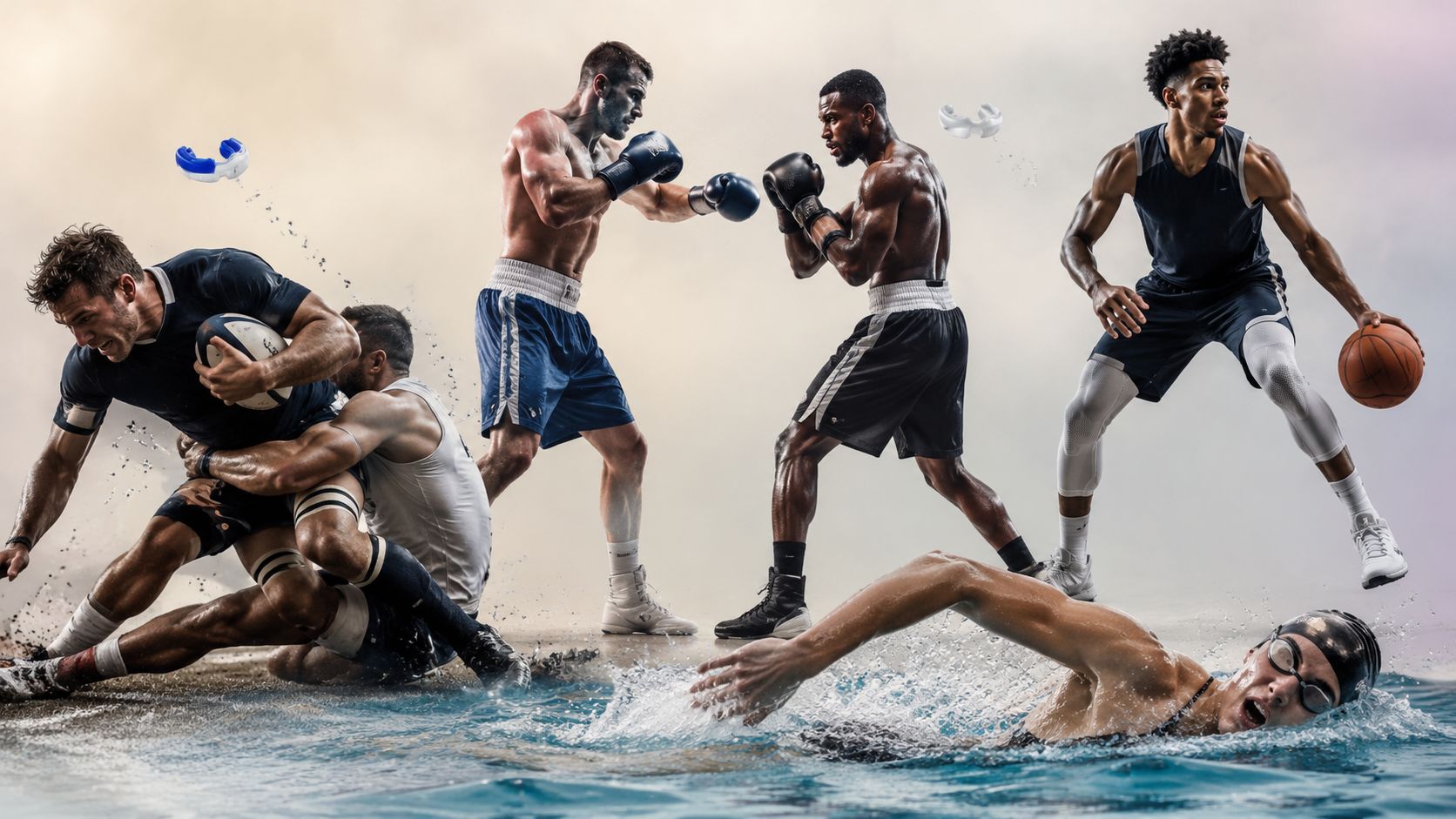
If the sport includes direct body contact, forceful impact, or hard equipment moving at speed, a mouthguard should be considered standard gear.
- Rugby and rugby league because collisions are built into the game
- Boxing and martial arts because facial contact is expected
- Hockey because both sticks and balls create obvious risk
- AFL and similar contact codes where accidental clashes happen often
For coaches trying to build safer habits from junior levels upward, this guide for aspiring rugby coaches offers useful context around the broader responsibilities that come with player development.
Strongly recommended for sports with fall or elbow risk
These sports may not be classified as collision sports, but they still create plenty of opportunities for dental trauma:
- Basketball
- Netball
- Soccer
- Skateboarding and similar wheeled activities
In these settings, the danger often comes from sudden falls, head clashes, or an unexpected elbow rather than a formal tackle.
A quick visual refresher can help when families are deciding what counts as “high enough risk” to justify protection.
Worth considering in lower-risk activities
Even lower-contact sports can involve slips, collisions, or accidental strikes. If a player has had previous dental trauma, has protruding front teeth, or also wants an extra margin of protection, a mouthguard can still be sensible.
The simplest rule is this. If you'd be upset by the thought of a chipped or knocked-out tooth during that activity, a mouthguard deserves serious consideration.
The Custom Mouthguard Process at The Smile Spot
For many families, the unknown part isn't the mouthguard itself. It's the process of getting one made. In reality, it's usually straightforward, comfortable, and much less complicated than people expect.
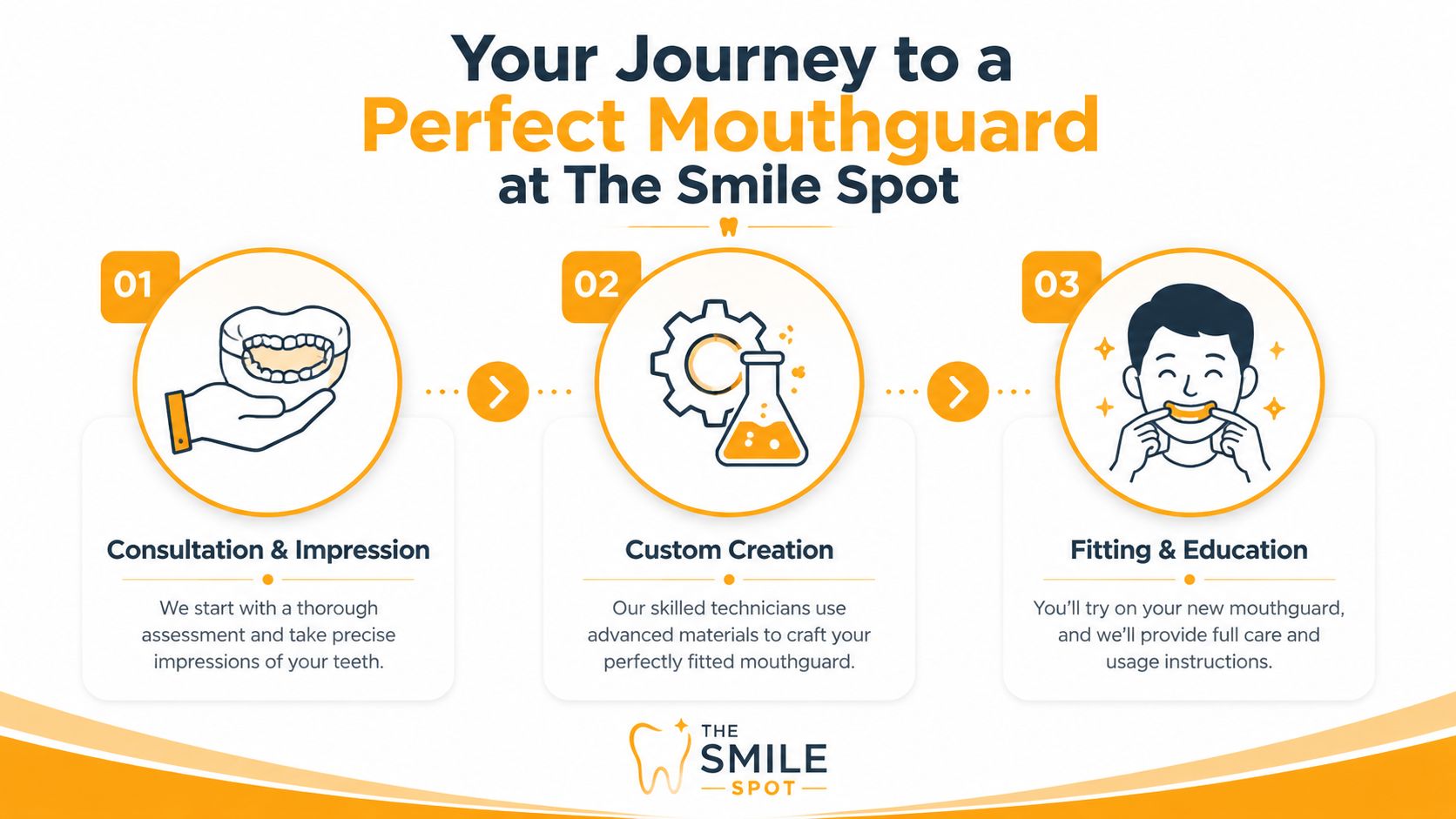
Step one starts with fit, not colour
Initial inquiries frequently concern colours first, and that's fair enough. Kids like choosing something they'll like wearing. But the clinical priority is always the same. Check the teeth, gums, bite, and any features that might affect design, such as braces, mixed dentition, or areas that need extra clearance.
An impression or digital record is then taken so the mouthguard reflects the actual shape of the patient's mouth. That precision is what separates a true custom fit from something adapted at home.
The lab stage matters more than people realise
The design determines whether a shaped bit of plastic becomes a protective device. Material choice, thickness, adaptation, and finishing all affect how well the final mouthguard seats and stays stable.
The aim is a guard that covers properly, feels secure, and doesn't trigger gagging or constant adjustment. Players should be able to breathe through it and communicate without feeling like they're trying to talk around a mouthful of rubber.
- For children: the process needs to feel calm and quick
- For teens in regular training: retention and comfort matter because poor gear gets abandoned
- For adults: fit is often the deciding factor between wearing it every session and forgetting it in the car
The fitting visit is where comfort gets tested
At the fitting appointment, the mouthguard is checked in the mouth rather than just admired in the hand. Retention, border comfort, speech, and bite feel all need to be right. Minor adjustments may be needed, especially if someone has sensitive gums or a strong gag reflex.
Patients are also shown how to insert, remove, clean, and store it properly. If you're comparing local options, this page on mouthguards near me gives a practical overview of what to look for in a professionally fitted service.
The best fitting appointment is often the quietest one. The guard goes in, stays in, and the athlete stops noticing it.
Caring for Your Mouthguard for Hygiene and Longevity
A mouthguard that's thrown loose into a sports bag won't stay clean for long. It also won't stay in good shape.
The simple care routine that works
After each use, rinse the mouthguard in cool water and let it dry before storing it in a ventilated case. Clean it gently with a soft toothbrush and a non-abrasive cleanser. Keep the case clean too, because there's no point washing the appliance and then putting it back into a dirty container.
For a more detailed hygiene routine that also applies to similar dental appliances, this guide on how to clean a mouth splint is useful. Some of the same common-sense principles also appear in WipesBlog's equipment cleaning insights, especially the reminder that gear used regularly needs a repeatable cleaning habit, not occasional attention.
What to avoid
A few mistakes shorten a mouthguard's life very quickly:
- Hot water: it can warp the shape
- Direct sun or a hot car: heat can distort the fit
- Chewing on the edges: this weakens the appliance and changes retention
- Wrapping it in a towel or tissue: it often gets thrown out by accident
Bring the mouthguard to dental check-ups. Wear, cracks, and distortion are easier to spot in the chair than at home under bathroom lighting.
If it starts feeling loose, rough, or visibly bent, it's time to have it reviewed.
Frequently Asked Questions About Sports Mouthguards
Can you wear a sports mouthguard with braces
Yes, but it needs special attention. Teeth move during orthodontic treatment, brackets create extra points of contact, and a poorly fitting guard can become uncomfortable quickly. In these cases, custom advice matters because the design has to allow for both protection and the realities of active tooth movement.
How often should a child's mouthguard be replaced
Growing children often outgrow appliances faster than adults expect. If the mouthguard feels tighter, looser, rubs differently, or no longer seats properly, it should be checked. A season is a long time in a growing mouth, especially when new teeth are erupting or the bite is changing.
Can adults use the same mouthguard for years
Sometimes, but only if the fit remains accurate and the appliance is still in good condition. Cracks, thinning, distortion, or heavy chew marks all reduce reliability. Adults also need reassessment after major dental work, because fillings, crowns, orthodontics, and bite changes can alter fit.
Are custom sports mouthguards covered by private health insurance
That depends on your level of cover and your fund's rules. Many patients can claim for dental appliances, but the only accurate answer comes from checking your policy details directly. It's worth asking before the fitting appointment so there are no surprises.
What if a child refuses to wear one
That usually points to comfort, bulk, breathing difficulty, or a bad early experience with a generic guard. Children are much more consistent when the mouthguard feels secure and doesn't make them gag or mumble. The less they have to think about it, the more likely they are to keep it in.
If you need a properly fitted sports mouthguard for yourself or your child, The Smile Spot can help with practical advice and custom options for Inner West families. Book a visit if you want a mouthguard that fits comfortably, stays in place, and gives you one less thing to worry about on game day.