You've probably done the same thing many people do when they start thinking seriously about implants. You like the idea of eating comfortably again, smiling in photos without thinking about the gap, and not dealing with a loose denture or a failing tooth. Then the worry kicks in. Will it hurt? What if my body rejects it? What if something goes wrong after surgery?
Those questions are sensible. They don't mean you're not a good candidate. They mean you want to make a careful decision.
Dental implants can be an excellent long-term solution, but they're still a surgical treatment. That means there are normal healing effects, less common complications, and a few warning signs that shouldn't be ignored. When people understand the difference, they usually feel calmer and make better choices. If you've been comparing dental implant options and wondering whether the benefits outweigh the risks, that's exactly the right place to start.
If you're still weighing up the bigger picture, this guide on whether dental implants are worth it can help frame the decision in practical terms.
Considering Implants But Worried About the Risks
A common situation goes like this. Someone has lived with a missing tooth for months, sometimes years. They've adapted by chewing on one side, smiling with their lips closed, or avoiding certain foods. They're interested in implants, but the thought of surgery sits in the background like a flashing warning light.
That fear usually comes from uncertainty, not from the treatment itself.
What most patients are really asking
When a patient says, “I'm worried about side effects,” they often mean several different things at once:
- Pain worries. Will the procedure hurt more than I can handle?
- Recovery worries. Will I be swollen and out of action for ages?
- Complication worries. Could I get an infection, nerve problem, or a failed implant?
- Control worries. How will I know what's normal and what needs attention?
Those are all fair questions. Dentistry uses terms like “osseointegration”, “peri-implantitis”, and “nerve impingement”, but patients typically seek plain answers. Is this likely to be a rough week, or a serious problem?
Most concerns become easier to manage once you separate expected healing from true complications.
A calmer way to look at risk
Think of an implant like building a strong fence post in the ground. The post needs careful placement, good surrounding soil, and ongoing maintenance. If those pieces are in place, it can serve you well for years. If the area gets inflamed, overloaded, or neglected, problems can develop around it.
That doesn't make implants unsafe. It means success depends on planning, healing, and aftercare, not luck.
For people in Dulwich Hill and the Inner West, one practical advantage of having implant treatment close to home is that follow-up care is easier. If something feels off, you want a team you can contact quickly, not a clinic that's difficult to reach once the procedure is done.
What to Expect Immediately After Implant Surgery
The most common dental implants side effects happen early, and they're usually part of normal healing rather than a sign that something has gone wrong. In Australia, pain, swelling, and minor bleeding are expected in the first week, while more serious issues are much rarer. Infection is reported at about 1 to 2%, and significant nerve damage at less than 1% of lower-jaw cases according to this summary of dental implant side effects.
That sounds clinical, but the day-to-day experience is easier to picture if you compare it with a sprained ankle. The area is tender because the body is repairing tissue. It may puff up before it settles down. It doesn't mean the treatment failed. It means healing has started.
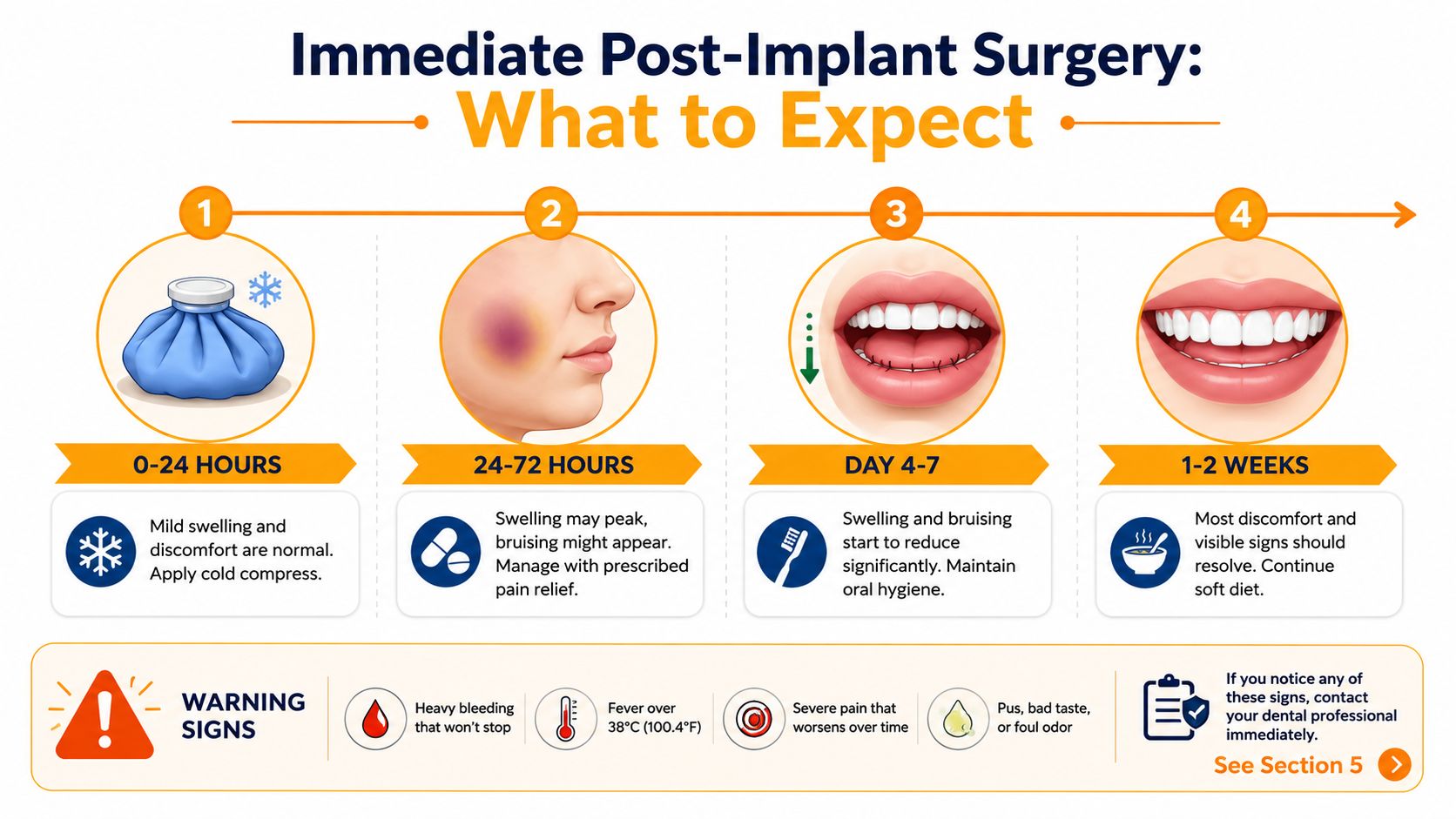
A simple first-week timeline
First 24 hours
You'll usually notice numbness wearing off, then mild to moderate discomfort beginning. A small amount of oozing or blood in the saliva can happen. Rest, cold compresses, and following post-op instructions matter most here.
Days 2 to 3
Swelling often becomes more noticeable before it gets better. Some bruising can appear on the cheek or gum. This stage catches people off guard because they expect each day to feel better than the one before, but early swelling often peaks before it fades.
Days 4 to 7
Typically, tenderness and swelling begin to settle. Eating is still gentler than normal, but the area should feel more predictable, not more dramatic. If you've been careful with cleaning and food choices, the mouth usually starts to feel less “surgical” and more stable.
By 1 to 2 weeks
Visible signs such as swelling and bruising should be much improved or gone. The gum is still healing under the surface, so “looks better” doesn't mean “fully healed”, but daily life usually feels far easier.
What helps at home
A few simple habits can make the first week smoother:
- Keep pressure off the site. Chew away from the area if advised.
- Choose softer foods. Think yoghurt, eggs, soups, mash, and well-cooked pasta.
- Clean gently but consistently. Plaque control still matters during healing.
- Follow the medication plan exactly. Don't guess or stop early without advice.
Practical rule: Healing should gradually move in the right direction. It doesn't have to be perfect every day, but it shouldn't feel like it's spiralling.
If you'd like a more detailed breakdown of day-by-day healing, this guide on dental implant recovery time is useful to keep bookmarked.
Understanding Potential Long-Term Complications
The side effects that matter most over time are different from the swelling and soreness of the first week. Long-term problems usually involve the tissues around the implant, the supporting bone, or the way the implant integrates and functions under load.
One of the easiest ways to understand this is to stop thinking only about the implant itself and start thinking about the environment around it.
When the tissue around the implant becomes inflamed
An implant is made of titanium or a similar biocompatible material, but it still sits in living tissue that can become irritated or infected. The Australian Dental Association highlights peri-implantitis as a key long-term risk. It's an inflammatory disease driven by biofilm accumulation and is marked by bleeding, suppuration, and bone loss. Risk is significantly higher with smoking, uncontrolled diabetes, and a history of periodontitis, as outlined in this discussion of implant problems and side effects.
A simple analogy helps. If healthy gums and bone are like a tidy garden bed, plaque is the weeds. If weeds are removed early, the garden stays healthy. If they're left to spread, they start damaging the soil and roots. Around implants, that “soil” is the supporting bone and gum tissue.
Mucositis and peri-implantitis are not the same
Peri-implant mucositis is the earlier stage. The gum around the implant becomes inflamed, often with redness or bleeding.
Peri-implantitis is the more serious stage. Inflammation is no longer limited to the soft tissue. It starts affecting the supporting bone.
That distinction matters because early inflammation is usually much easier to manage than bone loss.
| Concern | Timeline | What It Is | Action |
|---|---|---|---|
| Pain and swelling | Early healing | Normal tissue response after surgery | Monitor and follow post-op instructions |
| Minor bleeding | Early healing | Expected short-term oozing from the surgical site | Use the advice given by your dentist |
| Mucositis | Longer term | Inflammation in the soft tissue around the implant | Improve cleaning and have it assessed |
| Peri-implantitis | Longer term | Inflammation with bone loss around the implant | Prompt professional treatment is needed |
| Implant failure | Can be early or delayed | The implant doesn't integrate well or loses support over time | Clinical review and treatment planning |
Why implants fail
Implant failure isn't one single event. Sometimes the implant never bonds as expected with the bone. Sometimes it initially integrates well, then later develops problems because of inflammation, bite overload, or poor maintenance.
A small NIH-hosted clinical study reported postoperative infection in 15.3%, peri-implantitis in 12.0%, and implant failure in 8.0% among 150 implant surgery cases, but those figures come from that study sample and shouldn't be treated as nationwide Australian averages. The more useful takeaway is simple. The longer-term issues worth watching are infection, peri-implantitis, and implant failure.
If you're thinking beyond surgery and focusing on the maintenance side, it helps to read about how long dental implants last.
How We Manage and Minimise Specific Risks
Good implant care starts long before the implant goes in. A lot of the fear around dental implants side effects comes from picturing treatment as a blind procedure. It isn't. Careful planning reduces guesswork and helps protect important structures in the jaw.
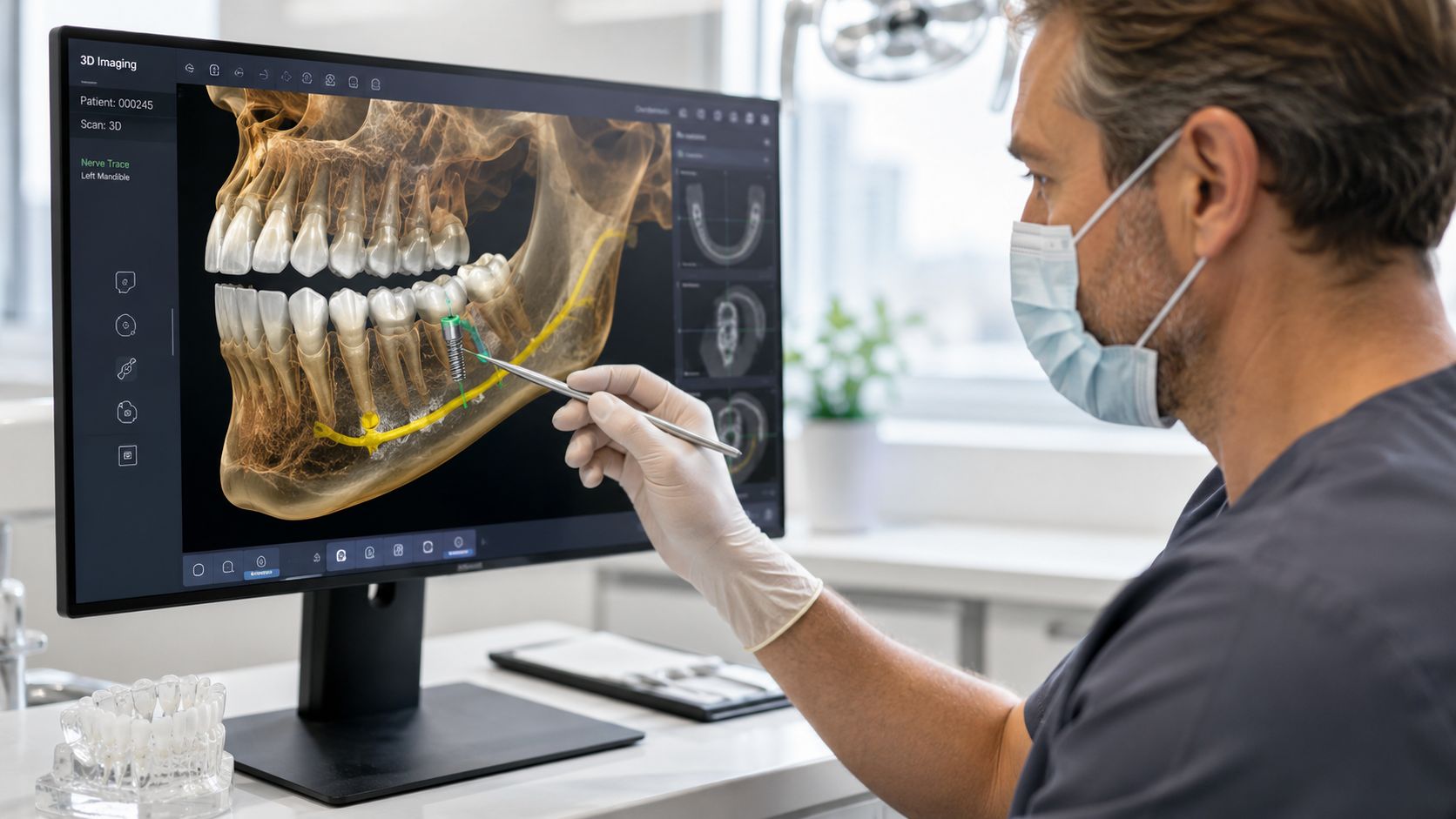
Precision matters most near nerves and sinuses
In the lower jaw, the critical structure is often the inferior alveolar nerve or the mental nerve. If an implant is placed too close, even a small positioning error can lead to persistent altered sensation. The FDA lists post-surgical numbness from nerve impingement as a recognised risk, and clinical guidance advises urgent review if numbness continues beyond the immediate post-operative period because early recognition can help prevent irreversible injury, as noted in the FDA's dental implant guidance.
That's why modern planning matters so much. A 3D CBCT scan works like a blueprint of the jaw. It helps the dentist measure bone height and width, assess angulation, and locate structures that must be avoided. In the upper jaw, planning also helps account for the sinus. In the lower jaw, it helps map the safe zone around the nerve canal.
Gentler techniques can improve comfort
Technology doesn't remove all risk, but it can make surgery more controlled and recovery feel less intimidating. Laser dentistry, including systems such as Biolase, can support a more conservative approach in selected soft tissue procedures. Patients often like it because the treatment feels more precise and less forceful than traditional methods.
That matters for anxious patients. When the process feels calmer, people are more likely to follow through with treatment and aftercare instead of delaying until the dental problem gets worse.
If you'd like to see how laser treatment fits into modern implant-related care, this article on Biolase laser dentistry gives useful background.
A short visual explanation can help make the planning process easier to understand:
Comfort isn't just about the drill
People often assume pain control is the whole story. It isn't. Comfort also comes from:
- Clear planning so you know what will happen.
- Careful imaging so the procedure is accurate.
- Appropriate sedation options if you're highly anxious.
- Early review if something doesn't feel right.
The safest implant experience is usually the one that feels most organised, not the one that sounds most impressive.
Your Guide to Prevention and Successful Aftercare
Implant success is a partnership. The dentist places and monitors the implant, but daily habits at home shape what happens around it month after month. If you think of the implant as the foundation, your routine is the weatherproofing.
Your role
Daily cleaning has to be meticulous, but not aggressive. The goal is to remove plaque around the implant and gumline without traumatising the tissue. If you're unsure what that looks like in practice, a straightforward guide to daily dental implant care can help you picture the routine between visits.
A few habits make the biggest difference:
- Brush with intention. Don't skim past the implant area because it feels sensitive.
- Clean between teeth and around the implant. Interdental brushes or other aids may be recommended depending on the design.
- Attend reviews even when nothing hurts. Early inflammation is often painless.
- Be honest about smoking and medical history. These factors affect healing and long-term stability.
Our role
The dental team's job doesn't end when the implant is placed. Ongoing care includes checking the gum seal, assessing plaque control, looking for early bleeding, reviewing bite forces, and taking images when needed to assess the supporting bone.
Professional cleaning matters because implants need maintenance, not neglect. A crown on top of an implant can look flawless while the tissue around it is gradually becoming inflamed. Regular review visits are where small issues are caught before they become expensive or uncomfortable.
Keep in mind: a successful implant is not just an implant that stays in the mouth. It's an implant surrounded by healthy, stable tissue.
The routine has to fit real life
The best aftercare plan is one you'll actually follow on a busy Tuesday, not one that only sounds good in the clinic. If you have a full-arch restoration, cleaning technique becomes even more important because food and plaque can collect in areas you can't see easily. This guide on how to clean All-on-4 dental implants is especially helpful if you've had or are considering a full-arch solution.
For families and busy professionals in the Inner West, practicality matters. Late appointments, local follow-up, and simple instructions usually support better long-term outcomes than overly complicated care plans.
Warning Signs That Need Urgent Dental Care
Most healing symptoms improve gradually. A warning sign does the opposite. It appears suddenly, persists when it shouldn't, or gets worse instead of better.
That's why it's safer to think in patterns, not single sensations. A little tenderness after surgery is ordinary. Pain that ramps up sharply after an initial improvement is not. Mild early numbness from local anaesthetic is expected. Ongoing or new numbness later on needs prompt attention.
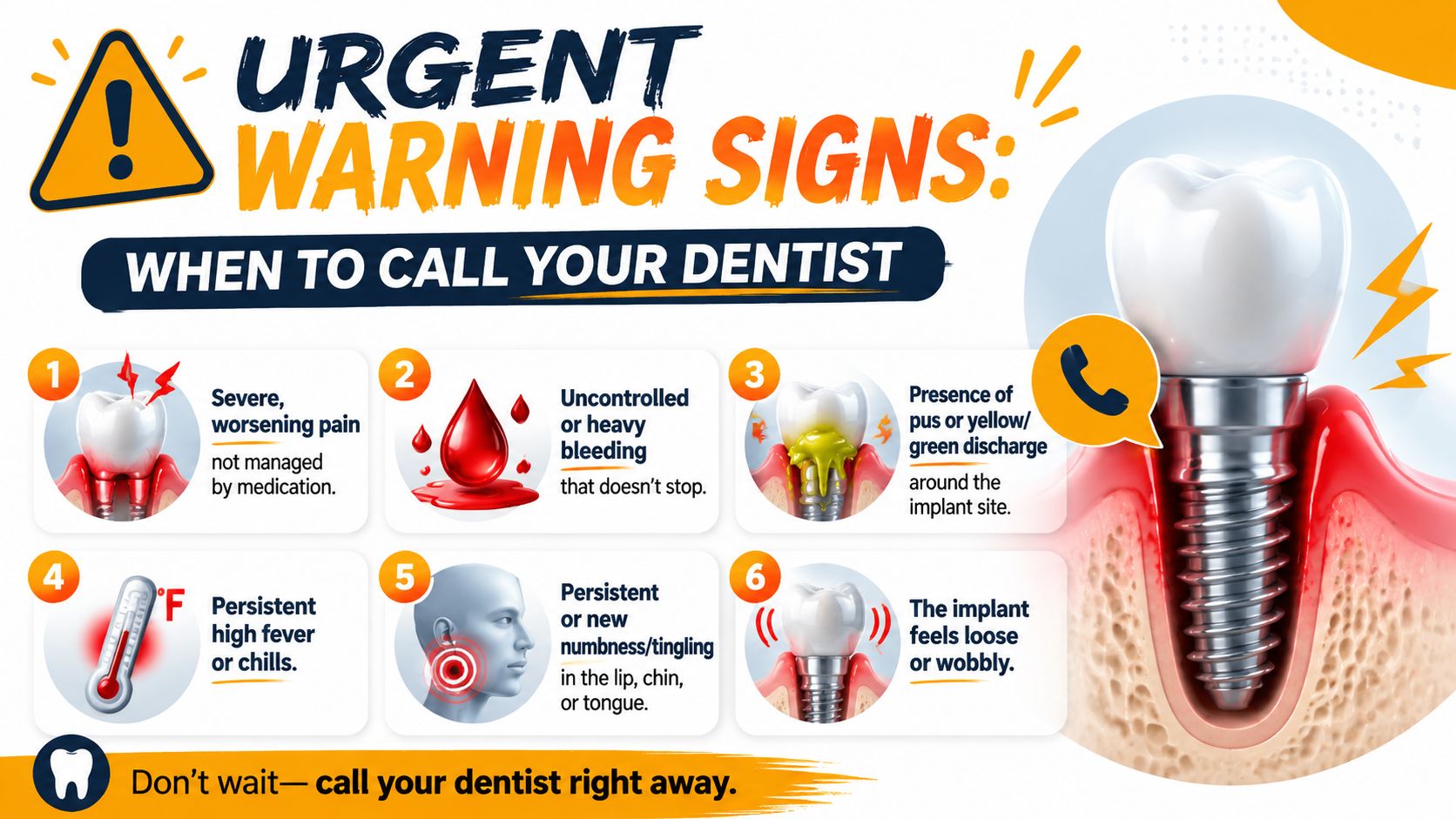
Call your dentist promptly if you notice any of these
- Worsening pain that isn't settling with the expected recovery pattern.
- Heavy or uncontrolled bleeding rather than light early oozing.
- Pus, discharge, or a bad taste coming from the implant area.
- Persistent fever or chills, especially if you also feel unwell.
- Numbness or tingling in the lip, chin, or tongue that persists or appears after the immediate post-op phase.
- A loose or wobbly feeling in the implant or attached tooth.
Why urgency matters
People sometimes wait because they don't want to “overreact”. That instinct can backfire. Implant problems are often easier to manage when they're caught early. A small infection is simpler than a larger one. Soft tissue inflammation is simpler than bone loss. Early review for altered sensation is far better than hoping it disappears on its own.
Some patients also find it useful to compare aftercare advice from another clinic's educational material, such as this article from Clayton Dental Studio, because repeated guidance from different dentists often makes the red flags clearer.
If you're unsure whether a symptom is urgent, call. It's better to ask a cautious question than to ignore an important sign.
Don't self-diagnose from appearance alone
The mouth can be misleading. A site may look “not too bad” while infection is developing underneath. On the other hand, bruising can look dramatic while healing is perfectly normal. That's why professional assessment matters more than guessing from a mirror.
If you ever need rapid review, this guide to dental emergency services explains when urgent care is appropriate.
Frequently Asked Questions for Inner West Patients
Is recovery different with All-on-4 implants
It can be. All-on-4 treatment involves a full-arch solution, so the surgical and bite adjustment experience can feel different from replacing a single tooth. People often notice that the mouth feels more “worked on” overall, even when discomfort is manageable. Cleaning instructions are also more specific because you're maintaining a larger restoration rather than one implant crown.
If you're comparing full-arch treatment with individual implants, the most useful question isn't “Which one heals faster?” It's “Which option suits my bone, goals, and maintenance routine best?” For more detail, see All-on-4 dental implants.
Can sedation help if I'm nervous about implant surgery
Yes. For anxious patients, sedation can change the whole experience from something tense and exhausting into something much more manageable. It doesn't just help during the appointment. It often helps people move forward with care instead of delaying treatment because of fear.
Sedation can be especially helpful if you have a strong gag reflex, previous difficult dental experiences, or you become distressed by sounds and sensations. If that sounds familiar, read about sedation dentistry before your consult so you know what to ask.
How do I know if numbness is normal or concerning
Numbness immediately after treatment is often due to local anaesthetic. What matters is whether sensation returns in the expected way. If numbness lingers, becomes more noticeable, or involves the lip, chin, or tongue in a way that worries you, don't wait for your next routine visit. Call the clinic.
The key idea is timing. Early temporary numbness can be normal. Persistent or new numbness deserves review.
Are implants a good option if I've had gum disease before
They can be, but the conversation needs to be honest and detailed. A history of gum disease doesn't automatically rule implants out. It does mean the tissues around the implant will need careful monitoring over time, and your cleaning routine has to be consistent.
This is similar to replacing a damaged fence in a yard that's had drainage problems before. The new fence may be strong, but you still need to deal with the conditions around it.
Does seeing a local clinic really make a difference
For many Inner West patients, yes. Implants aren't a one-day transaction. They involve planning, surgery, review visits, and long-term maintenance. Having your dental team nearby makes it easier to attend follow-ups, ask questions early, and get help quickly if something changes.
That's especially practical if you live or work around Dulwich Hill, Marrickville, Ashfield, Petersham, Summer Hill, Lewisham, Earlwood, or Hurlstone Park. Good implant care is easier when access is simple.
If you're weighing the benefits and risks of implants and want clear, practical advice, The Smile Spot offers implant consultations, advanced imaging, gentle treatment options, and ongoing support for patients across Dulwich Hill and the Inner West.