
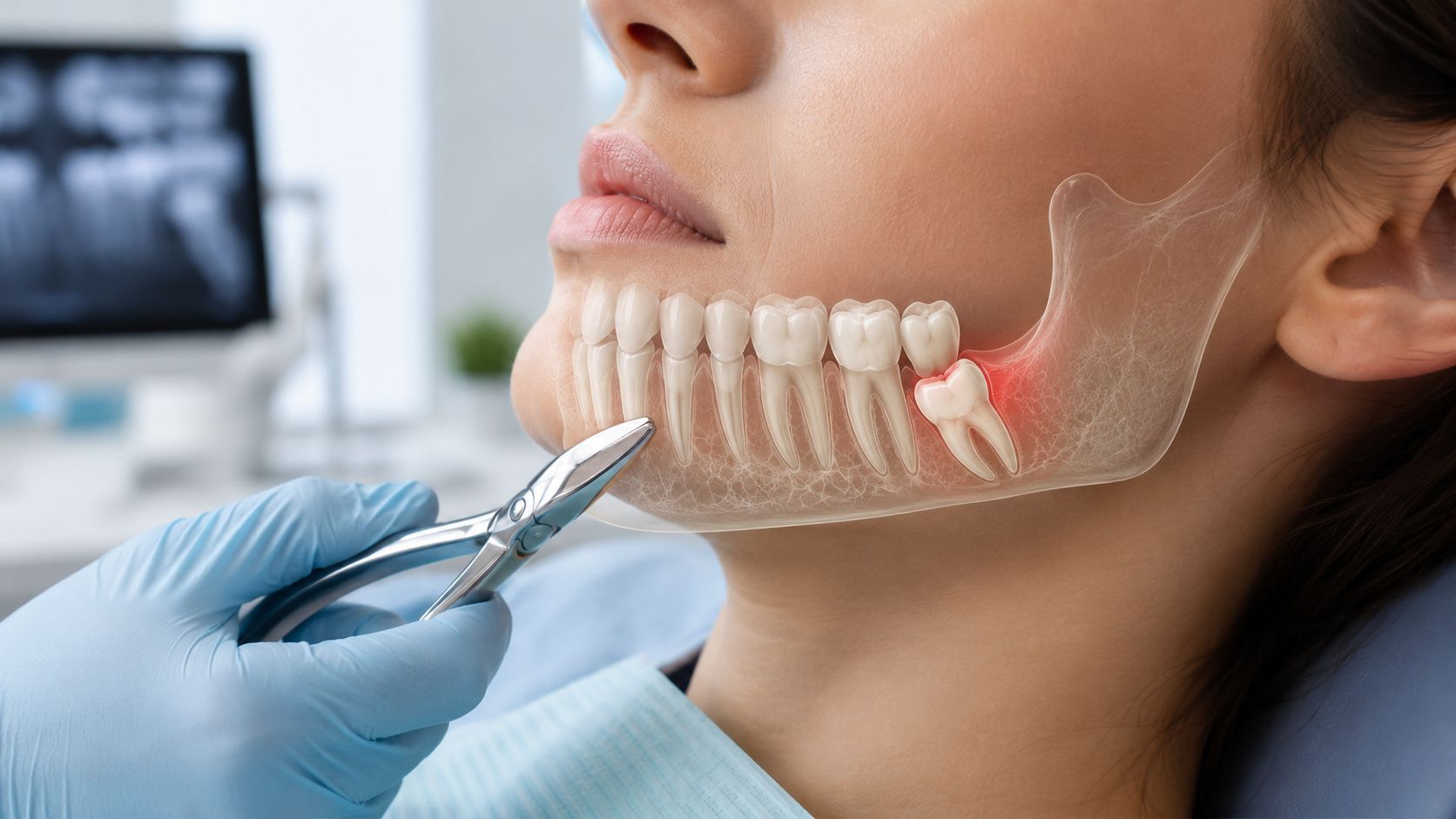
A lot of people arrive at this point the same way. There's a dull pressure at the very back of the jaw. Food keeps catching under a flap of gum. Or a dentist points to an X-ray and says, “That wisdom tooth doesn't have enough room.”
If that sounds familiar, you're probably wondering two things at once. Do I really need it removed, and how unpleasant is this going to be? Those are fair questions. Wisdom tooth removal can sound bigger and scarier than it usually feels when it's explained clearly and handled with care.
Most anxiety comes from not knowing what the words mean or what the day will look like. Terms like impacted, surgical extraction, and sedation can make your mind jump to the worst-case version of the story. In reality, impacted wisdom tooth removal is a very common dental procedure, and modern planning, imaging, anaesthetic options, and gentle techniques make it far more manageable than many patients expect.
Your Guide to a Calm Wisdom Tooth Removal
One patient I often think about is the person who keeps putting it off because the pain isn't constant. It only flares when they're tired, chewing on one side, or trying to brush the very back tooth. They tell themselves they'll deal with it next month. Then the gum swells again, and suddenly it feels urgent.
That stop-start pattern is common with wisdom teeth. They can be quiet for a while, then remind you they're there at the worst time, like before a work presentation, during exams, or right before a holiday. If you're helping a teenager, partner, or parent manage appointments and scans, it also helps to organize family medical records so medication lists, referral letters, and past imaging are easy to find when you need them.
A calm experience starts with a clear plan. That means understanding what an impacted tooth is, knowing the signs that matter, and talking through comfort options before the day of treatment. For anxious patients, even learning about oral sedation dentistry can make the whole idea feel more approachable.
Practical rule: Wisdom tooth treatment feels less frightening when you break it into small, predictable steps.
You don't need to know every surgical detail. You do need to know what your dentist is looking for, why removal is sometimes recommended, what happens during the procedure, and how recovery usually unfolds. Once those pieces are clear, the unknowns shrink, and that alone can take a lot of heat out of the situation.
What Is an Impacted Wisdom Tooth
Wisdom teeth are your third molars, the last large teeth at the back of the mouth. They usually try to come through after the rest of your adult teeth are already in place. Long ago, those extra molars may have been more useful for chewing a tougher diet. Today, many jaws do not have enough spare room for them.
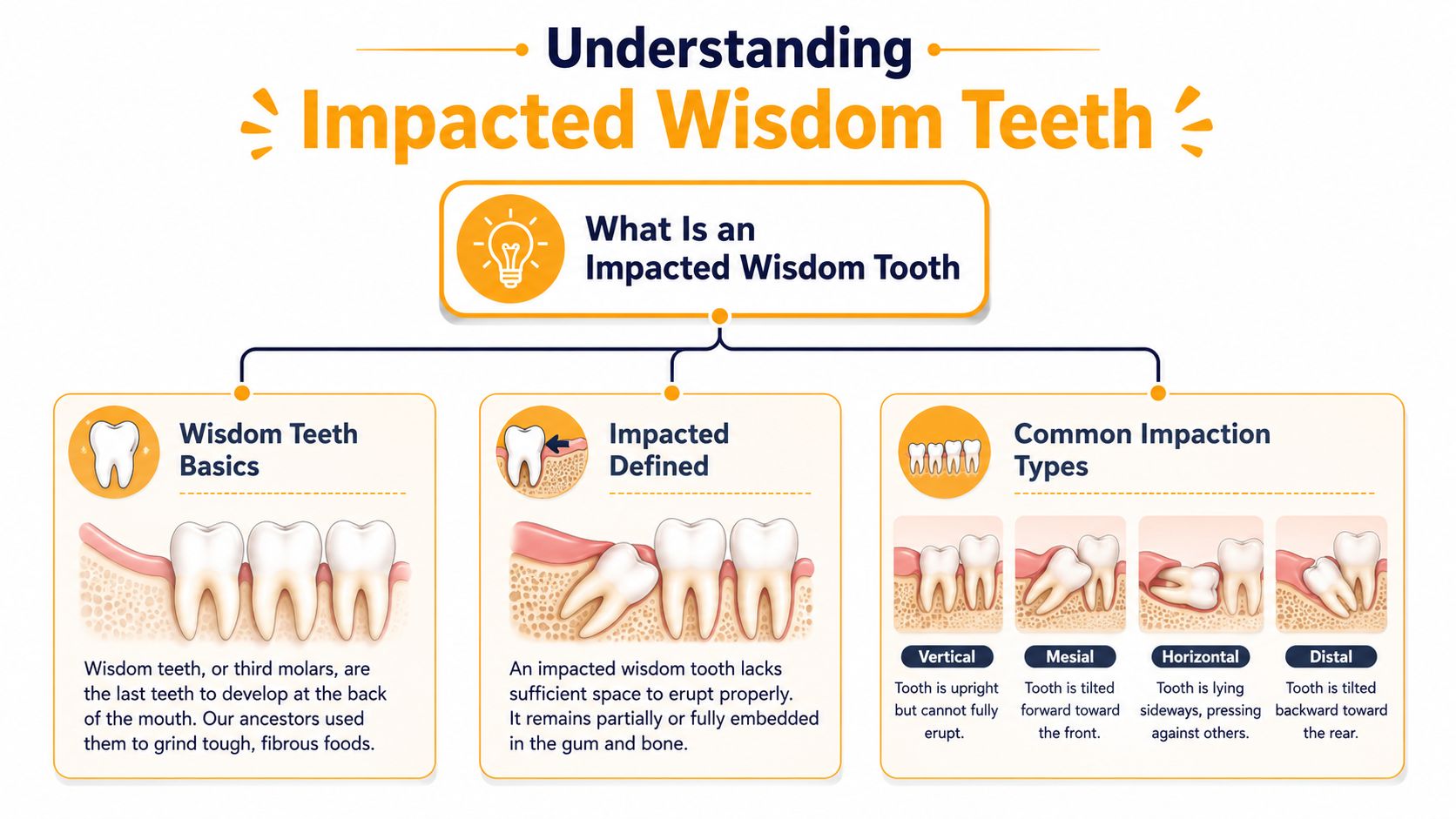
An impacted wisdom tooth is a tooth that can't come through normally because space, bone, gum, or the neighbouring tooth blocks its path. A simple way to picture it is trying to park a car in a garage that's already full. The car exists, the driver is trying to get in, but there isn't a clear space for it to settle properly.
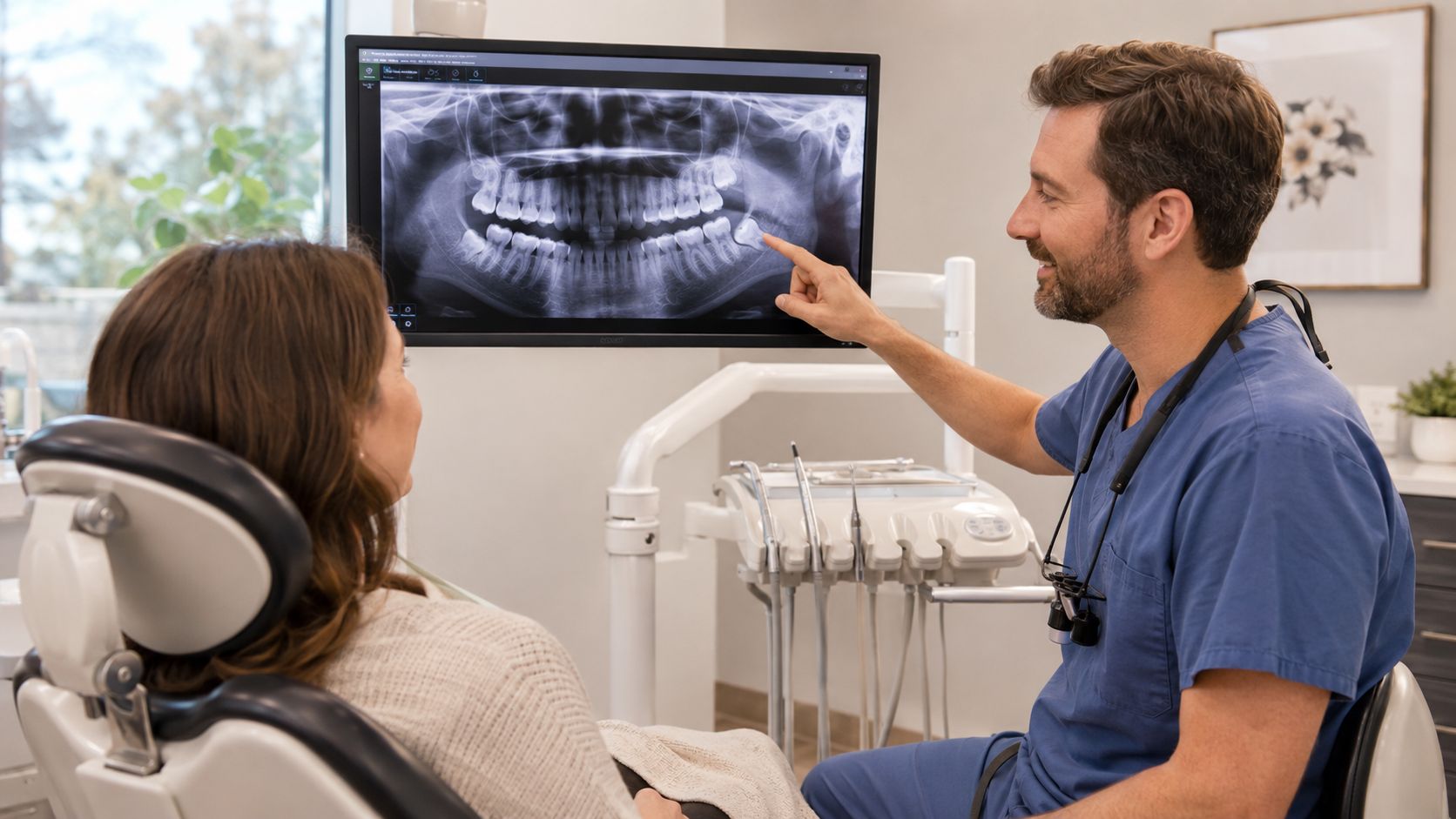
If you've ever been told you need an OPG or panoramic image, it's because that broad view helps show where the tooth is sitting, how it's angled, and what structures are nearby. A simple overview of that imaging is explained in this guide to an OPG dental X-ray.
Four common types of impaction
Dentists often describe impacted wisdom teeth by the direction they lean.
| Type | What it means in plain language | Why it can matter |
|---|---|---|
| Mesial impaction | The tooth leans forward toward the tooth in front | It may press into the neighbouring molar or trap food and bacteria |
| Distal impaction | The tooth angles backward, away from the other teeth | It can be hard to clean and awkward to remove if it stays partly buried |
| Vertical impaction | The tooth is upright but still stuck under gum or bone | Even a straight tooth can fail to erupt if there isn't enough room |
| Horizontal impaction | The tooth lies sideways | This often creates pressure against the tooth beside it |
Why the angle changes the treatment plan
The angle doesn't just change the X-ray appearance. It affects symptoms, cleaning, and how straightforward removal will be.
A partially erupted tooth may create a little pocket under the gum where plaque and food collect. A fully buried tooth may not hurt at all for years, then show signs of pressure, inflammation, or damage to the tooth beside it. That's why dentists don't judge wisdom teeth by pain alone.
An impacted wisdom tooth isn't always dramatic. Sometimes the main clue is that it sits in a place you can't properly clean or where the gum never settles down.
Signs You Need Your Wisdom Teeth Removed
You might notice a dull ache behind your last molar while eating, then feel nothing for a week. That stop start pattern is one reason wisdom teeth can be confusing. A tooth does not have to hurt every day to be causing trouble.
Dentists usually decide based on a few practical questions. Is the area staying inflamed. Can you keep it clean. Is the tooth damaging the one beside it. Is there enough space for it to sit in a healthy position. If the answer to several of those questions is no, removal often becomes the safer and more comfortable choice.
Common signs that a wisdom tooth is becoming a problem
A wisdom tooth often causes problems because it sits at the very back of the mouth, like a book jammed halfway onto a shelf. Food, plaque, and bacteria can collect around it, especially if only part of the tooth has come through.
Signs your dentist may look for include:
- Pain or pressure at the back of the mouth. This can feel mild and occasional, or more constant when chewing.
- Swollen, tender, or repeatedly irritated gum. A partly erupted tooth can leave a small flap of gum over the surface, which easily traps debris.
- A bad taste or ongoing bad breath. These can be signs that the area is not staying clean.
- Food constantly getting stuck there. If you are cleaning carefully and the area still feels impossible to reach, that matters.
- Soreness in the tooth next to the wisdom tooth. Pressure or trapped bacteria can affect the neighbouring molar.
- Decay, infection, or a cyst seen on examination or X-ray. These are stronger reasons to remove the tooth rather than keep watching it.
Some signs are obvious at home. Others only show up during an exam or on imaging. That is why a wisdom tooth can seem quiet while still causing slow damage nearby.
Pain is only one clue
Many anxious patients assume that no pain means no problem. Dentistry is not that simple.
A wisdom tooth can sit under the gum or bone and still press against the tooth in front. A partly erupted tooth can create a narrow pocket that behaves like a trapdoor, letting bacteria in and making cleaning difficult. You may only notice small warning signs, such as occasional swelling, a strange taste, or gum that never quite settles.
If your dentist recommends removal, it is often because the pattern looks unreliable, not because the tooth is behaving well.
When monitoring may make more sense
Some wisdom teeth do not need to be removed straight away. If the tooth is healthy, stable, easy to review, and not harming nearby teeth or gum, your dentist may recommend monitoring instead of surgery.
That decision should be individual. Your symptoms, age, X-rays, oral hygiene, and anxiety level all matter. If you want a clearer picture of when a removal becomes more complex, this explanation of a surgical wisdom tooth extraction can help.
At The Smile Spot, that conversation also includes comfort. For some patients, the right timing is not just about the tooth. It is also about planning the procedure in a way that feels manageable, with modern imaging, gentle techniques, and options such as laser assisted care where appropriate to make treatment feel less confronting.
Signs you should book an assessment soon
Some situations should not be left to chance:
- Swelling that is getting worse
- Pain that keeps returning
- Difficulty opening your mouth or chewing
- Gum infection around the wisdom tooth
- Damage to the tooth beside it
- Repeated flare-ups, even if they settle in between
A good rule is simple. One brief twinge does not decide the whole story. Repeated infection, trapped debris, cleaning difficulty, or damage to the neighbouring tooth usually matter much more.
The Removal Procedure Explained Step by Step
The day feels easier when you know the sequence. It's common to imagine the extraction itself and forget that the appointment is really a series of small, controlled steps: assessment, numbness, removal, and aftercare.
Step one is planning, not rushing
Before any tooth is removed, your dentist reviews the tooth's position, the shape of the roots, and how close it is to nearby structures. That's where the earlier imaging matters. The plan also includes your medical history, your anxiety level, and whether the tooth looks more like a simple extraction or a surgical one.
If you want a more detailed look at what makes a removal surgical, this explanation of a surgical extraction dentist visit is helpful.
Step two is choosing how comfortable you want to be
For some people, local anaesthetic is enough. That means the area is fully numbed, but you're awake. You may feel pressure and movement, but you shouldn't feel sharp pain.
For others, anxiety is the bigger issue than the tooth itself. In those cases, discussing sedation dentistry can make a huge difference. Sedation doesn't replace local anaesthetic. It works alongside it to help you feel more relaxed and less aware of the procedure.
Here's a simple comparison:
| Option | What it does | Best for |
|---|---|---|
| Local anaesthetic | Numbs the treatment area | Straightforward cases and patients comfortable being awake |
| Sedation with local anaesthetic | Adds relaxation while the area stays numb | Anxious patients or longer, more complex extractions |
Step three depends on whether the tooth is erupted or impacted
A simple extraction usually means the tooth has come through enough to be grasped and removed without opening the gum. An impacted wisdom tooth removal is different because the tooth may be partly or fully covered by gum or bone.
In a surgical extraction, the dentist or oral surgeon may make a small opening in the gum to reach the tooth. Sometimes a little bone around the tooth is carefully removed. Sometimes the tooth is divided into smaller sections so it can come out more gently instead of being forced.
Surgical doesn't mean harsh. It often means the opposite. A more precise approach protects the surrounding area and lets the tooth come out with less strain.
For many nervous patients, seeing the process explained visually helps more than words alone. This short video gives a useful overview:
Step four is protecting the area so healing can begin
Once the tooth is removed, the site is cleaned, and stitches may be placed if needed. A gauze pack helps you apply gentle pressure while the initial clot forms. That clot matters because it protects the socket underneath.
Patient comfort also depends on technique. Gentle handling of the tissues, clear communication during the appointment, and minimally invasive tools can make the experience feel much smoother. In practices that use Biolase laser dentistry, soft-tissue management can be more precise, which may reduce irritation and support cleaner healing. For anxious patients, the comfort conversation is just as important as the surgical one.
Your Recovery Timeline and Aftercare Guide
Recovery tends to feel most stressful when people don't know what's normal. A little swelling, soreness, and restricted eating are expected. Sudden worsening pain, foul taste, or bleeding that won't settle deserve a call.
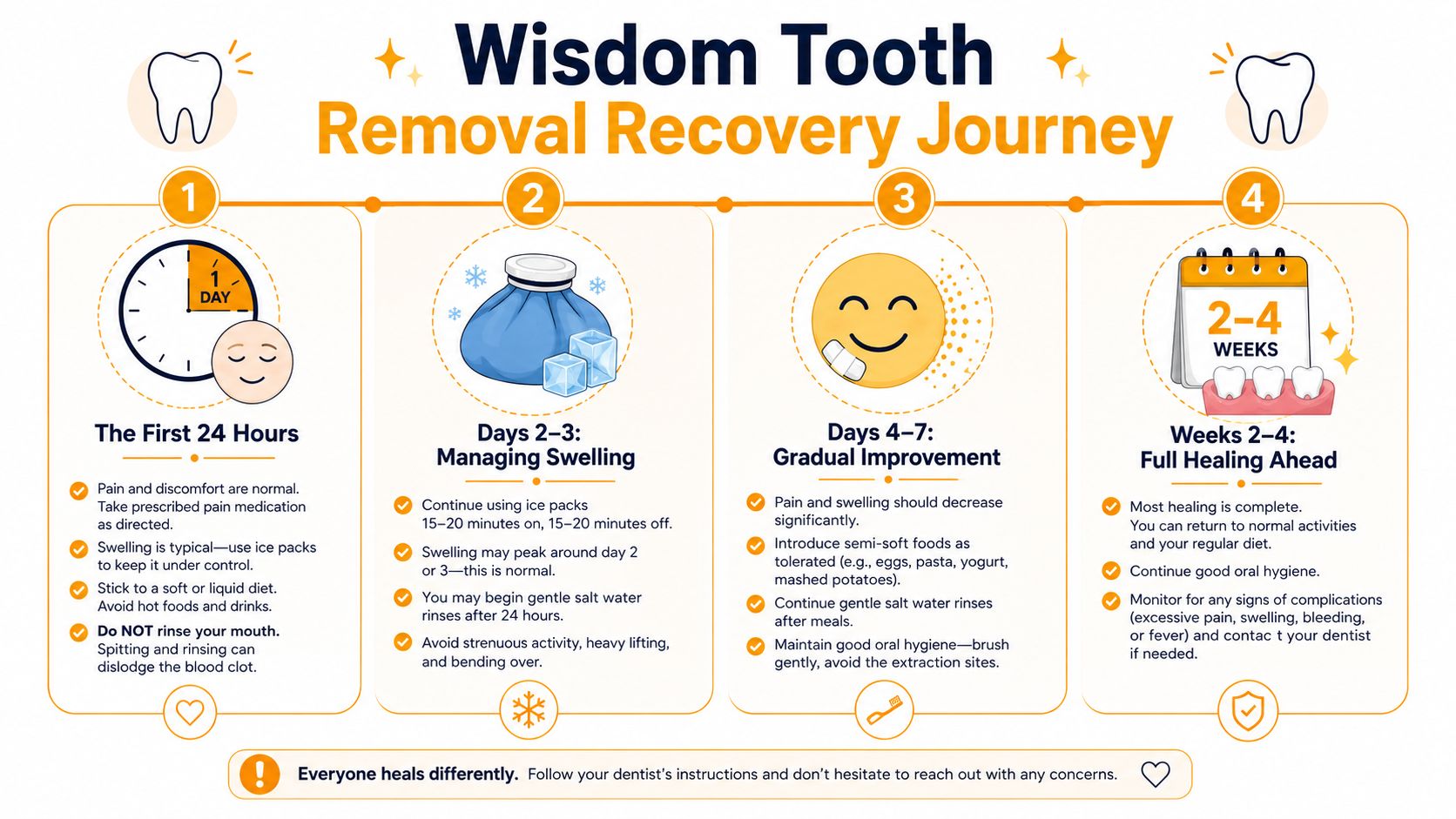
The first 24 hours
This is the protection phase. Your body is building the blood clot over the socket.
- Keep steady pressure on the gauze if your dentist has placed it.
- Take medication exactly as directed. Don't wait until discomfort is intense.
- Use cold packs on the outside of the face to help limit swelling.
- Choose soft, cool foods that don't require much chewing.
- Avoid straws, smoking, vigorous rinsing, and spitting because those actions can disturb the clot.
Days 2 to 3
This is often the swelling phase. Feeling puffy doesn't automatically mean something is wrong.
Gentle cleaning becomes important now. You'll usually be told when to start careful salt-water rinses and how to brush the nearby teeth without scrubbing the extraction site. If you want a practical checklist, these wisdom teeth removal recovery tips can help you stay organised day by day.
A soft-food routine makes life easier here. Think yoghurt, soups that aren't too hot, mashed foods, scrambled eggs, smoothies eaten with a spoon, and soft pasta once chewing feels comfortable. Some patients also review broader nutrition topics during healing, such as choosing the best vitamin K2 form, because bone and oral health often lead people to ask wider questions about dietary support.
Keep food simple for a few days. Recovery goes better when the socket isn't being challenged by crunchy, sharp, or sticky meals.
The first week and beyond
The mouth often feels easier to manage as the days go on. Opening wide, chewing, and talking usually become more comfortable in stages rather than all at once.
Watch for the difference between normal healing and a possible complication:
| What often feels normal | What deserves a dental review |
|---|---|
| Mild to moderate soreness that gradually settles | Pain that becomes stronger instead of better |
| Swelling that improves over time | Swelling that keeps worsening |
| Slight stiffness in the jaw | Trouble swallowing or significant spreading swelling |
| Mild oozing early on | Bleeding that doesn't ease with pressure |
| Tenderness when cleaning nearby | Strong bad taste, bad smell, or marked socket pain |
A dry socket can happen if the protective clot is lost too early. Patients often describe it as deep, throbbing pain that doesn't match the usual healing pattern. Following the aftercare instructions closely is the best way to lower that risk.
Managing Costs and Your Comfort at The Smile Spot
A common worry sounds like this: “I can handle the treatment if I know what it will feel like and what it will cost.” That concern is completely reasonable. Wisdom tooth removal is easier to face when the plan is clear before the appointment begins.
The final fee can change for the same reason building work changes in price once you know what is behind the wall. One tooth may be easy to reach. Another may be trapped under the gum, angled into the next tooth, or close to important structures. The number of teeth being removed, the type of sedation, the imaging needed, and whether care is provided in the clinic or a hospital setting all shape the total cost.

Why prices can differ so much
Two wisdom teeth can carry the same name on a chart and still be very different procedures. A tooth that has partly come through and is easy to access usually takes less planning than one buried under gum or bone. More difficult positions often mean a longer appointment, more detailed imaging, and a more involved surgical approach.
Sedation also affects cost, but for many anxious patients it affects something just as important. The experience itself. If you are already tense, worried about sounds, or afraid you will not cope in the chair, your comfort plan matters as much as the treatment plan.
A helpful place to start is this guide to wisdom teeth removal costs and what affects the price. It can help you prepare the right questions before your consultation.
Comfort is part of the treatment
At The Smile Spot, patient comfort is treated as part of good clinical care, not as an afterthought. That includes a gentle approach to numbing, clear explanations before treatment starts, and sedation options for suitable patients. Many people feel calmer once they know they will not be rushed and will be told what is happening step by step.
The clinic also uses advanced technology such as Biolase laser dentistry in selected situations. Laser tools are not used for every wisdom tooth removal, but in the right case they can support a more precise and less invasive approach to soft tissue treatment. For an anxious patient, that often makes the whole process feel more controlled and less intimidating.
Practical details matter too. The Smile Spot accepts most private health funds, offers transparent fees, and provides a $240 new patient package that includes an exam, X-rays, scale, and fluoride. Late evening and Saturday appointments can also make treatment easier to fit around work, school, and family responsibilities.
Questions worth asking before you book
- Ask why the tooth needs to come out now, not just whether it can be removed.
- Ask what type of numbing or sedation is suitable for your level of anxiety and the difficulty of the procedure.
- Ask for a clear written quote so you can see what is included, such as imaging, sedation, and follow-up care.
- Ask how the team will help you stay comfortable during and after the appointment.
A good plan lowers stress. When patients understand the reason for treatment, the expected fee, and the comfort options available, the procedure usually feels much more manageable.
Frequently Asked Questions About Wisdom Tooth Removal
Can all four of my wisdom teeth be removed at once
Sometimes, yes. Removing all four at one appointment can be practical if multiple teeth are causing problems or are expected to become difficult around the same time. It means one healing period instead of several.
That said, it's not automatically the best plan for everyone. Your dentist will consider the tooth positions, the expected difficulty, your medical history, and how you feel about a bigger single appointment versus staged treatment.
How much time will I need to take off work or school
It depends on how complex the extraction is and how your body reacts. Some people feel ready for light desk-based tasks after a short rest period. Others prefer a few extra days, especially after multiple impacted teeth are removed.
If your job involves speaking all day, physical work, commuting while sore, or wearing equipment that presses on the jaw, give yourself more breathing room. It's always easier to return early than to push too soon and regret it.
What is a dry socket and how can I avoid it
A dry socket happens when the protective blood clot in the extraction site is lost too early, leaving the underlying area exposed. It can cause strong, deep pain that feels different from normal post-extraction soreness.
You lower the risk by following the aftercare instructions closely:
- Don't use a straw in the early healing period.
- Don't smoke or vape while the socket is trying to stabilise.
- Don't rinse forcefully on the first day unless your dentist tells you to.
- Eat soft foods and avoid poking the area with your tongue or fingers.
- Call your dentist if pain suddenly worsens instead of gradually improving.
Most recoveries are straightforward. Problems are easier to manage when you report them early instead of hoping they'll settle on their own.
If you're dealing with wisdom tooth pain, swelling, or an X-ray that shows impaction, The Smile Spot can help you understand your options and move forward with confidence. Their team in Dulwich Hill combines clear advice, gentle care, sedation options, and modern technology to make treatment feel far less intimidating.