You've just had a dental implant placed, and you're probably wondering whether to brush normally, what you're allowed to eat, and whether every twinge is a warning sign. That uncertainty is common. The safest approach is simple: protect the surgical site at first, then build a consistent cleaning routine around the implant once healing allows it.
Long-term implant care isn't an exotic regimen. Australian guidance treats a healed implant much like a natural tooth, with daily brushing, cleaning between teeth and regular professional reviews. The difference is that plaque around an implant can inflame the surrounding tissues without causing tooth decay, so small habits deserve steady attention.
Immediate Post-Op Care for Your New Implants
The first day calls for protection rather than aggressive cleaning. While your mouth is numb, avoid hot food and drinks because you may burn yourself without realising it. Australian post-operative guidance also recommends ice packs for 20 minutes on and 20 minutes off during the first 24 hours, followed by heat packs after that period, and a soft diet for about one week. Follow your own dentist's medication and activity instructions where they differ.
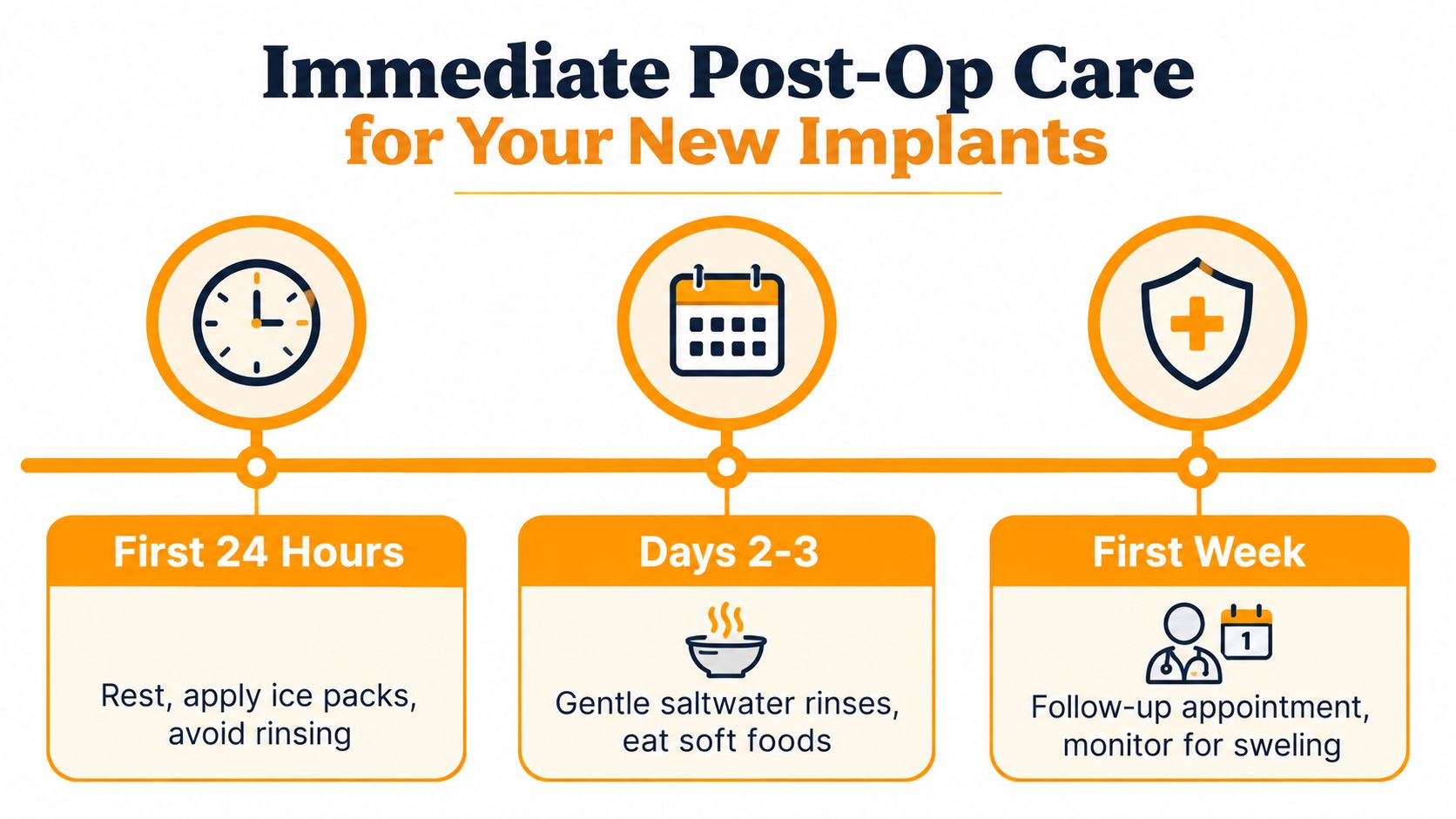
The first 24 hours
Rest with your head comfortably raised and avoid unnecessary disturbance to the area. Don't poke the implant with your tongue, toothbrush or fingers. If your dentist has placed gauze, use it exactly as directed. A little blood-tinged saliva can occur, but persistent or heavy bleeding needs prompt advice from the clinic.
For food, choose soft, cool options that require little chewing. Yoghurt, mashed vegetables, scrambled eggs and cooled soups are practical choices. Keep food away from the surgical side where possible, and don't use a straw unless your clinician specifically permits it.
Days two to three
After the initial day, your dentist may allow gentle warm saltwater rinses, particularly after meals. Let the rinse move around the mouth without vigorous swishing, and allow it to fall out rather than spitting forcefully. Brush the other teeth carefully, but don't scrub directly over a fresh wound unless you've been told to do so.
Pain and swelling should be monitored rather than judged in isolation. Contact the clinic if pain is severe or worsening, swelling becomes increasingly pronounced, bleeding won't settle, you develop fever, or you notice pus, a foul taste or a loose component. You can also review the expected stages in this guide to dental implant recovery time.
The first week
Continue with soft foods for about a week and gradually return to a broader diet only when chewing feels comfortable and your dentist approves. Don't smoke, vape or drink alcohol during healing unless your treating team gives different advice. If you've been given a prescribed rinse, use that rather than adding several products yourself. A product such as Peroxyl Oral Rinse 300ml may be relevant to some oral-care routines, but it shouldn't replace your surgeon's instructions or be used directly on a healing site without checking first.
Daily Cleaning Techniques That Protect Your Implants
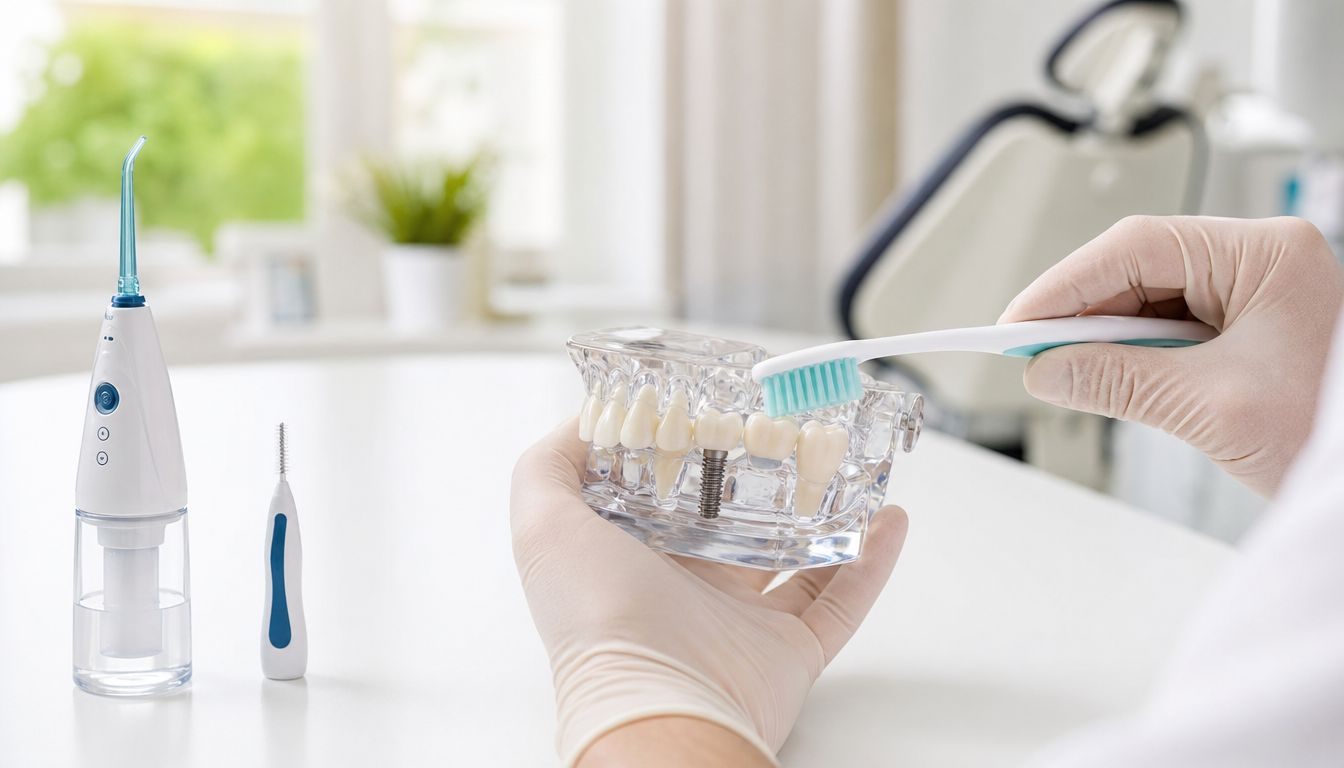
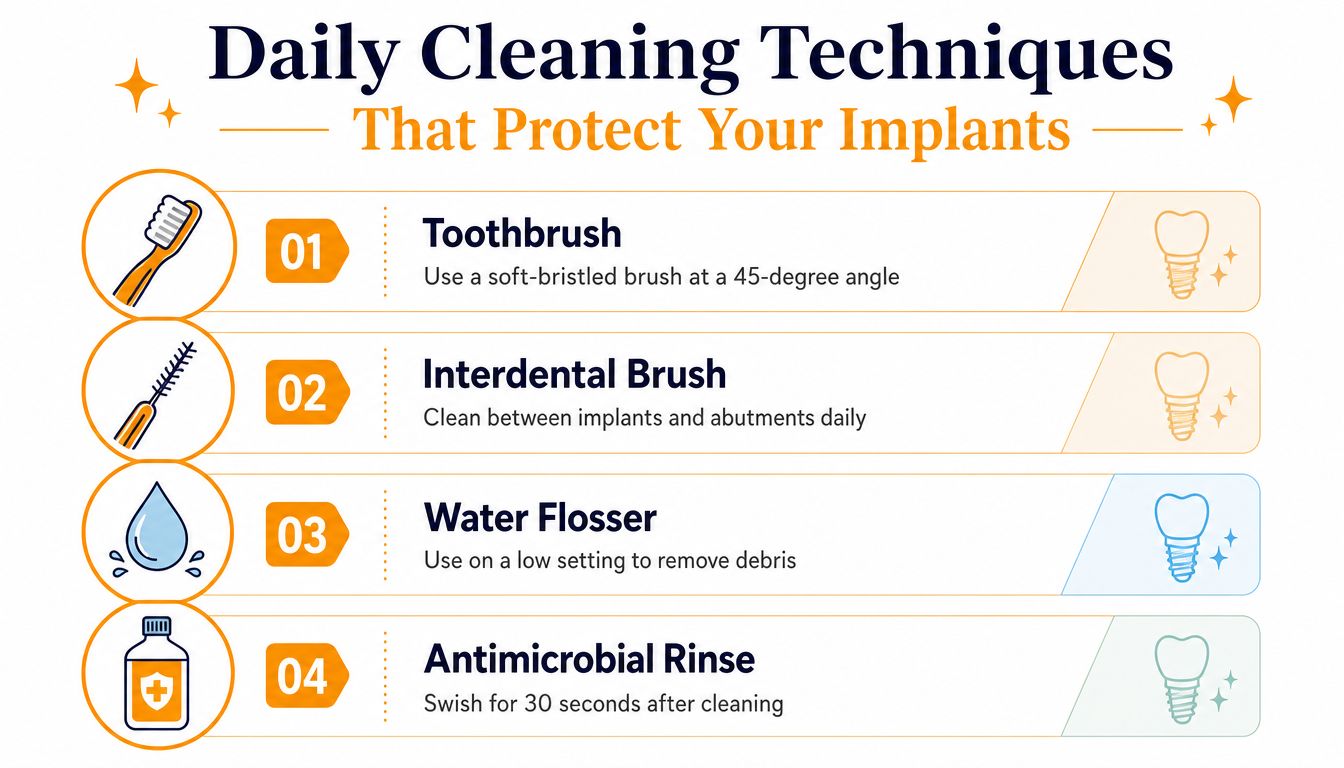
Once healing is complete, daily care should focus on the areas a toothbrush cannot reach. Healthdirect's dental implant guidance recommends brushing teeth and gums twice daily, cleaning between the implant and neighbouring teeth with floss, interdental brushes or a water flosser, and keeping regular dental appointments. Australian maintenance protocols commonly include brushing and interdental brushes, with floss and mouthwash used according to the restoration and the patient's access.
Start with the brush
Use a soft-bristled toothbrush and non-abrasive toothpaste. Angle the bristles towards the gumline, commonly at about 45 degrees, and make small, controlled movements. Give extra attention to the junction between the crown and gum, where plaque can collect.
An electric toothbrush may help if hand control or consistency is difficult. It does not remove the need for good technique. Use light pressure. Repeated bleeding, tenderness or swelling around an implant warrants a clinical review rather than harder brushing.
Clean the spaces brushing misses
Floss suits some single-implant sites, particularly where the contact and gum shape allow the thread to pass safely. Guide it around the abutment without snapping it into the tissue. Implant-specific floss or a floss threader can improve access around a back crown.
Interdental brushes are often easier when there is a visible space or when cleaning beneath a bridge. Select a size that passes with light resistance. Forcing an oversized brush can injure the gum, while a very small brush may leave plaque behind. Ask the dental team to check the size at a maintenance visit.
Add a water flosser when access is difficult
A water flosser can help remove food from awkward areas, including around bridges and full-arch restorations. Start on a low setting and direct the stream along the gumline and beneath accessible edges. It supports brushing and interdental cleaning, but does not replace either one.
Practical rule: Mouthwash can freshen the mouth, but it cannot physically remove established plaque. Mechanical cleaning comes first.
Soft plaque can harden into calculus, which home brushing cannot reliably remove. Read about why professional calculus removal involves more than brushing.
Why Peri-Implant Disease Makes Daily Care Non-Negotiable
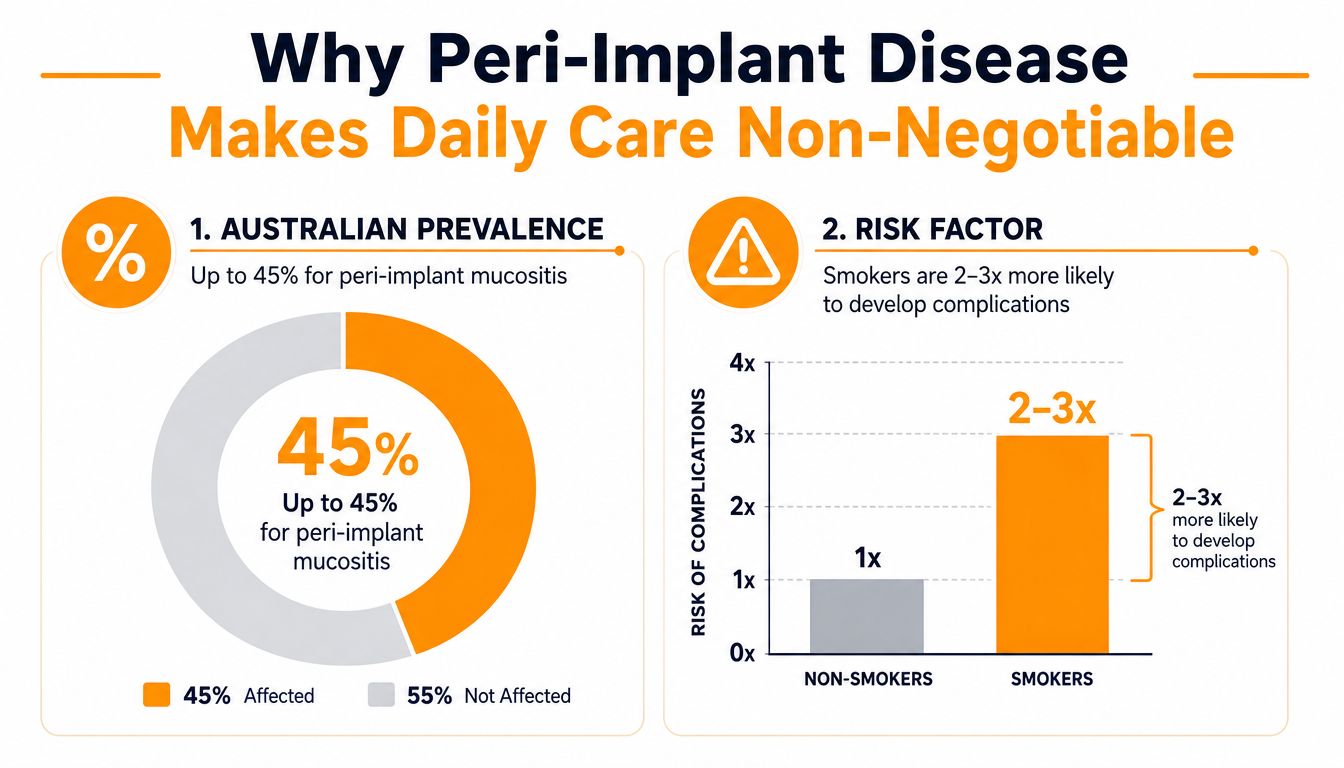
An implant cannot develop a cavity, but the gum and bone supporting it can become inflamed or infected. Peri-implant mucositis affects the soft tissue around an implant. If that inflammation continues and reaches the supporting bone, it is called peri-implantitis, which can reduce stability and threaten the restoration.
Australian research reports that peri-implant mucositis and peri-implantitis are common findings around implants. An Australian survey of periodontists also identified both conditions frequently in the general population (Australian periodontist survey). These findings do not mean your implant is expected to fail. They show why maintenance needs to continue after healing.
What inflammation means at home
Plaque can collect where the restoration meets the gum, beneath a bridge, or around an implant-supported full arch. Cleaning only the visible crown may leave these margins untouched. Daily cleaning helps control deposits before they irritate the tissue.
Bleeding while cleaning is a warning, not a reason to stop. Persistent bleeding, redness, swelling, tenderness, bad taste or discharge warrants a dental assessment. Early soft-tissue inflammation is usually easier to manage than disease involving bone loss.
Why professional reviews complete the routine
Home care removes daily deposits, while the dental team checks tissue health, bite, restoration margins and areas that are difficult to see. Recall timing should reflect your risk. Gum disease, smoking, dry mouth, reduced dexterity and an All-on-4 or other full-arch restoration may require closer professional monitoring.
Established gum inflammation may need treatment such as root planing and scaling. The appropriate approach depends on examination findings, even when symptoms seem mild. If cleaning causes anxiety, tell the clinic. The team can explain each step, agree on pauses and tailor visits so maintenance remains manageable.
Diet and Lifestyle Choices That Affect Implant Longevity
Food choices matter most while the implant is healing. Start with soft foods, then reintroduce firmer textures as comfort returns and your dentist confirms that loading is appropriate. Don't test a new implant by biting directly into hard crusts, tough meat or raw crunchy foods before you've been cleared.
After healing, most patients can eat a broad diet, but restorations still have limits. Ice, hard lollies, popcorn kernels and very hard nuts can chip a crown or place sudden force on an abutment. Sticky foods may pull at restorative work and can also remain around areas that are already difficult to clean.
Remove the risky habits
Never use an implant-supported crown to open packaging, crack shells or hold objects. Avoid chewing ice, and take care with hard foods rather than biting down suddenly. These habits don't improve implant function. They create avoidable stress on the crown, bridgework and surrounding tissues.
If you clench or grind, tell your dentist. A professionally designed night guard may protect the restoration and help distribute force more safely. Don't buy a generic guard without advice, especially if your bite has changed after implant treatment.
Treat smoking as a healing issue
Smoking can interfere with healing and contribute to inflammation around implants. If stopping completely feels difficult, speak with your GP, pharmacist or dental team about a supported cessation plan. At minimum, be honest about tobacco use so your clinician can account for it when planning reviews and maintenance.
Alcohol is also best avoided during the immediate healing period, particularly if you're taking medication or have been given specific post-operative restrictions. The practical priority is to protect healing tissues, keep cleaning gentle and return to normal habits only when your dental team says it's appropriate.
Professional Maintenance and Check-Up Schedules
A six-month dental check-up may suit routine care, but implant maintenance needs to match your healing, health and cleaning needs. A practical protocol may use a 3 to 4 month recall interval, particularly when risk is higher or close monitoring is needed, as outlined in the Australian Dental Association handbook.
The appointment should do more than confirm that the implant is still present. Your clinician may review:
- Medical and dental history: Changes in medication, smoking, dry mouth, general health or cleaning ability can alter your risk.
- Hygiene: The team identifies plaque-retentive areas, checks your home-care tools and adjusts your technique.
- Clinical findings: The implant, crown, gums and neighbouring teeth are examined for inflammation, movement and restoration problems.
- Radiographs: X-rays can show bone changes that are not visible during an ordinary examination.
- Stability and function: The implant and its components are checked for looseness, altered contact or changes in chewing.
- Professional debridement: Plaque and calculus are removed with methods suitable for implant surfaces.
Book earlier if cleaning becomes difficult, your restoration feels different or you cannot maintain the area comfortably. Patients with All-on-4 should also have the full bridge, tissue beneath it and access points checked, because a small cleaning problem can affect a larger prosthesis.
Why the radiograph schedule varies
Guidance describes baseline imaging, followed by radiographs around 6 to 8 months, at one year, and then roughly every three years when no crestal changes are present. If bone changes appear, imaging may be repeated every 6 to 8 months until stability is confirmed.
The first year under load deserves close attention because early crestal bone loss may be detected then. Your dentist may shorten or extend the interval according to your findings, rather than following an automatic timetable. Professional teeth cleaning can support this plan, but the review must assess the implant, restoration and surrounding tissues, not cleanliness alone. If appointments cause anxiety, ask the clinic to explain each step and agree on a stop signal before treatment begins.
Recognising Complications and When to Seek Help
A little bleeding after unusually vigorous cleaning may settle when you adjust your technique. Bleeding that continues, swollen gums or increasing tenderness should be reported to the clinic rather than left until the next appointment.
Movement needs quicker attention. An implant or restoration should not shift during chewing, and pain when biting requires assessment. Avoid chewing on that side and call promptly, especially if movement occurs with swelling or a changed bite.
Use this guide between reviews:
- Persistent bleeding or redness: Arrange an examination and have your cleaning technique checked.
- Gum recession or an exposed margin: Book an assessment, particularly if the area is sensitive or harder to clean.
- Pain when biting: Stop loading the area and contact the clinic.
- Unusual swelling, pus or a foul taste: Seek prompt clinical advice.
- Movement or looseness: Treat it as urgent. Do not keep testing the implant with your tongue or teeth.
A stable implant should feel dependable. A new change in comfort, fit or movement is a reason to call, not to wait.
Contact the clinic sooner if a problem makes home cleaning difficult, your restoration feels different, or the surrounding tissue changes. Early review helps distinguish irritation from a problem involving the restoration, implant components or supporting tissues. Do not adjust, remove or repeatedly bite on a loose component yourself.
Australian outcome data provide reassurance, but they do not replace symptom checks. A Melbourne Dental School cohort reported a low failure rate during follow-up, with strong survival outcomes at early and later review points (Australian Dental Journal cohort data). These results support confidence in implant treatment, while reinforcing the need to investigate new symptoms promptly. If anxiety makes calling difficult, ask the receptionist to note your concern and arrange a calm, step-by-step review.
Special Considerations for All-on-4 and Anxious Patients
All-on-4 care differs from caring for one implant crown because a fixed full-arch bridge creates sheltered spaces underneath the prosthesis. Food and plaque can collect beneath the bridge, particularly around the pontic areas, where a standard toothbrush can't reach effectively.
Use a water flosser on a comfortable, low setting and guide the stream beneath accessible areas. Super floss, floss threaders and correctly sized interdental brushes can help clean around the bridge and abutments. Don't force a brush into a tight space. Your dentist or hygienist should show you the correct size and pathway for your specific prosthesis.
You'll find a practical demonstration in this guide to cleaning All-on-4 dental implants. Full-arch patients also benefit from professional maintenance because the prosthesis can make visual inspection and home access more challenging.
Anxiety shouldn't keep you away from essential reviews. Tell the clinic what triggers your discomfort, whether that's sound, pressure, needles or a fear of gagging. A practice such as The Smile Spot can discuss gentle techniques, sedation options and Biolase laser-assisted care where clinically suitable, so maintenance is planned around your needs rather than postponed.
For any implant, the core routine remains consistent: brush twice daily, clean beneath and between restorations every day, avoid damaging habits, and attend the recall schedule your clinician sets. If you're a veteran with an assessed clinical need, the Department of Veterans' Affairs explains that approved implants may be provided without charge for eligible Veteran Gold Card holders, or Veteran White Card holders where the implant relates to an accepted service-related injury or condition (DVA dental implant support).
The Smile Spot provides implant reviews, professional cleaning, All-on-4 maintenance and support for anxious patients, including sedation discussions where appropriate. Visit The Smile Spot to arrange an assessment and receive a cleaning and recall plan suited to your implant and daily routine.