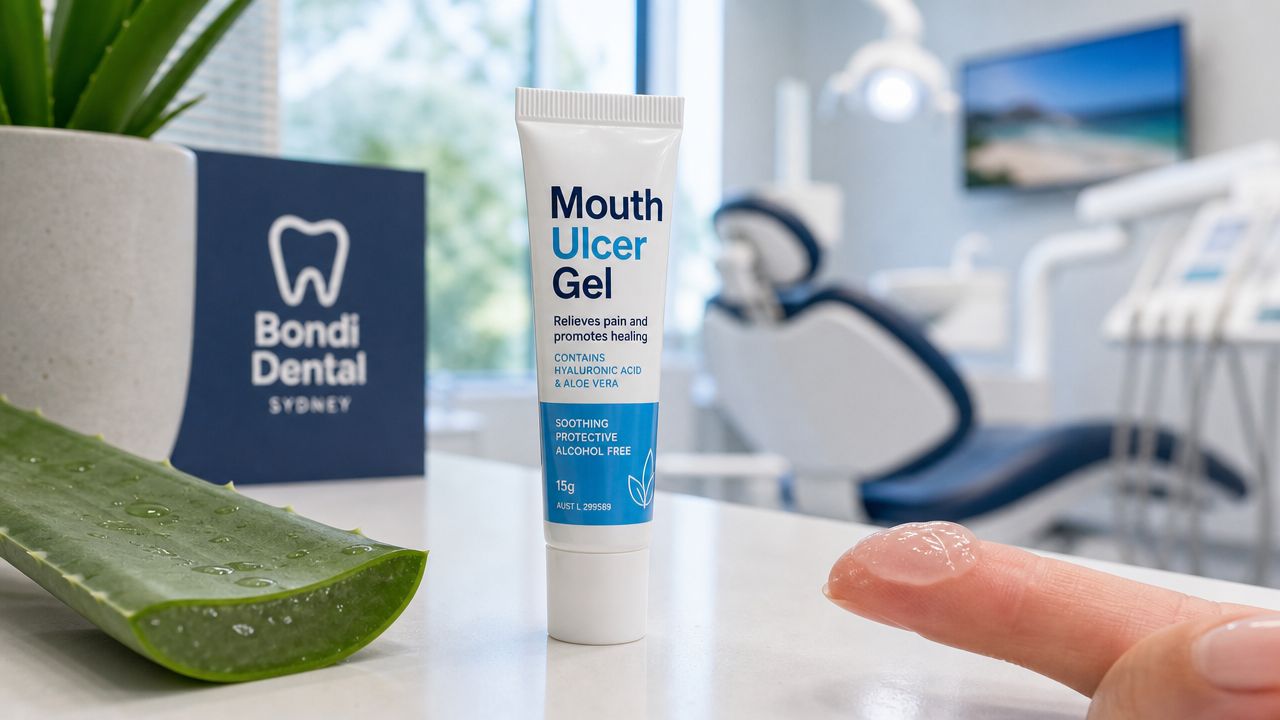
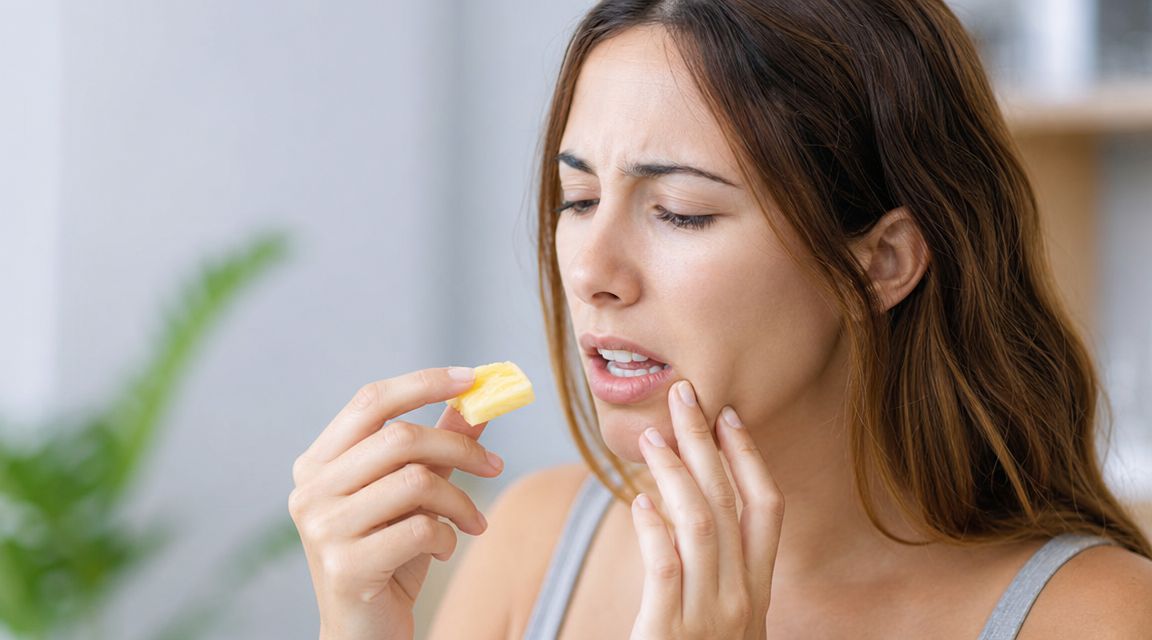
That sting when you sip orange juice, bite into toast, or brush near a sore spot is usually what sends people searching for the best mouth ulcer gel in Australia. You want something that works fast, stays in place, and doesn't just wash away the moment saliva hits it.
That's a reasonable goal, but the most useful answer isn't a single brand name. It's knowing why one type of treatment helps in one situation and falls short in another. A gel that numbs brilliantly may do very little to protect an ulcer that keeps rubbing on a sharp tooth. A barrier product may feel far more helpful than a numbing gel if the sore is being irritated every time your tongue moves.
Finding Fast Relief from Painful Mouth Ulcers
Most people don't care what category a product sits in when they're in pain. They care whether they can eat dinner, speak normally, and brush without wincing.
That's where it helps to set expectations early. In Australia, most mouth ulcers resolve within 1 to 2 weeks without treatment, and the main job of an over-the-counter gel is symptom control while the tissue heals naturally, according to Healthdirect's advice on mouth sores and ulcers.
What a gel can realistically do
A good mouth ulcer gel can make a short healing period much easier to live with. The most useful products reduce pain, calm irritation, or coat the ulcer enough that food and brushing are more tolerable.
That matters because the true test at home is practical. Can you get through meals? Can you keep your mouth clean? Can you stop the sore from getting angrier every time it's touched?
Practical rule: If a product helps you eat, drink, talk, and brush more comfortably, it's doing its job even if it isn't “curing” the ulcer.
What usually doesn't work as well as people hope
People often expect a tube of gel to shorten every ulcer dramatically. Sometimes comfort improves quickly, but healing itself still follows the body's normal pace. That's why product choice should match the problem in front of you, not just the word “ulcer” on the box.
If the sore is minor and you mainly need pain control, an OTC gel can be enough. If you're also trying to keep the rest of your mouth care routine on track, gentle habits matter too. Some patients who are also interested in broader soothing oral-care options find value in exploring aloe juice for oral hygiene, especially when the mouth feels generally irritated.
For pain after dental treatment, the thinking is similar. The right option depends on whether you need short-term symptom control or a proper review of the area. If that's relevant, our article on Panadeine Forte after tooth extraction explains that distinction in more detail.
How Mouth Ulcer Gels Work
“Mouth ulcer gel” sounds like one product type, but it isn't. It's a pharmacy category covering several different mechanisms.
That matters because mouth ulcers are common. One Australian report describes them as affecting 1 in 5 Australians, and it also notes that TGA-approved treatments are expected to show effectiveness for pain relief and support for healing after clinical testing, as reported in this Australian pharmacy industry article.
The main mechanisms inside the tube
When you read a label, look past the branding and ask what the product is trying to do.
- Numbing action helps when pain is the main problem. These products aim to dull sensation so eating and speaking hurt less.
- Anti-inflammatory action helps when the tissue looks angry, red, or irritated. The goal is to settle the local reaction.
- Antiseptic action is used in products designed to reduce local bacterial load around the sore.
- Protective action helps when the ulcer is being constantly rubbed by the tongue, cheek, teeth, braces, or dentures.
Some gels combine more than one of these jobs. Others are strong in one area and weak in another.
Why ingredient classes matter more than brand loyalty
The best mouth ulcer gel in Australia for one person may be the wrong choice for someone else because the target is different. A university student with a small but painful ulcer before exams often wants quick numbing. A denture wearer with friction on the same spot may need protection more than numbing.
A product that reduces pain but leaves the ulcer exposed can still feel disappointing if the sore keeps being traumatised.
A simple label-reading approach
When standing in the pharmacy, use this quick filter:
- Ask what you want first. Pain relief, reduced irritation, or a barrier.
- Check the actives. Don't assume all gels work the same way.
- Think about the location. Ulcers on moving surfaces often benefit from protection.
- Notice what triggers it. If a tooth edge, filling, or denture keeps catching the area, no gel can remove that cause.
That last point is where many people get stuck. They keep changing products when the actual problem is mechanical irritation.
Comparing Types of Mouth Ulcer Treatments
Some products are built to numb. Some aim to calm inflamed tissue. Others work more like a shield. That's why comparing by mechanism is more useful than comparing by shelf position.
Australian products already show these different approaches. For example, Healthdirect's Nyal product information lists a formulation using salicylic acid plus benzalkonium chloride plus ethanol, while Difflam's Australian gel is described as a dual-action antibacterial and anti-inflammatory product and highlights being alcohol-free, sugar-free, lactose-free, and gluten-free.
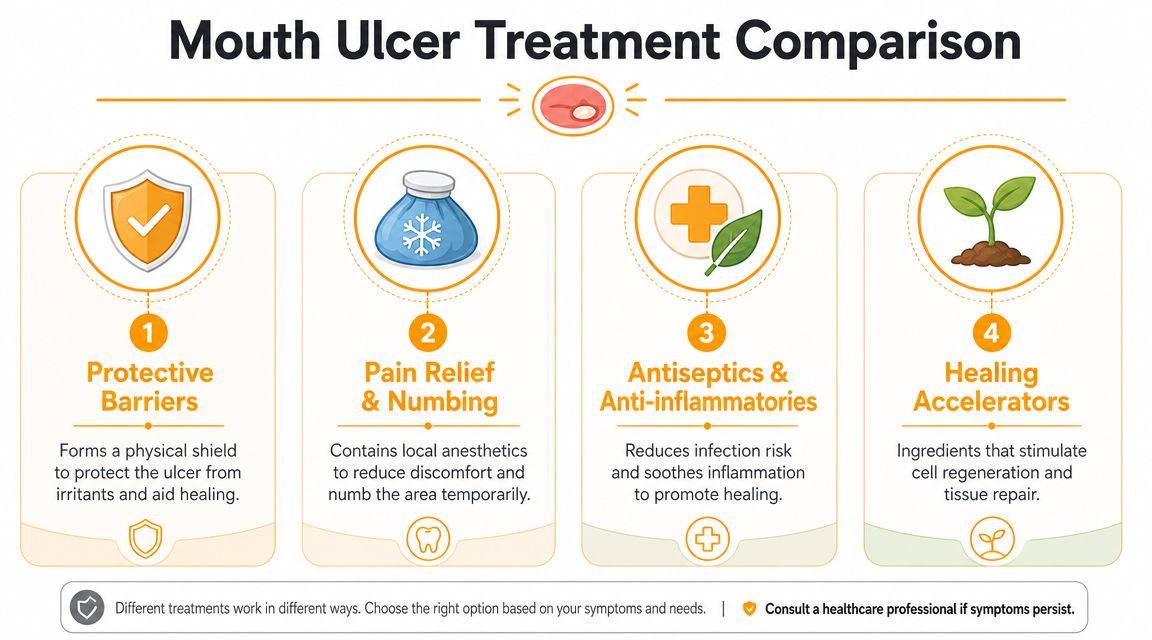
Mouth Ulcer Treatment Types at a Glance
| Treatment Type | Primary Goal | Best For | Example Ingredient |
|---|---|---|---|
| Pain relief and numbing gels | Reduce discomfort quickly | Small ulcers that mainly hurt during eating or talking | Local anaesthetic |
| Antiseptic and anti-inflammatory gels | Calm irritation and support a cleaner local environment | Ulcers that feel inflamed or are hard to keep comfortable | Salicylic acid, benzydamine, antiseptic agents |
| Protective barriers | Shield the sore from saliva and friction | Ulcers repeatedly rubbed by the tongue, cheek, teeth, braces, or dentures | Barrier-forming agents |
| Healing-focused formulations | Support tissue repair while improving comfort | People looking beyond simple numbing | Tissue-supportive barrier ingredients |
Where common pharmacy options fit
Nyal-style formulations suit people who want a more traditional medicated gel approach with anti-inflammatory and antiseptic intent.
Difflam-style formulations make more sense when soothing inflamed tissue is part of the goal and someone prefers an alcohol-free option.
Barrier products, including patches, can outperform gels when the ulcer is constantly being knocked. In practice, a shield can feel more effective than a numbing product because it removes repeated irritation.
What works well and what tends to disappoint
A gel usually works well when the ulcer is small, straightforward, and not being repeatedly traumatised. It tends to disappoint when the sore sits beside a rough filling, a fractured tooth edge, or an unstable denture.
That's also why some patients do better when the focus shifts from “Which gel is strongest?” to “What's irritating this area every few minutes?” If soft tissue keeps being traumatised, a pharmacy product can only do part of the job.
For persistent irritation around teeth or gums, treatment sometimes moves beyond OTC products to options that reduce tissue trauma more directly. If you want to understand that side of care, our article on laser gum treatment gives a practical overview.
How to Choose and Safely Use Your Treatment
Choosing well in the pharmacy usually comes down to one question. Do you need numbing, shielding, or inflammation control?
If you answer that first, the shelf gets much easier to sort through.
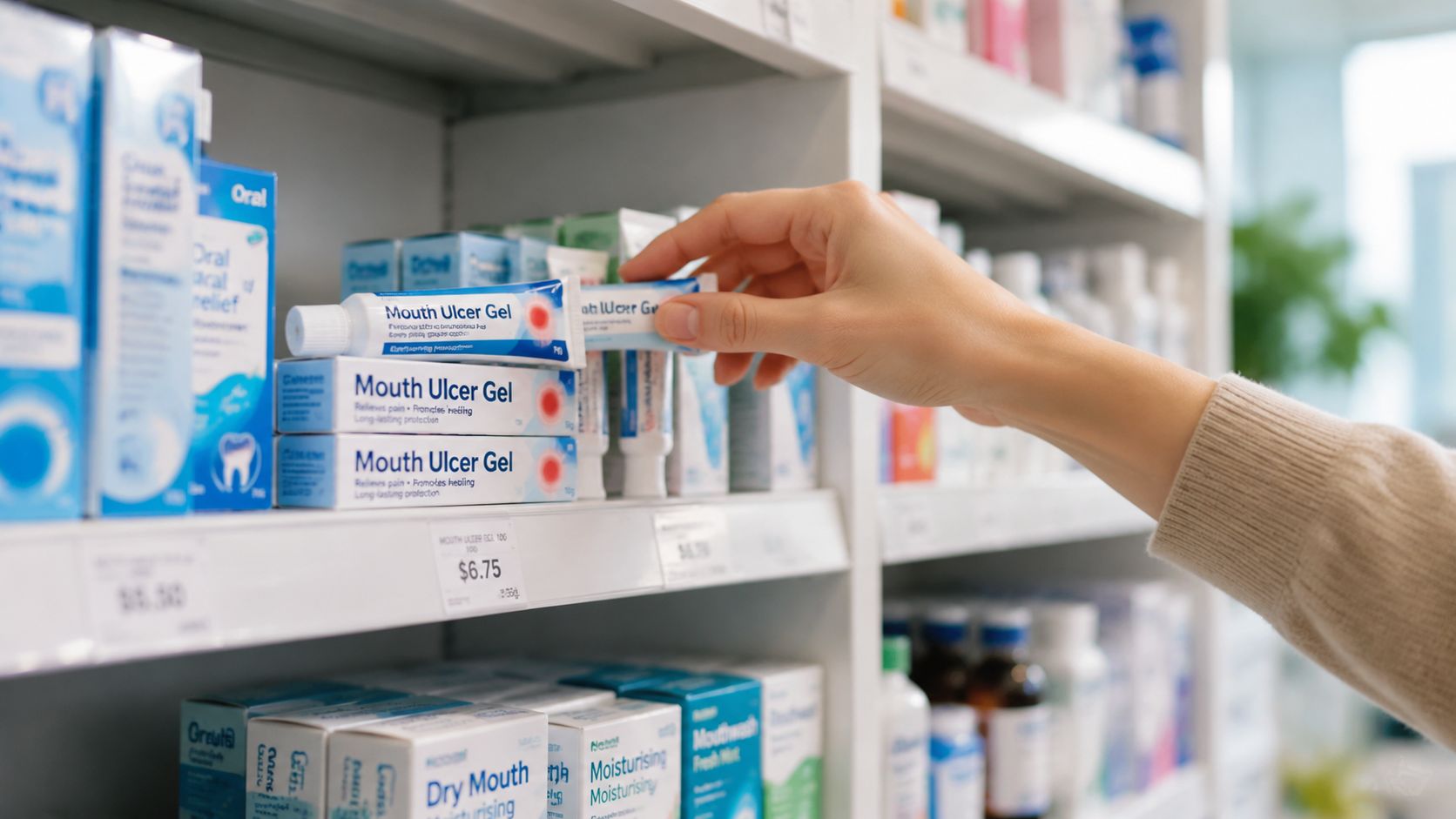
Match the format to the problem
A useful Australian distinction is that gels aren't the only option. Difflam's Australian product page highlights that treatment format matters. Barrier patches are designed to protect the ulcer from friction, while Kenalog in Orabase uses a corticosteroid paste approach aimed at reducing inflammation rather than numbing alone.
Use that difference in a practical way:
- Choose a numbing gel when eating and speaking are the main issue.
- Choose an anti-inflammatory or antiseptic style gel when the area looks irritated and you want a broader soothing effect.
- Choose a barrier patch when the ulcer keeps getting rubbed.
- Ask a dentist or pharmacist about steroid paste if the ulcer is more severe, recurrent, or not behaving like a simple one-off sore.
How to apply it so it actually stays put
Technique makes a big difference.
- Apply after meals so food doesn't immediately disturb the product.
- Use a clean finger or cotton bud to place a small amount directly on the sore.
- Keep the area as still as you can briefly after application so the product has a chance to adhere.
- Follow the pack directions carefully for repeat use, age suitability, and precautions.
A lot of frustration with mouth ulcer gels comes from poor contact time. If the gel is spread too widely, licked away, or used right before eating, it won't seem very effective.
If a treatment keeps washing off within moments, the issue may be the format rather than the product quality. A patch or paste may suit that ulcer better.
When to think beyond self-selection
Children, pregnancy, and regular medicines all change the safety conversation. Product labels matter. Pharmacists are useful here, especially for checking whether a specific active ingredient is suitable for the person using it.
This short video gives a helpful overview before you buy:
If ulcers are becoming frequent enough that you're repeatedly buying products, it's worth stepping back. At that point, a routine check-up and clean can be more useful than trial-and-error shopping, especially if there's an underlying irritant in the mouth.
When a Mouth Ulcer Needs a Dental Assessment
Not every mouth ulcer is a pharmacy problem.
A key gap in many product pages is that they don't explain when self-treatment stops making sense. The more important question is often not “Which gel should I buy?” but “Why is this ulcer still there?”
Red flags that shouldn't be ignored
The cases that deserve a dental assessment are usually the ones with a pattern.
- It keeps coming back in the same area or in frequent cycles.
- It isn't settling despite sensible self-care.
- It seems linked to a tooth, filling, denture, or appliance.
- It feels unusually severe or is making normal eating and brushing difficult beyond what you'd expect from a minor sore.
The reason is straightforward. Ulcers caused by sharp teeth, fillings, or dentures may not heal until the underlying cause is fixed, as noted on Nyal's product page. In those situations, a gel can reduce discomfort, but it can't stop the repeated trauma.
What a dentist looks for
A dental assessment is less about handing you a different tube and more about identifying the source.
That may include checking for:
- A rough edge on a tooth or restoration
- A denture pressure point
- Repeated cheek or tongue trauma
- Whether the sore looks typical for a simple ulcer or needs closer review
Persistent soft-tissue irritation is often a mechanical problem in disguise.
Indefinite self-treatment proves counterproductive. If an ulcer is being driven by friction, repeated biting, or a local irritant, changing gels won't solve it.
When urgent review makes sense
Some ulcers are painful enough, or worrying enough, that waiting isn't the best option. If the sore is severe, rapidly worsening, or tied to a dental source you can feel with your tongue, arrange prompt care rather than hoping the next pharmacy product will be different.
If you're unsure whether it's routine or urgent, our page on emergency dental clinics near me explains when a faster review is sensible.
Advanced Mouth Ulcer Treatments at The Smile Spot
When an ulcer is persistent, recurrent, or being caused by local trauma, treatment needs to move past temporary symptom management. The useful shift is from product shopping to diagnosis.
At that point, a dental visit can identify whether the problem is a rubbing tooth edge, an irritating filling, a denture issue, or an ulcer pattern that needs a more individualized plan. In selected cases, treatment may also involve laser dentistry rather than another gel or rinse.

Why advanced care can be the better next step
Over-the-counter products are useful for straightforward ulcers. They're much less useful when the sore won't stop being irritated or when the pattern keeps repeating.
For those situations, laser dentistry in Dulwich Hill may be one treatment option a dentist considers as part of managing painful soft-tissue problems. The bigger advantage, though, is not just the technology. It's having the ulcer examined properly so treatment matches the cause.
The right treatment for a mouth ulcer isn't always a better gel. Sometimes it's removing the reason the tissue can't settle down.
If you've been trying pharmacy products without clear improvement, that's usually the moment to stop guessing.
If a mouth ulcer is lingering, recurring, or too painful to manage comfortably, book an appointment with The Smile Spot. We can assess whether you're dealing with a simple ulcer, ongoing irritation from a tooth or denture, or a problem that needs a different treatment approach altogether.