You wake up, stretch, and notice your jaw feels tight. Maybe there's a dull headache sitting at your temples. Maybe your teeth feel oddly sensitive when you sip your first coffee. A lot of people assume they just slept badly.
Often, that morning discomfort is your mouth telling you that you've been clenching or grinding in your sleep.
If that sounds familiar, you're not alone. At a family dental practice, we see this pattern often. The good news is that a night guard for grinding is usually a straightforward, conservative way to protect your teeth and ease the strain that bruxism places on your smile.
That Morning Ache A Sign You Need a Night Guard
A common story goes like this. You're busy, a bit stressed, sleeping through the night as far as you know, yet you keep waking with a sore jaw. By mid-morning, the ache settles, so it's easy to ignore. Weeks later, you notice your teeth feel more sensitive, or your partner says they can hear you grinding.
That habit has a name. It's called bruxism, which means grinding or clenching your teeth. It can happen while you're awake, but many people do it during sleep and don't realise it until symptoms build up.
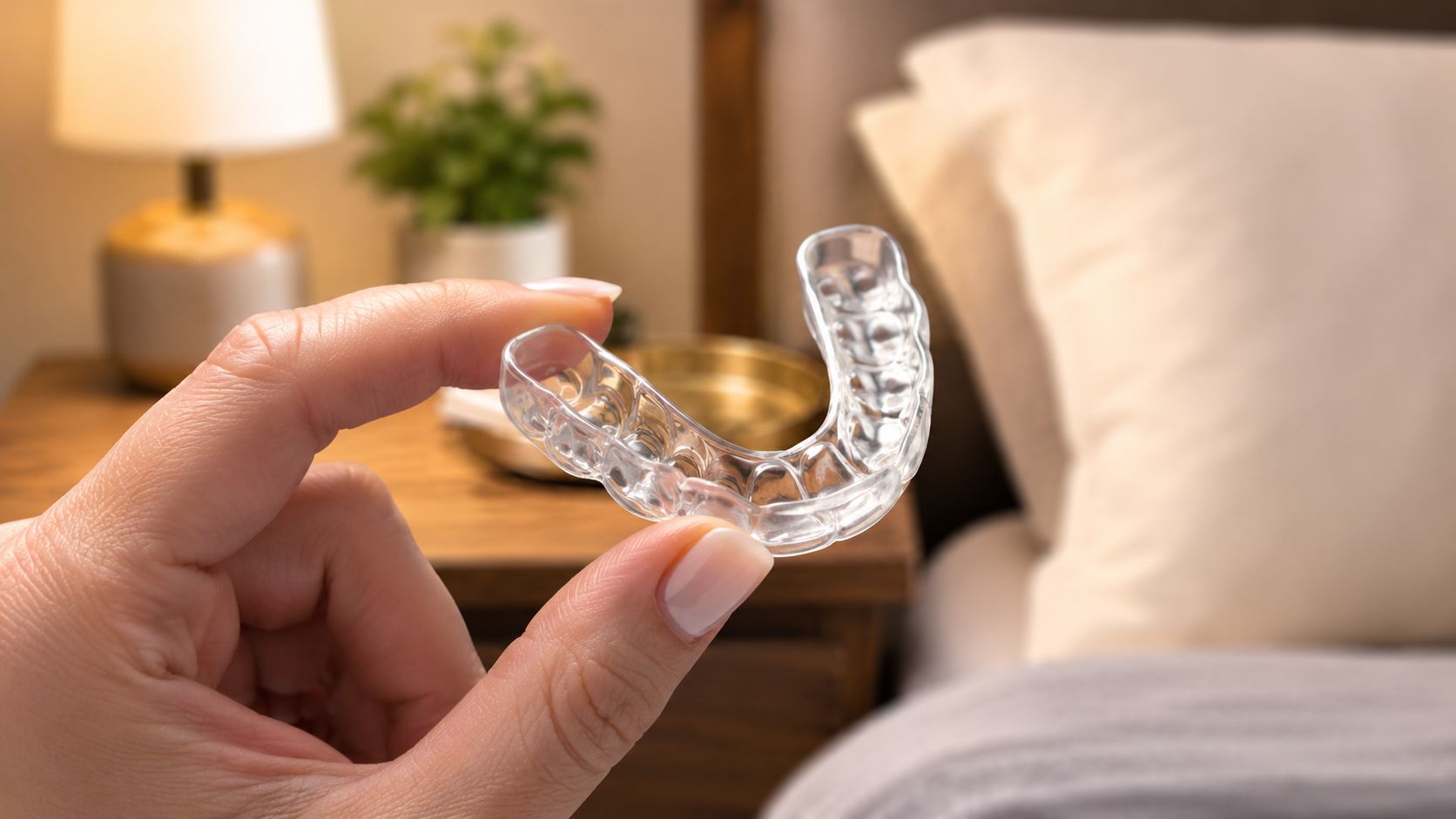
A night guard isn't there to “cure” grinding. It works more like a shield between your teeth. If you want a plain-language overview of what these appliances are used for, this guide from Seven Oaks Sleep Medicine on night guards gives a simple starting point.
Why people often miss it
Bruxism can be sneaky because it doesn't always start with obvious tooth damage. Sometimes the first signs are muscular.
You might notice:
- Jaw tightness when you wake up
- Temple headaches that feel like tension headaches
- Tender teeth when eating or drinking
- A tired feeling in the face by the end of the day
A protective appliance makes the most sense when we catch grinding early, before wear turns into cracks, chips, or broken dental work.
If you're overdue for an examination, pairing a guard discussion with a routine check-up and clean at The Smile Spot is often the easiest next step. We can look for wear patterns, ask about your symptoms, and work out whether a night guard is the right option for you.
Recognising the Signs of Teeth Grinding
Bruxism is common. A dental lab source notes that it affects up to 31% of adults, and that lighter grinders may need a 1.0–1.5 mm guard while heavier grinders often need 2–3 mm for protection, as explained in this discussion of night guard thickness and bruxism.

Signs you might notice at home
Some signs are obvious. Others are easy to put down to stress, sinus pressure, or poor sleep.
- Morning jaw soreness. Your jaw muscles have been working overnight.
- Frequent headaches. These often sit around the temples or sides of the head.
- Tooth sensitivity. Worn enamel can leave teeth feeling more reactive.
- Chipped or flattened teeth. Grinding can gradually change the shape of biting edges.
- Clicking or tightness in the jaw joint. Some people notice stiffness when opening wide.
- Tenderness around fillings, crowns, or bridges. Existing dental work can take extra force.
Signs we often see during a dental exam
A dentist may spot clues before you do.
We look for uneven wear, polished biting surfaces, small fractures, and marks that suggest repeated clenching. If you have restorations such as crowns or fillings, we also check whether they're carrying excess force.
Practical rule: If your teeth, jaw, and temples all seem to complain at the same time, grinding is worth investigating.
Why it happens
There isn't one single cause. Bruxism usually sits at the intersection of habits, stress, sleep, and muscle patterns.
A few common contributors include:
- Stress and tension. Many people clench more during demanding periods.
- Sleep disruption. Poor-quality sleep can make grinding more likely.
- Caffeine or alcohol habits. These can affect sleep and muscle activity in some people.
- Daytime clenching. If you hold your teeth together while concentrating, your jaw may stay overworked.
When to book in
You don't need to wait until a tooth breaks. If your symptoms are recurring, that's enough reason to have it checked.
A proper diagnosis matters because not every sore jaw means the same thing. Sometimes people think they need a stronger toothbrush, sinus treatment, or pain relief, when nightly muscle strain and tooth contact is the problem.
Comparing Your Night Guard Options
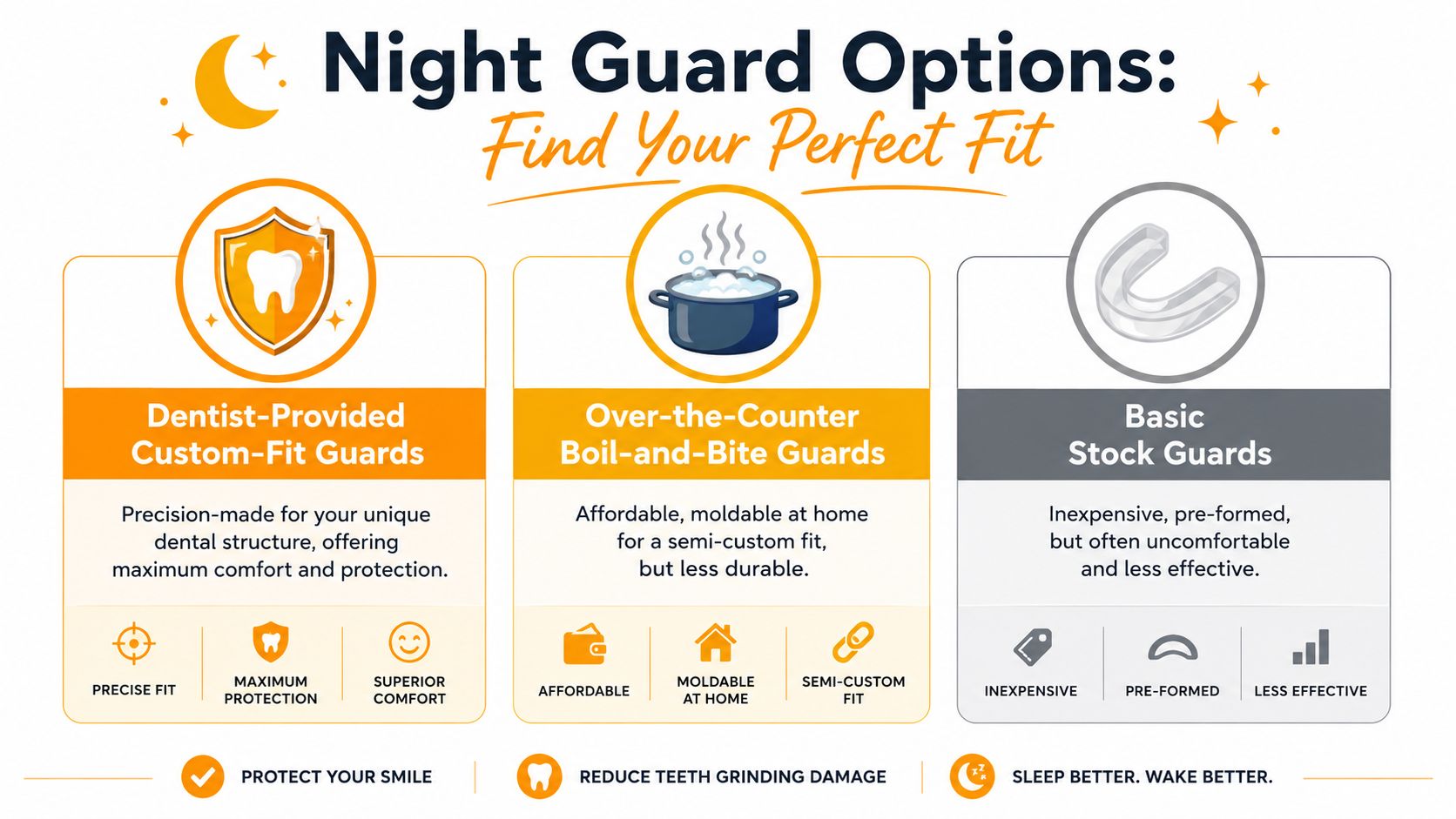
There are usually three broad choices for a night guard for grinding: Stock guards, boil-and-bite guards, and dentist-made custom guards. They all look similar at first glance, but they don't perform the same way.
The quick comparison
| Option | How it fits | Comfort | Protection | Durability |
|---|---|---|---|---|
| Stock guard | Pre-formed | Often bulky | Basic | Usually the shortest-lasting |
| Boil-and-bite | Softened and moulded at home | Better than stock, but variable | Moderate for some users | Can wear down faster |
| Custom guard | Made to your teeth | Most precise | Designed around your grinding pattern | Built for longer service |
Stock guards
These are the simplest option. You buy one off the shelf and wear it as-is.
The trade-off is fit. If a guard doesn't sit properly, it can feel bulky, shift during sleep, or encourage you to stop wearing it. Even a cheap product isn't good value if it spends most nights in a drawer.
Boil-and-bite guards
These guards soften in hot water so you can mould them at home. For mild symptoms, some people try them first because they're easy to access.
They can help in the short term, but home moulding has limits. If the fit is patchy or the thickness ends up uneven, protection and comfort can both suffer. That's especially relevant if you clench hard or already have worn teeth.
Dentist-provided custom guards
A custom appliance is made from an impression or digital scan of your mouth. That means the fit, material, and shape are chosen with your bite in mind.
For many adults, this is the point where the decision becomes less about “Can I wear something?” and more about “What will I realistically keep using every night?”
If a guard is comfortable, you're more likely to wear it consistently. Consistency is what protects teeth over time.
Cost versus long-term value
Price matters, and it's reasonable to ask about it upfront. According to GoodRx's overview of night guard cost and lifespan, over-the-counter guards can cost about $20 and may last 6 to 12 months, while professionally made guards can range from $200 to $1,000, often around $300 to $500, and are commonly reported to last 3 to 5 years with proper care.
That doesn't mean every person needs a custom guard immediately. But if you grind heavily, want a more secure fit, or already have crowns, fillings, or jaw pain, a professionally made option usually makes more clinical sense.
If you'd like a more focused look at custom appliances, our article on a dentist mouth guard explains how professionally made designs differ from retail versions.
The Unseen Benefits of a Custom-Fit Guard
Thinking about tooth wear is a common starting point. That's a good reason to act, but it's not the whole picture.
A well-made custom guard can also change how force is distributed across your teeth and jaw. That matters if your symptoms are as much about muscle fatigue and joint strain as they are about enamel.
It protects more than enamel
Custom night guards, also called occlusal splints, are made in different materials. Delta Dental's explanation of occlusal mouth guards notes that they may be hard, soft, or dual-laminate, and that hard acrylic is typically recommended for more severe grinding because it's durable and designed to redistribute force while protecting enamel, restorations, and the jaw joint.
That's why material choice isn't just a comfort issue. It affects how the appliance behaves under pressure.
The practical benefits patients notice
People often expect a guard to only stop tooth damage. What they usually notice first is that their mouth feels less overworked in the morning.
A custom-fit design may help with:
- Jaw comfort. Less direct tooth-on-tooth contact can ease overnight strain.
- Protection for restorations. Crowns, bridges, and fillings benefit from a controlled barrier.
- More predictable wear. A professionally selected material usually holds up better under heavy clenching.
- Improved consistency. Better fit usually means better compliance.
Why precision matters
A generic guard has to suit everyone, so it doesn't suit anyone perfectly. A custom one is built around your bite, your arch shape, and the level of force your jaw generates.
That's also where modern workflows help. Digital impressions and fabrication methods can support a more accurate final appliance. If you're curious about how these technologies are used in dentistry more broadly, our post on dental 3D printing gives a practical overview.
The right guard should feel like a treatment plan, not a workaround.
Your Custom Night Guard Journey at The Smile Spot
For many patients, the biggest worry isn't the guard itself. It's not knowing what the process involves.
At The Smile Spot, a custom night guard appointment usually starts with a conversation about what you're feeling. Morning headaches, jaw tightness, worn teeth, broken fillings, poor sleep, or a partner hearing grinding all help build the picture.
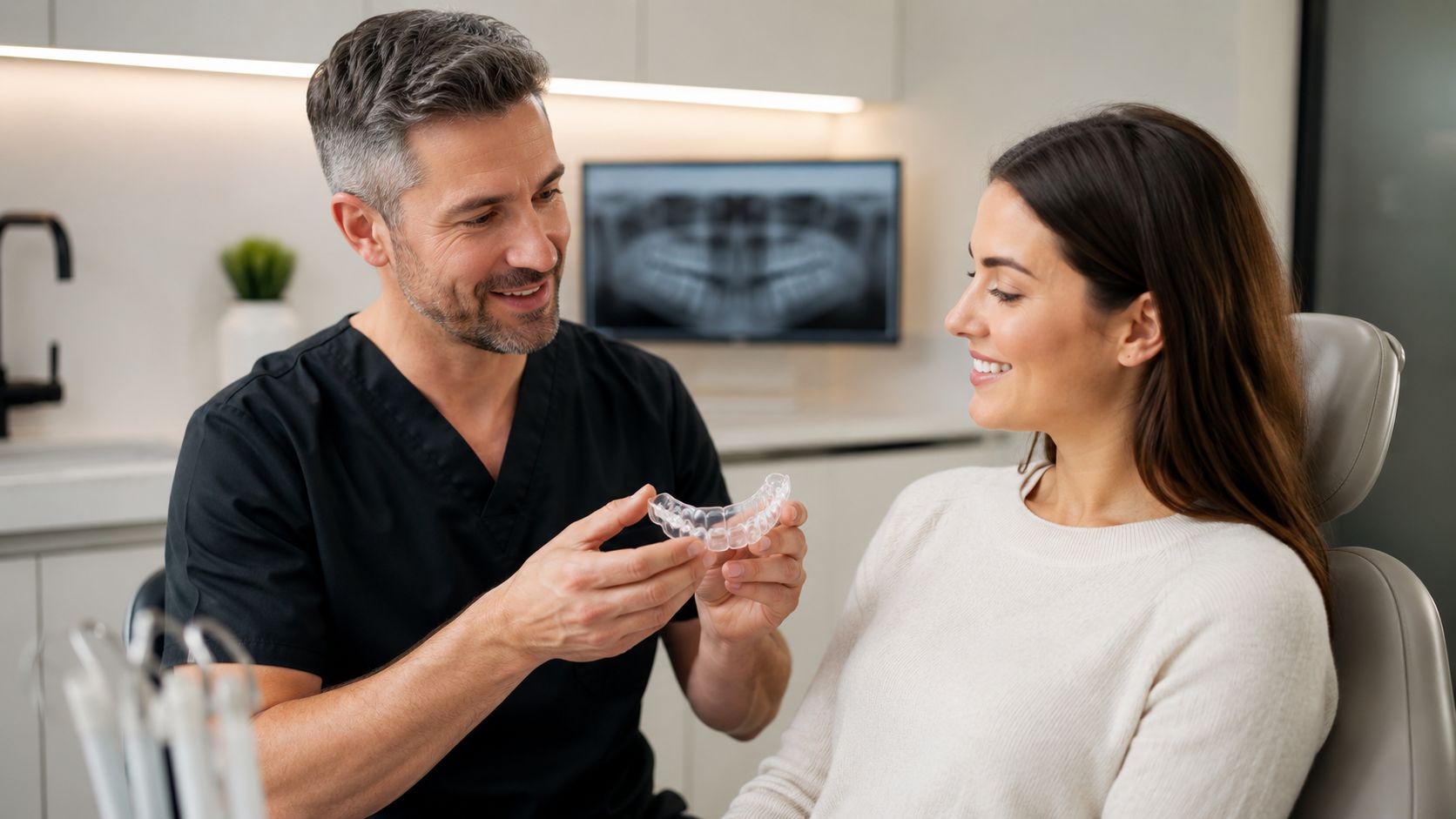
Step one is confirming what's happening
We examine your teeth, bite, jaw joints, and any existing dental work. The goal is to confirm whether grinding is the likely issue and whether a guard is the right first step.
Sometimes that conversation is reassuring in itself. Patients often arrive thinking something is seriously wrong because their jaw feels so tense. In many cases, the pattern points to bruxism and a very manageable path forward.
Taking the records for your guard
Once we decide to proceed, we take precise records of your teeth. Depending on the case, that may involve impressions or digital scanning.
The key point is accuracy. A custom appliance only works as intended if it matches your bite closely. If you want to understand how this kind of appliance is made in more detail, our guide to a custom mouth guard in Sydney walks through the basics.
Fitting and fine-tuning
When the guard comes back, we check how it seats, how it feels, and how your bite contacts against it. Small adjustments can make a big difference to comfort.
That appointment is also where you'll learn how to insert it, remove it, clean it, and what's normal during the first few nights.
Here's a short video that helps visualise the process and purpose of a night guard:
What the first week usually feels like
You may need a brief settling-in period. Your mouth is sensitive to anything new, even a well-made appliance.
You may notice:
- A feeling of fullness for the first few nights
- More awareness of saliva at first
- Mild adjustment in speech if you try talking with it in
- Quick improvement as the routine becomes familiar
If something feels sharp, unstable, or uncomfortable, that's not something to push through. It usually just means the appliance needs a minor adjustment.
Cost Care and What to Expect From Your Guard
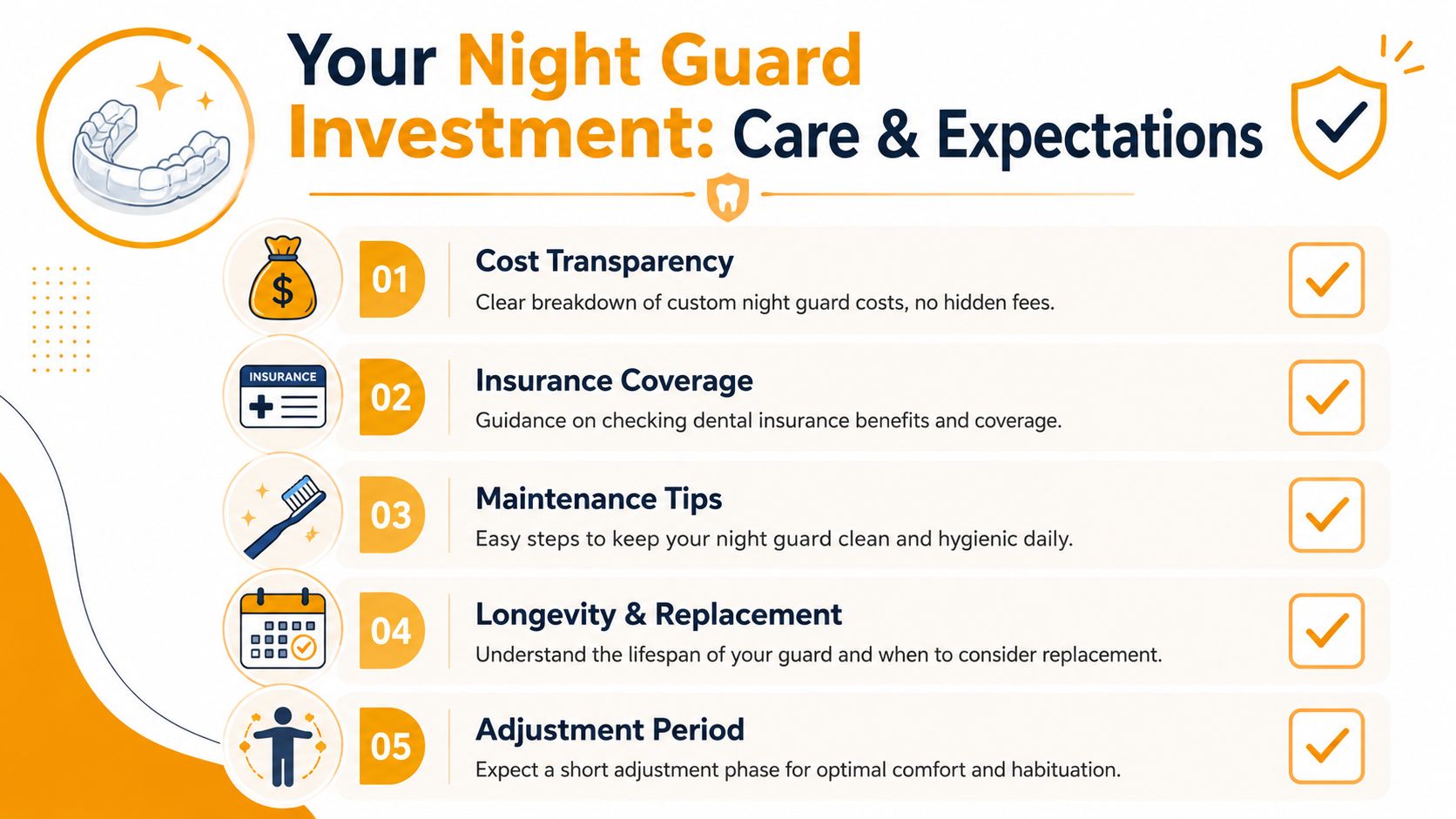
Cost is one of the first questions people ask, and it should be. A custom appliance is an investment, so it helps to know the usual range before you commit.
According to this overview of custom night guard pricing, a dentist-provided custom guard can range from $300 to $1,000, and one fee-guide example lists a standard mouthguard at $346 plus laboratory fees. Those figures help explain why custom guards are usually reserved for cases where fit, comfort, and durability matter most.
What affects the fee
The final cost can vary based on the material used, how complex your bite is, and whether extra adjustments are needed. If you have private health cover, it's worth checking what your extras policy includes before treatment.
A more expensive guard isn't automatically the right one. The right one is the appliance that matches your grinding pattern, your mouth, and your goals.
How to care for it properly
Daily care is simple, but it matters.
- Rinse it after use. Lukewarm water helps remove saliva and debris.
- Brush it gently. Use a soft toothbrush and non-abrasive cleaner as advised by your dentist.
- Store it dry in its case. That reduces damage and helps keep it clean.
- Bring it to dental visits. We can check for wear and fit changes.
- Keep it away from heat. Hot water or a hot car can distort the material.
If you want a step-by-step routine, our guide on how to clean a mouth splint covers the practical details.
Bring your guard to your check-up. We often spot wear on the appliance before you notice changes in your teeth.
How long should you expect it to last
Lifespan depends on how heavily you grind and how well you care for the appliance. A guard that shows deep wear marks may still be doing its job, but it might also be telling us that your grinding forces are strong enough to justify a review.
It's also normal for your needs to change over time. New crowns, orthodontic changes, or shifting symptoms can all affect whether your current guard is still the best fit.
Common Questions and Alternatives to Night Guards
One of the most common questions is whether an upper or lower guard is better. The answer depends on your bite, your symptoms, and what feels secure in your mouth. Guidance from Concord Dental Group on upper or lower night guards for clenching notes that upper guards are often used for clenching, while lower guards can be better for some grinders, and that material choice also depends on severity, restorations, and TMJ symptoms.
What if you have crowns, bridges, or implants
That's exactly when professional guidance matters most. A guard has to protect your dental work without creating awkward pressure on it.
In those cases, we pay close attention to fit, contact points, and material choice. A cheap guard can feel tempting, but if it sits unevenly, it may not be the safest approach for restored teeth.
Are there alternatives if a night guard isn't enough
Yes. A night guard protects your teeth, but it doesn't remove every reason you might be clenching.
Depending on the cause, your plan might also include:
- Stress management. Relaxation techniques can help if daytime tension is feeding the pattern.
- Jaw exercises or physiotherapy. This can be useful when muscles are tight and overworked.
- Sleep assessment. Some patients benefit from looking more closely at sleep quality. For broader reading on alleviating common sleep issues, this guide offers practical general tips.
- Bite review. In selected cases, your dentist may want to assess how your teeth meet.
- Further treatment for jaw pain. If symptoms are more complex, we may coordinate a broader plan.
A sensible way to think about it
A night guard isn't a sign that something has gone badly wrong. It's a protective tool. For many people, it's the simplest way to stop a stressful habit from turning into chipped teeth, sore jaws, and repeat dental repairs.
If you're waking with that familiar morning ache, it's worth getting a proper answer rather than guessing.
If you think you may need a night guard for grinding, book a consultation with The Smile Spot. We can assess the wear on your teeth, discuss your symptoms, and help you decide whether a custom guard or another approach is the right next step.