If you're reading this with a treatment plan sitting in your inbox, or you've cancelled one dental appointment too many because your stomach drops at the thought of the chair, you're in familiar company. Many people don't delay treatment because they don't care. They delay it because the experience feels overwhelming.
That's where a common question comes in. What is intravenous sedation? In simple terms, it's a way to help you feel profoundly relaxed during dental treatment while still remaining conscious and able to respond. It isn't the same as being “put to sleep”. For many anxious patients, that distinction matters a lot.
Anxious About the Dentist? You Are Not Alone
Some patients feel uneasy for a day or two before an appointment. Others feel their heart race in the waiting room. Some avoid booking at all, even when a broken tooth, infection, or ongoing pain is starting to affect daily life.
Dental fear can develop gradually. A bad past experience, a strong gag reflex, embarrassment about the condition of your teeth, or even the sound of dental instruments can be enough to keep someone away for years. If that sounds like you, your reaction isn't dramatic. It's human.
A lot of people first start exploring sedation after realising gentle care alone may not be enough. Calm communication, breaks, and local anaesthetic can help, but some patients still need a deeper sense of relief to get through treatment. That's often when intravenous sedation becomes part of the conversation.
Some patients don't want to be unconscious. They want to feel safe, calm, and less aware of the treatment while still knowing they haven't lost control.
If anxiety affects other parts of life too, broader support can help alongside dental planning. Some people also benefit from counselling strategies for panic and avoidance, and this guide to Find Grande Prairie anxiety services may be useful if you're looking for ways to understand anxiety patterns more generally.
For dental-specific support, it also helps to read about a gentle approach to dental care so you can see how comfort is built into treatment long before sedation is discussed.
What Intravenous Sedation Actually Feels Like
The part that confuses most patients is this. You're sedated, but you're not unconscious.
Relaxed, not knocked out
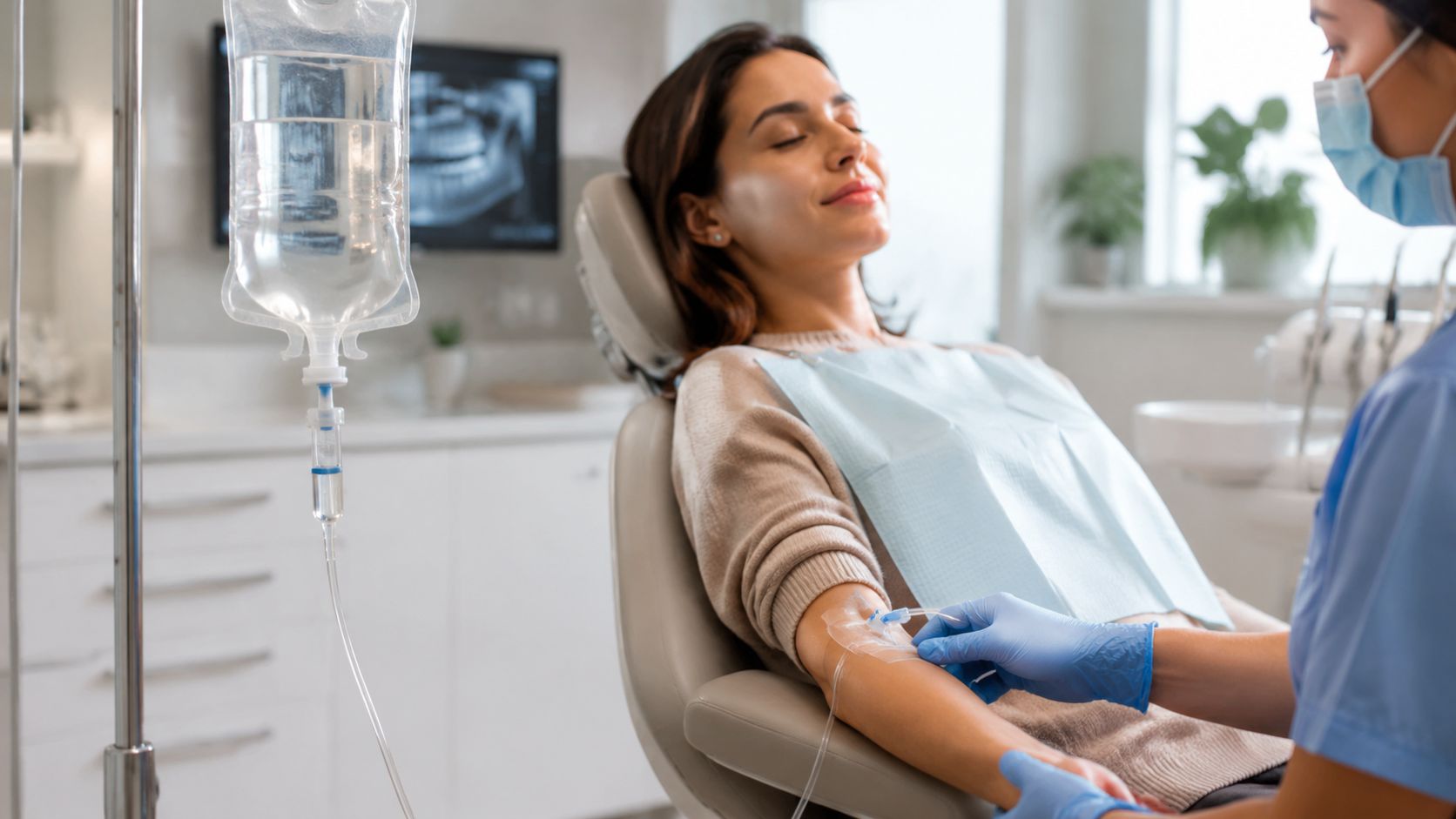
Intravenous sedation means medication is given through a vein, usually in the arm or hand. In dentistry, the aim is usually conscious sedation, which means your level of awareness is reduced but you can still purposefully respond to instructions. Clinical guidance also notes that an IV benzodiazepine such as midazolam can begin working within about 2 minutes, which is one reason dentists value the rapid, adjustable effect during treatment, as described in guidance on conscious sedation in dentistry.
That sounds technical, but the feeling is easier to understand than the terminology.
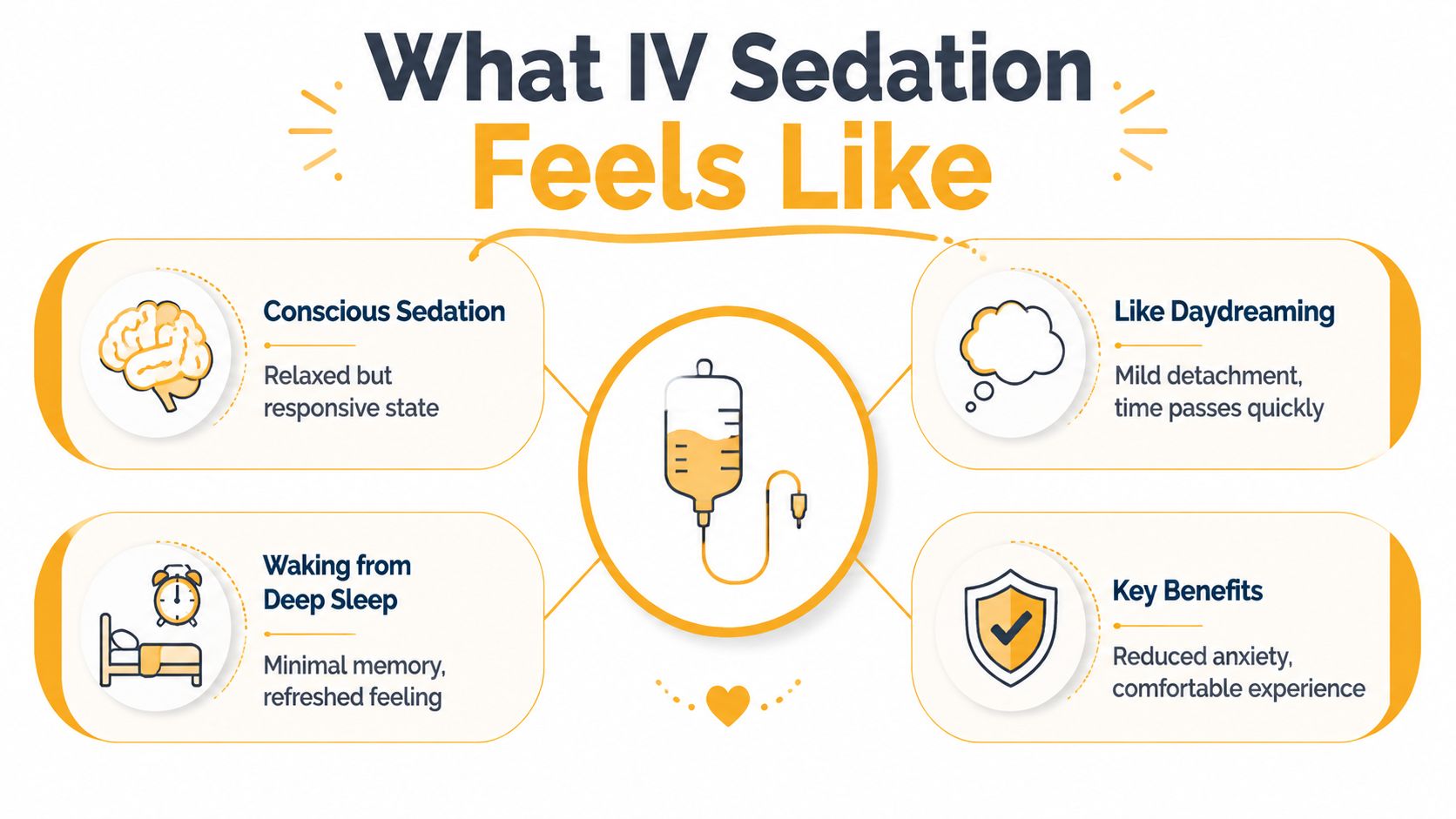
Many patients describe it more like drifting into a very calm, floaty state. Not asleep. Not alert in the usual way either. More like the feeling just before sleep, when you can still hear someone speaking to you but you're no longer tense or focused on every little thing.
What you may notice during treatment
You may still hear voices. You may be aware that treatment is happening. If the dentist asks you to open a little wider or turn your head, you can usually do that.
What changes is the emotional volume of the experience.
- Anxiety fades into the background. The usual rush of fear often softens significantly.
- Time may feel strange. Long appointments can seem much shorter.
- Memory may be patchy. Many patients remember very little afterwards.
- Your body feels looser. That can help if you usually brace, tense your shoulders, or struggle to stay settled.
A useful way to think about it is this. IV sedation doesn't switch you off. It turns down the intensity.
Practical rule: If your biggest fear is “I don't want to lose control,” IV sedation is often easier to understand when you compare it to deep relaxation rather than sleep.
If you want a broader overview of sedation options before deciding what suits you, this article on dental sedation near me can help you place IV sedation in context.
Your IV Sedation Appointment Step by Step
A lot of anxiety comes from not knowing what the day will look like. When the process feels predictable, it usually feels less frightening too.
To help with that, here's the general flow of an IV sedation appointment.
Before your appointment
The first step is a proper discussion, not a needle.
Your dental team will review your medical history, current medications, and the treatment you need. You'll also receive instructions to follow before the appointment. Those instructions matter because sedation affects alertness, coordination, and recovery afterwards.
Patients are usually asked to arrange for a responsible adult to take them home and stay with them for a period afterwards. You should also plan your day as if you won't be working, driving, or doing anything important once treatment is over.
This visual guide gives a simple overview of the journey.
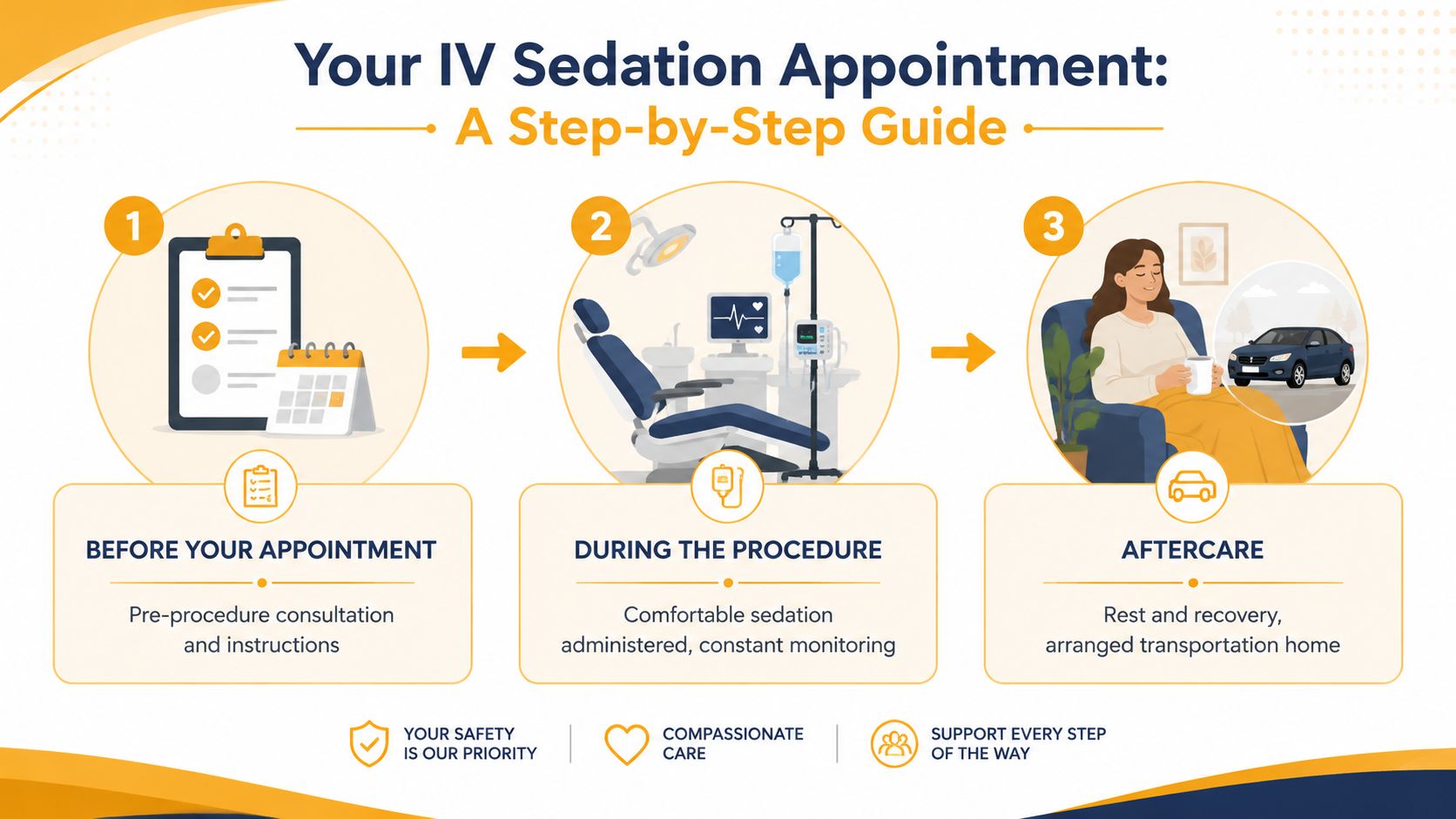
During the procedure
Once you're settled in the chair, the sedative is administered through a vein. Because the medicine goes directly into the bloodstream, the effect is rapid and can be adjusted as needed. Australian patient guidance describes IV sedation as medicine given through a vein with continuous monitoring of pulse and oxygen saturation, and also notes that drowsiness and impaired judgement can persist for 12 hours or more, which is why patients are told not to drive or make important decisions for the rest of the day in this patient leaflet on IV dental sedation.
You'll also usually still have local anaesthetic. That's important. Sedation helps with fear and comfort, but local anaesthetic is what numbs the treatment area.
A simple walk-through can make this easier to picture.
After the procedure
Recovery starts in the clinic, where staff continue to observe you as you become more alert. Most patients feel drowsy, slow, or pleasantly foggy for a while.
For the rest of the day, keep plans light.
- Go straight home: Don't schedule errands, meetings, or family duties that require concentration.
- Rest: Your brain and body may feel functional before your judgement is fully back to normal.
- Follow instructions carefully: Eat, drink, and take medications exactly as advised after your procedure.
- Let your escort help: This isn't just a lift home. It's part of safe recovery.
You may feel as though you're “fine” sooner than you actually are. That's one reason same-day decisions and driving aren't considered safe after sedation.
Is IV Sedation the Right Choice for You
IV sedation isn't for every appointment, and it doesn't need to be. Its value is that it can make treatment possible when anxiety, complexity, or physical sensitivity would otherwise get in the way.
Who often benefits most
People often ask for IV sedation when they've already tried to cope without it and found they couldn't.
It may be worth discussing if you:
- Avoid treatment because of fear: You know you need care, but your anxiety is strong enough that booking feels hard.
- Have a strong gag reflex: Even simple treatment can become stressful when you can't tolerate instruments well.
- Need longer or more complex procedures: Some patients prefer to complete more treatment in one visit rather than face multiple stressful appointments.
- Tense up in the chair: If your body stays rigid, you may find it difficult to stay comfortable for the full procedure.
- Worry most about remembering everything: Many patients appreciate the hazy memory that often follows IV sedation.

Established, but used selectively
IV sedation is a recognised part of specialist dental care in Australia, but it isn't something every practice uses for every patient. In a national survey of Australian periodontal practices, 49.8% of respondents offered IV sedation, which suggests it is established in specialist dentistry while still being used selectively for cases such as high anxiety or more involved procedures, as reported in this Australian periodontal practice survey.
That selective use is a good thing. It means the decision should be based on your needs, not on a routine template.
For some patients, a lighter option is enough. If you're curious about a milder alternative, this article on a dentist with nitrous oxide explains where that can fit.
If you're looking at local options, The Smile Spot offers sedation dentistry as part of treatment planning, alongside more conservative comfort approaches when those are appropriate.
Comparing Dental Sedation Alternatives
IV sedation makes more sense when you compare it with the other choices. Most patients aren't deciding between “sedation or nothing”. They're choosing between different levels of support.
Dental sedation options at a glance
| Feature | Nitrous Oxide ('Laughing Gas') | Oral Sedation (Pill) | IV Sedation | General Anaesthesia |
|---|---|---|---|---|
| Level of effect | Mild relaxation | Mild to moderate relaxation | Deep relaxation with conscious response | Full unconsciousness |
| How it starts | Breathed in during treatment | Taken before appointment | Given through a vein during treatment | Given by anaesthetic team |
| Control during procedure | Easy to adjust while in use | Less precise once taken | Can be adjusted during treatment | Not the same type of dental chairside adjustment |
| Typical awareness | Awake and aware | Drowsy but awake | Conscious but deeply relaxed | Unconscious |
| Memory afterwards | Usually clear | May be patchy | Often hazy | No awareness of procedure |
| Recovery | Usually quick | Slower than nitrous oxide | Takes hours | More involved recovery |
| Best suited to | Mild anxiety | Patients needing more than gas alone | Significant anxiety or longer treatment | Cases requiring complete unconsciousness |
The key difference patients need to know
The biggest source of confusion is the difference between IV sedation and general anaesthesia.
IV sedation creates deep relaxation while you remain responsive to verbal cues, and memory may be hazy afterwards. General anaesthesia is different because it involves a total loss of consciousness. That practical distinction is explained clearly in this article about how IV sedation differs from being fully asleep under general anaesthesia.
That's why patients often say, “I want to be asleep,” when what they want is not to feel frightened, hyper-aware, or trapped during treatment. IV sedation often meets that need without full unconsciousness.
Where the other options fit
Nitrous oxide is useful for patients with mild anxiety who still want to stay quite aware and recover quickly. It can be a very practical option for shorter visits.
Oral sedation is sometimes chosen by patients who want help relaxing but don't need the precision of IV medication. It can be helpful, but it doesn't offer the same moment-to-moment adjustment during treatment.
If you'd like to understand how tablets compare with IV methods, this article on oral sedation in dentistry is a useful next read.
The right question isn't “Which option is strongest?” It's “Which option matches my anxiety level, medical history, and procedure?”
General anaesthesia has its place, but it's usually reserved for situations where complete unconsciousness is necessary. That's a very different pathway from routine conscious sedation in a dental clinic.
Our Commitment to Your Safety During Sedation
Most anxious patients ask about safety before they ask about comfort. That's the right instinct.
Sedation should never be treated as a shortcut. It needs careful planning, appropriate patient selection, and proper monitoring throughout the appointment.
Safety starts before treatment begins
A responsible sedation plan begins with assessment. Your dentist needs to know about your health conditions, medications, allergies, previous reactions to sedation, and the kind of procedure being planned.
That's also why IV sedation isn't automatically the best option for everyone. A dentistry reference notes that its use in children is “not widely accepted”, and documented adverse events in the literature include problems such as hypoxia and cardiovascular depression. That's why careful case selection matters, as discussed in this overview of intravenous sedation considerations and risks.
What monitoring means in real terms
For patients, “monitoring” can sound vague. In practice, it means the team is actively tracking how you're doing during sedation, rather than giving medication and hoping for the best.
That includes attention to things like:
- Breathing and oxygenation: Making sure you're breathing well and staying adequately oxygenated.
- Pulse and circulation: Watching how your body is responding during treatment.
- Level of responsiveness: Checking that the sedation level remains appropriate for conscious treatment.
- Recovery before discharge: Confirming you're ready to leave with your escort and written instructions.
Honest expectations matter
Even when sedation is appropriate, minor after-effects can still happen. You may feel groggy, emotional, or slow for a while. Some patients notice tenderness or bruising around the cannula site.
Safe sedation isn't about pretending there are no risks. It's about reducing risk through preparation, monitoring, and choosing the right method for the right patient.
If you want a dental-focused overview of how this option is assessed in practice, you can read more about an intravenous sedation dentist.
Frequently Asked Questions About IV Sedation
Will I feel pain during the procedure
Sedation helps you relax. It doesn't replace numbness. For dental treatment, local anaesthetic is usually still used so the area being treated is properly numbed.
Will I be aware of what's happening
Usually, yes, but in a very softened way. Most patients remain able to respond if the dentist asks them to open wider or turn slightly. Many remember little afterwards.
Why do I need someone to take me home
Because sedation can affect judgement, balance, and reaction time long after the appointment ends. Even if you feel reasonably alert, that doesn't mean you're safe to drive or make important decisions.
Is IV sedation the same as general anaesthesia
No. With IV sedation, you remain conscious and responsive. With general anaesthesia, you are unconscious.
Is it suitable for children
Not always. Age, health, cooperation, and the type of treatment all matter. In some situations, another approach may be safer or more appropriate.
How much does IV sedation cost
The cost varies based on the procedure, the length of the appointment, and the complexity of care. The most useful way to get an accurate figure is through a personalised consultation rather than a rough online estimate.
What if I'm worried about breathing during sedation
That's a common concern, and it's one reason proper monitoring matters so much. If you like understanding how breathing is tracked in clinical settings, this explanation of understanding quantitative capnography gives helpful background in plain language.
What should I do next if I'm interested
Book a consultation and talk through your anxiety, health history, and treatment needs openly. The best sedation plan is always individual.
If dental fear has been stopping you from getting care, a consultation with The Smile Spot can help you understand whether IV sedation suits your situation, what the appointment would involve, and what other comfort options may be available.