
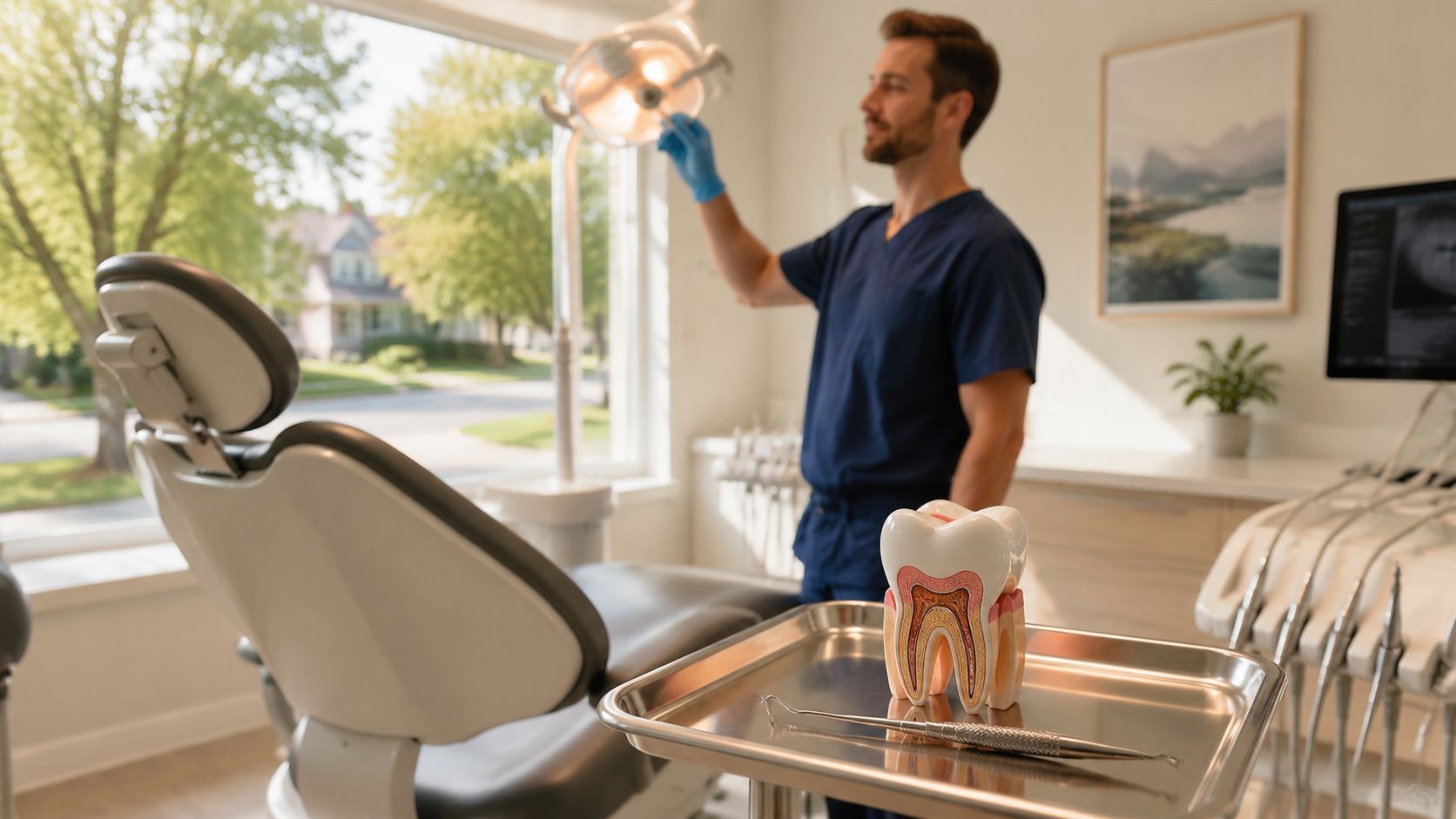
A lot of people search for a tooth extraction near me at the exact moment they're trying to hold things together. The pain has gone from annoying to distracting. A filling has failed. A wisdom tooth has flared up before work, before school drop-off, or late at night when every clinic seems closed. Sometimes the tooth isn't even painful yet. You've been told it can't be saved, and now you're dealing with the worry that comes next.
That first search usually carries three unspoken questions. Will it hurt? How much is this going to cost? And how hard is recovery really?
If you live in Dulwich Hill or the Inner West, it helps to have a clear picture before you book. A tooth extraction can be straightforward, or it can involve a more careful surgical approach. The difference matters. So does knowing what happens before the procedure, what the first day feels like, and which warning signs mean you should call a dentist quickly rather than wait it out.
Your Guide to Tooth Extractions in the Inner West
A common local scenario goes like this. Someone bites on the wrong side because one molar has been “a bit sensitive” for weeks. The tooth gives a sharp jolt. By evening, the gum feels swollen, chewing is off the table, and the late-night search begins. Another version is quieter. A patient comes in for a check-up expecting a filling, then hears that the crack runs too deep or the wisdom tooth is trapped in a position that keeps causing trouble.
Both situations feel different, but the emotional response is often the same. People worry that extraction means something has gone badly wrong, or that the procedure will be rough, expensive, and followed by a miserable recovery.
That's rarely the most useful way to look at it. Extraction is often the treatment that removes infection, stops repeat flare-ups, and gives the mouth a chance to settle. In many cases, the hard part is the anticipation, not the appointment itself.
For Inner West residents, practical details matter as much as clinical ones. You need to know whether the tooth can be removed in a standard chair appointment or whether it needs a surgical plan. You need honest guidance about costs, insurance, healing, food, work, school runs, and what to do if pain starts outside normal business hours.
Practical rule: A good extraction experience starts before the tooth is removed. Diagnosis, pain control, and aftercare instructions matter just as much as the procedure itself.
That's what this guide is for. It walks through the journey from the first signs that a tooth may need to come out, to the appointment itself, to the recovery period that follows.
Understanding Why a Tooth Extraction May Be Needed
Not every painful tooth needs to be removed. Many can still be treated with a filling, crown, or root canal. Extraction becomes the sensible option when keeping the tooth would leave you with ongoing infection, structural failure, or a poor long-term result.
The common reasons dentists recommend removal
A tooth may need extraction when decay has destroyed too much structure to rebuild predictably. The same applies to a deep crack that runs below the gum line. In other cases, advanced gum disease weakens the support around a tooth so badly that it becomes mobile and uncomfortable.
There are also planned reasons for removal. Orthodontic treatment sometimes requires space. Problem wisdom teeth are another major category, especially when they're impacted, partly erupted, or repeatedly inflamed. If that's your concern, this guide to wisdom tooth removal near you explains the issue in more detail.
One point surprises many patients. A lot of extractions aren't just a simple pull. In Australia, approximately 40% of the 452,000 dental procedures performed in hospitals in 2022–23 were tooth extractions, and 80% of those were surgical extractions for issues such as impacted wisdom teeth or severely decayed roots, according to Australian tooth extraction statistics.
Simple and surgical are not the same thing
The easiest way to understand the difference is this. A simple extraction is like wiggling a loose post out of the ground. The tooth is visible, accessible, and can usually be eased out with standard instruments.
A surgical extraction is more like carefully excavating a post that's set in concrete. The tooth may be broken at the gum line, trapped under gum or bone, or positioned in a way that prevents a straight removal.
| Feature | Simple Extraction | Surgical Extraction |
|---|---|---|
| Typical tooth position | Fully visible in the mouth | Broken, buried, impacted, or difficult to access |
| Main reason | Tooth can't be saved but is straightforward to remove | Tooth position or condition makes standard removal unsafe or impractical |
| Technique | Gentle loosening and removal | May involve opening the gum, sectioning the tooth, or removing some bone |
| Usual examples | Loose tooth, badly decayed visible tooth | Impacted wisdom tooth, fractured root, tooth below the gum line |
| Recovery pattern | Often simpler | May involve more swelling and a slower early recovery |
What works, and what doesn't
What works is matching the treatment to the condition of the tooth. What doesn't work is delaying a tooth that is repeatedly infected, hoping it will “settle down” for good. Temporary relief can happen, but the underlying problem often returns.
A tooth that keeps flaring up usually gets less predictable with time, not more.
The decision to remove a tooth should feel clinical and reasoned, not rushed. Patients cope better when they understand not just that the tooth needs to come out, but why.
What to Expect During Your Tooth Extraction
The procedure is usually far less dramatic than people expect. Anxiety tends to come from not knowing the sequence. Once the process is clear, most patients feel more in control.
To make that easier, it helps to picture the first step.
The consultation and planning stage
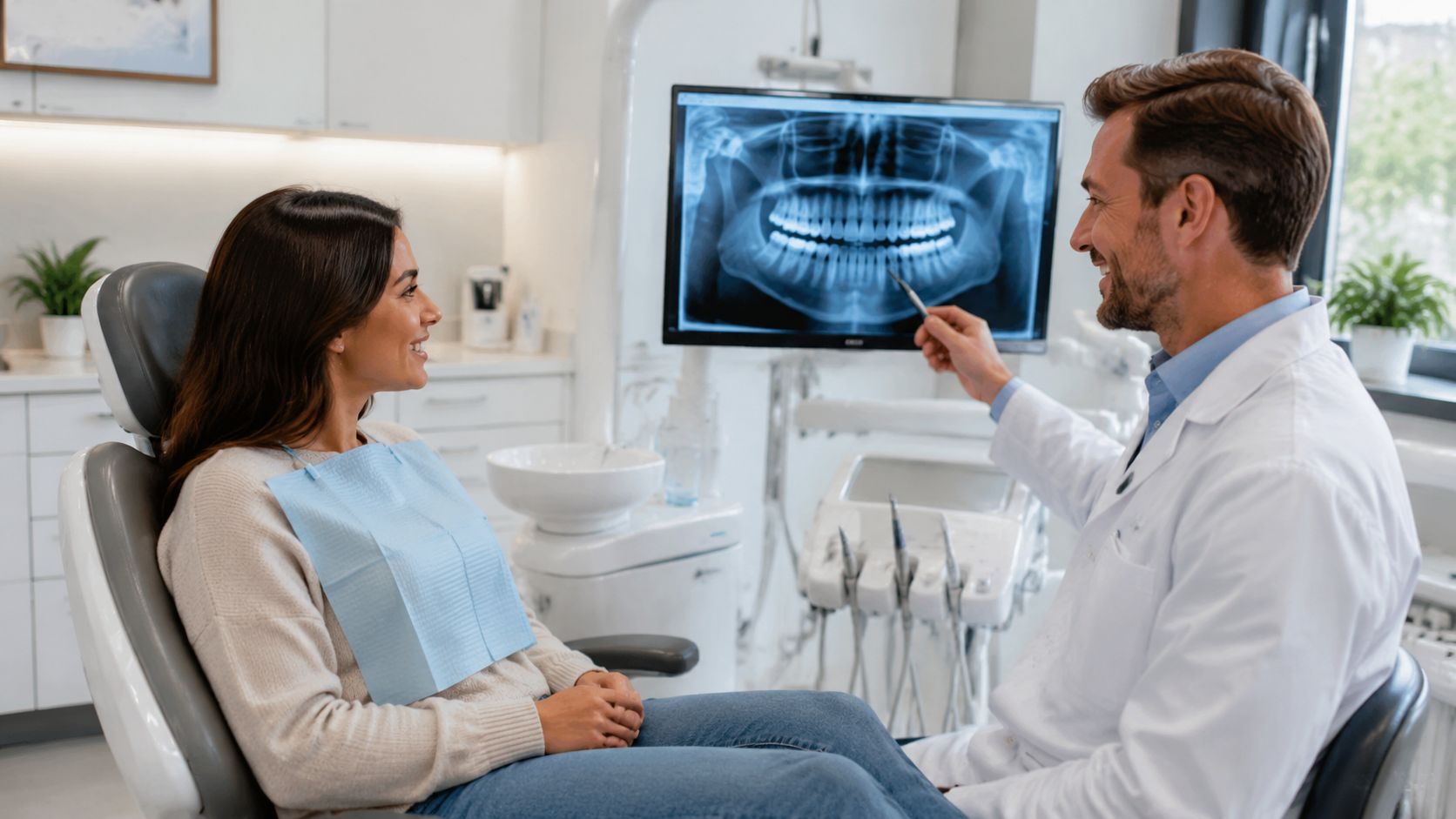
Before any extraction, the dentist needs to confirm exactly what's happening with the tooth and surrounding bone. That usually means an examination and X-rays. The goal isn't just to decide whether the tooth should come out. It's to decide how it should come out safely.
This is when key details get sorted out:
- Whether the extraction is simple or surgical. The X-ray often explains why a tooth that looks ordinary on the surface is found to be more complicated underneath.
- How to keep you comfortable. Local anaesthetic is standard. For anxious patients, sedation can also be discussed.
- Whether a staged plan is smarter. Some cases are best treated once swelling or acute infection is first brought under control.
If you want a closer look at more complex removals, this article on a surgical extraction dentist covers the surgical side in more depth.
What the procedure feels like
The most important point is simple. With effective local anaesthetic, you should feel pressure and movement, not sharp pain.
The injection itself is brief. After the area is numb, the dentist checks carefully before starting. During a simple extraction, the tooth is loosened and removed with controlled pressure. During a surgical extraction, the gum may be gently opened and the tooth may be divided into smaller sections to reduce stress on the area.
That approach often makes the procedure gentler, not harsher. Sectioning a difficult tooth is usually more controlled than trying to force it out in one piece.
Comfort options that change the experience
Modern extraction care isn't just about removing the tooth. It's about reducing tissue trauma and keeping the experience manageable for the patient in the chair.
Useful comfort measures can include:
- Sedation for anxious patients so the appointment feels calmer and more tolerable
- Biolase laser dentistry in selected soft-tissue situations, where a minimally invasive approach can help reduce bleeding and support smoother healing
- Clear stop-and-start communication so you know what's happening at each point and can signal if you need a pause
The Smile Spot offers extractions, wisdom tooth removal, sedation options, and Biolase laser dentistry as part of its broader treatment approach in Dulwich Hill. Those tools don't replace clinical judgement, but they can make the appointment more comfortable when used appropriately.
In the chair: The biggest shift for nervous patients usually happens once they realise numb pressure is not the same as pain.
Before you leave the chair
The first part of healing starts immediately. The site is checked, gauze is placed, and you're given specific instructions about pressure, eating, rinsing, and medication. If the extraction was surgical, stitches may be used.
This is the moment to ask practical questions. Can you drive? When can you eat? What if the gauze keeps spotting? Good aftercare advice prevents a lot of unnecessary worry later that evening.
Navigating Extraction Costs and Health Insurance
A lot of Inner West patients hesitate at this point for one reason. They do not know what the final bill is likely to look like.
That concern is reasonable. Extraction fees vary because two teeth that both “need to come out” can involve very different levels of difficulty, time, equipment, and follow-up care. A loose baby tooth is one thing. A broken molar below the gumline or an impacted wisdom tooth is another.
What usually changes the fee
The main driver is the type of extraction. A tooth that is visible, accessible, and easy to loosen is usually less expensive than a tooth that has fractured, has curved roots, or sits partly under gum or bone. Surgical planning, extra imaging, stitches, sedation, and referral to a specialist can all increase the cost.
Setting also matters. Treatment done safely in a general dental chair is priced differently from treatment that needs hospital facilities or general anaesthesia. That is why online price guides can be misleading. They often quote a single number without explaining what kind of case it applies to.
In practice, the useful question is not “What does a tooth extraction cost?” It is “What type of extraction do I need, and what is included in my quote?”
At The Smile Spot, that conversation should happen before treatment starts. Patients need a clear explanation of the diagnosis, the likely item numbers, and whether anything beyond the extraction itself is expected.
How health insurance affects the out-of-pocket cost
Private health cover can reduce your out-of-pocket expense, but the rebate depends on the policy. Extras cover may help with a straightforward extraction in the dental chair. Hospital cover may become relevant if the case needs admission, an oral surgeon, or general anaesthesia.
The gap can still vary quite a bit. Waiting periods, annual limits, fund rules, and the exact item number all affect what you get back. Sedation, scans, and specialist fees may also be billed separately, so they should be discussed early rather than discovered later.
Insurance also changes timing. Research on Australian adults published in the national Australian dental insurance data found that private dental cover was associated with higher use of third molar extraction services. In day-to-day practice, that often means insured patients feel more able to proceed before the tooth becomes an emergency.
Questions to ask before you agree to treatment
A short financial discussion can save a lot of stress later. Ask these questions clearly:
- Is this a simple extraction or a surgical extraction? The answer affects both the fee and the appointment plan.
- What is included in the quote? Check whether imaging, sedation, review visits, or medications are separate.
- Can you give me the item numbers? Your health fund can usually estimate the rebate once they have them.
- Will I need a specialist or hospital treatment? That changes both cost and insurance pathways.
- Are payment plan options available? Patients who want to spread treatment costs can review local information about dentists with payment plans near you.
- Does my child qualify for government support? If your family is eligible, the Child Dental Benefits Schedule may help cover basic dental treatment, including extractions.
If you end up sorting through itemised paperwork after treatment, a plain-English guide to a superbill in medical billing can help explain how detailed charges may be recorded for claims and reimbursement.
What helps more than fee guessing
The safest way to plan for cost is to get the tooth assessed first. An exam and any needed imaging tell us whether the tooth is straightforward, surgical, urgent, or better managed by a specialist. From there, the quote becomes much more accurate.
That approach also helps patients weigh real trade-offs. Paying for early treatment is often simpler than waiting until pain, swelling, infection, or a broken tooth turns the problem into a longer and more expensive visit.
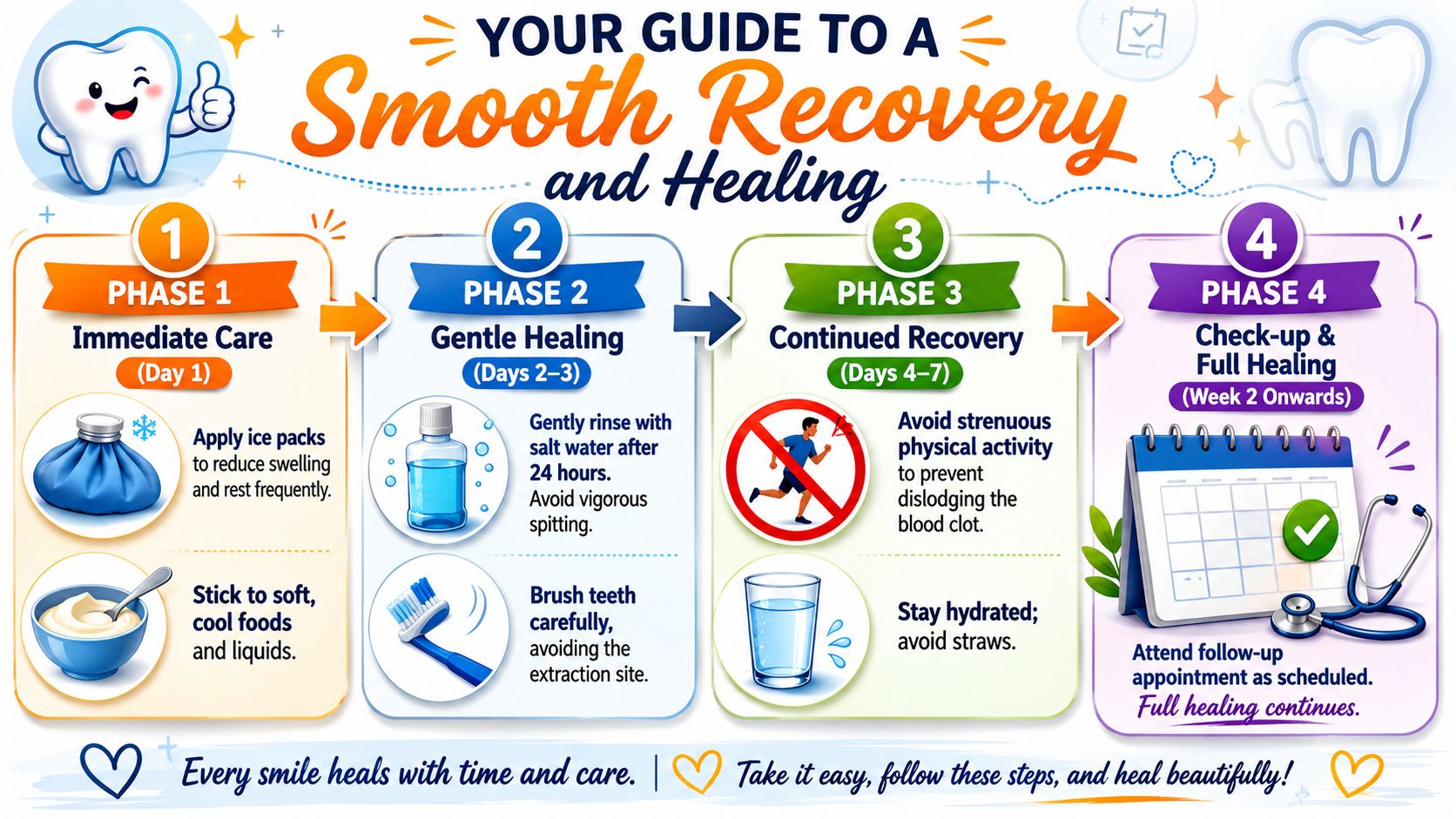
Your Guide to a Smooth Recovery and Healing
Recovery usually goes well when the first few days are handled carefully. The main job is protecting the blood clot that forms in the socket. That clot covers the bone, reduces pain, and gives the area a stable start to healing.
For Inner West patients, the stressful part is rarely the extraction itself. It is getting home and wondering what is normal once the numbness wears off. A clear plan helps. Mild bleeding, soreness, and some swelling are expected early on. Heavy bleeding, worsening pain, or swelling that keeps building are not.
Day 1 matters most
The first day is about protecting the site and keeping things quiet. Bite on the gauze for as long as instructed. Rest with your head slightly raised. Choose soft, cool foods if you feel ready to eat.
Helpful priorities on the first day include:
- Keeping steady pressure on the site to help the clot stay in place
- Eating soft foods such as yoghurt, mashed banana, soup, or scrambled eggs
- Avoiding smoking, alcohol, strenuous exercise, and forceful rinsing
- Taking pain relief exactly as advised
- Leaving the socket alone, even if it feels unusual with your tongue
If you have been prescribed or advised on stronger pain relief, our guide to Panadeine Forte after tooth extraction explains how this medication is commonly used and what to watch for.
Days 2 to 3 can feel worse before they feel better
This is the stage that catches people off guard. Swelling often peaks after the appointment day, and the jaw can feel stiff or bruised. That pattern is common, especially after a surgical extraction or wisdom tooth removal.
After the first 24 hours, gentle saltwater rinsing can help keep the area clean without disturbing it. Brush the rest of your teeth as normal, but do not scrub the socket. If The Smile Spot used stitches, laser support, or sedation as part of your treatment plan, the recovery instructions may be slightly adjusted to match that procedure. We go through those details before you leave, because the right aftercare depends on how the tooth was removed.
A simple rule helps. If symptoms are slowly improving, recovery is usually on track.
Days 4 to 7 should show steady progress
By this point, eating and talking are usually easier. The site may still be tender, and the hole in the gum can remain visible for longer than patients expect. That does not mean healing has stalled. Gum tissue often settles before the deeper socket fully fills in.
A few habits make recovery easier:
- Drink plenty of water
- Avoid straws and strong suction
- Return to exercise gradually
- Keep food away from the socket as much as possible
- Do not probe the area with fingers, cotton buds, or your tongue
If discomfort suddenly increases after a few quieter days, the clot may have been disturbed. Dry socket is more common after smoking, difficult extractions, or early suction from rinsing and straws. It is painful, but it is treatable when we see it promptly.
What patients often worry about, and what is usually normal
Patients often ask whether the socket should look white, whether bad breath is expected, or whether they should still need pain relief after a few days. Those concerns are reasonable.
A pale or whitish layer over the site can be part of normal healing. Mild mouth odour can happen while the area is closing. Some soreness on chewing is also common. What deserves a call is pain that becomes stronger rather than weaker, bleeding that keeps restarting, swelling that spreads, or a bad taste with discharge.
When to call the dentist
Please contact the clinic promptly if you notice:
- Bleeding that does not settle
- Pain that becomes more severe instead of easing
- Fever
- Swelling, pus, or a foul taste
- Difficulty opening the mouth, swallowing, or coping with fluids
At The Smile Spot, we would rather hear from you early than have you sit at home wondering whether to wait. Quick review visits can often sort out a problem before it turns into a longer, more painful recovery.
Handling Dental Emergencies in the Inner West
A dental emergency usually isn't subtle. The toothache is intense enough to stop sleep, swelling is spreading, the face feels tight, or a broken tooth has left a sharp edge and exposed nerve pain. Trauma can do the same. So can a wisdom tooth flare-up that won't settle.
The mistake many people make is waiting for certainty. They tell themselves they'll give it one more day. That can work for mild sensitivity. It doesn't work well for strong pain, facial swelling, or a tooth that's clearly broken beyond function.
Local access presents a real issue. Finding after-hours care is a real challenge. While 1 in 3 Australians qualify for public dental, waitlists can be years long, and true 24-hour urgent care is often limited to major hospitals, according to Australian emergency dental access information. For Inner West residents, that often means confusion at exactly the moment quick direction is needed.
When not to wait
Seek urgent dental help if you have:
- Severe, escalating pain that isn't controlled with basic measures
- Noticeable swelling, especially if it's spreading
- A broken or traumatised tooth after an accident
- Persistent bleeding after an extraction
- Systemic symptoms such as fever with dental swelling
Prompt assessment matters because the fundamental issue isn't just discomfort. Delay can turn a manageable dental issue into a more painful and more involved one.
Local practicalities matter
For many families and commuters, the best emergency option is the clinic that can see you without forcing a hospital visit for a problem that still fits chairside care. Late evening availability, Saturday appointments, and clear triage over the phone are often more useful than broad “emergency dentistry” claims.
If you're searching for a tooth extraction near me because the situation feels urgent, don't spend hours comparing generic directories. Call a local clinic, explain the symptoms clearly, and ask whether the problem sounds like something that needs same-day review.
Why Choose The Smile Spot for Your Extraction
Choosing a clinic for an extraction isn't just about who can remove a tooth. It's about who can assess the problem properly, keep you comfortable during treatment, and support you through recovery without making the process feel chaotic.
That matters even more for nervous patients. Calm communication, local anaesthetic that's allowed to work fully, and treatment planning that reflects the actual difficulty of the case all change the experience. So do practical details such as online booking, late evening appointments, Saturday access, and whether the clinic works with most private health funds.
Dr. Dimitrios Thanos has led care at the practice since 1996, and the clinic's scope is broad enough to handle the conversations that often follow an extraction. Sometimes that means wisdom tooth removal. Sometimes it means discussing how to replace a missing tooth later. Sometimes it means getting someone out of pain quickly and safely.
This local context also matters if your problem is specifically in the back of the mouth. Patients comparing options may find this article on molar extraction near you useful.
A quick look at the clinic gives a sense of the setting patients are walking into.
The practical advantages are straightforward:
- Experienced diagnosis so the extraction plan matches the tooth
- Patient comfort options including sedation and Biolase laser dentistry where appropriate
- Transparent fee discussions rather than vague estimates
- Convenient Inner West access for Dulwich Hill families, commuters, and nearby suburbs
An extraction is never something people book for fun. But it can be handled in a way that feels organised, gentle, and predictable.
If you need clear advice about a painful, broken, or unsalvageable tooth, The Smile Spot offers local dental care in Dulwich Hill with emergency appointments, online booking, late evening and Saturday hours, and treatment options designed to make the extraction process easier to manage from start to finish.