
You've booked a dental appointment because something needs attention. Maybe it's a routine clean, maybe it's a broken filling, or maybe your child is due for a check-up and you're trying to work out whether your health fund will help. Then the questions start. Is dental under hospital or extras? What's a gap fee? Why does one treatment get paid straight away while another has a waiting period?
That confusion is common. At clinic level, dental health insurance in Australia often feels less like a simple benefit and more like a set of rules hidden behind fund jargon, yearly caps, network lists, and fine print.
Most patients don't need a lecture on insurance. They need practical answers. Can I claim today? Will there be a gap? Is this covered under general dental or major dental? If I delay treatment, will I lose benefits or save money? Those are the questions that matter when you're in the chair, not when you're skimming a policy booklet at home.
Your Guide to Navigating Dental Insurance
A patient might arrive for a consultation with a card from their health fund in hand and a perfectly reasonable assumption. “I've got dental cover, so this should be covered.” Sometimes that turns out to be mostly true. Sometimes it's only partly true. Sometimes the treatment is covered, but the waiting period hasn't passed. Other times the policy pays a set benefit that's much lower than expected.
That's where frustration usually begins. Not because insurance never helps, but because the way it works in practice is rarely explained clearly.
Dental health insurance in Australia makes more sense when you stop thinking about it as one big benefit. It's really a collection of smaller rules. The treatment type matters. The category matters. The timing matters. The clinic's relationship to your fund can matter too. A simple examination and clean usually sits in a different insurance bucket from a crown or denture, and your out-of-pocket cost changes accordingly.
What patients usually want to know
When people ask about cover at a local family clinic, the same concerns come up again and again:
- Can I claim on the spot: In many cases, yes. Clinics commonly process private health claims immediately, which means you only pay the remaining balance.
- Will I have a gap fee: Often, yes. Even with cover, there may still be an amount left to pay after your fund contributes.
- Why is one item covered and another not: Because funds split dental into categories, and each category comes with its own waiting periods and annual limits.
- Do I need to use a preferred provider: Sometimes that changes the rebate, especially for promotions such as no-gap check-ups.
Practical rule: If you don't know your limits, assume nothing until the clinic checks your fund details or gives you an estimate.
A good dental visit isn't just about treatment. It's also about clarity. When patients understand how their cover works before treatment starts, they're more likely to make calm, sensible decisions about timing, priority, and cost.
Understanding the Basics of Dental Cover
You sit in the chair for a routine check-up, we find a cracked filling, and the first question is usually not about the tooth. It is, “Will my insurance cover this?” At clinic level, that answer depends less on the fund's advertising and more on how your policy is built, how the treatment is coded, and what benefits you have left on the day.
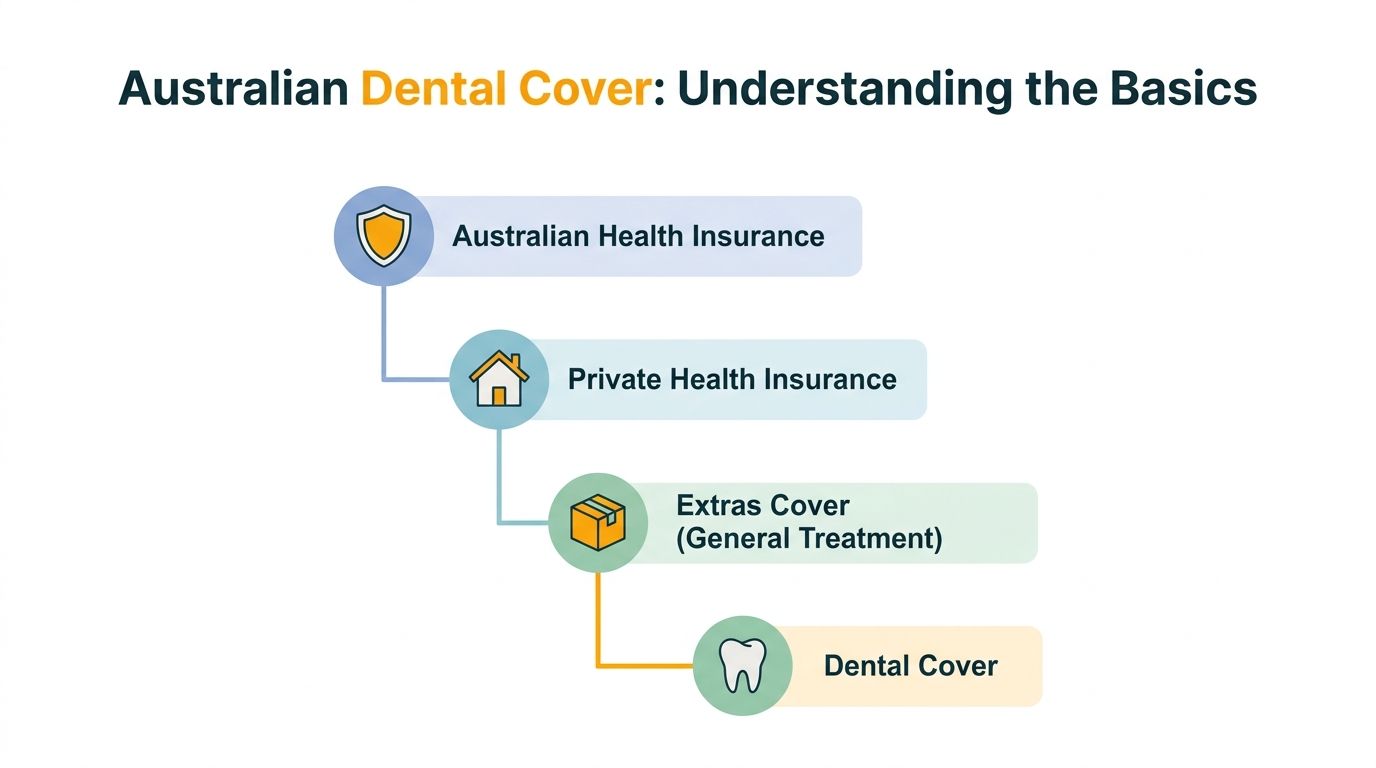
Private health insurance is divided into two main parts. Hospital cover helps with in-hospital medical treatment. Extras cover is the part that usually includes dental, which is why plenty of patients have private health insurance but still cannot claim much, or anything, at the dentist.
Most policies follow a similar structure. Dental usually sits under extras and is split into categories such as preventive and basic care on one side, and more complex restorative work on the other. Check-ups, cleans, X-rays and fluoride usually fall under general dental. Fillings, simple extractions and some root canal treatment may also sit there, depending on the policy. Crowns, bridges, implants and dentures are commonly treated as major dental. Many funds also apply a 2 month waiting period for general dental and 12 months for major dental and orthodontics, with annual limits often around $500 per person for general dental and $1,200 per person for major dental, while some plans use percentage rebates such as 60% for general dental, according to this overview of dental insurance options.
The two questions to ask first
Before booking treatment, ask:
- Is this classed as general dental or major dental?
- Does my fund pay a set benefit or a percentage of the fee?
Those two answers often explain your out-of-pocket cost better than the brochure does.
A fixed benefit means your fund pays a set dollar amount for a treatment item or category. A percentage rebate means your fund pays part of the clinic fee. In practice, both models have trade-offs. A percentage rebate can look generous until you hit your annual limit. A fixed benefit can work well for one item and poorly for another. The only way to judge it properly is against the actual treatment plan and the rebate available on that day.
This matters at the front desk, not just on paper. If we can claim on the spot through HICAPS or a similar terminal, you usually pay only the gap. If your fund has a preferred provider arrangement somewhere else, your rebate may differ from what you receive at an independent local clinic. No-gap offers can help for selected check-ups and cleans, but they are usually tied to specific item numbers, timeframes, and participating practices. They rarely mean every dental need is fully covered.
Periodontal care is a good example. A patient may come in expecting a standard clean rebate, then learn the condition needs gum treatment with different item numbers and different costs. If you want a clearer sense of what that can involve, our guide to gum disease treatment costs explains the common fee differences in plain language.
Extras cover can reduce the bill, but it works within category rules, waiting periods, item numbers, and annual limits. That is why checking before treatment is always worth it.
What Dental Procedures Are Actually Covered
A patient sits in the chair expecting a standard check-up rebate, then we find a cracked tooth that needs a crown. The visit still started as routine, but the insurance category has changed. That is where cover often becomes confusing at clinic level.
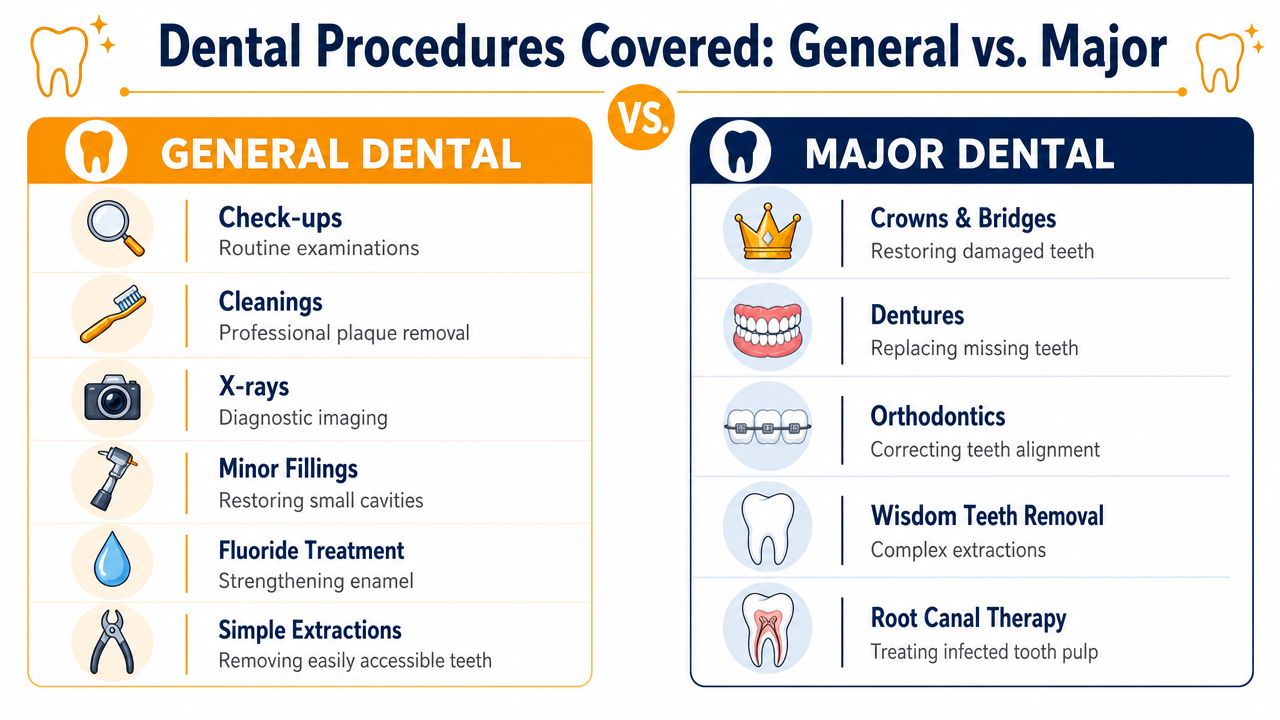
The biggest misunderstanding I see is treating all dental work as one bucket. Funds usually split cover into general dental and major dental, and that split affects whether you can claim straight away, how much the fund contributes, and how large the gap may be at the front desk.
General dental
General dental usually covers the work patients in the Inner West book most often. It tends to include preventive care, early diagnosis, and simpler treatment that keeps small problems from turning into expensive ones.
Common examples include:
- Examinations and cleans
- X-rays
- Basic fillings
- Simple extractions
At the clinic, these are the items patients are most likely to claim on the spot through HICAPS. Even then, the rebate can vary a lot between funds and policies. Two patients can have the same clean on the same day and receive different benefits.
Major dental
Major dental covers treatment that restores damaged teeth or replaces missing structure. This is usually where out-of-pocket costs rise and where patients feel the limits of their policy much faster.
| Category | Typical examples | What patients notice most |
|---|---|---|
| General dental | check-ups, scale and clean, X-rays, basic fillings | lower fees, shorter waiting periods on many policies |
| Major dental | crowns, bridges, dentures, root canal treatment | higher fees, longer waits, limits used up quickly |
A crown, bridge, or denture can use a large share of a yearly benefit in one visit. If you are weighing up treatment options, our guide to dental crowns and bridges explains where these restorations fit and why the fees differ from a standard filling.
One detail patients often miss is item numbers. A toothache does not come with one insurance label attached to it. If a sore tooth needs a small filling, it may fall under general dental. If the same tooth is too damaged and needs root canal treatment and a crown, the claim may move into major dental items with a very different rebate.
What this looks like in practice
At clinic level, cover is less about the name of the visit and more about the treatment performed. A "check-up appointment" can still lead to treatment that is billed under different categories once we diagnose the problem.
That matters because no-gap offers are usually narrow. They may apply to an exam, clean, and X-rays, but not to the filling, gum treatment, crown, or splint that follows. Patients are often relieved when the preventive part is covered, then surprised when the next stage carries a gap.
Fixed benefit versus percentage rebate
Funds also differ in how they pay.
Some pay a fixed dollar amount for each item number. Others pay a percentage of the clinic fee. From a patient point of view, the trade-off is simple. A fixed rebate can cover a fair share of a basic service but only a small part of complex work. A percentage rebate sounds clearer, but the final out-of-pocket cost still depends on the clinic fee and how much of your annual limit remains.
The treatment category decides whether the service fits your policy. The rebate model decides how much you are likely to pay yourself.
Decoding Waiting Periods and Annual Limits
Waiting periods annoy people because they arrive at the worst possible time. A tooth breaks, a filling fails, or a dentist recommends a crown, and the patient discovers they've only just taken out the cover. Insurance rules don't care that the need feels urgent now. If the waiting period hasn't passed, the fund usually won't contribute.
Annual limits create a different problem. The policy may look generous when you read the headline amount, but real use is often narrower than people expect.
Why the numbers can mislead
The Australian Institute of Health and Welfare reports that private health insurance funds allocate $2.2 billion annually to dental services, and that the median charge for a thorough oral examination is $60, yet most policies restrict full no-gap benefits to only two check-ups annually. After that, patients may need to pay out-of-pocket or accept a partial benefit, as outlined in the AIHW summary of private health insurance and dental care.
That disconnect catches people off guard. They see an annual limit and assume they can use it freely across many visits. In reality, the policy may advertise broad value but apply practical restrictions to the very items patients use most often.
How this affects treatment planning
A shorter waiting period for general dental means preventive care is easier to access early. Major dental works differently. If a patient already knows they may need a crown, bridge, or similar restorative work, joining a fund after the problem appears usually won't solve the immediate cost issue.
This is why timing matters so much. A sensible approach often looks like this:
- Check your reset date: Annual limits usually matter most near the end and beginning of a benefit period.
- Use preventive visits properly: Don't waste no-gap entitlements by missing routine care.
- Ask whether treatment can be staged: Some procedures can be planned around waiting periods or annual limits.
- Request a written quote first: This is especially important when treatment could fall partly under one category and partly under another.
Patients booking a routine check-up and clean are often in the best position to use their cover efficiently, because preventive appointments can identify issues before they turn into major dental expenses.
No-gap doesn't always mean unlimited, and a high annual limit doesn't always mean broad day-to-day access.
Public Dental Care Versus Private Insurance
A parent calls in the morning because their child has tooth pain, and the first question is often not about the tooth. It is about cost, eligibility, and whether private cover will help on the day. At clinic level, that is the difference between public dental care and private insurance. One can reduce upfront cost for eligible patients. The other usually gives you more choice about where you go, when you're seen, and how treatment is arranged.
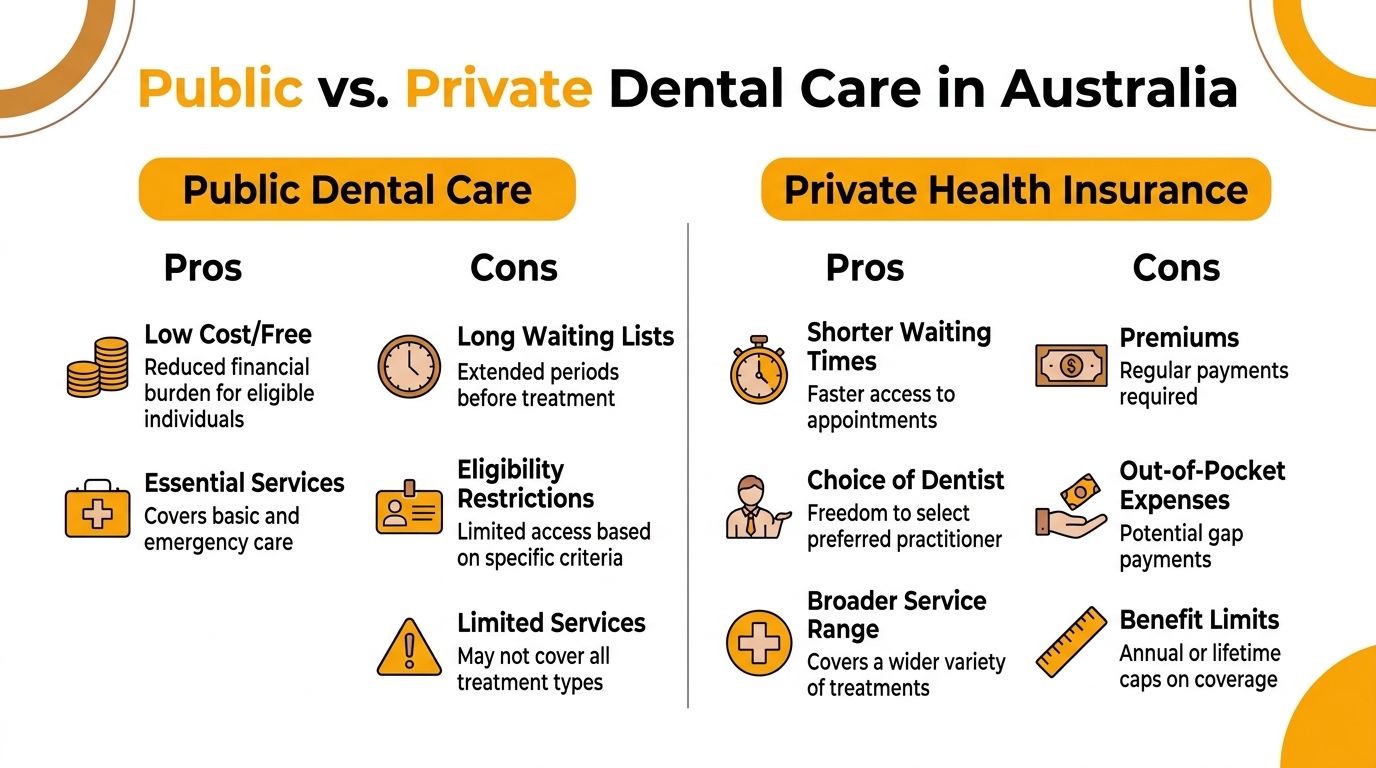
Public dental care can be a good fit if you qualify and your treatment needs fall within what the system can provide in a reasonable timeframe. Private insurance works differently. You pay premiums in exchange for benefits that may help with check-ups, cleans, fillings, and sometimes larger items, but you still need to check for gap fees, annual limits, and whether your dentist is in a preferred provider network.
For families, the Child Dental Benefits Schedule often matters more than extras cover for children. Eligible children can usually use CDBS for basic dental services such as examinations, cleans, X-rays, fillings, and extractions. It does not generally extend to orthodontic treatment or every type of dental work a parent might ask about. In practice, that means a child may be covered for routine care through the government, while the adults in the household use private extras for their own appointments.
At the chairside, the trade-off is straightforward. Public care can lower the immediate bill, but provider choice and appointment availability are more limited. Private cover usually gives faster access and more control over where treatment happens, but it does not guarantee a no-gap visit.
A mixed approach often makes the most sense in a family clinic.
- Public dental care: Suits eligible patients who are focused on affordability and can work within public access rules.
- Private extras cover: Suits patients who want more flexibility in booking, provider choice, and ongoing support for family care.
- Combination use: Some families claim government-funded care for eligible children and keep private extras for adult treatment and services outside the public scheme.
I often tell Inner West families to check the practical side, not just the brochure. Ask who can be seen under each option, how soon the appointment can happen, and what you will pay on the day. A routine professional teeth cleaning appointment is usually a simple place to compare real out-of-pocket costs between public support and private extras.
For adults looking at the wider insurance decision, including tax considerations beyond dental alone, Wealth Collective financial advice for MLS can help clarify the broader private health picture.
The best option is usually the one that fits the treatment you need now, the access you want, and the bill you can manage without surprises.
Maximising Your Benefits at the Clinic
Insurance becomes real at the front desk. That's where patients find out whether the fund will pay immediately, whether there's a gap, and whether the treatment plan needs to be adjusted to fit a remaining limit. This is the point where knowledge saves money.
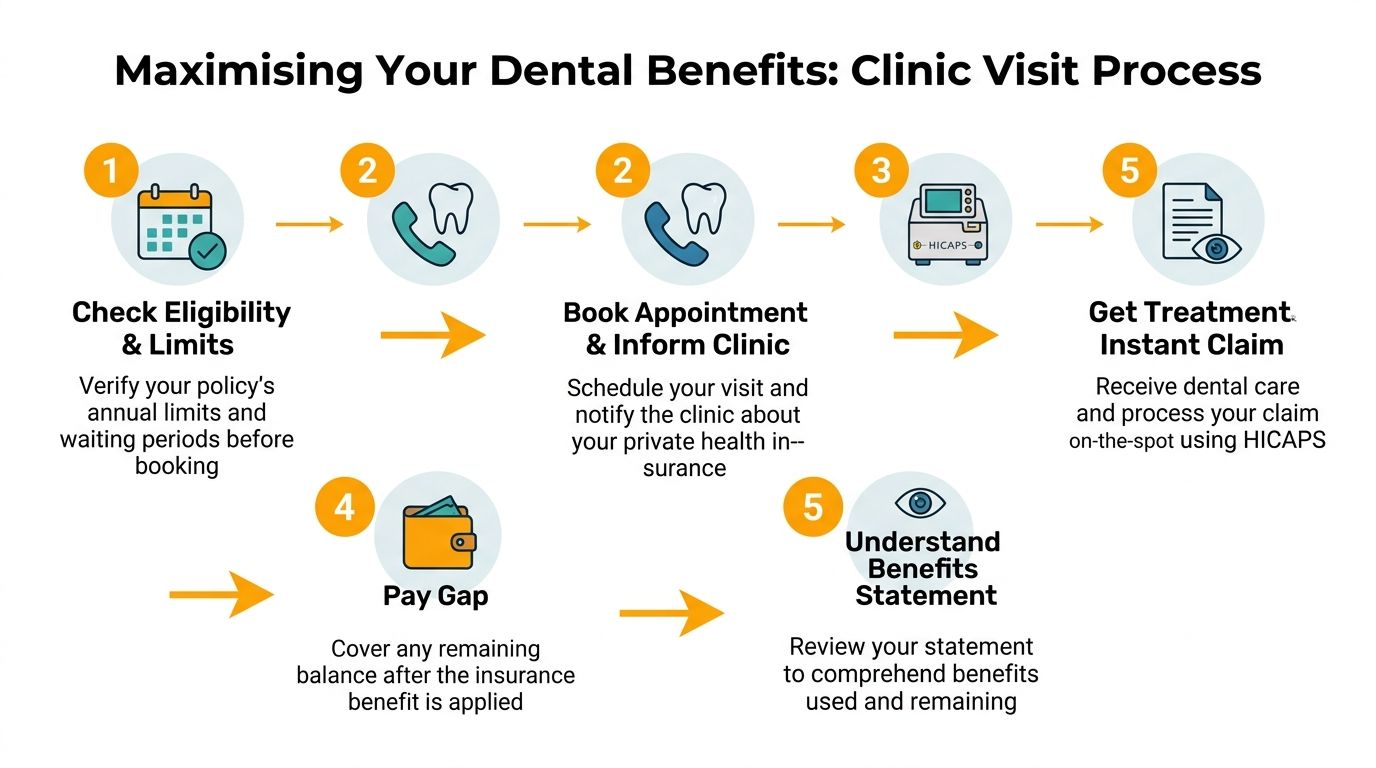
In many clinics, claims are processed on the spot through systems such as HICAPS. That means the fund's contribution is applied straight away and the patient pays the balance. This is convenient, but convenience can hide the bigger issue. The remaining balance is where many people feel let down by their policy.
According to Cohealth's submission on dental access in Australia, the hidden gap in dental insurance is significant. Policies may cover 50–75% of treatment costs, yet the median out-of-pocket gap for major procedures like crowns remains over $900 annually, despite average premiums of $1,200–$1,500. That's why many patients feel they're insured but still paying heavily when major work is needed.
A routine visit for professional teeth cleaning is usually where insurance feels most helpful. The trouble starts when people expect the same smooth experience to apply to larger restorative treatment.
Here's a quick visual guide to the clinic side of the process.
What works well for patients
Some habits consistently lead to better outcomes:
- Check item categories before treatment: Ask whether the work is being claimed under general or major dental.
- Ask the clinic to estimate the rebate: It may not be exact, but it's often enough to avoid surprises.
- Request a treatment plan for bigger procedures: A staged plan can help you decide whether to proceed now or spread care over time.
- Confirm your remaining limits: A policy can be active and still offer very little benefit if most of the annual allowance has already been used.
What doesn't work well
Patients often lose value when they rely on assumptions.
- Assuming all clinics rebate the same way: They don't. Your fund and policy rules still control the benefit.
- Confusing acceptance of health funds with preferred provider status: A clinic may accept your fund perfectly well without being part of a contracted no-gap network.
- Leaving quotes until the day of treatment: That's when pressure is highest and choices feel rushed.
Ask for the fee, the estimated benefit, and the likely gap before major work starts. That single conversation prevents most insurance-related frustration.
Preferred provider offers can be useful, but they shouldn't be mistaken for the whole picture. Convenience, trust in the dentist, treatment quality, and clear communication often matter more than chasing a small rebate difference while ignoring the full treatment plan.
Your Partner in Long-Term Dental Health
Most patients start this process feeling uncertain. They know they have some kind of cover, but not what it means once they're sitting in the dental chair. By the time they understand the basics, the picture usually becomes much simpler. Dental health insurance in Australia sits under extras. Claims depend on treatment category. Waiting periods affect timing. Annual limits affect value. Quotes matter.
That knowledge changes behaviour in a good way. People stop assuming and start asking better questions. They book preventive care earlier, check their limits before larger treatment, and make decisions based on both oral health and real cost.
The long game is still prevention
Insurance is a financial tool. It isn't the actual goal. The goal is to keep your teeth and gums healthy enough that you need less complex and more expensive treatment in the first place.
That's why regular maintenance still makes the most sense for most families. A solid preventive routine, along with consistent appointments and early diagnosis, usually gives patients the best chance of using their cover on planned care rather than unexpected repair. If you want to build that habit, this guide to preventive dental care is a helpful place to start.
Confidence comes from clarity
A good local clinic should make costs easier to understand, not harder. Patients deserve plain-language explanations, realistic estimates, and treatment plans that respect both health priorities and household budgets.
When dental cover is used well, it can take the edge off routine care and soften some treatment costs. When it's used blindly, it often creates disappointment. The difference is usually information, timing, and a willingness to ask direct questions before treatment begins.
If you'd like clear advice about your treatment options, expected gap fees, or how to make the most of your health fund at your next visit, The Smile Spot can help. The team welcomes families across Dulwich Hill and the Inner West, and can talk you through your dental needs in plain English so you can book with confidence.